Get 50% OFF All Premium 3D & STL Models!

In the dynamic world of 3D visualization, game development, and automotive rendering, the difference between a good project and an outstanding one often lies in the authenticity and technical precision of its assets. Generic models can suffice for placeholders, but truly captivating scenes demand vehicles that tell a story, grounding the virtual world in a recognizable reality. This is particularly true for creating vibrant, believable urban environments, where a diverse range of vehicles is crucial for immersion.
Enter the utilitarian hero of countless street scenes across the globe: the Daewoo Damas Microvan. This compact, yet incredibly versatile commercial vehicle has cemented its place in the urban fabric of many nations, from the bustling markets of South Korea to the expansive landscapes of Central Asia. Its distinctive cabover design and no-nonsense aesthetic make it an instantly recognizable element of daily life. For 3D artists and developers, recreating such an iconic vehicle with precision is paramount, and the Daewoo Damas Microvan 3D Model from 88cars3d.com delivers exactly that—a highly optimized, meticulously crafted digital twin ready to elevate any project.
This comprehensive article delves into the technical intricacies, versatile applications, and professional workflows facilitated by such a high-quality 3D car model. We’ll explore the critical role of file formats, optimization strategies for real-time engines, and how this particular model seamlessly integrates into various professional pipelines, from detailed architectural visualizations to expansive open-world game development.
The choice of 3D model file format is not a trivial decision; it dictates compatibility, workflow efficiency, and the ultimate utility of an asset across different software and platforms. Professionals must select the appropriate format based on their specific project needs, whether it’s for animation, real-time rendering, or manufacturing. The Daewoo Damas Microvan 3D Model, understanding this critical need, is provided in a comprehensive suite of formats, ensuring maximum flexibility.
The .blend format is native to Blender, the popular open-source 3D creation suite. When you download a .blend file, you’re not just getting the mesh; you’re receiving a complete Blender scene. This typically includes all modifiers, materials, textures, lighting setups, cameras, and potentially even animation data. For artists working primarily in Blender, this is invaluable as it allows for immediate, full editability. You can inspect the topology, modify shaders, adjust lighting, and even re-rig components with ease, making it perfect for deep customization or learning from an expertly crafted scene file.
.fbx (Filmbox) is arguably the most widely adopted proprietary file format for 3D data exchange, especially prevalent in game development. Developed by Autodesk, it excels at storing not just mesh data, but also complex animation, rigging, materials (though material translation can vary between software), cameras, and lights. Its strength lies in its ability to transfer data between different 3D applications like 3ds Max, Maya, Blender, and directly into game engines such as Unreal Engine and Unity. For game assets like the Daewoo Damas Microvan, .fbx is ideal because it reliably preserves skeletal animations and instance data, making it straightforward to implement the vehicle with functional doors, steering, and wheel rotations in a real-time environment.
The .obj (Wavefront OBJ) format is a foundational, non-proprietary standard for 3D geometry. It’s a simple, text-based format that primarily stores mesh data (vertices, normals, texture coordinates, and faces) and can reference external material (.mtl) and texture files. While it doesn’t support animation or rigging, its universal compatibility makes it a safe bet for cross-software transfers when you only need the raw geometric data. It’s often used as a fallback or for projects where animation is handled separately, or for static architectural visualizations where clean mesh export is the priority.
.glb (GL Transmission Format Binary) is the binary version of glTF, a royalty-free specification for the efficient transmission and loading of 3D scenes and models by applications. It packages textures, animations, and other data into a single file, making it incredibly streamlined for web-based 3D, augmented reality (AR), and virtual reality (VR) applications. Its compact size and optimized structure ensure fast loading times and efficient rendering, perfect for displaying the Daewoo Damas in an interactive web viewer or an AR experience on a mobile device.
.stl (STereoLithography) is the de facto standard file format for 3D printing. It represents a 3D model as a series of connected triangles (a triangular mesh), defining the surface geometry without color, texture, or other CAD attributes. While simple, its ubiquity in the 3D printing ecosystem is unchallenged. If you plan to fabricate a physical model of the Daewoo Damas Microvan, converting the digital asset to .stl is the first step, preparing it for slicing software and ultimately, the 3D printer itself.
.ply (Polygon File Format or Stanford Triangle Format) is another format that stores geometric information, often including color, transparency, and sometimes even higher-order properties like normals. It’s commonly used in applications that deal with scanned 3D data, scientific visualization, and CAD. While less common for general 3D asset exchange than .fbx or .obj, its ability to store precise mesh data and vertex properties makes it valuable for specific analytical or manufacturing workflows where data integrity is paramount.
The .unreal format, or rather, an asset directly structured and optimized for Unreal Engine, signifies a model that has been specifically prepared for seamless integration into Epic Games’ powerful real-time engine. This often means proper material setup, collision meshes, LODs (Levels of Detail), and skeletal rigging are already configured to Unreal Engine’s specifications. This can dramatically reduce import and setup time, allowing developers to drop the Daewoo Damas directly into their scenes with minimal fuss, ready for immediate use as an AI-driven vehicle or a player-controlled asset.
Similar to .blend for Blender, the .max file format is native to Autodesk’s 3ds Max. It contains an entire 3ds Max scene, including all geometry, textures, materials, lighting, cameras, animation, and scene settings. For 3ds Max users, this format offers the highest level of control and editability, allowing full access to the original creation environment. It’s ideal for high-fidelity automotive rendering, architectural visualization projects, or any scenario where deep integration with 3ds Max’s extensive toolset is required for further customization or animation of the Daewoo Damas.
The Daewoo Damas is more than just a microvan; it’s a cultural icon in many parts of the world. Its presence evokes a sense of authentic urban life, a detail that many 3D artists strive to achieve in their projects. Recreating such a specific, recognizable vehicle requires a keen eye for detail and an understanding of its character, attributes expertly captured in this 3D model.
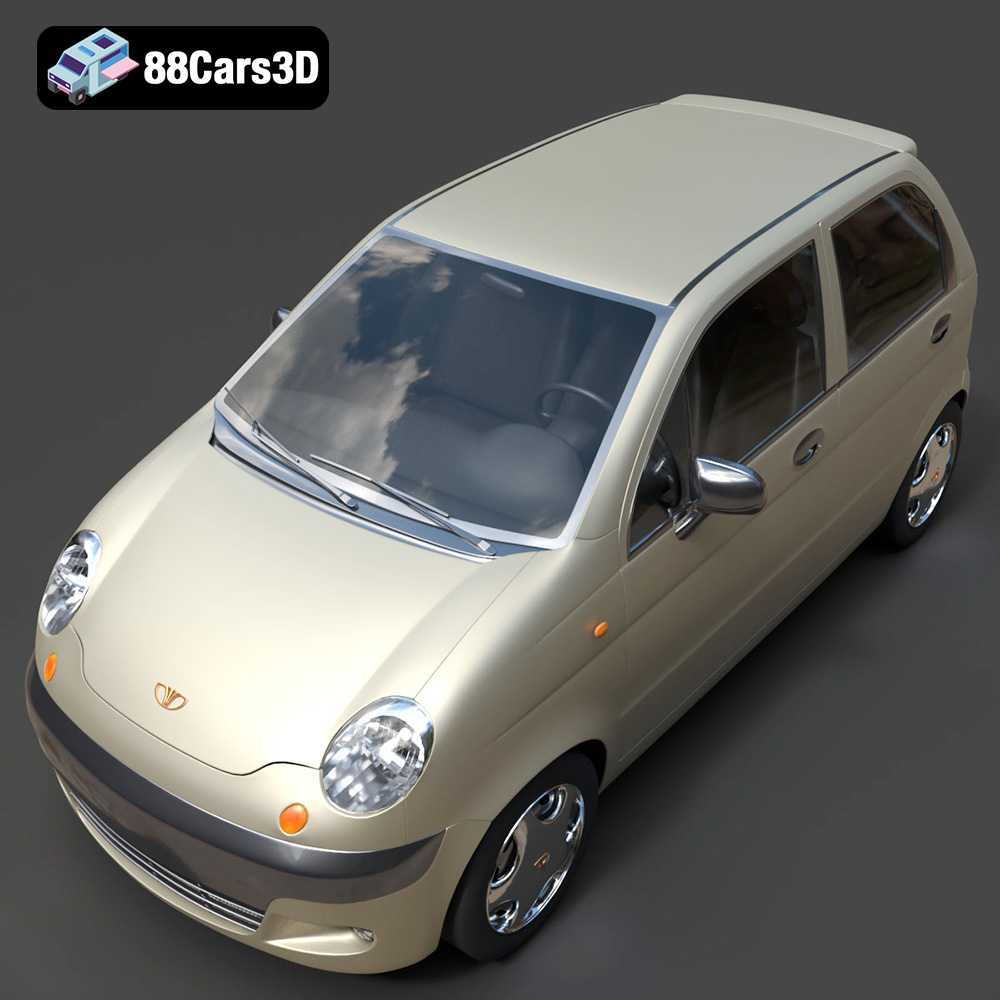
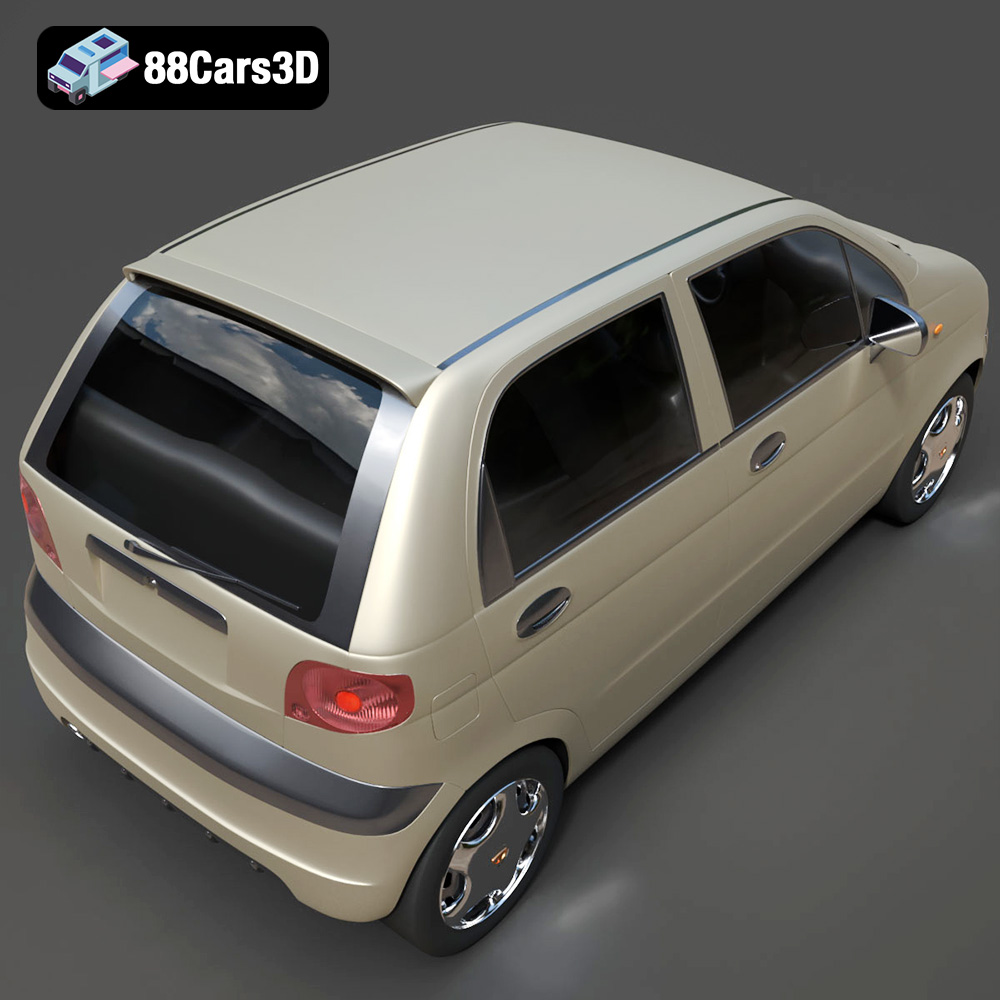
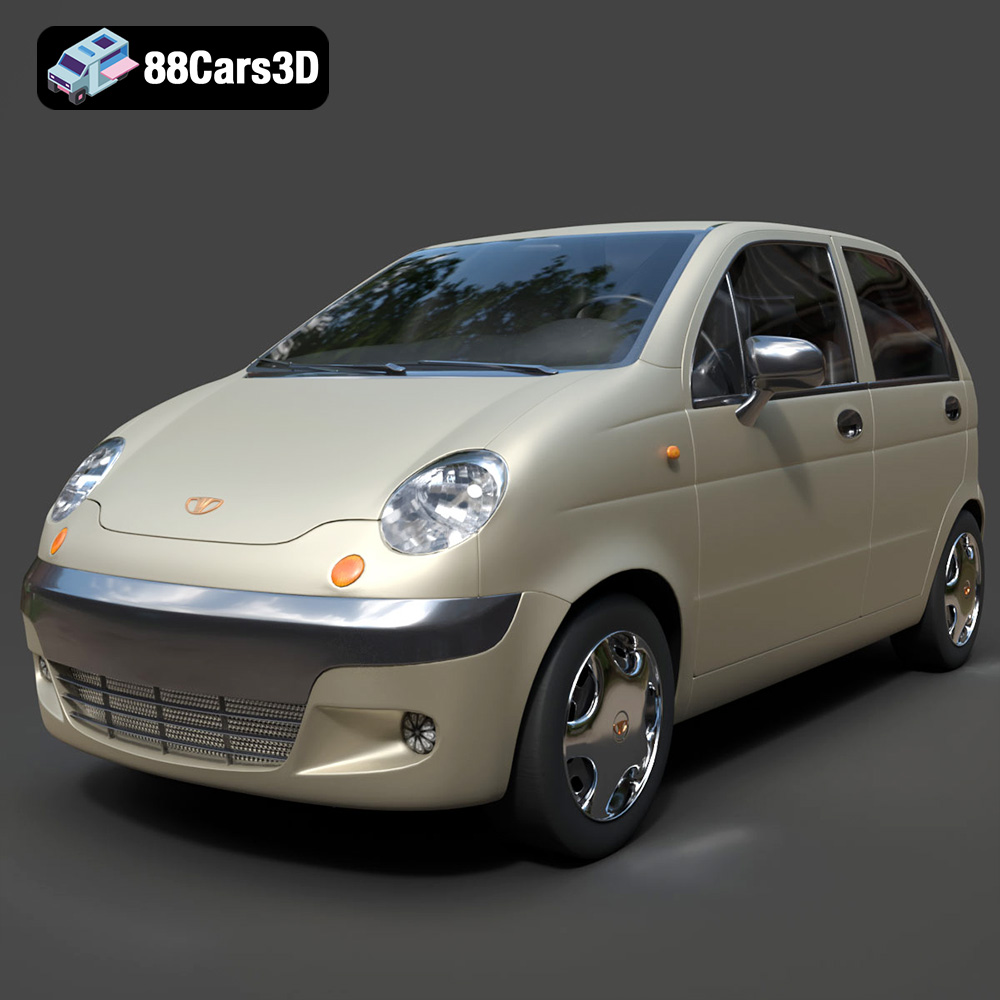
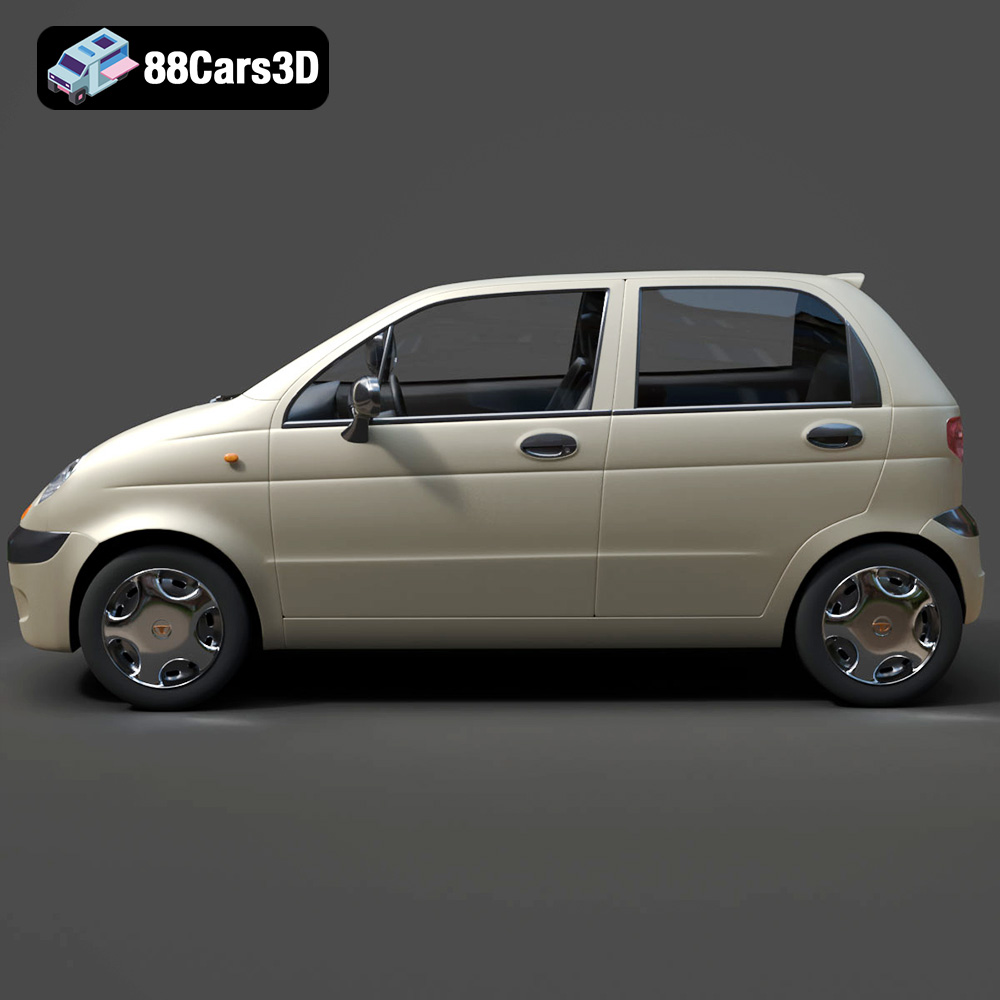
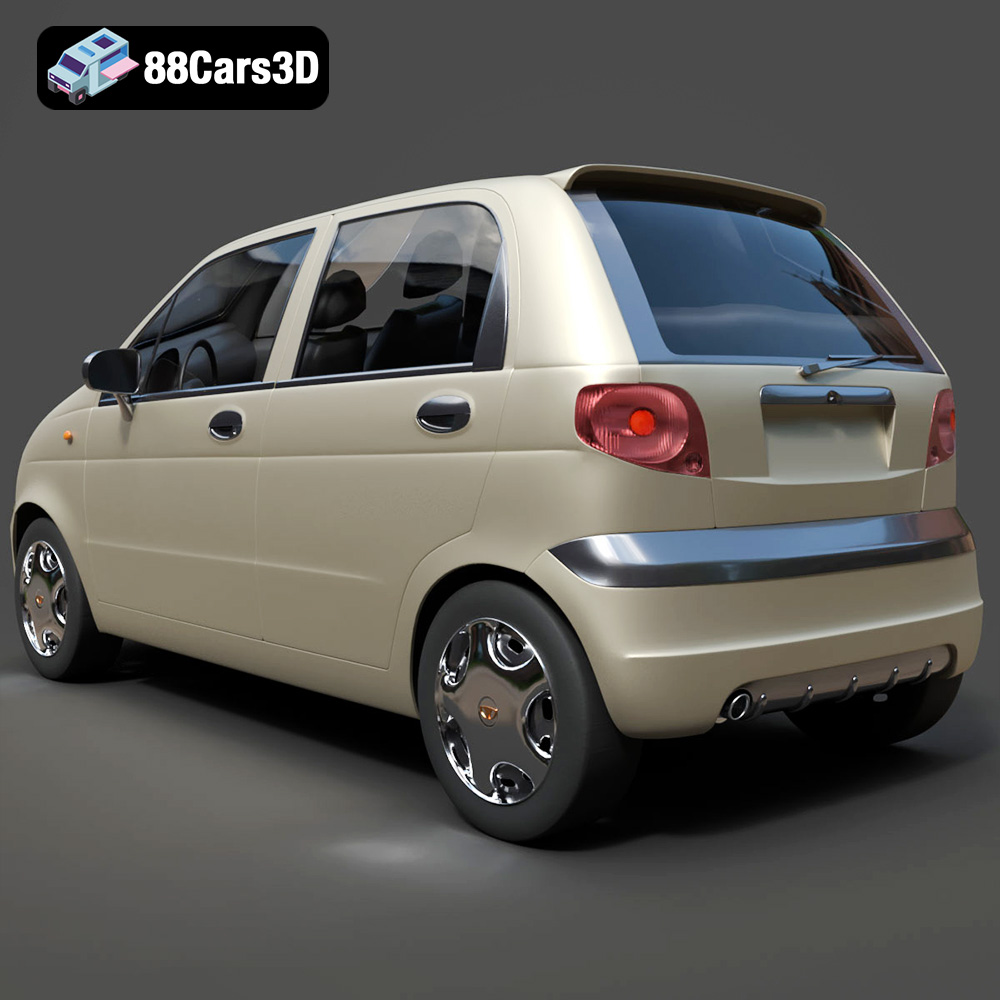
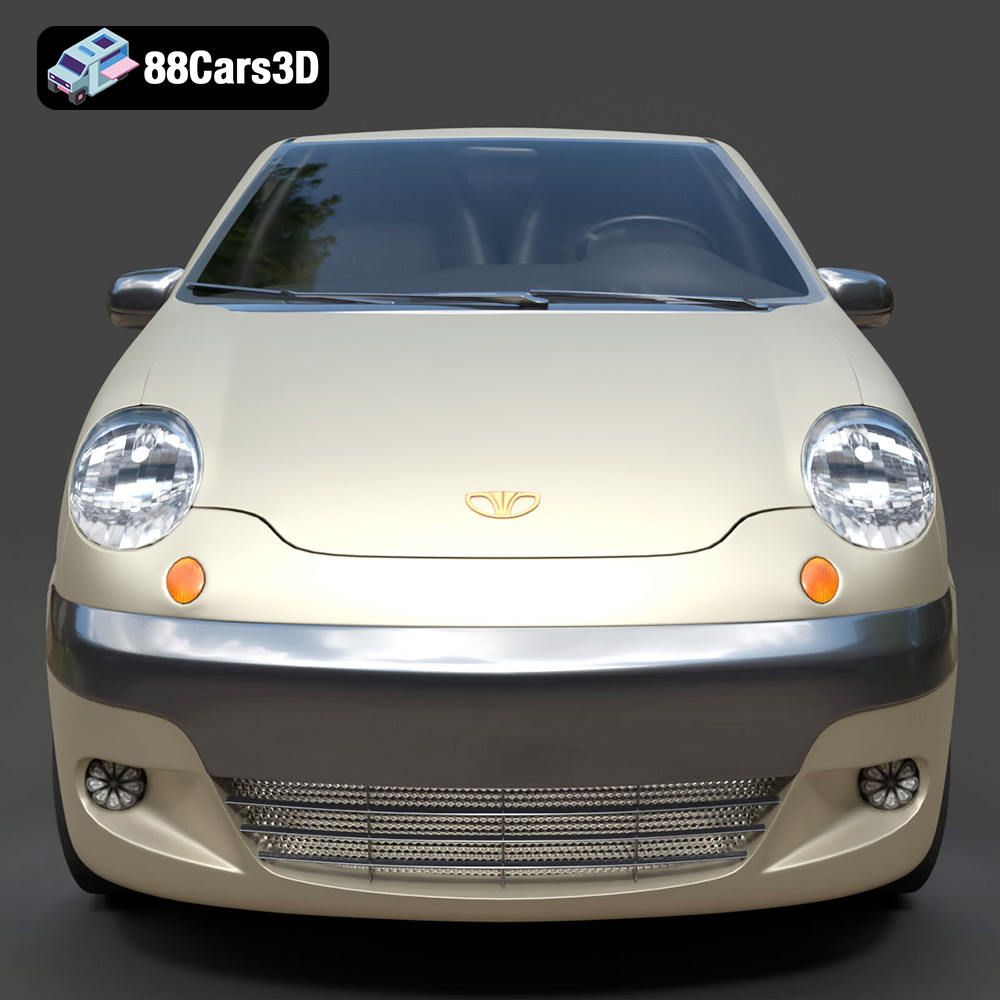
The Daewoo Damas Microvan 3D Model from 88cars3d.com excels at faithfully reproducing the vehicle’s distinctive utilitarian aesthetic. Its classic cabover design, maximizing interior space over a compact footprint, is accurately translated into 3D geometry. Artists will appreciate the precision in the flat front fascia, complete with the classic rectangular headlight clusters and robust black plastic bumpers – hallmarks of its no-frills, functional design. The model features correct proportions for the dual sliding rear doors and a functional large rear liftgate, essential for both visual realism and potential animation. Even the detailed 12-inch steel wheels, wrapped in commercial-grade tires, contribute to the authentic visual appeal, ensuring that whether seen from afar or in a close-up render, the vehicle holds up to scrutiny.
While often viewed from the outside, a well-modeled interior significantly enhances the realism of any 3D car model, particularly for scenes that might feature transparent windows or VR applications. The Daewoo Damas model provides a practical, driver-centric cabin layout, typical of affordable commercial vans. Details include a minimalist dashboard, a classic two-spoke steering wheel, and analog gauges, all contributing to the genuine feel. The seating geometry, with front seats mounted directly over the front axle, is accurate to the real vehicle. Furthermore, the configurable rear space, suitable for empty cargo delivery or passenger benches, offers flexibility for various scene setups. Crucially, the interior geometry is optimized to look authentic from the exterior, ensuring performance isn’t unduly impacted while still providing visual integrity.
In 3D, high visual fidelity often comes at the cost of performance, especially in real-time applications. However, professional-grade assets strike a delicate balance, offering stunning visuals without bogging down a scene. The Daewoo Damas Microvan 3D Model is a prime example of this engineering philosophy.
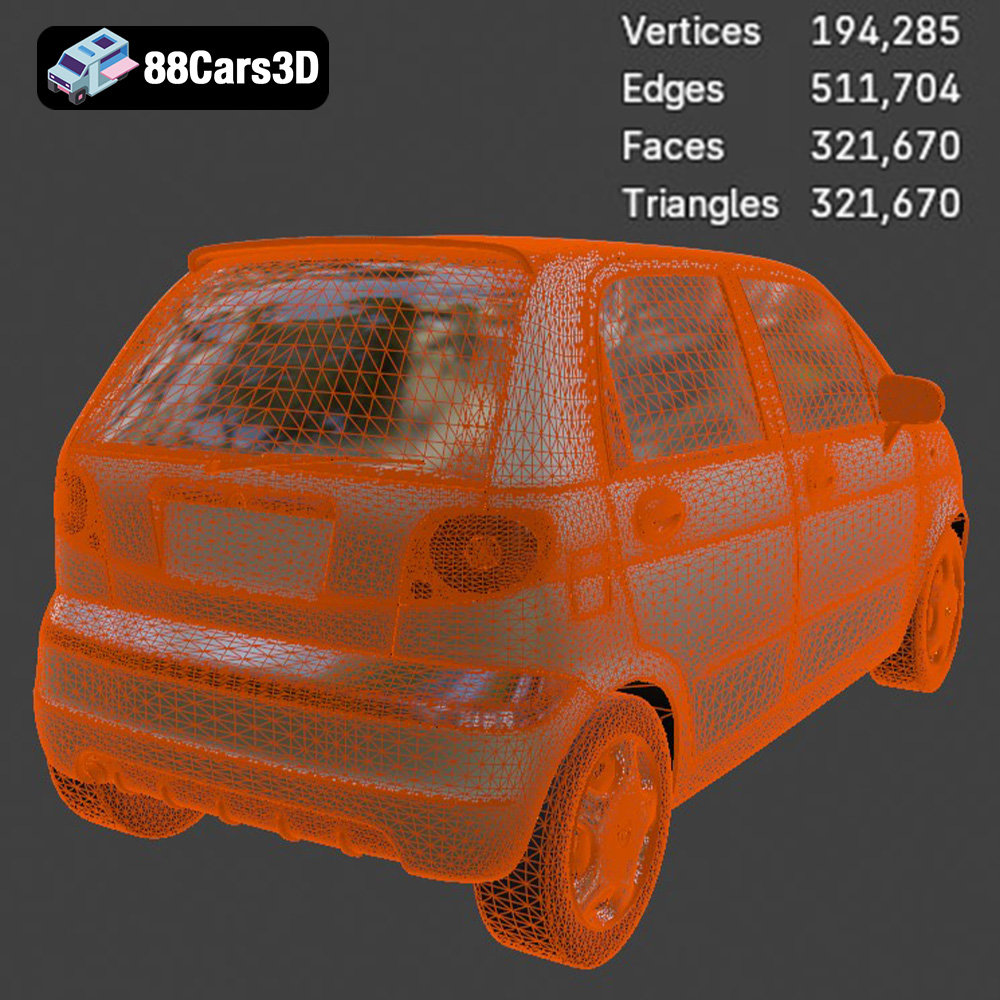
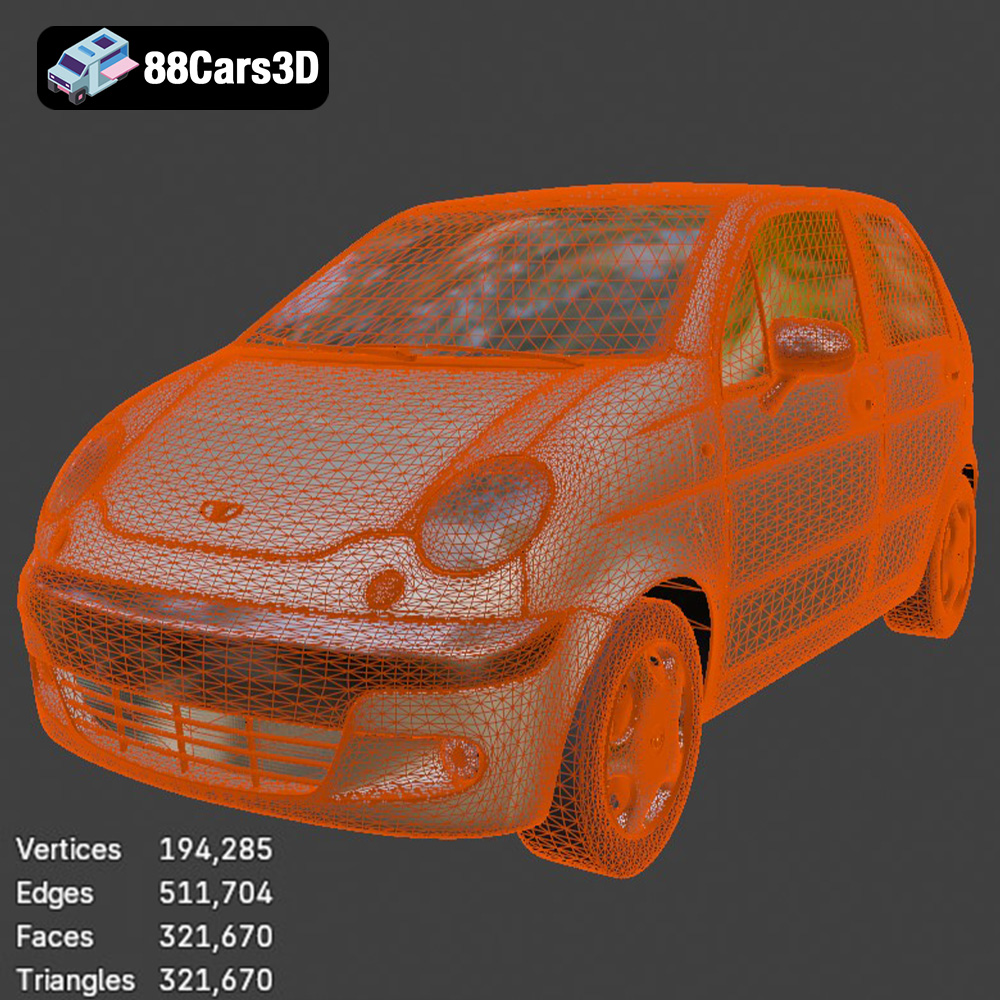
The heart of any successful 3D asset lies in its topology. The Daewoo Damas Microvan 3D Model boasts a highly optimized, impeccably clean mid-polygon topology, registering just over 321,670 triangles. This figure represents an absolute sweet spot for versatility. For detailed automotive rendering, this poly count provides crisp visual fidelity, allowing for close-up shots without noticeable faceting. Simultaneously, its efficiency makes it lightweight enough to be duplicated endlessly as background traffic in demanding game engines, preventing performance bottlenecks even in crowded urban scenes. With 194,285 vertices and 321,670 faces/polygons, the model maintains a quad-heavy structure, which is the gold standard for clean deformations, easier UV mapping, and predictable subdivisional smoothing, should higher detail be required for hero shots. This careful optimization ensures that artists and developers can deploy the model across a wide spectrum of applications without compromise.
Beyond raw polygon counts, the true measure of a high-quality 3D car model lies in its readiness for animation and seamless integration into diverse workflows. The Daewoo Damas Microvan 3D Model is engineered with real-world scale accuracy, based on factory commercial dimensions, ensuring it fits perfectly within any architectural visualization or game environment. Crucially for dynamic projects, it features proper pivot setups for key animated components: steering, wheel rotation, and sliding door mechanisms. This pre-configuration saves significant time for animators and developers, allowing them to instantly rig and animate the vehicle without extensive rework. Its compatibility with major 3D software platforms (such as 3ds Max, Blender) and leading real-time engines (Unreal Engine, Unity) further solidifies its position as a go-to asset for professionals seeking efficiency and reliability.
The practical utility of a 3D asset is defined by its ability to integrate seamlessly into diverse professional pipelines. The Daewoo Damas Microvan 3D Model, with its technical robustness and accurate representation, opens up a myriad of application possibilities across different industries.
For game developers, the demand for realistic, diverse 3D car models is constant, especially for open-world games, logistics simulators, and mobile driving titles. The Daewoo Damas, with its mid-poly optimization and clean topology, is an ideal “everyday traffic” and delivery vehicle. Its efficient triangle count means it can be instanced hundreds of times without significantly impacting frame rates, allowing for incredibly dense and realistic street scenes. Imagine populating a virtual city with a fleet of these microvans, each with animated wheels and doors, bringing life to urban environments. For implementation, developers can directly import the .fbx or pre-configured .unreal file into Unreal Engine or Unity. The model’s pre-set pivots for steering and wheel rotation drastically reduce setup time, letting developers focus on AI pathfinding, physics, and gameplay mechanics rather than asset preparation.
In automotive rendering and architectural visualization, realism is paramount. Artists often need to populate scenes with accurate contextual elements to convey a sense of place and scale. The Daewoo Damas Microvan 3D Model is perfect for breathing authentic life into architectural visualizations, particularly those set in regions where the Damas is ubiquitous. Placing this highly recognizable vehicle in a street scene or a commercial district instantly grounds the visualization in a specific cultural and geographical context. Using the .max file in 3ds Max or the .blend file in Blender allows artists to leverage advanced rendering techniques, applying realistic materials, lighting, and environmental effects to create stunning, photorealistic images. This model serves not just as a background element but as a narrative tool, enhancing the overall believability of the rendered scene.
The rapidly expanding fields of Augmented Reality (AR) and Virtual Reality (VR) demand highly optimized assets that can perform efficiently on various hardware platforms, from high-end headsets to mobile devices. The Daewoo Damas Microvan 3D Model, particularly in its .glb format, is exceptionally well-suited for these applications. Developers can use it to create interactive digital delivery fleet configurators, allowing users to customize and visualize a virtual fleet in real-time. In city-planning VR experiences, the Damas can serve as an integral part of simulating traffic flow and urban density, offering a truly immersive perspective. The lightweight nature and efficient material setup of the model ensure smooth interactions and quick loading times, which are critical for maintaining user engagement in AR/VR environments.
A truly versatile 3D asset provides a strong foundation while also offering ample room for creative interpretation. The Daewoo Damas Microvan 3D Model not only delivers technical excellence but also invites artists to customize it to fit their unique vision, and even to bring it into the physical realm.
The clean topology and structured material setup of this 3D car model make it highly adaptable. Artists can easily change exterior paint colors, transforming the microvan from a pristine factory white to a vibrant taxi yellow or a weathered service vehicle. This allows for immense flexibility in scene composition, whether depicting a bustling modern city or a dusty, aged commercial district. Adding custom delivery logistics decals, company branding, or regional signage like “Marshrutka” (route taxi) on the side panels can further enhance realism and contextual relevance. Furthermore, applying weathering materials such as dust, mud, or rust can create gritty, authentic urban environments, reflecting the arduous life of a working vehicle. The model’s compatibility with advanced shading networks in Blender or 3ds Max means artists can adapt lighting to simulate various scenarios, from sunny urban commutes to moody, rainy night-time delivery routes, adding significant emotional depth to their renders.
For hobbyists, collectors, or even professional designers prototyping physical models, the ability to translate a digital asset into a tangible object is a powerful feature. The Daewoo Damas Microvan 3D Model is perfectly convertible to the .stl format, making it ideal for 3D printing. This allows for the creation of display-scale commercial diecast models or miniature versions for urban dioramas. For optimal results, specific 3D print settings are recommended:
The journey from concept to a compelling 3D scene is paved with meticulous detail and technical excellence. The Daewoo Damas Microvan 3D Model stands as a testament to this principle, offering an incredibly accurate, highly optimized, and profoundly versatile asset for a wide range of professional applications. From populating dense virtual cityscapes in games to providing authentic regional context in architectural visualizations, and even enabling the creation of physical scale models, its value is undeniable.
Its clean, mid-polygon topology ensures peak performance without sacrificing visual fidelity, making it a stellar choice for both demanding real-time engines and high-resolution rendering. With a comprehensive suite of file formats, including .blend, .fbx, .obj, .glb, .stl, .ply, .unreal, and .max, it guarantees seamless integration into virtually any professional workflow. Whether you’re an indie game developer, a seasoned ArchViz artist, or a 3D printing enthusiast, this Daewoo Damas model provides the foundation for truly impactful creations.
For those seeking to elevate their projects with high-quality 3D car models that blend technical precision with artistic flexibility, look no further than the curated selection at 88cars3d.com. The Daewoo Damas Microvan 3D Model is just one example of the exceptional assets available to help you build more immersive, realistic, and visually stunning 3D worlds.
The Daewoo Damas 3D Model is an incredibly accurate, highly optimized digital recreation of the legendary compact commercial microvan. Based on the classic kei-van architecture, the Damas is a ubiquitous and unstoppable workhorse recognized globally—serving as the ultimate urban delivery vehicle, taxi, and daily commuter, particularly across South Korea, Central Asia (such as Uzbekistan), and the Middle East. This 3D model beautifully captures the timeless, utilitarian cabover aesthetic of the classic Damas. It features the distinctive flat front fascia, large rectangular headlight assemblies, dual sliding passenger/cargo doors, and a tall, space-maximizing roofline. Built with a highly efficient, impeccably clean mid-polygon topology (just over 321k triangles), it strikes the absolute perfect balance. It provides crisp visual fidelity for close-up automotive rendering while remaining lightweight enough to be duplicated endlessly as background traffic in modern game engines. Perfect for populating realistic global street scenes, commercial fleet simulations, architectural visualizations, and mobile game development.
$29