Get 50% OFF All Premium 3D & STL Models!

In the dynamic worlds of automotive design, realistic visualization, and immersive game development, the quality of your 3D assets is paramount. A meticulously crafted 3D car model isn’t just a digital object; it’s the cornerstone of stunning renders, interactive experiences, and even physical prototypes. It’s the difference between a passable scene and one that truly captivates, a game asset that blends seamlessly, and a visualization that sells. When it comes to capturing both rugged luxury and iconic design, few vehicles command attention like the Mercedes-Benz G-Class. Its distinctive, boxy silhouette and undeniable presence translate beautifully into the digital realm, making it a highly sought-after subject for 3D artists and developers alike.
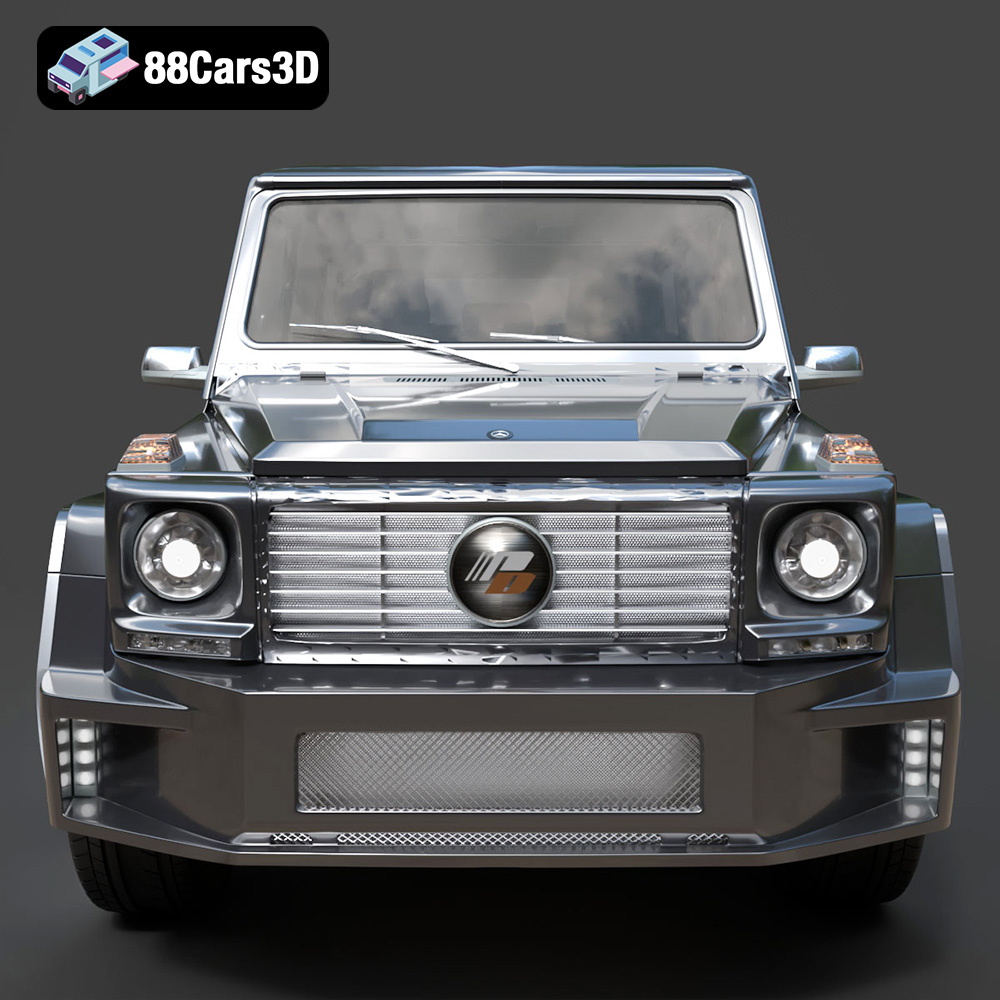
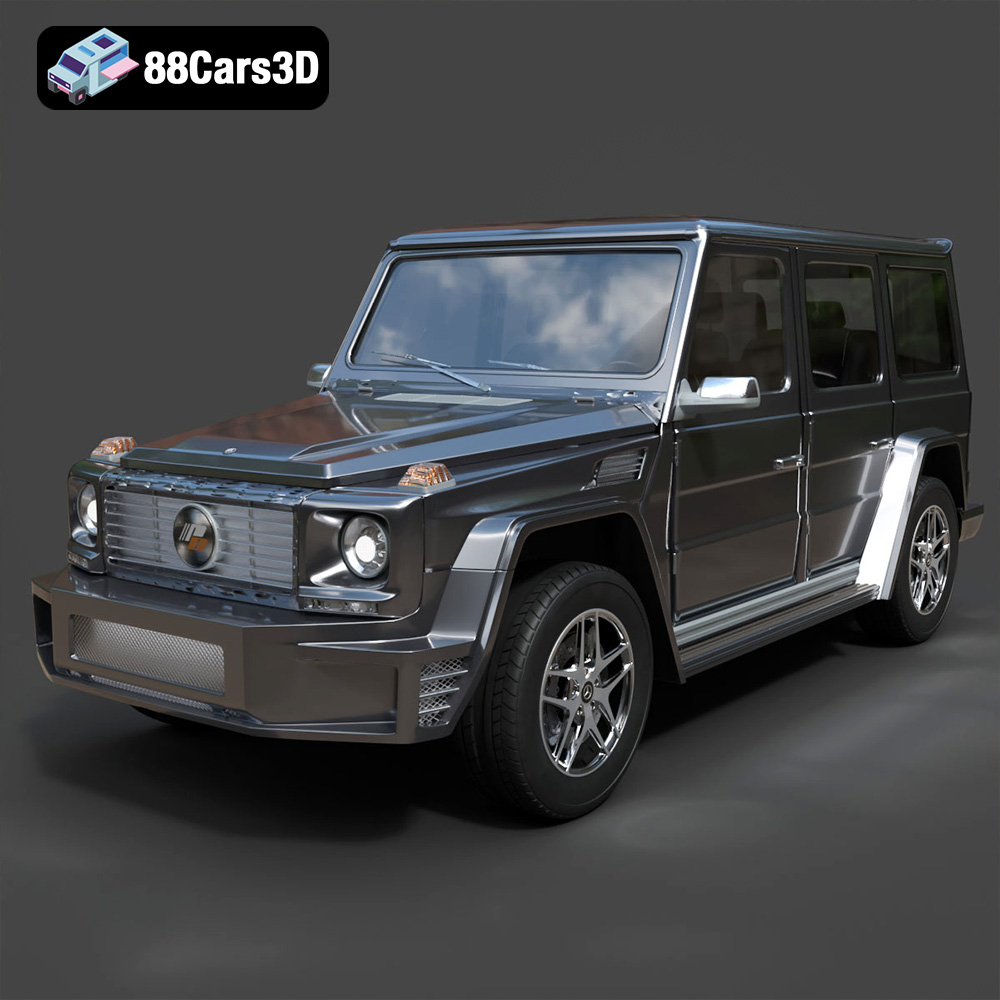
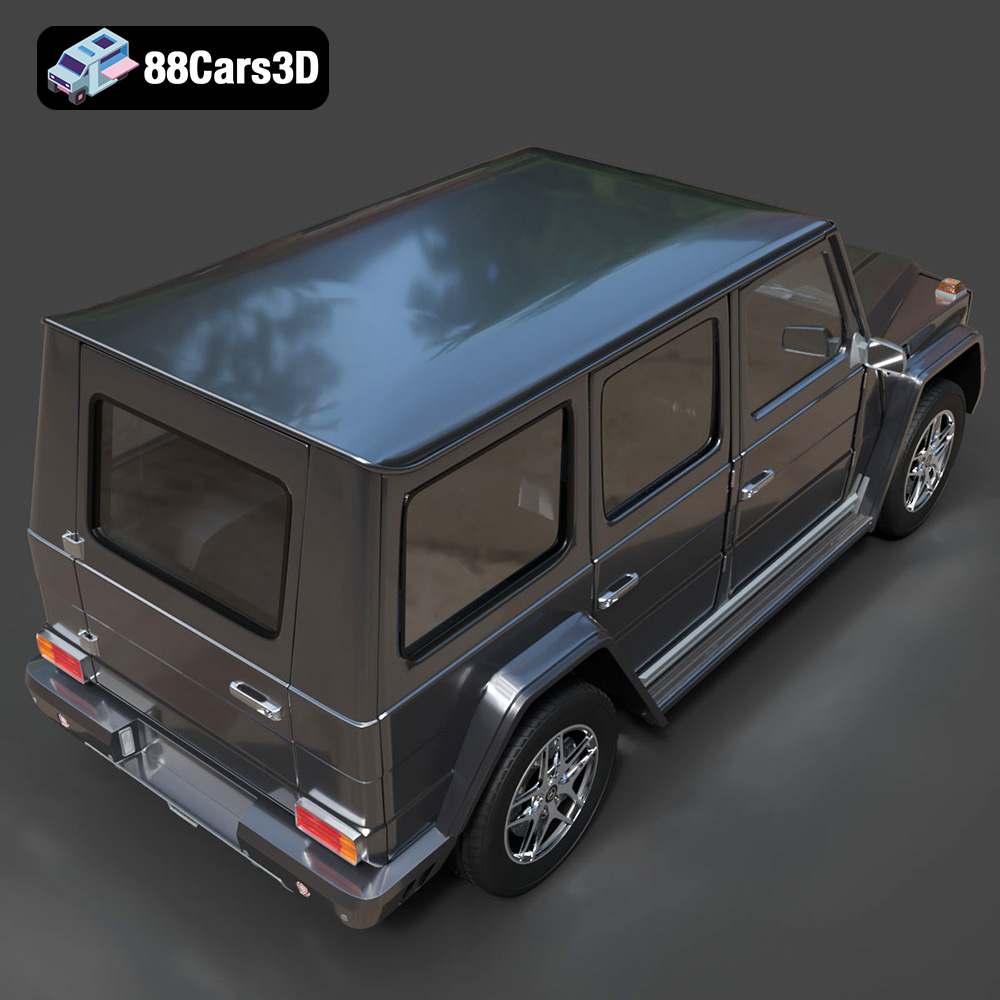
Today, we’re diving deep into the technical intricacies and creative potential offered by a prime example of such an asset: the Mercedes-Benz G Class 2013 3D Model, available at 88cars3d.com. This model represents a blend of aesthetic accuracy and technical readiness, designed to integrate flawlessly into a myriad of professional pipelines, from high-fidelity automotive rendering to real-time game environments and even tangible 3D prints.
The pursuit of realism in 3D digital content is relentless. For automotive projects, this means every curve, every panel gap, every material nuance must be perfect. A high-quality 3D car model isn’t merely about having the right shape; it’s about the underlying mesh, the efficient UV mapping, the accurate material setup, and the flexibility it offers for various applications.
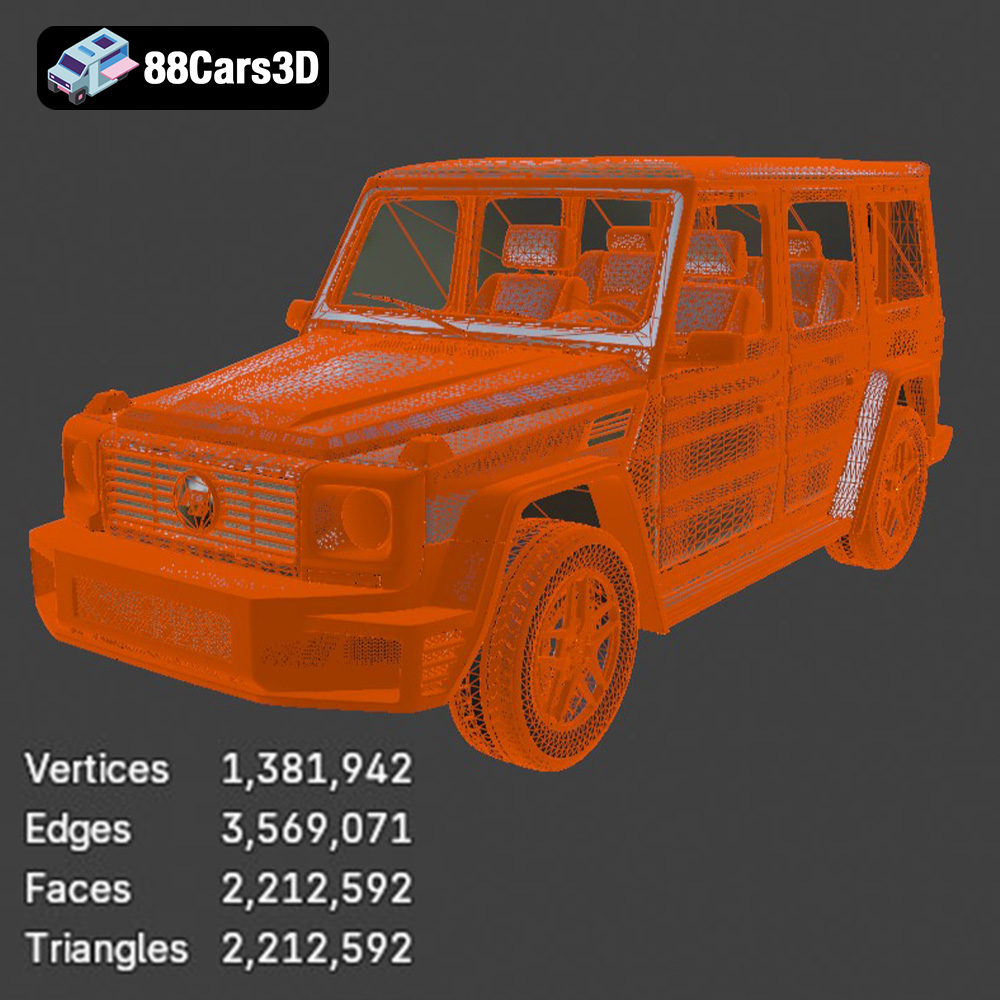
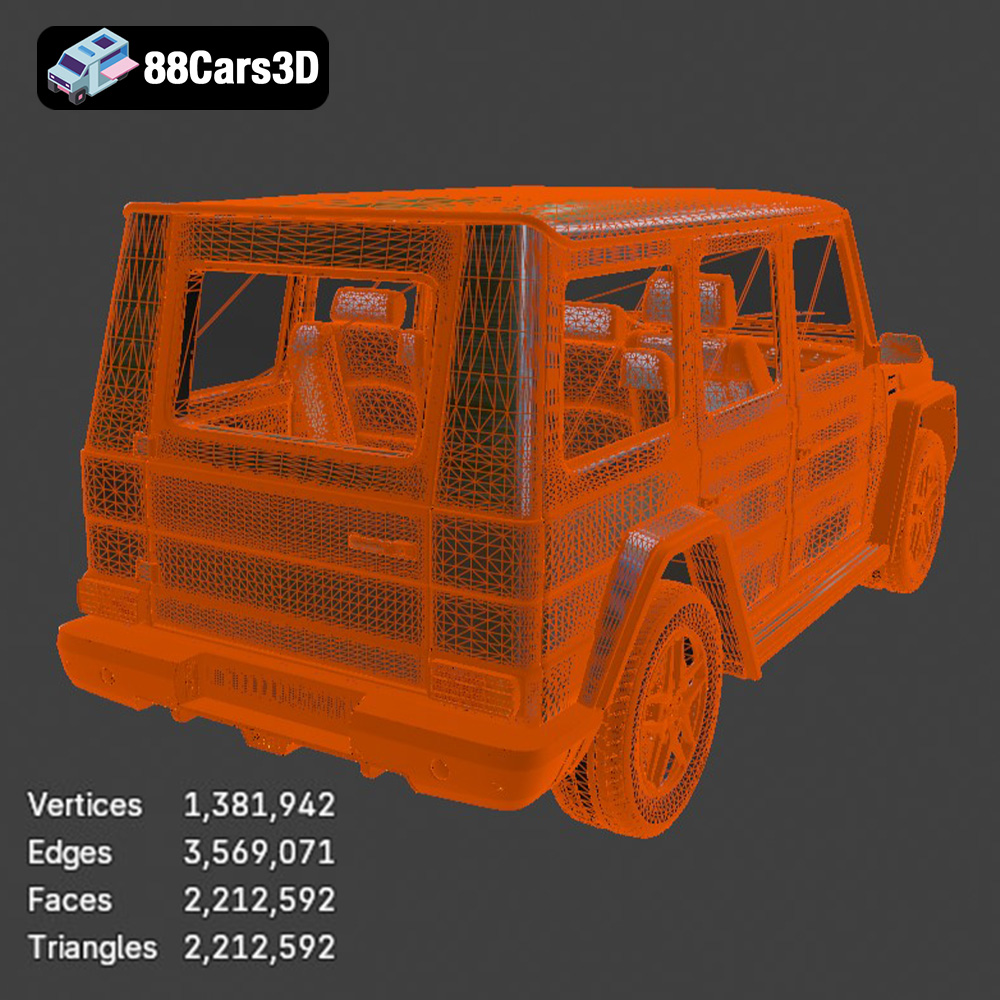
Automotive rendering demands an unparalleled level of detail and fidelity. From promotional images for luxury brands to interactive car configurators, the digital representation must be indistinguishable from its physical counterpart. A model like the Mercedes-Benz G-Class 2013 provides the clean topology necessary for subdivision surfacing, ensuring smooth curves and crisp edges even in extreme close-ups. Its real-world scale accuracy is crucial for correct lighting, reflections, and camera perspectives, allowing artists to create truly photo-realistic scenes that resonate with audiences and prospective buyers.
In game development, AR, and VR, the challenge shifts from pure visual fidelity to optimized performance without sacrificing too much detail. Game assets need to be lean, with efficient polygon counts and well-managed UVs to facilitate texture baking and material application. A professionally prepared 3D car model understands this balance, often providing optimized geometry suitable for real-time engines. It allows developers to implement features like Level of Detail (LOD) systems effectively, ensuring smooth frame rates across different platforms while still delivering a convincing visual experience, whether driving through an urban sprawl or navigating rugged terrain in a simulated G-Wagen.
The convergence of digital assets and physical manufacturing has opened new avenues. High-quality 3D models can be converted into tangible objects through 3D printing. For enthusiasts and collectors, printing a scale model of an iconic vehicle like the G-Class offers a unique way to own a piece of automotive history. This requires a model with manifold geometry, ensuring there are no open edges or non-solid parts, making it ready for slicing software and physical fabrication. The Mercedes-Benz G Class 2013 3D Model, with its “3D Printable STL” designation, highlights this capability, providing a pathway from screen to desk.
The versatility of a 3D model often hinges on its supported file formats. Each format caters to specific software, engines, or use cases, offering unique advantages. Understanding these is crucial for seamless integration into any professional workflow, and the Mercedes-Benz G Class 2013 3D Model from 88cars3d.com conveniently includes a comprehensive suite of options.
The .blend format is native to Blender, a powerful open-source 3D creation suite. When you receive a .blend file, you’re getting a fully editable Blender scene, complete with the model, materials, lighting, cameras, and even animation data if present. This format is ideal for artists who primarily work within Blender, allowing for direct modification, rendering with Cycles or Eevee, and leveraging Blender’s vast array of tools and add-ons without any import/export translation issues. For the G-Class model, this means immediate access to its clean topology and material setups for further customization or scene integration.
.fbx (Filmbox) is arguably the most widely used interchange format in the 3D industry, especially prevalent in game development. Developed by Autodesk, it supports not only mesh data but also materials, textures, animations, rigging, and cameras. It’s the go-to format for transferring assets between major 3D applications like Maya, 3ds Max, Blender, and directly into game engines like Unreal Engine and Unity. Its robust support for complex scene data makes it invaluable for models destined for real-time pipelines, ensuring that the Mercedes-Benz G-Class 2013’s separate wheels and steering components for animation, along with its PBR materials, transfer correctly.
The .obj (Wavefront Object) format is a classic, universal standard for 3D geometry. It’s highly compatible across virtually all 3D software, making it an excellent fallback or starting point when broad compatibility is needed. While .obj supports mesh data (vertices, faces, UVs), it handles materials via a separate .mtl (material) file, and it doesn’t typically store animation or rigging data. For the G-Class model, .obj offers a clean geometric representation that can be imported into any application for re-texturing or integration, prioritizing mesh integrity and simplicity.
.glb (GL Transmission Format Binary) is an increasingly important format optimized for efficient transmission and loading of 3D scenes and models in web browsers, AR, and VR applications. It’s a binary format that bundles models, textures, and animations into a single file, making it incredibly lightweight and fast to load. .glb is becoming the standard for displaying interactive 3D content on websites, allowing users to spin, zoom, and inspect models directly in their browser. For showcasing the Mercedes-Benz G-Class 2013 in an online showroom or an interactive AR experience, .glb is the perfect choice, delivering high visual quality with minimal overhead.
.stl (Stereolithography) is the most common file format for 3D printing. It represents a 3D model as a series of connected triangles, defining only the surface geometry without color, texture, or material information. The key requirement for an .stl file is “manifold geometry,” meaning the model must be completely watertight with no holes or intersecting faces, ensuring a solid object for printing. The inclusion of an .stl format for the G-Class model signifies its readiness for physical fabrication, enabling users to print detailed scale models or prototypes directly from the digital asset.
The .ply (Polygon File Format) is often used in scientific applications, particularly for storing data from 3D scanners. It can store not only vertex positions and face connectivity but also additional information like color, normal vectors, and even transparency per vertex or face. While less common for typical automotive design assets than .fbx or .max, its precision and ability to carry detailed attribute data make it valuable for specialized pipelines or for models that might originate from detailed real-world scans. For the G-Class, it provides an alternative, robust mesh format suitable for certain engineering or analysis workflows.
The .unreal format refers to engine-ready assets specifically packaged for Unreal Engine. While .fbx is the primary import format, an .unreal file implies a pre-configured asset that has been optimized, had its materials set up with Unreal’s Physically Based Rendering (PBR) system, and potentially includes collision meshes, LODs, and even basic Blueprints for immediate integration into an Unreal project. This dramatically speeds up development, as much of the tedious setup work for bringing the Mercedes-Benz G-Class 2013 into a real-time environment is already complete.
Finally, the .max format is the native file type for Autodesk 3ds Max, a long-standing industry standard for 3D modeling, animation, and rendering, particularly in architecture and product visualization. Similar to .blend for Blender, a .max file contains the entire scene, including geometry, modifiers, materials, lights, cameras, and animation data. It offers full editability and access to all of 3ds Max’s features, making it ideal for users whose primary workflow revolves around this powerful software. The inclusion of this format for the G-Class ensures that 3ds Max users can immediately open, modify, and render the model within their familiar environment, leveraging its robust rendering capabilities with engines like V-Ray or Corona.
The essence of a premium 3D model lies in its meticulous construction. The Mercedes-Benz G Class 2013 3D Model exemplifies this with thoughtful design choices that facilitate its diverse applications.
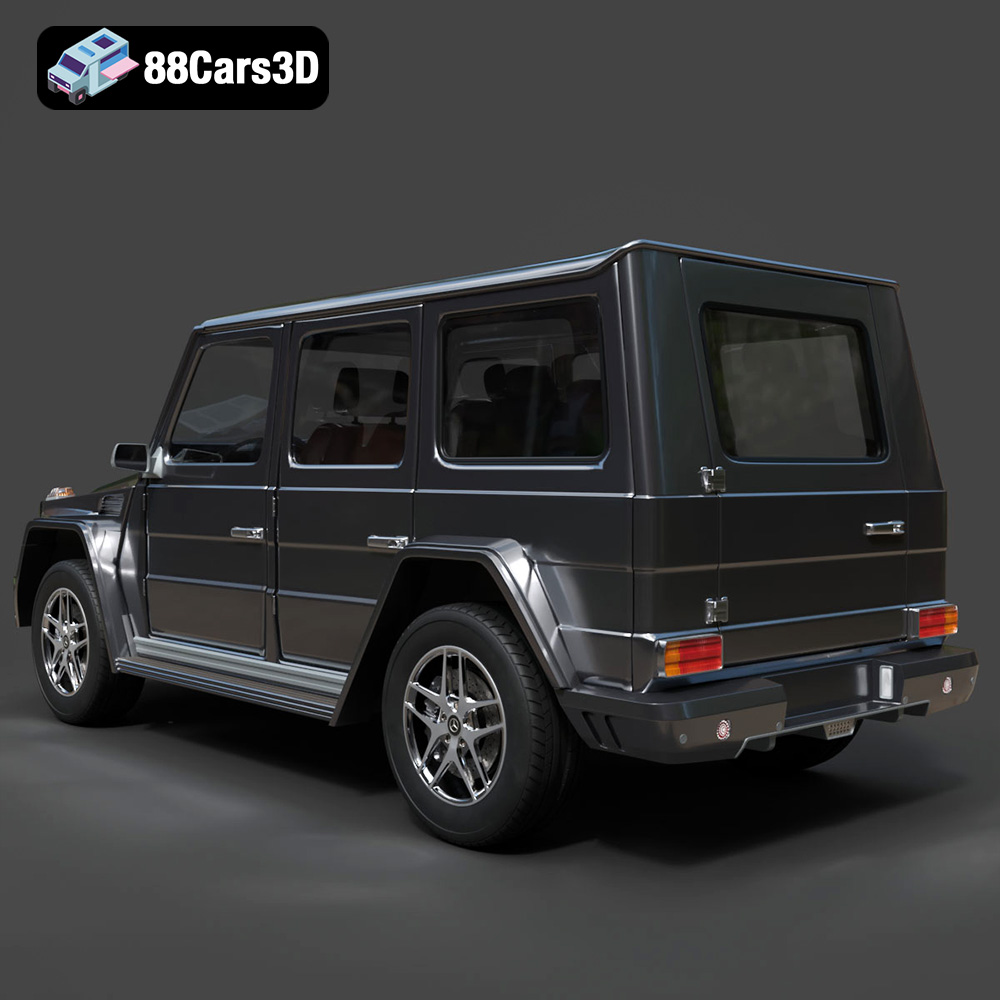
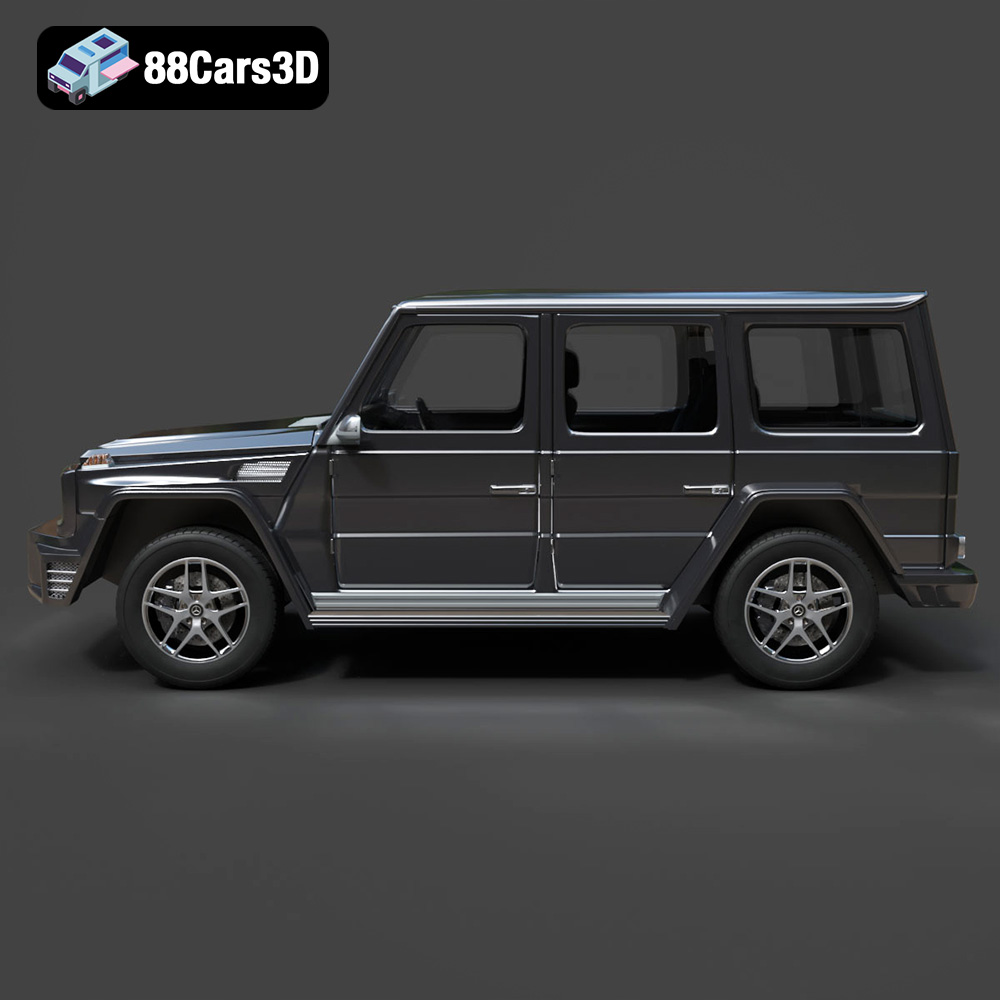
The 2013 G-Class is instantly recognizable by its distinct boxy form. This 3D model accurately captures these defining characteristics, from its squared body shape and sharp panel edges to the iconic round headlights and exposed door hinges. The technical advantage here is the “clean and well-organized mesh structure.” This means the polygon flow follows the natural contours of the vehicle, facilitating smooth subdivision in rendering packages for ultra-high fidelity, or allowing for efficient polygon reduction for game-ready assets without introducing unwanted artifacts. Details like the bold front grille, rear-mounted spare wheel housing, side steps, and roof rail detailing are all present, built with geometry that respects the real-world scale and design intent. The large alloy wheels with off-road tire geometry are separate components, crucial for realistic animation and customization.
While the exterior often gets the spotlight, a detailed interior significantly enhances a model’s utility, especially for close-up renders, VR experiences, or in-game cockpits. The G-Class model includes a luxury dashboard with an instrument cluster, a multifunction steering wheel, a center console with infotainment layout, and detailed seat geometry with stitching. The key here is “optimized geometry for real-time engines and high-quality renders.” This implies a balance: enough detail for convincing close-ups, but also an efficient mesh that won’t bog down real-time performance. Good interior topology also makes it easier to apply PBR materials, ensuring realistic reflections and light scattering on leather, plastics, and metal surfaces.
For any vehicle 3D model destined for animation or interactive simulations, proper rigging is fundamental. The G-Class model boasts “separate wheels and steering components for animation” and “proper pivot setup for steering and wheel rotation.” This seemingly simple detail is critical. Correct pivot points ensure that wheels rotate around their true centers and steering components articulate realistically. This readiness for animation extends to the potential for custom suspension rigging, allowing for dynamic off-road driving simulations or cinematic sequences where the vehicle reacts authentically to terrain.
The versatility of the Mercedes-Benz G Class 2013 3D Model shines when integrated into established professional workflows. Its multiple file formats ensure a smooth transition, regardless of your preferred software or engine.
For high-end automotive rendering, 3ds Max combined with V-Ray or Corona Renderer is a powerful duo. Artists can import the included .max file or an .fbx into 3ds Max. The clean topology allows for easy application of modifiers like TurboSmooth for extreme detail. Setting up PBR materials for paint, chrome, glass, and tires is straightforward, leveraging the model’s well-organized UVs. Scene setup involves carefully crafted HDRIs for realistic environmental reflections, precise studio lighting, and physically accurate camera settings to achieve dealership-quality promotional visuals. Post-processing in tools like Photoshop or Nuke further refines the render, adding cinematic effects or compositing the vehicle into real-world backplates. The G-Class model, with its accurate proportions, serves as a perfect base for creating stunning marketing assets for luxury automotive campaigns.
Game developers will primarily utilize the .fbx or the specialized .unreal format for integration into Unreal Engine or Unity. The process typically involves importing the model, setting up materials using the engine’s PBR workflow, and applying textures (albedo, normal, roughness, metallic, ambient occlusion). For the G-Class, having pre-configured Unreal assets streamlines this. Developers would then add collision meshes, create multiple Levels of Detail (LODs) to optimize performance based on distance, and implement vehicle physics systems. The G-Class’s separate wheel and steering geometry are crucial for setting up realistic driving mechanics and animations within the engine, whether for an open-world driving game, an off-road simulator, or premium SUV environments. Its optimized polygon flow ensures it performs well without being a drain on system resources.
Blender artists benefit directly from the included .blend file. This allows them to open the model immediately, with all materials and basic setup intact. They can then customize the model, add off-road accessories, modify wheel styles, or even adjust suspension height to achieve a rugged stance. Blender’s Cycles and Eevee renderers are capable of producing high-quality visuals, and the G-Class’s clean mesh makes it a joy to work with. For independent artists, this accessibility means they can focus on creative scene composition, lighting, and animation without having to spend valuable time on complex model cleanup or format conversions.
The designation of “3D Printable STL” highlights a significant value proposition of the Mercedes-Benz G Class 2013 3D Model: its ability to transcend the digital realm and become a physical collectible.
When preparing a 3D model for printing, the .stl format is key. The model must be “manifold,” meaning it represents a solid object with no gaps or holes in its surface. This G-Class model is designed with this in mind, ensuring a watertight mesh suitable for slicing software. Scaling is also a critical consideration. The product recommends scales like 1:32, 1:24, 1:18, or 1:14, which are common for miniature vehicles. The clean geometry of the G-Class model ensures that details like the grille, headlights, and body lines are preserved even at smaller scales, a testament to its initial modeling quality.
The provided 3D print settings offer invaluable guidance:
Post-processing, including sanding, priming, and painting (gloss or matte finish, chrome detailing), allows for a truly professional and customized physical model, reflecting the luxury of the real G-Class.
A high-quality 3D asset is not just a static representation; it’s a foundation for endless creative possibilities and real-world impact.
The Mercedes-Benz G Class 2013 3D Model is highly customizable. Artists can easily change body colors and trim accents to match specific branding or personal preferences. Adding off-road accessories like roof racks, winches, or specialized tires transforms its aesthetic from a sleek urban luxury SUV to a rugged expedition vehicle. Modifying wheel styles and tire types, or even adjusting the suspension height, can dramatically alter its visual character. This flexibility makes it invaluable for various projects – from creating an elegant visualization for a dealership to designing a hardcore off-road simulator. Configurability of lighting for different environments (city, mountain, desert) further enhances its versatility in scene creation.
The demand for exceptional 3D car models continues to grow across industries, driving the need for assets that are not only visually accurate but also technically robust and versatile. The Mercedes-Benz G Class 2013 3D Model stands as an exemplary product, meticulously crafted to meet these professional standards. Its faithful representation of an automotive icon, coupled with clean geometry, animation readiness, and support for a comprehensive range of file formats including .blend, .fbx, .obj, .glb, .stl, .ply, .unreal, and .max, makes it an indispensable tool for artists and developers.
Whether your goal is to produce breathtaking automotive renders, integrate a high-performance vehicle into a game, create an immersive AR/VR experience, or even bring the digital model to life through 3D printing, this G-Class model offers the quality and flexibility needed to elevate your project. It embodies the commitment to excellence that 88cars3d.com provides to its users, offering assets that truly empower creativity and innovation. Explore this exceptional model and more at 88cars3d.com to unlock the full potential of your next digital venture.
The Mercedes-Benz G Class 2013 3D Model is a high-detail digital recreation of the iconic luxury off-road SUV known for its boxy design, rugged capability, and premium craftsmanship. The 2013 G-Class blends military-inspired durability with refined interior comfort, making it a timeless symbol of performance and prestige. This 3D model accurately represents the distinctive squared body shape, bold front grille, round headlights, exposed door hinges, roof rails, spare wheel rear mount, and elevated ground clearance. Designed with clean topology and real-world scale accuracy, it is ideal for rendering, animation, automotive visualization, game development, and AR/VR experiences. Perfect for urban luxury scenes, off-road environments, desert simulations, cinematic projects, and SUV driving games. Convertible to .stl format for collectible SUV scale models and display miniatures.
$60