Get 50% OFF All Premium 3D & STL Models!

Few vehicles embody an era and culture quite like the Volkswagen Transporter T1, affectionately known as the “Microbus” or “Split Window Bus.” More than just a mode of transport, it became a symbol of freedom, adventure, and counter-culture, its distinctive silhouette instantly recognizable around the globe. For 3D artists, game developers, automotive enthusiasts, and visualization experts, bringing such an iconic piece of history into the digital realm offers unparalleled creative opportunities. Whether you’re crafting a nostalgic rendering, populating a retro game world, or even fabricating a physical collectible, the demand for accurate, high-quality 3D car models of classics like the T1 is ever-present.
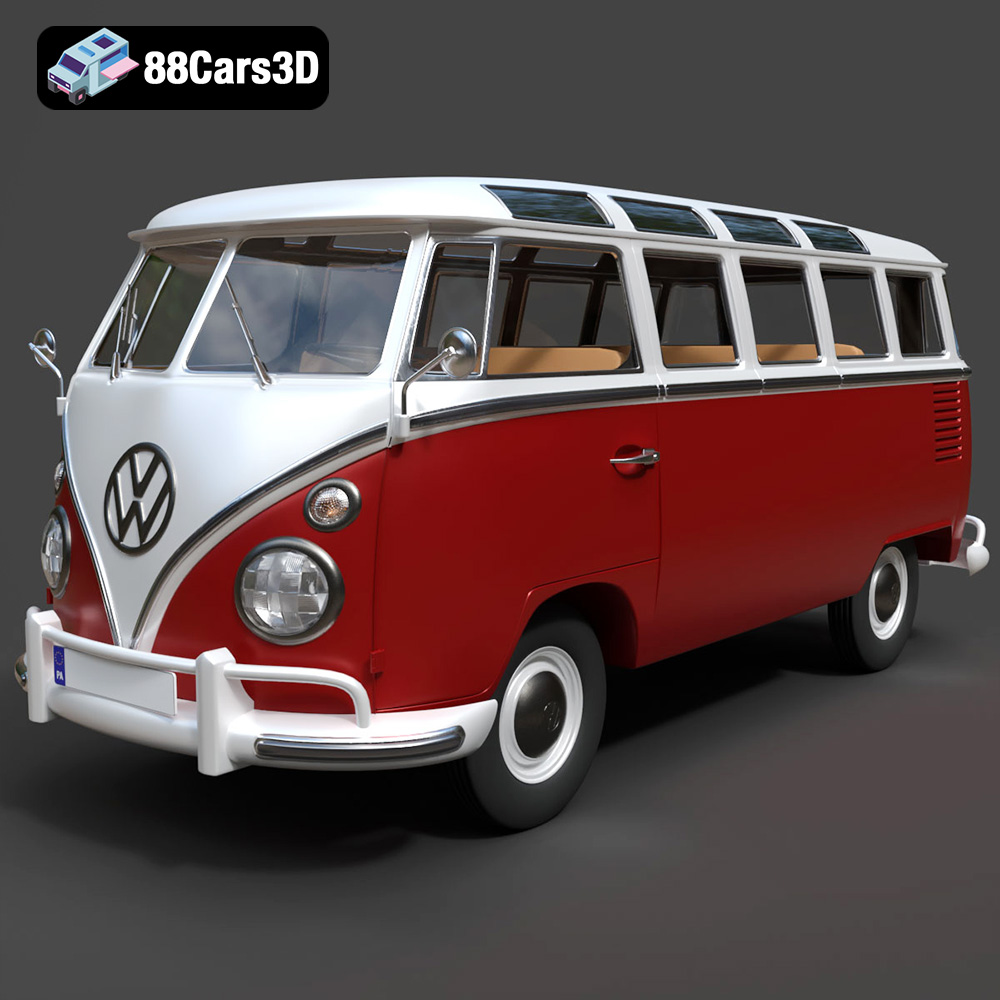
Today, we delve into the meticulous craftsmanship of a particular digital recreation: the Volkswagen Transporter T1 1950 3D Model. This exceptional asset, available on 88cars3d.com, is not merely a visual replica but a technically robust foundation designed to integrate seamlessly into a myriad of professional workflows. From its perfectly rounded body shape and signature split front windshield to its detailed interior and optimized geometry, this model stands as a testament to the blend of artistry and engineering required in premium 3D asset development. Let’s explore how this digital icon can elevate your projects, understanding its technical intricacies, and how it caters to diverse creative demands, including 3D printing.
The 1950 Volkswagen Transporter T1 holds a special place in automotive history. As the first-generation Type 2 van, it pioneered the concept of a multi-purpose passenger and cargo vehicle, setting the stage for decades of utility and style. Its minimalist design, rear-mounted engine, and unparalleled versatility made it a global phenomenon, resonating with everyone from small business owners to globe-trotting adventurers. Digitally, this translates into a highly sought-after asset for capturing period accuracy and injecting character into any scene.
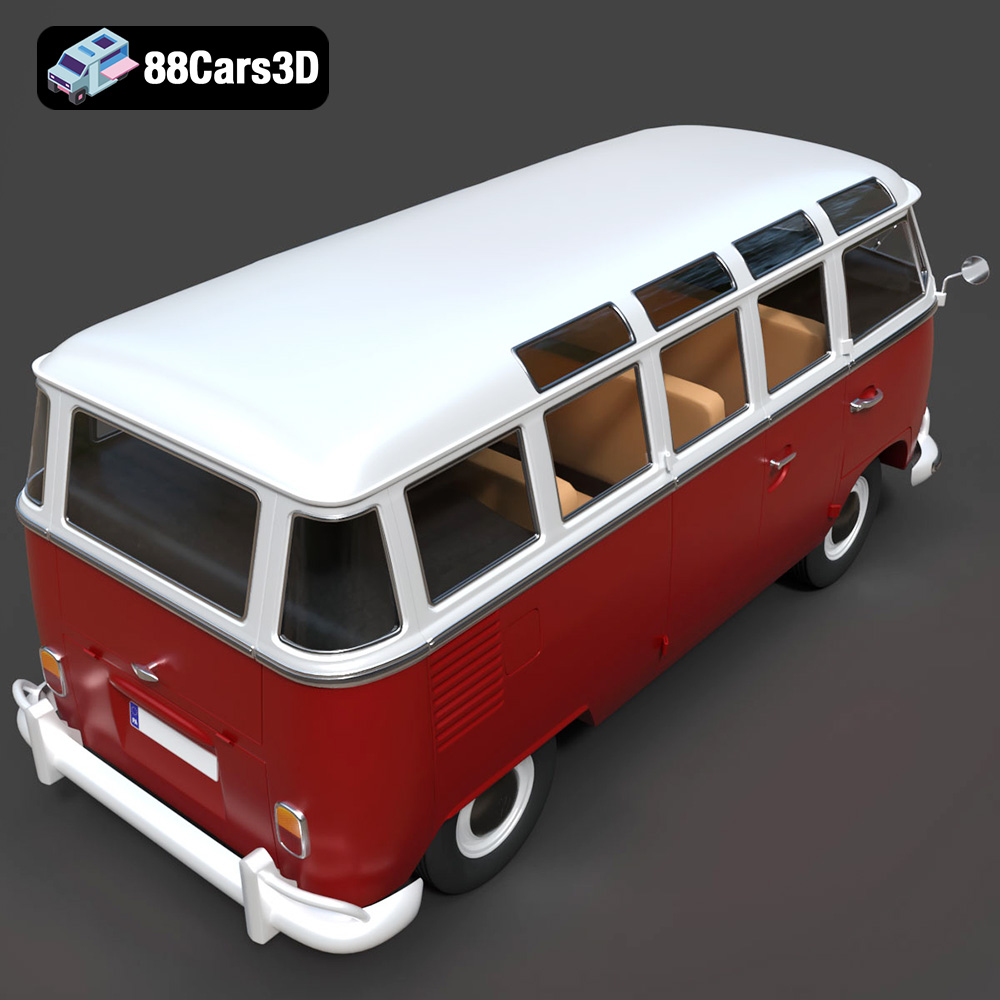
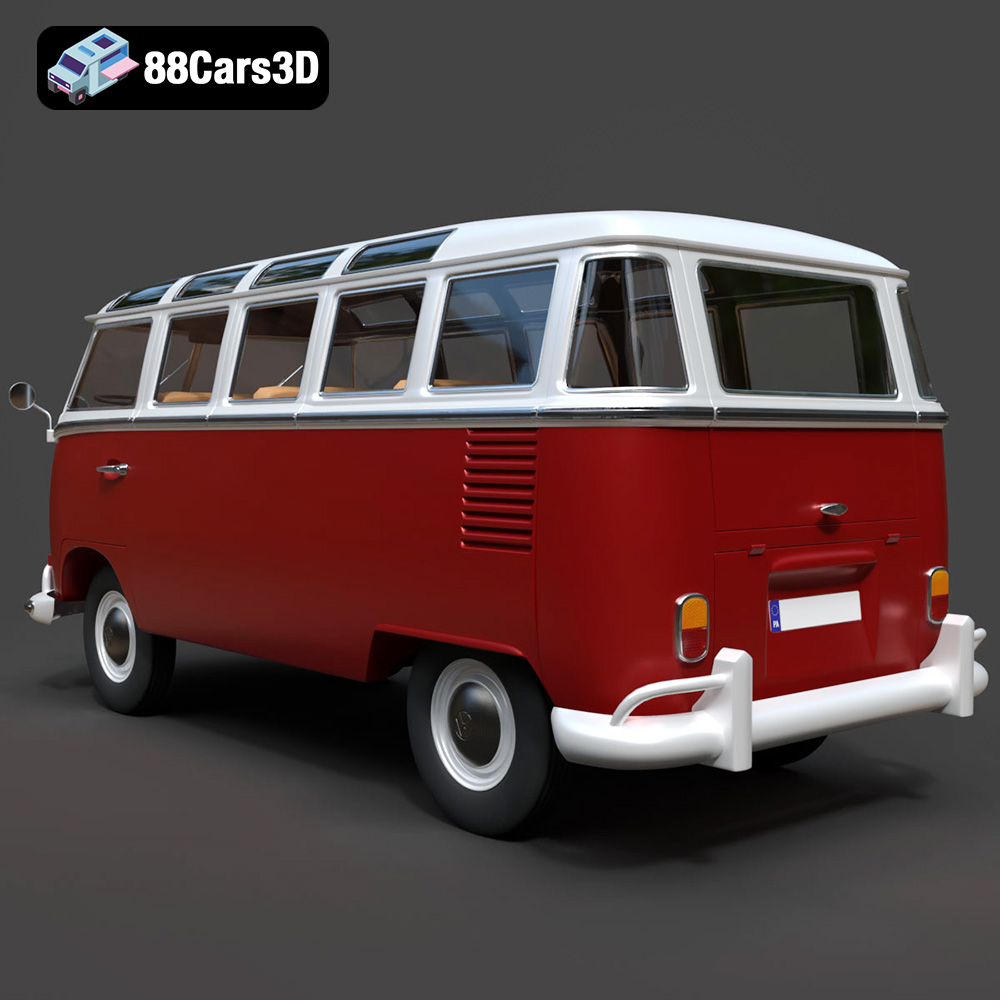
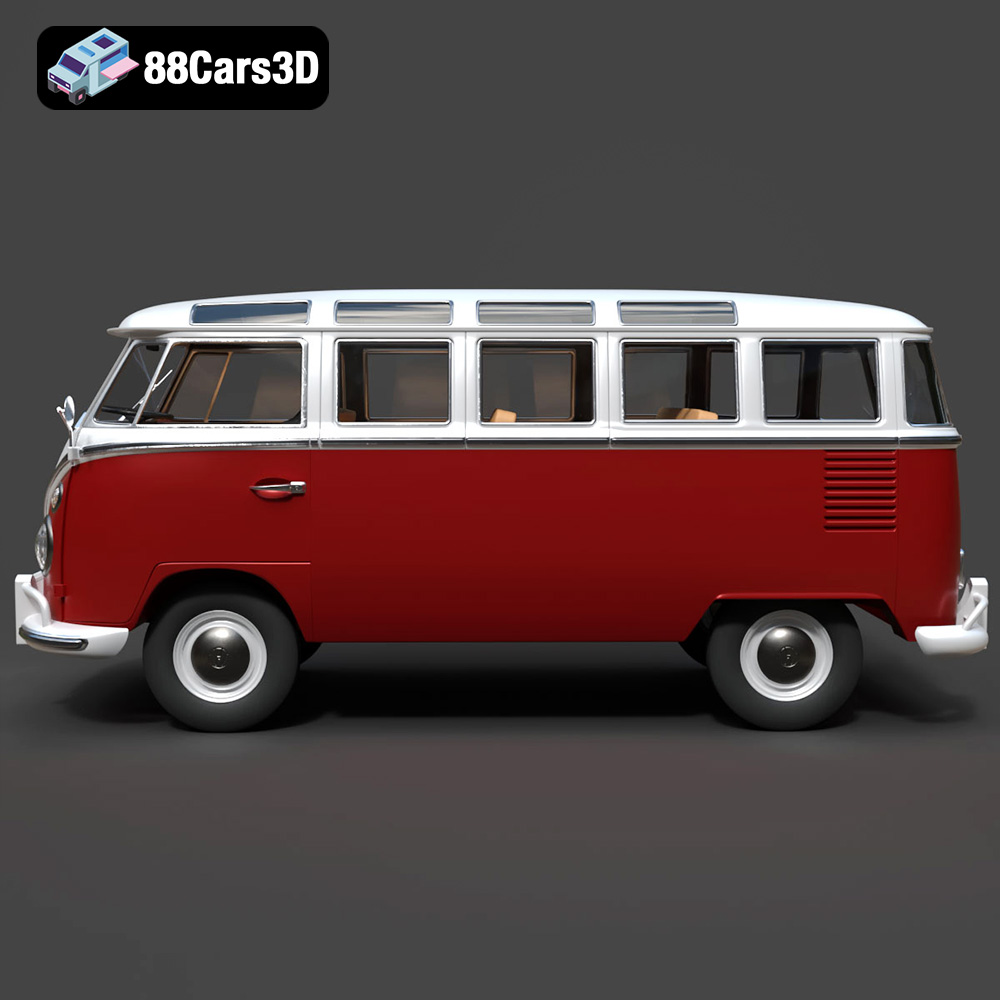
The Volkswagen Transporter T1 1950 3D Model meticulously recreates every iconic feature. The model’s exterior boasts accurate 1950 Volkswagen T1 body proportions, ensuring that its instantly recognizable form is faithfully preserved. The iconic split front windshield design, a hallmark of early T1s, is rendered with precision, contributing to the model’s historical authenticity. Further details like the detailed front emblem, the distinctive V-shaped body panel styling, realistic round headlights, and chrome bumpers elevate the visual fidelity. Even the wheels, hubcaps, and classic tire profile are carefully modeled, down to the subtle curve and tread patterns, vital for close-up renders and animations.
A key technical advantage for animators and interactive designers is the model’s construction. Separate doors, hood panels, and wheels are structured with proper hierarchy, allowing for easy animation workflows. This means the model is production-ready for scenarios requiring opening doors, spinning wheels, or even intricate crash simulations, without the need for extensive rigging from scratch.
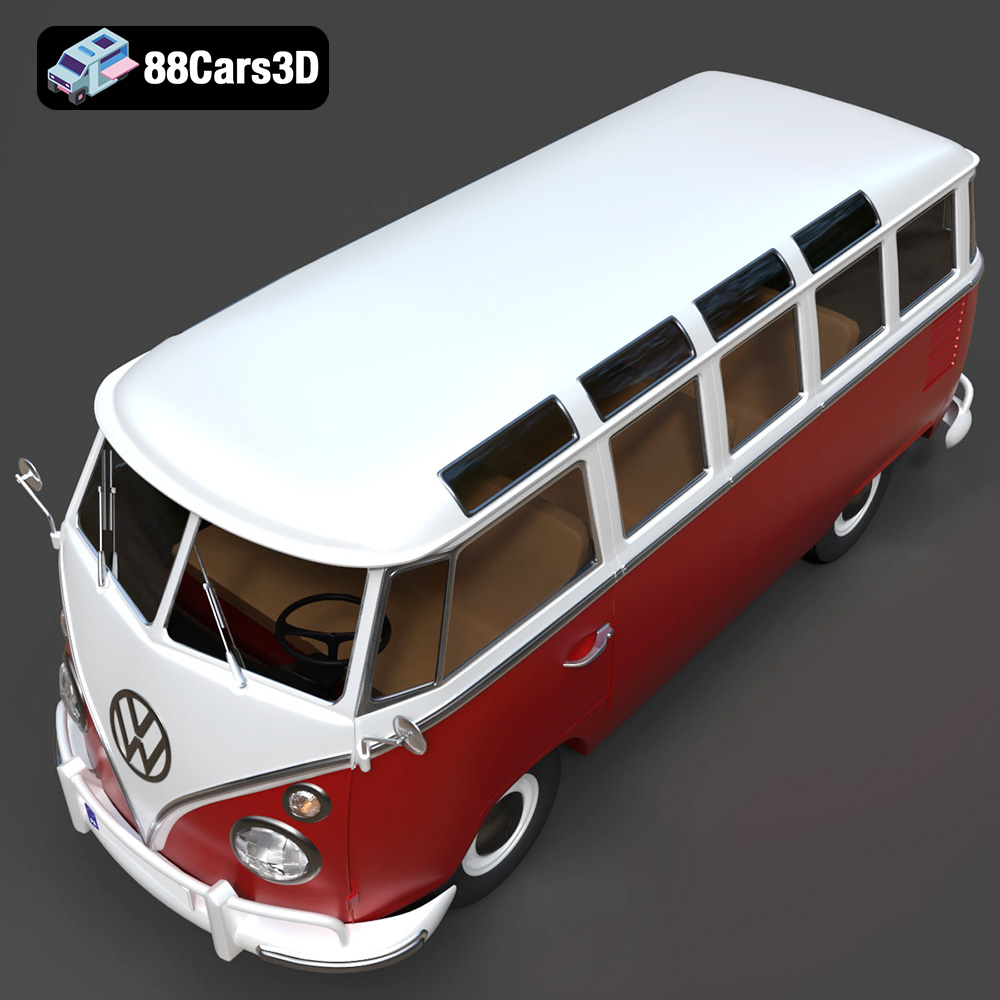
While the exterior of the T1 is its most famous aspect, the interior of this 3D model doesn’t disappoint. It captures the minimalist dashboard layout consistent with the 1950 design, reflecting the utilitarian ethos of the original vehicle. The steering wheel and simple gauge cluster are present, providing enough detail for interior shots without bogging down performance. The front bench seat and rear cargo/passenger space are accurately represented, providing context for the vehicle’s function and ample room for customization. Interior panels and structural framing representation add to the realism, ensuring that even from inside the cabin, the model holds up to scrutiny. The optimized interior mesh is suitable for both real-time applications like games and AR/VR, and high-quality renders, demonstrating a thoughtful balance between detail and performance.
Navigating the world of 3D content creation requires a solid grasp of various file formats, each tailored for specific uses and software environments. The Volkswagen Transporter T1 1950 3D Model from 88cars3d.com comes equipped with a comprehensive suite of formats, ensuring maximum compatibility and utility across your projects. Understanding these formats is crucial for optimizing your workflow, whether you’re focused on rendering, game development, 3D printing, or immersive experiences.
The .blend format is the native file type for Blender, the powerful open-source 3D creation suite. When you acquire a .blend file, you’re getting a fully editable Blender scene. This includes not only the mesh geometry but also materials, textures, lighting setups, cameras, animation data, and even modifiers. For users entrenched in the Blender ecosystem, a .blend file offers the most flexibility for customization. You can easily modify the model’s topology, adjust materials, or re-pose separate components like doors and wheels. This format is ideal for artists who want to delve deep into the model’s construction or integrate it into complex Blender projects without any loss of data during import/export.
.fbx (Filmbox) is an industry-standard format developed by Autodesk, renowned for its ability to store entire 3D scenes, including models, materials, textures, animations, and camera data. It is widely supported across major 3D software like 3ds Max, Maya, Cinema 4D, and critically, game engines like Unreal Engine and Unity. For game development and professional rendering pipelines, .fbx is often the go-to choice due to its robustness in transferring complex data while maintaining scene hierarchy. The .obj (Wavefront OBJ) format, while older, remains incredibly universal. It primarily stores geometry (vertices, normals, UV coordinates) and can reference external material (.mtl) files. While it doesn’t support animation or rigging directly, its simplicity makes it excellent for clean mesh transfer between almost any 3D software. It’s a reliable fallback for static model exchange and is generally lightweight.
.glb (GL Transmission Format Binary) is quickly becoming the standard for 3D models on the web, in AR (Augmented Reality), and VR (Virtual Reality) applications. It’s a compact, single-file format that includes geometry, materials, textures, and animation, making it highly efficient for streaming and quick loading in browsers and mobile apps. Its optimization for real-time display makes the T1 model in .glb format perfect for interactive web showcases or AR experiences where performance is paramount. The .unreal format, often referring to a cooked asset or an imported asset specifically prepared for Unreal Engine, signifies an engine-ready asset. This format has been optimized for Unreal’s rendering pipeline, potentially including specific material setups, LODs (Levels of Detail), and collision meshes, ensuring peak performance and visual quality within real-time environments.
The .stl (Stereolithography) format is the cornerstone of 3D printing. It represents a 3D model as a series of connected triangles, defining its surface geometry without color or texture information. For the T1 model, providing it in .stl ensures direct compatibility with 3D slicer software, making it instantly suitable for fabricating collectible scale models or miniature builds. This format prioritizes watertight meshes, crucial for successful physical output. .ply (Polygon File Format) is another precision mesh format often used for storing 3D data from 3D scanners or for applications requiring high accuracy, like CAD or scientific analysis. It can store not just geometry but also properties like color, transparency, and even texture coordinates for each vertex. While less common for direct game asset use, it offers a robust solution for highly detailed, precise geometric data.
Finally, the .max format is the native file type for Autodesk 3ds Max, a leading software for 3D modeling, animation, and rendering. Similar to .blend, a .max file contains the complete scene, including models, modifiers, materials, lighting, and animation. For professionals working within a 3ds Max pipeline, this format offers the highest level of editability and ensures that all scene components are preserved as intended by the model creator. It’s invaluable for those who wish to integrate the T1 model into existing 3ds Max projects, apply advanced rendering techniques with V-Ray or Corona, or build complex animations around the vehicle.
This extensive range of formats demonstrates the versatility and forward-thinking design of the Volkswagen Transporter T1 1950 3D Model, ensuring it’s a valuable addition to any digital artist’s toolkit, regardless of their preferred software or end-use application.
The true value of a high-quality 3D model lies in its seamless integration into diverse professional pipelines. The Volkswagen Transporter T1 1950 3D Model is engineered for this purpose, offering robust technical advantages that streamline creative processes across various industries.
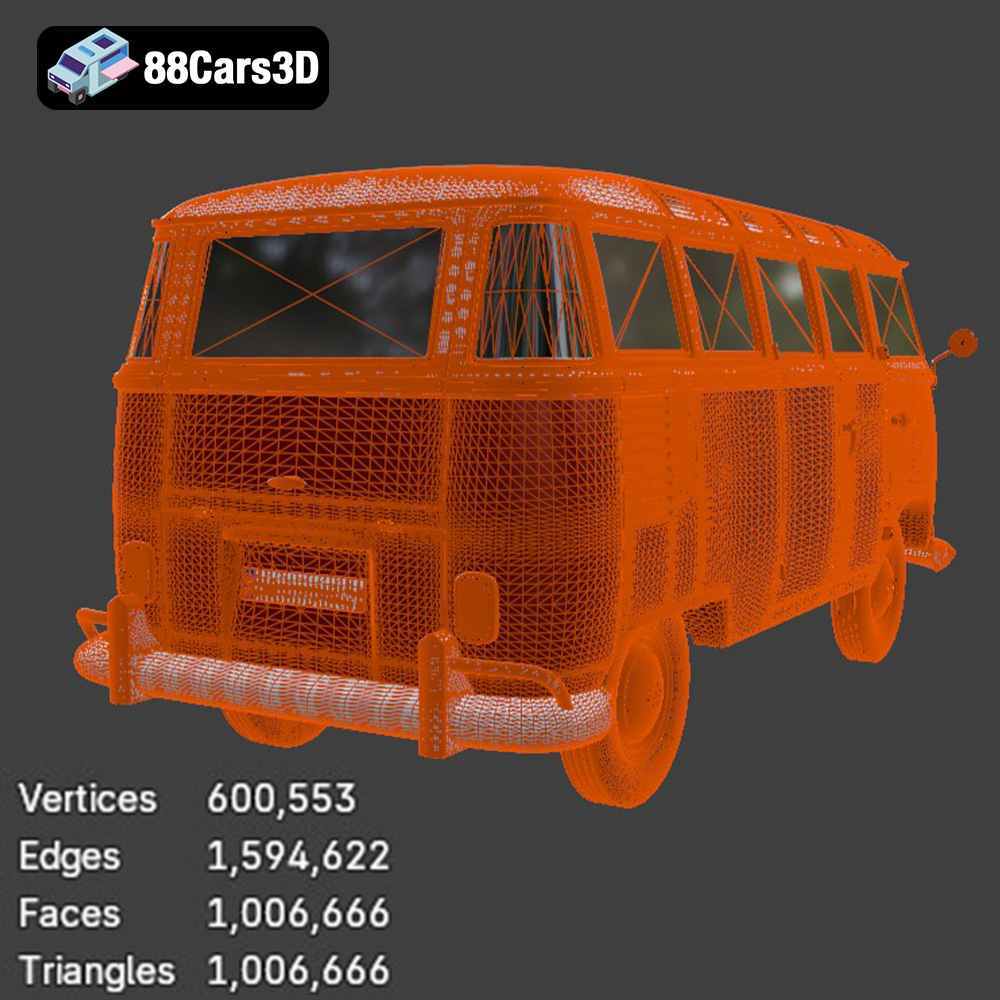
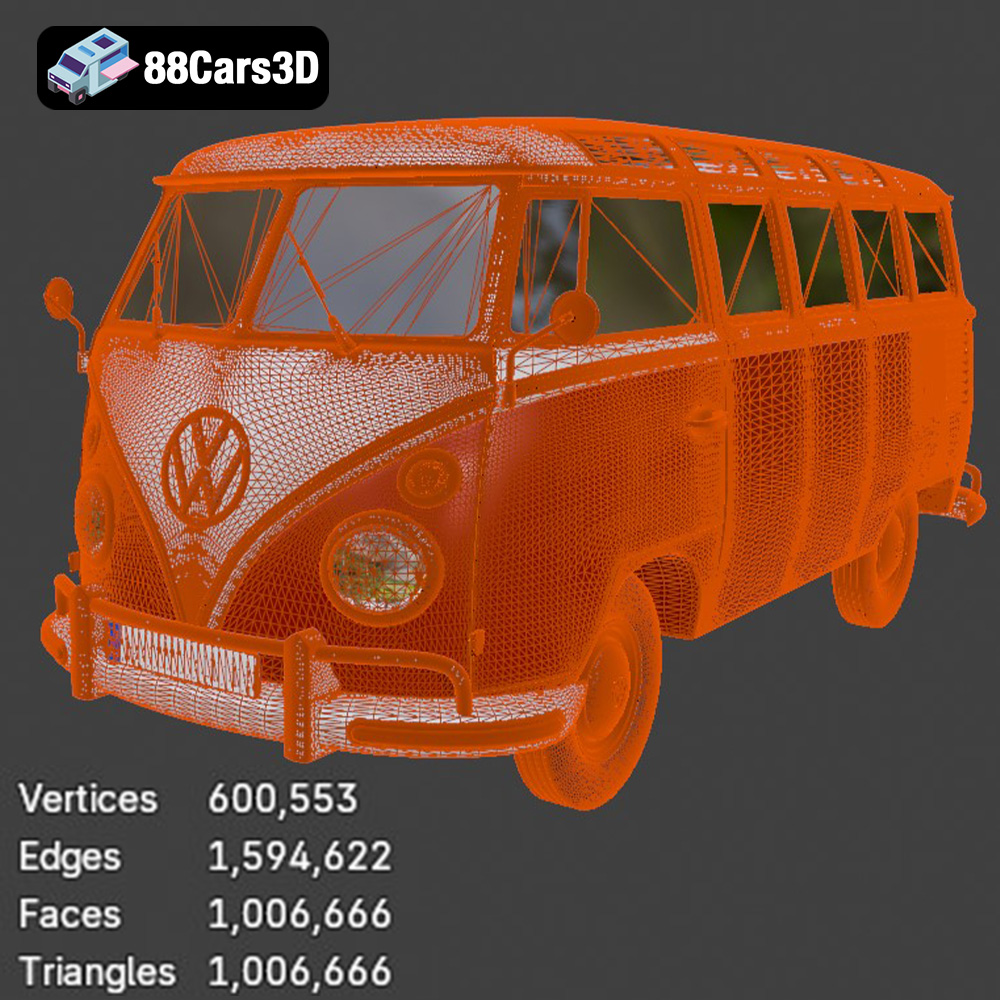
For artists focused on photorealistic automotive rendering, the T1 model is an ideal candidate. Its clean quad-based geometry is essential for smooth subdivision surfaces, ensuring flawless reflections and refractions under any lighting condition. In 3ds Max, artists can easily import the .max or .fbx version, apply advanced PBR (Physically Based Rendering) materials using render engines like V-Ray or Corona Renderer, and set up intricate studio lighting. The real-world scale accuracy of the model ensures that it fits perfectly into architectural visualizations or realistic street scenes without needing scale adjustments. Artists can leverage its proper hierarchy for animating car doors opening, wheels rotating, or even creating complex camera fly-throughs, making it perfect for vintage automotive presentations, nostalgic marketing visuals, or high-fidelity studio renders.
In the demanding world of game development, performance and visual quality are paramount. The T1 model’s optimized polygon count ensures it can be integrated into game engines like Unreal Engine and Unity without causing significant performance bottlenecks. The availability of .fbx and .unreal formats is crucial here. Developers can import the model, apply game-ready materials, set up LODs (Levels of Detail) for efficient rendering at varying distances, and configure collision meshes for realistic physics interactions. This makes it perfect for retro open-world games, period-based simulations, or adding authentic atmosphere to lifestyle environments. Its clean topology and optimized interior mesh also lend themselves well to AR/VR applications, enabling virtual classic car exhibitions or interactive retro showcases where immersion and smooth performance are key.
Blender users will find the native .blend file format incredibly accommodating. This allows for full access to the model’s structure, materials, and any included scene data, providing maximum flexibility for modification and animation. Indie creators can easily customize the T1 with classic two-tone paint schemes, add surfboards, roof racks, or even convert it into a camper for unique storytelling. The organized mesh and hierarchy simplify the process of rigging for complex animations, or simply adjusting lighting setups for beach, urban, or studio environments within Blender’s powerful Cycles or Eevee renderers. The model’s quality means even a small team can produce high-end visuals and animations without starting from scratch.
Beyond digital displays, the Volkswagen Transporter T1 1950 3D Model offers a unique pathway to physical manifestation through 3D printing. The inclusion of the .stl format specifically caters to this application, allowing enthusiasts and collectors to bring this cultural icon to life as a tangible scale model.
The .stl file is a triangular mesh representation optimized for slicing software, the intermediary step before printing. The recommended scales (1:24, 1:32, 1:18, 1:12) offer flexibility depending on desired detail and printer capabilities. For successful printing, careful attention to slicer settings is crucial. A layer height of 0.12–0.18 mm will yield a good balance between detail and print time, capturing the T1’s smooth curves. A wall thickness of 2–3 mm ensures the model’s structural integrity, preventing fragility. Infill settings between 15–25% provide adequate internal support without excessive material consumption. Supports will be required for overhangs such as bumpers, mirrors, and wheel arches to prevent drooping during printing. A recommended print orientation suggests printing the body upside-down for a smoother roof surface, minimizing visible layer lines on prominent areas. Printing wheels separately allows for better detailing and easier assembly post-print, achieving a higher level of fidelity.
Once printed, the physical T1 model offers a canvas for further customization and artistry. Post-processing steps like sanding are essential to smooth out layer lines and achieve a professional finish. Applying a primer prepares the surface for paint, ensuring vibrant and even color application. The classic two-tone paint finish, a signature of the T1, can then be meticulously applied, bringing the model to life with historical accuracy. Optional clear coats can add gloss and protect the paintwork. Beyond paint, enthusiasts can add custom vintage decals and branding to personalize their models, or even integrate miniature accessories like surfboards or luggage to create a vibrant diorama. This hands-on process transforms a digital file into a unique, collectible physical asset, showcasing the full potential of 3D car models in both virtual and tangible forms.
The utility of the Volkswagen Transporter T1 1950 3D Model extends far beyond individual artistic endeavors. Its comprehensive design and diverse file formats make it an invaluable asset across multiple professional and creative sectors.
The optimized interior mesh and real-time compatibility (especially with .glb and .unreal formats) mean this model is perfectly suited for immersive AR/VR applications. Imagine a virtual classic car exhibition where users can walk around, examine, and even “enter” the 1950 T1, experiencing its minimalist design up close. For educational platforms or historical documentaries, the model can serve in interactive historical automotive demonstrations or detailed educational presentations, providing accurate visual context for post-war industrial design and cultural shifts. Simulation and training scenarios, though perhaps less obvious for a vintage van, could even utilize this model for historical traffic recreation or environmental studies within a period context.
For marketing agencies and advertisers, the T1 is a powerful nostalgic tool. This 3D model is ideal for vintage marketing visuals, retro city scenes, and travel-themed environments. It can anchor a campaign, evoking feelings of nostalgia, adventure, and authenticity. Creating compelling visuals for product launches, historical brand stories, or even general lifestyle promotions becomes effortless with such a ready-to-use, high-fidelity asset. Furthermore, for those specializing in collectible vehicle showcases, the digital model offers a versatile platform for pre-visualization, catalog imagery, and even interactive digital displays before a physical collection is assembled. The possibilities for creative expression and commercial application are truly vast, underscored by the model’s detailed features and robust technical specifications.
The Volkswagen Transporter T1 1950 3D Model is more than just a digital replica; it’s a meticulously crafted asset that embodies the spirit of an icon and provides immense value to creators across all disciplines. Its accurate historical detailing, clean topology, and versatile file formats—including .blend, .fbx, .obj, .glb, .stl, .ply, .unreal, and .max—make it an indispensable tool for anyone involved in automotive rendering, game development, AR/VR experiences, or 3D printing.
Whether you’re aiming for photorealistic renders that transport viewers back to the 1950s, building immersive game worlds, or bringing a tangible piece of automotive history to your desk, this model delivers on all fronts. Its optimized design ensures performance without sacrificing detail, while the included file formats provide unparalleled flexibility for integration into your preferred software and pipeline. For professionals seeking premium 3D car models that stand up to the most rigorous demands, exploring the offerings on 88cars3d.com is a must. The Volkswagen Transporter T1 1950 3D Model is a testament to quality and a gateway to countless creative possibilities. Don’t miss the opportunity to integrate this legendary vehicle into your next project and bring its timeless charm to life.
The Volkswagen Transporter T1 1950 3D Model is a detailed digital recreation of the iconic first-generation Type 2 van produced by Volkswagen. Known as the “Microbus” or “Split Window Bus,” the 1950 T1 is a symbol of post-war industrial design and became a cultural icon throughout the 1950s and 1960s. This 3D model accurately captures the rounded body shape, split front windshield, rear-mounted engine layout, and minimalist utility design that made the T1 famous. Designed with clean topology and realistic proportions, it is ideal for rendering, animation, classic automotive visualization, game development, and AR/VR applications.
$29.99
.arvr
.blend
.car3dmodel
.classicvan
.fbx
.gameasset
.glb
.max
.microbus
.obj
.ply
.rendering
.simulation
.stl
.transportert1
.unreal
.vehicleasset
.vintagevehicle
.volkswagen
.vwbus