Get 50% OFF All Premium 3D & STL Models!

In the dynamic world of 3D design, the demand for exceptionally detailed and versatile assets is constant. From stunning automotive rendering projects to immersive game environments and precise 3D printing, professionals require models that stand up to the closest scrutiny. It’s a realm where accuracy, topology, and material integrity are paramount, especially when depicting heavy-duty vehicles that embody power and industrial design.
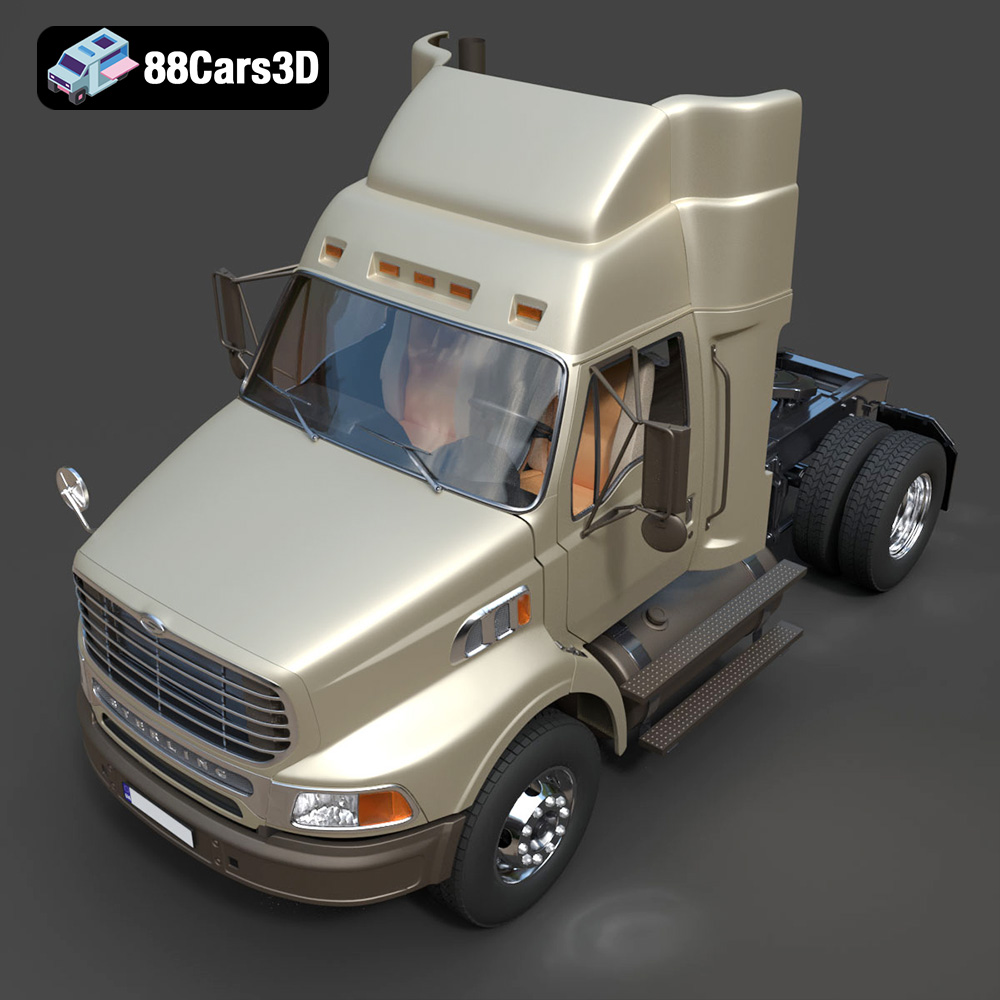
Today, we’re taking an in-depth look at a standout example that perfectly encapsulates these requirements: the Ford Sterling A9500 Tractor Truck 2006 3D Model. This impressive asset, available on 88cars3d.com, is more than just a digital representation; it’s a meticulously crafted tool designed to elevate professional workflows across multiple disciplines. Join us as we explore its features, technical specifications, and how it seamlessly integrates into various production pipelines, demonstrating why high-quality 3D car models are essential for any serious designer or developer.
The Sterling A-Line series, a direct descendant of Ford’s robust heavy truck division, is synonymous with durability and a commanding presence on North American highways. The A9500 Tractor Truck, in particular, represents a workhorse known for regional hauling, vocational fleets, and industrial logistics. Recreating such an iconic vehicle in 3D requires a deep understanding of its real-world counterpart, translating its rugged essence into a digital asset.
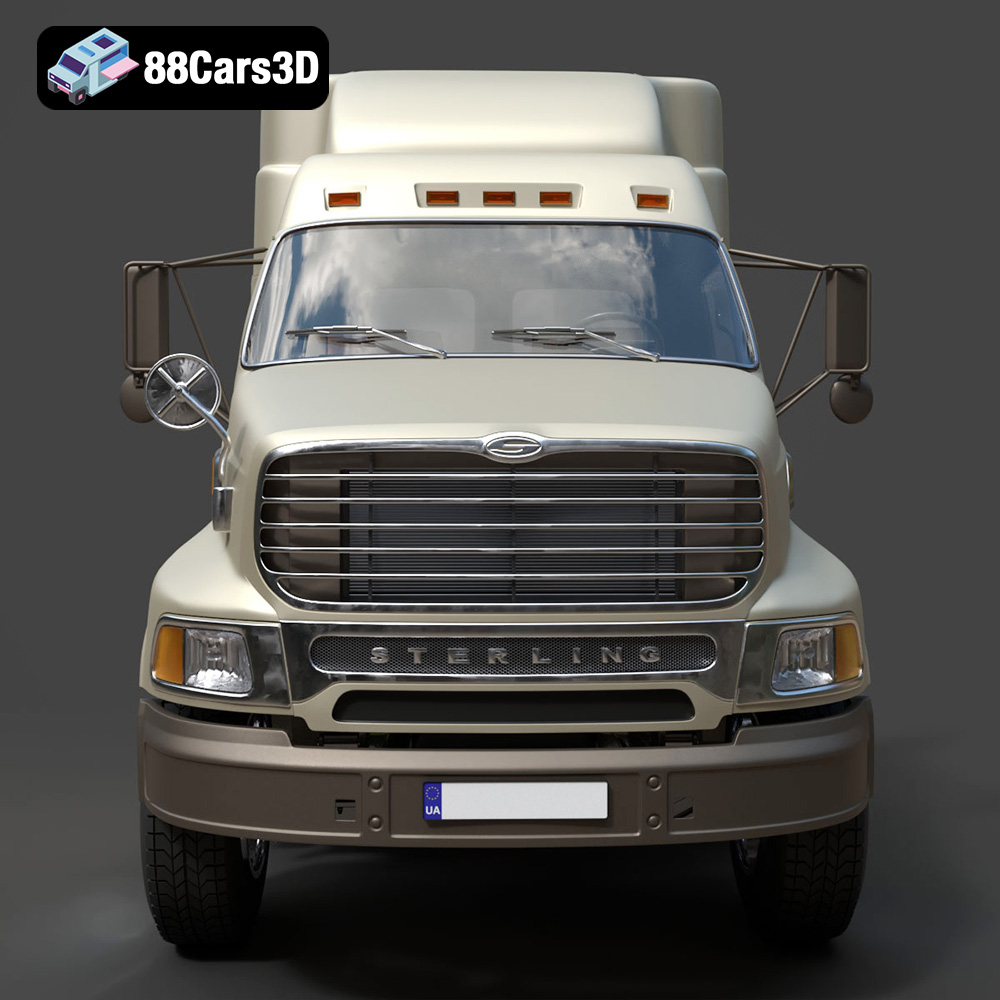
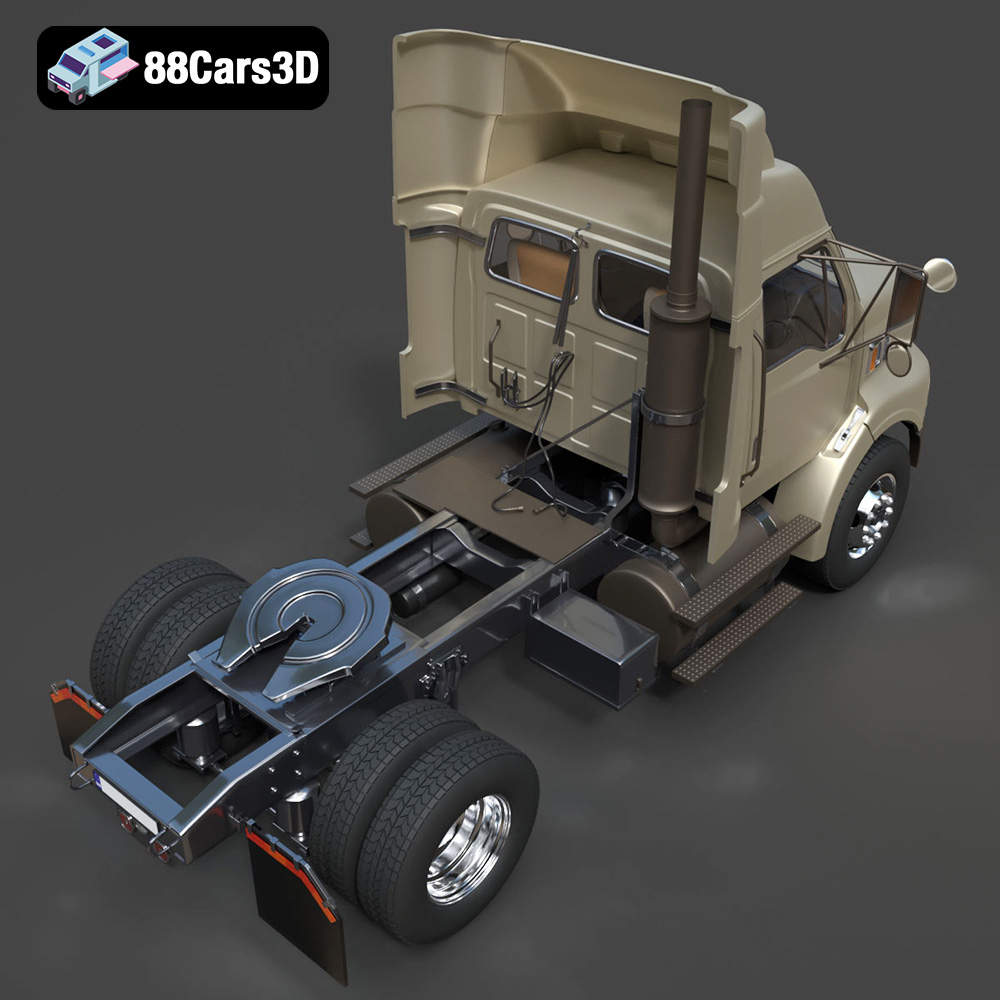
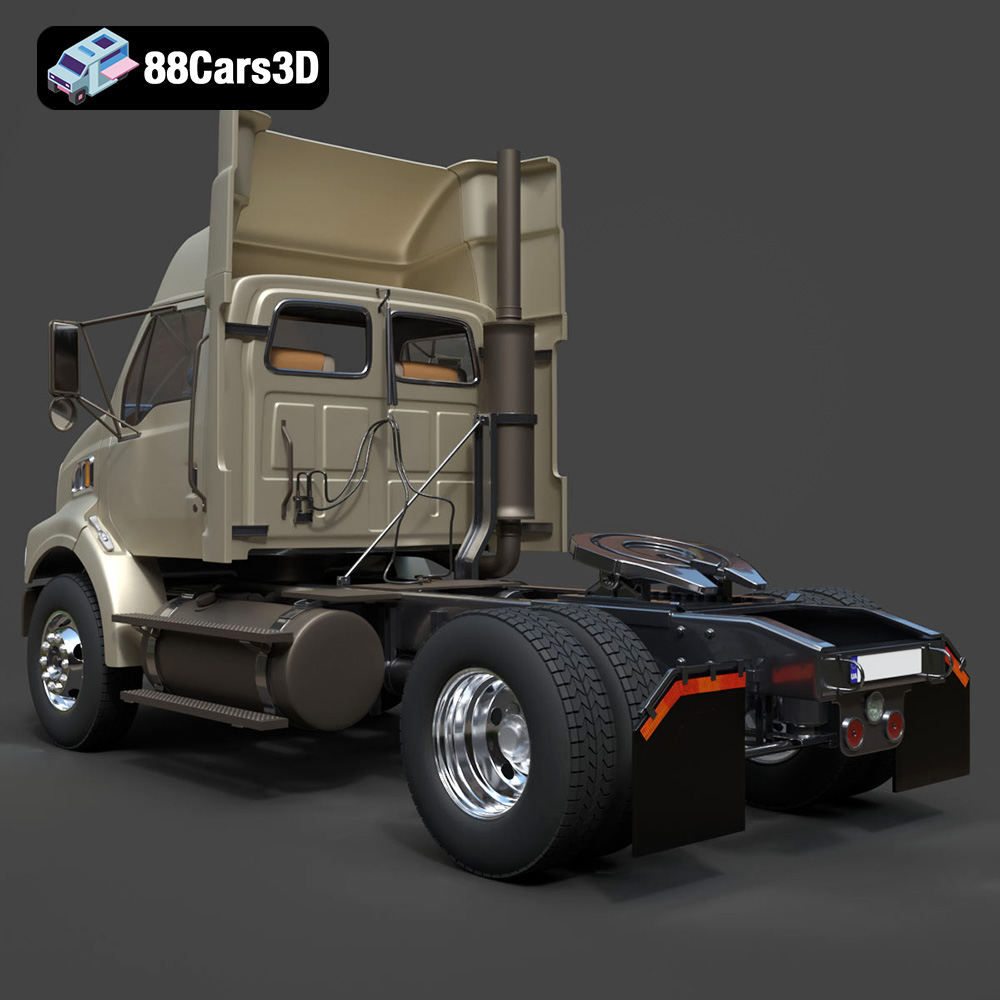
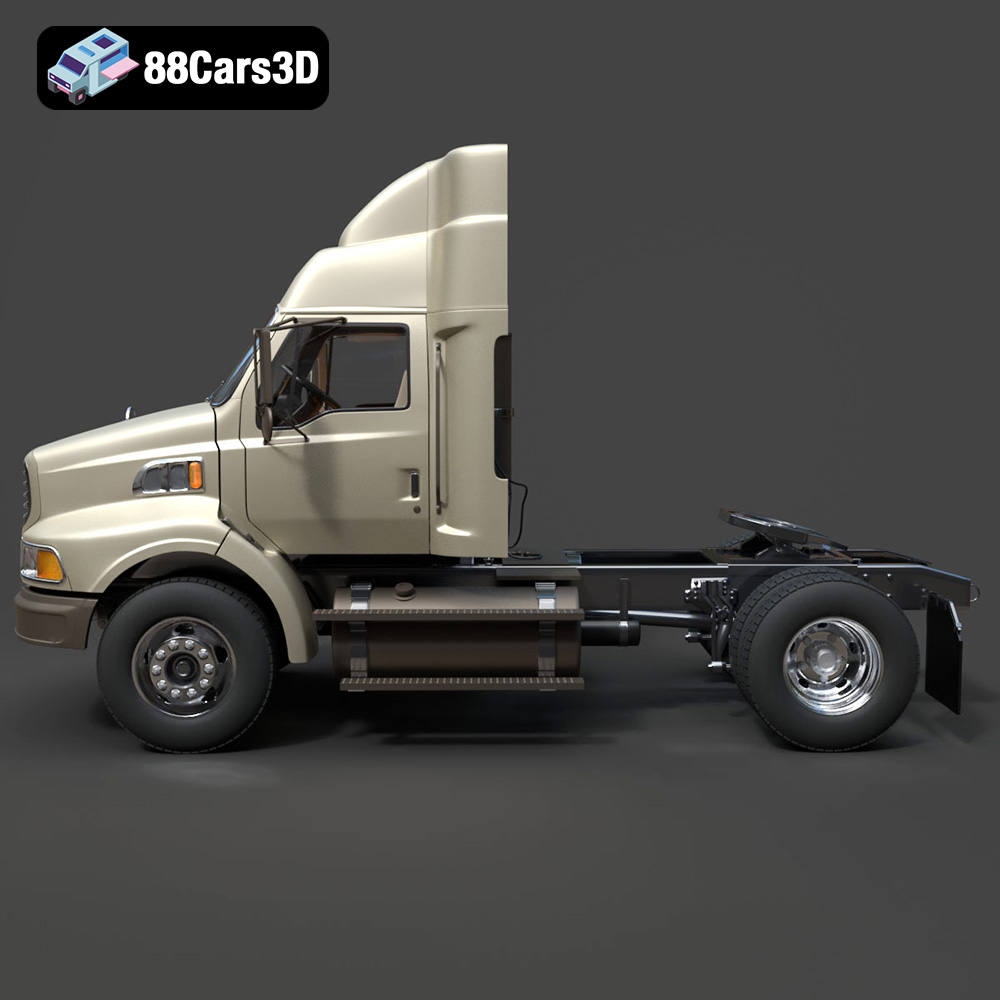
This Ford Sterling A9500 3D Model brilliantly captures the classic aerodynamic yet muscular styling that defines the truck. Every exterior detail has been meticulously recreated. The signature sloped hood, with its characteristic curves and integrated elements, flows into the bold chrome Sterling grille – a focal point that instantly identifies the vehicle. Beyond the aesthetics, the model features heavy-duty rear tandem axles, complete with detailed suspension and air brake components, showcasing an unwavering commitment to mechanical accuracy. Large cylindrical diesel fuel tanks, practical side steps, and towering exhaust stacks further reinforce its industrial utility and visual impact. Elements like separate wheels, steering components, and a pivot-ready fifth-wheel coupling are prepared for animation, offering dynamic possibilities for cinematic sequences or interactive visualizations.
A truly comprehensive 3D car model doesn’t stop at the exterior; the interior is equally crucial, especially for projects requiring first-person perspectives or immersive experiences. The Ford Sterling A9500 model provides an authentic commercial driver’s cabin layout, designed with long-haul ergonomics in mind. The wrap-around dashboard is populated with detailed analog gauge clusters and heavy-duty switches, essential for conveying a sense of realism. Air-ride driver and passenger seating, complete with authentic upholstery textures, adds to the immersion. Even the large industrial steering wheel and heavy-duty transmission shifter are modeled with precision. This optimized geometry makes the interior suitable for high-resolution first-person POV rendering, allowing designers to create compelling cab-view scenes for training simulations, marketing materials, or detailed walkthroughs.
The versatility of a 3D car model is often defined by the file formats it supports. Different formats are optimized for distinct purposes, from universal compatibility to specific software or real-time engines. The Ford Sterling A9500 Tractor Truck 2006 3D Model from 88cars3d.com offers a comprehensive suite of formats, ensuring it can be integrated into virtually any professional workflow. Understanding these formats is crucial for selecting the right tool for your project.
The choice of format largely depends on your specific needs. If you’re a Blender artist needing full control, .blend is your go-to. For game development or inter-software exchange, .fbx is generally the most robust. For universal static model compatibility, .obj works well. Web-based AR/VR projects will benefit from .glb’s efficiency. And, critically for physical prototypes or scale models, .stl is indispensable. The availability of all these formats for the Ford Sterling A9500 ensures that no matter your pipeline, you’re covered, giving you maximum flexibility to integrate this exceptional model into your creative vision.
Professional 3D artists and developers understand that a beautiful render is only half the story. The underlying technical specifications of a 3D car model dictate its usability, performance, and adaptability across various projects. The Ford Sterling A9500 Tractor Truck 2006 3D Model boasts specifications tailored for high-end visualization, while also acknowledging the practicalities of real-time environments.
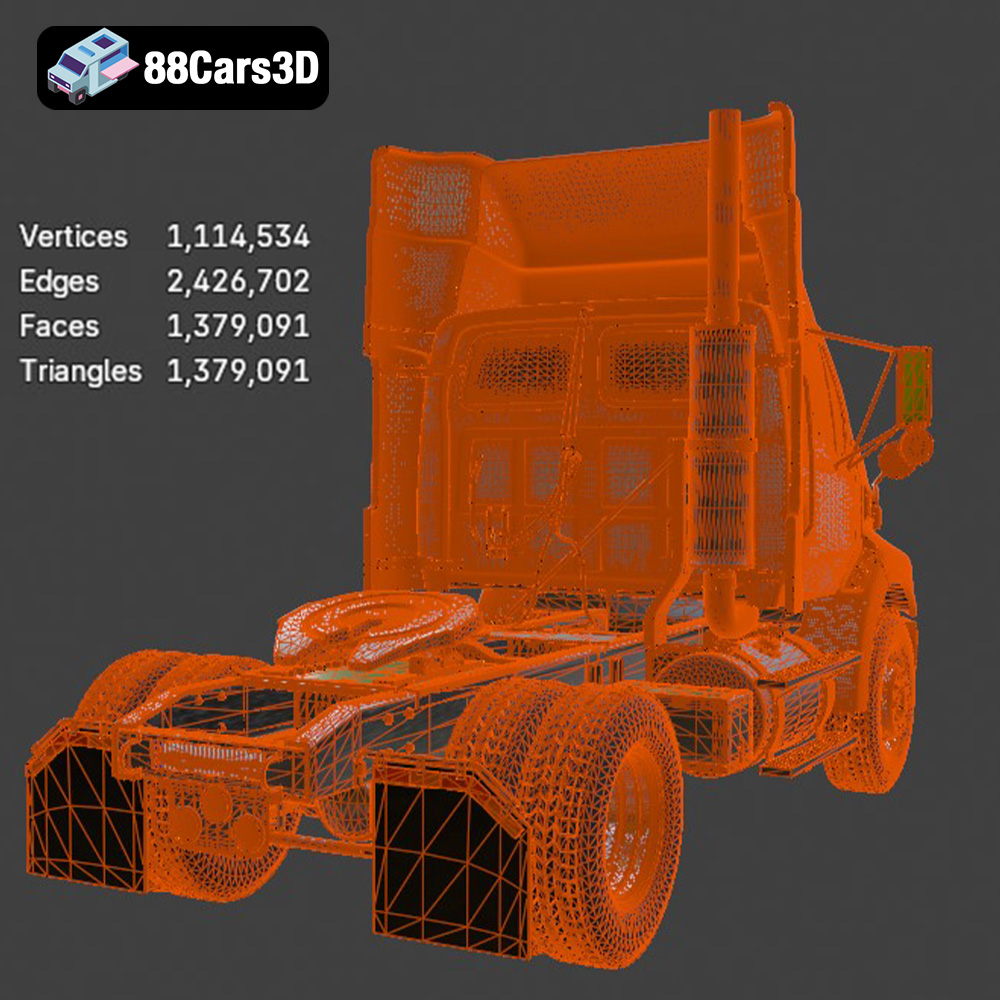
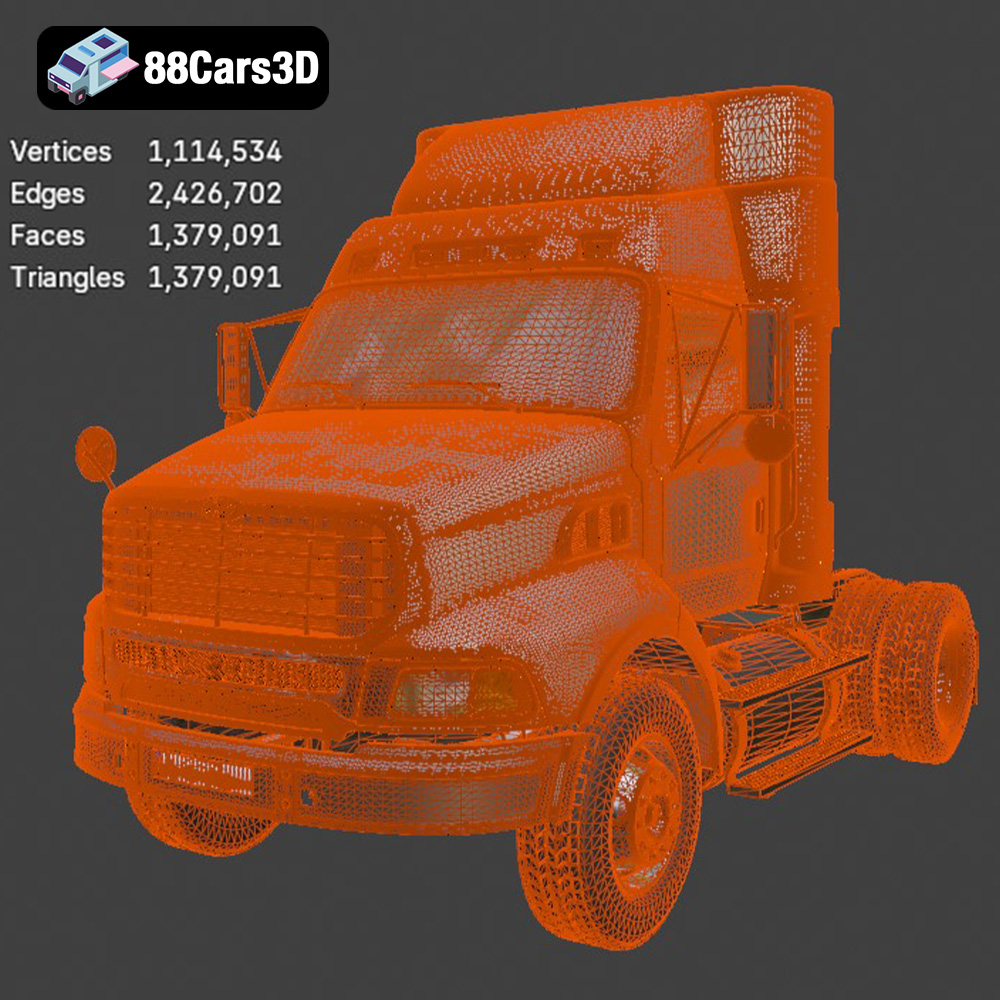
With an impressive 1,379,091 faces (polygons) and nearly 1.58 million triangles, this model is undeniably a “heavy hero asset.” This high-poly count translates directly into maximum visual fidelity, allowing for extreme close-up rendering, cinematic industrial visualization, and commercial fleet mockups where every curve, bolt, and panel line must be perfectly smooth and detailed. The mesh structure is well-organized, ensuring clean geometry, which is crucial for predictable subdivision, unwrapping, and material application. Furthermore, the model adheres to real-world scale accuracy based on factory commercial dimensions, which is vital for architectural visualization, engineering simulations, or integration into existing scene scales. Proper pivot setups for steering, wheel rotation, and trailer coupling articulation are also included, simplifying the animation process significantly.
While the high poly count is a boon for pre-rendered scenarios, it poses a challenge for real-time applications like game development, AR, or VR. A model with 1.58 million triangles will heavily impact performance in an interactive environment. This isn’t a drawback but rather a design choice, indicating its primary intent as a high-resolution source asset. For those planning to use it in real-time engines, manual retopology or decimation is a necessary step. Tools within Blender, 3ds Max, or dedicated software like ZBrush or Instant Meshes can be employed to reduce the poly count while preserving essential details. This process often involves creating lower Level of Detail (LOD) versions, baking normal maps from the high-poly model to the low-poly mesh to retain visual richness. Despite the need for optimization, starting with a high-fidelity model like this is always advantageous, as it provides a solid foundation from which to derive optimized versions without sacrificing detail. It means that while the raw asset is heavy, its potential for game assets is still high with the right workflow.
Beyond digital rendering, the tactile experience of holding a physical manifestation of a 3D model offers a unique satisfaction. The Ford Sterling A9500 Tractor Truck 2006 3D Model is not just for screens; it’s also designed with 3D printing in mind, opening up a world of hobbyist projects and custom fabrication. Furthermore, the model offers ample opportunities for creative customization to fit diverse project needs.
The inclusion of the .stl file format is a direct invitation to the world of 3D printing. This model serves as an excellent base for highly detailed, large-scale custom RC semi-truck bodies or intricate diecast hobbyist displays. To achieve the best results, specific print settings are recommended:
This detailed guidance ensures that hobbyists and professionals can transform the digital asset into a tangible, impressive scale model.
Beyond its default appearance, the Ford Sterling A9500 3D Model provides a flexible foundation for creative modifications. Designers can easily change exterior paint colors to match classic fleet logistics branding or even create fictional company liveries. The model allows for modification of wheel setups, letting users swap standard steel wheels for highly polished Alcoa-style aluminum alloys to enhance its aesthetic. Adjusting rear chassis accessories, such as mudflaps, pogo sticks for air lines, and various rear work lights, further extends the customization possibilities, allowing for specialized truck configurations. Additionally, the asset can be adapted with diverse lighting setups, from bright sunny highway stretches to moody, rain-slicked night runs at a desolate truck stop, significantly altering the visual narrative of any scene.
The true measure of a high-quality 3D asset lies in its seamless integration into established professional workflows. Whether you’re a seasoned artist in architectural visualization, a game developer, or a cinematic animator, the Ford Sterling A9500 Tractor Truck 2006 3D Model provides the necessary flexibility and detail to enhance your projects. Let’s explore how it fits into popular software ecosystems.
For users of Autodesk 3ds Max, the included .max file offers native control over the entire scene. This means direct access to the model’s geometry, hierarchies, and potentially pre-configured materials, allowing for effortless integration into complex scenes. Artists can leverage 3ds Max’s robust modeling tools for further customization, and its powerful rendering engines like V-Ray or Corona to achieve photorealistic automotive rendering. This level of native support is crucial for complex animation setups, environmental integration, and final production-ready renders. Lighting schemes, camera angles, and atmospheric effects can be precisely controlled to highlight the truck’s features. For Blender artists, the .blend file provides a similar native experience. Users can immediately dive into Cycles or Eevee for rendering, taking advantage of Blender’s node-based material system to adjust textures, reflectivity, and other surface properties. The well-organized mesh structure facilitates easy material assignments and texture application, ensuring that the model looks its best whether it’s an isolated hero shot or part of a larger, bustling industrial scene.
While noted as a “heavy hero asset,” the Ford Sterling A9500 can certainly be adapted for real-time engines like Unreal Engine, a common platform for game development, architectural walkthroughs, and virtual production. The .fbx format is the go-to for importing into Unreal. Upon import, developers will need to address the high poly count (nearly 1.58 million triangles) to ensure optimal performance. This typically involves several key steps:
By following these steps, the Ford Sterling A9500 can be transformed into a visually stunning game asset or interactive element, demonstrating the immense value of starting with a highly detailed source model even for performance-critical applications.
The world of 3D modeling thrives on detail, versatility, and technical precision. The Ford Sterling A9500 Tractor Truck 2006 3D Model exemplifies these qualities, offering an unparalleled level of realism for professionals across diverse industries. From its meticulously recreated exterior and authentic interior to its robust technical specifications and comprehensive file format support, this model is a powerful asset.
Whether you are crafting photorealistic automotive rendering, engineering complex cinematic sequences, developing immersive game assets (with appropriate optimization), or even bringing a tangible replica to life through 3D printing, this model provides an exceptional foundation. Its adaptability across software like 3ds Max, Blender, and Unreal Engine underscores its value as a truly professional-grade resource. Explore the possibilities this incredible asset offers for your next project, and discover a wide array of other high-quality 3D car models by visiting 88cars3d.com today.
The Ford Sterling A9500 Tractor Truck 2006 3D Model is a highly detailed digital recreation of the iconic heavy-duty Class 8 commercial semi-truck. Born from the legacy of Ford’s heavy truck division, the Sterling A-Line series is renowned for its rugged durability, versatile chassis, and commanding presence on the highway. This model captures the classic aerodynamic yet muscular styling that made it a staple of regional hauling, vocational fleets, and industrial logistics across North America. Built with incredibly dense, uncompromising topology (nearly 1.6 million triangles), it provides maximum visual fidelity for extreme close-up rendering, cinematic industrial visualization, commercial fleet mockups, and high-end 3D printing. Includes .blend, .fbx, .obj, .glb, .stl, .ply, .unreal, and .max formats for rendering, visualization, and 3D printing.
$79.99
.automotive
.blend
.fbx
.obj
.rendering
.stl
3d printing
a9500
big-rig
car-3d-model
class-8
commercial-vehicle
ford-trucks
heavy-duty
high poly
semi-truck
sterling-truck
tractor-truck