Get 50% OFF All Premium 3D & STL Models!

In the dynamic world of 3D visualization, automotive design holds a unique allure. From breathtaking cinematic sequences to hyper-realistic game environments and interactive AR/VR experiences, the demand for impeccably crafted 3D car models is constant. Professionals and enthusiasts alike seek assets that not only capture the aesthetic essence of a vehicle but also adhere to rigorous technical standards for seamless integration into diverse workflows. This pursuit of digital perfection often leads to complex challenges in modeling, texturing, and optimization.
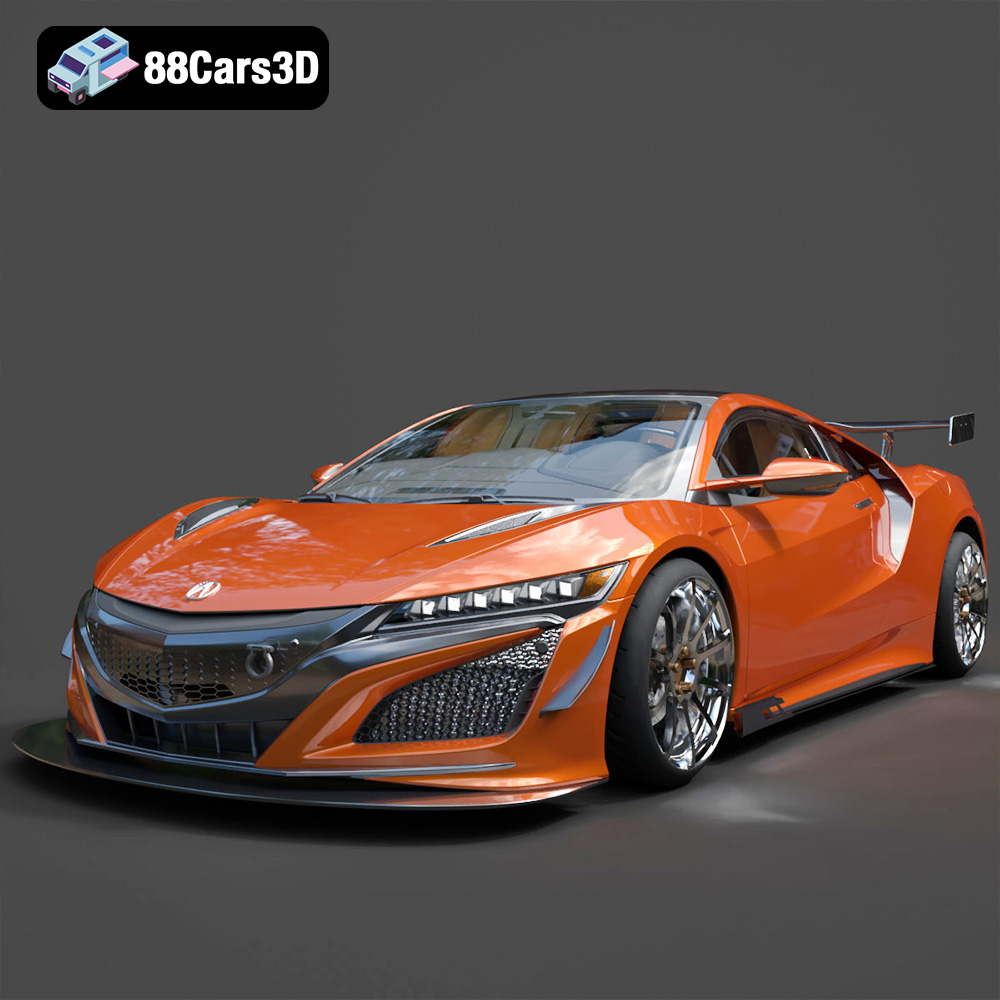
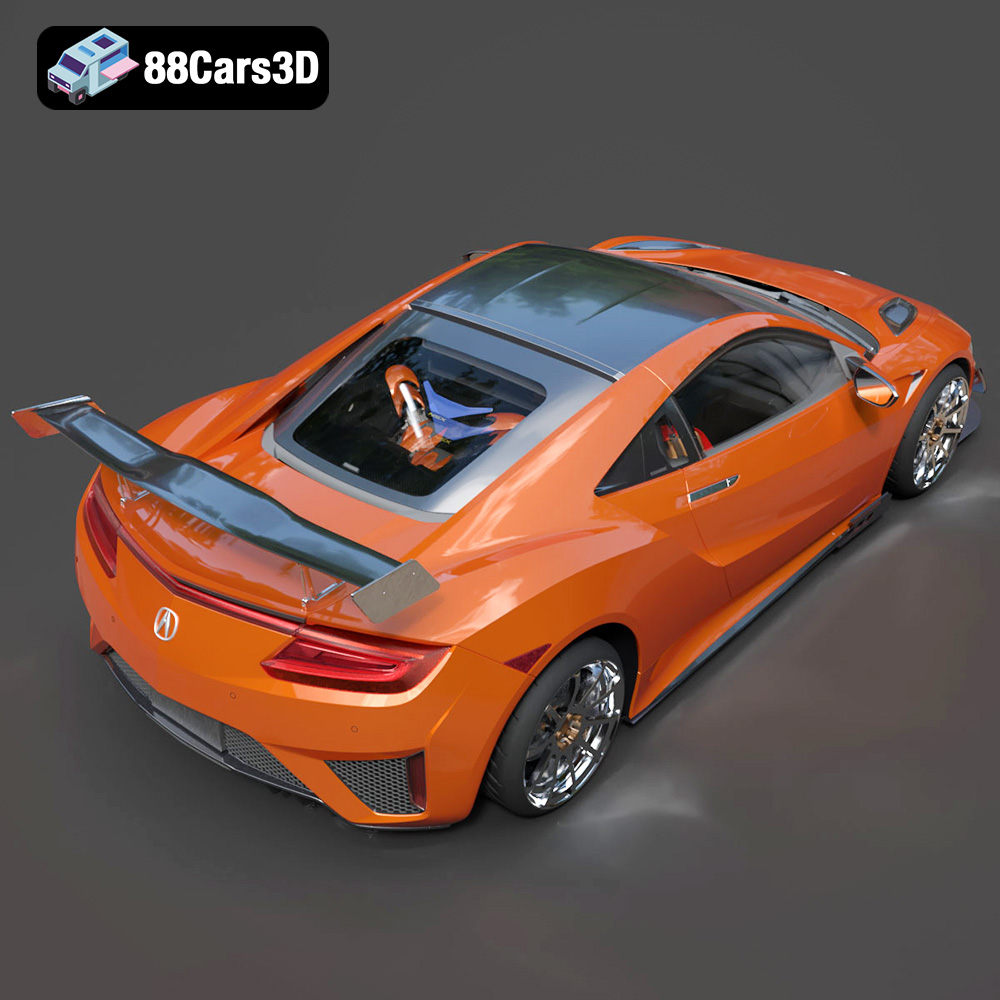
Today, we’re taking a detailed look at an exceptional example of this craftsmanship: the Acura NSX 2017 3D Model. This asset from 88cars3d.com isn’t just a representation; it’s a meticulously engineered digital twin, ready to accelerate your projects whether you’re building a next-gen racing simulator, creating a stunning architectural visualization, or even bringing this supercar to life on your desktop through 3D printing.
The journey of a vehicle from a designer’s sketch to a physical car is mirrored by its digital counterpart. Early 3D car models were often rudimentary, serving basic visualization needs. However, as rendering engines grew more powerful and real-time applications became ubiquitous, the fidelity and technical complexity of 3D car models skyrocketed. Today, these models are critical tools at every stage of a project, from conceptualization and marketing to full-scale game development and immersive training simulations.
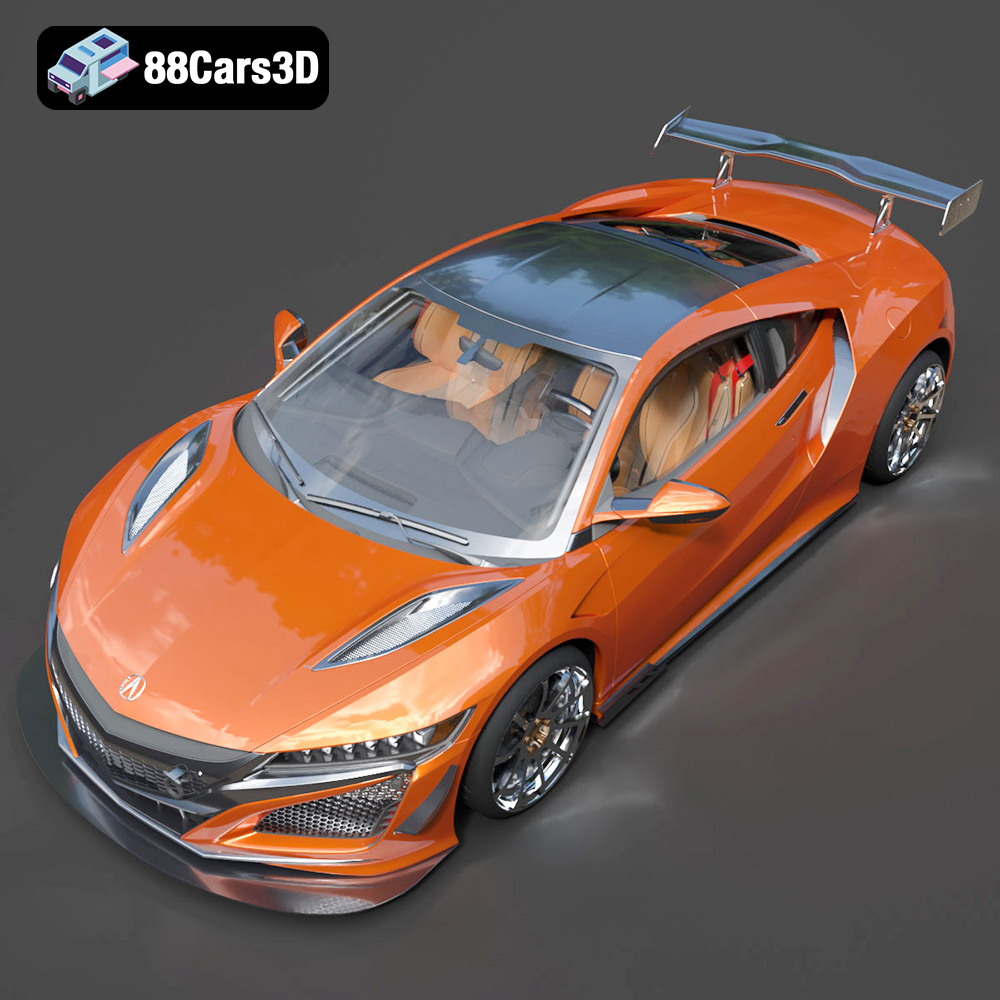
Modern audiences expect nothing less than absolute realism. For automotive rendering, this means capturing every curve, reflection, and material nuance with photographic accuracy. This necessitates high-polygon counts for smooth surfaces, meticulous UV mapping for texture application, and physically based rendering (PBR) materials that react correctly to light. The Acura NSX 2017 3D Model embodies this demand, featuring the signature Jewel Eye LED headlights and the aggressive lines that define the real-world supercar.
Automotive 3D models serve multiple masters. Design studios use them for rapid prototyping and client presentations. Marketing agencies leverage them for captivating advertisements and configurators. Game developers integrate them as hero vehicles, requiring robust optimization for performance. Even hobbyists utilize them for personalized 3D prints or unique digital art. The versatility of a well-constructed 3D asset, such as the Acura NSX 2017, ensures it can adapt to these varied requirements, offering separate components like wheels, steering, and doors for realistic animation and rigging.
Navigating the world of 3D assets requires a solid understanding of file formats. Each format is designed with specific use cases, software compatibility, and technical advantages in mind. Choosing the right format for your project is crucial for an efficient workflow and optimal results. The Acura NSX 2017 3D Model from 88cars3d.com comes with a comprehensive suite of formats, ensuring maximum compatibility across professional pipelines.
The provision of these diverse formats with the Acura NSX 2017 3D Model highlights its versatility and the commitment of 88cars3d.com to professional standards, ensuring that users can integrate this high-quality asset into virtually any pipeline.
At the heart of any professional 3D asset is its topology – the underlying structure of vertices, edges, and faces that define its shape. For automotive models, striking the perfect balance between visual fidelity and performance optimization is an art form. The Acura NSX 2017 3D Model excels in this regard, boasting a “Goldilocks zone” topology that makes it incredibly versatile.
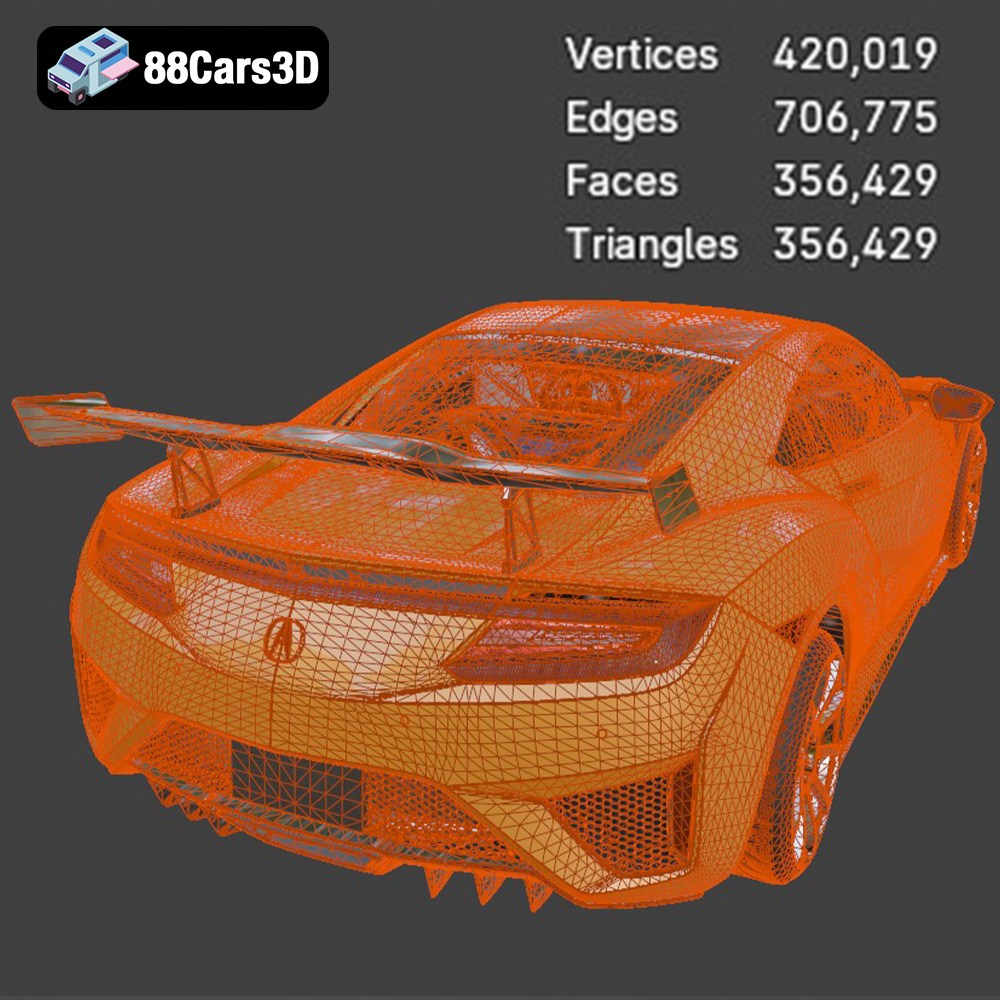
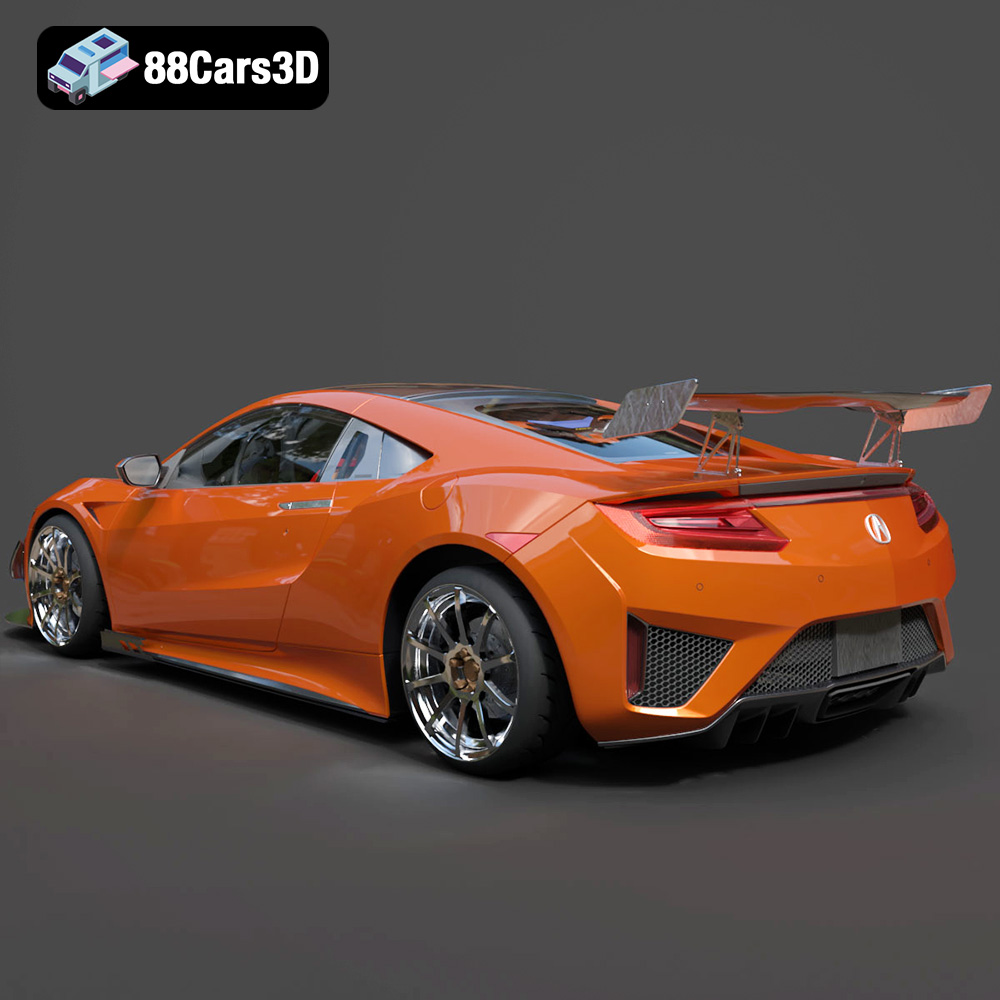
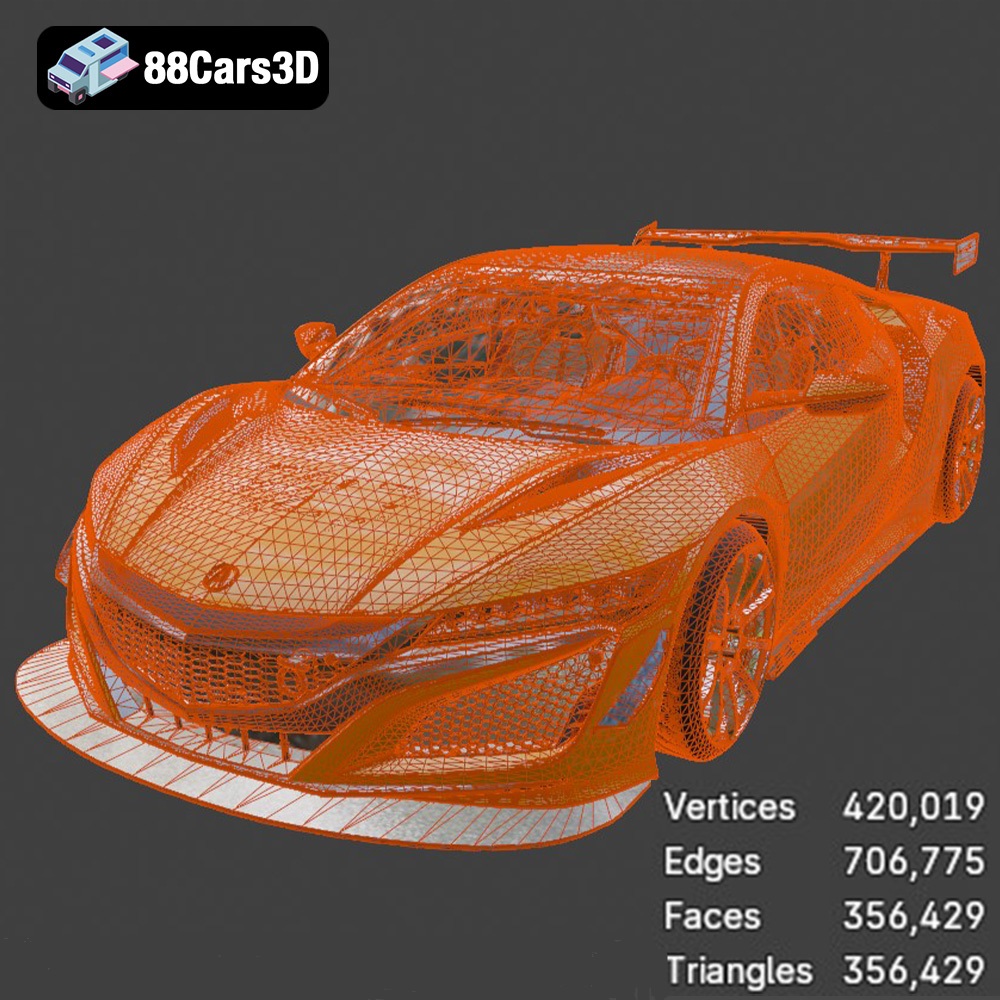
High-end cinematic rendering often demands extremely dense meshes with millions of polygons to capture every subtle curve and reflection. In contrast, real-time game engines require models with significantly lower polygon counts to maintain smooth frame rates. The Acura NSX 2017 model, with just over 356,000 triangles, hits a sweet spot. This mid-polygon count is sufficiently detailed for gorgeous studio renders, allowing the sharp aerodynamic edges, distinct Jewel Eye LED headlights, and intricate rear diffuser to shine. Simultaneously, it remains lean enough to be efficiently rendered in modern game engines like Unreal Engine or Unity, serving as a “hero” drivable vehicle without causing severe performance drops.
This mid-poly approach is a deliberate engineering choice. It means the model provides substantial visual fidelity for close-up shots and high-resolution outputs, showcasing detailed features like the high-performance factory alloy wheels with detailed brake calipers and slotted rotors. Yet, its relatively optimized count (Vertices: 420,019, Edges: 706,775, Faces/Polygons: 356,429, Triangles: 356,429) avoids unnecessary computational overhead. This careful balance ensures that the asset is not only beautiful but also practical for professional applications where efficiency is paramount.
Beyond polygon count, a truly professional asset features real-world scale accuracy and proper articulation. The Acura NSX 2017 3D Model is built to the exact factory dimensions of the real car, ensuring it fits perfectly into architectural visualizations or simulations. Furthermore, its separate components – wheels, steering, and doors – come with properly set pivots, making it ready for realistic animation and rigging. This attention to detail allows for dynamic scenes, whether it’s the car turning a corner in a racing game or a door opening in an interactive showroom.
The technical robustness of the Acura NSX 2017 3D Model translates directly into a wide array of creative and professional applications. Its optimized design ensures a streamlined workflow across different platforms, making it an invaluable asset for various digital endeavors.
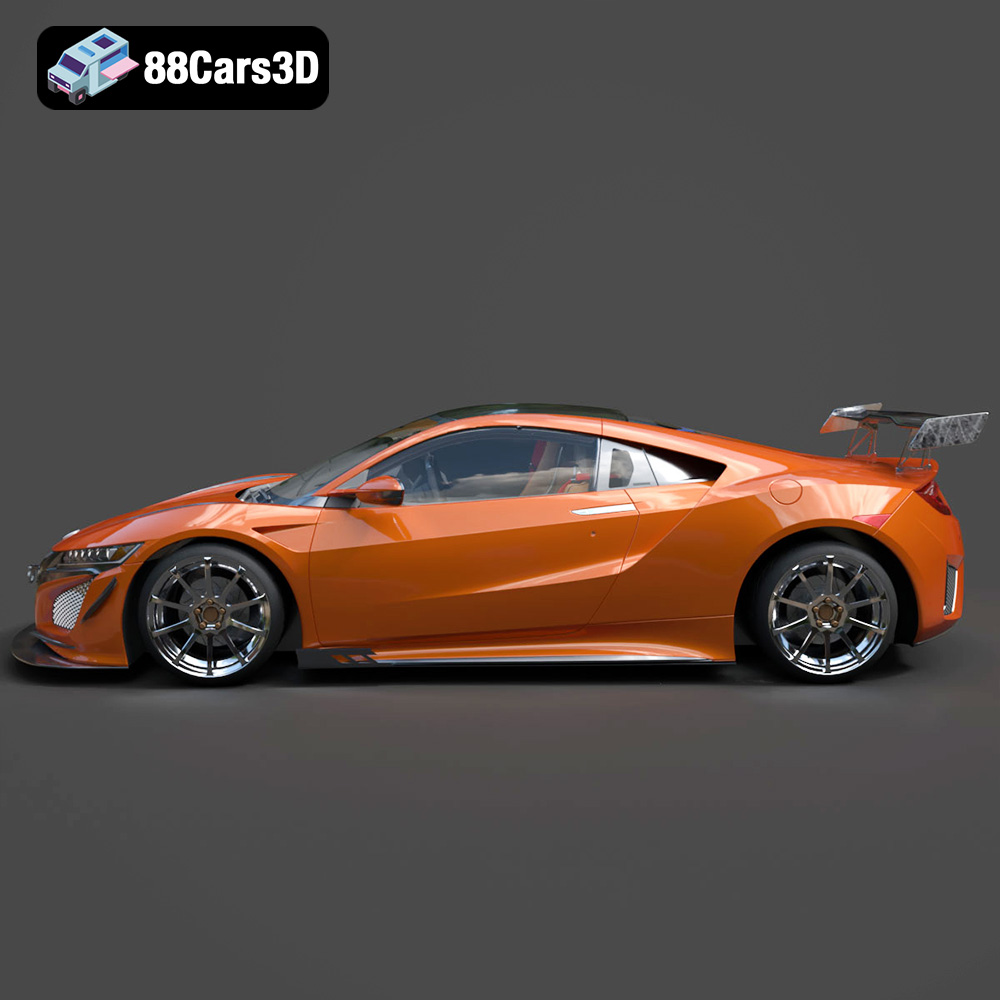
For artists and designers specializing in automotive rendering, the Acura NSX 2017 3D Model is a powerful tool. In software like 3ds Max or Blender, its balanced topology allows for stunning visual output without the burden of overly complex meshes. Users can easily apply advanced physically based rendering (PBR) materials, set up dramatic studio lighting, and craft cinematic camera angles to showcase the car’s striking design. Imagine the NSX bathed in the warm glow of a virtual garage, or speeding through a meticulously rendered cityscape – the model’s detail, from its floating C-pillars to its center-mounted quad exhaust, ensures every frame is captivating. The .max and .blend files provide native editability for deep customization.
Game developers, particularly those working on current-gen racing titles or open-world games, will find the Acura NSX 2017 model exceptionally game-ready. Its optimized triangle count (356k) makes it suitable for direct integration as a “hero” vehicle, offering high detail without compromising precious frame rates. The inclusion of an .unreal file (or an optimized .fbx for Unreal/Unity) simplifies the import process, often coming with pre-configured materials and collision meshes. Developers can quickly rig the separate wheels, steering, and doors, implement physics, and have a fully drivable supercar in their game engine, ready for high-speed chases or leisurely cruises through virtual environments. This efficiency is critical in tight production schedules.
The burgeoning fields of Augmented Reality (AR) and Virtual Reality (VR) demand highly optimized assets that can be rendered smoothly on various devices. The Acura NSX 2017 3D Model, particularly in its .glb format, is perfectly suited for these immersive experiences. It can be integrated into interactive digital showrooms, allowing potential buyers to explore the car’s interior and exterior in a virtual space. For AR applications, the model can be projected into the real world, letting users visualize the NSX parked in their driveway or even customize its paint and features on their mobile devices. The balanced geometry ensures these experiences are fluid and engaging, providing an excellent platform for car configurators and mobile AR.
The utility of 3D models extends beyond digital screens into the physical realm, thanks to 3D printing. The Acura NSX 2017 3D Model is also designed to be 3D printable, offering a tangible connection to the digital asset and opening up possibilities for collectors, hobbyists, and model makers. The inclusion of the .stl format is key for this application.
To transition from a digital file to a physical object, a 3D model needs to have manifold geometry – meaning it must be watertight with no gaps or intersecting faces. The Acura NSX 2017 3D Model, with its clean topology, is inherently well-suited for this. When exported as an .stl file, it provides the necessary data for slicer software to prepare the model for printing. This allows enthusiasts to create display-scale supercar replicas, miniature cars, or even automotive collectibles, bringing the beauty of the NSX into the real world.
Achieving a high-quality 3D print requires specific settings. For the Acura NSX 2017, a recommended scale of 1:24, 1:18, or 1:12 will best capture its intricate details. For optimal results, especially to render the sharp aerodynamic edges, distinct headlight clusters, and delicate floating C-pillars, resin printing (SLA/DLP) is highly recommended over FDM. A layer height between 0.04-0.12 mm will ensure fine detail. Essential print settings include a wall thickness of 1.2–2.0 mm and an infill of 15–25%. Supports will be required for areas like the side mirrors, rear diffuser, and the C-pillars, and printing the body angled with wheels printed separately will yield the smoothest surface finish.
The beauty of 3D printing lies not just in creation but also in customization. After printing the Acura NSX 2017 model, post-processing steps like sanding and priming are crucial for a smooth base. Then comes the exciting part: applying signature NSX colors such as Nouvelle Blue Pearl, Valencia Red Pearl, or Casino White. Further detailing can include adding carbon fiber textures to the roof, rear spoiler, and front lip for the ‘Carbon Package’ look, or modifying wheel finishes to replicate machine-polished or matte black alloys. This allows hobbyists to create a truly unique, display-worthy piece that reflects the supercar’s real-world elegance.
In a competitive digital landscape, the quality of your assets directly impacts the quality of your final output. Relying on meticulously crafted 3D car models saves invaluable time and elevates the professional standard of any project. The Acura NSX 2017 3D Model exemplifies the commitment to excellence found on 88cars3d.com.
One of the biggest advantages of sourcing assets from a specialized marketplace like 88cars3d.com is the assurance of quality and optimization. Each model, including the Acura NSX 2017, undergoes rigorous development to ensure clean topology, proper UV mapping, and accurate real-world scale. This means less time spent on cleaning up messy geometry or fixing broken materials, and more time focused on creative execution. The “Goldilocks” topology of the NSX model ensures it’s ready for immediate use in both high-fidelity renders and demanding real-time environments.
Whether you’re a seasoned professional under tight deadlines or an enthusiast looking to quickly bring your vision to life, pre-made, high-quality 3D car models are a game-changer. Instead of spending days or weeks modeling complex vehicles from scratch, you can acquire a production-ready asset like the Acura NSX 2017 3D Model and integrate it into your scene within minutes. This efficiency is crucial for rapid prototyping, client presentations, and personal projects that demand a professional finish without the extensive time commitment of full-scale asset creation.
Investing in premium 3D assets is an investment in the future of your projects. High-quality models like those available on 88cars3d.com are built to stand the test of time and technological advancements. Their clean geometry and versatile file formats ensure they remain usable and adaptable across evolving software and engine versions. The Acura NSX 2017 3D Model is not just a digital asset for today; it’s a foundational component for future cinematic projects, game developments, and immersive experiences.
The world of 3D automotive modeling is a fascinating intersection of art and engineering, where precision, performance, and aesthetic appeal converge. The Acura NSX 2017 3D Model stands out as an exceptional example of what a high-quality 3D car model should be: a versatile, meticulously optimized asset ready for deployment across a spectrum of professional and creative applications. From the intricate details of its exterior and interior to its perfectly balanced mid-polygon topology and comprehensive file format support, this model is engineered for success.
Whether your goal is to create stunning automotive rendering, develop immersive game assets, build interactive AR/VR experiences, or even bring a legendary supercar to life through 3D printing, the Acura NSX 2017 3D Model from 88cars3d.com provides the robust foundation you need. It exemplifies the blend of visual fidelity and technical efficiency that defines excellence in modern 3D production. Explore this model and other premium 3D car models today to accelerate your creative vision.
The Acura NSX 2017 3D Model is a stunning digital recreation of a legendary supercar, combining aerodynamically optimized styling with a futuristic mid-engine hybrid profile. This model accurately captures the razor-sharp aesthetic of the original, from its Jewel Eye LED headlights to its detailed rear diffuser. Built with a perfectly balanced mid-polygon topology (just over 356k triangles), it offers excellent visual fidelity for close-up automotive rendering and is highly optimized for use as a hero vehicle in game engines and real-time applications. Ideal for racing games, luxury galleries, and cinematic showcases.
$45