Get 50% OFF All Premium 3D & STL Models!

In the vibrant realm of digital automotive design, the pursuit of realism and technical precision drives innovation. From breathtaking cinematic sequences to immersive game environments and highly detailed product visualizations, the quality of your 3D assets can make or break a project. Crafting a vehicle model that captures not just its form, but its very essence, requires a meticulous eye for detail and a profound understanding of 3D pipelines. This is where truly exceptional 3D car models distinguish themselves, offering a foundation upon which artists and developers can build unparalleled experiences.
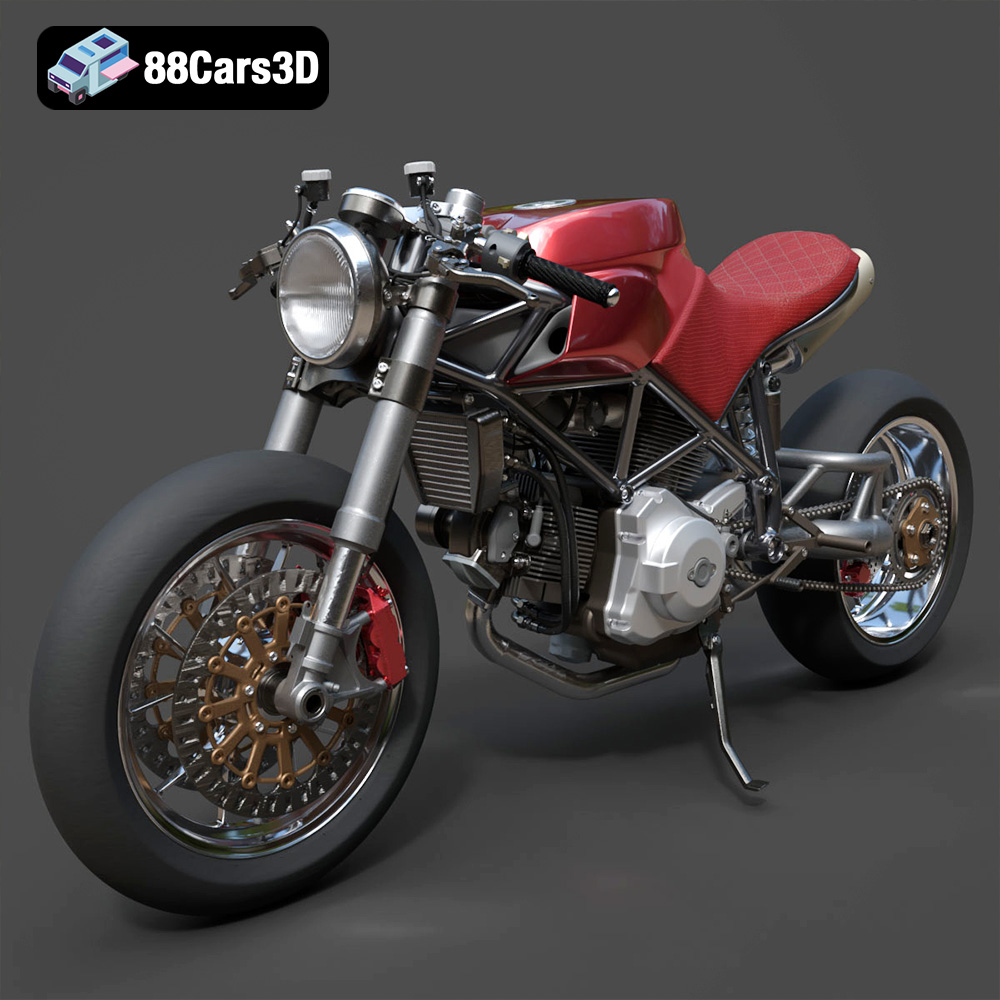
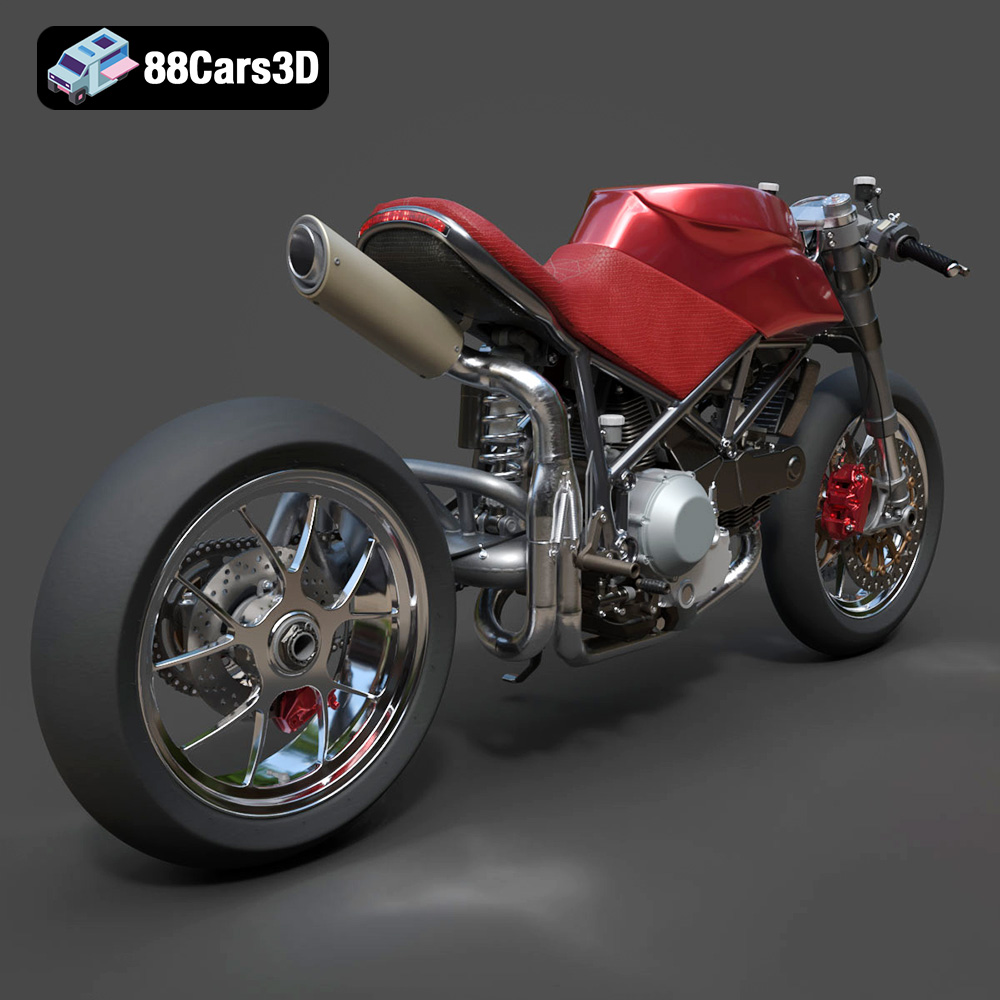
Today, we’re taking an in-depth look at a prime example of such artistry: the Ducati 916 Custom Café Fighter 3D Model. This isn’t just a digital recreation; it’s a celebration of engineering and bespoke customization, designed to push the boundaries of visual fidelity. Its intricate details, from the exposed L-twin engine to the custom trellis frame, make it an invaluable asset for anyone serious about high-end automotive rendering, cinematic production, or even creating physical collector’s items through advanced 3D printing.
Join us as we explore the technical aspects, workflow integrations, and creative potential unlocked by such a sophisticated model, and discover how products like this, available at 88cars3d.com, empower professionals to achieve their most ambitious visions.
When working with complex 3D car models like the Ducati 916 Custom Café Fighter, understanding the various file formats is not just helpful—it’s essential. Each format serves a specific purpose, optimized for different stages of the production pipeline, from initial modeling to real-time rendering and even physical fabrication. The Ducati 916 Custom Café Fighter 3D Model conveniently includes a comprehensive suite of formats, ensuring broad compatibility and utility across diverse professional workflows.
The .blend file format is Blender’s native project file. For users of Blender, this is often the most desirable format as it contains the complete scene data, including geometry, materials, textures, lighting, cameras, animations, and even modifiers. It offers maximum flexibility for editing, making adjustments to the mesh, tweaking materials, or re-rigging components. For the Ducati 916 Custom Café Fighter, the .blend file would provide a fully editable Blender scene with all its high-resolution components and custom material setups ready for immediate rendering in Cycles or Eevee, or further development.
.fbx (Filmbox) is a proprietary file format developed by Autodesk, widely regarded as the industry standard for exchanging 3D data between various software applications. It’s particularly ideal for game development pipelines using engines like Unreal Engine and Unity, due to its robust support for geometry, materials, textures, animations, and rigging. While the Ducati 916 Custom Café Fighter’s extreme polycount (over 17 million) necessitates optimization for real-time engines, the .fbx format provides a stable and reliable bridge for exporting the model for processes like retopology, UV unwrapping, and normal map baking before integration into a game project.
The .obj (Wavefront OBJ) format is one of the oldest and most universally supported 3D formats. It excels at storing pure geometric data (vertices, normals, texture coordinates, and faces) and can be opened by virtually any 3D software. While it doesn’t typically store advanced scene data like rigging or animation, its simplicity and widespread compatibility make it an excellent choice for cross-software collaboration or as a robust fallback for importing raw mesh data. For the Ducati, the .obj provides a clean, universal mesh for sculpting, detailing, or conversion to other specialized formats.
.glb (GL Transmission Format Binary) is the binary version of glTF, a royalty-free specification for the efficient transmission and loading of 3D scenes and models by applications. It’s increasingly becoming the “JPEG of 3D” due to its optimization for web-based applications, augmented reality (AR), virtual reality (VR), and other browser-based displays. A single .glb file can contain mesh data, materials, textures, and animations, making it highly portable and efficient for interactive online viewing of the Ducati 916 Custom Café Fighter model.
.stl (Stereolithography) is the de facto standard format for 3D printing. It represents a 3D model as a series of connected triangles, describing the surface geometry without color or texture information. For the Ducati 916 Custom Café Fighter, the .stl file is crucial for anyone looking to bring this digital masterpiece into the physical world. It ensures the model is manifold (watertight) and ready for slicing software, enabling the creation of highly detailed resin prints or FDM models, as suggested by the product’s 3D print settings.
.ply (Polygon File Format or Stanford Triangle Format) is another format for storing 3D data, particularly suited for scanner data and meshes with color or other attributes per vertex or face. While less common for artistic exchange than .fbx or .obj, it’s often used in scientific applications, CAD, and situations requiring high-precision mesh data. For highly accurate mechanical models like the Ducati, .ply can be valuable for detailed analysis or specific industrial visualization tasks.
The .unreal format typically refers to asset files specifically prepared and optimized for Unreal Engine. This often implies an .fbx import that has been processed within Unreal, including material setup, collision geometry, and LODs (Levels of Detail). For the Ducati 916 Custom Café Fighter, while the base model’s raw polycount is too high for direct real-time use, the inclusion of an .unreal file suggests an optimized version or at least a structure that streamlines the import process into Unreal Engine, post-retopology and texture baking, for those who need this high-detail vehicle as a game asset in a real-time environment.
.max is the native file format for Autodesk 3ds Max, a powerful 3D modeling, animation, and rendering software. Similar to .blend for Blender, the .max file contains the complete scene, including all geometric data, materials, textures, lighting, and animation setups. For professionals working in architectural visualization, product design, or cinematic rendering who rely on 3ds Max, this format offers full editability and direct access to all the intricate details of the Ducati 916 Custom Café Fighter for high-end rendering with V-Ray or Corona.
This array of formats underscores the versatility of high-quality 3D car models found on platforms like 88cars3d.com, ensuring that artists, designers, and engineers have the right tools for any creative challenge.
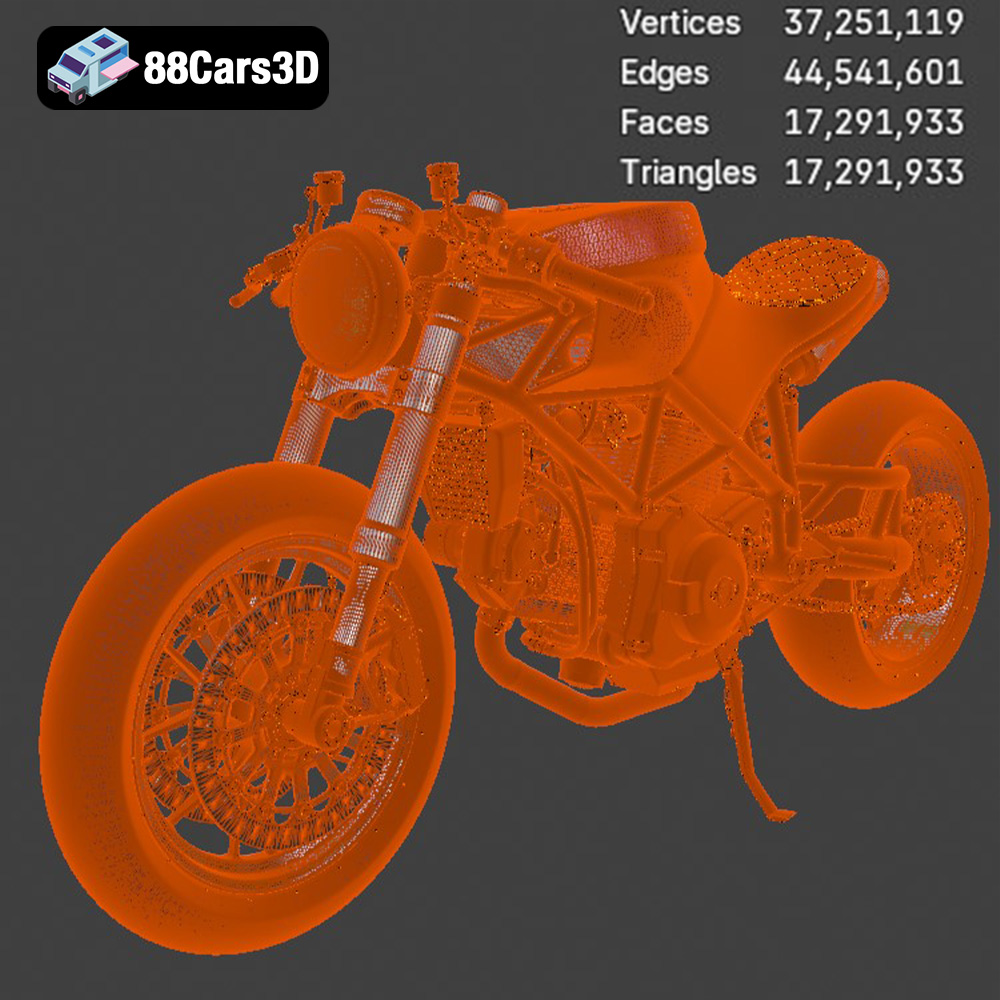
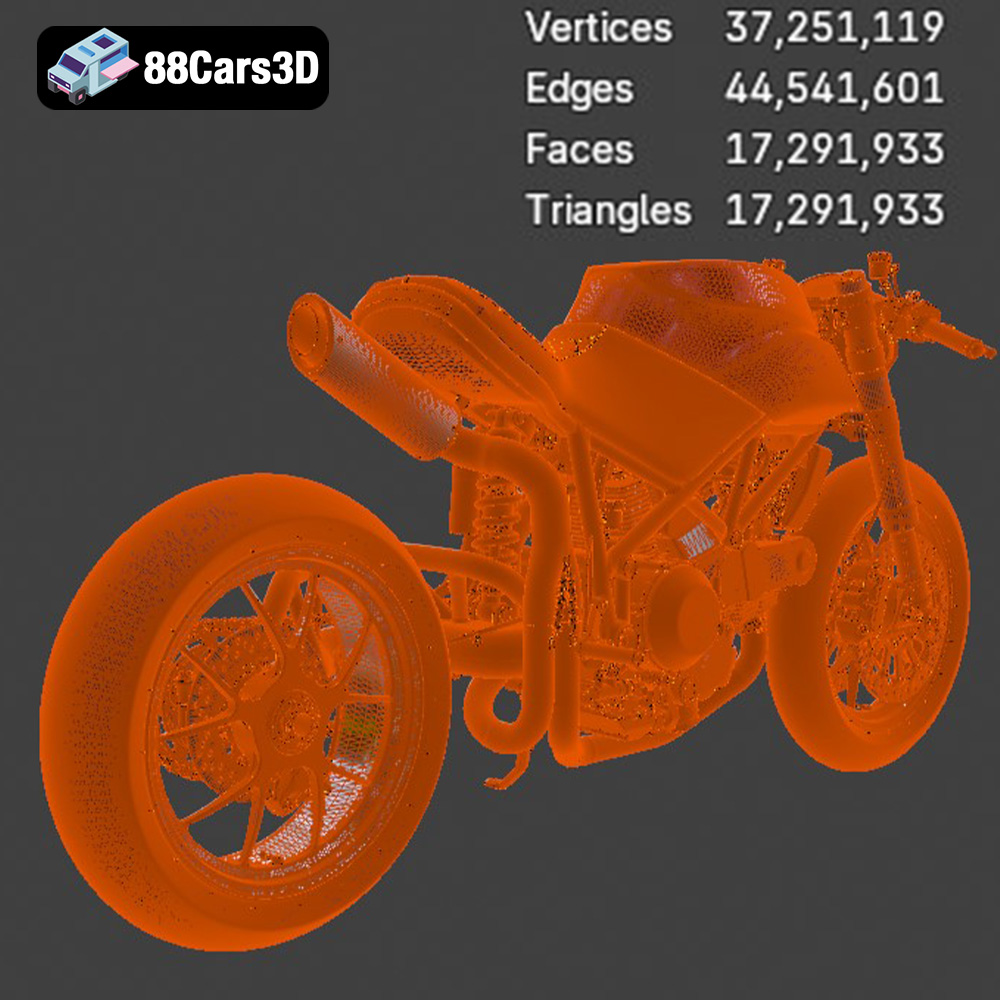
The Ducati 916 Custom Café Fighter 3D Model stands as a testament to the power of high-polygon modeling. With an staggering 17.2 million polygons, this model isn’t just detailed; it’s meticulously crafted to represent every bolt, weld, and curve of its custom-built inspiration. This extreme level of geometric detail sets it apart, making it an indispensable asset for specific high-end applications.
In the world of 3D, polycount often correlates directly with the potential for visual realism. The 17,291,933 polygons of the Ducati 916 Custom Café Fighter ensure that even at extreme close-up angles, every mechanical component, every hose, every texture detail on the engine block, and the intricate weave of the trellis frame holds up to scrutiny. This is crucial for cinematic renders, where cameras can zoom in to reveal the smallest imperfections or design nuances, or for high-resolution stills for marketing and product showcases. Unlike models relying heavily on normal maps for detail, this model’s realism is baked directly into its geometry, providing a solid, uncompromising foundation for any render.
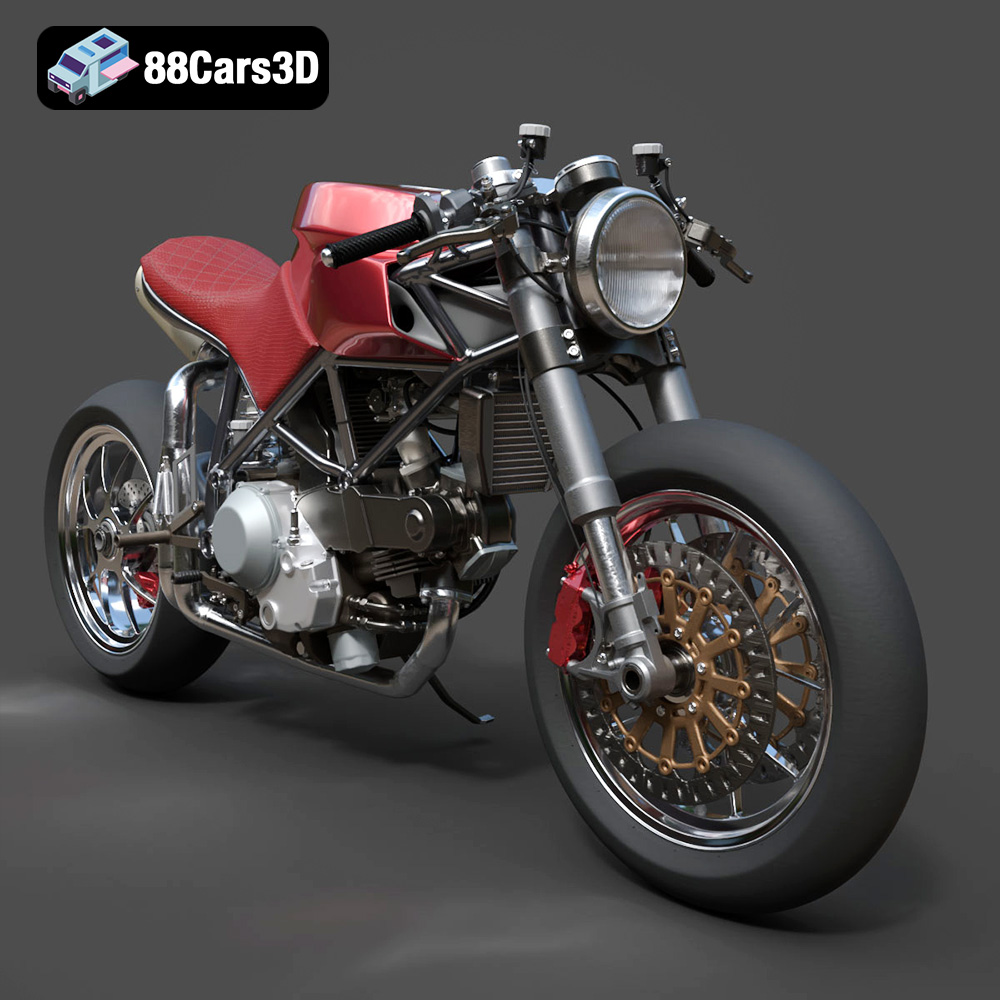
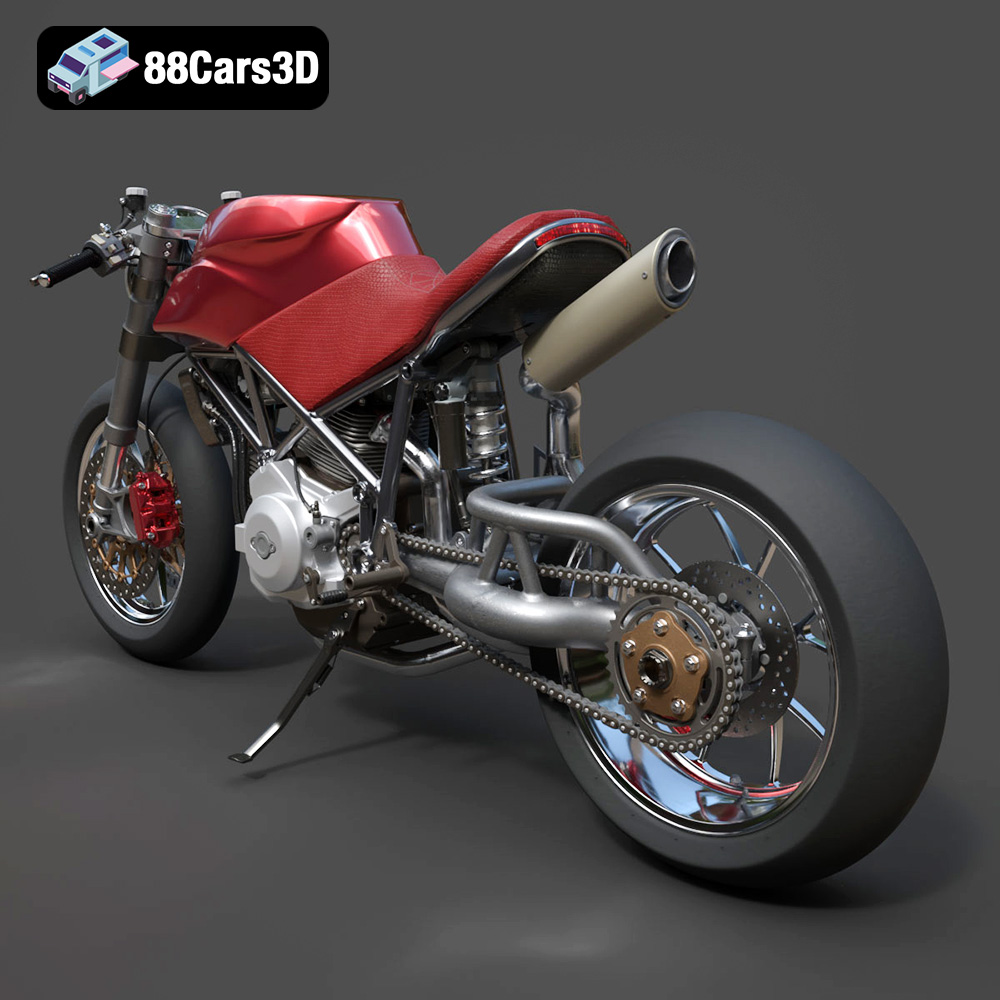
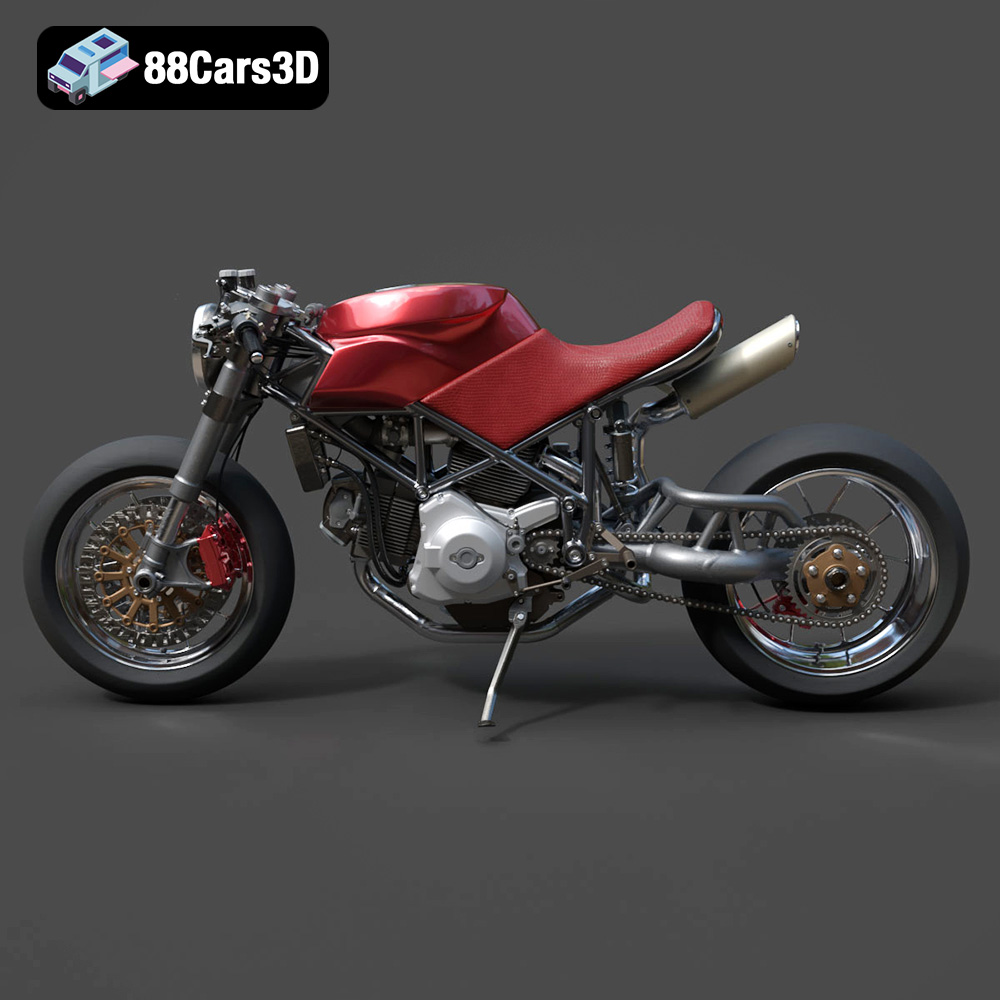
The model accurately captures the essence of a custom café fighter, stripping away the factory fairings to expose the raw mechanical beauty beneath. Key exterior features include the hyper-detailed L-twin engine block, dry clutch cover, and transmission. The iconic Italian steel trellis frame and single-sided swingarm are rendered with precision, highlighting their structural artistry. Custom elements like the swept exhaust system, featuring realistic heat-stain material zones, and the aftermarket Café Fighter LED headlight assembly, contribute to its unique character. Even the specialized custom wheel design maintains authenticity while adding a bespoke touch. The model also boasts separate wheels, suspension forks, and steering components, primed for realistic animation.
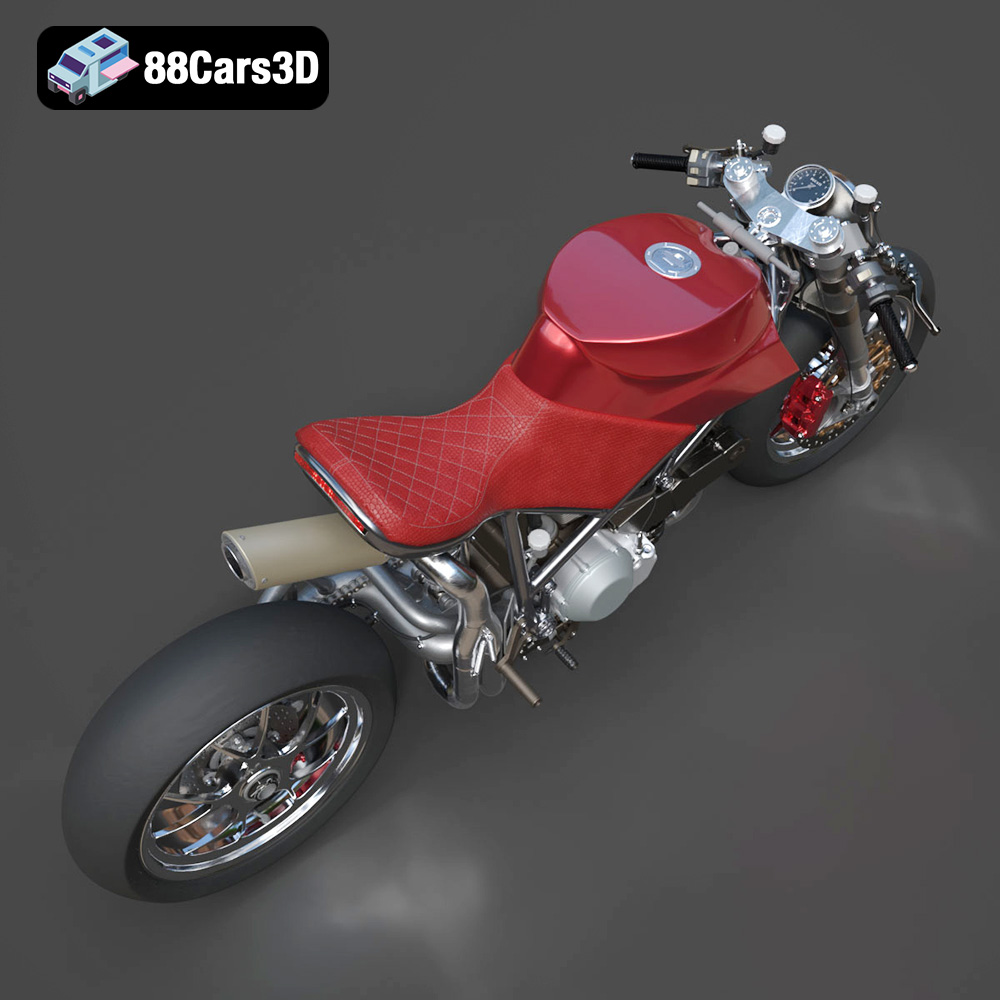
The cockpit and rider interface also receive uncompromising attention. From the custom stitched leather single-seat geometry to the aggressive clip-on handlebars with custom grips and bar-end mirrors, every element is designed for high-resolution first-person POV rendering. Aftermarket rear-set footpegs and custom brake/clutch levers further enhance the custom appeal, offering a complete, immersive experience even from a rider’s perspective.
Integrating a model of this magnitude, like the Ducati 916 Custom Café Fighter 3D Model, into professional workflows requires a nuanced understanding of its technical specifications and intended applications. Its ultra-high polycount positions it perfectly for certain tasks while requiring careful optimization for others.
For cinematic production, high-end automotive rendering, and detailed product visualization, the Ducati 916 Custom Café Fighter is an unparalleled asset. Using industry-standard software such as 3ds Max (with its .max file) or Blender (with its .blend file), artists can leverage renderers like V-Ray, Corona Renderer, Cycles, or Octane to produce stunning visuals. The model’s real-world scale accuracy and proper pivot setup for animation (steering, wheel rotation, kickstand) mean less time spent on setup and more on creative direction.
While the Ducati 916 Custom Café Fighter is an incredible asset for pre-rendered content, its native 17.2 million polygons are far too dense for efficient use as a real-time game asset in engines like Unreal or Unity. This is a common challenge with ultra-high-detail models, and the product description correctly highlights the necessity for specific optimization steps.
The “3D Printable STL” aspect of the Ducati 916 Custom Café Fighter 3D Model opens up an exciting avenue for enthusiasts and collectors: bringing this digital masterpiece into the physical world. This is where the geometric fidelity of the model truly shines, allowing for the creation of stunning scale models or prototypes.
The inclusion of the .stl and .ply formats is critical for 3D printing. The .stl format, being the universal standard, is directly compatible with slicing software that prepares the model for a 3D printer. The Ducati’s extreme detail, originally intended for rendering, translates beautifully into a physical object, especially when considering the suggested resin printing for capturing fine mechanical details like the trellis frame and spokes.
Achieving a high-quality physical print requires adherence to specific print settings, as provided with the model:
After printing, post-processing is where the model truly transforms from a raw print into a display piece. Sanding and priming prepare the surfaces for paint. The suggested iconic Red for the frame, metallic metalizer paints for the engine block, and matte/gloss finishes for custom panels allow for a realistic, museum-quality finish. The ability to separate components for printing also simplifies the painting process, allowing for greater precision and detail.
The true value of a premium 3D car model like the Ducati 916 Custom Café Fighter lies in its versatility across various professional applications. Its uncompromising detail allows for creative explorations that less refined models simply cannot achieve.
Imagine a high-end custom motorcycle garage looking to present a new bespoke design concept to a client. Instead of costly physical prototypes, they can use the Ducati 916 Custom Café Fighter 3D Model as a base, or as an example of the quality they aspire to. They can adapt its customization options—changing fuel tank and tail cowl colors, modifying engine finishes, or adjusting seat materials—to perfectly match a client’s vision. This allows for photorealistic previews, virtual walk-arounds, and even animated sequences showcasing the bike from every angle before a single wrench is turned in the real world.
For film and advertising agencies, the Ducati 916 Custom Café Fighter is a dream asset. Its high-poly structure is perfect for pre-rendered cinematic sequences where every frame counts. Consider a luxury lifestyle advertisement where the bike is the centerpiece, gleaming under dramatic studio lights or tearing through a moody urban landscape. The ability to zoom in on the dry clutch cover, revealing the intricate mechanism, or to highlight the bespoke LED headlight assembly in a close-up shot, adds a layer of authenticity and impact that engages viewers on a deeper level. This model can serve as the hero asset in commercials, music videos, or even short films, delivering uncompromised mechanical detail.
While the raw polycount requires optimization, the sheer detail of the Ducati 916 Custom Café Fighter provides an incredible source for AR/VR experiences. Imagine a virtual showroom where customers can explore the custom bike in an interactive environment. With proper retopology and texture baking, a game-engine-ready version could allow users to walk around the motorcycle, inspect its components, or even customize its colors and finishes in real-time. The .glb format could facilitate lightweight, interactive web-based previews or AR apps, allowing users to “place” the bike in their living room via their smartphone, bringing a touch of high-octane art into everyday spaces.
Purchasing a high-quality 3D car model like the Ducati 916 Custom Café Fighter from 88cars3d.com is an investment in quality and versatility. Beyond its immediate applications, the model offers extensive customization options and inherent future-proofing due to its robust construction.
The model isn’t a static asset; it’s a dynamic canvas for creativity. Its design intrinsically supports customization, allowing artists to personalize it to fit diverse project needs:
A model built with such an uncompromising level of geometric detail is inherently future-proof. As rendering technologies advance, and hardware capabilities increase, this model will continue to hold its value without needing significant re-detailing. Its raw polygonal data means that new renderers, lighting techniques, or even virtual production pipelines will be able to extract maximum realism from it for years to come. This makes it a foundational piece for any professional working with 3D car models, ensuring that their asset library remains cutting-edge.
The robust file format support (.blend, .fbx, .obj, .glb, .stl, .ply, .unreal, .max) further enhances its longevity, ensuring compatibility across evolving software ecosystems and diverse project requirements, from high-fidelity rendering to physical 3D printing.
The world of 3D automotive modeling demands a blend of artistic vision and technical mastery. The Ducati 916 Custom Café Fighter 3D Model exemplifies this synergy, offering an ultra-high-detail digital recreation that serves as a cornerstone for a multitude of professional applications. From crafting breathtaking cinematic renders and compelling product visualizations to producing exquisite 3D prints for collectors, this model delivers uncompromising quality and flexibility.
We’ve explored how its 17.2 million polygons enable extreme visual fidelity, how diverse file formats cater to every stage of the production pipeline, and how, with strategic optimization, it can even find a place in real-time game environments. The ability to extensively customize its appearance and its robust, detailed geometry ensures it’s not just a purchase, but an investment in a versatile and future-proof digital asset.
For artists, designers, and developers who demand the very best, the Ducati 916 Custom Café Fighter 3D Model stands as a testament to what’s possible in digital automotive art. Discover this and other exceptional 3D car models that redefine realism and creative potential at 88cars3d.com – your premier destination for high-quality digital automotive assets.
The Ducati 916 Custom Café Fighter 3D Model is an ultra-high-detail digital recreation of a bespoke custom motorcycle build, based on the legendary 1990s Italian sportbike. Inspired by iconic digital concepts that blend the raw mechanical aggression of a streetfighter with the retro-modern sleekness of a café racer, this model strips away the factory fairings to proudly expose the beautiful steel trellis frame, the legendary L-twin engine, and the signature single-sided swingarm.
$130
.blend
.ducati
.fbx
.obj
.rendering
.stl
.streetfighter
17m-polygons
3d printing
916
cafe-racer
car-3d-model
custom-motorcycle
engine-details
l-twin
trellis-frame
ultra-high-poly