Get 50% OFF All Premium 3D & STL Models!

In the dynamic world of 3D visualization, the ability to accurately and beautifully recreate objects from any era is a cornerstone of compelling digital content. From breathtaking automotive renders to immersive game environments, the demand for high-quality, meticulously crafted 3D assets is ever-present. These digital masterpieces serve as the building blocks for countless creative projects, bridging the gap between imagination and tangible digital reality. They are not merely pretty pictures; they are robust, technically sound constructions designed for seamless integration into diverse professional pipelines. Today, we’ll delve into the intricate details and broad applications of such an asset, focusing on a truly charming example: the **Vintage Tricycle 1930 3D Model**.
This exceptional model, available at 88cars3d.com, is more than just a nostalgic prop. It represents the pinnacle of digital craftsmanship, offering designers, game developers, architects, and educators a versatile tool to enrich their projects. Capturing the authentic charm and robust construction of an early 20th-century children’s tricycle, it’s a testament to how detailed 3D assets can infuse a scene with character, history, and unparalleled realism. As we explore the technical nuances and creative potential of this model, you’ll gain a deeper appreciation for the thought and skill that goes into producing top-tier 3D car models and other essential game assets.
The versatility of any 3D model, especially one as detailed as the **Vintage Tricycle 1930 3D Model**, lies significantly in its file format compatibility. Professional workflows often necessitate switching between various software platforms and engines, making broad format support absolutely essential. Understanding what each format offers is crucial for optimizing your project and ensuring smooth asset integration. The Vintage Tricycle 1930 3D Model from 88cars3d.com is provided in a comprehensive suite of formats, catering to virtually every need.
The `.blend` format is the native file type for Blender, a powerful open-source 3D creation suite. When you receive a `.blend` file, you’re not just getting the mesh; you’re gaining access to the entire Blender scene. This includes the model’s geometry, materials, textures, lighting setups, cameras, animation data, and even modifiers. For the Vintage Tricycle, the `.blend` file allows artists to delve deep into its construction, modify materials, adjust the scene lighting, or even dissect its animation rigging directly within Blender. It’s ideal for users who want complete control and editability, leveraging Blender’s extensive toolkit for rendering with Cycles or Eevee, or further developing the model.
`.fbx` (Filmbox) is a proprietary file format owned by Autodesk and is one of the most widely adopted interchange formats in the 3D industry. Its strength lies in its ability to store a vast array of 3D data, including model geometry, UV data, materials, textures, bones, skinning, and animations, making it a robust choice for transferring assets between different 3D software applications. For game development, particularly in engines like Unreal Engine and Unity, `.fbx` is the go-to format for importing complex animated characters and props like our tricycle. It ensures that crucial elements like the separate wheels and pedals of the Vintage Tricycle, designed for animation, transfer seamlessly.
`.obj` (Wavefront OBJ) is a universal geometry definition file format that is highly compatible across almost all 3D software. It primarily stores vertex positions, UV coordinates, normals, and material group information. While it doesn’t support animation or rigging, it is excellent for transferring clean mesh data, making it a reliable choice for static models or as a base for retopology and sculpting. The `.obj` version of the Vintage Tricycle ensures that its detailed geometry can be accessed and manipulated in virtually any 3D package, from ZBrush to Modo, without fidelity loss.
`.glb` is the binary version of the GL Transmission Format (`.gltf`), an open standard for 3D scenes and models. Optimized for quick loading and efficient runtime delivery, `.glb` files package geometry, materials, textures, and animation into a single, self-contained file. This makes it incredibly well-suited for augmented reality (AR), virtual reality (VR), and browser-based applications where file size and performance are critical. For showcasing the **Vintage Tricycle 1930 3D Model** in an interactive web viewer or a mobile AR app, `.glb` offers unmatched efficiency and visual quality.
`.stl` (Stereolithography) is perhaps the most recognized file format for 3D printing. It represents a 3D model as a series of connected triangles, defining only the surface geometry of an object without color, texture, or other attributes. For manufacturing physical replicas of the Vintage Tricycle, the `.stl` file provides a manifold, watertight mesh ready for slicing software. It’s the bridge that transforms a digital design into a tangible object, allowing enthusiasts to 3D print their own collectible scale toy replicas, as specified in the product description.
`.ply` (Polygon File Format) is another format for storing 3D data, often used for representing 3D scanned data or meshes from CAD applications. It’s flexible and can store properties like color, transparency, and normal information in addition to geometry. While less common for everyday asset exchange than `.fbx` or `.obj`, `.ply` can be valuable in specialized workflows requiring high precision or for archiving complex geometric data, such as might be used in a detailed engineering analysis of the tricycle’s frame.
The `.unreal` format denotes an asset that is specifically packaged and optimized for use within Unreal Engine. This often means the model comes pre-configured with Unreal-friendly materials, collision meshes, LODs (Levels of Detail), and sometimes even basic blueprints for interactivity. For immediate integration into game development or architectural visualization projects within Unreal Engine, having a dedicated `.unreal` file streamlines the import process significantly, ensuring the Vintage Tricycle is game-ready right out of the box.
Similar to `.blend` for Blender, `.max` is the native file format for Autodesk 3ds Max. This format encapsulates the entire 3ds Max scene, including the model’s geometry, modifiers, materials, textures, lighting, cameras, animations, and render settings (e.g., V-Ray, Corona). For users deeply embedded in the 3ds Max ecosystem, the `.max` file of the **Vintage Tricycle 1930 3D Model** provides the most comprehensive and editable version of the asset, perfect for high-end automotive rendering, complex animation sequences, or detailed architectural scene population.
The availability of the **Vintage Tricycle 1930 3D Model** in these diverse formats underscores its professional readiness and value. Whether you’re crafting a photorealistic render, developing an interactive game, or printing a physical replica, 88cars3d.com ensures you have the right tools for the job.
The creation of a high-quality 3D asset goes far beyond simply modeling shapes; it involves a deep understanding of the subject matter, meticulous attention to detail, and technical prowess. The **Vintage Tricycle 1930 3D Model** is a shining example of this craftsmanship, bringing the nostalgic charm of an early 20th-century toy into the digital realm with remarkable fidelity.
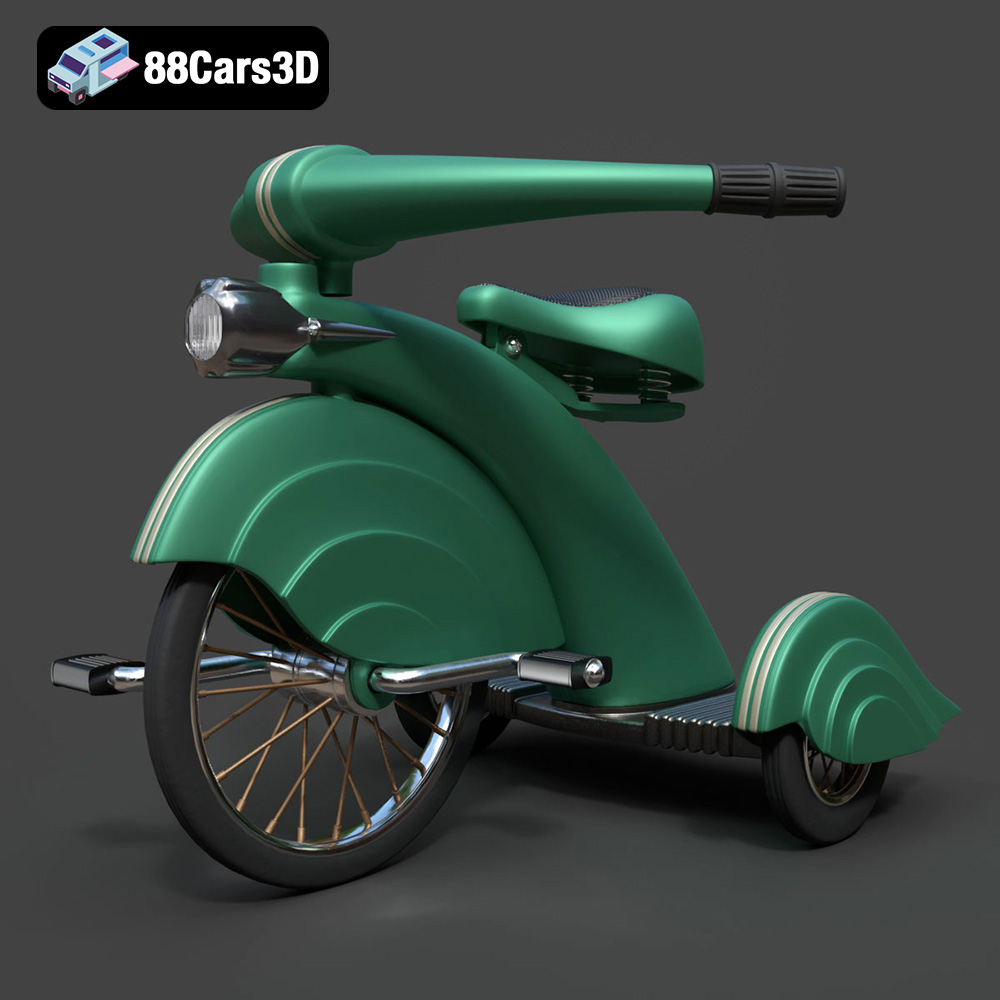
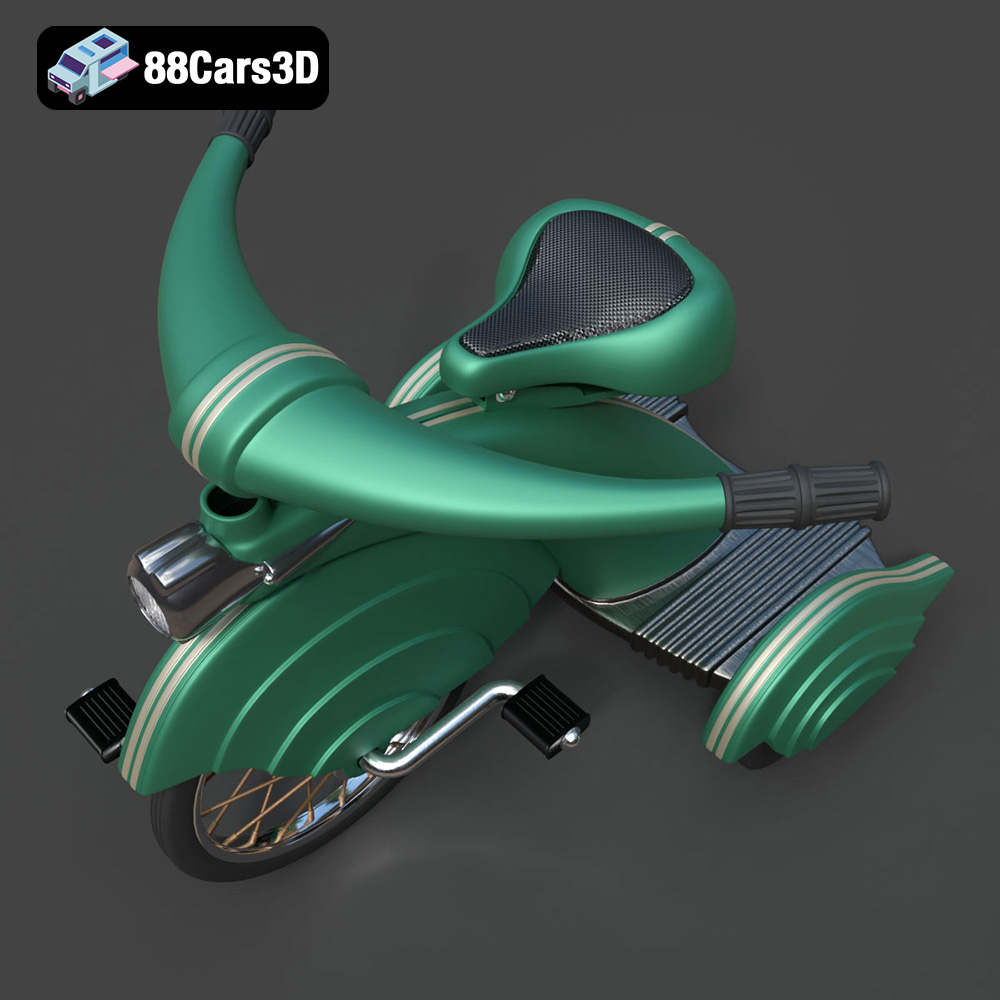
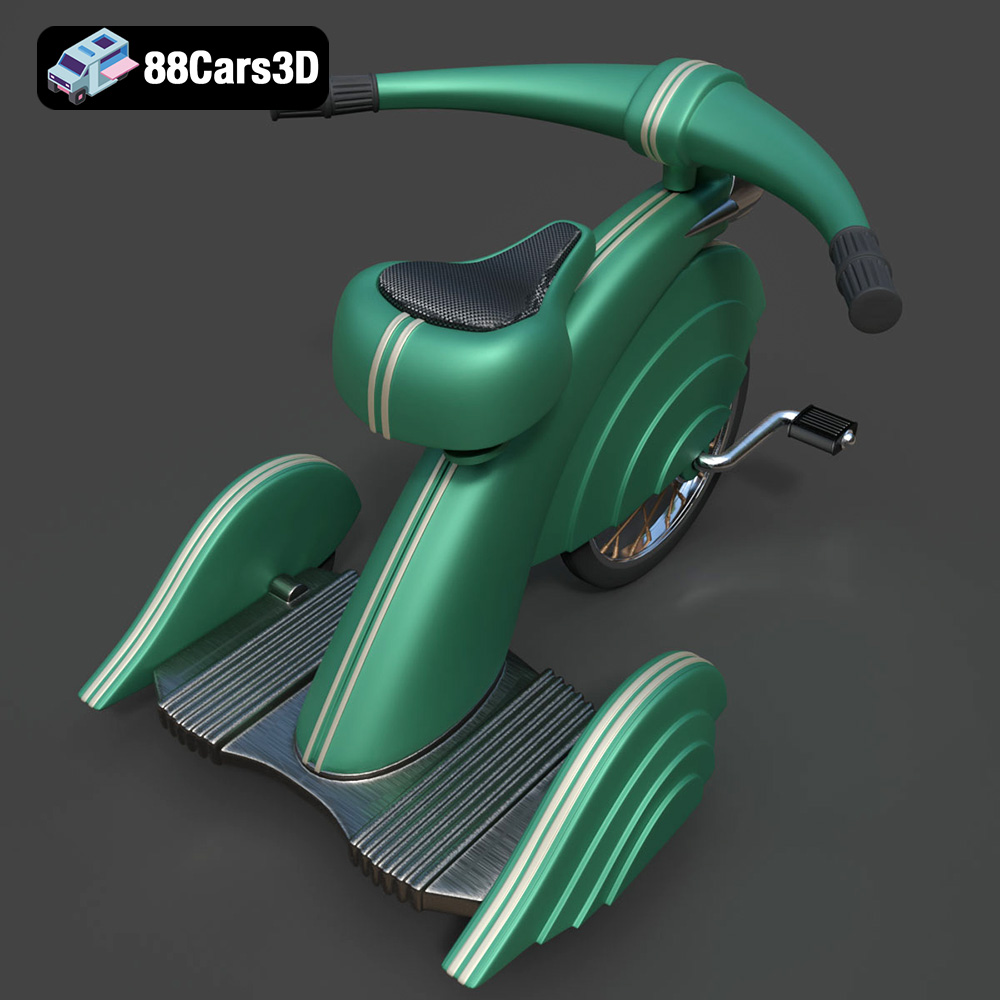
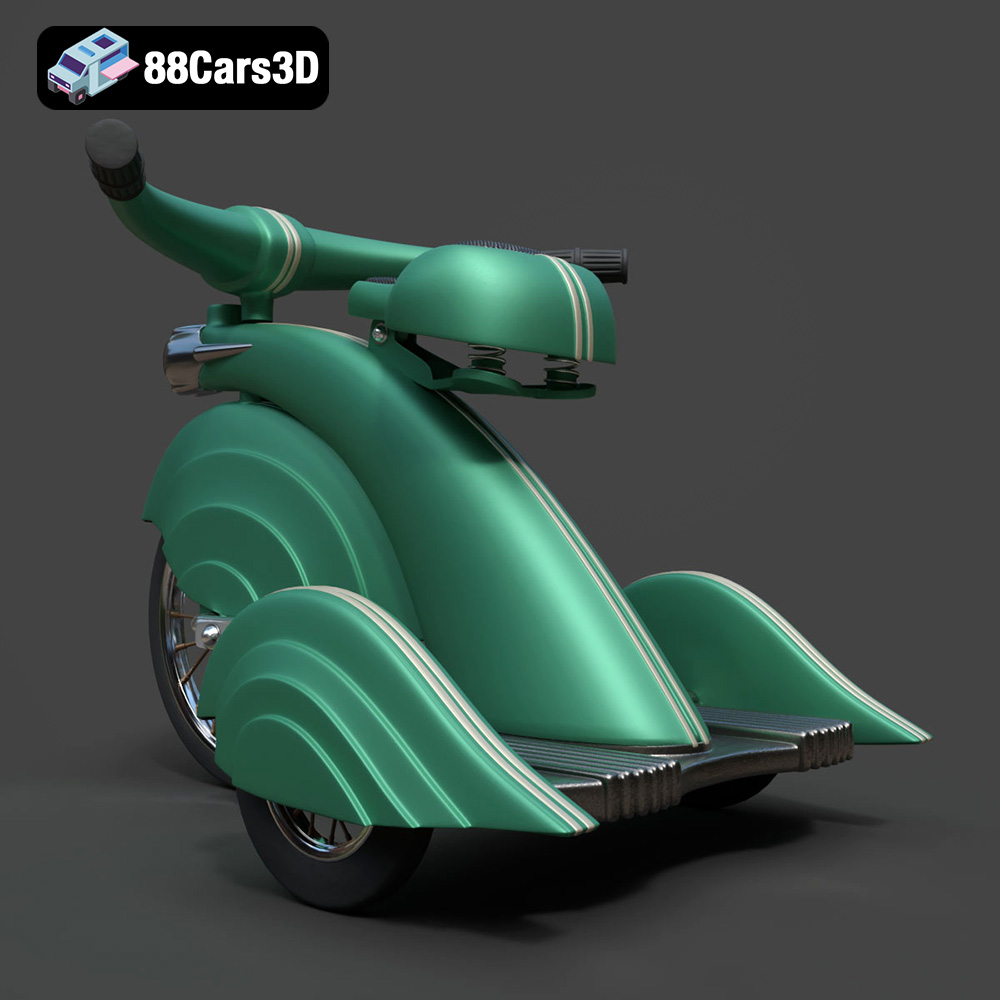
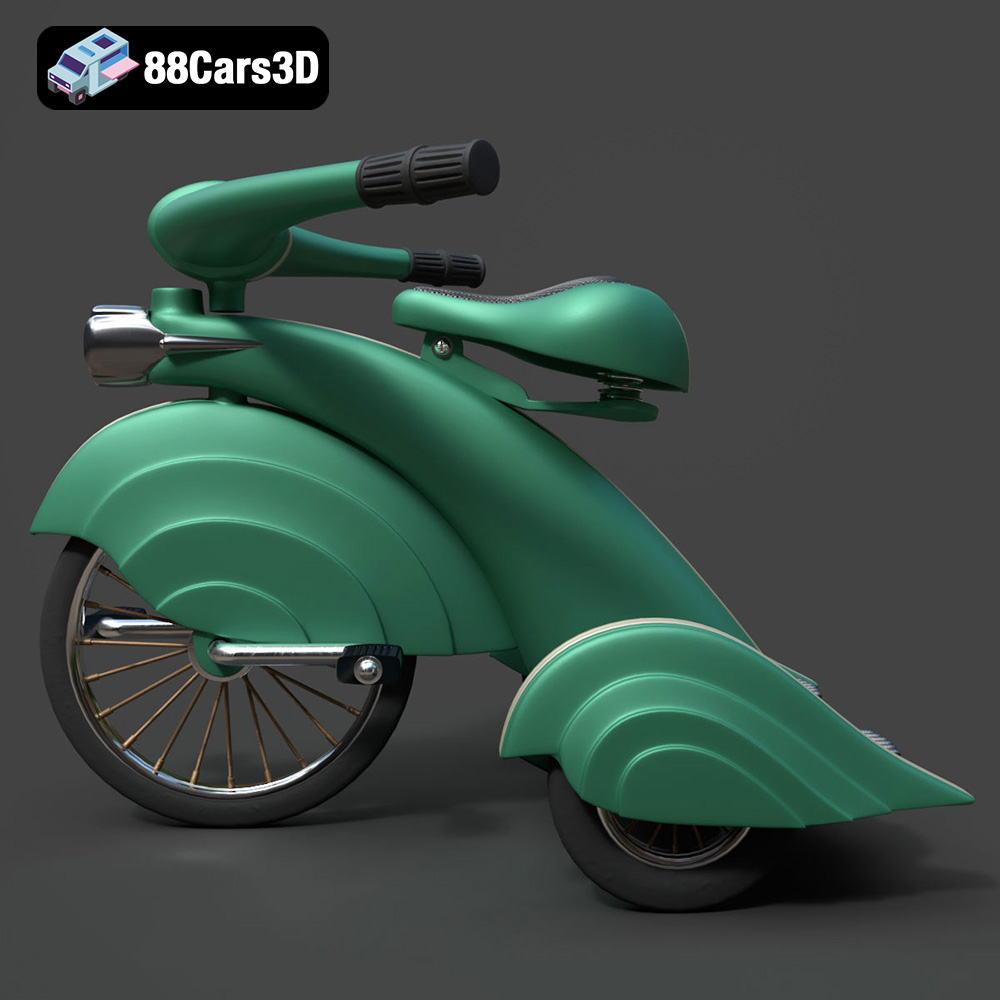
This 3D model is a digital recreation inspired by the robust and charming tricycles of the 1930s. The artists at 88cars3d.com have captured the essence of vintage steel construction, from the oversized front wheel that defined early designs to the elegantly curved handlebars and the simple, yet iconic, saddle seat. Every proportion, every curve, and every subtle detail reflects the period, ensuring that the model feels genuinely authentic. The solid rubber tires, often a subtle but crucial detail, are accurately represented, contributing to the overall realistic aesthetic. This dedication to historical accuracy makes the model ideal for projects requiring a touch of genuine retro flair, whether it’s for historical visualizations, period-specific advertising, or museum exhibits.
Beyond its visual appeal, the Vintage Tricycle 1930 3D Model boasts impressive mechanical and structural accuracy. The front-wheel drive pedal mechanism, characteristic of tricycles from that era, is precisely modeled, as is the detailed rear axle connection and the properly aligned steering pivot. These elements are not merely static representations; the separate wheels and pedals are designed to allow for realistic animation, bringing the tricycle to life in animated shorts or interactive experiences. The tubular steel frame construction is evident, with representations of frame welds and joint structures that further enhance its realism and grounding in physical engineering principles. This level of detail is critical for close-up renders and for users who might need to dissect the model for educational or design analysis purposes.
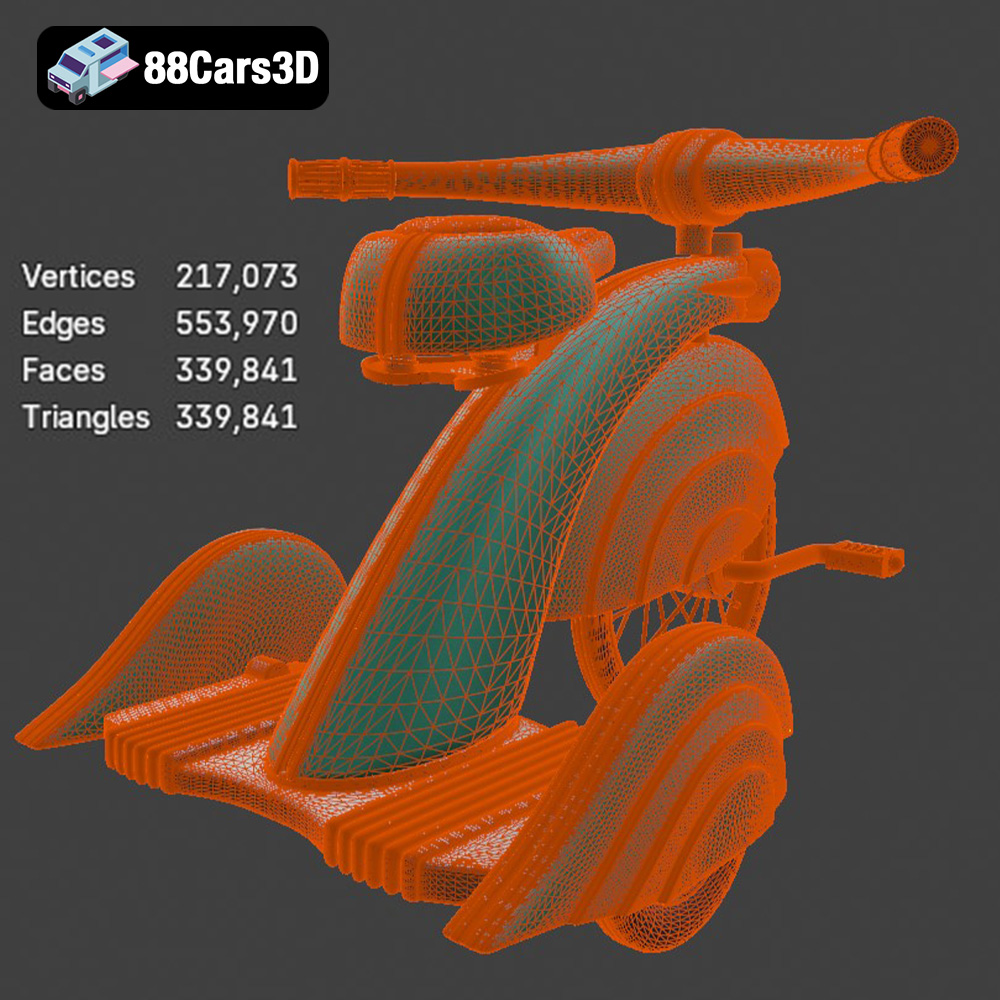
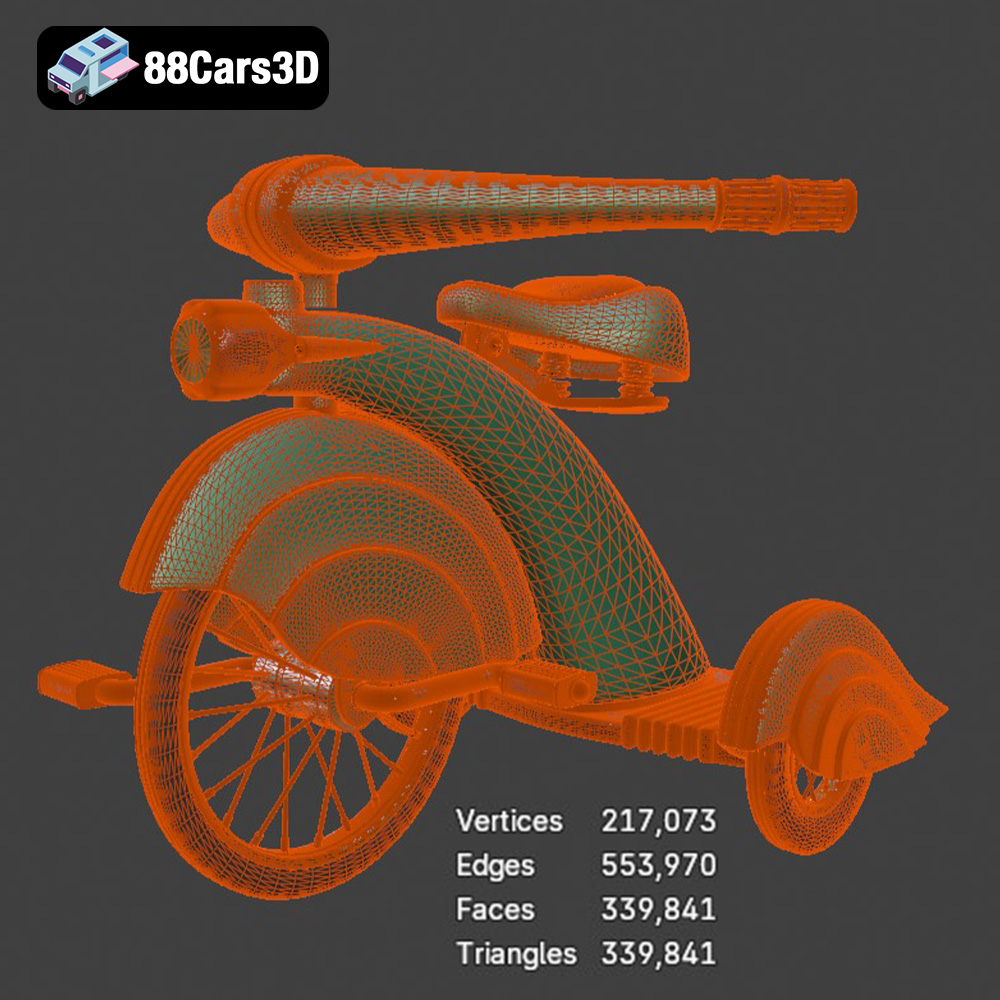
A truly professional 3D model must balance visual fidelity with technical efficiency. The **Vintage Tricycle 1930 3D Model** excels here with its clean, well-organized mesh structure and optimized polygon flow. This means that while it maintains high detail for rendering, its underlying geometry is efficient enough for real-time applications like game development or AR/VR. The polygon count, though not explicitly stated, would be intelligently managed, providing sufficient detail for smooth curves and intricate parts without overburdening game engines. Proper UV mapping (implicit in “clean topology” and “optimized polygon flow”) ensures that textures can be applied without distortion, and the thoughtful pivot setup for wheel rotation and steering facilitates easy animation and interaction. This optimization ensures the model performs beautifully across a spectrum of platforms and uses, from high-end automotive rendering to lightweight game assets.
The true value of a versatile 3D asset like the **Vintage Tricycle 1930 3D Model** shines brightest when seamlessly integrated into professional production workflows. Its availability in multiple formats and its optimized structure make it a prime candidate for a myriad of creative endeavors.
For projects demanding photorealistic visuals, the tricycle model provides an excellent foundation for high-fidelity rendering.
For interactive experiences, game development, and real-time visualization, the tricycle’s optimized nature and specific file formats are indispensable.
The rise of augmented and virtual reality creates new avenues for 3D content.
The utility of a comprehensive 3D model extends far beyond rendering pixels on a screen. With the advent of accessible 3D printing technology, digital models can transition into tangible objects, and the **Vintage Tricycle 1930 3D Model** is meticulously prepared for this exciting leap.
The inclusion of an `.stl` file specifically caters to the growing community of 3D printing enthusiasts and professionals. The `.stl` format represents the model’s geometry as a triangulated surface, optimized for manufacturing. The product description for the Vintage Tricycle provides detailed 3D print settings, which are crucial for a successful print:
This comprehensive guidance ensures that anyone, from a hobbyist to a professional model maker, can successfully reproduce the vintage charm of the tricycle in a physical form.
While `.stl` is the standard for direct 3D printing, the `.ply` format offers a different avenue for precision and analysis. As a format capable of storing exact vertex and face information, it’s often used in scenarios where the mesh needs to be analyzed for its exact geometric properties, or potentially even for re-engineering projects. For instance, an educational institution might use the `.ply` file to perform simulations on the tricycle’s structural integrity, or a design firm might adapt the geometry within a CAD environment for a modern interpretation of a vintage design. While a simple tricycle might not immediately suggest complex analysis, its inclusion broadens the model’s potential, catering to advanced users in fields like industrial design, reverse engineering, or academic studies.
The **Vintage Tricycle 1930 3D Model** is not merely a static digital representation; it’s a dynamic asset that can be tailored and deployed in a multitude of creative scenarios, empowering artists and developers to tell richer stories and build more immersive worlds.
Consider a high-end advertising campaign for a children’s clothing line or a vintage-inspired lifestyle brand. The tricycle, with its undeniable nostalgic appeal, could be the hero prop in a beautifully rendered scene. Imagine:
Such visualizations not only capture attention but also convey a deep sense of authenticity and emotional connection, all facilitated by the high-quality asset from 88cars3d.com.
In the realm of interactive entertainment, assets like the Vintage Tricycle are essential for world-building and narrative immersion.
Beyond commercial applications, the Vintage Tricycle holds significant value for education and cultural preservation.
The ability to modify seat material texture or configure lighting allows for diverse presentations, enhancing both educational and archival projects.
In the realm of 3D modeling, the pursuit of realism, versatility, and technical excellence is paramount. The **Vintage Tricycle 1930 3D Model** embodies these principles, offering a meticulously crafted asset that transcends mere aesthetics to become a powerful tool for professionals across various industries. From its authentic 1930s design and robust mechanical detailing to its optimized topology and extensive file format support, this model is a testament to the high standards of modern 3D asset creation.
Whether you are an architect crafting a nostalgic visualization, a game developer building an immersive historical environment, an advertising agency seeking that perfect retro prop for automotive rendering, or a 3D printing enthusiast looking to bring a piece of history to life, this tricycle offers unparalleled value. Its comprehensive technical specifications and broad compatibility ensure seamless integration into any workflow, providing the flexibility and quality demanded by today’s leading projects. The availability of multiple formats, including `.blend`, `.fbx`, `.obj`, `.glb`, `.stl`, `.ply`, `.unreal`, and `.max`, signifies its readiness for anything from photorealistic renders to real-time game assets and tangible 3D prints.
Ultimately, investing in high-quality 3D models like the **Vintage Tricycle 1930 3D Model** from 88cars3d.com is an investment in efficiency, quality, and creative potential. It allows artists and developers to spend less time on asset creation and more time on refining their vision, delivering compelling content that truly stands out. Explore the possibilities and elevate your next project with this exceptional piece of digital heritage.
The Vintage Tricycle 1930 3D Model is a high-detail digital recreation of a classic early 20th-century three-wheeled bicycle designed for children. Inspired by 1930s craftsmanship, this model captures the nostalgic charm of vintage steel construction, oversized front wheel, curved handlebars, simple saddle seat, and solid rubber tires. This 3D model accurately represents the sturdy tubular frame, large front drive wheel with pedals, dual rear wheels, rear axle structure, classic fender detailing, and period-correct handlebar design. Built with clean topology and real-world scale accuracy, it is ideal for rendering, animation, historical visualization, game development, and AR/VR experiences.
$15.9
.1930s
.antiquetoy
.arvr
.blend
.classictricycle
.fbx
.gameasset
.glb
.max
.nostalgicdesign
.obj
.ply
.rendering
.retrobike
.simulation
.stl
.toy3dmodel
.unreal
.vintagetricycle