Unleashing Automotive Brilliance: Mastering 3D Car Models in Unreal Engine for Real-Time Visualization
The automotive industry is in a constant state of evolution, pushing the boundaries of design, engineering, and, critically, visualization. In this rapidly advancing landscape, Unreal Engine has emerged as the definitive platform for rendering breathtakingly realistic vehicles in real-time. Whether you’re a game developer aiming for unparalleled realism, an automotive designer iterating on concepts, or a marketing professional crafting immersive configurators, mastering Unreal Engine for 3D car models is no longer an option—it’s a necessity.
This comprehensive guide will dive deep into the technical workflows, best practices, and cutting-edge features that empower artists and developers to bring automotive brilliance to life within Unreal Engine. From initial project setup and model import to advanced material creation, real-time lighting, interactive experiences, and crucial optimization strategies, we’ll equip you with the knowledge to transform high-quality 3D car models into stunning, performant real-time assets. Prepare to unlock the full potential of your automotive projects, leveraging the power of Unreal Engine to deliver visuals that captivate and engage.
Setting the Stage: Unreal Engine Project Setup and Importing High-Quality Car Models
Embarking on an automotive visualization project in Unreal Engine begins with a solid foundation: proper project setup and the efficient import of your 3D car models. A well-configured project ensures optimal performance and a smooth workflow. For automotive projects, we often start with the “Blank” template or the “Automotive Product Design” template if it suits the specific needs, as it provides a good starting point for visualization and architectural applications. It’s crucial to enable necessary plugins early on, such as “Datasmith” for CAD import or “Variant Manager” for configurators, which significantly streamline the process.
When sourcing 3D car models, quality is paramount. Platforms like 88cars3d.com offer models specifically designed for Unreal Engine, featuring clean topology, PBR-ready materials, and efficient UV mapping. These assets often come in formats like FBX or USD, which Unreal Engine handles exceptionally well. The import process itself is straightforward but requires attention to detail. Utilizing the “Datasmith” importer is highly recommended for complex CAD data or large scenes, as it intelligently tessellates geometry, preserves hierarchy, and generates basic materials, saving countless hours. For more granular control over individual meshes, the standard FBX import pipeline offers robust options for mesh, material, and animation import settings. Always double-check scale, rotation, and coordinate systems during import to avoid later discrepancies.
Initial Project Configuration for Automotive Visualization
- Engine Scalability Settings: For high-fidelity automotive visualization, set your Engine Scalability to “Cinematic” or “Epic” to ensure maximum visual quality. Adjust this during development for performance profiling.
- Recommended Plugins:
- Datasmith: Essential for importing CAD data (e.g., from SolidWorks, CATIA, VRED) and maintaining scene hierarchy. Visit Unreal Engine documentation for detailed Datasmith workflows.
- Variant Manager: Crucial for building interactive configurators where users can switch between different car features, materials, or colors.
- Editor Scripting Utilities: Useful for automating repetitive tasks, such as renaming imported assets or batch-applying material instances.
- Content Structure: Establish a clear folder structure (e.g., “Vehicles,” “Materials,” “Environments,” “Blueprints”) from the outset to keep your project organized, especially with numerous car parts and variations.
Importing and Optimizing Your 3D Car Models
Once your project is ready, importing your 3D car model is the next step. High-quality car models typically range from 100,000 to 500,000 polygons for a single vehicle, sometimes exceeding millions for extremely detailed interiors. While Nanite handles high poly counts, it’s still good practice to have a reasonably optimized base mesh.
- Choosing the Right Format: FBX is the industry standard for static meshes and animations. USD (Universal Scene Description) is gaining traction for its robust scene description capabilities, ideal for complex automotive pipelines and virtual production. USDZ is the Apple-specific variant, primarily for AR applications.
- Datasmith Import Workflow:
- Navigate to “File > Import Datasmith” or “Create > Datasmith” in the Content Browser.
- Select your CAD or scene file.
- Configure import options: pay attention to “Geometry,” “Materials,” and “Hierarchy” settings. For car models, ensuring correct hierarchy is vital for animated parts or material assignments.
- Datasmith often generates “Master Materials” and “Material Instances,” which are excellent starting points for PBR setup.
- Standard FBX Import:
- Right-click in the Content Browser and select “Import.”
- Crucial settings in the FBX Import Options dialog:
- Geometry: Ensure “Combine Meshes” is unchecked if you want to retain individual parts (doors, wheels, interior components). Set “Normal Import Method” to “Import Normals and Tangents” if your model has custom normals.
- Materials: Select “Create New Materials” or “Do Not Create Materials” if you plan to create them from scratch.
- Scale: Verify the import scale to match Unreal’s default units (centimeters). Many 3D applications export in different scales, so adjustment might be necessary (e.g., 0.01 for meters).
Crafting Realism: PBR Materials and Advanced Shading in Unreal Engine
The visual fidelity of a 3D car model hinges critically on its materials. Physically Based Rendering (PBR) is the cornerstone of realism in Unreal Engine, accurately simulating how light interacts with surfaces. For automotive visualization, achieving photorealistic paint, glass, chrome, and intricate interior textures requires a deep understanding of PBR principles and the Unreal Engine Material Editor. Each component of a car—from its glossy exterior to its matte interior plastics—demands specific material properties to truly shine. For instance, car paint is a complex material, often requiring multiple layers: a base metallic color, a clear coat with reflection and Fresnel, and sometimes a flake layer. Understanding these layers and how to represent them within Unreal’s Material Editor is crucial for achieving that showroom finish.
Unreal Engine’s Material Editor provides an incredibly powerful node-based interface to build these complex materials. At its core, every PBR material relies on a set of texture maps: Base Color (Albedo), Normal, Roughness, Metallic, and Ambient Occlusion. For automotive assets, specific channels like opacity (for glass), emissive (for headlights), and dedicated clear coat properties become essential. Advanced techniques involve using blend materials, material functions, and even ray-traced materials for unparalleled accuracy on reflective surfaces. The goal is not just to make the material look good, but to make it *behave* correctly under various lighting conditions, just as it would in the real world. Experimentation with parameters and careful calibration against real-world references are key to unlocking true photorealism for your car models.
Unreal Engine PBR Material Creation Workflow
When creating materials for automotive assets, precision is key:
- Base PBR Setup: Start with a basic PBR material using Base Color, Metallic, Roughness, and Normal maps.
- Base Color (Albedo): Represents the diffuse color without any lighting information. For car bodies, this might be a solid color vector, while interiors will use detailed texture maps.
- Metallic: A binary value (0 or 1) for metals. Car bodies are metallic (1), while plastics and rubber are non-metallic (0). Use masked textures for areas that blend these properties.
- Roughness: Controls the specularity and blurriness of reflections. A low roughness (near 0) means highly reflective, like polished chrome or clear coat. High roughness (near 1) scatters light, like matte plastic.
- Normal Map: Provides surface detail without adding geometry, essential for subtle imperfections or fine leather grain.
- Ambient Occlusion (AO): Helps ground the model by darkening crevices, usually multiplied with the Base Color.
- Car Paint Shader: This is one of the most complex but rewarding materials.
- Clear Coat: Unreal Engine has a dedicated Clear Coat input in the material node, allowing you to simulate the reflective, glossy top layer of car paint. Adjust Clear Coat Roughness and Normal for subtle variations.
- Flake Layer: For metallic paints, a flake normal map (often tiled) and a subtle Fresnel effect can create realistic metallic flakes that catch the light at different angles.
- Dirt/Grime Layers: Often achieved by blending a second material (e.g., a dusty material) based on vertex colors, masks, or world-space Z-axis for a more weathered look.
- Glass Materials: Achieve realistic glass by using translucency, refraction, and proper PBR values.
- Set Material Domain to “Surface” and Blend Mode to “Translucent.”
- Use a low Roughness (0.01-0.05) and a Metallic of 0.
- Adjust Opacity, and consider using the “Refraction” input for physically accurate light bending. For performance, simpler opaque glass with masked reflection capture can be used for distant objects.
- Tire Rubber: Utilize high roughness values, a dark Base Color, and a detailed Normal Map for tire treads and sidewall text. Metallic should be 0.
Advanced Shading Techniques and Optimization
- Material Instances: Always create Material Instances from your master materials. This allows you to quickly change parameters (color, roughness, texture scales) without recompiling the shader, vastly speeding up iteration and reducing draw calls.
- Material Functions: Encapsulate common node networks (e.g., a “Car Paint Flake” function) into reusable functions to keep your master materials clean and modular.
- Ray Tracing for Reflections: For the ultimate in reflection accuracy, enable Hardware Ray Tracing in your project settings and ensure your materials are compatible. This is particularly impactful on highly reflective surfaces like car bodies and chrome. However, be mindful of the performance cost.
- Texture Resolution: Use appropriate texture resolutions. For close-up details like dashboard dials, 2K or 4K maps might be necessary. For large, uniform surfaces like the car body, a single 4K Base Color map might suffice, with detail normals layered on top. For less visible parts, 1K or 512px textures are acceptable.
Illuminating the Scene: Real-Time Lighting with Lumen and Traditional Methods
Lighting is the soul of any visualization, and in automotive rendering, it can make or break the realism of your 3D car models. Unreal Engine offers a versatile array of lighting tools, from traditional static and dynamic lights to the revolutionary Lumen Global Illumination and Reflections system. Understanding how to harness these tools is crucial for creating stunning automotive scenes, whether for a product showcase, an interactive experience, or a cinematic sequence.
Lumen, Unreal Engine’s fully dynamic global illumination and reflections system, has transformed real-time lighting. It provides physically accurate indirect lighting and reflections for dynamic environments and real-time ray tracing, allowing light to bounce naturally off surfaces and illuminate the scene realistically. This is particularly impactful for car models, where the interplay of light and shadow, reflections on the bodywork, and the ambient bounce light off the environment truly bring the vehicle to life. However, Lumen is resource-intensive, so a balance between visual quality and performance is often necessary. Complementing Lumen, traditional light sources like Directional Lights (for sun/moon), Sky Lights (for ambient environmental light), Spot Lights, and Point Lights are indispensable for shaping the scene, highlighting specific features, and adding dramatic accents. Post-processing volumes also play a vital role, allowing fine-tuning of exposure, color grading, bloom, and other visual effects to achieve the desired mood and photographic quality for your automotive renders.
Leveraging Lumen for Dynamic Global Illumination
Lumen provides a robust solution for real-time global illumination and reflections, crucial for dynamic automotive scenes:
- Enabling Lumen: In Project Settings > Rendering, set “Global Illumination” and “Reflections” methods to “Lumen.” This activates the system project-wide.
- Lumen Scene Considerations: Lumen works by creating a software ray-tracing representation of your scene. Ensure your geometry is reasonably watertight and correctly scaled for optimal Lumen results. High-density meshes benefit greatly from Nanite to be effectively used with Lumen.
- Lumen Performance: While powerful, Lumen can be demanding. Adjust “Lumen Global Illumination Quality” and “Lumen Reflection Quality” in Post Process Volumes to balance visual fidelity with performance. For static environments, consider baking lighting with Lightmass for specific scenarios if performance is a critical constraint.
- Workflow with HDRIs: Combine Lumen with a Sky Light using an HDR (High Dynamic Range) cubemap. The HDR will provide initial environment lighting and reflections, which Lumen then enhances with bounced light. This is an industry-standard practice for realistic automotive lighting.
Traditional Lighting Methods and Best Practices
Even with Lumen, traditional lights remain essential for precise control and artistic direction:
- Directional Light: Simulates the sun or moon. Crucial for establishing primary light direction and sharp shadows. For outdoor automotive scenes, it’s the primary light source.
- Sky Light: Captures the distant parts of the scene and applies it as ambient light. For realistic automotive renders, pair it with an HDRI (High Dynamic Range Image) cubemap in its “Cubemap” slot. This provides natural, diffused lighting and reflections.
- Spot Lights and Point Lights: Use these for localized lighting, such as highlighting specific car features, interior lighting, or simulating studio lights in a product visualization setup. Adjust their attenuation radius and intensity carefully.
- Exposure Control: Use a Post Process Volume to manage exposure. Auto Exposure can be useful, but manual exposure control often yields more consistent and artistically controlled results for showcasing your vehicle.
- Shadows: For sharp, detailed shadows, especially on car bodies, ensure your Directional Light’s “Source Angle” is appropriate (smaller for sharper shadows) and that “Cast Ray Traced Shadows” is enabled if using hardware ray tracing.
- Reflection Captures: While Lumen handles dynamic reflections, for static reflective surfaces or specific baked effects, Reflection Capture actors can still be valuable. Place them strategically around your car to capture the environment accurately.
Driving Interaction: Blueprint Scripting and Nanite for Automotive Applications
Beyond static renders, Unreal Engine excels at creating interactive experiences. Blueprint Visual Scripting empowers designers and artists to build complex functionalities without writing a single line of code, making it invaluable for automotive configurators, interactive demos, and virtual showrooms. Simultaneously, Nanite, Unreal Engine 5’s virtualized geometry system, revolutionizes how we handle incredibly high-detail 3D car models, making previously impossible polygon counts a reality in real-time.
Blueprint allows for dynamic control over material parameters (e.g., changing car color or wheel types), switching between different car components, triggering animations (like opening doors), and creating sophisticated user interfaces. A typical automotive configurator might use Blueprint to manage an array of material instances for paint colors, toggle the visibility of different wheel meshes, or animate the interior to showcase features. When combined with Nanite, artists can import incredibly dense, CAD-level geometry directly into Unreal Engine without worrying about traditional polygon budget constraints or complex LOD setups. This means pristine car models with millions of polygons for intricate details on the dashboard, grille, or engine bay can be rendered efficiently, delivering an unprecedented level of visual fidelity and truly enabling “design fidelity” in real-time. This pairing of interactive control with uncompromising visual detail is what sets Unreal Engine apart for modern automotive visualization.
Blueprint Visual Scripting for Interactive Automotive Experiences
Blueprint is the backbone of interactivity in Unreal Engine. For automotive projects, it enables dynamic customization and showcases:
- Creating a Car Configurator:
- Material Swapping: Use “Set Material” or “Set Material Instance Dynamic” nodes to change the car’s paint, interior trim, or wheel materials. Expose parameters in Material Instances to Blueprint for dynamic color changes.
- Component Visibility: Toggle the visibility of different car parts (e.g., spoilers, wheel variations) using “Set Visibility” nodes.
- Animation Control: Use “Play Animation” or “Set Relative Location/Rotation” to animate doors opening, trunk lifting, or seats adjusting. This often involves creating “Skeletal Meshes” for animatable parts or using “Level Sequences” called from Blueprint.
- UI Integration: Connect UMG (Unreal Motion Graphics) widgets (buttons, sliders) to Blueprint logic to drive these changes, creating an intuitive user interface for the configurator.
- Camera Controls and Turntables:
- Orbital Camera: Create a Blueprint class for an orbital camera that rotates around the car, allowing users to inspect it from all angles. This involves using events like “Event Tick” and “Add Controller Yaw/Pitch Input.”
- Automated Turntable: For presentations, a simple Blueprint can rotate the car mesh or the camera around the car continuously, often using a “Timeline” node for smooth animation.
- Real-time Data Display: Use Blueprint to fetch and display dynamic information about the car (e.g., engine specs, price) from data tables or external sources, further enriching the interactive experience.
Harnessing Nanite for High-Fidelity Car Models
Nanite in Unreal Engine 5 is a game-changer for high-fidelity automotive models:
- Enabling Nanite: For static meshes, simply right-click on the mesh in the Content Browser and select “Nanite > Enable Nanite.” You can also enable it during import via Datasmith or FBX settings.
- Benefits for Car Models:
- Polygon Freedom: Import incredibly dense CAD models (millions of polygons per component) without worrying about performance hits or manual LOD creation. This means pristine details on grilles, badges, and intricate interior elements are rendered efficiently.
- Performance: Nanite intelligently streams and renders only the necessary detail, drastically reducing draw calls and vertex counts, even for complex scenes with multiple high-poly vehicles.
- Simplified Workflow: Artists can focus on modeling detail rather than meticulous polygon optimization and manual LOD generation.
- Nanite Limitations & Considerations:
- Static Meshes Only: Nanite currently works only with static meshes. Animated parts (like wheels or doors that open via skeletal animation) still require traditional skeletal mesh workflows and potentially manual LODs.
- Transparent Materials: Nanite meshes with transparent materials (e.g., glass) might have sorting issues or require specific material setups. Often, it’s better to keep transparent elements as non-Nanite meshes or use specific Lumen settings for accurate glass reflections.
- Foliage/Instanced Meshes: While Nanite supports instanced static meshes, be mindful of its performance overhead with extreme instances compared to traditional instancing for things like small screws or bolts.
Performance and Polish: LODs, Optimization, and Cinematic Sequences
Achieving stunning visuals in Unreal Engine is only half the battle; maintaining optimal performance, especially for real-time applications like games, AR/VR, or interactive configurators, is equally critical. This involves a strategic approach to Level of Detail (LOD) management, overall scene optimization, and careful consideration of target platforms. Beyond performance, polishing your presentation through cinematic sequences adds a professional sheen, transforming an interactive model into a compelling visual narrative.
While Nanite significantly alleviates the burden of LODs for static meshes, traditional LOD generation remains vital for skeletal meshes (like animated vehicle components), transparent objects, and scenarios where Nanite might not be suitable (e.g., mobile AR/VR). Effective LODs ensure that models simplify gracefully as they move further from the camera, reducing rendered polygons and draw calls. Optimization extends beyond geometry to efficient material usage, texture streaming, and careful management of lighting and post-processing effects. For presenting your automotive creations, Unreal Engine’s Sequencer offers a powerful non-linear editor for crafting breathtaking cinematic walkthroughs and product reveals. It allows precise control over camera movements, character animations (if applicable), visual effects, and dynamic lighting changes, turning a simple car model into a captivating storytelling experience. Combining performance optimization with cinematic polish ensures your automotive visualizations not only run smoothly but also leave a lasting impact.
LOD Management and Performance Optimization Strategies
Even with Nanite, robust optimization is essential for a fluid real-time experience:
- Traditional LODs for Non-Nanite Meshes:
- Skeletal Meshes: For wheels, doors, or interiors that need to animate, generate multiple LODs (e.g., LOD0 – full detail, LOD1 – 50% polygons, LOD2 – 25% polygons, etc.) using the “LOD Settings” within the Static Mesh Editor.
- Transparent Objects: Glass, headlights, and tail lights often benefit from traditional LODs or simplified materials at a distance to prevent overdraw and sorting issues.
- Auto LOD Generation: Unreal Engine can automatically generate LODs for static meshes (pre-Nanite workflow) and skeletal meshes. Adjust the “Number of LODs” and “Reduction Settings” for optimal results.
- Material Optimization:
- Material Instances: As mentioned, use material instances heavily to reduce shader permutations and draw calls.
- Texture Packing: Combine grayscale texture maps (e.g., Roughness, Metallic, AO) into a single RGB channel (e.g., RMA texture) to reduce texture sampling and memory usage.
- Complexity: Keep master materials as efficient as possible. Complex node networks increase shader compilation time and rendering overhead.
- Texture Streaming and Resolution:
- Mips: Ensure all textures have appropriate MipMaps enabled. Unreal Engine automatically generates these, allowing it to stream lower-resolution textures for objects further away.
- Max Texture Size: Set appropriate “Max Texture Size” in texture properties to prevent unnecessarily high-resolution textures from hogging memory.
- Lighting Optimization:
- Light Counts: Minimize the number of dynamic lights, especially overlapping ones. Use baked lighting for static elements where possible (less relevant with Lumen but still valid for some scenarios).
- Ray Tracing: While powerful, hardware ray tracing is demanding. Optimize its usage by adjusting sample counts, enabling denoisers, and considering selective application for specific effects if performance is critical.
- Profiling Tools: Use Unreal Engine’s built-in profilers (e.g., “stat gpu,” “stat fps,” “stat unit” in the console, or the “Session Frontend” profiler) to identify performance bottlenecks.
Creating Cinematic Automotive Content with Sequencer
Sequencer is Unreal Engine’s non-linear cinematic editor, perfect for showcasing your 3D car models:
- Camera Animation: Create dynamic camera paths using keyframes or spline curves. Add “Cine Camera Actors” for realistic camera properties (focal length, aperture, depth of field).
- Vehicle Animation: Animate car doors, wheels, or suspension using “Level Sequence” tracks that control skeletal mesh animations or transform properties. You can also import pre-made car animations.
- Lighting Changes: Keyframe light intensity, color, or visibility to create dramatic shifts in mood or highlight specific features.
- Visual Effects: Integrate Niagara particle systems for effects like exhaust smoke, dust, or rain to enhance realism.
- Post-Process Control: Animate post-process volume settings (e.g., color grading, bloom, vignette, lens flares) over time to achieve a polished cinematic look.
- Exporting: Render your sequence to an image sequence (EXR, PNG) or video (AVI) for high-quality output, ideal for marketing materials or presentations.
Advanced Applications: Automotive Configurators, Virtual Production, and AR/VR
The capabilities of Unreal Engine extend far beyond simple renders, enabling a suite of advanced applications that are transforming the automotive industry. From fully interactive configurators that allow customers to personalize their dream car in real-time to virtual production workflows for stunning commercials and seamless integration into AR/VR experiences, Unreal Engine is at the forefront of innovation. These applications leverage the engine’s real-time rendering prowess, Blueprint scripting, and optimization features to deliver immersive and highly engaging experiences.
Automotive configurators, often powered by Unreal Engine, allow users to explore different paint colors, wheel options, interior trims, and even view the car in various environments. This level of interaction empowers both sales and design teams, providing a dynamic tool for product showcase and iterative design. Virtual production, particularly with LED walls, integrates real-time Unreal Engine environments with physical vehicles and actors, blurring the lines between digital and physical sets for unparalleled cinematic results. For AR/VR, the challenge lies in optimizing these detailed car models for mobile and headset platforms while maintaining visual quality and performance. This often involves careful LOD management, optimized materials, and streamlined scene complexity. By embracing these advanced applications, automotive professionals can unlock new possibilities for design, marketing, and customer engagement, revolutionizing how we interact with vehicles long before they hit the road.
Building Advanced Automotive Configurators and Interactive Demos
Take your interactive car experiences to the next level with sophisticated configurators:
- Blueprint-Driven UI: Create a responsive and intuitive user interface using UMG (Unreal Motion Graphics). Link UI elements (buttons, sliders, dropdowns) to Blueprint logic that manipulates car properties (materials, meshes, animations).
- Variant Manager: For complex configurators with many options and dependencies, Unreal Engine’s “Variant Manager” is indispensable. It allows you to define different configurations (e.g., “Sport Trim,” “Luxury Trim”) and effortlessly switch between them, automatically managing material, mesh, and actor property changes. This is far more efficient than manual Blueprint logic for large-scale customization.
- Dynamic Environments: Allow users to switch between different environments (e.g., showroom, urban street, nature) to see how the car looks under varied lighting conditions. This involves swapping out level streaming volumes or controlling lighting scenarios via Blueprint.
- Hotspot Interactions: Implement interactive hotspots on the car (e.g., clicking on a door to open it, clicking on the dashboard to zoom into the interior details) using line traces and Blueprint event handlers.
- Physics Simulation for Realism: For advanced demos, integrating physics can add another layer of realism. Unreal Engine’s Chaos physics engine allows for realistic vehicle dynamics, suspension simulation, and collision responses. While a full driving simulation can be complex, subtle physics (e.g., car body gently swaying) can enhance immersion.
Virtual Production and LED Wall Workflows
Unreal Engine is at the heart of modern virtual production, especially for automotive advertising:
- LED Wall Integration: Render real-time Unreal Engine environments onto LED walls, which serve as dynamic backgrounds for a physical car and actors. This provides realistic in-camera effects and reflections directly on the car.
- N Display Configuration: Utilize Unreal Engine’s “N Display” framework to distribute your render across multiple screens (LED walls), ensuring seamless synchronization and correct perspective for the camera.
- Camera Tracking: Integrate real-world camera tracking systems with Unreal Engine to match the perspective of the virtual environment to the physical camera’s movement, creating the illusion of the car being genuinely within the digital scene.
- In-Camera VFX: Leverage the “In-Camera VFX” template in Unreal Engine to set up virtual production stages, enabling real-time compositing and immediate feedback during shoots.
- Live Compositing: Use Unreal Engine’s Composure plugin for live compositing physical elements (car, talent) with virtual backgrounds, delivering high-quality visual effects on set.
AR/VR Optimization for Automotive Applications
Bringing high-fidelity car models to AR/VR demands meticulous optimization:
- Target Platform Constraints: Understand the performance limitations of your target AR/VR hardware (e.g., mobile AR, standalone VR headsets). These platforms have much stricter polygon, draw call, and texture memory budgets.
- Aggressive LODs: Implement aggressive LODs for all meshes, especially for AR/VR. For VR, prioritize visual quality for objects close to the viewer, but heavily reduce detail for distant elements.
- Material Optimization: Simplify materials. Avoid complex shaders, excessive texture samples, or highly translucent materials. Use baked lighting for static elements where possible to reduce real-time lighting calculations.
- Occlusion Culling: Ensure effective occlusion culling to prevent rendering objects that are hidden behind others. Unreal Engine’s built-in culling usually works well, but manual occluder meshes can be beneficial in specific scenarios.
- Forward Shading Renderer: For VR, consider using the “Forward Shading Renderer” in Project Settings > Rendering. It often provides better performance for VR applications, especially with MSAA (Multi-Sample Anti-Aliasing).
- Dynamic Resolution: Implement dynamic resolution scaling to maintain a stable frame rate, sacrificing some pixel clarity when performance dips.
- AR-Specific Features: For mobile AR, leverage features like “ARCore” or “ARKit” integration for plane detection, hit testing, and scene understanding, allowing users to place and interact with 3D car models in the real world. Ensure models are exported in formats like USDZ for optimal iOS AR experience.
Conclusion: Driving Innovation with Unreal Engine and High-Quality 3D Car Models
The journey through mastering 3D car models in Unreal Engine reveals a powerful ecosystem designed to push the boundaries of real-time visualization. We’ve explored everything from the critical initial setup and importing processes, emphasizing the importance of high-quality assets available from platforms like 88cars3d.com, to crafting photorealistic PBR materials that truly capture the essence of automotive design. We delved into the intricacies of real-time lighting with Lumen and traditional methods, illuminating how light sculpts form and enhances realism.
Furthermore, we uncovered the transformative power of Blueprint scripting for creating engaging, interactive experiences and the revolutionary impact of Nanite on handling incredibly dense geometry. We also highlighted crucial optimization strategies, including LOD management, to ensure smooth performance across various platforms, and the art of cinematic storytelling with Sequencer. Finally, we touched upon advanced applications, from interactive configurators to virtual production and AR/VR, demonstrating how Unreal Engine empowers automotive professionals to innovate and captivate their audiences. By embracing these workflows and leveraging Unreal Engine’s cutting-edge features, you’re not just rendering cars; you’re crafting immersive experiences that redefine automotive design, marketing, and interaction. The road ahead for automotive visualization in Unreal Engine is bright, and with the tools and techniques discussed, you are well-equipped to drive that innovation forward.
Featured 3D Car Models
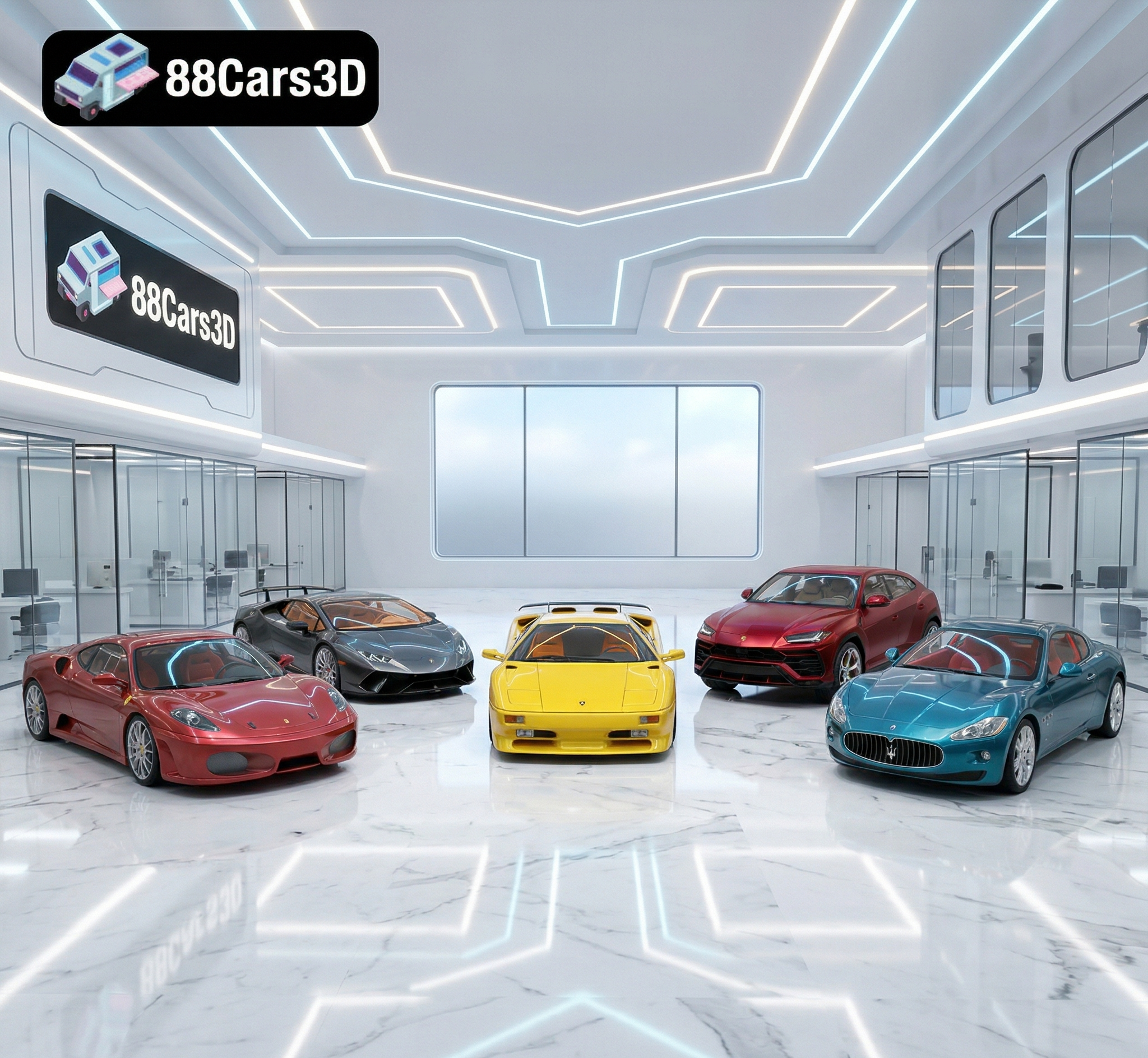
Texture: Yes | Material: Yes | 3D Printable: Yes. Download the Italian Thoroughbreds Bundle featuring 5 iconic 3D models: Lamborghini Huracán Performante, Ferrari 458 Italia, Lamborghini Urus, Diablo SV, and Maserati GT. Optimized for 4K rendering and 3D printing (STL included). Save 50% with this ultimate Italian vehicle collection.
Price: $199.99
View Product

Download the Elite Future Mobility Bundle featuring 4 highly optimized 3D models: Tesla Model S, Avatr 11, Li L9, and Zoox Robotaxi. Perfect for ArchViz, Smart City renders, and game dev. Optimized for Unreal Engine and Blender. Includes .fbx, .obj, and .max formats.
Price: $99
View Product
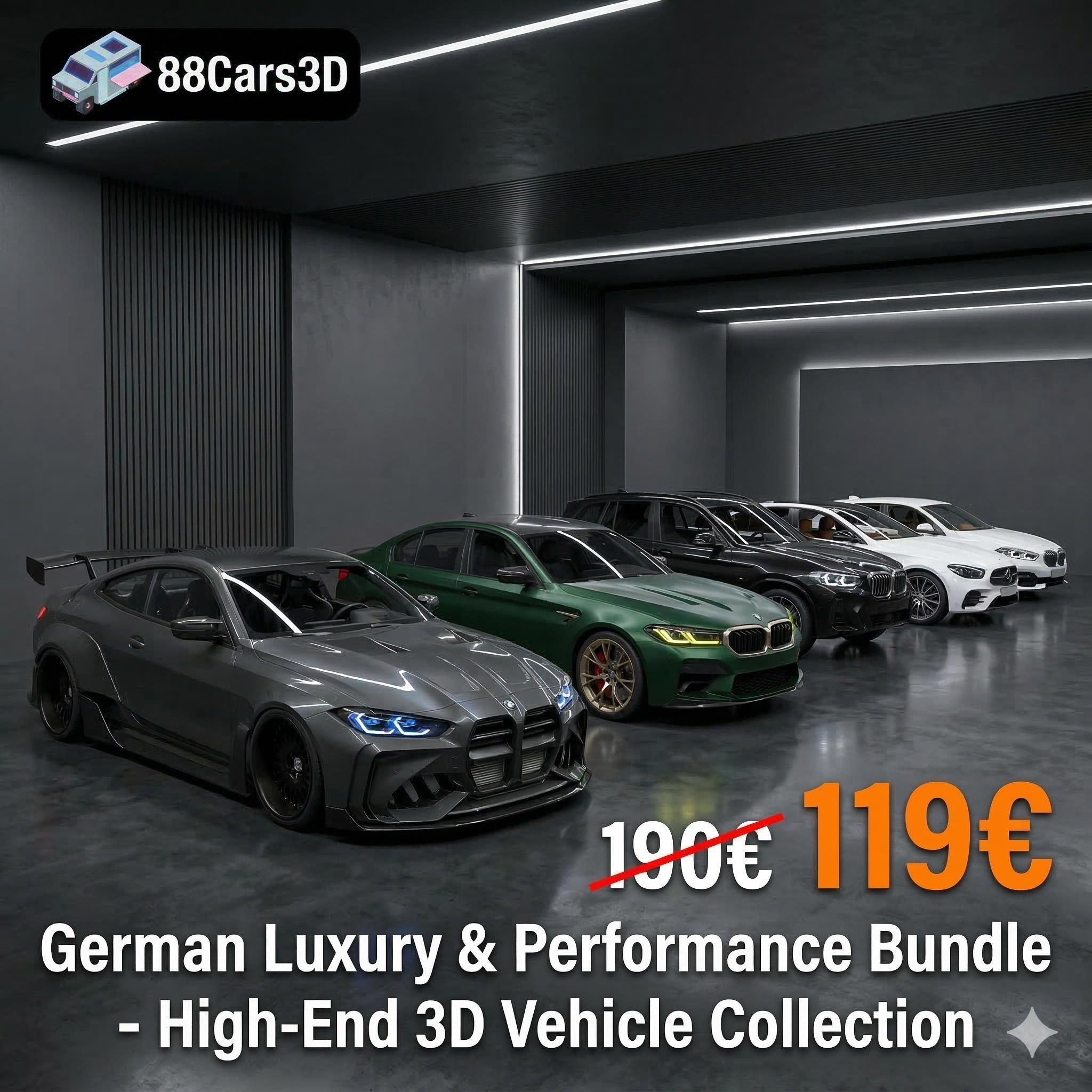
🚗 5 Iconic German Cars (BMW M4 G82, M5 CS, X3, 1 Series & Mercedes E-Class). ✅ Optimized for ArchViz: Ready for Corona & V-Ray. 💰 Save €71 with this limited-time collection! 🚀 Instant Download after purchase.
Price: $119
View Product
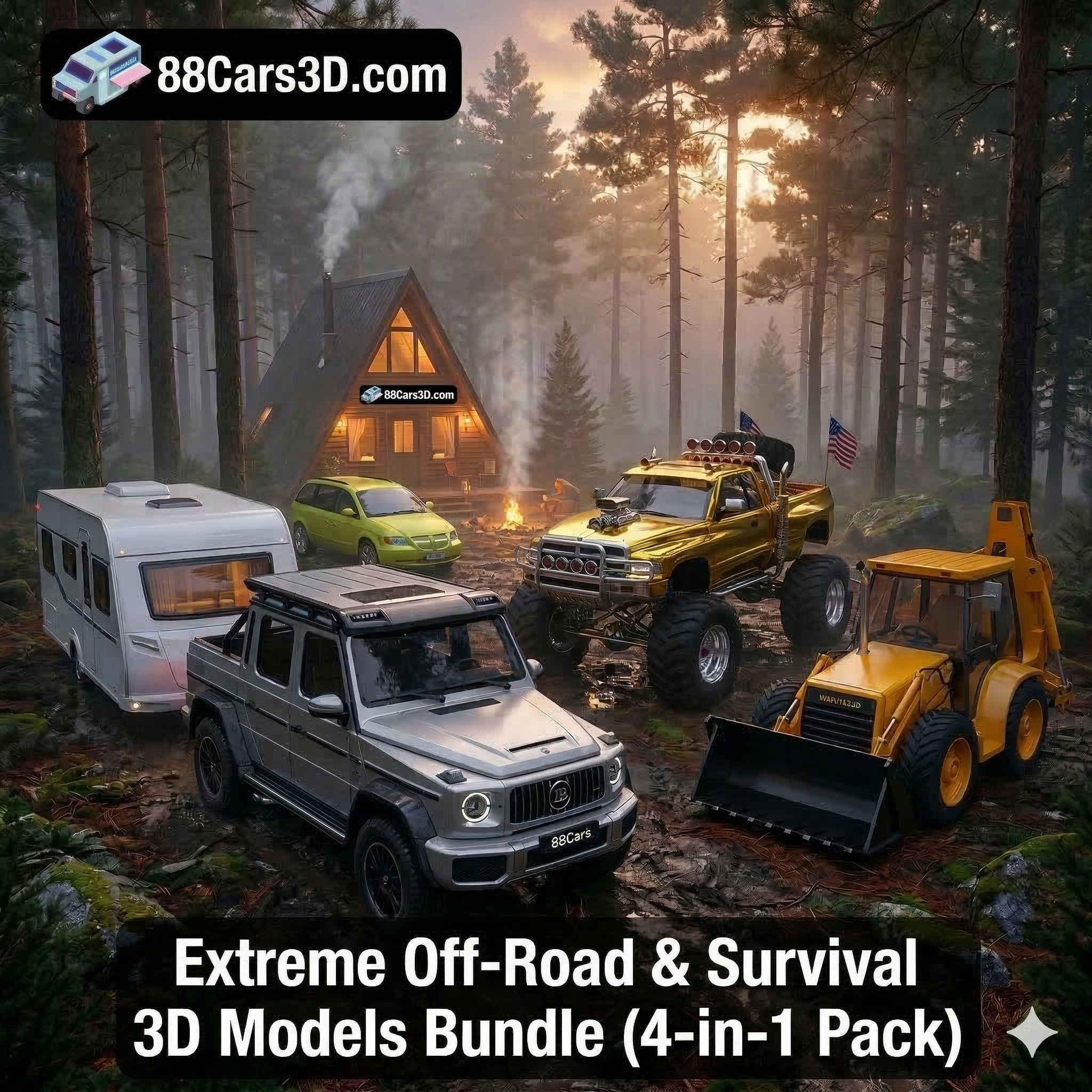
Download the Extreme Off-Road & Survival 3D Models Bundle! Includes the Brabus 800 Adventure, Dodge Ram Bigfoot, Spec Truck, and a Caravan. Save over €210 on this premium 4-in-1 off-grid vehicle pack for ArchViz and game development.
Price: $149.99
View Product
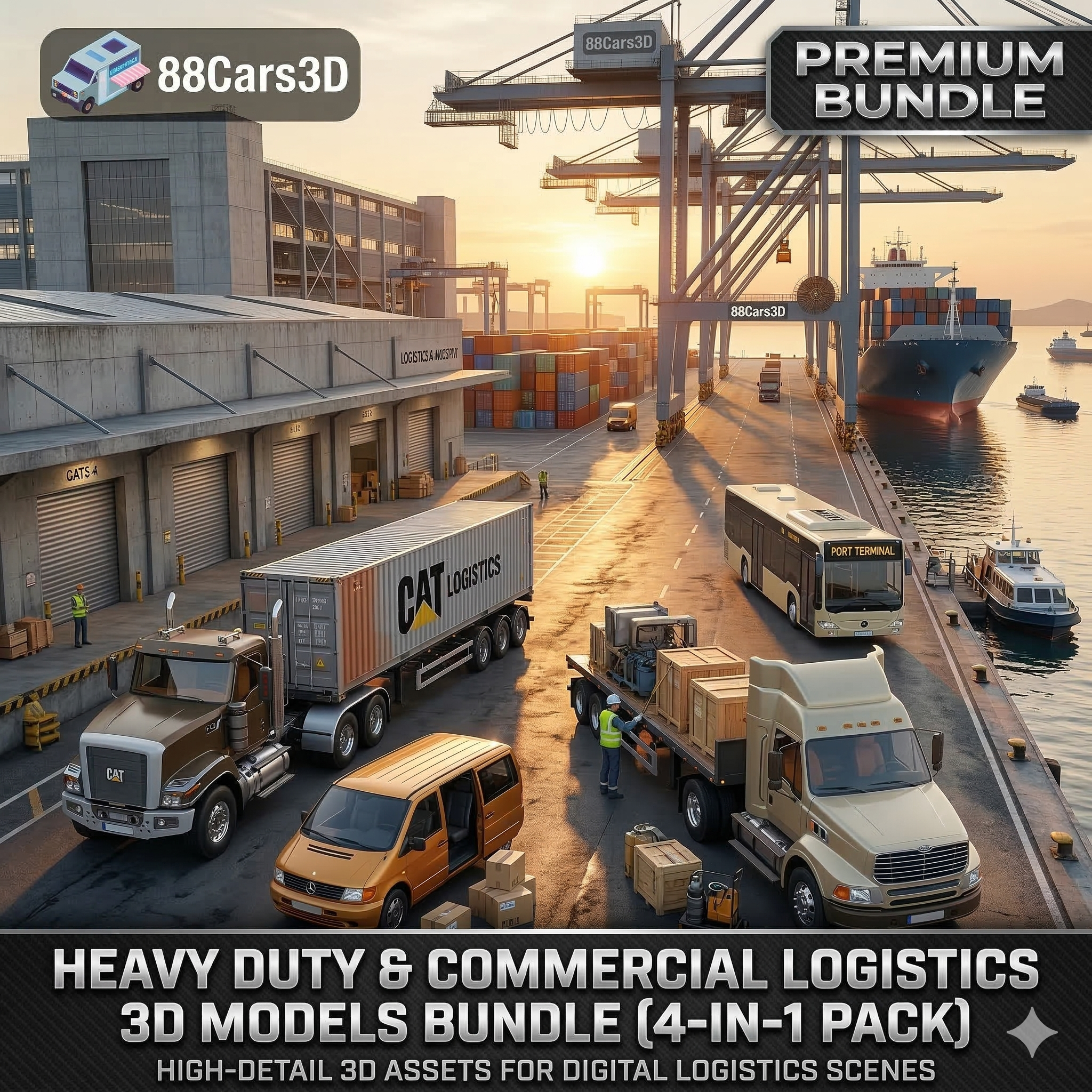
Download the Heavy Duty & Commercial Logistics 3D Models Bundle! Includes the Ford Sterling, Caterpillar CT680, Mercedes Citaro Bus, and Vito Van. Save over €130 on this massive, game-ready 4-in-1 industrial vehicle pack.
Price: $109.99
View Product

Download the Ultimate Custom Motorcycles 3D Models Bundle. Includes a Custom Chopper, Ducati 916 Café Fighter, Harley XR1200X, and BMW K100. Perfect premium props for luxury ArchViz garages. Save over €250 today!
Price: $159.99
View Product

Download the ultimate JDM Street Racing 3D Models Bundle! Includes the Nissan GT-R, Toyota Supra, Mazda RX-7, Lancer Evo IX, and Honda NSX. Save big on this highly optimized, game-ready 5-in-1 Japanese legend car pack.
Price: $129.99
View Product

Download the ultimate American Muscle & Cinematic Classics 3D Models Bundle! Includes the Dodge Charger ’68, Mustang Eleanor GT500, Camaro Z28 ’79, and a custom ’69 Mustang. Save over €240 on this game-ready, premium 4-in-1 pack.
Price: $149.99
View Product
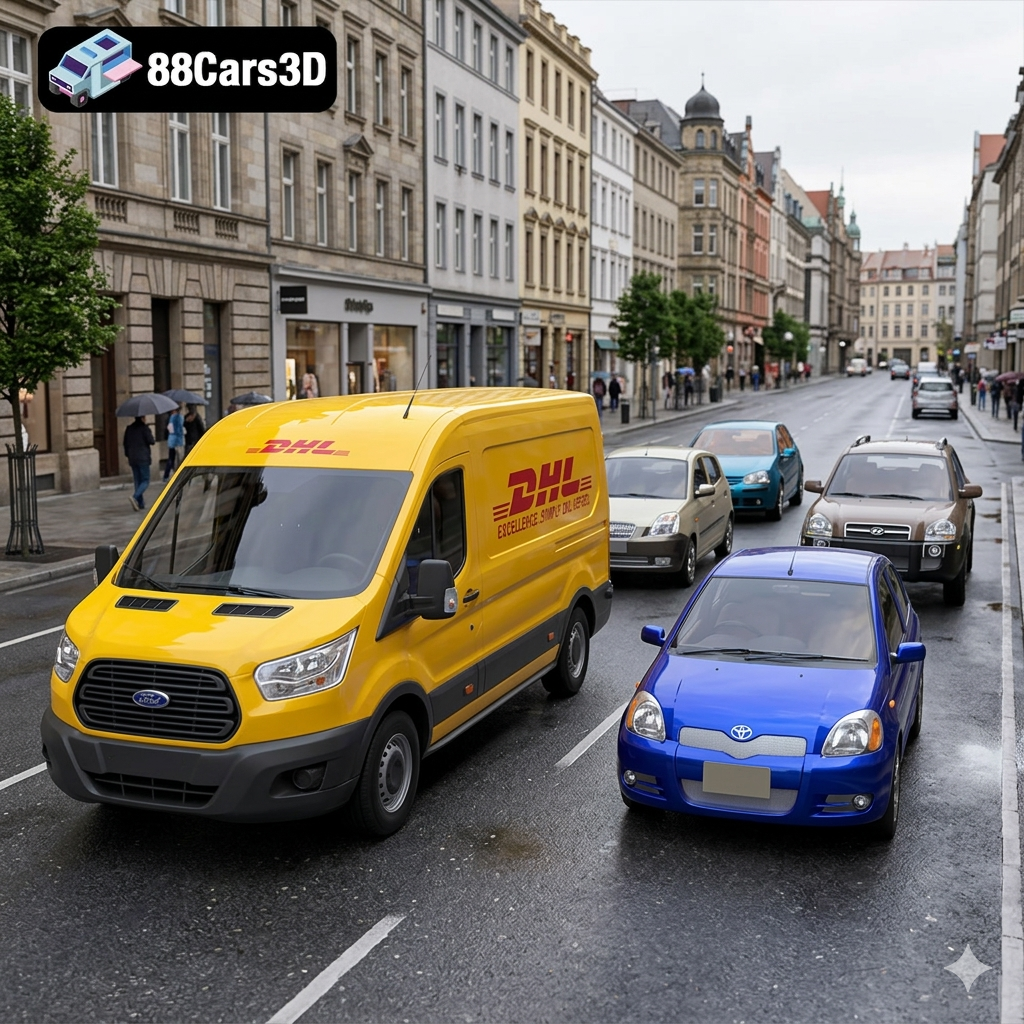
Download the Everyday City Traffic 3D Models Bundle. Includes the VW Golf, Kia Picanto, Hyundai Tucson, Toyota Yaris, and a DHL Ford Transit Van. Save big on this 5-in-1 pack, perfectly optimized for realistic ArchViz streets and game traffic.
Price: $99.99
View Product
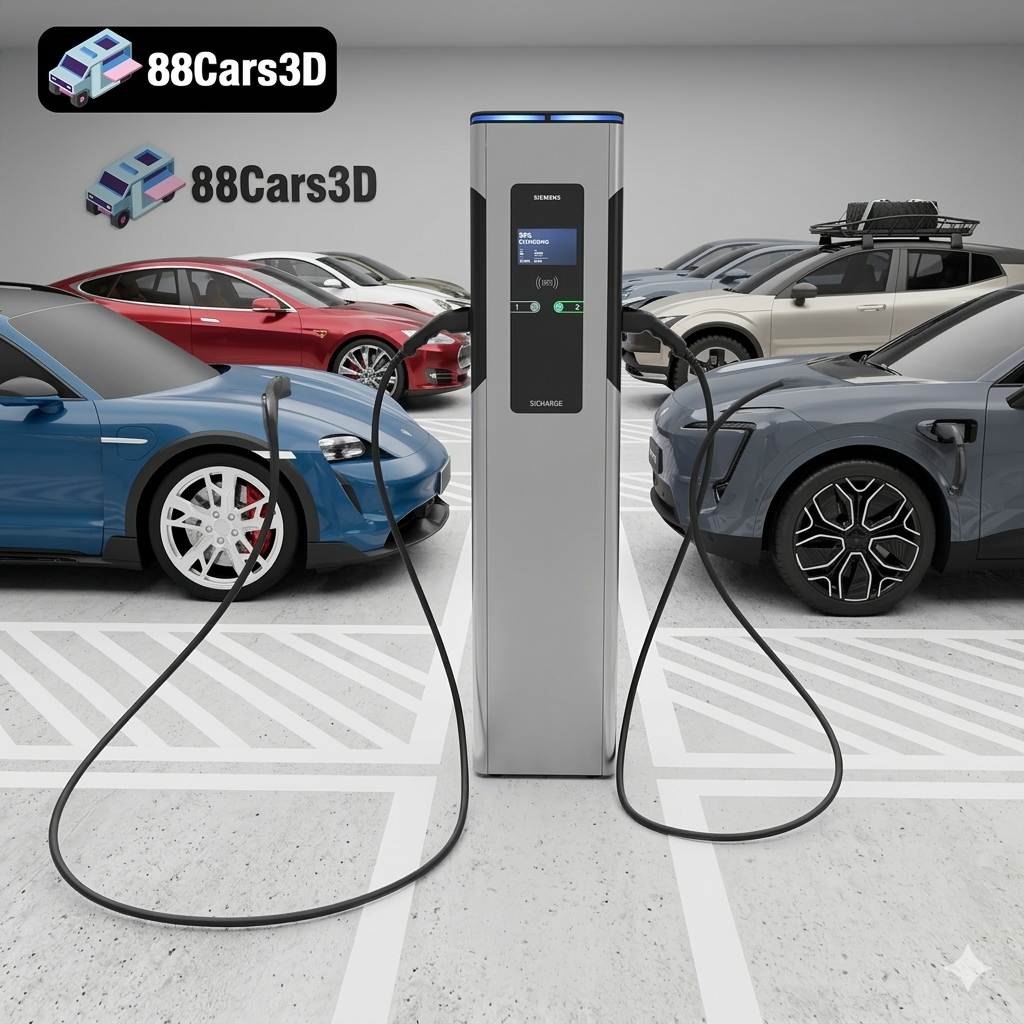
Download the Future of Mobility EV 3D Models Bundle. Includes the Volvo EX30, Tesla Model S, AVATR 11, Porsche Taycan, and a Siemens EV Charger. Save big on this highly optimized 5-in-1 pack for ArchViz and game development!
Price: $89.99
View Product


