Get 50% OFF All Premium 3D & STL Models!

In the intricate world of 3D automotive design and rendering, where every curve and reflection tells a story, the importance of meticulous detail cannot be overstated. Among the myriad of technical disciplines involved in crafting photorealistic 3D car models, UV mapping stands as a foundational pillar, directly impacting the visual fidelity and performance of your assets. For those sourcing or creating high-quality 3D car models for rendering, game development, AR/VR experiences, or even 3D printing, a deep understanding of advanced UV mapping techniques for complex car surfaces is not just beneficial, it’s absolutely essential. This comprehensive guide will delve into the critical workflows, technical specifications, and industry best practices that transform a mere 3D mesh into a canvas ready for stunning PBR materials and realistic visualization.
Creating a visually compelling automotive model goes far beyond shaping polygons. The surface details – the subtle metallic flake of the paint, the intricate weave of carbon fiber, the precise reflections on chrome, or the nuanced wear and tear of a tire – are all dictated by the quality of its UVs. Poor UVs lead to distorted textures, visible seams, and inefficient texture memory usage, ultimately breaking the illusion of realism. Whether you’re an aspiring 3D artist, a seasoned game developer, or an automotive designer striving for perfection, mastering UV mapping for these challenging forms is a skill that elevates your work from good to exceptional. Prepare to unlock the secrets to flawless texture application on even the most demanding car surfaces.
At its core, UV mapping is the process of flattening a 3D model’s surface into a 2D space, allowing a 2D image texture to be applied. Think of it like deconstructing a cardboard box: you unfold its 3D shape into a flat 2D pattern. For a simple cube, this is straightforward. For a complex, organic shape like a car, with its intricate curves, sharp edges, and numerous distinct components, the challenge escalates dramatically. The ‘U’ and ‘V’ refer to the horizontal and vertical axes of this 2D texture space, analogous to the ‘X’ and ‘Y’ coordinates in a 3D environment.
Effective UVs are characterized by several key attributes: minimal stretching and compression (maintaining consistent texel density), logical seam placement, and efficient use of the 0-1 UV space. Without proper UV mapping, your beautifully sculpted 3D car models will exhibit ugly texture distortions, seams that break visual continuity, and a general lack of realism when PBR materials are applied. This foundational understanding is crucial before diving into the advanced strategies required for automotive assets.
The UV space is typically a square grid, usually normalized from 0 to 1 in both the U and V directions. Each vertex of your 3D model has a corresponding UV coordinate, linking it to a specific point on your 2D texture map. When you apply a texture, the software uses these coordinates to project the image onto the 3D surface. The goal is to make these 2D ‘islands’ (the flattened pieces of your model) fit together efficiently within the UV space without overlapping, while also ensuring that the texture appears correctly stretched across the 3D model. For automotive rendering, achieving perfectly unwarped surfaces is paramount to capturing the subtle reflections and material properties accurately.
The consequences of rushed or incorrect UV mapping are severe. Firstly, texture stretching and compression will deform your textures, making details look squashed or elongated, especially noticeable on large, curved panels like car bonnets or doors. Secondly, visible seams will appear where your 3D model was ‘cut’ to be flattened, creating jarring lines that interrupt the flow of paint, decals, or carbon fiber patterns. Thirdly, inefficient texture packing can lead to wasted texture space, forcing you to use lower resolution textures or multiple texture maps for a single material, increasing memory consumption and draw calls in game development. Finally, overlapping UVs can cause baking artifacts during normal map or ambient occlusion generation, resulting in visual glitches that degrade the overall quality of your game assets.
Before even considering UV mapping, a strong understanding of 3D modeling topology and edge flow is critical, especially for complex objects like cars. Good topology doesn’t just make a model look good; it makes the unwrapping process significantly smoother, reduces distortion, and ensures that subdivision surfaces behave predictably. Automotive models are characterized by large, smooth, reflective surfaces that demand perfect light reflections. Any imperfection in topology, such as triangles or N-gons in areas meant to be smooth, will inevitably lead to unsightly artifacts and problematic UV unwrapping.
Professional 3D car models, like those found on 88cars3d.com, are built with an emphasis on clean quad-based topology. This ensures that when the model is subdivided (a common practice for achieving high-fidelity renders), the surface remains smooth and free of pinching, and the UVs can be unwrapped with minimal stretching. Proper edge flow, where edges follow the natural contours and creases of the vehicle, is also vital for both aesthetic reasons and for defining clear boundaries for your UV seams.
For high-quality automotive rendering, a workflow utilizing subdivision surfaces (e.g., Turbosmooth in 3ds Max or Subdivision Surface modifier in Blender) is common. This means that your base mesh should primarily consist of quadrilaterals (quads). Quads subdivide evenly, producing smooth, predictable results. Triangles can cause pinching or undesirable hard edges when subdivided, and N-gons (faces with more than four sides) should generally be avoided, especially on deformable or prominently visible surfaces. Aim for a topology that efficiently captures the shape with the fewest necessary edges, allowing for a clean unwrap later.
Car bodies feature numerous sharp, defined edges—door lines, wheel arches, hood gaps. To preserve these details while using subdivision surfaces, artists employ control loops (also known as support loops or holding edges). These are extra edge loops placed close to a hard edge, which, when subdivided, prevent the edge from becoming too soft. In Blender, you can also use crease values on edges to achieve a similar effect without adding extra geometry. The placement of these control loops is crucial not only for the visual integrity of the model but also for determining natural UV seam placements. Often, a control loop provides an ideal location to cut a UV seam, as it naturally delineates a hard surface change where a texture break will be less noticeable.
The art of UV mapping a car truly comes alive in the strategic placement of seams. Seams are the ‘cuts’ that allow your 3D model to be flattened. For a car, haphazardly placed seams will result in visible lines across pristine paintwork or distorted texture patterns. The goal is to place seams where they are least visible, such as along natural breaks in the geometry, under trim pieces, or in areas that will be obscured by other components. This requires a thoughtful approach and a deep understanding of the vehicle’s construction and how textures will eventually be painted or applied.
A well-seamed car model typically consists of numerous small, manageable UV islands, rather than one or two massive, distorted islands. This strategy not only minimizes stretching but also makes the UV editing process more intuitive and flexible. Consider the various components of a car: the body panels, windows, tires, interior elements, and small details like emblems or lights. Each of these will likely require its own set of UV islands, carefully laid out to maximize texture resolution and minimize visual artifacts. The efficiency of your UV layout will directly influence the quality of your baked maps (normal, ambient occlusion, curvature) and the overall realism of your automotive rendering.
When approaching the UV mapping of a complex car, it’s helpful to categorize seams:
The key is to balance the number of seams (more seams generally mean less distortion but more islands to manage) with the need to keep them hidden.
The ultimate goal is to make your UV seams virtually invisible. Here are some strategies:
By thoughtfully applying these principles, you can achieve a clean, efficient UV layout that supports the highest quality PBR materials and rendering.
PBR materials (Physically Based Rendering) demand highly accurate and consistent UV mapping. PBR textures, such as Albedo/Base Color, Roughness, Metallic, Normal, and Ambient Occlusion maps, rely on precise texture coordinates to render correctly. Any inconsistencies in texel density or poorly packed UV islands will directly translate into a less convincing, less realistic final render. Optimizing your UV layout is not just about making textures fit; it’s about ensuring visual consistency, maximizing detail, and preparing your 3D car models for various pipelines, from cinematic rendering to real-time game assets.
The goal is to provide enough texture space to critical areas of the car while efficiently utilizing the entire UV canvas. This involves careful consideration of texel density, intelligent packing of UV islands, and sometimes even employing multiple UV channels. A well-optimized UV layout ensures that your car models look equally stunning up close and from a distance, without requiring excessively large texture files that bloat file sizes and impact performance.
Texel density refers to the number of texture pixels per unit of 3D space. Maintaining a consistent texel density across all visible parts of your car is paramount for PBR. If parts of your model have a higher texel density than others, textures will appear sharper in some areas and blurrier in others, creating an inconsistent look. For an automotive rendering, where surfaces are often viewed at various angles and distances, this inconsistency is highly detrimental.
To achieve consistent texel density:
Once your UV islands are unwrapped and scaled for consistent texel density, the next step is to pack them efficiently into the 0-1 UV space. Good packing aims to minimize empty space while preventing overlaps between islands. This ensures that you get the most detail out of your chosen texture resolution (e.g., 2048×2048, 4096×4096, 8192×8192) and reduces the overall number of texture maps required, leading to better performance in game engines and faster rendering times.
Techniques for effective UV packing:
While the principles of UV mapping remain consistent, the tools and workflows vary across different 3D software. Understanding these software-specific nuances is crucial for efficiency and for leveraging the full power of your chosen application. Whether you prefer the open-source flexibility of Blender, the industry-standard capabilities of 3ds Max or Maya, or the specialized tools in a dedicated unwrapping package, each offers unique advantages for tackling complex car surfaces.
For artists working on automotive design and rendering, familiarity with multiple platforms can be a significant asset, especially when collaborating or working with models from marketplaces like 88cars3d.com which often provide files in universal formats like FBX or OBJ, compatible with various software. This section will highlight key UV mapping features and best practices within popular 3D applications, demonstrating how to achieve optimal results regardless of your toolkit.
Blender has evolved into a formidable tool for UV mapping, offering a comprehensive suite of features within its UV Editor. For detailed insights, always refer to the official Blender 4.4 documentation at https://docs.blender.org/manual/en/4.4/.
Key Blender UV Tools and Workflow:
Ctrl + E > Mark Seam. This is the fundamental step for defining your UV islands. For car bodies, carefully trace along panel lines and hidden areas.U > Unwrap. Blender’s default unwrap algorithm is quite good, but for complex shapes like car body panels, “Smart UV Project” can be a quick starting point, though it often requires significant cleanup. “Follow Active Quads” is excellent for uniform grids.P to “pin” them. When you re-unwrap, these pinned elements will remain in place, allowing you to manually fix distortions in specific areas without affecting the entire island.Relax UVs) help smooth out stretched or compressed areas, distributing texture space more evenly.While Blender offers robust UV tools, 3ds Max and Maya remain industry staples, often paired with specialized external unwrapping software or powerful built-in modifiers.
3ds Max Workflow:
Maya Workflow:
External Tools (e.g., RizomUV, Unfold3D): Many professionals utilize dedicated unwrapping software like RizomUV or Unfold3D, which are integrated into or exported from 3ds Max or Maya. These tools often provide superior unwrapping algorithms, better packing, and more intuitive controls for complex models like vehicles, especially for achieving perfect straightness on things like car trim or wheel spokes. The ability to quickly and accurately unwrap complex forms is a major time-saver in automotive design pipelines.
When developing game assets or models for AR/VR, UV mapping takes on an additional layer of complexity: performance optimization. While photorealistic rendering might prioritize ultimate fidelity and can afford higher texture resolutions, real-time applications demand efficiency. Every polygon, every texture map, and every draw call contributes to the performance budget. Effective UV strategies can significantly reduce memory footprint and improve frame rates without sacrificing visual quality.
For interactive automotive experiences, optimizing 3D car models is crucial. This involves making intelligent decisions about texel density, combining textures, and utilizing advanced techniques like Level of Detail (LODs) and texture atlasing. The goal is to make your car models load quickly and render smoothly, providing an immersive experience for users on various platforms, from high-end PCs to mobile AR/VR devices.
Level of Detail (LODs): For game development, LODs are essential. A highly detailed car model (e.g., 200,000 polygons, 8K textures) is only needed when the player is very close. As the player moves further away, lower-polygon versions (LODs) of the model are swapped in. Each LOD might have its own optimized UV map and lower-resolution textures. For instance:
This staggered approach significantly reduces the computational load on the GPU. Many 3D car models on marketplaces like 88cars3d.com often come with pre-built LODs for game-ready optimization.
Texture Atlasing: This technique involves combining multiple smaller textures for different parts of a model (or even multiple models) into a single, larger texture map (an “atlas”). For example, all the interior fabric textures, dashboard elements, and steering wheel textures could be combined into one large atlas. This significantly reduces the number of draw calls (instructions sent to the GPU to render an object), which is a major performance bottleneck in game engines like Unity and Unreal Engine.
To implement texture atlasing:
Atlasing can be a time-consuming process but yields substantial performance gains, making your game assets highly optimized.
Game engines often utilize multiple UV channels (also known as UV sets or UV maps) for different purposes. A 3D car model might have:
Managing these multiple UV channels effectively is a hallmark of professional game asset development. Always ensure proper naming conventions for your UV channels for seamless export and import into game engines.
The journey of a 3D car model often involves moving between different software environments and platforms. Whether you’re collaborating with other artists, preparing assets for a specific game engine, or sharing models on marketplaces like 88cars3d.com, file format conversions are inevitable. It is absolutely critical that during these conversions, the integrity of your carefully crafted UV mapping is maintained. Losing or corrupting UV data can necessitate re-unwrapping, a costly and time-consuming setback.
Understanding which file formats best support UV data, and how to properly export and import them, is a vital part of the 3D artist’s workflow. This section will cover the most common file formats used in the industry and provide best practices for ensuring UV compatibility across various software and applications.
Different file formats handle UV data in slightly different ways, and some are more robust than others:
To prevent headaches during file format conversions:
By adhering to these practices, you can ensure that the painstaking work put into your UV mapping is preserved, and your 3D car models remain production-ready across various workflows.
Even the most experienced 3D artists encounter UV mapping challenges, especially with complex 3D car models. Identifying and resolving these issues promptly is crucial for maintaining a high-quality asset pipeline and achieving the desired visual results in rendering, game development, or AR/VR applications. Common problems include visible texture stretching, noticeable seams, and artifacts during texture baking. Fortunately, most 3D software provides powerful diagnostic and corrective tools to address these issues.
Learning to quickly diagnose the root cause of a UV problem saves immense time and prevents hours of frustrating re-work. This section will walk through the most frequent UV mapping issues faced when working with automotive models and provide actionable solutions and tips for efficient troubleshooting, ensuring your 3D car models from platforms like 88cars3d.com consistently meet professional standards.
This is arguably the most common and visually disruptive UV mapping issue. It occurs when a 3D surface is not properly flattened into UV space, leading to disproportionate scaling of the texture. On a car, this is immediately obvious on large, smooth, reflective surfaces like body panels, where a subtle metallic flake or a painted line will appear elongated or compressed.
Diagnosis:
Solutions:
Overlapping UV islands occur when two or more parts of your 3D model occupy the same space in the 2D UV map. While sometimes intentional for mirrored parts (e.g., a symmetrical fender that uses the same texture as its mirrored counterpart to save texture space), unintentional overlaps can cause serious issues, especially during texture baking or when using specific PBR materials.
Diagnosis:
Solutions:
G to grab, then moving it) to move overlapping islands apart.By diligently using the diagnostic tools within your 3D software and applying these problem-solving techniques, you can ensure that your 3D car models possess pristine UVs, ready to showcase the stunning PBR materials and intricate details required for modern automotive rendering and game asset development.
Mastering UV mapping for complex car surfaces is an art form as much as it is a technical skill. It’s the unseen foundation upon which stunning PBR materials, realistic rendering, and optimized game assets are built. We’ve journeyed through the fundamentals, explored the crucial link between topology and UVs, delved into strategic seam placement, optimized layouts for performance, navigated file format conversions, and tackled common troubleshooting scenarios. Each step, from the initial model creation to the final export, relies heavily on a solid UV mapping strategy.
The dedication to precise UV mapping is what differentiates a good 3D car model from an exceptional one. It ensures that every metallic gleam, every subtle paint imperfection, and every detail of a headlight lens is rendered flawlessly, whether for a cinematic visualization or an immersive AR/VR experience. This attention to detail is a hallmark of the high-quality 3D car models you’ll find on platforms like 88cars3d.com, where professional artists understand that the best textures are only as good as the UVs that support them.
To truly elevate your 3D automotive projects, integrate these advanced UV mapping techniques into your workflow. Practice different unwrapping methods, pay close attention to texel density, and consistently test your UVs with checkerboard patterns. Explore the capabilities of your chosen software, be it Blender, 3ds Max, or Maya, and remember to consult official documentation like the Blender 4.4 Manual for in-depth guidance. By doing so, you’ll not only enhance the visual quality of your 3D car models but also streamline your texturing and rendering workflows, delivering breathtaking results that stand out in any professional context.

Texture: Yes | Material: Yes | 3D Printable: Yes. Download the Italian Thoroughbreds Bundle featuring 5 iconic 3D models: Lamborghini Huracán Performante, Ferrari 458 Italia, Lamborghini Urus, Diablo SV, and Maserati GT. Optimized for 4K rendering and 3D printing (STL included). Save 50% with this ultimate Italian vehicle collection.
Price: $199.99

Download the Elite Future Mobility Bundle featuring 4 highly optimized 3D models: Tesla Model S, Avatr 11, Li L9, and Zoox Robotaxi. Perfect for ArchViz, Smart City renders, and game dev. Optimized for Unreal Engine and Blender. Includes .fbx, .obj, and .max formats.
Price: $99

🚗 5 Iconic German Cars (BMW M4 G82, M5 CS, X3, 1 Series & Mercedes E-Class). ✅ Optimized for ArchViz: Ready for Corona & V-Ray. 💰 Save €71 with this limited-time collection! 🚀 Instant Download after purchase.
Price: $119

Download the Extreme Off-Road & Survival 3D Models Bundle! Includes the Brabus 800 Adventure, Dodge Ram Bigfoot, Spec Truck, and a Caravan. Save over €210 on this premium 4-in-1 off-grid vehicle pack for ArchViz and game development.
Price: $149.99

Download the Heavy Duty & Commercial Logistics 3D Models Bundle! Includes the Ford Sterling, Caterpillar CT680, Mercedes Citaro Bus, and Vito Van. Save over €130 on this massive, game-ready 4-in-1 industrial vehicle pack.
Price: $109.99

Download the Ultimate Custom Motorcycles 3D Models Bundle. Includes a Custom Chopper, Ducati 916 Café Fighter, Harley XR1200X, and BMW K100. Perfect premium props for luxury ArchViz garages. Save over €250 today!
Price: $159.99

Download the ultimate JDM Street Racing 3D Models Bundle! Includes the Nissan GT-R, Toyota Supra, Mazda RX-7, Lancer Evo IX, and Honda NSX. Save big on this highly optimized, game-ready 5-in-1 Japanese legend car pack.
Price: $129.99

Download the ultimate American Muscle & Cinematic Classics 3D Models Bundle! Includes the Dodge Charger ’68, Mustang Eleanor GT500, Camaro Z28 ’79, and a custom ’69 Mustang. Save over €240 on this game-ready, premium 4-in-1 pack.
Price: $149.99
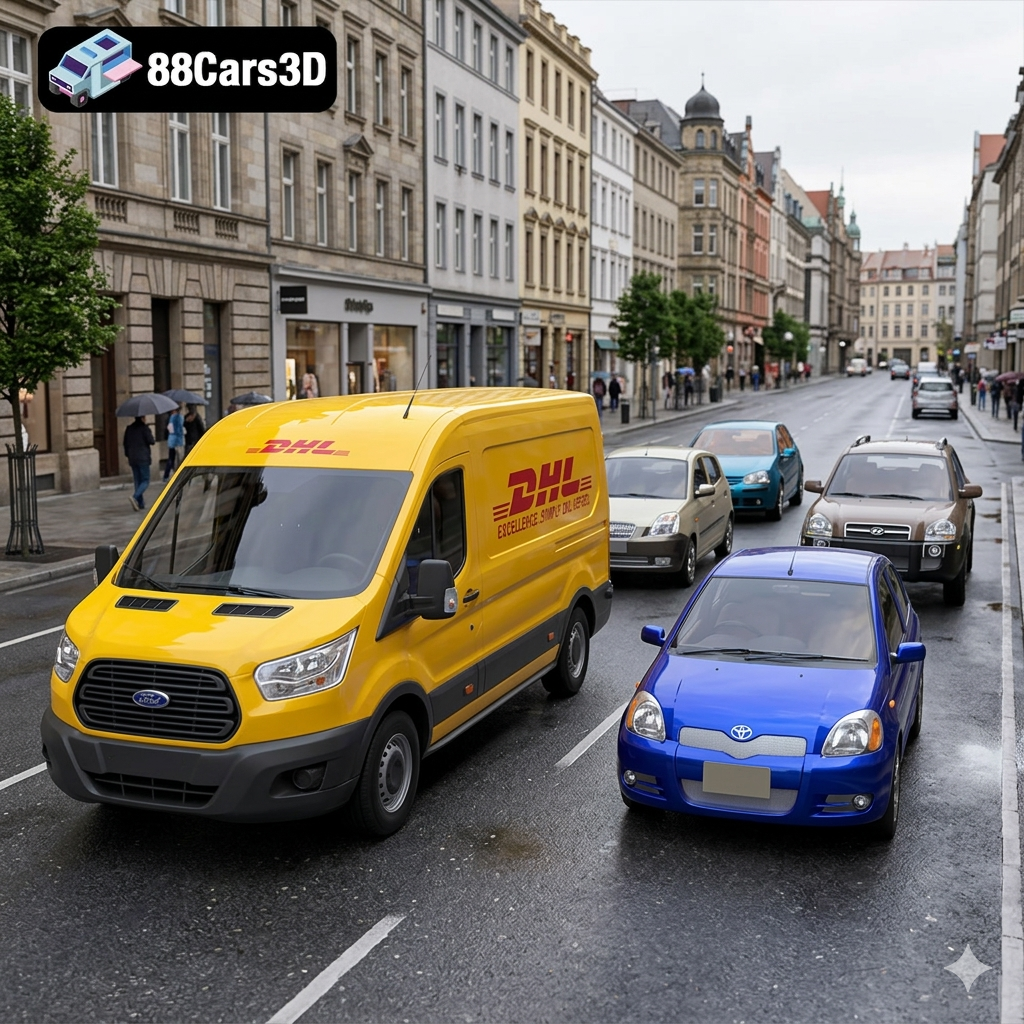
Download the Everyday City Traffic 3D Models Bundle. Includes the VW Golf, Kia Picanto, Hyundai Tucson, Toyota Yaris, and a DHL Ford Transit Van. Save big on this 5-in-1 pack, perfectly optimized for realistic ArchViz streets and game traffic.
Price: $99.99
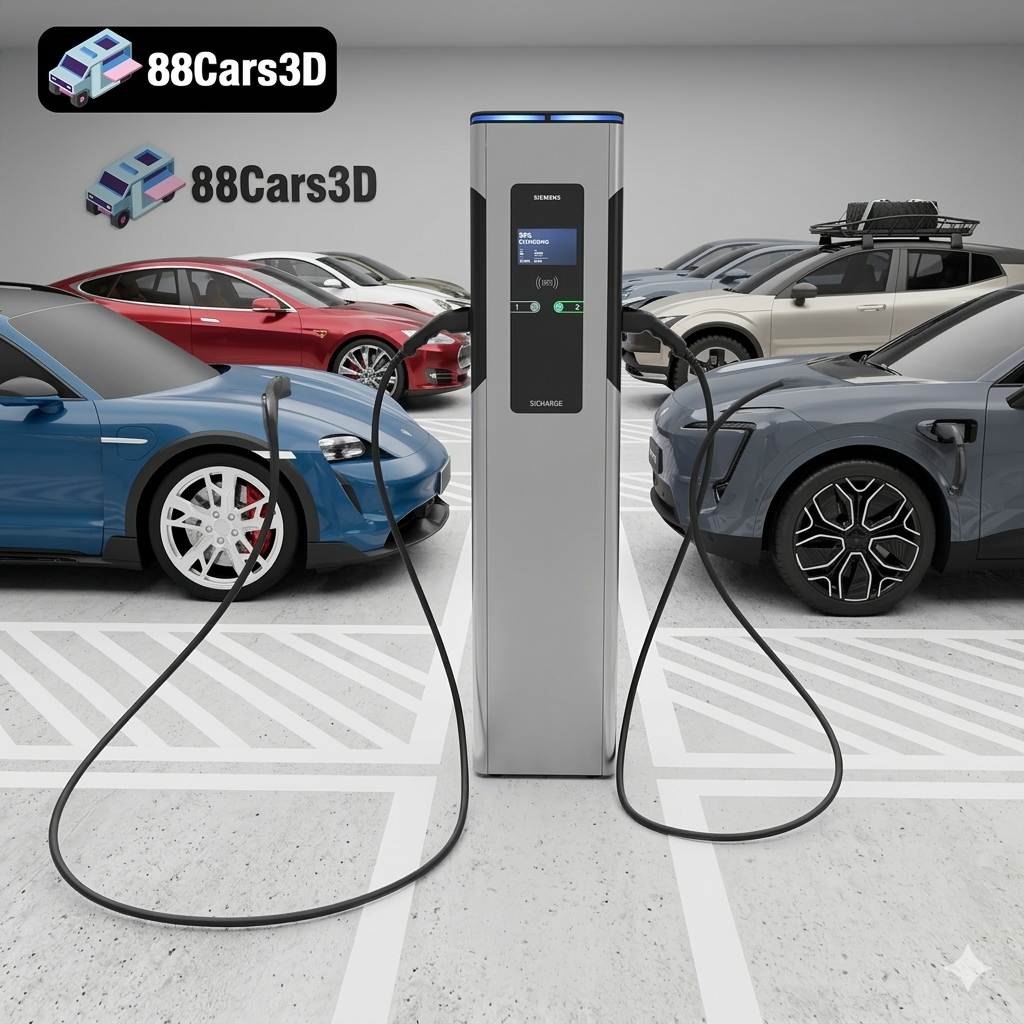
Download the Future of Mobility EV 3D Models Bundle. Includes the Volvo EX30, Tesla Model S, AVATR 11, Porsche Taycan, and a Siemens EV Charger. Save big on this highly optimized 5-in-1 pack for ArchViz and game development!
Price: $89.99

