Get 50% OFF All Premium 3D & STL Models!

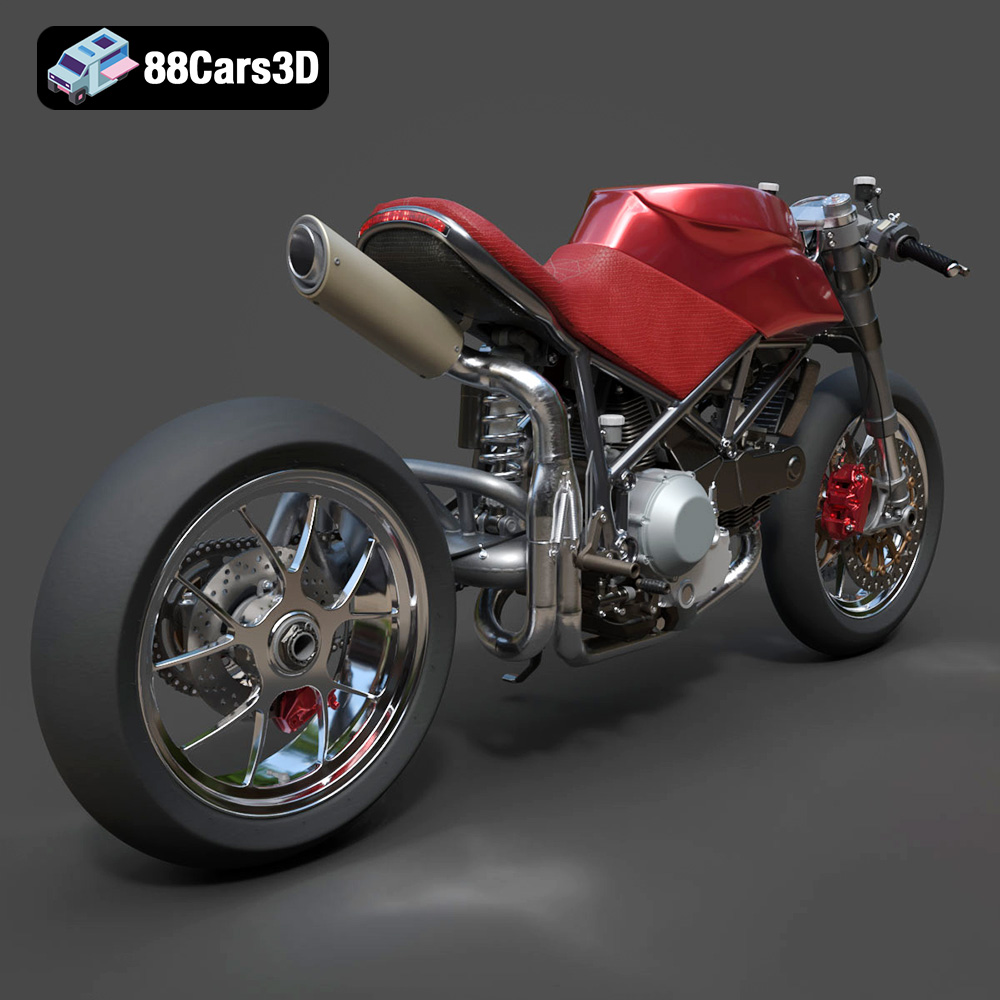
In the dynamic world of 3D modeling, the pursuit of realism and intricate detail continually pushes the boundaries of what’s possible. From the gleaming chrome of classic muscle cars to the sleek lines of futuristic concepts, 3D artists strive to capture the essence and mechanical soul of automotive design. This dedication is particularly evident in the realm of custom builds, where every bolt, weld, and polished surface tells a story of passion and precision. Today, we’re diving deep into an exemplary piece of digital automotive artistry: the Ducati 916 Custom Café Fighter 3D Model, available at 88cars3d.com.
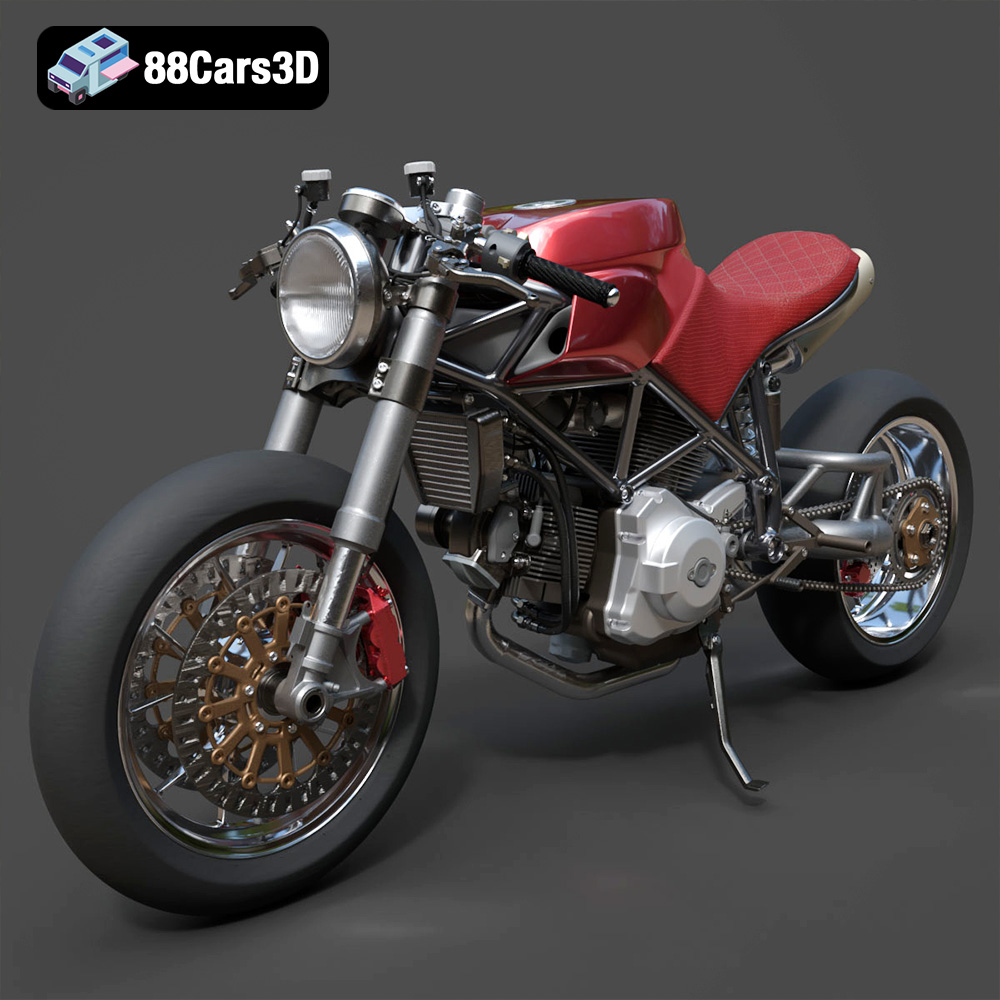
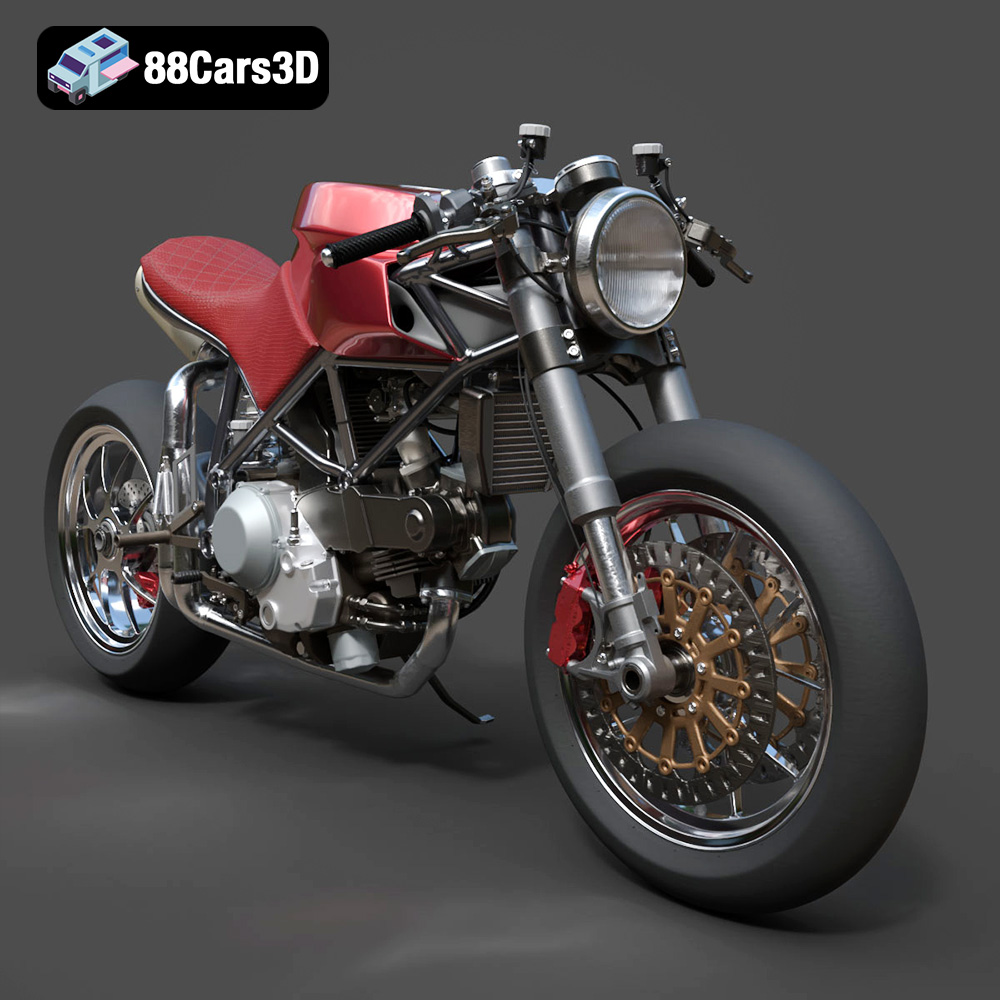
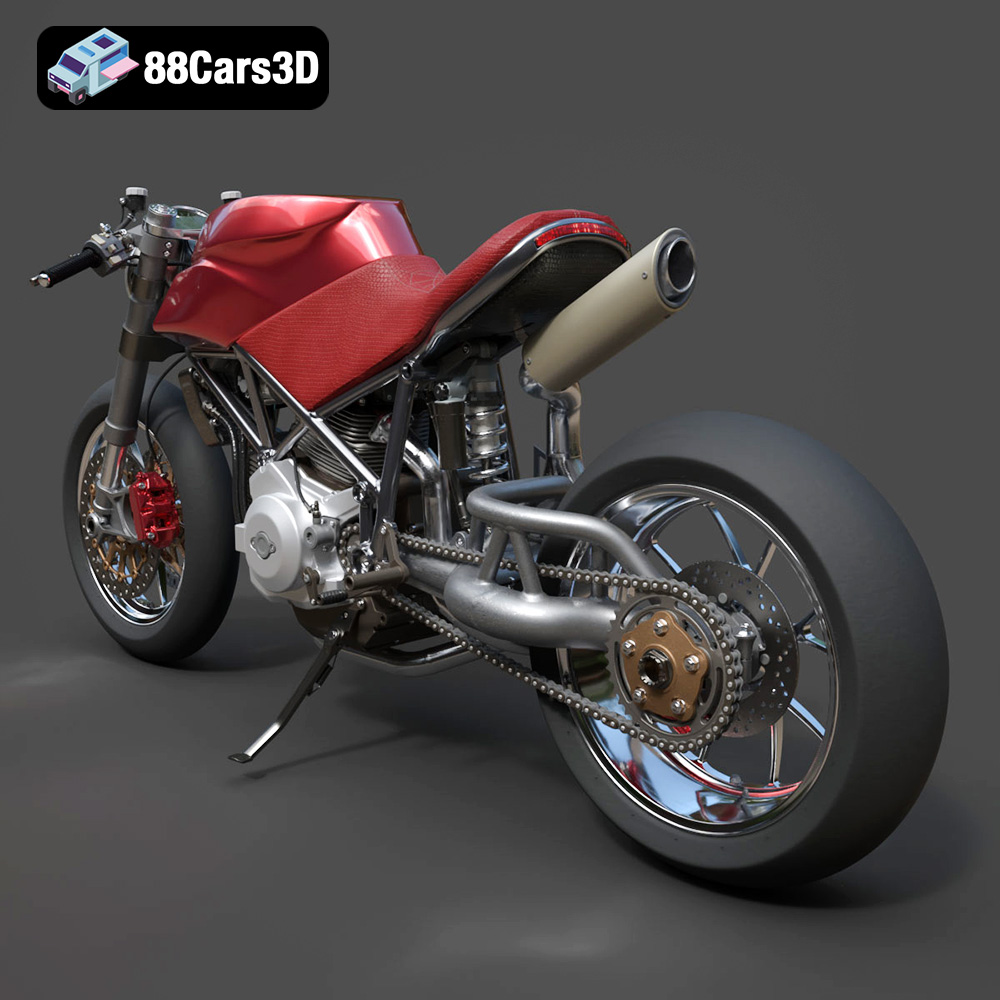
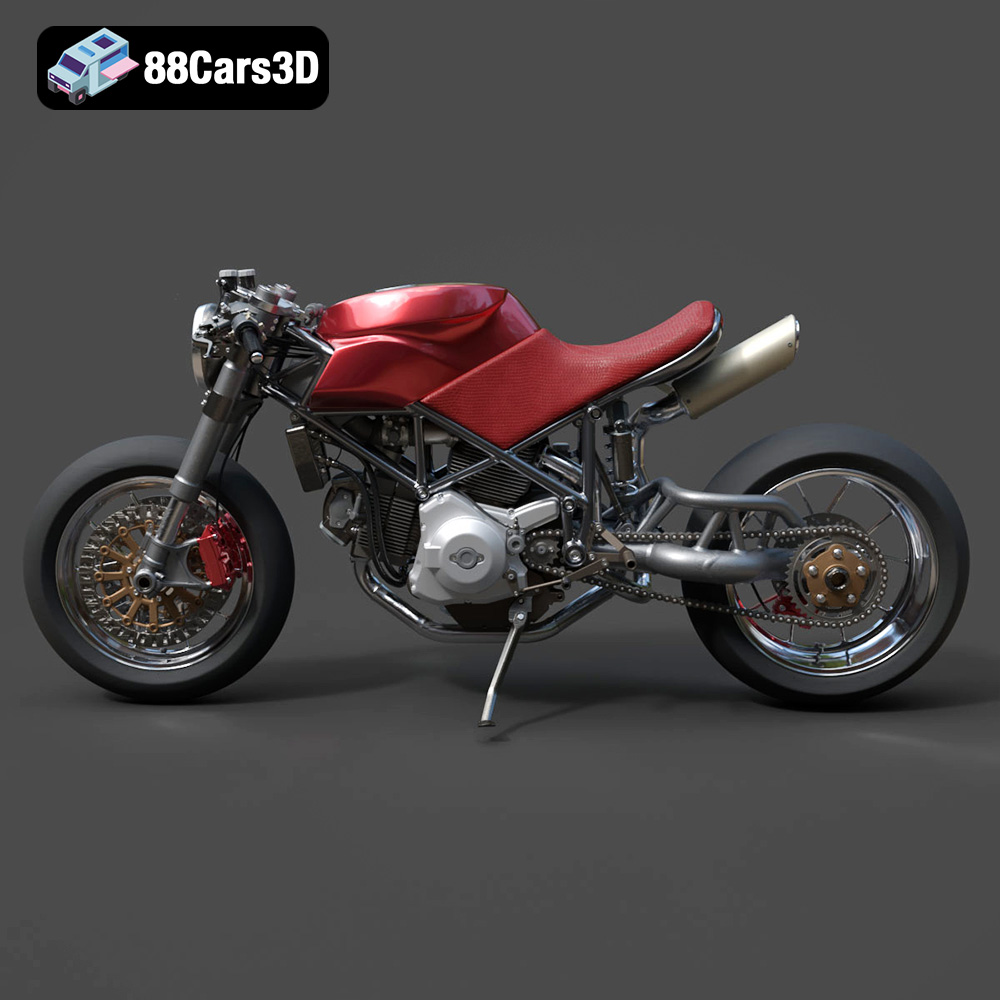
This isn’t just another 3D car model; it’s a meticulously crafted digital replica of a bespoke custom motorcycle, merging the legendary aggression of a Ducati 916 with the minimalist elegance of a café racer. It strips away the conventional, exposing the raw beauty of its engineering – the iconic steel trellis frame, the powerful L-twin engine, and the distinctive single-sided swingarm. Such a model is a testament to the power of high-fidelity 3D assets in capturing extreme mechanical realism, making it invaluable for professionals in automotive rendering, cinematic visualization, and even advanced 3D printing.
For artists, designers, and developers, the availability of pre-built, ultra-detailed assets like this Ducati 916 Custom Café Fighter can be a game-changer. It allows for focus on lighting, composition, animation, or integration into larger projects, rather than spending countless hours on foundational modeling. Let’s explore the technical nuances and creative potential that a model of this caliber brings to various professional workflows.
The choice of a 3D model file format is often as crucial as the model’s design itself, dictating compatibility, feature support, and overall utility across different software and applications. A premium asset like the Ducati 916 Custom Café Fighter 3D Model offers a comprehensive suite of formats, each tailored for specific professional use cases. Understanding their distinctions is fundamental for optimizing your workflow and achieving your desired output.
The .blend format is Blender’s native file type, offering a complete, editable scene package. When you download the Ducati 916 in .blend, you receive not just the raw geometry but also materials, textures, lighting setups, cameras, and any applied modifiers or animation data, all within a single file. This is ideal for artists who primarily use Blender, providing maximum flexibility for customization, rigging, and rendering directly within their preferred environment. It allows for deep dives into the mesh structure, material node networks, and precise adjustments without loss of information.
.fbx (Filmbox) is a proprietary file format owned by Autodesk, but it has become a de facto standard for 3D data exchange across different software packages, particularly within animation and game development pipelines. Its strength lies in its ability to store not only mesh data but also animation, rigging, skinning, camera, and lighting information. For the Ducati 916, an .fbx export would be optimized for seamless import into game engines like Unreal Engine or Unity, and other DCC applications such as 3ds Max or Maya, facilitating complex scene integration and animation workflows. It’s excellent for transferring a static pose or an animated sequence of the motorcycle into another platform.
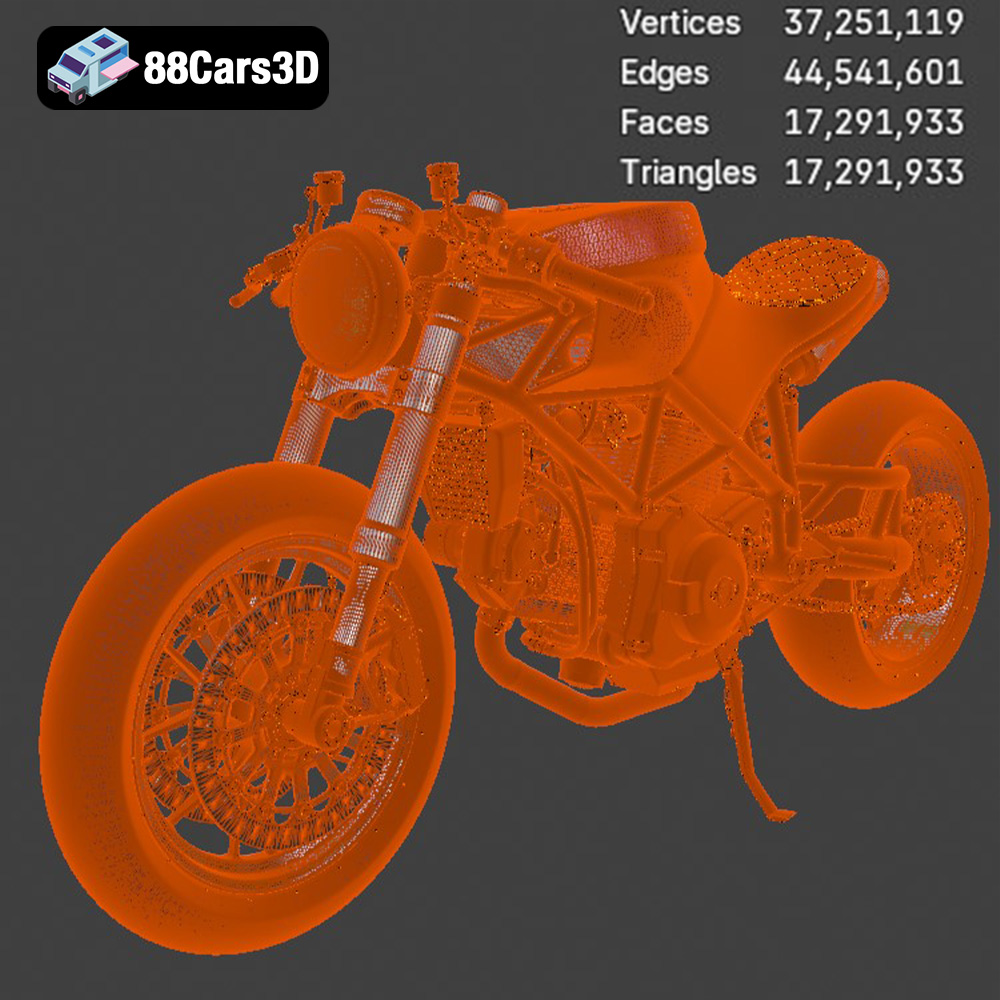
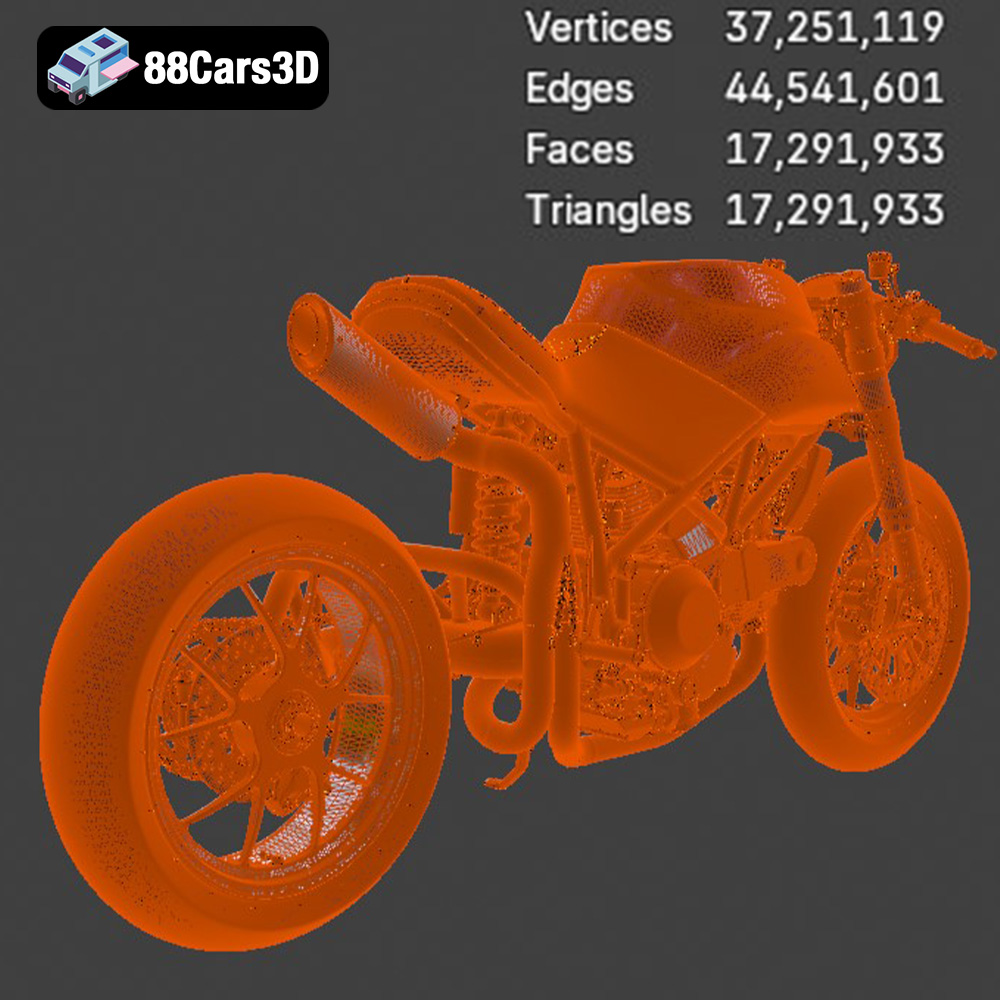
The .obj (Wavefront OBJ) format is one of the oldest and most universally supported 3D file formats. It’s a simple, text-based format primarily used for exchanging raw 3D geometry data, including vertices, normals, UV coordinates, and faces. While it doesn’t typically store animation or rigging data, its widespread compatibility makes it an excellent choice for static mesh transfer between almost any 3D software. For the Ducati 916, an .obj file ensures that the core geometric detail, including its complex 17.2 million polygons, can be imported and rendered in virtually any 3D application, making it a reliable fallback or primary format for pure visualization tasks.
.glb (GL Transmission Format Binary) is the binary version of glTF, a royalty-free specification for the efficient transmission and loading of 3D scenes and models by applications. It’s particularly optimized for augmented reality (AR), virtual reality (VR), and web-based 3D applications. A .glb file packages all necessary assets (geometry, materials, textures, animation) into a single, self-contained binary file, ensuring fast loading and rendering. While the Ducati 916’s high poly count would require significant optimization for real-time AR/VR, the .glb format provides the perfect wrapper for an optimized version, or for displaying a detailed, interactive model in a web browser with appropriate decimation.
.stl (Stereolithography) is the most common file format for 3D printing. It represents a 3D model as a series of connected triangles (a triangulated surface mesh), defining only the surface geometry of a 3D object without any color, texture, or other attributes. The Ducati 916’s availability as an .stl is crucial for anyone looking to physically manifest this digital design. Its ultra-high detail translates directly into a high-resolution printable mesh, perfect for large-scale resin prints where fine mechanical components like the trellis frame and engine details can be accurately reproduced.
.ply (Polygon File Format, also Stanford Triangle Format) is a versatile format often used for storing 3D data from 3D scanners, CAD software, and other scientific applications. It can store various properties beyond just geometry, such as color, transparency, surface normals, and even confidence values for scanned data. While less common for artistic asset exchange than .fbx or .obj, its precision and ability to store complex attributes make it valuable for specialized workflows, particularly for analysis or where additional mesh properties beyond basic geometry are required for the Ducati 916.
The .unreal format typically refers to assets that have been imported into and optimized for Unreal Engine. While there isn’t a direct “.unreal” file format in the same way as .fbx, providing a file specifically designated as “.unreal” implies that it comes with settings, materials, and perhaps even basic Blueprints configured for optimal use within the engine. For a model like the Ducati 916, this could mean an FBX or similar file pre-processed for Unreal, though given its extreme polycount, users should still expect to perform retopology or decimation for efficient real-time performance, as noted in the product description.
.max is Autodesk 3ds Max’s native file format, similar to Blender’s .blend. It contains the entire scene data, including geometry, materials, textures, lighting, cameras, animation, and any specific 3ds Max modifiers or plugins. Offering the Ducati 916 in .max format ensures that 3ds Max users get the most comprehensive and editable version of the model, allowing for full control over rendering settings, animation sequences, and integration into existing 3ds Max projects without any translation issues.
Choosing the correct file format is a critical first step for any 3D project, and the diverse options provided for the Ducati 916 Custom Café Fighter 3D Model underscore its versatility for a wide array of professional applications.
The Ducati 916 Custom Café Fighter 3D Model stands out not just for its subject matter, but for its uncompromising level of geometric detail. With over 17 million polygons, this is a truly ultra-high-poly asset. This level of detail isn’t arbitrary; it’s a deliberate choice that unlocks unparalleled visual fidelity for specific high-end applications.
When dealing with a model boasting 17,291,933 polygons (and 37,251,119 vertices), we’re talking about a mesh structure where every curve, edge, and minute mechanical component is modeled explicitly. This is crucial for capturing the nuances of a custom motorcycle, where elements like the intricate steel trellis frame, the cooling fins of the L-twin engine, the detailed dry clutch cover, and the subtle contours of the custom exhaust system are all rendered with physical accuracy. Unlike lower-poly models that rely heavily on normal maps and displacement maps to simulate detail, an ultra-high-poly model creates that detail directly in its geometry. This means:
This level of precision ensures that whether you’re showcasing the bike in a sprawling automotive gallery, a gritty urban street scene, or a high-octane cinematic sequence, the visual integrity remains uncompromised.
While a 17.2 million polygon model isn’t suitable for every application (especially real-time game engines without significant optimization), it excels in specific professional contexts:
The dedication to such an extreme polygon count in this Ducati 916 Custom Café Fighter 3D Model is a deliberate design choice, prioritizing ultimate visual fidelity for scenarios where compromise is not an option. It’s a specialized tool for specialized tasks, elevating the standard of digital automotive artistry.
Integrating a complex 3D car model like the Ducati 916 Custom Café Fighter into professional workflows requires a strategic approach, particularly given its ultra-high poly count. While its detail is a major asset, understanding how to leverage it across different platforms—from offline renderers to real-time engines—is key.
For artists working in applications like Autodesk 3ds Max or Blender, the Ducati 916 Custom Café Fighter 3D Model truly shines. Both programs are powerful offline renderers capable of handling dense geometry and complex material setups, making them perfect for showcasing this model’s intricate details.
In both cases, the sheer polygon count is an advantage, allowing for extreme close-ups without loss of fidelity. The focus shifts from creating geometry to perfecting materials, lighting, and camera work to tell a compelling visual story.
The product description explicitly notes that the Ducati 916 Custom Café Fighter 3D Model, with its 17.2M polygons, “will require manual retopology, baking, or decimation before it can be used efficiently in real-time game engines like Unreal or Unity.” This is a crucial technical consideration for game developers and AR/VR creators.
While the initial optimization step is necessary, the ultra-high-poly base model provides an unparalleled source of detail for baking, ensuring that even a game-ready version retains exceptional visual quality. This dual-use capability – direct high-end rendering and a source for real-time assets – highlights the model’s versatility.
The power of 3D modeling extends far beyond digital screens; it’s a vital tool for physical production, and models like the Ducati 916 Custom Café Fighter 3D Model are perfectly poised to bridge the digital-to-physical divide, particularly through 3D printing.
The product’s inclusion of an .stl file and detailed 3D print settings is a clear indicator of its suitability for additive manufacturing. 3D printing allows designers, enthusiasts, and even professional fabricators to create tangible replicas, prototypes, or even custom parts based on the digital model.
This capability opens doors for custom model builders, product designers wanting physical representations, or even educational institutions for engineering studies. The digital Ducati can become a cherished physical object.
Beyond static display models, the high-fidelity 3D model can serve as a powerful tool for real-world design and prototyping:
The journey from a digital file on 88cars3d.com to a tangible, intricately detailed model or prototype is a testament to the transformative power of modern 3D technology.
High-quality 3D car models are the bedrock of modern automotive visualization and storytelling. The Ducati 916 Custom Café Fighter 3D Model, with its blend of iconic design and aggressive custom flair, presents a wealth of creative opportunities across various media. Let’s explore some scenarios where such a detailed asset proves invaluable.
Imagine a high-end advertisement for a luxury lifestyle brand or a motorcycle accessories company. The Ducati 916 Custom Café Fighter could be the hero asset. Its uncompromised mechanical detail and aggressive styling make it perfect for:
These applications leverage the model’s “specifically built for extreme close-up studio rendering and cinematic use” advantage, delivering visual impact that resonates with discerning audiences.
While the raw 17.2M polycount requires significant optimization for real-time AR/VR, the high-fidelity base model is still crucial as the source for baked textures and optimized meshes. Consider these applications:
The ability to transform such a detailed asset into an interactive experience makes it a forward-thinking choice for digital pioneers.
Although demanding retopology, the Ducati 916 Custom Café Fighter 3D Model’s meticulous detail is an invaluable asset for game developers aiming for next-generation realism.
The strategic application of this ultra-high-poly model across these diverse scenarios underscores its versatility and value as a cornerstone asset for creative professionals.
In the expansive marketplace of 3D assets, finding models that perfectly balance quality, technical precision, and versatility can be a challenge. For professionals seeking top-tier 3D car models and vehicle assets, 88cars3d.com distinguishes itself by offering assets like the Ducati 916 Custom Café Fighter 3D Model that are designed with specific high-end applications in mind.
The Ducati 916 Custom Café Fighter is a prime example of the quality standard at 88cars3d.com. Its 17.2 million polygon count isn’t just a number; it represents a commitment to geometric accuracy and visual fidelity that is paramount for demanding projects. From the authentic Ducati 916 base geometry to the custom minimalist tail section and the aggressively positioned clip-on handlebars, every aspect is meticulously crafted. This level of detail ensures that whether the model is intended for a close-up render in an automotive magazine, a cinematic shot in a commercial, or a high-resolution 3D print, it will consistently deliver stunning results.
The inclusion of “real-world scale accuracy” and “proper pivot setup for steering, wheel rotation, and kickstand articulation” further demonstrates a professional understanding of what animators and technical directors require. These seemingly small details save countless hours in post-production and ensure realistic motion and integration within any scene.
One of the significant advantages of sourcing assets from 88cars3d.com is the thoughtful provision of multiple file formats. As we’ve discussed, the Ducati 916 Custom Café Fighter is available in .blend, .fbx, .obj, .glb, .stl, .ply, .unreal, and .max formats. This extensive support ensures that the model can be seamlessly integrated into virtually any professional 3D pipeline, whether you’re using Blender for a personal project, 3ds Max for an architectural visualization, or need an .stl for 3D printing a physical collectible.
While the product clearly outlines the need for optimization for real-time engines like Unreal or Unity, it provides a robust, high-detail source for that process. This foresight allows developers to create stunning game assets by baking intricate details from the master model onto optimized meshes, ensuring next-gen visual quality.
For those interested in tangible outputs, the inclusion of the STL format and detailed 3D print settings makes the transition from digital to physical straightforward and rewarding. The recommended scales, layer heights, and post-processing tips provide a clear roadmap for achieving a high-quality physical replica.
88cars3d.com caters to a diverse audience, from individual artists seeking a stunning centerpiece for their portfolio to large studios needing a reliable source of production-ready 3D car models. The detailed product descriptions, technical specifications, and application guidelines provide all the information necessary to make informed decisions.
By offering assets like the Ducati 916 Custom Café Fighter, 88cars3d.com empowers creators to elevate their projects, focusing on artistic direction and storytelling rather than getting bogged down in intricate modeling from scratch. It’s a platform built for those who demand excellence in their digital assets and seek to push the boundaries of automotive rendering and visualization.
The world of 3D modeling continually blurs the lines between digital artistry and engineering precision. The Ducati 916 Custom Café Fighter 3D Model exemplifies this convergence, presenting an asset that is as technically sophisticated as it is visually stunning. With its ultra-high polygon count, meticulously recreated mechanical details, and aggressive custom styling, it stands as a testament to the potential of high-fidelity 3D assets in capturing the soul of automotive design.
Whether your goal is to produce breathtaking automotive rendering, create cinematic sequences that captivate audiences, or bring a tangible, intricately detailed model to life through 3D printing, this model offers the foundation for unparalleled results. Its broad compatibility through various file formats ensures it can be integrated into diverse professional pipelines, from Blender and 3ds Max for offline rendering to serving as a high-detail source for game assets in Unreal Engine.
For those who refuse to compromise on detail and seek to push the boundaries of digital visualization, the Ducati 916 Custom Café Fighter 3D Model is an indispensable tool. Explore its full potential and discover more high-quality 3D car models and motorcycle assets at 88cars3d.com, where precision meets passion in every digital creation.
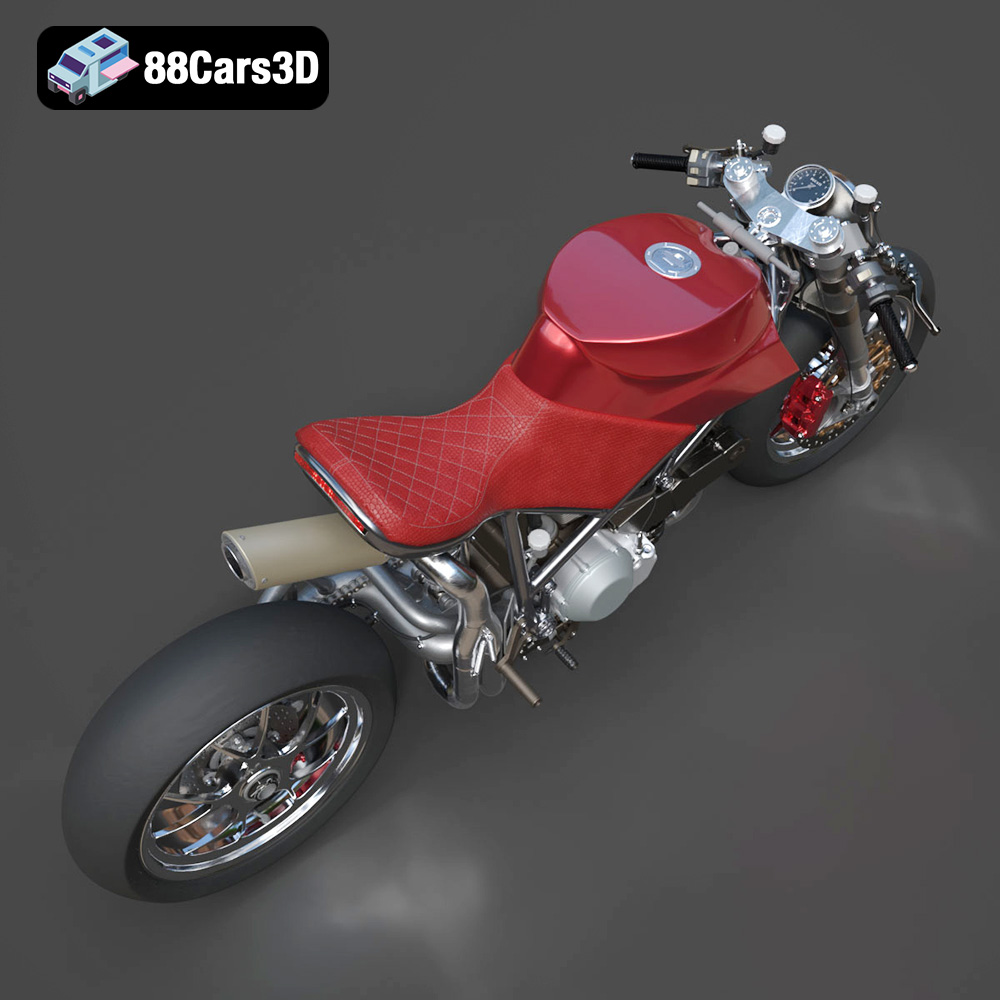
The Ducati 916 Custom Café Fighter 3D Model is an ultra-high-detail digital recreation of a bespoke custom motorcycle build, based on the legendary 1990s Italian sportbike. Inspired by iconic digital concepts that blend the raw mechanical aggression of a streetfighter with the retro-modern sleekness of a café racer, this model strips away the factory fairings to proudly expose the beautiful steel trellis frame, the legendary L-twin engine, and the signature single-sided swingarm. This 3D model accurately represents the aggressive, forward-leaning stance, custom minimalist tail section, bespoke front headlight assembly, and intricate mechanical details of a high-end custom garage build. Built with an extreme, uncompromised level of geometric detail (over 17 million polygons), it provides maximum visual fidelity for extreme close-up rendering, cinematic automotive visualization, and high-end 3D printing. Perfect for gritty urban street scenes, high-end automotive galleries, cinematic productions, and extreme-detail mechanical renders. Includes .blend, .fbx, .obj, .glb, .stl, .ply, .unreal, and .max formats.
$130
.blend
.ducati
.fbx
.obj
.rendering
.stl
.streetfighter
17m-polygons
3d printing
916
cafe-racer
car-3d-model
custom-motorcycle
engine-details
l-twin
trellis-frame
ultra-high-poly