Get 50% OFF All Premium 3D & STL Models!

The automotive industry has always been at the forefront of technological innovation, and its visualization processes are no exception. Gone are the days when static renders or expensive physical prototypes were the only means to showcase vehicle designs. Today, thanks to the power of real-time rendering engines like Unreal Engine, automotive professionals can create breathtakingly realistic, interactive experiences that push the boundaries of design, marketing, and engineering. This complete guide will dive deep into harnessing Unreal Engine for automotive visualization, focusing on workflows, optimization, and cutting-edge features to bring 3D car models to life.
Whether you’re a game developer integrating realistic vehicles, an automotive designer iterating on concepts, or a marketing professional crafting immersive configurators, Unreal Engine offers an unparalleled toolkit. We’ll explore everything from efficient asset import and PBR material creation to advanced lighting with Lumen, performance optimization with Nanite, and interactive scripting with Blueprint. Our aim is to equip you with the knowledge to leverage Unreal Engine effectively, transforming high-quality 3D car models, such as those found on platforms like 88cars3d.com, into stunning real-time visualizations that captivate your audience and streamline your workflow.
Starting an Unreal Engine project for automotive visualization requires careful planning, especially when dealing with complex 3D car models. A solid foundation ensures optimal performance and a smooth development experience. The initial setup dictates how efficiently you can work with high-fidelity assets and how scalable your project will be across different platforms and applications. Understanding project templates, configuring settings, and mastering the import pipeline are crucial first steps.
When you first create a new Unreal Engine project, selecting the right template and configuring key settings is vital. For automotive visualization, starting with a “Blank” or “Games” template might offer more flexibility, allowing you to build from the ground up without unnecessary game-specific features. However, for those looking for a quick start, the “Automotive Product Design” template (available via the Epic Games Launcher under the “Samples” section) provides pre-configured settings, industry-standard lighting setups, and material examples tailored for vehicle showcases. Key settings to consider include:
Referencing the official Unreal Engine documentation at https://dev.epicgames.com/community/unreal-engine/learning is highly recommended for detailed guidance on project settings and templates.
The quality of your 3D car models is paramount. When sourcing automotive assets from marketplaces such as 88cars3d.com, you can expect professionally prepared models. However, understanding the import process and potential pitfalls is still essential. The FBX format is a widely accepted standard for static meshes and skeletal meshes in Unreal Engine due to its robust support for geometry, materials, animations, and skeletal data. More recently, USD (Universal Scene Description) and USDZ are gaining traction, offering powerful scene description capabilities that streamline complex asset pipelines, especially for virtual production and collaborative workflows.
Upon importing an FBX file, ensure the following:
High-quality models, like those available on 88cars3d.com, typically feature clean topology, proper UV mapping, and a well-organized hierarchy, which significantly simplifies the import and optimization process.
Even with high-quality models, initial optimization is critical for real-time performance. High-polygon meshes, while visually stunning, can quickly overwhelm your system if not managed correctly. This is where Level of Detail (LODs) come into play. LODs are simplified versions of a mesh that are swapped in at different distances from the camera. Unreal Engine provides automated LOD generation tools, but creating custom, optimized LODs in your 3D modeling software offers greater control and better results. Typically, a car model might need 3-5 LODs, decreasing polygon count by 50-75% for each successive level. Additionally, consider mesh simplification for non-critical interior components or hidden parts of the chassis.
Another crucial aspect is proper UV mapping. Each mesh component of your car model should have clean, non-overlapping UVs for lightmaps (typically UV Channel 1) and texture maps (UV Channel 0). This ensures accurate lighting and avoids artifacts. It’s also good practice to check for flipped normals and ensure all mesh components have consistent winding orders, which can prevent lighting errors and incorrect material rendering.
Realistic materials are the cornerstone of compelling automotive visualization. Unreal Engine’s physically-based rendering (PBR) pipeline allows artists to create materials that react to light in a physically accurate way, resulting in stunningly lifelike surfaces. Mastering the Material Editor and understanding the nuances of different automotive finishes is essential to achieving photographic realism for your 3D car models.
PBR is based on real-world physics, simulating how light interacts with surfaces. The core principle revolves around two key material properties: Base Color (albedo) and Metallic/Roughness. Unreal Engine’s PBR workflow typically uses a Metallic/Roughness model.
These channels work in conjunction to define how light bounces off the car’s surface, whether it’s the highly reflective clear coat of the paint or the matte texture of the interior dashboard.
Car paint is one of the most challenging materials to replicate due to its multi-layered nature: a metallic base, often with metallic flakes, topped by a clear coat.
Interior materials like leather, fabric, and plastics also require careful attention. Use high-resolution PBR textures for Base Color, Normal, Roughness, and AO. For leather, introduce subtle variations in roughness and normal maps to simulate natural creases and imperfections. Fabric materials will benefit from complex normal maps and often higher roughness values. For dashboards and trim, consider layering different plastics, some with slight subsurface scattering for a more organic feel. Utilize Material Functions to modularize complex material graphs, making them reusable and easier to manage across various car components.
Real cars aren’t pristine. Adding subtle wear, dirt, scratches, and decals significantly enhances realism. Unreal Engine’s Decal Actor allows you to project textures onto surfaces, perfect for logos, warning labels, or mud spatters. You can control the material properties of the decal, including blend mode and opacity, to seamlessly integrate it with the underlying surface. For more advanced wear, material layering and blending techniques can be used. For example, you can blend a dirt material over the base car paint using vertex painting, a mask texture, or distance-based blending.
High-resolution texture maps are vital. Aim for 4K or even 8K textures for the main body panels, ensuring crisp details even up close. For tires, create detailed normal maps for tread patterns and use a higher roughness value for realistic rubber. Glass materials should have accurate refraction, reflections, and potentially subtle imperfections using normal maps to break up perfectly smooth surfaces. Ensuring proper UV mapping and consistent texture resolution across your model’s components will contribute greatly to overall visual coherence and fidelity.
Lighting is arguably the most critical element in any visualization. In Unreal Engine, powerful tools like Lumen offer dynamic global illumination, bringing unprecedented realism to automotive scenes. Combining these with traditional lighting techniques and post-processing can create stunning, photorealistic results.
Lumen is Unreal Engine’s fully dynamic global illumination and reflections system, providing an incredibly realistic and interactive lighting solution. For automotive visualization, Lumen eliminates the need for baking static lightmaps, allowing for real-time changes to lighting, time of day, and even vehicle position, all while maintaining physically accurate indirect lighting and reflections. This is especially powerful for interactive configurators where paint colors and environments can change instantly.
To leverage Lumen effectively:
Lumen’s ability to handle dynamic light changes makes it indispensable for showcasing car models in various environments, from a brightly lit showroom to a moody night street scene.
While Lumen handles global illumination, specific lighting types are still crucial for shaping the scene and highlighting the car’s design features.
Combine these lights with Lumen for a powerful and flexible lighting setup. For instance, a directional light for the sun, an HDRI for environmental reflections, and several rect lights for a studio setup, all dynamically interacting with Lumen’s GI, create a truly immersive scene.
Post-processing is the final layer of polish that elevates a visualization from good to spectacular. Unreal Engine’s Post Process Volume allows you to control a wide range of cinematic effects:
Applying these effects thoughtfully can significantly enhance the visual impact of your automotive scenes, giving them a professional, polished finish reminiscent of high-end photography.
Achieving stunning visuals in real-time often comes with performance challenges. Unreal Engine provides powerful tools like Nanite and robust optimization techniques to ensure your automotive visualizations run smoothly across various hardware, from high-end workstations to AR/VR devices.
Nanite is Unreal Engine 5’s virtualized geometry system, a game-changer for handling extremely high-polygon models with minimal performance impact. Traditional real-time rendering struggles with millions of polygons per mesh, but Nanite can render billions of triangles per frame without LODs or baking normal maps, thanks to its intelligent streaming and culling technology. For 3D car models, this means you can import CAD data or highly detailed sculpts directly, maintaining incredible geometric fidelity, which is critical for showing off intricate design details like body panel gaps, intricate grilles, and complex interior components.
To enable Nanite for a mesh:
Once enabled, Nanite meshes are automatically optimized, intelligently streaming only the necessary triangle data based on the camera’s view, allowing for unprecedented detail without manual LOD creation or significant performance overhead. This is a massive advantage for automotive visualization, where geometric accuracy and detail are paramount. While Nanite works wonders for static geometry, it’s important to note that it doesn’t currently support skeletal meshes, transparent materials (though masks are fine), or custom depth writes for real-time ray tracing features like Lumen, although Epic Games continues to improve its capabilities.
While Nanite handles the most demanding meshes, traditional LODs and occlusion culling remain vital for components not supported by Nanite (e.g., character models within a car scene, transparent meshes, or older assets) or for target platforms that don’t fully leverage Nanite (like some mobile VR experiences).
Strategic use of both Nanite and traditional LODs ensures comprehensive optimization across your entire automotive scene.
Optimization is an ongoing process. To ensure your automotive visualization runs smoothly, continuous profiling is essential.
stat fps, stat unit, stat gpu, stat rhi, and stat Lumen to monitor real-time performance metrics. The stat gpu command helps identify render bottlenecks (e.g., too many draw calls, expensive post-process effects).Regularly profiling and iteratively optimizing your project is key to delivering a high-quality, performant automotive visualization experience across all target platforms. Remember that platforms like 88cars3d.com often provide models with optimized topology and UVs, giving you a strong head start in the optimization process.
Static renders are impressive, but real-time interactive experiences and cinematic sequences elevate automotive visualization to new heights. Unreal Engine provides powerful tools like Blueprint and Sequencer to add dynamic behavior and create captivating narratives around your 3D car models.
Blueprint visual scripting system empowers artists and designers to add complex functionality without writing a single line of code. This is invaluable for creating interactive automotive configurators where users can customize vehicles in real-time.
Common Blueprint functionalities for automotive configurators include:
Blueprint’s intuitive interface makes it accessible for non-programmers to build sophisticated interactive experiences, turning a static car model into a dynamic, engaging product showcase.
For simulations, driving experiences, or virtual test drives, realistic vehicle physics are crucial. Unreal Engine’s Chaos Physics engine provides a robust framework for simulating vehicle dynamics. Chaos vehicles are built using a component-based system, allowing for detailed configuration of engine torque curves, gear ratios, suspension travel, tire friction, and aerodynamics.
Key aspects of setting up Chaos vehicles:
WheeledVehiclePawn.While configuring Chaos Physics can be intricate, the result is a highly realistic driving experience that responds accurately to user input and environmental factors, perfect for engineering simulations or even casual driving games.
Unreal Engine’s Sequencer is a powerful multi-track non-linear editor that allows you to create high-quality cinematics, animations, and interactive sequences. It’s the go-to tool for crafting marketing videos, virtual productions, or detailed walk-around presentations of your automotive designs.
With Sequencer, you can:
Sequencer provides the tools to tell compelling stories around your automotive creations, showcasing their design, features, and performance in a polished, cinematic fashion.
Unreal Engine’s versatility extends beyond traditional rendering, enabling groundbreaking applications in virtual production, AR/VR, and streamlined CAD workflows. These advancements are reshaping how automotive designs are visualized, iterated, and presented.
Virtual Production (VP) is revolutionizing filmmaking and advertising, and its application in automotive visualization is particularly impactful. Using large LED walls as dynamic backgrounds, designers and filmmakers can place a physical car in a virtual environment rendered in real-time by Unreal Engine. This allows for in-camera visual effects (ICVFX), where the final visual is captured directly by the camera on set, minimizing post-production and offering immediate feedback.
For automotive applications, VP enables:
This workflow significantly reduces costs and time associated with traditional automotive photography and videography, offering unparalleled flexibility and creative control.
Augmented Reality (AR) and Virtual Reality (VR) are transforming how consumers and professionals interact with automotive designs. Unreal Engine is a leading platform for developing these immersive experiences due to its high visual fidelity and robust performance.
Optimizing for AR/VR typically requires even more stringent performance targets than desktop applications, often necessitating aggressive LODs, streamlined materials, and carefully managed lighting to maintain high frame rates.
Automotive design often starts in CAD (Computer-Aided Design) software. Unreal Engine’s Datasmith importer is specifically designed to streamline the process of bringing complex CAD data into the engine. Datasmith handles geometry, hierarchies, metadata, and even basic materials from a wide range of CAD formats (e.g., SolidWorks, Catia, Rhino, Autodesk VRED, SketchUp).
Benefits of Datasmith for automotive workflows:
This seamless pipeline from CAD to real-time Unreal Engine empowers automotive professionals to rapidly prototype, visualize, and iterate on designs with unprecedented speed and fidelity. When combined with high-quality, pre-optimized assets from sources like 88cars3d.com, the entire visualization pipeline becomes remarkably efficient and powerful.
Unreal Engine has firmly established itself as an indispensable tool for automotive visualization, offering unparalleled realism, interactivity, and efficiency. From handling high-fidelity 3D car models with Nanite to crafting dynamic lighting with Lumen and building immersive experiences with Blueprint and Sequencer, the engine provides a comprehensive suite of tools for every stage of the visualization pipeline. We’ve explored the critical steps, from project setup and material creation to advanced optimization techniques and innovative applications in virtual production and AR/VR.
The ability to create real-time, photorealistic environments allows automotive designers to iterate faster, marketers to engage customers more deeply, and engineers to simulate with greater accuracy. By embracing these workflows and leveraging optimized assets from reputable sources such as 88cars3d.com, professionals can unlock new possibilities in design, marketing, and engineering. The future of automotive visualization is dynamic, interactive, and powered by real-time technology. It’s an exciting time to be at the intersection of automotive design and cutting-edge rendering, and with Unreal Engine, the possibilities are virtually limitless.

Texture: Yes | Material: Yes | 3D Printable: Yes. Download the Italian Thoroughbreds Bundle featuring 5 iconic 3D models: Lamborghini Huracán Performante, Ferrari 458 Italia, Lamborghini Urus, Diablo SV, and Maserati GT. Optimized for 4K rendering and 3D printing (STL included). Save 50% with this ultimate Italian vehicle collection.
Price: $199.99

Download the Elite Future Mobility Bundle featuring 4 highly optimized 3D models: Tesla Model S, Avatr 11, Li L9, and Zoox Robotaxi. Perfect for ArchViz, Smart City renders, and game dev. Optimized for Unreal Engine and Blender. Includes .fbx, .obj, and .max formats.
Price: $99

🚗 5 Iconic German Cars (BMW M4 G82, M5 CS, X3, 1 Series & Mercedes E-Class). ✅ Optimized for ArchViz: Ready for Corona & V-Ray. 💰 Save €71 with this limited-time collection! 🚀 Instant Download after purchase.
Price: $119

Download the Extreme Off-Road & Survival 3D Models Bundle! Includes the Brabus 800 Adventure, Dodge Ram Bigfoot, Spec Truck, and a Caravan. Save over €210 on this premium 4-in-1 off-grid vehicle pack for ArchViz and game development.
Price: $149.99

Download the Heavy Duty & Commercial Logistics 3D Models Bundle! Includes the Ford Sterling, Caterpillar CT680, Mercedes Citaro Bus, and Vito Van. Save over €130 on this massive, game-ready 4-in-1 industrial vehicle pack.
Price: $109.99

Download the Ultimate Custom Motorcycles 3D Models Bundle. Includes a Custom Chopper, Ducati 916 Café Fighter, Harley XR1200X, and BMW K100. Perfect premium props for luxury ArchViz garages. Save over €250 today!
Price: $159.99

Download the ultimate JDM Street Racing 3D Models Bundle! Includes the Nissan GT-R, Toyota Supra, Mazda RX-7, Lancer Evo IX, and Honda NSX. Save big on this highly optimized, game-ready 5-in-1 Japanese legend car pack.
Price: $129.99

Download the ultimate American Muscle & Cinematic Classics 3D Models Bundle! Includes the Dodge Charger ’68, Mustang Eleanor GT500, Camaro Z28 ’79, and a custom ’69 Mustang. Save over €240 on this game-ready, premium 4-in-1 pack.
Price: $149.99

Download the Everyday City Traffic 3D Models Bundle. Includes the VW Golf, Kia Picanto, Hyundai Tucson, Toyota Yaris, and a DHL Ford Transit Van. Save big on this 5-in-1 pack, perfectly optimized for realistic ArchViz streets and game traffic.
Price: $99.99
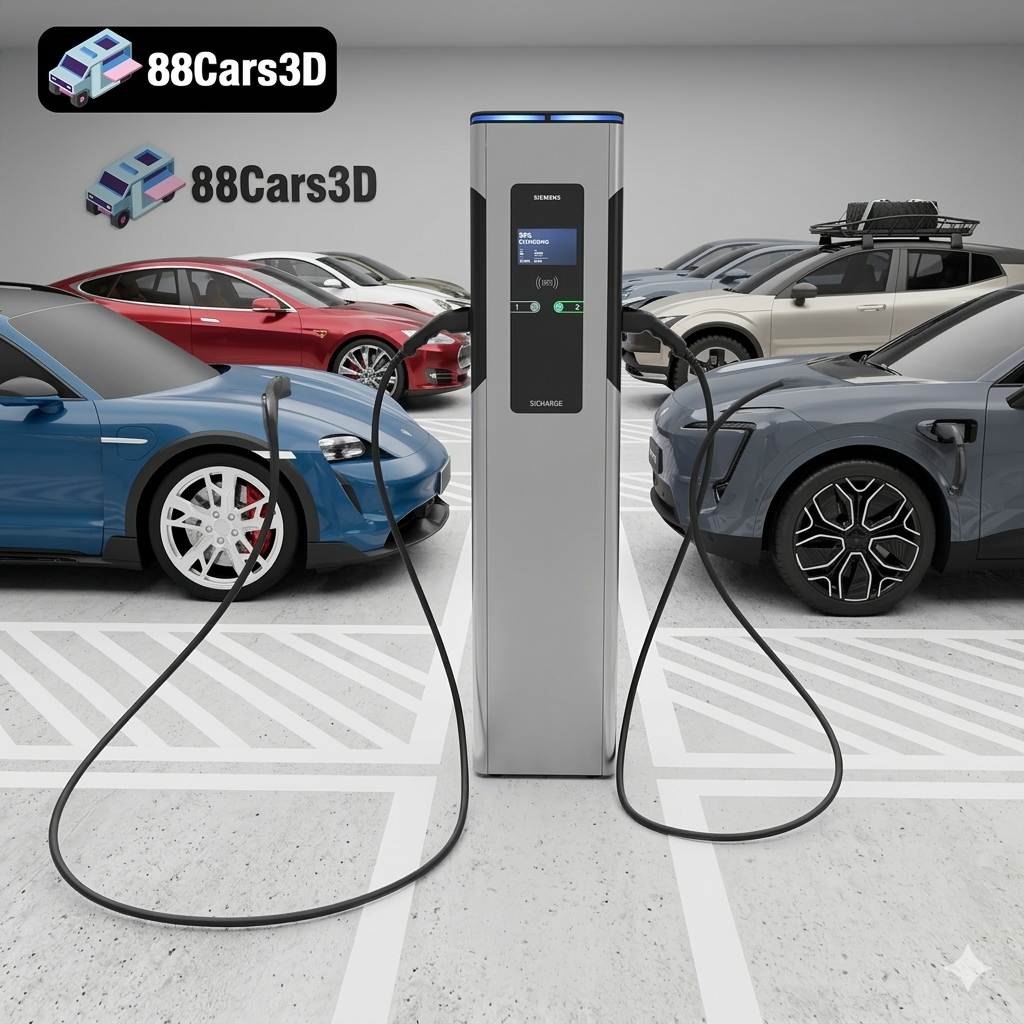
Download the Future of Mobility EV 3D Models Bundle. Includes the Volvo EX30, Tesla Model S, AVATR 11, Porsche Taycan, and a Siemens EV Charger. Save big on this highly optimized 5-in-1 pack for ArchViz and game development!
Price: $89.99

