Get 50% OFF All Premium 3D & STL Models!

The realms of Augmented Reality (AR) and Virtual Reality (VR) are no longer futuristic concepts; they are here, transforming industries from automotive design and engineering to immersive gaming and interactive visualization. For professionals working with high-quality 3D car models, the transition to real-time, interactive AR/VR environments presents unique and exciting challenges. Unlike traditional offline rendering, where virtually unlimited polygons and texture resolutions can be used, AR/VR demands meticulous optimization to ensure smooth performance, high frame rates, and a truly immersive user experience without motion sickness or visual glitches.
At 88cars3d.com, we understand the critical importance of delivering models that not only look stunning but also perform flawlessly across a spectrum of devices, from powerful VR headsets to mobile AR platforms. This comprehensive guide will delve deep into the technical strategies and best practices for optimizing 3D car models specifically for AR/VR applications. We’ll cover everything from fundamental mesh topology and UV mapping to advanced material setups, game engine integration, and file format considerations. By mastering these techniques, you’ll be equipped to create breathtaking, high-performance interactive automotive experiences that captivate your audience and meet the rigorous demands of real-time rendering.
The bedrock of any high-performance 3D asset, especially for real-time AR/VR applications, is its underlying mesh topology. For automotive models, which are characterized by smooth, complex curves and intricate details, efficient topology is paramount. Poorly optimized meshes lead to excessive polygon counts, increased draw calls, and ultimately, a significant drop in frame rates, compromising the immersive experience. Understanding how to manage polygon budgets and maintain clean, quad-based topology is the first critical step in AR/VR optimization.
For AR/VR, typical polygon budgets for a primary hero asset like a detailed car can range from 50,000 to 150,000 triangles on mobile AR platforms, and up to 200,000-500,000 triangles for high-end VR on desktop systems. These figures are drastically lower than the millions of polygons often used for cinematic rendering. Achieving this requires a strategic approach to modeling, focusing on efficiency without sacrificing visual fidelity. Automotive models often require specific attention to areas like car body panels, wheel arches, and interior elements, where curvature demands a certain level of mesh density, but flat surfaces can be optimized aggressively. Tools like 3ds Max’s ProOptimizer, Maya’s Reduce, or Blender’s Decimate modifier (specifically the ‘Collapse’ and ‘Un-Subdivide’ modes) are indispensable for intelligent polygon reduction while preserving shape.
Clean topology, characterized by mostly quad-based geometry and consistent edge flow, is crucial for several reasons in AR/VR. Firstly, it ensures predictable deformation if your model ever needs to be animated (e.g., car doors opening). More importantly for AR/VR, it facilitates efficient UV mapping and baking of high-resolution details from a sculpt or source mesh onto a lower-polygon game mesh. A good edge flow follows the natural contours and creases of the car model, allowing for smoother shading and minimizing artifacts when normal maps are applied. Avoiding n-gons (faces with more than four vertices) and triangles in flat areas, though sometimes necessary at the very end of optimization, generally leads to better results. Maintaining a logical flow of edges means that when polygon reduction techniques are applied, the mesh simplifies in a more controlled and visually acceptable manner.
When modeling, consider areas of high curvature versus flat surfaces. Doors, hoods, and roofs often require less polygon density than wheel wells, grilles, or complex headlight assemblies. Use supporting edge loops sparingly and only where absolutely necessary to define sharp creases or maintain curvature. For advanced users working in Blender, detailed information on modeling principles and tools can be found in the official Blender 4.4 documentation, specifically under the “Modeling” section, which covers essential topics like mesh editing and modifiers: https://docs.blender.org/manual/en/4.4/. Understanding how to effectively use tools like the ‘Knife’ tool, ‘Loop Cut’, and ‘Dissolve Edges’ can significantly contribute to maintaining clean and efficient geometry.
Polygon reduction is the art of simplifying a mesh while retaining its perceived visual quality. Techniques range from manual retopology (rebuilding the mesh from scratch to be optimized for real-time) to automated decimation tools. Automated tools are excellent for quickly getting to a target polygon count, but manual cleanup is often required to fix artifacts. For complex automotive parts, it’s often more efficient to optimize individual components (wheels, chassis, interior) separately before combining them.
Level of Detail (LOD) strategies are indispensable for AR/VR performance. LODs involve creating multiple versions of a single 3D model, each with a progressively lower polygon count. The game engine then dynamically swaps between these versions based on the object’s distance from the camera. For example, a car might have:
Proper implementation of LODs can drastically reduce the number of polygons rendered per frame, especially in scenes with many objects or large environments. When generating LODs, prioritize reducing elements that aren’t critical at a distance, such as interior details or undercarriage components, while maintaining the silhouette and primary visual cues of the car model.
Once your mesh is optimized, the next crucial step is to create materials and textures that are both visually stunning and performant within AR/VR environments. Real-time rendering pipelines, especially in AR/VR, rely heavily on Physically Based Rendering (PBR) workflows to achieve photorealistic results with consistent lighting across different scenes. However, PBR materials, while powerful, can become performance bottlenecks if not managed correctly, particularly regarding texture resolution and shader complexity.
The goal is to strike a balance between visual fidelity and performance. This means making intelligent choices about texture resolutions, utilizing texture atlases, and understanding the impact of shader complexity. For a hero car model in AR/VR, typical texture resolutions for primary maps (Albedo, Normal, Metallic, Roughness) might be 2048×2048 (2K) or 4096×4096 (4K) for the most visible parts of the car body. Secondary elements like wheels, interior panels, or engine components might use 1024×1024 (1K) or 512×512 maps. The cumulative size of these textures needs to be carefully monitored, as they consume significant GPU memory.
PBR materials are fundamental for achieving realism in AR/VR. They simulate how light interacts with surfaces in a physically accurate way, resulting in more believable reflections, refractions, and diffuse lighting. The core maps in a PBR workflow typically include:
When setting up PBR materials in game engines like Unity or Unreal Engine, it’s crucial to ensure that unnecessary shader features are disabled. For instance, if a material doesn’t need transparency, disable it. Avoid complex custom shaders with many instructions unless absolutely necessary, as they can be computationally expensive. Use standard PBR shaders provided by the engine as a baseline, and only customize where specific visual effects are required. When sourcing 3D car models from marketplaces such as 88cars3d.com, always check if they come with optimized PBR textures and materials, as this can significantly streamline your AR/VR development pipeline.
Texture atlasing is a crucial optimization technique for AR/VR. Instead of having multiple small textures for different parts of a model, an atlas combines many textures into a single, larger texture map. This reduces the number of draw calls (commands sent from the CPU to the GPU to render objects), as the GPU only needs to bind one texture instead of several. For a car model, you might create an atlas for all interior elements, another for all chrome parts, and another for all tire details. While it can involve more upfront UV work, the performance gains are substantial.
Texture resolution management involves intelligently choosing the appropriate resolution for each texture based on its visibility and importance. Overly high-resolution textures on small, rarely seen surfaces are a waste of GPU memory and processing power. Use tools within your 3D software (e.g., Blender’s Image Editor, or Photoshop/GIMP) to resize textures to powers of two (e.g., 512, 1024, 2048, 4096) for optimal GPU compatibility and performance. Additionally, consider texture compression formats specific to your target platform (e.g., ASTC for mobile, BC7 for desktop VR) to further reduce file size and memory footprint. For instance, a 4K uncompressed texture can easily exceed 30MB, but with aggressive compression, it might be reduced to just a few MBs.
UV mapping is the process of flattening the 3D surface of your model onto a 2D plane so that textures can be applied. For AR/VR automotive models, efficient and clean UV mapping is not just about aesthetics; it’s a performance imperative. Poor UVs lead to wasted texture space, resolution issues, and can prevent effective texture atlasing and light baking, all of which are detrimental to real-time performance.
The primary goals for AR/VR UV mapping are:
For complex automotive surfaces, achieving these goals requires careful planning and execution. Tools like 3ds Max’s Unwrap UVW modifier, Maya’s UV Editor, or Blender’s UV Editing workspace offer powerful functionalities for unwrapping, packing, and manipulating UV layouts. Remember, the quality of your UVs directly impacts the visual quality of your PBR materials and the efficiency of your rendering pipeline.
Non-overlapping UVs are an absolute requirement for most AR/VR applications, especially when baking lighting (lightmaps) or ambient occlusion. If UV islands overlap, baked light and shadow information will be incorrectly applied, resulting in visual artifacts. While it’s possible to have overlapping UVs for certain tiled textures (e.g., generic tire tread patterns), for the primary unique textures of a car model, each face should have a unique position in UV space. Many game engines require a second, non-overlapping UV channel specifically for lightmaps.
Consistent texel density ensures that the resolution of your textures is evenly distributed across your model’s surface. Texel density refers to the number of texture pixels per unit of 3D space. If one part of your car (e.g., a door panel) has a high texel density and another (e.g., a roof) has a low one, the roof will appear blurrier than the door. Tools exist in most 3D software to visualize texel density, allowing artists to adjust and normalize it across different UV islands. Aim for a target texel density based on your primary texture resolution (e.g., 10.24 pixels/cm for a 2K texture on a standard-sized car). This prevents visual inconsistencies and makes the most efficient use of your texture budget.
Automotive models feature numerous smooth, curved surfaces, which can be challenging to unwrap efficiently. Here are some advanced techniques:
Proper UV mapping is often one of the most time-consuming but rewarding optimization steps. It directly impacts the visual quality and performance of your automotive model in AR/VR, making it a critical skill for any 3D artist specializing in real-time content.
Once your 3D car model is meticulously optimized in your chosen 3D software, the next critical phase is integrating it into a real-time game engine like Unity or Unreal Engine and fine-tuning its performance for AR/VR. This involves understanding how engines render assets, managing draw calls, optimizing lighting, and implementing engine-specific features to maximize frame rates and create a seamless immersive experience.
AR/VR applications demand extremely high and stable frame rates (typically 72-90 frames per second per eye, sometimes higher) to prevent motion sickness and maintain immersion. Every element in your scene, from the car model itself to the environment and lighting, contributes to the overall performance budget. Effective game engine integration requires a holistic approach, considering not just the individual asset but its interaction with the entire scene’s rendering pipeline. Tools like Unity’s Frame Debugger or Unreal Engine’s GPU Visualizer are invaluable for identifying performance bottlenecks.
Draw calls are instructions sent from the CPU to the GPU to render geometry. Each time the engine needs to switch materials, shaders, or texture atlases, it typically incurs a new draw call. Minimizing draw calls is one of the most impactful optimizations for AR/VR. For a 3D car model, this means:
Occlusion Culling is another vital performance feature. It prevents the engine from rendering objects that are hidden behind other objects from the camera’s perspective. For a car model, this means if the camera is viewing the front, the engine won’t try to render the back wheels or the interior elements that are completely obscured. Implementing effective occlusion culling involves baking occlusion data into the scene, which requires careful setup in the engine. It’s particularly useful in complex scenes with many objects or tight spaces, like a car showroom environment.
Lighting is crucial for realism but also one of the most performance-intensive aspects of AR/VR.
Proper lighting setup, combining baked lightmaps for static elements with judicious use of real-time lights and strategically placed reflection probes, is key to achieving visual fidelity without compromising AR/VR performance.
The choice of file format is a critical consideration for AR/VR 3D car models, impacting everything from ease of integration into various platforms to asset delivery size and compatibility. Different AR/VR ecosystems and tools favor specific formats, and understanding their strengths and limitations is essential for a smooth workflow and broad reach. The goal is to select formats that are lightweight, support PBR materials, and handle animations and interactivity efficiently.
When preparing your 3D car models for diverse AR/VR applications, whether it’s for mobile AR experiences on iOS or Android, or high-fidelity VR on Oculus, HTC Vive, or Valve Index, you’ll encounter a range of formats. Each has its niche and optimal use cases. The ability to convert and optimize across these formats is a valuable skill for any professional working in the 3D space, especially when distributing assets from platforms like 88cars3d.com.
When choosing, consider your target platform. For cross-platform AR/VR, prioritize GLB. For iOS AR, USDZ is key. FBX remains excellent for the initial export from your DCC software into a game engine, where further optimization and material setup can occur.
Beyond the file format itself, data compression is paramount for AR/VR, especially for mobile applications where download sizes and loading times are critical.
Asset delivery pipelines for AR/VR must be efficient. For web-based AR, smaller file sizes mean faster loading. For app-based AR/VR, it means smaller app downloads. Consider streaming assets if your scene is massive, loading parts of the car model or environment dynamically as the user progresses. Optimizing your 3D car models not only improves real-time performance but also directly contributes to a better download and loading experience, enhancing overall user satisfaction.
Beyond the general principles of 3D asset optimization, AR/VR introduces its own set of unique technical challenges and opportunities for enhancement. The need for dual-eye rendering, maintaining user comfort, and enabling interactive experiences necessitates specialized strategies that go beyond typical game development optimization. These advanced techniques directly address the core requirements of immersive AR/VR, ensuring your 3D car models not only look great but also contribute to a comfortable and engaging user journey.
The goal in AR/VR is to achieve a constant, high frame rate (often 90 FPS or more) for both eyes, with minimal latency between user input and visual feedback. Any dips in performance can lead to motion sickness, breaking immersion and making the experience unpleasant. Therefore, understanding and implementing AR/VR-specific optimizations is not just about making things look good; it’s about making them feel right and ensuring user well-being. This section will dive into strategies that cater specifically to the nuances of rendering for stereoscopic displays and ensuring seamless interaction.
Stereo Rendering: The fundamental difference in AR/VR is rendering the scene twice, once for each eye, with a slight offset to create the illusion of depth. This effectively doubles the rendering workload. Any optimization made to your 3D car model directly benefits both views. Techniques like Single-Pass Instanced Rendering (SPIR) or Multi-View Rendering are crucial at the engine level. These methods allow the GPU to render both eye views in a single pass, significantly reducing CPU overhead and GPU draw calls compared to rendering each eye sequentially. When preparing your car model, ensure it’s compatible with these rendering paths by having clean geometry and efficient materials.
Foveated Rendering: This is an advanced optimization technique specific to VR headsets with eye-tracking capabilities. It leverages how human vision works: only the very center of our gaze (the fovea) has high resolution, while peripheral vision is much lower resolution. Foveated rendering renders the area directly in the user’s gaze at full resolution and progressively reduces the resolution of the scene in the periphery. This can provide significant performance gains (up to 30% or more) by reducing the pixel count rendered without noticeable loss of perceived quality. While primarily an engine-level feature, its effectiveness relies on having a well-optimized base mesh and textures on your 3D car model, as the engine still needs to handle a consistent model across all resolution tiers. Ensure your materials and textures are robust enough to scale correctly across these varying resolution areas.
For AR/VR applications, particularly those involving interactive 3D car models, the user experience goes hand-in-hand with technical performance. Optimization here extends beyond visual rendering to how the user interacts with the model.
By prioritizing user comfort and designing for efficient interactions from the outset, you ensure that your highly optimized 3D car models deliver a truly memorable and enjoyable AR/VR experience.
Optimizing 3D car models for Augmented and Virtual Reality is a multifaceted discipline that requires a deep understanding of 3D artistry, real-time rendering principles, and platform-specific requirements. It’s a continuous balancing act between visual fidelity and raw performance, demanding meticulous attention to detail at every stage of the asset pipeline. From crafting clean, efficient topology and smart UV layouts to implementing advanced PBR material workflows and mastering game engine integration, every technical decision directly impacts the immersive quality and smooth operation of your AR/VR experience.
By adhering to the best practices outlined in this guide—meticulously managing polygon budgets, leveraging LODs, employing texture atlasing, optimizing PBR shaders, and understanding the nuances of file formats like GLB and USDZ—you can transform your high-quality 3D car models into high-performance interactive assets. Remember that the journey of optimization doesn’t end with a single export; it’s an ongoing process of profiling, identifying bottlenecks, and refining your assets within the target AR/VR environment. Platforms like 88cars3d.com provide an excellent starting point for acquiring high-quality base models, but the optimization journey is where true expertise shines. Embrace these technical strategies, and you’ll be well on your way to creating stunning, smooth, and truly immersive automotive AR/VR experiences that push the boundaries of real-time visualization.

Texture: Yes | Material: Yes | 3D Printable: Yes. Download the Italian Thoroughbreds Bundle featuring 5 iconic 3D models: Lamborghini Huracán Performante, Ferrari 458 Italia, Lamborghini Urus, Diablo SV, and Maserati GT. Optimized for 4K rendering and 3D printing (STL included). Save 50% with this ultimate Italian vehicle collection.
Price: $199.99

Download the Elite Future Mobility Bundle featuring 4 highly optimized 3D models: Tesla Model S, Avatr 11, Li L9, and Zoox Robotaxi. Perfect for ArchViz, Smart City renders, and game dev. Optimized for Unreal Engine and Blender. Includes .fbx, .obj, and .max formats.
Price: $99

🚗 5 Iconic German Cars (BMW M4 G82, M5 CS, X3, 1 Series & Mercedes E-Class). ✅ Optimized for ArchViz: Ready for Corona & V-Ray. 💰 Save €71 with this limited-time collection! 🚀 Instant Download after purchase.
Price: $119

Download the Extreme Off-Road & Survival 3D Models Bundle! Includes the Brabus 800 Adventure, Dodge Ram Bigfoot, Spec Truck, and a Caravan. Save over €210 on this premium 4-in-1 off-grid vehicle pack for ArchViz and game development.
Price: $149.99

Download the Heavy Duty & Commercial Logistics 3D Models Bundle! Includes the Ford Sterling, Caterpillar CT680, Mercedes Citaro Bus, and Vito Van. Save over €130 on this massive, game-ready 4-in-1 industrial vehicle pack.
Price: $109.99

Download the Ultimate Custom Motorcycles 3D Models Bundle. Includes a Custom Chopper, Ducati 916 Café Fighter, Harley XR1200X, and BMW K100. Perfect premium props for luxury ArchViz garages. Save over €250 today!
Price: $159.99

Download the ultimate JDM Street Racing 3D Models Bundle! Includes the Nissan GT-R, Toyota Supra, Mazda RX-7, Lancer Evo IX, and Honda NSX. Save big on this highly optimized, game-ready 5-in-1 Japanese legend car pack.
Price: $129.99

Download the ultimate American Muscle & Cinematic Classics 3D Models Bundle! Includes the Dodge Charger ’68, Mustang Eleanor GT500, Camaro Z28 ’79, and a custom ’69 Mustang. Save over €240 on this game-ready, premium 4-in-1 pack.
Price: $149.99
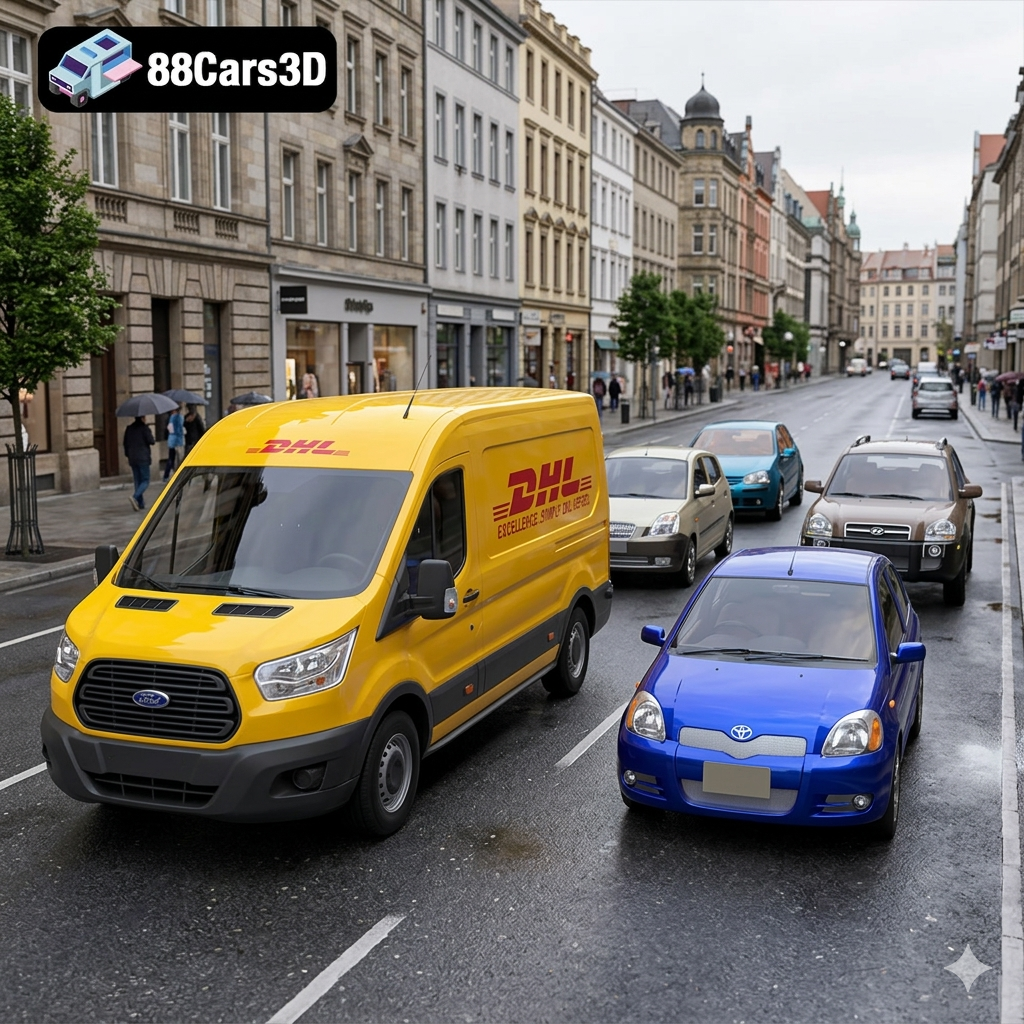
Download the Everyday City Traffic 3D Models Bundle. Includes the VW Golf, Kia Picanto, Hyundai Tucson, Toyota Yaris, and a DHL Ford Transit Van. Save big on this 5-in-1 pack, perfectly optimized for realistic ArchViz streets and game traffic.
Price: $99.99
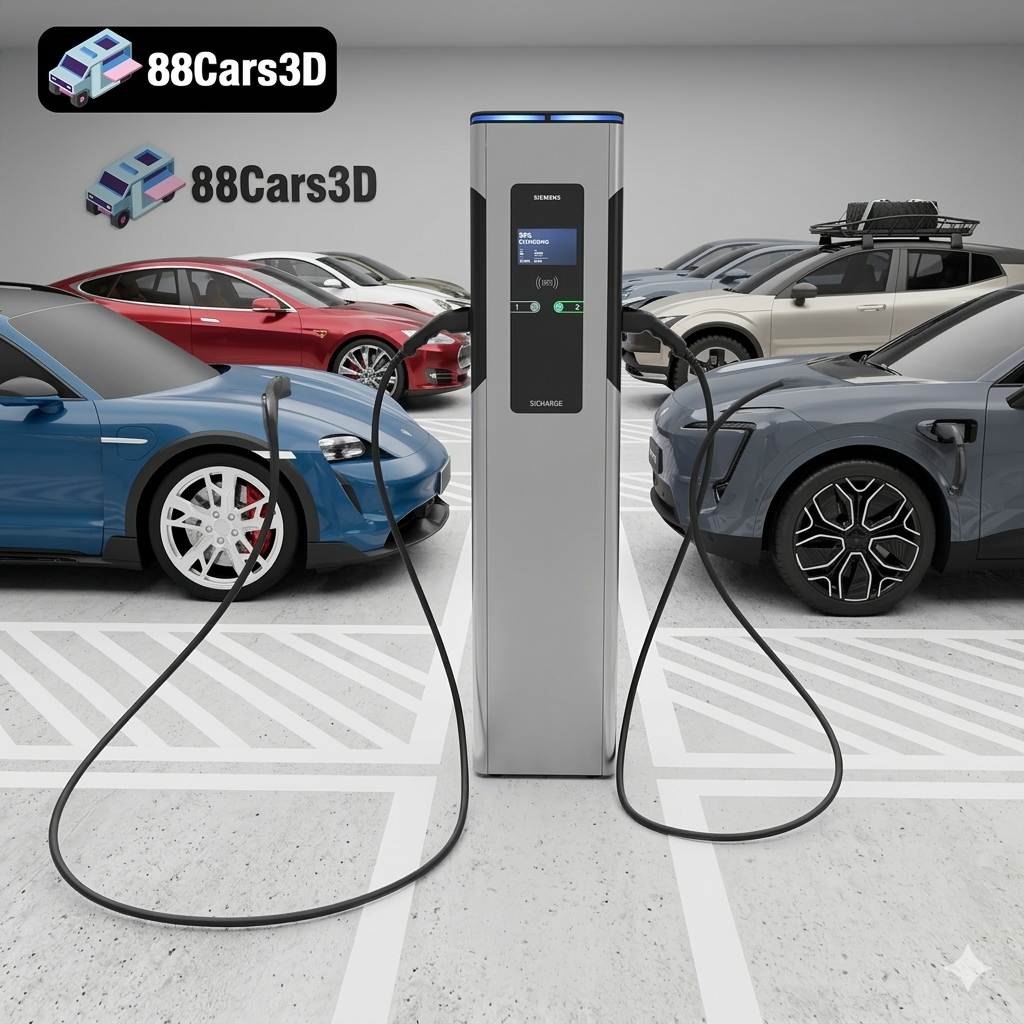
Download the Future of Mobility EV 3D Models Bundle. Includes the Volvo EX30, Tesla Model S, AVATR 11, Porsche Taycan, and a Siemens EV Charger. Save big on this highly optimized 5-in-1 pack for ArchViz and game development!
Price: $89.99

