Get 50% OFF All Premium 3D & STL Models!

In the dynamic world of 3D visualization, automotive design, and immersive digital experiences, the demand for exceptionally detailed and technically sound 3D car models is ever-present. From captivating cinematic renders to cutting-edge game environments and interactive AR/VR applications, the foundation of any compelling project lies in the quality of its assets. A truly professional 3D model isn’t just about aesthetic appeal; it’s about precision, adaptability, and an understanding of diverse industry workflows.
Today, we delve into the intricate details that elevate a 3D car model from a mere digital object to a powerful creative tool, exploring how a premium asset integrates seamlessly into various professional pipelines. We’ll specifically examine the Cadillac Ciel Concept 2011 3D Model, a remarkable digital recreation available on 88cars3d.com, showcasing its technical merits and widespread utility. This model isn’t just a static representation; it’s a meticulously crafted asset designed to empower artists, designers, and developers in bringing their most ambitious visions to life, whether for stunning renders, interactive simulations, or even physical 3D prints.
The versatility of a 3D model often hinges on the file formats in which it is provided. Different formats cater to specific software, engines, or end-use applications, each with its own advantages and technical nuances. Understanding these distinctions is paramount for any professional working with 3D content, ensuring seamless integration and optimal performance. The Cadillac Ciel Concept 2011 3D Model, a prime example of a comprehensive asset from 88cars3d.com, is offered in a wide array of formats, making it highly adaptable.
The availability of such a diverse range of formats for the Cadillac Ciel Concept 2011 3D Model highlights its professional-grade nature and the thoughtful approach taken by providers like 88cars3d.com to cater to a broad spectrum of digital artists and engineers. This comprehensive format support significantly reduces conversion headaches and ensures that the model can be immediately utilized in virtually any project pipeline.
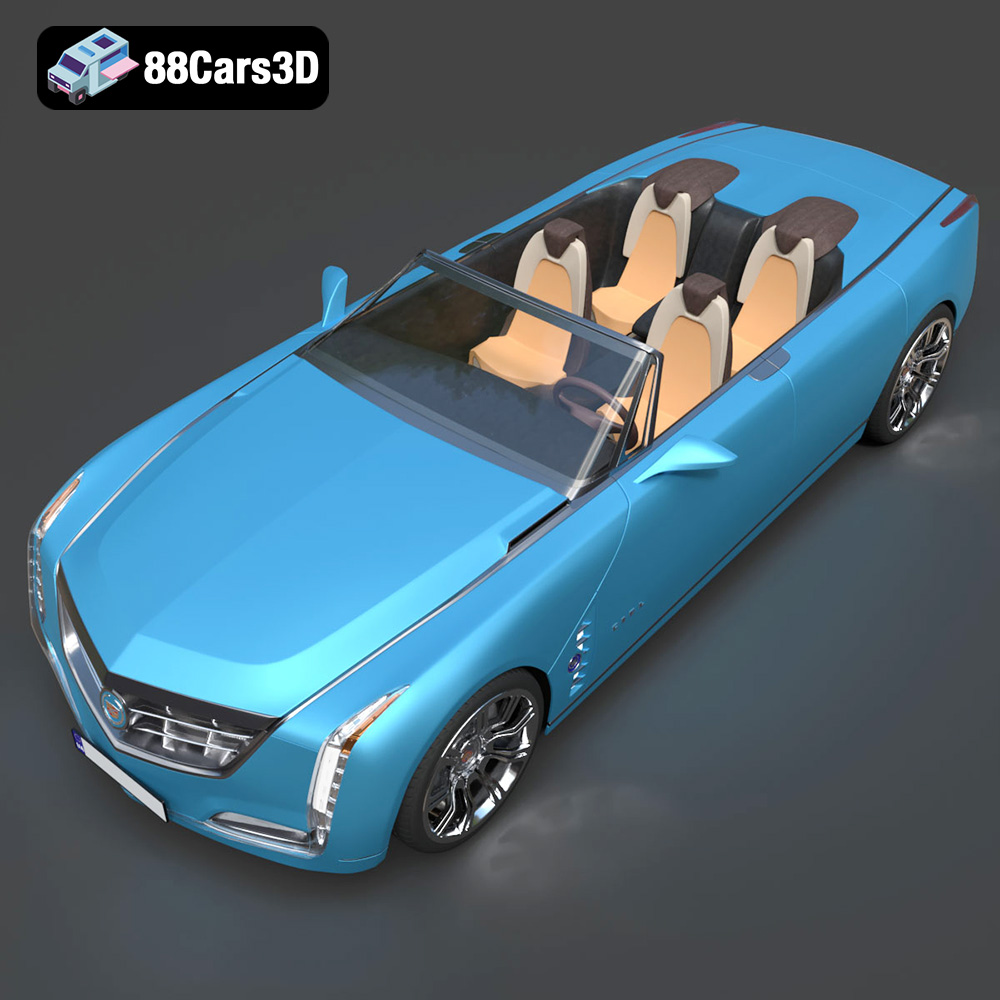
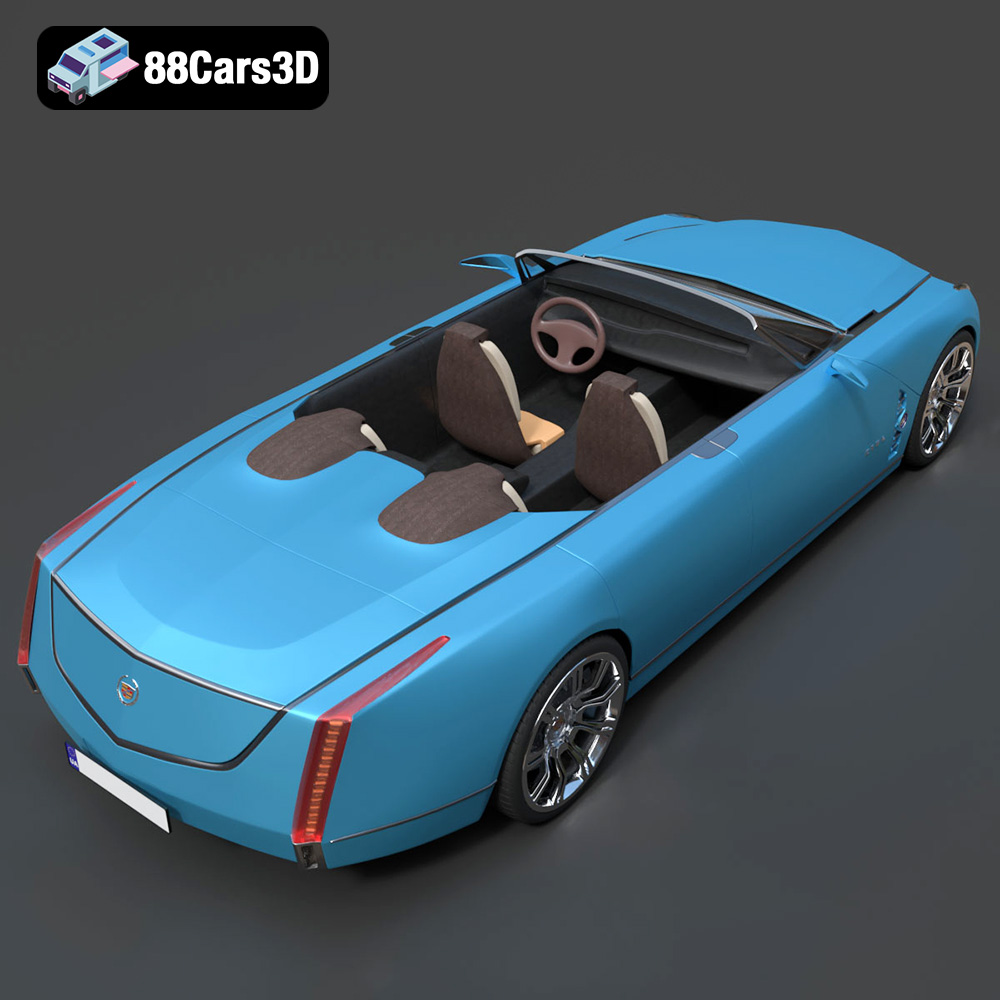
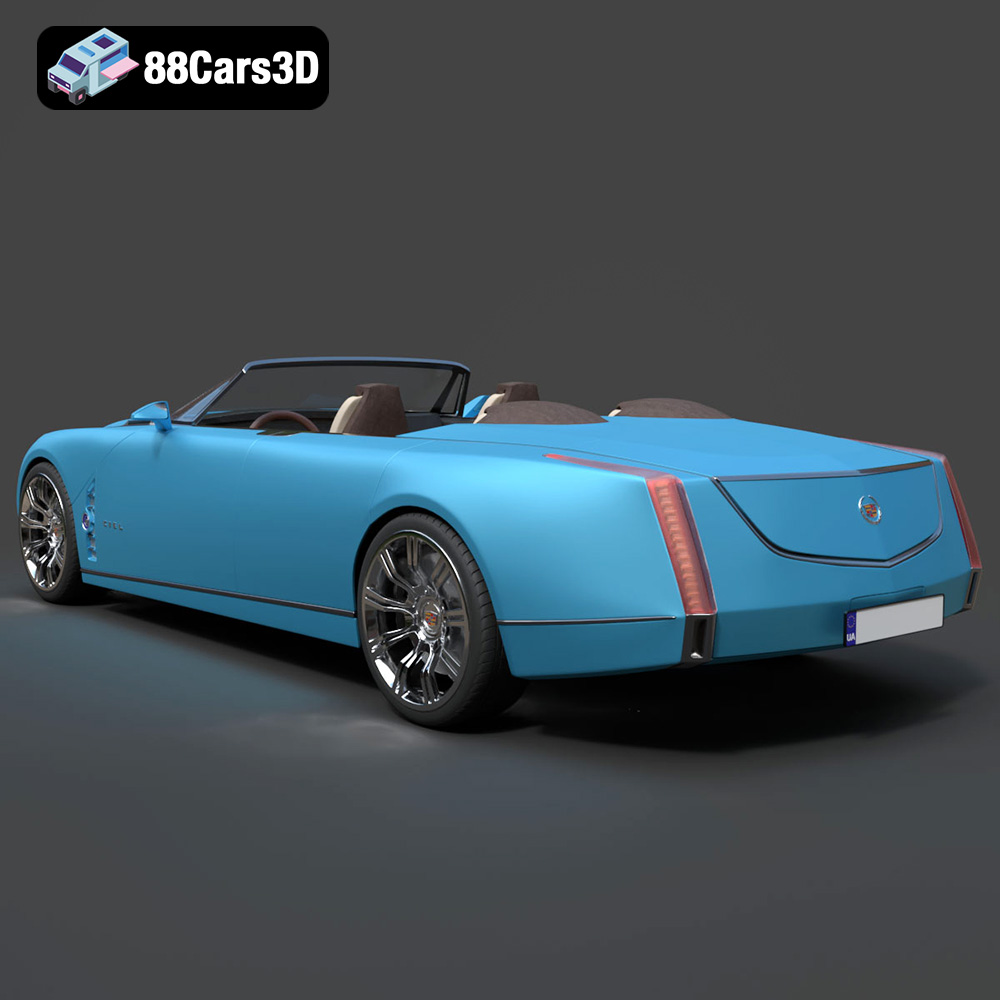
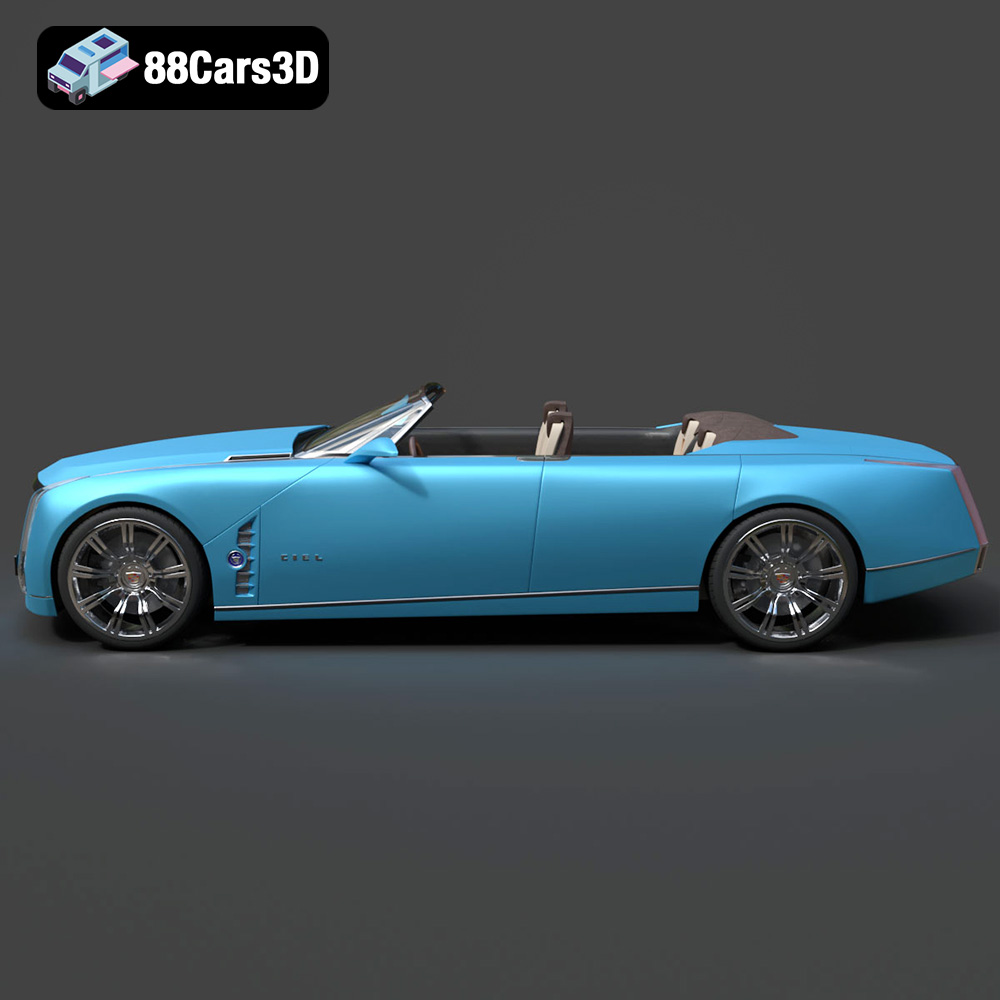
The 2011 Cadillac Ciel Concept was more than just a car; it was a statement of luxury, a vision of open-air grand touring that combined classic Cadillac grandeur with a forward-thinking aesthetic. Recreating such an iconic vehicle in 3D demands an extraordinary level of attention to detail and a profound understanding of automotive design principles. The Cadillac Ciel Concept 2011 3D Model excels in this regard, offering a digital twin that captures the essence and intricate styling of the original concept car with breathtaking fidelity.
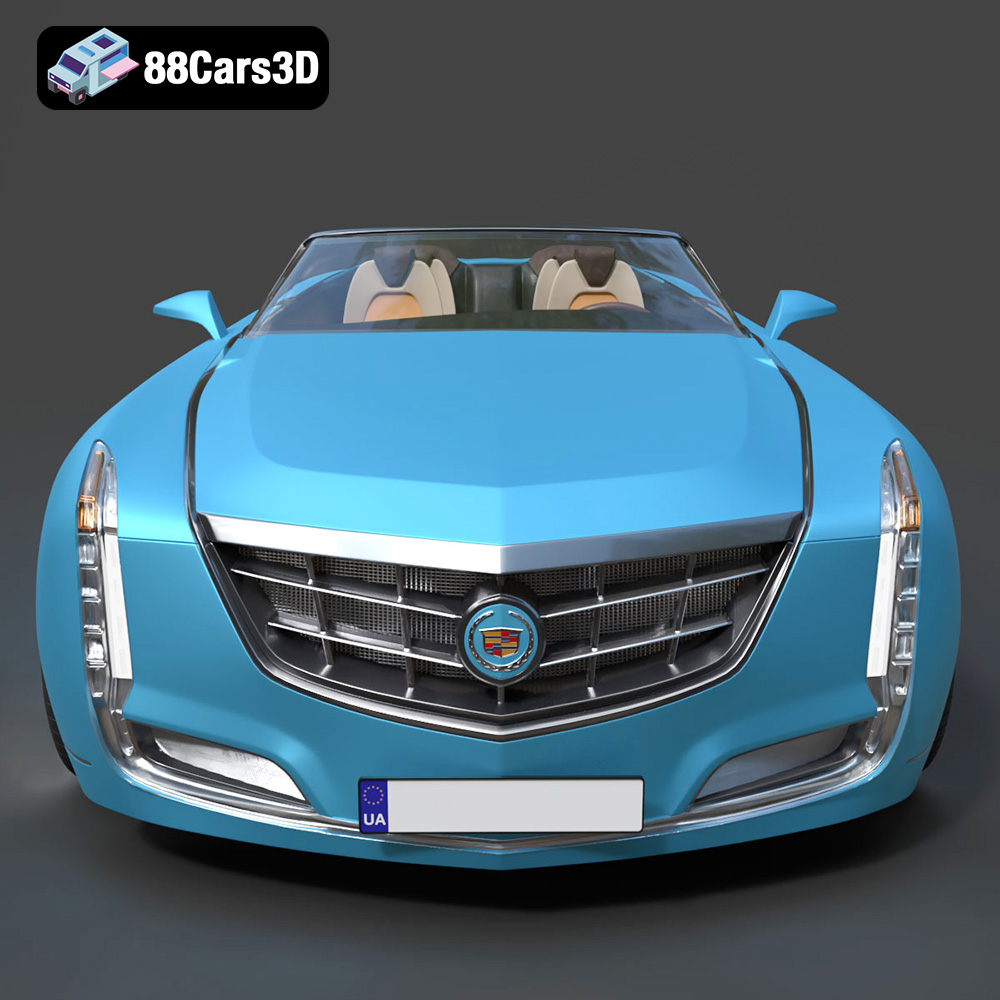
The defining characteristic of the Ciel was its dramatic proportions – an elongated body, an extended wheelbase, and a majestic, sweeping hood that conveyed power and elegance. This 3D model accurately mirrors these heroic dimensions, ensuring that its digital presence is as commanding as the physical concept. The bold front grille, a signature Cadillac element, is meticulously reproduced, complete with its vertical LED lighting signature that pierces through the digital darkness. Every sculpted body panel, the subtle chrome trim, and the distinctive large luxury concept wheels are rendered with precision, reflecting the futuristic yet timeless design language Cadillac championed. Even the unique rear-hinged (suicide-style) doors, a challenging feature to model correctly, are perfectly articulated, ready for stunning open-door presentations or animations.
Beyond its striking exterior, the Cadillac Ciel Concept boasted an interior that was a sanctuary of luxury. The 3D model extends this dedication to detail inside the cabin, presenting a fully realized four-seat executive layout. The two-tone tan and brown colorway of the original concept’s premium dashboard and sculpted luxury seating geometry are faithfully represented. Every element, from the detailed center console structure to the high-end trim and material representation, is built with optimized geometry suitable for close-up rendering. This level of interior fidelity means the model isn’t just for exterior glamour shots; it’s a complete package that allows for immersive virtual tours or intricate scene setups where the interior is a focal point, critical for showcasing the vehicle in high-end automotive galleries or product visualizations.
In professional 3D production, aesthetic beauty must be matched by technical robustness. A high-quality 3D car model, such as the Cadillac Ciel Concept 2011 3D Model, is characterized by a clean mesh, accurate scaling, and thoughtful preparation for various end-uses. These technical specifications are what truly differentiate a professional asset from a casual creation, ensuring optimal performance and flexibility across diverse pipelines.
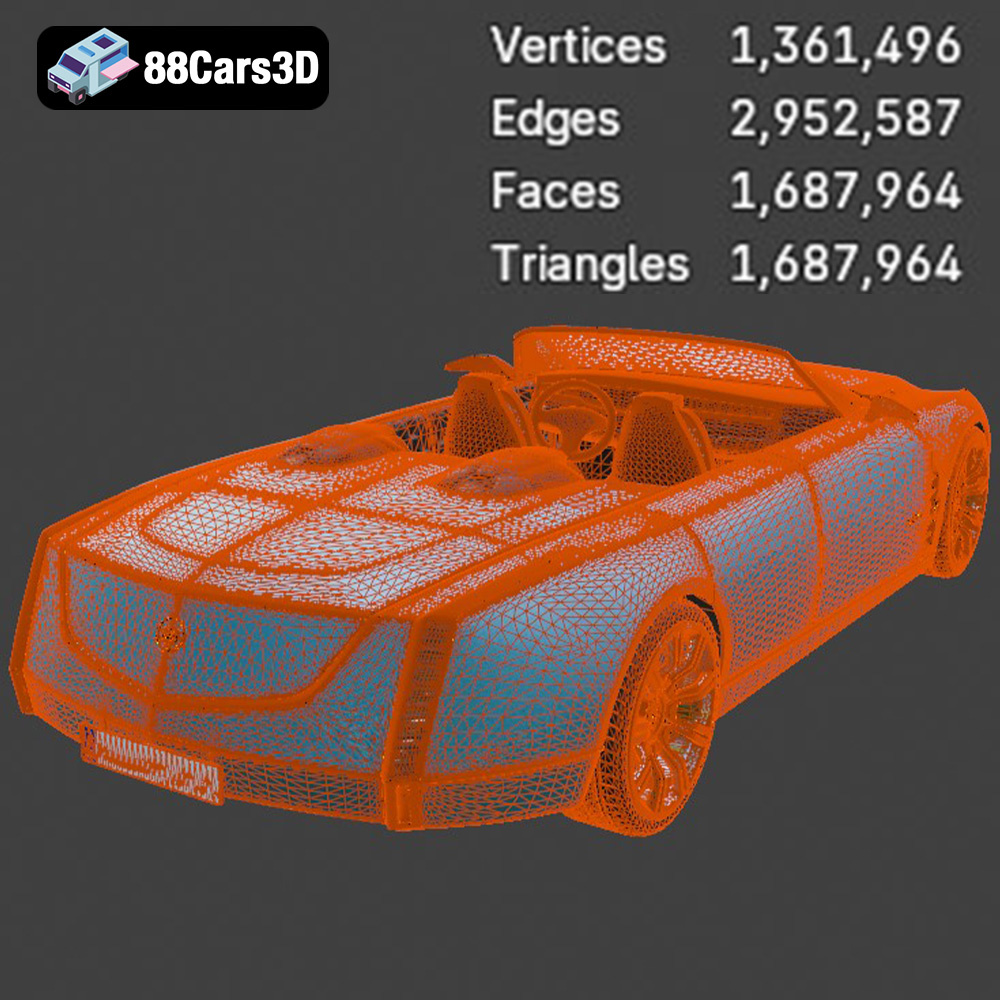
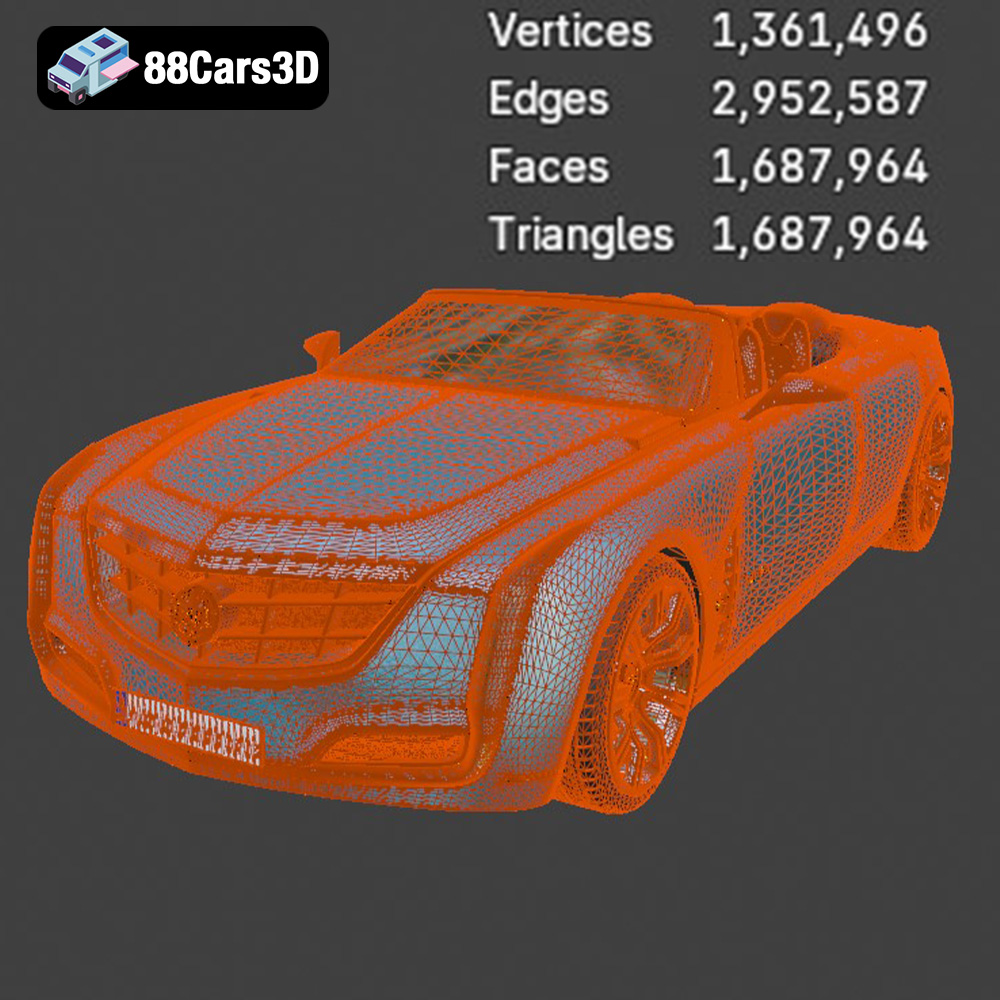
The Cadillac Ciel Concept model boasts impressive technical specifications: 1,361,496 vertices, 2,952,587 edges, and 1,687,964 faces/polygons (triangles). This high-poly count is a direct indicator of its premium visual fidelity, making it perfectly suited for high-resolution concept visualization and cinematic rendering. The well-organized mesh structure ensures that the complex surfaces of the Ciel, from its flowing body lines to its intricate interior components, are smooth and free of artifacts, even under extreme close-ups or demanding lighting conditions. Furthermore, the real-world scale accuracy is crucial for architects visualizing their designs with a luxury vehicle or for automotive configurators requiring precise dimensions. With proper pivot setups for steering and wheel rotation, animators can easily bring the vehicle to life, creating dynamic motion studies or realistic drive-by sequences without tedious rigging adjustments. This level of detail and organization makes it an indispensable asset for luxury brand campaigns and high-end automotive showcases.
While designed for premium visual fidelity, the Cadillac Ciel Concept 3D Model also considers the demands of real-time applications. The product description notes its suitability for game development and AR/VR, acknowledging that it “may require retopology/decimation for real-time performance depending on the engine.” This is a realistic and honest assessment for a high-poly model. For game engines like Unreal and Unity, where frame rates are paramount, developers might utilize tools within their engine or external software to create lower-polygon versions (LODs – Levels of Detail) from this high-fidelity base. This workflow leverages the model’s rich detail for baking normal maps and other texture details onto simpler meshes, preserving visual quality while drastically reducing polygon count for optimal real-time performance. For AR/VR experiences, where immersion and smooth interaction are key, similar optimization strategies would apply, ensuring that users can interact with a fluid and responsive digital representation of the Ciel. The included .fbx and .unreal formats further streamline this process, providing a robust starting point for real-time integration.
The utility of a meticulously crafted 3D car model like the Cadillac Ciel Concept 2011 extends far beyond simple aesthetics. Its versatility allows it to serve as a pivotal asset across a multitude of industries and creative endeavors, empowering professionals to elevate their projects with stunning visual content and functional data.
For architectural visualization (ArchViz) artists, incorporating a high-fidelity luxury vehicle can dramatically enhance the perceived value and realism of a rendered scene. Imagine the Cadillac Ciel parked elegantly in front of a modern mansion, or gliding through a futuristic urban landscape. Its presence adds context, scale, and a touch of aspirational luxury, making architectural renders more impactful and relatable to potential clients. Similarly, in cinematic productions and commercials, the Ciel Concept 3D Model can be a star in its own right. Its dramatic proportions and sophisticated styling make it perfect for creating stunning visual effects sequences, car chases, or prestige brand advertisements without the logistical complexities and costs associated with acquiring and shooting a real-world concept car. The model’s clean topology and animation-ready components (separate wheels, steering) facilitate complex camera moves and dynamic storytelling, making it a valuable asset for any visual effects studio.
One of the most exciting applications for the Cadillac Ciel Concept 2011 3D Model is in the realm of 3D printing. The availability of an .stl file, coupled with its “3D Printable” designation, opens up a world of possibilities for designers, collectors, and hobbyists. The product’s detailed 3D print settings – recommending scales like 1:32, 1:24, or 1:18, specific layer heights, wall thickness, infill, and crucial support placements – provide a clear roadmap for successful physical replication. This means a designer could print a scale prototype for a presentation, a collector could add a unique, custom-made piece to their automotive display, or an enthusiast could create a detailed model for personal enjoyment. The recommendations for post-processing, such as sanding, primer, metallic paint, and chrome detailing, emphasize the potential to achieve a professional, museum-quality physical model, further blurring the line between digital design and tangible reality.
Integrating a new 3D asset into a professional workflow requires more than just compatibility; it demands an asset that is organized, flexible, and ready to be manipulated within industry-standard software. The Cadillac Ciel Concept 2011 3D Model, with its well-structured mesh and multiple file formats, is designed to be a cornerstone asset for artists working in various ecosystems.
For professionals primarily using Autodesk 3ds Max, the inclusion of a native .max file is a significant advantage. It ensures that all scene components, materials, and object hierarchies are preserved exactly as intended by the model’s creators. Artists can immediately open the Cadillac Ciel Concept model and begin setting up advanced V-Ray or Corona renders, leveraging 3ds Max’s robust lighting and material editors to achieve photorealistic results. The model’s pre-defined pivots for wheels and steering simplify the rigging process for animation, allowing for quick setup of path animations, cinematic turntable shots, or complex drive cycles. Automotive rendering specialists can easily swap out the metallic light blue exterior for custom paint shaders, modify the interior color themes, or even configure the rear-hinged doors to be open or closed, all within the familiar 3ds Max environment, optimizing their workflow for efficiency and creative control.
Blender has emerged as a powerhouse in the 3D industry, offering a comprehensive suite of tools for modeling, sculpting, texturing, animation, and rendering. The native .blend file provided for the Cadillac Ciel Concept allows Blender artists to fully exploit these capabilities. They can seamlessly integrate the high-poly model into complex scenes, utilizing Blender’s non-destructive workflow with modifiers to refine mesh details or experiment with different aesthetic variations. For example, artists can add custom details, modify wheel designs, or adapt the interior to specific design specifications using Blender’s powerful modeling tools. The Cycles and Eevee rendering engines in Blender can then be used to create stunning visualizations, from a soft, sunset coastal scene to a dramatic, showroom presentation, completely customizing the lighting and atmospheric effects to match their creative vision. This direct access to the original Blender project file streamlines the customization process and empowers artists with complete creative freedom.
The real-time capabilities of Unreal Engine make it an ideal platform for creating immersive experiences, from high-fidelity game levels to interactive product configurators and virtual showrooms. The Cadillac Ciel Concept 3D Model, especially with its .fbx and “unreal” specific format support, is well-equipped for this environment. Developers can import the model, apply Unreal Engine’s advanced material system (using PBR workflows), and set up dynamic lighting to showcase the vehicle in a fully interactive, real-time environment. For performance-critical applications, the model’s high-poly nature serves as an excellent base for generating optimized LODs, ensuring smooth frame rates without sacrificing visual quality at closer inspection. Imagine walking around the Ciel in VR, opening its doors, and exploring its luxurious interior, or featuring it as a hero vehicle in a futuristic racing game. The structured mesh and separate components mean that engineers can easily implement vehicle physics, interactive animations, and custom scripting, turning a static 3D model into a dynamic, interactive element within Unreal Engine.
The realm of 3D modeling for automotive design, rendering, and game development demands assets that are not only visually striking but also technically robust and versatile. The Cadillac Ciel Concept 2011 3D Model exemplifies this standard, offering a meticulously crafted digital representation of an iconic vehicle that meets the rigorous demands of professional production. With its high-polygon count, accurate real-world scale, detailed interior and exterior features, and comprehensive file format support, it stands as a premium asset for any creative endeavor.
Whether your goal is to create breathtaking automotive renders in 3ds Max or Blender, integrate a luxurious vehicle into a cutting-edge game or AR/VR experience with Unreal Engine, or even bring a tangible piece of automotive art to life through 3D printing, this model provides the necessary foundation. Its adaptability across various software and applications, coupled with its stunning visual fidelity, makes it an invaluable addition to any designer’s or developer’s toolkit. For those seeking high-quality 3D car models that push the boundaries of digital realism and technical excellence, 88cars3d.com consistently delivers, and the Cadillac Ciel Concept 2011 3D Model is a testament to that commitment.
The Cadillac Ciel Concept 2011 3D Model is a high-detail digital recreation of the stunning four-door convertible luxury concept revealed in 2011. Designed as a vision of open-air grand touring, the Ciel combines dramatic proportions, elongated body lines, rear-hinged doors, and futuristic luxury styling that reflects Cadillac’s modern design language. Built with dense, high-polygon topology for premium visual fidelity and real-world scale accuracy, it is ideal for close-up rendering, concept visualization, animation, game development, and AR/VR automotive showcases. Features a fully detailed two-tone interior and is compatible with major 3D software and engines, including an STL format for 3D printing.
$59.99
.automotive
.blend
.cadillac
.fbx
.obj
.rendering
.stl
1m-polygons
2011-concept-car
3d printing
blue-convertible
car-3d-model
ciel-concept
futuristic-car
game asset
high poly
luxury-convertible
vehicle-design
VR/AR