Get 50% OFF All Premium 3D & STL Models!

In the dynamic world of 3D visualization, automotive design, and game development, the pursuit of realism and technical precision is paramount. From breathtaking cinematic renders that blur the line between digital and reality, to immersive virtual showrooms and cutting-edge racing simulations, the foundation of every successful project lies in the quality of its 3D assets. Hypercars, with their intricate aerodynamics, luxurious interiors, and bespoke engineering, represent the pinnacle of automotive design, making them prime subjects for detailed digital recreation.
Today, we’re diving deep into the technical excellence required to bring such automotive marvels to life in the digital realm, using an exemplary case study: the Bugatti Centodieci 2020 3D Model. This ultra-exclusive hypercar, a tribute to the legendary EB110, embodies both heritage and futuristic performance, and its digital twin found on 88cars3d.com offers an unparalleled opportunity for professionals across various industries to integrate a truly stunning asset into their work.
Whether you’re an architect visualizing a luxury garage, a game developer crafting the next-generation racing title, or a product designer seeking a reference for complex surfacing, understanding the nuances of premium 3D car models is crucial. This article will explore the technical considerations, workflow integrations, and diverse applications of high-detail automotive assets, showcasing how a model like the Bugatti Centodieci can elevate your projects.
The versatility of a 3D model often hinges on the range of file formats it supports. Each format is designed with specific use cases and software ecosystems in mind, offering unique advantages regarding data preservation, compatibility, and optimization. When sourcing 3D car models, especially high-fidelity ones like the Bugatti Centodieci 2020 3D Model from 88cars3d.com, it’s essential to understand what each format brings to your workflow.
The .blend format is the native file type for Blender, a powerful open-source 3D creation suite. A .blend file typically encapsulates an entire Blender scene, including the 3D mesh data, materials (with all their node networks and textures), lighting setups, camera positions, animations, and even physics simulations. This format is ideal for users deeply integrated into the Blender ecosystem, offering maximum editability and full control over every aspect of the model. For the Bugatti Centodieci, this means access to the original PBR (Physically Based Rendering) materials, clean mesh topology, and any pre-configured scene elements, making it perfect for custom renders or further modifications within Blender.
.fbx (Filmbox) is a proprietary file format owned by Autodesk, widely regarded as the industry standard for interoperability between various 3D software and game engines. It’s excellent for transferring 3D models, animation, and scene information because it can store complex data like meshes, materials (often simplified or baked), textures, bones, and animation curves. For real-time applications like Unreal Engine and Unity, .fbx is often the go-to format due to its robust support for skeletal animations and efficient scene transfer. When importing the Centodieci as an .fbx, you can expect a well-structured mesh, UV mapping, and potentially some basic material assignments that can be easily recreated or linked to your engine’s PBR material system.
The .obj (Wavefront OBJ) format is one of the oldest and most universal 3D file formats. It’s a simple, text-based format primarily used for transferring geometric data, including vertex positions, UV coordinates, normals, and material group information. While it doesn’t support animation or advanced material properties directly (these are usually defined in an accompanying .mtl file), its widespread compatibility makes it a safe bet for cross-software workflows. If you need to import the Bugatti Centodieci into a niche 3D application or convert it to another format, .obj often serves as a reliable intermediary. It ensures the fundamental shape and UVs are preserved, allowing you to rebuild materials in your target software.
.glb (GL Transmission Format Binary) is the binary version of glTF, a royalty-free specification for the efficient transmission and loading of 3D scenes and models by applications. It’s designed specifically for web-based 3D, AR (Augmented Reality), and VR (Virtual Reality) environments, packaging geometry, materials, textures, and animation into a single, compact file. The .glb format for the Centodieci would be highly optimized for quick loading and rendering in browsers, mobile AR apps, or WebGL-powered experiences, providing a lightweight yet visually appealing representation of the hypercar.
.stl (STereoLithography) is the de facto standard for 3D printing. This format represents 3D surfaces as a series of connected triangles, making it incredibly simple and widely accepted by slicing software. An .stl file contains only the raw geometry, without color, texture, or material information. For the Bugatti Centodieci 2020 3D Model 3D Printable STL, this format is critical for translating the digital asset into a physical object. It ensures that the model’s manifold geometry is suitable for manufacturing, enabling enthusiasts to print their own scale models of this rare hypercar.
The .ply (Polygon File Format, or Stanford Triangle Format) is a file format for storing 3D data, particularly point clouds and polygon meshes from 3D scanners or CAD systems. It can store a wider range of properties than .obj or .stl, including color, transparency, normals, texture coordinates, and reliability information for each vertex and face. For the Centodieci, a .ply export could be useful in scenarios requiring high precision for reverse engineering, scientific analysis, or detailed CAD integration where rich geometric attribute data is important.
While not a universal file format in the same vein as .fbx or .obj, a file designated as .unreal implies an asset specifically prepared and optimized for direct import or use within Unreal Engine. This often means it has proper PBR material setup, optimized meshes (potentially with LODs), collision meshes, and potentially even blueprint functionality. This designation suggests the Bugatti Centodieci 3D Model has been thoughtfully prepared to integrate seamlessly into a high-end real-time visualization or game project, saving valuable development time.
The .max format is the native file type for Autodesk 3ds Max, a powerful 3D modeling, animation, rendering, and visualization software. Like .blend, a .max file contains the entire scene data, including geometry, materials (with V-Ray, Corona, or Arnold setup), lighting, cameras, and animations. This format provides the most comprehensive level of editability for 3ds Max users, allowing full control over shading networks, scene composition, and any pre-existing animations or rigging. For professionals using 3ds Max for high-end automotive rendering, having the Bugatti Centodieci in .max format ensures the highest quality starting point.
The Bugatti Centodieci is a masterclass in automotive sculpture, and replicating its essence in 3D demands an equally meticulous approach. The Bugatti Centodieci 2020 3D Model available on 88cars3d.com stands out due to its commitment to accuracy and technical excellence, making it a cornerstone asset for any serious visualization or game development project.
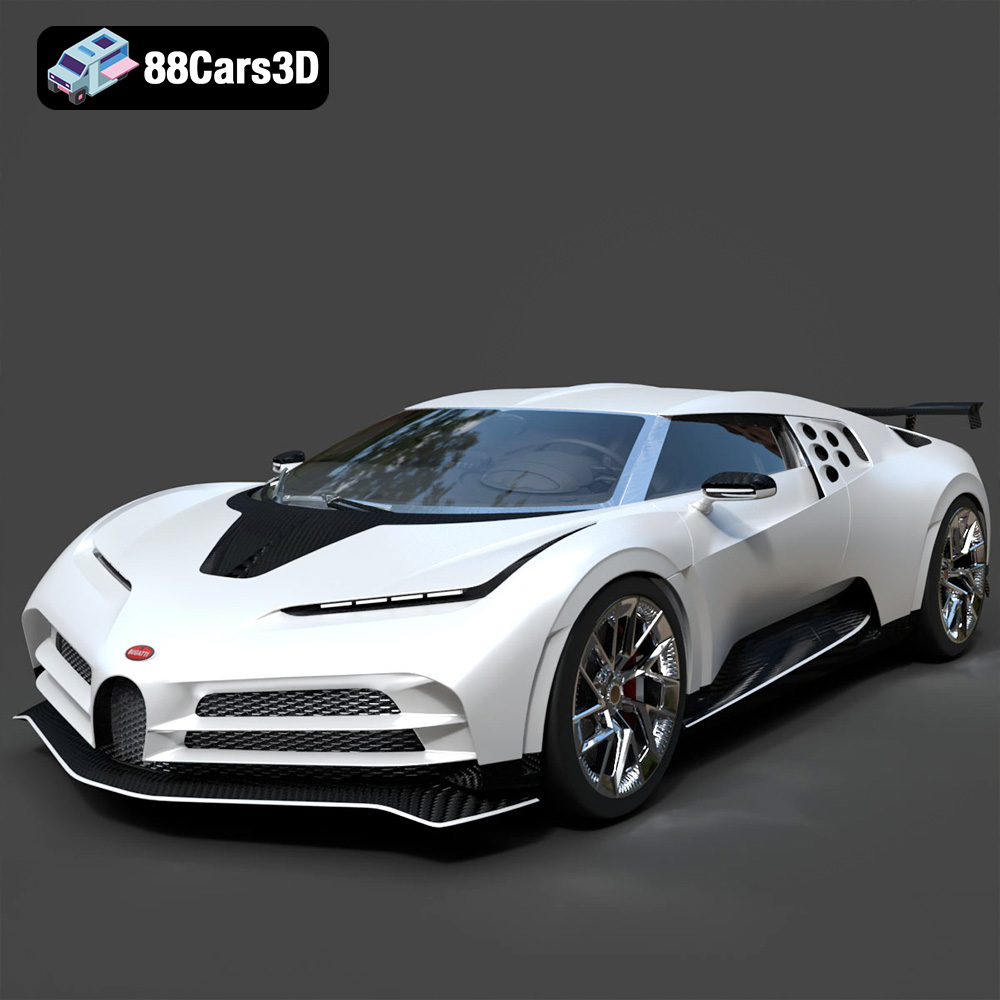
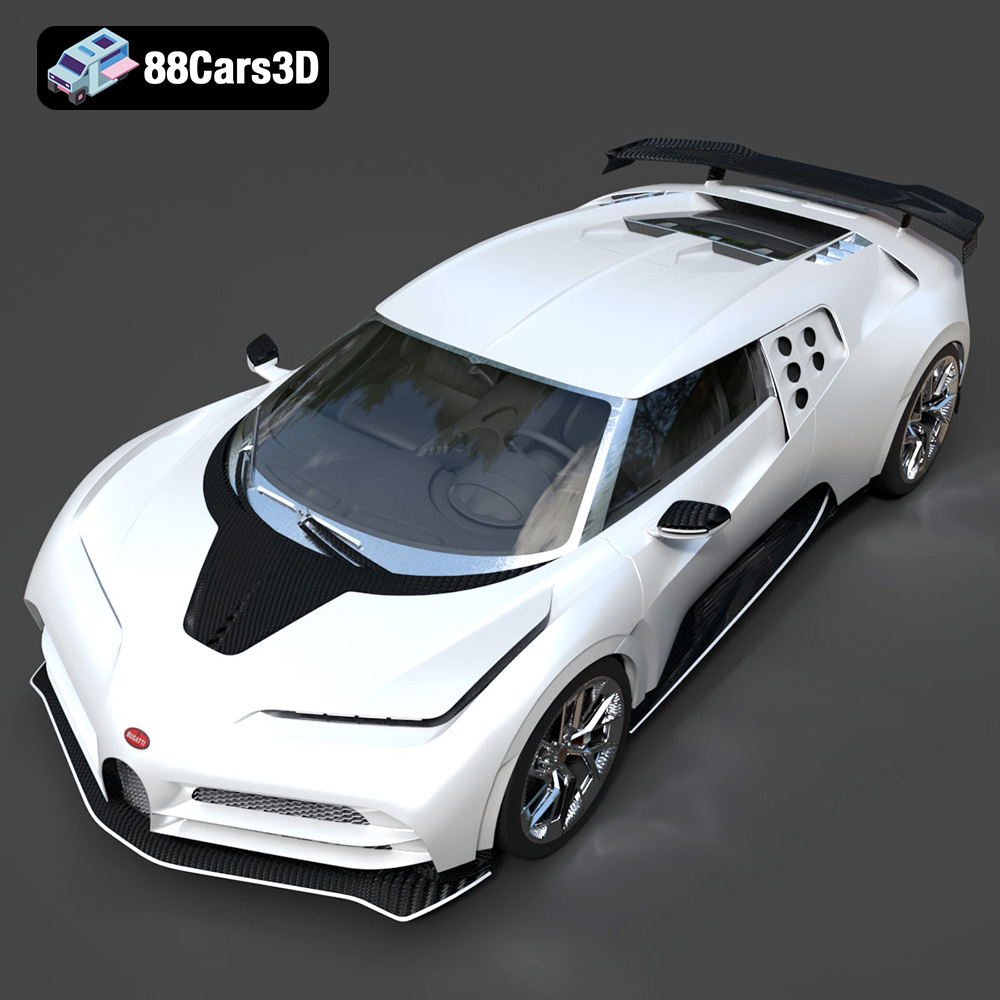
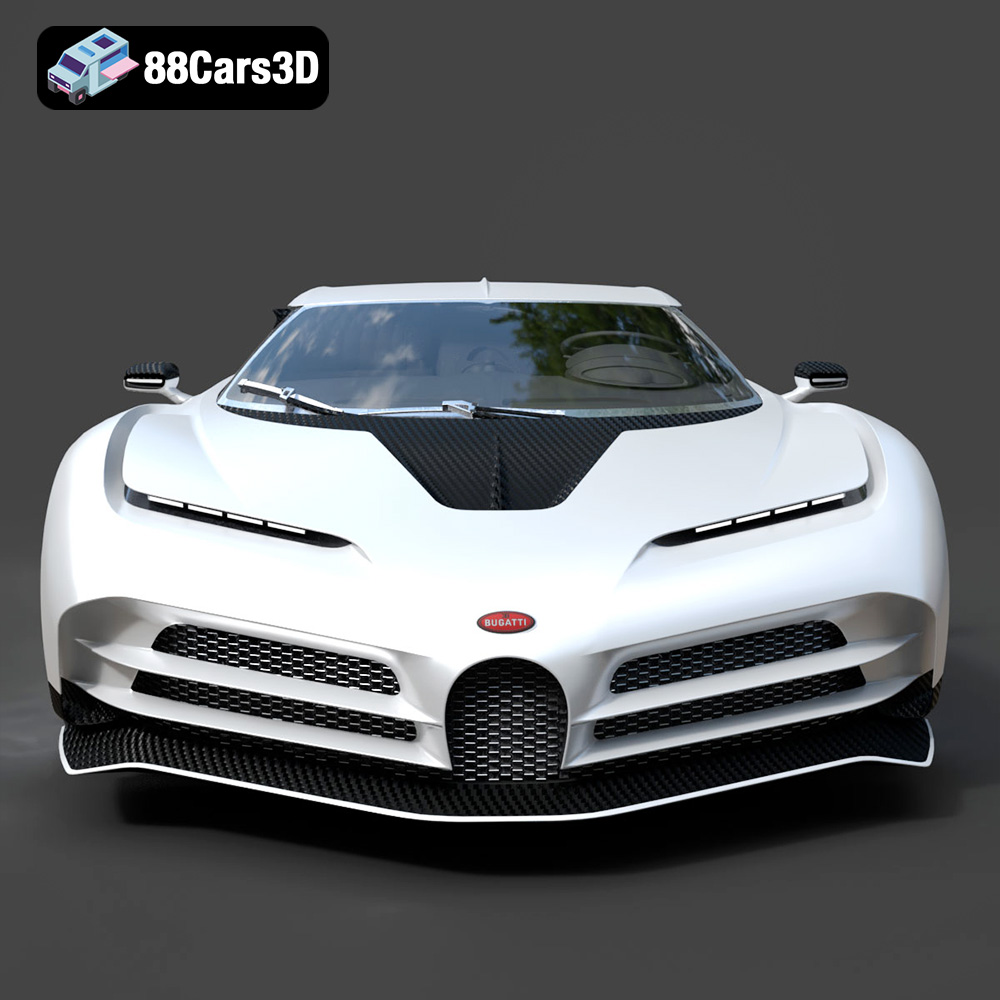
The Centodieci’s exterior is a complex interplay of aggressive lines and functional aerodynamics. A high-quality 3D model must capture every curve, vent, and lighting signature with unwavering precision. This model boasts accurate 2020 Centodieci body proportions, ensuring the hypercar’s iconic silhouette is faithfully rendered. Key features like the slim LED headlight design, which forms a distinctive signature, the large aerodynamic side air intakes crucial for cooling the monstrous W16 engine, and the sculpted hood and front splitter detailing, are all meticulously recreated. The fixed rear wing assembly and the stacked quad exhaust configuration, reminiscent of its EB110 inspiration, are not merely aesthetic elements but critical design identifiers that must be perfect. Even the high-performance multi-spoke wheel design, often a challenging detail to model, is rendered with exceptional fidelity, with separate components for animation allowing realistic wheel rotation and steering.
While the exterior captures immediate attention, the interior of a hypercar like the Centodieci is a realm of bespoke luxury and advanced ergonomics. The 3D model provides a detailed hypercar cockpit layout, featuring sport bucket seats with intricate stitching detail. The center console and digital instrumentation are accurately represented, reflecting the blend of analog and digital interfaces unique to Bugatti. Premium trim and carbon fiber elements, which are pervasive in such high-performance vehicles, are modeled to ensure they catch light and render with convincing reflectivity and texture. This optimized geometry is suitable for cinematic close-ups, allowing artists to showcase the luxurious environment where performance meets artistry. The ability to perform close-up renders on the interior is a testament to the model’s high polygon count and thoughtful detailing.
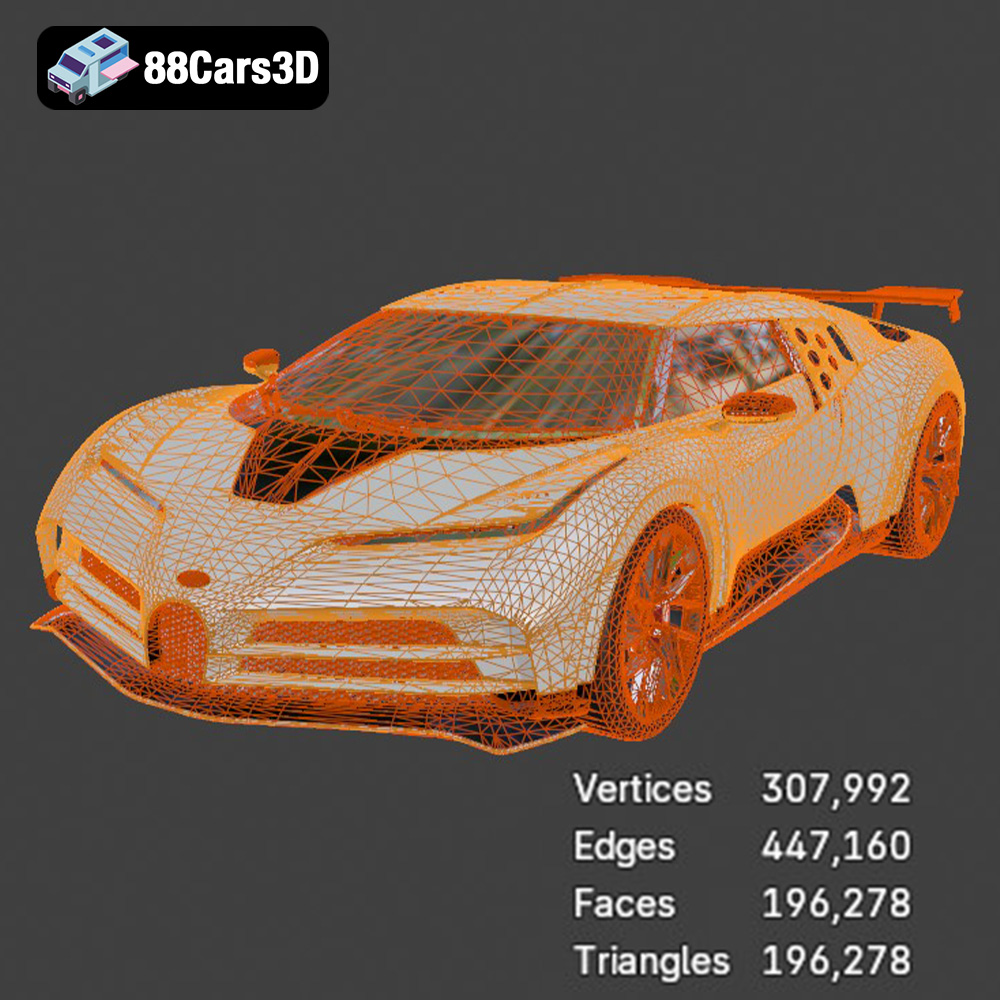
Beyond visual accuracy, a truly professional 3D model is defined by its underlying technical structure. This Centodieci model features a clean and well-organized mesh structure, which is vital for smooth deformations during animation, efficient UV unwrapping, and predictable subdivision surfaces. Real-world scale accuracy is maintained, ensuring that the model fits seamlessly into scenes without needing tedious resizing, which is critical for architectural visualizations or game engine integrations. Proper pivot setup for steering and wheel rotation simplifies animation workflows, allowing animators to easily articulate the vehicle’s movement. Furthermore, the optimized polygon flow strikes a balance between performance and realism, providing enough detail for cinematic renders while remaining manageable for real-time applications. This robust technical foundation ensures compatibility with major 3D software platforms and engines, offering flexibility for diverse professional applications.
The strategic use of high-quality 3D car models like the Bugatti Centodieci 2020 3D Model can dramatically enhance projects across numerous industries. Professionals leverage these assets to achieve photorealism, accelerate production, and create compelling user experiences.
For advertising agencies, automotive design studios, and visualization artists, photorealistic rendering is non-negotiable. The Centodieci model is ideal for luxury automotive marketing, where every detail must shine. Using software like 3ds Max with V-Ray or Corona Renderer, or Blender with Cycles, artists can create hypercar showcases that are indistinguishable from photographs. This involves setting up complex lighting scenarios, from sun-drenched outdoor scenes to dramatic studio environments, and applying sophisticated PBR materials that accurately simulate paint reflectivity, carbon fiber weave, and intricate leather textures. The model’s clean topology ensures smooth reflections and accurate light bounces, which are crucial for premium promotional campaigns. Imagine a virtual showroom where the Centodieci glistens under spotlights, its every curve highlighted to perfection – this model makes such visions achievable.
Modern game development demands incredibly detailed yet highly optimized assets. The Centodieci, with its optimized polygon flow and engine-ready formats like .fbx and .unreal, is perfect for racing games, open-world supercar collections, and high-performance vehicle packs. Developers can import the model into Unreal Engine or Unity, leveraging features like automatic LOD (Level of Detail) generation to manage performance across different distances. The proper pivot setup for wheels and steering significantly reduces rigging time, allowing physics engines to interact realistically with the model. PBR textures and materials can be integrated directly, ensuring consistency with the game’s rendering pipeline. This asset provides a high-fidelity base for creating thrilling virtual driving experiences or showcasing luxury vehicles in interactive game environments.
Augmented Reality (AR) and Virtual Reality (VR) are revolutionizing how consumers interact with products, especially in the luxury market. The Bugatti Centodieci 3D Model is tailor-made for immersive virtual showrooms and interactive hypercar experiences. Using formats like .glb, optimized for web and mobile AR/VR, manufacturers and dealerships can offer potential buyers the chance to explore the Centodieci in full 3D, customize its colors and finishes, or even “place” it in their driveway using AR on a smartphone. For VR, designers can create virtual environments where users can walk around, sit inside, and inspect every detail of the hypercar, providing an unparalleled level of engagement and pre-purchase visualization. The model’s optimized geometry ensures smooth performance without compromising visual quality in these demanding real-time environments.
The allure of holding a miniature, tangible representation of a digital masterpiece is undeniable. The Bugatti Centodieci 2020 3D Model 3D Printable STL extends its utility beyond purely digital realms, offering the exciting prospect of physical creation through 3D printing.
Converting a high-detail digital model into a successful 3D print requires careful consideration. The provided .stl format for the Centodieci ensures manifold geometry, a crucial requirement for 3D printers. Recommended scales like 1:32, 1:24, 1:18, or 1:12 allow for various display options, from desk models to larger, more detailed collectibles. Print settings are critical: a layer height of 0.08–0.16 mm is suggested for FDM printers to capture fine details, though for the absolute best results on intricate features, resin (SLA/DLP) printing is often recommended, especially at smaller scales. Wall thickness of 1.2–2.0 mm ensures structural integrity, while an infill of 15–25% provides necessary internal support without excessive material use. Supports are required for complex overhangs such as the rear wing, front splitter, mirrors, and aerodynamic elements, preventing print failures. Print orientation is also strategic: printing the body angled can result in a smoother aerodynamic surface finish by minimizing layer lines, and printing wheels separately ensures their intricate design isn’t compromised by support structures or orientation issues.
A successful 3D print is often just the beginning. The Centodieci model lends itself beautifully to post-processing for a truly professional finish. This typically involves sanding to smooth out layer lines, followed by applying primer to create an even base. The real magic happens with painting; utilizing high-gloss automotive paint can replicate Bugatti’s iconic finishes. Optional carbon fiber detailing, achieved through decals or intricate painting techniques, can further enhance realism. This attention to post-processing can transform a raw 3D print into a stunning collectible hypercar miniature or a high-quality display model, making it a prized possession for automotive enthusiasts and 3D printing hobbyists alike.
Beyond collectibles, 3D printed models of the Bugatti Centodieci serve valuable educational and prototyping purposes. Automotive design students can print scale models to study complex surfacing and aerodynamic principles in a tangible way. Engineers can use these physical models for basic form factor analysis or as a visual aid in presentations about aerodynamic study. The ability to quickly iterate and produce physical representations of digital designs fosters a deeper understanding of form and function. For design educators, the Centodieci offers a perfect example of advanced automotive engineering and aesthetic principles to be dissected and appreciated physically.
One of the significant advantages of working with a meticulously crafted 3D model is the inherent flexibility it offers for customization. The Bugatti Centodieci 2020 3D Model provides a rich canvas for artists and designers to tailor the hypercar to specific project requirements or creative visions.
The Centodieci’s iconic status is often paired with its striking color palette. This 3D model allows for extensive customization of the body color, enabling artists to choose from classic Bugatti white or blue, an aggressive exposed carbon fiber finish, or any custom color scheme imaginable. This flexibility is crucial for marketing campaigns that require specific brand identities or for game developers wanting to offer player customization options. Furthermore, brake caliper colors can be adjusted to match or contrast the body, and the wheel finish can be modified—from polished alloys to stealthy black or high-tech carbon look—to dramatically alter the vehicle’s aesthetic. These material variations ensure that the Centodieci can fit seamlessly into diverse visual narratives, from ultra-luxury showrooms to gritty urban race tracks.
Beyond the vehicle itself, the model’s adaptability extends to its integration within various 3D environments. Artists can easily add a custom license plate, personalizing the vehicle for specific clients or fictional settings. Configuring lighting is also a powerful customization option. For a showroom render, soft, even illumination might highlight the car’s curves, while for a dramatic night hypercar scene, dynamic light sources casting long shadows and emphasizing reflections can create an entirely different mood. The model’s well-optimized geometry and clean UVs facilitate easy texture adjustments and shader tweaks, allowing artists to achieve truly unique and compelling visual compositions. This level of customization ensures that the Bugatti Centodieci 3D Model remains a highly versatile and valuable asset for any professional needing to create bespoke automotive content.
The journey from the awe-inspiring Bugatti Centodieci hypercar to its high-fidelity digital counterpart is a testament to the sophistication of modern 3D modeling. The Bugatti Centodieci 2020 3D Model, available through 88cars3d.com, is more than just a collection of polygons and textures; it is a gateway to boundless creative possibilities across numerous industries.
We’ve explored the critical role of diverse 3D model file formats, each offering specific advantages for different workflows – from the full editability of .blend and .max files, to the universal compatibility of .fbx and .obj, and the specialized applications of .glb for AR/VR and .stl for 3D printing. The meticulous detailing of the Centodieci model, encompassing its aggressive exterior, luxurious interior, and robust technical foundation, ensures it stands as a premium asset for high-end automotive rendering, dynamic game development, and immersive AR/VR experiences.
Furthermore, the ability to transform this digital marvel into a tangible 3D print provides a unique avenue for collectors, educators, and hobbyists to engage with this automotive icon on a physical level. Coupled with extensive customization options, this model empowers professionals to create tailor-made visualizations, animations, and interactive content that push the boundaries of realism and engagement.
For anyone seeking to integrate unparalleled realism and technical excellence into their projects, investing in high-quality 3D car models is a strategic decision. The Bugatti Centodieci 2020 3D Model is a prime example of the caliber of assets available, ready to elevate your creative endeavors. Discover this exceptional model and a wide range of other professional-grade 3D assets at 88cars3d.com, where quality meets innovation.
The Bugatti Centodieci 2020 3D Model is a high-detail digital recreation of the ultra-exclusive hypercar inspired by the legendary EB110. Limited to only a handful of units worldwide, the Centodieci combines modern Bugatti engineering with 1990s design heritage, delivering extreme performance and rare collector prestige. This 3D model accurately represents the aggressive aerodynamic bodywork, sharp front fascia with ultra-slim LED headlights, large side air intakes, sculpted rear with stacked exhaust outlets, fixed rear wing, and distinctive multi-spoke wheel design. Built with clean topology and real-world scale accuracy, it is ideal for rendering, animation, hypercar visualization, game development, and AR/VR luxury automotive projects. Perfect for high-end showroom renders, luxury lifestyle visuals, hypercar collections, cinematic productions, and racing game environments. Convert the 3D model to .stl format for collectible hypercar miniatures and display models.
$39.99
.2020hypercar
.arvr
.automotive
.blend
.bugatti
.car3dmodel
.centodieci
.exoticcar
.fbx
.gameasset
.glb
.luxurycar
.max
.obj
.ply
.rendering
.simulation
.stl
.supercar
.unreal