Get 50% OFF All Premium 3D & STL Models!

In the vibrant and ever-evolving landscape of 3D modeling, the demand for highly detailed, versatile, and contextually accurate assets is paramount. Whether you’re an automotive rendering specialist striving for photorealism, a game developer populating expansive virtual worlds, or an architect bringing urban scenes to life, the quality of your 3D car models can make or break a project. Beyond hypercars and luxury vehicles, there’s a significant, often overlooked, need for models that represent the everyday fabric of cities around the globe. This is precisely where the Daewoo Nexia (N150) 3D Model steps in, offering a unique blend of authentic representation and technical excellence.
The Daewoo Nexia, particularly its N150 facelift generation, is far more than just a car; it’s a ubiquitous sight across Eastern Europe, Russia, and Central Asia, serving reliably as a family vehicle, a hard-working taxi, and a daily commuter. Capturing this essence in a digital asset requires meticulous attention to detail, optimized topology, and broad file format compatibility. This comprehensive model, available on 88cars3d.com, delivers precisely that, providing a “Goldilocks zone” solution for professionals seeking realism without compromising performance. It’s an indispensable asset for populating diverse digital environments, from high-fidelity architectural visualizations to dynamic game scenes.
The flexibility and utility of any 3D model are intrinsically tied to the file formats it supports. Different formats are optimized for various stages of the 3D pipeline, from initial modeling and animation to real-time rendering and physical production. The Daewoo Nexia (N150) 3D Model is exceptionally versatile, offering a suite of formats to ensure seamless integration into virtually any professional workflow. Understanding the nuances of each is crucial for maximizing efficiency and achieving desired outcomes.
The .blend format is native to Blender, the powerful open-source 3D creation suite. When you acquire a .blend file like that for the Daewoo Nexia N150, you’re receiving a fully editable Blender scene. This typically includes not just the mesh geometry but also materials, textures, lighting setups, cameras, and even animations if present. For artists and studios heavily reliant on Blender, this format provides the most flexibility for customization, rigging adjustments, material tweaking, and rendering within Blender’s Cycles or Eevee engines. It’s a comprehensive package, ensuring all elements are preserved as intended by the original creator for direct manipulation.
As Autodesk’s proprietary file format, .fbx (Filmbox) has become an industry standard for data exchange between 3D applications and real-time engines. It excels at transferring not only mesh data but also animations, bone structures, skinning information, and even certain material properties. For developers working with Unreal Engine or Unity, the .fbx version of the Daewoo Nexia N150 3D Model is often the go-to choice. Its robust nature ensures that assets, particularly those with complex hierarchies and animation potential (like separate wheels and doors), are imported cleanly and are ready for integration into game pipelines, complete with proper pivots for dynamic elements.
The .obj (Wavefront OBJ) format is one of the oldest and most universally supported 3D file formats. It’s a simple, text-based format primarily used for transferring geometric data, including vertices, UV coordinates, and normals, often accompanied by an .mtl file for material definitions. While it doesn’t typically support animation or rigging, its widespread compatibility makes it an excellent choice for cross-software transfers when you primarily need the raw mesh. For users of software less commonly supported by other formats, or for foundational mesh work, the .obj version of the Daewoo Nexia N150 provides reliable access to the model’s core geometry.
.glb (GLB, GL Transmission Format Binary) is a modern, compact, and efficient format designed for rapid loading in web browsers, AR, and VR applications. It’s a binary version of glTF (GL Transmission Format), embedding all necessary data—meshes, materials, textures, animations—into a single file. This “all-in-one” characteristic makes it incredibly convenient for sharing 3D content online without complex dependencies. For projects involving the Daewoo Nexia N150 in web-based configurators, interactive AR experiences, or light VR scenes, the .glb format offers optimal performance and ease of deployment.
The .stl (STereoLithography) format is the de facto standard for 3D printing. It represents 3D surfaces as a series of connected triangles, describing only the surface geometry of a 3D object without color, texture, or other CAD attributes. While it lacks rich data, its simplicity makes it universally compatible with 3D printers and slicing software. The Daewoo Nexia N150’s availability in .stl format means enthusiasts can transform the digital model into a physical collectible, producing scale models perfect for urban dioramas, as detailed in the product’s 3D print settings.
.ply (Polygon File Format, or Stanford Triangle Format) is another format for storing 3D data, particularly useful for scanned data, engineering, and scientific visualization. It can store various properties for each vertex (like color, normal vectors, transparency) and face (color), and supports both polygonal and point cloud representations. While less common for everyday automotive assets, its precision and ability to carry diverse data make it valuable for more analytical or manufacturing-oriented pipelines where the Daewoo Nexia N150 might be integrated for precise measurements or simulations.
The .unreal designation often refers to assets that are pre-configured or specifically optimized for direct import into Unreal Engine projects. This might involve optimized FBX imports, materials configured for Unreal’s Physically Based Rendering (PBR) system, or even packaged assets ready for drag-and-drop into the content browser. For game developers leveraging Unreal Engine, the .unreal version of the Daewoo Nexia N150 streamlines the integration process, ensuring the model is engine-ready with minimal setup, adhering to best practices for real-time environments and taking full advantage of the engine’s rendering capabilities.
Lastly, the .max format is native to Autodesk 3ds Max, one of the leading software packages for 3D modeling, animation, and rendering in the architectural visualization and entertainment industries. A .max file of the Daewoo Nexia N150 provides the complete scene as created in 3ds Max, including all modifiers, materials, lights, and any animation or rigging setups. For professionals working within the 3ds Max ecosystem, this format offers the highest level of control and editability, allowing for sophisticated rendering setups using V-Ray, Corona Renderer, or other renderers integrated into 3ds Max, perfect for high-end automotive rendering.
The Daewoo Nexia N150 is more than just a car model; it’s a piece of automotive history and cultural touchstone, particularly in specific regions of the world. Its presence in a 3D scene instantly adds a layer of authenticity and familiarity for viewers acquainted with Eastern European, Russian, or Central Asian urban landscapes. The Daewoo Nexia (N150) 3D Model meticulously captures this identity, making it an invaluable asset for projects demanding regional specificity.
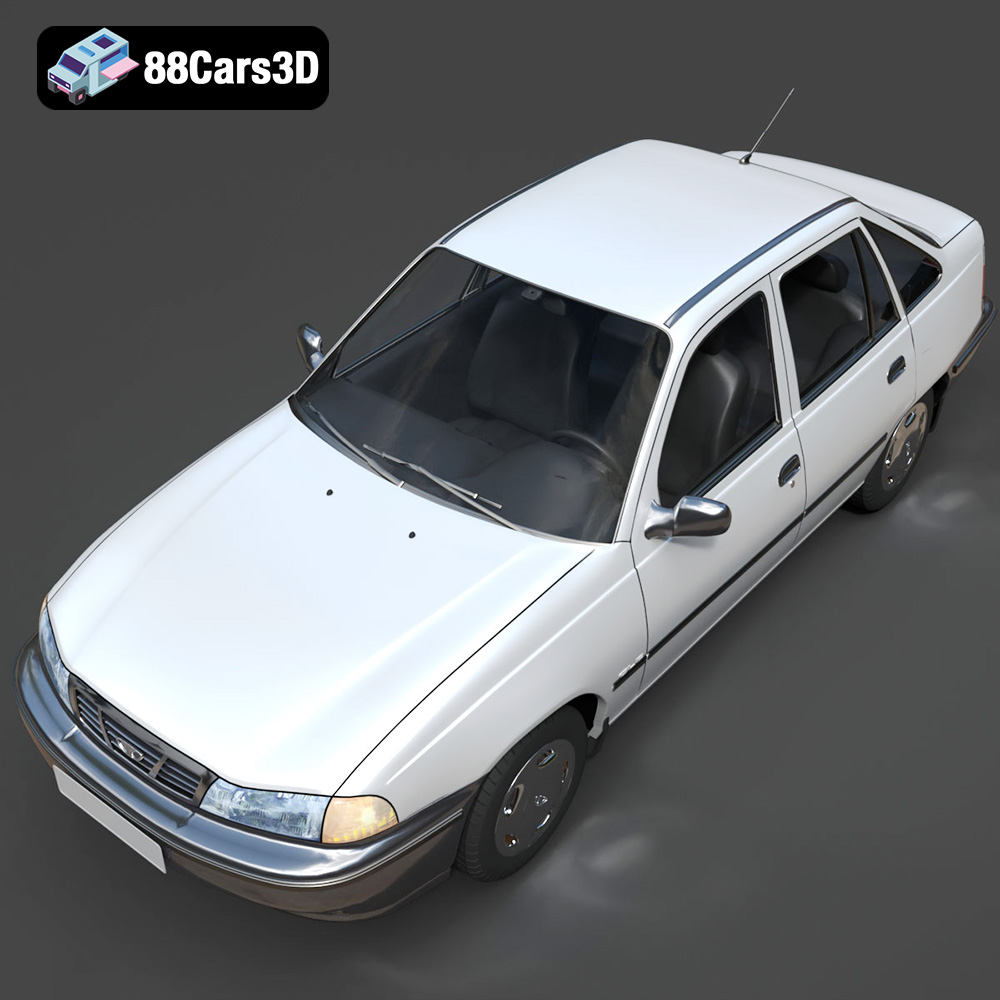
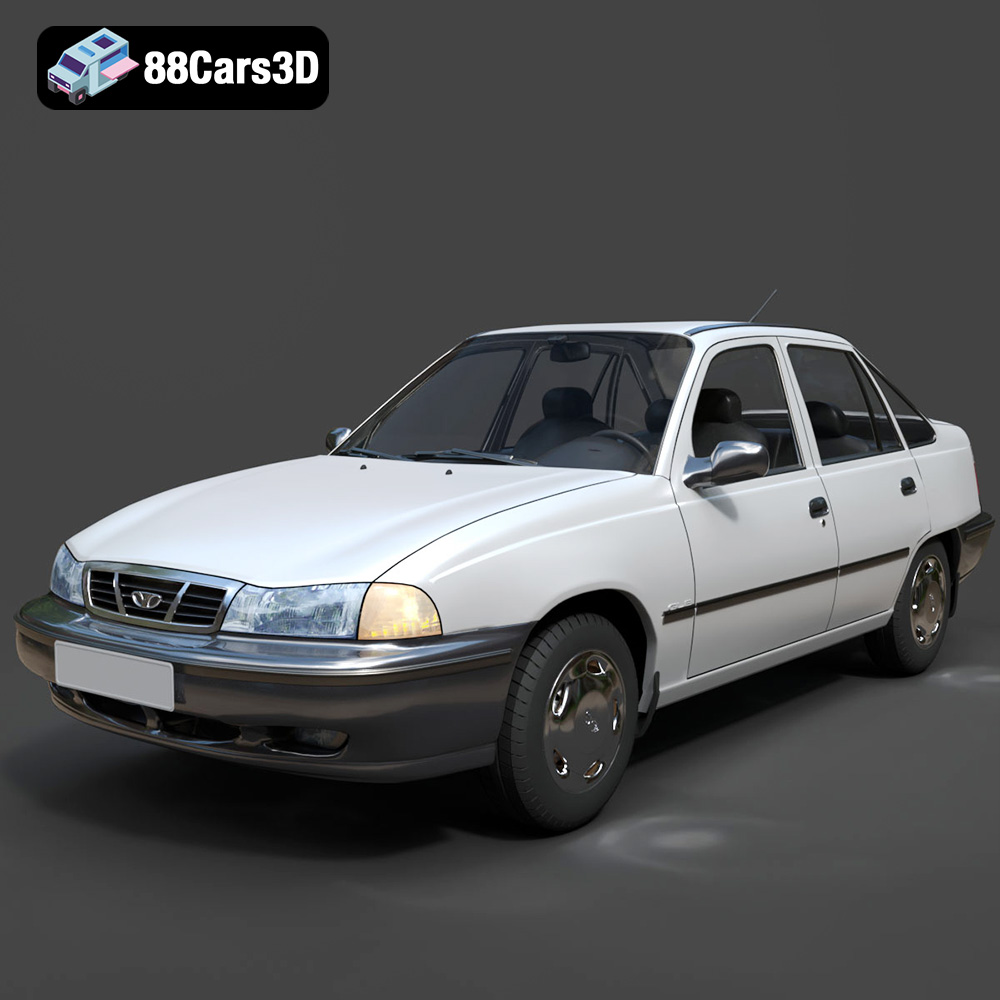
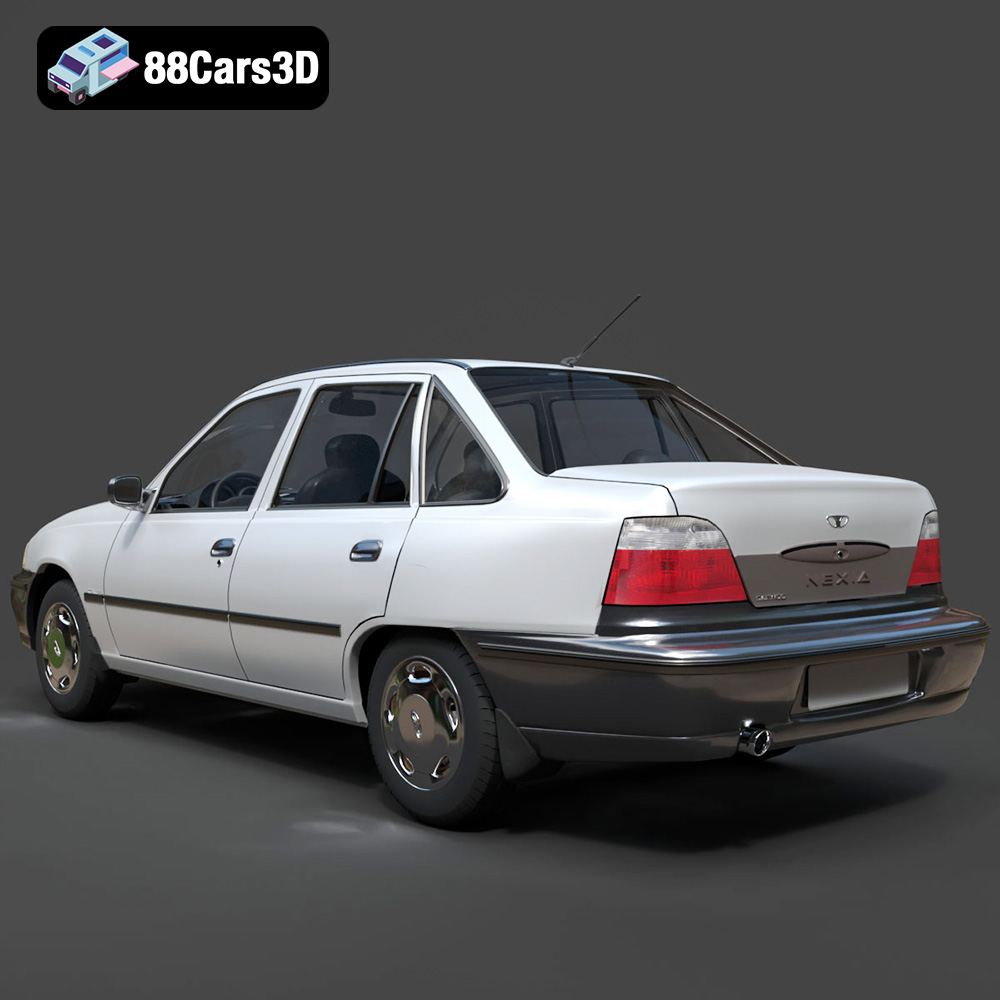
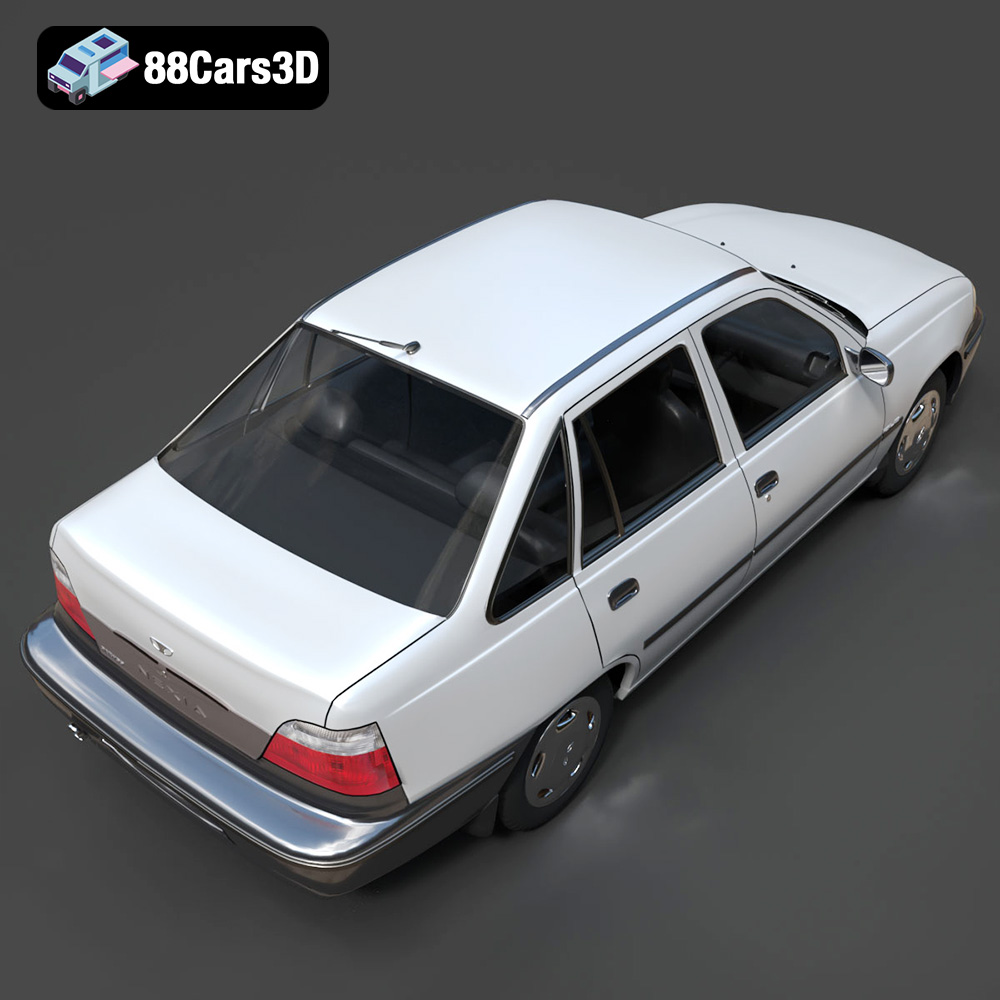
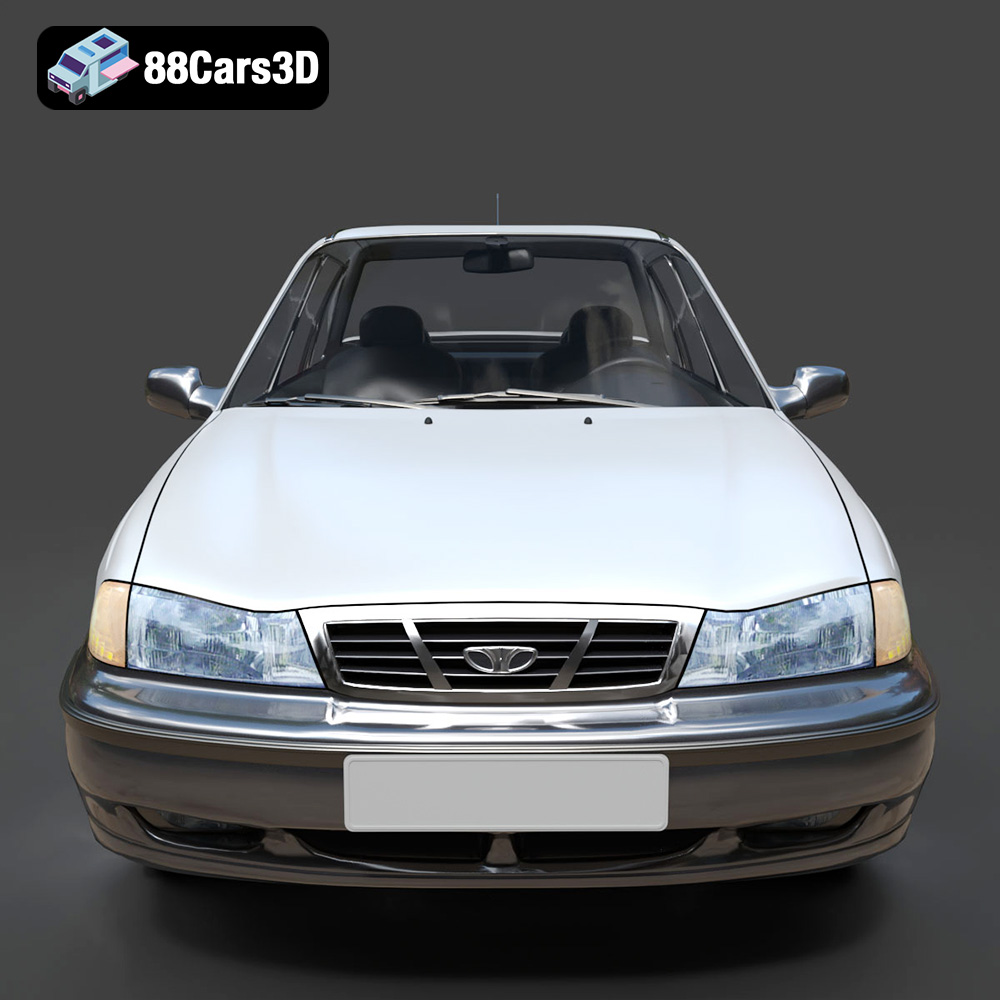
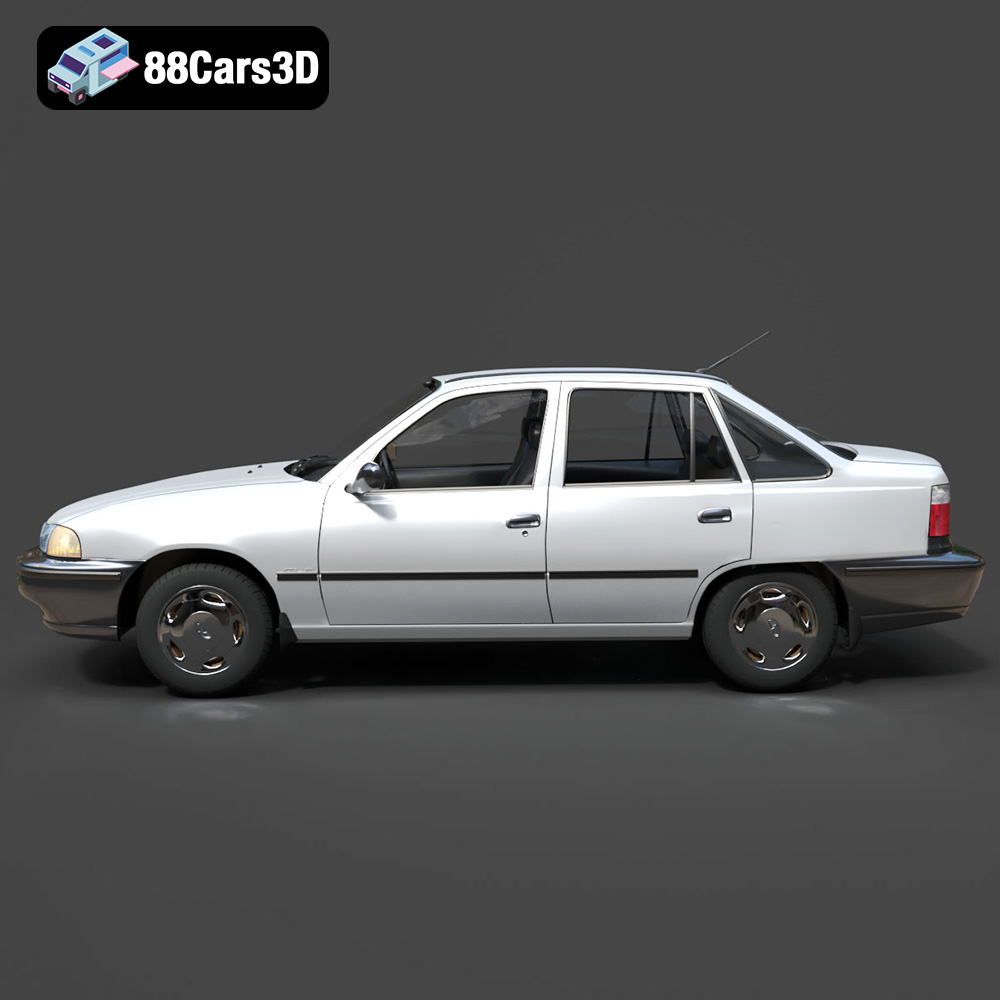
A significant challenge in creating realistic 3D car models is achieving accurate proportions and capturing subtle design cues. The Daewoo Nexia N150 model excels here, faithfully recreating the modernized aesthetic of the facelift generation. This includes the distinctive projector-style headlight housings, which replaced earlier designs, and the smoothed-out front bumper and grille that gave the N150 a more contemporary look. From the classic, practical sedan proportions, originally derived from the robust Opel Kadett E platform, to the detailed classic taillight clusters and realistic panel gaps, every exterior feature contributes to an authentic representation. Separate meshes for wheels, steering components, and doors further enhance its utility for realistic rigging and animation, crucial for automotive rendering and interactive simulations.
While often viewed from the exterior, the interior of a 3D car model is vital for establishing realism, especially in scenarios like AR/VR, close-up architectural visualization, or in-game drivable vehicles. The Daewoo Nexia N150 3D Model provides an authentic, practical driver-centric cabin layout, typical of budget-friendly sedans. The detailed dashboard, featuring the classic center console and analog instrument cluster, along with realistic seating geometry for a five-passenger layout, complete with cloth/vinyl texture mapping, ensures fidelity. Even the classic steering wheel and manual gear shifter representation are included. This optimized interior geometry is tailored to look great not just from an external pass-through, but also to hold up to scrutiny in a virtual reality experience, immersing the user fully.
Professional 3D artists and developers understand that a model’s aesthetic quality must be matched by its technical prowess. A beautiful model that cripples a scene with excessive polygons or lacks proper organization is of limited use. The Daewoo Nexia (N150) 3D Model demonstrates a clear understanding of these demands, offering a carefully balanced topology and meticulous structural setup that makes it suitable for a vast array of applications, from high-fidelity cinematic renders to real-time game environments.
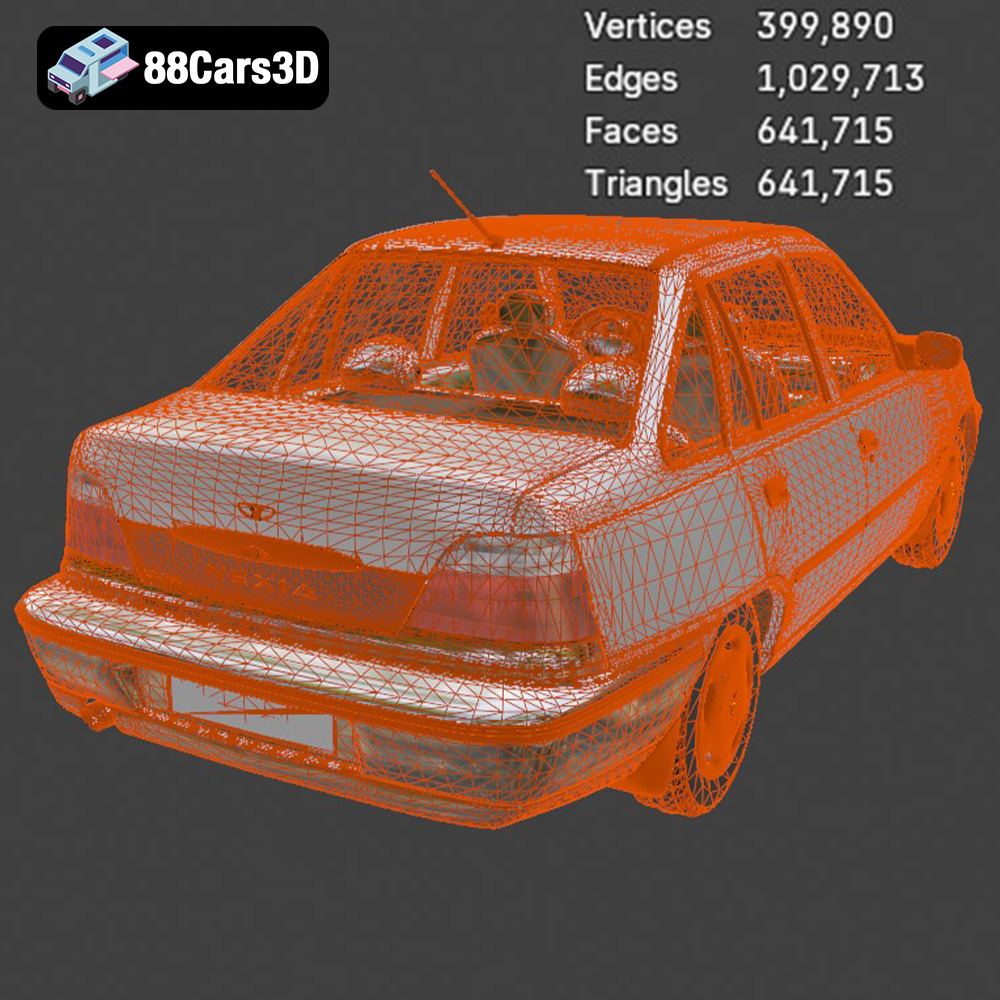
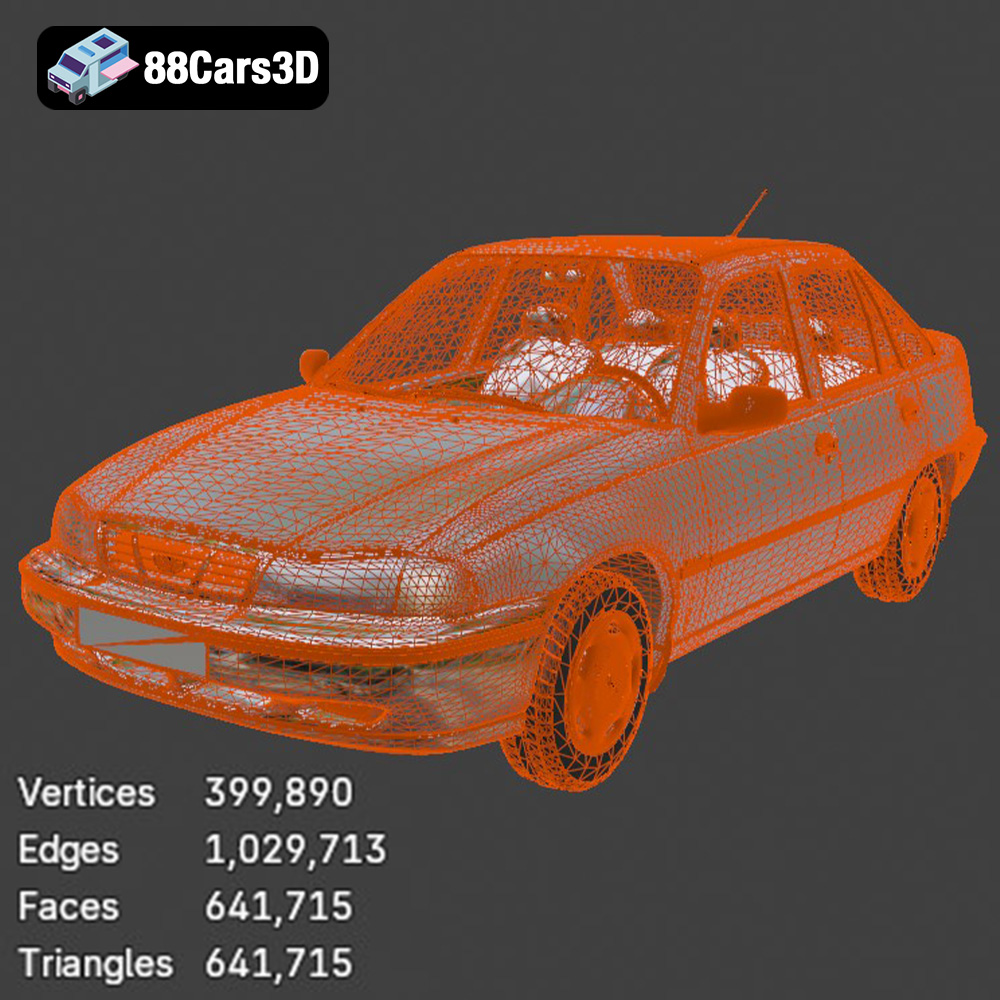
One of the standout technical specifications of the Daewoo Nexia N150 3D Model is its polygon count, sitting at just over 641,000 triangles. This figure represents what 88cars3d.com aptly describes as the “Goldilocks zone.” For high-quality automotive rendering, particularly in architectural visualization (ArchViz), this level of detail is sufficient for foreground vehicles, allowing for smooth curves and crisp details that hold up under close inspection. Simultaneously, this polygon count is optimized enough to be used efficiently in modern game engines like Unreal Engine and Unity, either as a primary drivable vehicle or as dense background traffic, without causing severe performance bottlenecks. This balance is critical for studios needing assets that can span multiple project types without requiring extensive re-topology or simplification.
Accuracy extends beyond visual aesthetics to include physical dimensions and functional preparation. The Daewoo Nexia N150 3D Model is built with real-world scale accuracy, based on factory dimensions. This is vital for maintaining visual consistency when integrating the model into architectural scenes or simulations where accurate representation of space and size is paramount. Furthermore, the model comes with a proper pivot setup for steering and wheel rotation. This pre-configured rigging foundation significantly accelerates the animation process, allowing animators to quickly set up drivable cars, or create dynamic traffic sequences without spending valuable time on foundational setup. The separate geometry for doors, wheels, and steering components further facilitates complex rigging and animation tasks.
The true measure of a versatile 3D asset lies in its ability to integrate seamlessly across various professional software environments. The inclusion of multiple file formats, such as .blend for Blender users, .max for 3ds Max professionals, and .fbx (with a dedicated .unreal option) for Unreal Engine developers, ensures broad compatibility. For Blender users, the .blend file provides a native, editable scene for direct manipulation. In 3ds Max, artists can leverage advanced rendering engines like V-Ray or Corona to produce photorealistic automotive rendering. Game developers can import the optimized FBX or .unreal files directly into Unreal Engine, benefiting from pre-configured pivots and potentially PBR materials ready for real-time applications. This multi-format approach minimizes conversion issues and allows artists to work within their preferred ecosystem without friction.
The versatility of the Daewoo Nexia (N150) 3D Model opens up a plethora of creative possibilities across different industries. Its specific regional relevance combined with its technical optimization makes it an incredibly valuable asset for niche yet common visualization and interactive needs. This isn’t just a generic car model; it’s a finely tuned instrument for specific storytelling and environmental immersion.
In architectural visualization, context is everything. A beautifully rendered building can fall flat if the surrounding environment lacks authenticity. The Daewoo Nexia N150 3D Model is the absolute perfect vehicle for breathing life into architectural visualizations set in Eastern Europe or Central Asia. Imagine an ArchViz project showcasing a new residential complex in Kyiv or a bustling street scene in Almaty; without region-accurate traffic, the scene loses its credibility. The Nexia, being a recognizable and common sight, immediately grounds the visualization in reality, providing the crucial element of believable background traffic. Its mid-to-high poly count ensures it looks excellent in close-up renders without burdening scene performance unnecessarily, making it a staple for realistic urban environments.
For game development, particularly open-world titles, delivery simulators, or urban taxi driving games, creating a sense of place is paramount. The Daewoo Nexia N150 3D Model serves as an excellent asset for populating such virtual worlds. It can function as a drivable hero car, offering players a familiar and realistic vehicle experience, or as an everyday traffic asset, adding depth and immersion to cityscapes. Its optimized geometry ensures that even dense traffic scenes can maintain high frame rates, a critical factor for fluid gameplay. The separate components for rigging and animation further enable developers to create dynamic vehicle interactions, from realistic steering to opening doors, enhancing player engagement in these immersive game environments.
Beyond digital rendering and interactive experiences, the Daewoo Nexia N150 3D Model bridges the gap into the physical realm through 3D printing. For classic diecast hobbyists or enthusiasts looking to create custom scale models, the provision of a manifold .stl file is a significant advantage. The recommended scales (1:24, 1:32, 1:43) are perfect for urban dioramas, allowing for detailed physical representations. The specific 3D print settings – advocating for resin printing for fine details, precise layer heights, wall thicknesses, infill, and support strategies – ensure that users can achieve high-quality physical outputs. Post-processing suggestions, including sanding, priming, and painting in classic factory colors like Silver Metallic or Sahara Dust, provide a clear roadmap for transforming the digital asset into a tangible, collectible item.
The true power of a high-quality 3D car model lies not just in its initial fidelity but also in its adaptability. Projects often require specific aesthetics, moods, or narratives, and the Daewoo Nexia (N150) 3D Model provides ample scope for customization, enabling artists to seamlessly integrate it into diverse visual storytelling contexts.
Every scene tells a story, and the appearance of vehicles plays a crucial role in that narrative. The Daewoo Nexia N150 allows for extensive customization of its exterior paint colors. Instead of a generic white, artists can opt for striking, vibrant hues to depict a lively city scene, or choose weathered city-car palettes to convey a sense of time and use. For urban renders, adding classic yellow “Taxi” roof signs and checker decals instantly transforms the car’s identity, making it a perfect fit for a bustling metropolitan setting. This flexibility ensures that the model can be tailored to match the specific tone, era, and regional flavor required by the project, enhancing the overall storytelling in automotive rendering and visualization.
Realism in 3D scenes often comes down to the subtle details – how light interacts with surfaces, and how environmental factors affect objects. The Daewoo Nexia N150 3D Model is an excellent canvas for applying advanced material effects. Artists can easily apply weathering materials such as dust, mud, or snow to create gritty, realistic winter environment scenes, or depict a car that has seen years of city driving. Beyond textures, adapting the lighting is crucial. The model can be lit to simulate sunny urban commutes, with bright, crisp reflections, or moody, rainy night-time city streets, where reflections are diffused and puddles shimmer. These customization options provide artists with the tools to craft truly dynamic and immersive scenes, making the Daewoo Nexia N150 a versatile asset for any demanding rendering project.
In the demanding world of 3D content creation, where realism, optimization, and versatility are paramount, the Daewoo Nexia (N150) 3D Model stands out as an exceptionally well-crafted asset. Its meticulous attention to authentic details, from its distinctive N150 facelift features to its practical interior, makes it an ideal choice for populating culturally specific scenes in architectural visualization, game development, and even AR/VR experiences. The carefully balanced polygon count ensures it’s equally at home in high-fidelity automotive rendering as it is in real-time game engines.
Furthermore, its robust technical foundation, including real-world scale accuracy, proper rigging pivots, and extensive file format support (from .blend and .max for comprehensive editing, to .fbx and .unreal for game-ready integration, and even .stl for 3D printing), underscores its value. This model is not just a digital car; it’s a versatile tool that empowers professionals to tell more authentic stories and build more immersive worlds. For those seeking high-quality 3D car models that offer both aesthetic fidelity and technical robustness, exploring offerings like the Daewoo Nexia (N150) 3D Model on 88cars3d.com is a highly recommended step towards elevating your next project.
Product Title:
Daewoo Nexia (N150) 3D Model
Detailed Product Description:
The Daewoo Nexia 3D Model is a highly accurate digital recreation of the legendary budget-friendly sedan. Specifically representing the N150 facelift generation (widely produced by UzDaewoo), this vehicle is an absolute staple of everyday life, serving as a reliable family car, urban taxi, and daily commuter across Eastern Europe, Russia, and Central Asia.
This 3D model beautifully captures the modernized aesthetic of the N150 facelift, featuring the updated projector-style headlight housings, the smoothed-out front bumper and grille, and the classic, practical sedan proportions originally derived from the Opel Kadett E platform. Built with a perfectly balanced mid-to-high polygon topology (just over 641k triangles), it provides excellent visual fidelity for close-up automotive rendering while remaining highly optimized for background traffic in modern game engines.
Perfect for populating realistic CIS or Eastern European street scenes, architectural visualizations, urban taxi simulators, and mobile game development.
Exterior Features:
• Accurate Daewoo Nexia N150 facelift sedan proportions and body geometry
• Updated front fascia with detailed projector-style headlight assemblies
• Distinctive classic taillight clusters and smoothed rear bumper
• Realistic panel gaps, door handles, and functional side mirrors
• Detailed standard factory wheels (alloys or steelies with hubcaps) wrapped in street tires
• Separate wheels, steering components, and doors for rigging and animation
Interior Features:
• Authentic, practical driver-centric cabin layout typical of budget sedans
• Detailed dashboard featuring the classic center console and analog instrument cluster
• Realistic seating geometry for a five-passenger layout with cloth/vinyl texture mapping
• Classic steering wheel and manual gear shifter representation
• Optimized interior geometry tailored to look great from the exterior or in VR
Technical Specifications & Advantages:
• Vertices: 399,890
• Edges: 1,029,713
• Faces / Polygons: 641,715
• Triangles: 641,715
• Perfectly Balanced Topology: At ~641k triangles, this model sits in the “Goldilocks zone.” It is detailed enough for high-quality ArchViz foreground renders, yet optimized enough to be used as a drivable hero car or dense background traffic in real-time engines without causing severe lag.
• Real-world scale accuracy based on factory dimensions
• Proper pivot setup for steering and wheel rotation
• Compatible with major 3D software platforms and real-time engines (Unreal Engine, Unity)
Applications:
• Rendering & Visualization: The absolute perfect vehicle for breathing life into architectural visualizations (ArchViz) set in Eastern Europe or Central Asia, providing recognizable, region-accurate traffic.
• Game Development: Excellent as a drivable vehicle or everyday traffic asset for open-world games, delivery simulators, and taxi driving games.
• AR/VR: Great for interactive digital city-planning VR experiences.
• 3D Printing: Convertible to .stl format for display-scale classic diecast hobbyists.
3D Print Setting:
• Recommended scale: 1:24 / 1:32 / 1:43 (Perfect for urban dioramas)
• Layer height: 0.04–0.12 mm (Resin printing recommended for the smaller scale details)
• Wall thickness: 1.2–2.0 mm
• Infill: 15–25%
• Supports: Required for side mirrors, wheel arches, and exhaust
• Print orientation: Body printed angled for a smooth surface finish; wheels printed separately
• Post-processing: Sanding, primer, and classic factory colors (like Silver Metallic, Sahara Dust, or Classic White)
Customization Options:
• Change exterior paint colors to match striking, vibrant, or weathered city-car palettes
• Add classic yellow “Taxi” roof signs and checker decals for urban renders
• Apply weathering materials (dust, mud, or snow) to create gritty, realistic winter environment scenes
• Adapt lighting for sunny urban commutes or moody, rainy night-time city streets
Included File Formats:
.blend, .fbx, .obj, .glb, .stl, .ply, .unreal, .max
Title Tag:
Daewoo Nexia N150 Sedan High-Poly 3D Model
Meta Description:
Texture: Yes | Material: Yes
Download the highly detailed Daewoo Nexia N150 3D Model (641k Triangles). Features classic sedan styling, an updated facelift front fascia, and a detailed interior. Perfectly balanced for ArchViz, regional background traffic, and game development. Includes .blend, .fbx, .obj, .glb, .stl, and .max formats.
Tags:
daewoo, nexia, daewoo-nexia, n150, sedan, city-car, uzdaewoo, cis-traffic, mid-poly, game-ready, traffic-car, car-3d-model, archviz, rendering, blend, fbx, obj3D Print Setting: • Recommended scale: 1:24 / 1:32 / 1:43 • Layer height: 0.04–0.12 mm (Resin printing recommended for the smaller scale details like the Thor’s Hammer headlights) • Wall thickness: 1.2–2.0 mm • Infill: 15–25% • Supports: Required for side mirrors, wheel arches, and the subtle rear roof spoiler • Print orientation: Body printed angled for a smooth surface finish; wheels printed separately • Post-processing: Sanding, primer, and modern Volvo factory colors (like Sage Green, Glacier Silver, or Crystal White) paired with a gloss black roof.3D Printing, STL, 3D Printable, Miniature Car, Scale Model, FDM Ready, Resin Print, SLA, Digital Manufacture, Car Prototype, Automotive Collectible, 3D Print Model, Physical Asset, Tabletop Display, Manifold Geometry.
$34.99