Get 50% OFF All Premium 3D & STL Models!

Animation is the pulsating heart of any immersive real-time experience, transforming static scenes into dynamic, believable worlds. In the realm of Unreal Engine, this vital function is primarily powered by the robust and incredibly versatile Animation Blueprints. Whether you’re crafting the subtle nuances of a driver’s idle pose in an automotive visualization, designing complex character movements for a cutting-edge game, or orchestrating interactive elements within a virtual showroom, Animation Blueprints are your command center. They provide the logical framework to control, blend, and react to events, breathing life into your skeletal meshes with unparalleled precision.
For professionals working with high-quality 3D car models from platforms like 88cars3d.com, integrating animated characters or interactive vehicle components is crucial for elevating realism and engagement. This comprehensive guide will demystify the essentials of Unreal Engine Animation Blueprints, taking you from foundational concepts to advanced techniques. We’ll explore how to set up your animated assets, build sophisticated state machines, utilize blend spaces for fluid motion, employ montages for impactful actions, and apply inverse kinematics for grounded realism. By the end, you’ll possess a deeper understanding of how to leverage these powerful tools to animate your automotive scenes and characters, making your real-time projects truly stand out.
Before diving into the intricate world of Animation Blueprints, it’s crucial to grasp the underlying assets that make animation possible: skeletal meshes and skeletons. These form the fundamental building blocks upon which all your character and complex object animations are constructed in Unreal Engine. Without a solid understanding here, creating convincing animations can become an uphill battle.
Unlike static meshes, which are rigid objects, **skeletal meshes** are 3D models specifically designed to be deformed and animated. They consist of two primary components: the mesh geometry itself and a **skeleton**. The skeleton is a hierarchical structure of bones, much like a real human or animal skeleton, but simplified for digital articulation. Each bone in the hierarchy has a parent-child relationship, meaning that when a parent bone moves, its children follow suit. This structure allows for realistic deformation of the mesh, as the vertices of the mesh are “weighted” or “skinned” to one or more bones, indicating how much they should move with each bone. For instance, the vertices around a character’s elbow would be weighted to both the upper arm and forearm bones, allowing for a smooth bend.
The quality of your skeletal mesh and its associated skeleton is paramount. A well-rigged model, with clean topology, a logical bone hierarchy, and proper skinning, will animate smoothly and realistically, minimizing artifacts and visual distortions. When sourcing automotive assets that may include drivers or passengers, or even articulated parts like active spoilers or movable interior components, ensuring they come pre-rigged and optimized for game development is a significant advantage. Marketplaces such as 88cars3d.com often provide such high-quality, production-ready 3D car models, ensuring compatibility and ease of integration for your Unreal Engine projects.
Once you have a skeletal mesh imported into Unreal Engine, the next step is to create its **Animation Blueprint**. This special type of Blueprint asset acts as the control center for all animations applied to that skeletal mesh. To create one, simply right-click in the Content Browser, go to Animation, and select “Animation Blueprint.” You’ll then be prompted to select the target skeleton that your new Anim Blueprint will control.
An Animation Blueprint consists of two main graphs: the **Event Graph** and the **Anim Graph**.
* The **Event Graph** functions much like a standard Actor Blueprint’s Event Graph. Here, you’ll define logic that runs once per frame to gather data needed for animation, such as character speed, direction, health, or interaction states. This data is then typically stored in variables that can be accessed by the Anim Graph. For example, you might get the character’s velocity and calculate its speed here.
* The **Anim Graph** is where the magic happens. This is where you actually define how different animations are blended, layered, and transitioned. It’s a visual programming environment specifically for animation, connecting nodes like State Machines, Blend Spaces, and Animation Montages to ultimately drive the final pose of the skeletal mesh. The final node in the Anim Graph is always the “Output Pose,” which sends the calculated animation to the skeletal mesh component.
To apply your Animation Blueprint, you typically assign it to a **Skeletal Mesh Component** within an Actor Blueprint. Open your character or vehicle Actor Blueprint, select the Skeletal Mesh Component, and in the Details panel, under “Animation,” set the “Anim Class” to your newly created Animation Blueprint. For more detailed instructions on creating and setting up Animation Blueprints, the official Unreal Engine documentation at dev.epicgames.com/community/unreal-engine/learning provides excellent step-by-step guides.
One of the most powerful features within Unreal Engine’s Animation Blueprints is the **State Machine**. This visual programming construct allows you to manage complex animation logic by defining distinct animation states and the rules for transitioning between them. It’s an indispensable tool for creating responsive and realistic character behavior, from basic locomotion to intricate interactive sequences.
A **State Machine** in the Anim Graph represents a flowchart of animation states. Each state typically holds a specific animation or a complex blend of animations that represent a particular behavior, such as “Idle,” “Walk,” “Run,” “Jump,” or “Crouch.” When you enter a state, the animation or blend associated with it plays. As conditions change, the State Machine can transition to another state, creating a seamless flow of animation.
To create a State Machine, you simply right-click in the Anim Graph and search for “State Machine.” Double-clicking the new node will open its graph, where you can add new states. For example, you might start with an “Idle” state. Inside the “Idle” state, you would place an “Idle” animation sequence. Then, from the “Idle” state, you can drag a line to create a new state, perhaps “Walk.” This line represents a **transition rule**. Double-clicking on this transition line opens a new graph where you define the conditions that must be met for the transition to occur. For an “Idle” to “Walk” transition, the condition might be `Speed > 0.1` (where ‘Speed’ is a variable calculated in the Event Graph). Conversely, the “Walk” to “Idle” transition might be `Speed < 0.1`. Crucially, transitions aren't instantaneous. You can define a **Blend Time** for each transition, specifying how long it takes to smoothly blend from the outgoing state's animation to the incoming state's animation. You can also use **Blend Curves** to customize the interpolation, allowing for non-linear blending that feels more natural. Effective state machine design is about breaking down complex behaviors into manageable states and defining clear, logical conditions for moving between them.
While individual animation sequences are essential, combining them dynamically is where the true power of Animation Blueprints shines. **Blend Spaces** are a fantastic tool for achieving smooth, fluid transitions between multiple animations based on one or more input parameters. They are particularly effective for character locomotion, allowing you to blend between idle, walk, and run animations based on speed, and even incorporate directional movement.
Unreal Engine supports both **1D Blend Spaces** and **2D Blend Spaces**:
* **1D Blend Spaces:** Blend between animations along a single axis. A common use case is blending “Idle,” “Walk,” and “Run” animations based on a single “Speed” parameter. You define key points on the axis, assign specific animations (e.g., Idle at Speed 0, Walk at Speed 150, Run at Speed 600), and the Blend Space will automatically interpolate between them.
* **2D Blend Spaces:** Blend between animations across two input parameters, creating a more complex and nuanced blending experience. For example, a 2D Blend Space might blend between “Idle,” “Walk Forward,” “Walk Backwards,” “Strafe Left,” and “Strafe Right” animations based on “Speed” and “Direction” parameters. This allows for fluid movement in any direction, even when the character is moving diagonally, without needing separate animations for every angle.
To integrate a Blend Space, you first create it as a separate asset (right-click in Content Browser -> Animation -> Blend Space/Blend Space 1D) and assign the target skeleton. Then, you place the Blend Space node inside a State Machine state in your Anim Graph. You connect the relevant variables from your Event Graph (e.g., character Speed and Direction) to the input pins of the Blend Space node. The Blend Space will then output a blended pose that automatically updates every frame, ensuring your characters move with lifelike fluidity. When dealing with driver or passenger animations in automotive visualization, a 2D Blend Space could manage head turns based on camera input, or subtle body shifts correlating with vehicle g-forces, enhancing the realism of the interaction.
Beyond the foundational State Machines and Blend Spaces, Unreal Engine provides advanced tools for fine-tuning animation control, managing specific actions, and achieving unparalleled realism. Animation Montages, layered blending, and Inverse Kinematics (IK) are critical techniques for adding polish and interactive depth to your animated characters and objects.
While State Machines are excellent for continuous, reactive behaviors, they can become cumbersome for managing discrete, one-off actions that might interrupt or layer on top of regular locomotion. This is where **Animation Montages** excel. Montages are specialized animation assets designed for playing specific, often short, animation sequences triggered by gameplay events. Think of actions like reloading a weapon, performing a special attack, opening a door, or a character getting into or out of a vehicle – these are perfect candidates for Montages.
To create an Animation Montage, right-click an animation sequence in the Content Browser and select “Create Montage.” A Montage editor will open, allowing you to segment your animation into different “slots” or “sections.” You can define different animation sequences within the same Montage, organize them into a playback order, and even specify different blend curves for entering and exiting the Montage. Crucially, Montages are played using the `Play Anim Montage` node, which can be called directly from your Actor Blueprints (e.g., on an input event) or the Animation Blueprint’s Event Graph. This allows you to trigger specific actions independently of the State Machine, often blending them on top of the current State Machine animation using a **Default Slot** node in your Anim Graph. This means your character can continue walking while performing a “pick up item” montage, creating highly dynamic and responsive gameplay. For automotive visualization, a Montage could drive the complex sequence of a character entering a car model from 88cars3d.com, ensuring hands grip the door, body slides into the seat, and seatbelt is fastened, all as a single, triggered event.
Achieving truly convincing animation often requires more than just playing full-body sequences. **Layered Blending** allows you to combine different animations on specific parts of a skeleton, giving you granular control. The `Layered Blend Per Bone` node in the Anim Graph is your primary tool here. For example, you might have your State Machine controlling the character’s lower body (walking, running), while a separate animation (perhaps from a Montage or another State Machine) controls the upper body (waving, aiming a weapon). You specify a “branch filter” to define which bones and their children are affected by the secondary animation, leaving the rest of the skeleton to play the base animation. This technique is invaluable for creating rich, complex character behaviors without needing countless bespoke full-body animations.
**Inverse Kinematics (IK)** is another crucial technique for enhancing realism, particularly for grounding characters in their environment. Instead of animating each bone in a chain forward (Forward Kinematics), IK allows you to specify a target location for the end of a bone chain (the “end effector”), and the system automatically calculates the necessary rotations for the intermediate bones to reach that target. This is vital for:
* **Foot Placement:** Ensuring a character’s feet correctly plant on uneven terrain, preventing “foot sliding.”
* **Hand Interaction:** Making sure a character’s hands grip objects precisely, such as a steering wheel or a gear shifter in an automotive context.
* **Gaze Following:** Having a character’s head or eyes track a target.
Unreal Engine offers nodes like `Two Bone IK` for simple arm/leg setups and `FabRIK` for more complex, multi-jointed chains. You typically place these nodes within the Anim Graph after your main animation blend. You define an IK “bone chain” (e.g., from hip to foot) and provide a “target location” (often derived from a socket on the skeletal mesh, a scene component in the Actor Blueprint, or a collision hit result) and a “pole vector” to guide the knee/elbow direction. The IK solver then adjusts the bone rotations in real-time to match the target, leading to far more natural and grounded interactions. When animating a driver in a high-fidelity car model, using IK to snap hands to the steering wheel and feet to the pedals is essential for believability.
While rich, detailed animations are critical for immersive experiences, they can also be computationally expensive. In real-time rendering environments like Unreal Engine, especially for applications such as game development or high-performance automotive visualization, optimizing your Animation Blueprints is not just good practice—it’s essential. Understanding how to manage performance and efficiently debug animation issues will save countless hours and ensure a smooth user experience.
Animation calculations involve processing bone transforms, blending animations, and evaluating complex logic, all of which consume CPU cycles. Without careful optimization, even a few animated characters can significantly impact your project’s frame rate.
Here are key strategies for optimizing animation performance in Unreal Engine:
* **Tick Optimization:** By default, Animation Blueprints tick every frame. For characters or objects that aren’t always visible or don’t require high-frequency updates, you can reduce their animation update rate. In the Anim Blueprint’s Class Defaults, under “Performance,” explore options like “Update Rate Optimizations” or “LOD Settings” to disable ticking when not visible or reduce update frequency based on distance.
* **Bone Reduction and LODs for Skeletal Meshes:** High-fidelity skeletal meshes, especially those suitable for cinematic shots or close-up automotive visualizations, can have many bones. However, when these meshes are far from the camera, calculating all those bones is wasteful. Implement **Skeletal Mesh LODs (Levels of Detail)**, which provide simplified versions of your skeleton with fewer bones at increasing distances. You can configure this directly on the Skeletal Mesh asset. For instance, a character might have 100 bones up close but only 30 bones when viewed from afar.
* **Culling Animations:** Unreal Engine provides automatic culling mechanisms. Ensure your skeletal meshes are set up correctly for frustum culling (not rendering when outside the camera view). You can also configure animation-specific culling methods in the Skeletal Mesh Component, like “Tick Animation When Not Rendered” to false if appropriate, stopping animation updates when the mesh is off-screen.
* **Efficient Event Graph Logic:** The Event Graph of an Animation Blueprint runs every frame. Avoid complex, computationally heavy calculations here. If a value doesn’t change frequently, calculate it less often or cache the result. Prefer direct variable access over complex node networks for frequently used parameters.
* **Blend Space and State Machine Complexity:** While powerful, overly complex State Machines with too many states or Blend Spaces with too many samples can add overhead. Design your animation logic to be as streamlined as possible, only adding complexity where it genuinely enhances visual quality.
* **Compression:** Animation sequences themselves can be large. Utilize Unreal Engine’s animation compression settings on individual animation assets to reduce their memory footprint without significantly compromising visual quality.
Even with careful planning, animation systems can be complex, and issues are bound to arise. Unreal Engine provides robust debugging tools to help you diagnose and resolve problems efficiently.
The primary tool for debugging Animation Blueprints is the **Animation Debugger** (found under Window -> Developer Tools -> Animation Debugger). When you select an animated actor in your scene while PIE (Play In Editor) is active, the Animation Debugger window populates with invaluable information:
* **Anim Graph:** This visualizes the execution flow of your Anim Graph in real-time, showing which states are active, which transitions are being evaluated, and the blend weights of various nodes. You can see the values of variables feeding into Blend Spaces or IK nodes, helping pinpoint where an animation might be breaking down.
* **Event Graph:** Similar to the Anim Graph, it shows the execution flow and variable values in the Event Graph, allowing you to verify that your input data (like speed or direction) is being calculated correctly.
* **Bone Transforms:** Visually inspect the local and world transforms of every bone in your skeleton, which is incredibly useful for troubleshooting IK issues or incorrect bone rotations.
* **Preview Scene:** In the Anim Blueprint editor, you can also use the “Preview Scene Settings” to test different animation states, input values for Blend Spaces, and even manipulate IK targets, allowing you to iterate quickly without having to re-enter PIE every time.
Common issues and troubleshooting tips:
* **T-Pose or Reference Pose:** If your character snaps to a T-pose, it often indicates a broken link in the Anim Graph (e.g., a node not connected to the Output Pose) or an issue with the Skeletal Mesh Component’s Anim Class assignment.
* **Broken Blends or Jumps:** Check transition rules in State Machines and input values to Blend Spaces. Ensure your blend times are sufficient and your input variables are within the expected range.
* **Foot Sliding/Floating:** This is often an IK issue. Verify your IK targets are correctly placed, your bone chain is defined accurately, and your pole vector is providing the desired knee/elbow direction.
* **Incorrect Rotations:** Use the Bone Transforms in the Animation Debugger to isolate which bone is rotating incorrectly and trace it back through the Anim Graph.
By diligently using these optimization techniques and debugging tools, you can ensure your animated characters and interactive elements not only look fantastic but also perform smoothly within your Unreal Engine projects, whether they’re high-fidelity automotive visualizations or immersive games.
The mastery of Animation Blueprints extends far beyond traditional character controllers in games. In the specialized field of automotive visualization and interactive experiences, Animation Blueprints become a powerful tool for injecting realism, interactivity, and narrative depth into premium 3D car models. From animating drivers to crafting dynamic vehicle interactions and cinematic sequences, the possibilities are vast.
High-fidelity automotive visualizations often demand more than just stunning static renders of vehicles. To truly immerse an audience, animated human elements are crucial. This is where Animation Blueprints shine in bringing drivers, passengers, or even bystanders to life around the meticulously crafted car models found on platforms like 88cars3d.com.
Consider a sophisticated automotive configurator or a virtual showroom:
* **Driver & Passenger Entry/Exit:** Instead of a character simply appearing inside the car, an Animation Montage can orchestrate a fluid, multi-stage sequence of them opening the door, stepping in, settling into the seat, and closing the door. This instantly elevates the perceived quality and realism.
* **Interactive Interior Animations:** Once seated, characters can have subtle idle animations, perhaps a slight shift in posture or a head turn to look at various interior features. Using IK, their hands can naturally grip the steering wheel, automatically adjusting to different steering angles, and their feet can press pedals in response to acceleration or braking inputs. This level of detail, driven by an Animation Blueprint, significantly enhances the user’s connection to the experience.
* **Gaze and Focus:** An Animation Blueprint can drive a character’s head and eye movements (using an IK or “look-at” setup) to track the user’s camera, highlight specific car features, or simply mimic natural human behavior, making the scene feel more alive.
When integrating such animated characters with high-quality 3D car models, ensuring correct scaling, rigging, and skeleton consistency (or robust retargeting) is key. The precision of the 3D car models from marketplaces like 88cars3d.com provides the perfect foundation for these detailed character interactions, creating a cohesive and believable scene.
Beyond human characters, Animation Blueprints can even drive certain dynamic aspects of the vehicles themselves, especially when paired with physics or user input.
* **Dynamic Vehicle Components:** While major suspension or wheel animations are often handled by dedicated vehicle physics systems, an Animation Blueprint could manage smaller, interactive elements. For example, animating an active aerodynamic spoiler based on vehicle speed, or dynamically adjusting a convertible roof mechanism through a Montage triggered by a user button press. Control Rigs, another powerful Unreal Engine animation tool, can also work in conjunction with Anim Blueprints for more complex procedural animation of vehicle parts.
* **Cinematic Content with Sequencer:** For pre-rendered cinematic sequences or virtual production workflows, Animation Blueprints are invaluable. In **Unreal Engine’s Sequencer**, you can place your animated characters (controlled by their Anim Blueprints) and record their movements, or drive specific animation states and montages at precise points in time. For example, a cinematic sequence showing a car speeding down a track could feature a driver whose head subtly turns into the corner, an animation driven by their Anim Blueprint reacting to the vehicle’s yaw input, all orchestrated within Sequencer. You can even bake Anim Blueprint outputs to animation sequences within Sequencer for further fine-tuning.
* **AR/VR Optimization:** For real-time AR/VR automotive applications, performance is paramount. Animation Blueprints, when optimized as discussed previously (LODs, efficient logic), allow for complex character and vehicle interactions within strict performance budgets. Ensuring animations are streamlined helps maintain high frame rates crucial for comfortable VR experiences. Imagine walking around a photorealistic car model in AR, while a virtual sales associate, animated by an optimized Anim Blueprint, provides a guided tour.
By creatively employing Animation Blueprints, developers and artists can transcend static presentations, crafting rich, interactive automotive experiences and engaging narratives that truly resonate with their audience. The synergy between meticulously detailed 3D car models and sophisticated animation control makes for truly unforgettable real-time content.
Animation Blueprints are the dynamic core of character and complex object animation within Unreal Engine, offering an unparalleled level of control and flexibility. We’ve explored how these powerful assets, built upon skeletal meshes and skeletons, serve as the central hub for all your animation logic. From orchestrating continuous behaviors with intuitive State Machines and achieving seamless transitions with Blend Spaces, to triggering impactful one-off actions using Animation Montages, you now have a comprehensive understanding of their fundamental mechanics.
We also delved into advanced techniques such as Layered Blending for granular control over different body parts and the critical role of Inverse Kinematics (IK) in grounding characters and objects in their environment, ensuring realistic interaction with high-quality assets like those found on 88cars3d.com. Crucially, we emphasized the importance of optimization strategies – from efficient Event Graph logic to leveraging Skeletal Mesh LODs – and highlighted the Animation Debugger as your invaluable ally in troubleshooting.
The power of Animation Blueprints extends into virtually every real-time application. For automotive visualization and game development, they transform static car models into living scenes, enabling lifelike drivers, interactive vehicle elements, and captivating cinematic narratives. By mastering these essential tools, you unlock the potential to infuse your projects with unparalleled realism and engagement.
The journey into animation is a continuous one, rich with possibilities. We encourage you to experiment with these concepts, iterate on your designs, and delve deeper into the vast resources available on the official Unreal Engine documentation at dev.epicgames.com/community/unreal-engine/learning. Combine your newfound animation skills with the exceptional quality of 3D car models from 88cars3d.com, and watch as your automotive visions truly come to life.

Texture: Yes | Material: Yes | 3D Printable: Yes. Download the Italian Thoroughbreds Bundle featuring 5 iconic 3D models: Lamborghini Huracán Performante, Ferrari 458 Italia, Lamborghini Urus, Diablo SV, and Maserati GT. Optimized for 4K rendering and 3D printing (STL included). Save 50% with this ultimate Italian vehicle collection.
Price: $199.99

Download the Elite Future Mobility Bundle featuring 4 highly optimized 3D models: Tesla Model S, Avatr 11, Li L9, and Zoox Robotaxi. Perfect for ArchViz, Smart City renders, and game dev. Optimized for Unreal Engine and Blender. Includes .fbx, .obj, and .max formats.
Price: $99

🚗 5 Iconic German Cars (BMW M4 G82, M5 CS, X3, 1 Series & Mercedes E-Class). ✅ Optimized for ArchViz: Ready for Corona & V-Ray. 💰 Save €71 with this limited-time collection! 🚀 Instant Download after purchase.
Price: $119

Download the Extreme Off-Road & Survival 3D Models Bundle! Includes the Brabus 800 Adventure, Dodge Ram Bigfoot, Spec Truck, and a Caravan. Save over €210 on this premium 4-in-1 off-grid vehicle pack for ArchViz and game development.
Price: $149.99

Download the Heavy Duty & Commercial Logistics 3D Models Bundle! Includes the Ford Sterling, Caterpillar CT680, Mercedes Citaro Bus, and Vito Van. Save over €130 on this massive, game-ready 4-in-1 industrial vehicle pack.
Price: $109.99

Download the Ultimate Custom Motorcycles 3D Models Bundle. Includes a Custom Chopper, Ducati 916 Café Fighter, Harley XR1200X, and BMW K100. Perfect premium props for luxury ArchViz garages. Save over €250 today!
Price: $159.99

Download the ultimate JDM Street Racing 3D Models Bundle! Includes the Nissan GT-R, Toyota Supra, Mazda RX-7, Lancer Evo IX, and Honda NSX. Save big on this highly optimized, game-ready 5-in-1 Japanese legend car pack.
Price: $129.99

Download the ultimate American Muscle & Cinematic Classics 3D Models Bundle! Includes the Dodge Charger ’68, Mustang Eleanor GT500, Camaro Z28 ’79, and a custom ’69 Mustang. Save over €240 on this game-ready, premium 4-in-1 pack.
Price: $149.99
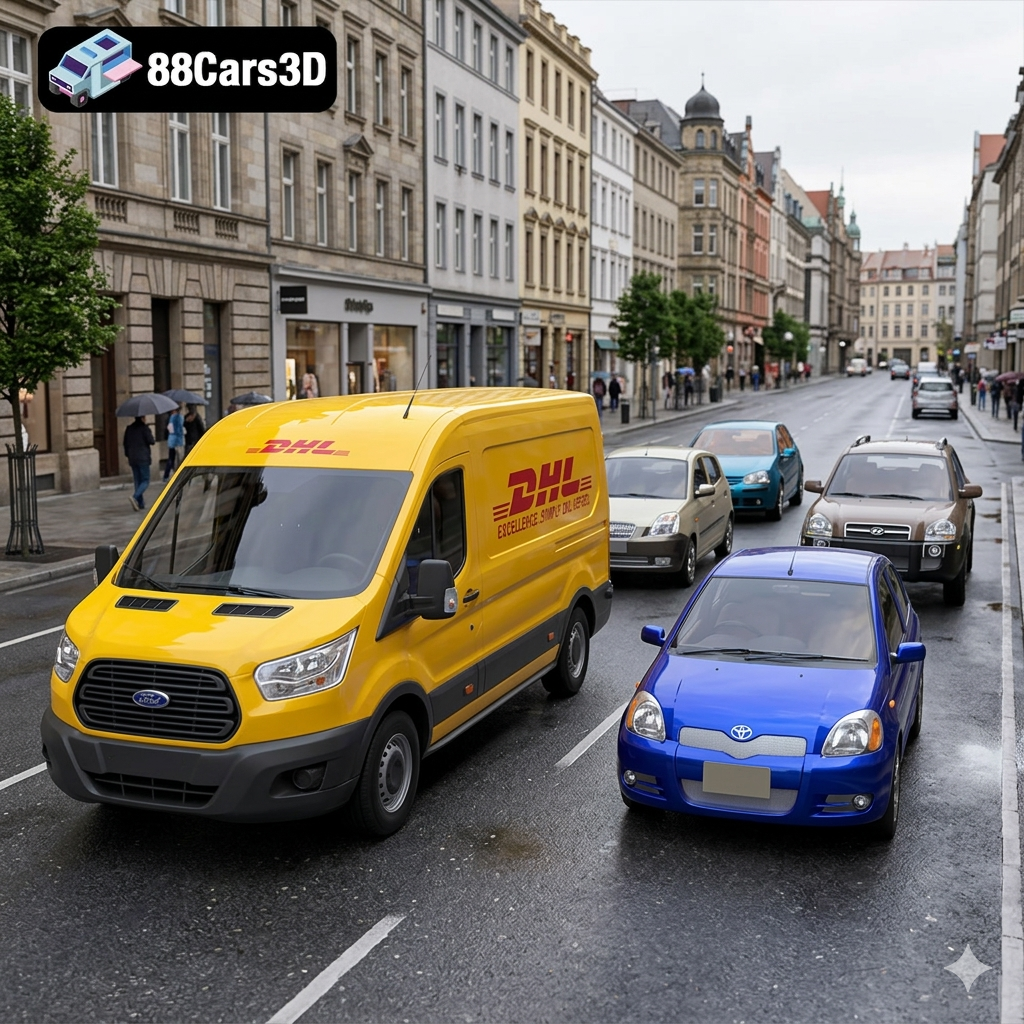
Download the Everyday City Traffic 3D Models Bundle. Includes the VW Golf, Kia Picanto, Hyundai Tucson, Toyota Yaris, and a DHL Ford Transit Van. Save big on this 5-in-1 pack, perfectly optimized for realistic ArchViz streets and game traffic.
Price: $99.99
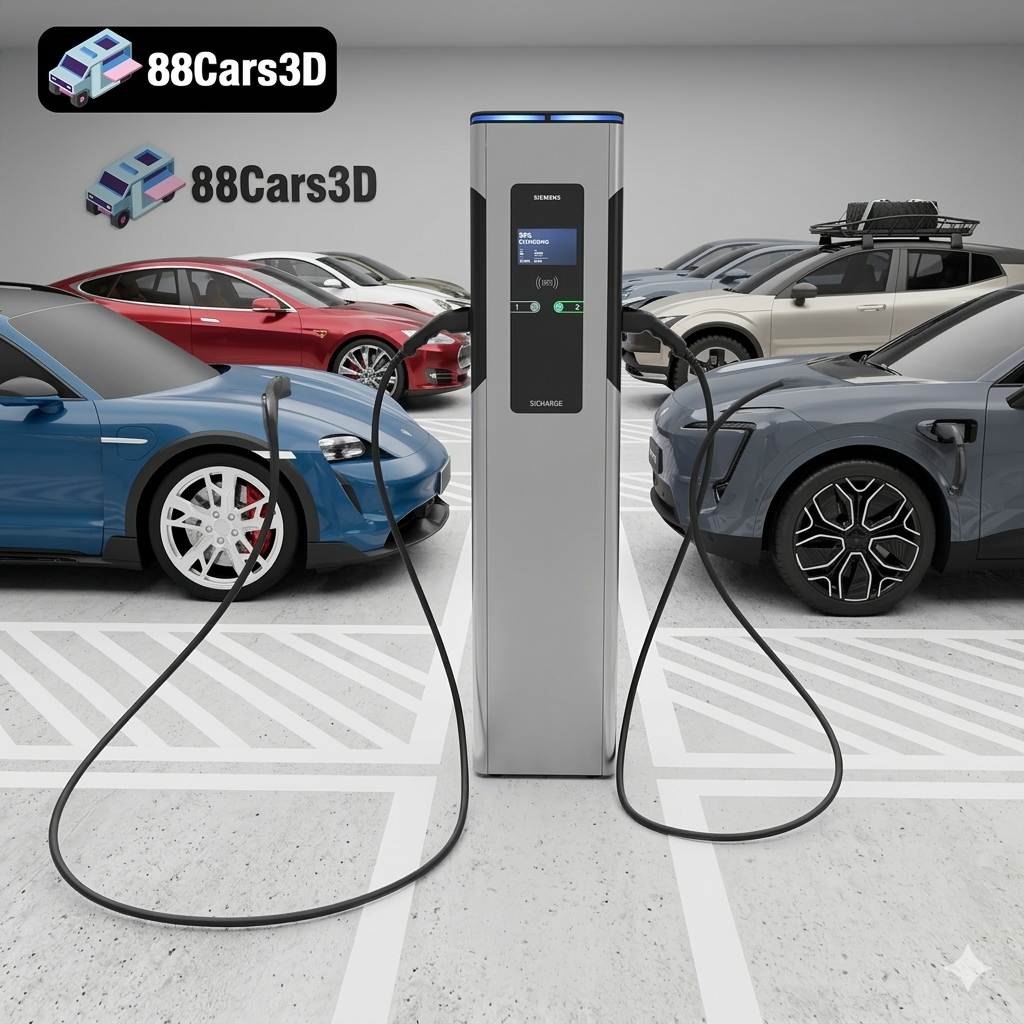
Download the Future of Mobility EV 3D Models Bundle. Includes the Volvo EX30, Tesla Model S, AVATR 11, Porsche Taycan, and a Siemens EV Charger. Save big on this highly optimized 5-in-1 pack for ArchViz and game development!
Price: $89.99

