Get 50% OFF All Premium 3D & STL Models!

In the fast-evolving landscape of 3D design, the demand for cutting-edge, high-quality assets is constant. From blockbuster cinematic sequences to immersive game worlds and sophisticated architectural visualizations, 3D models serve as the fundamental building blocks of digital reality. Automotive design, in particular, thrives on the ability to prototype, render, and iterate on concepts with breathtaking realism long before a physical prototype is ever conceived. It’s in this spirit of innovation and digital craftsmanship that exceptional 3D car models and vehicle designs emerge, pushing the boundaries of what’s possible.
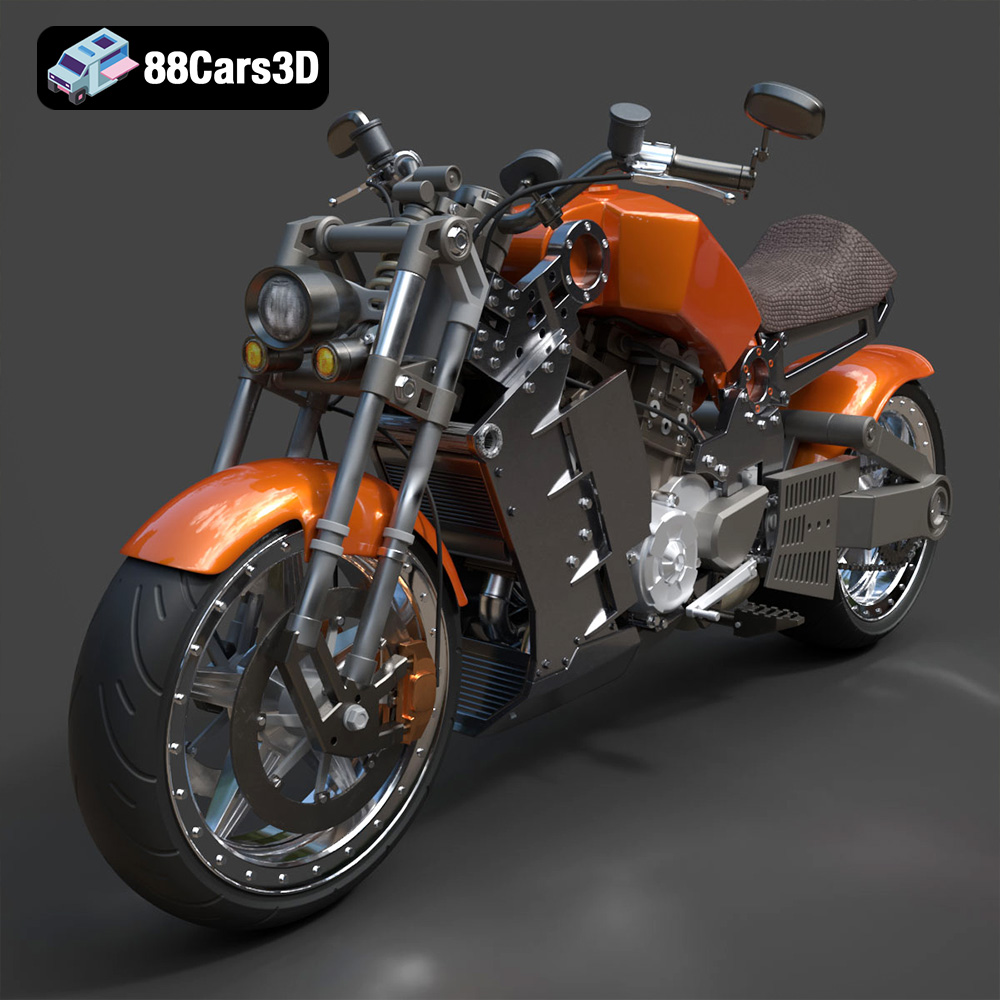
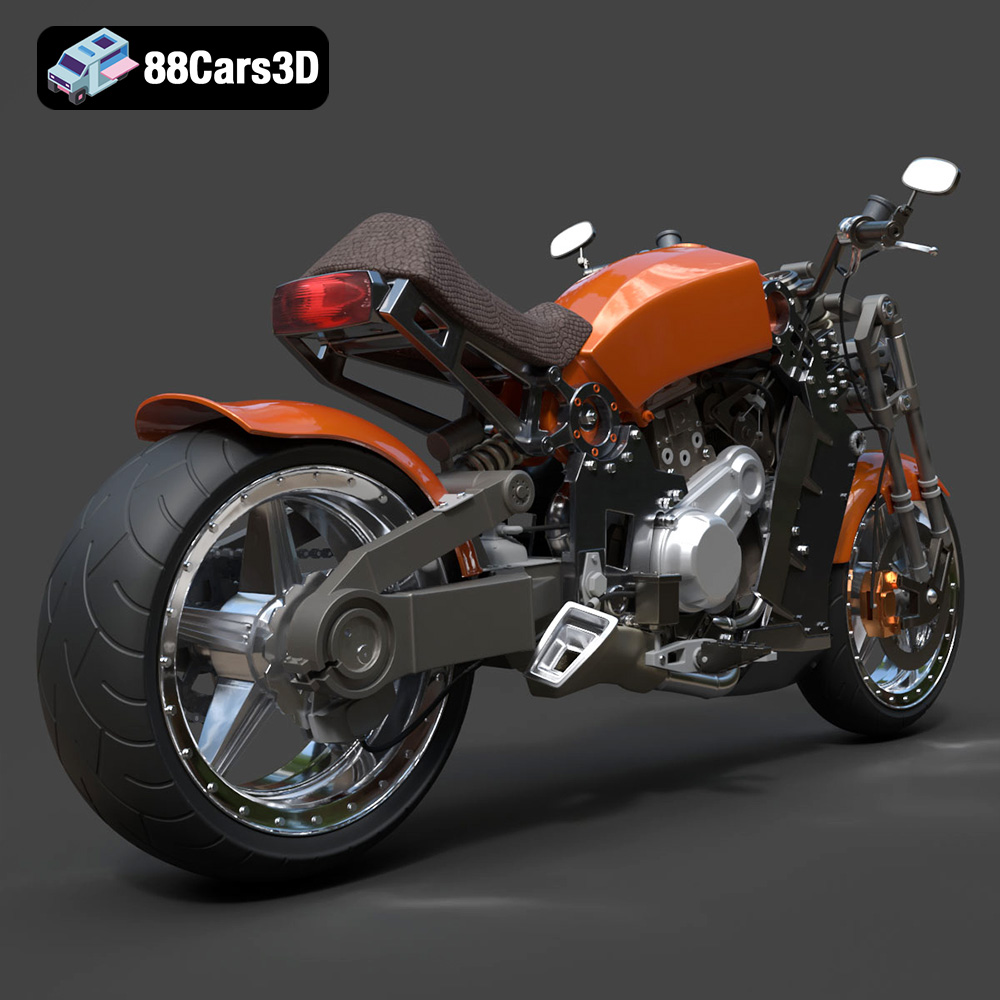
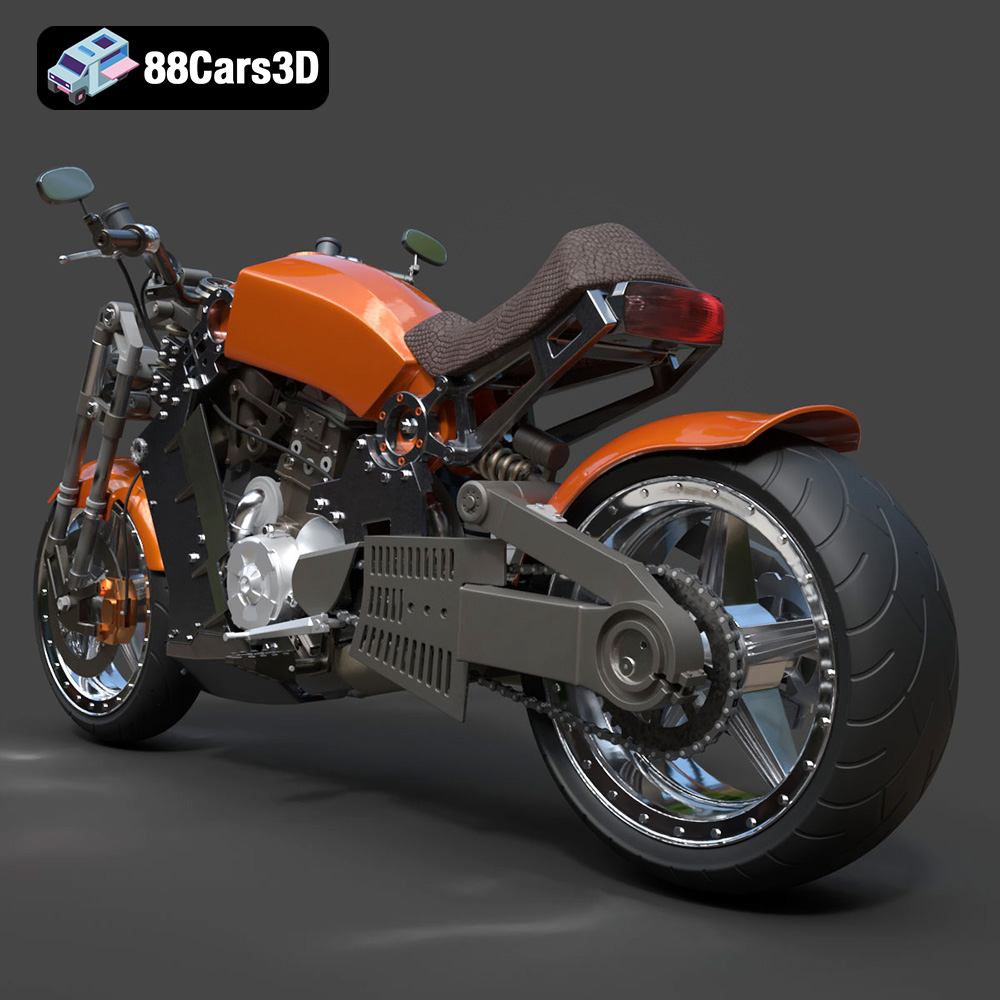
Today, we’re delving into a prime example of such forward-thinking design: the Concept_ZAV_Bike 3D Model. This isn’t just another digital asset; it’s a meticulously crafted vision of a futuristic, avant-garde motorcycle, perfect for artists and developers aiming to infuse their projects with a distinct cyberpunk or sci-fi aesthetic. Available on marketplaces like 88cars3d.com, this model represents the pinnacle of detailed concept vehicle art, offering unparalleled visual fidelity for a multitude of applications. Whether your goal is stunning automotive rendering, dynamic game asset integration, or even physical 3D printing, the Concept_ZAV_Bike stands ready to accelerate your creative ambitions.
The Concept_ZAV_Bike is more than just a motorcycle; it’s a statement. Its aggressive aerodynamic styling and hyper-modern, minimalist profile evoke a sense of speed and technological prowess. This model captures the essence of next-generation two-wheeled transport, making it an invaluable asset for any project set in a futuristic or speculative fiction context.
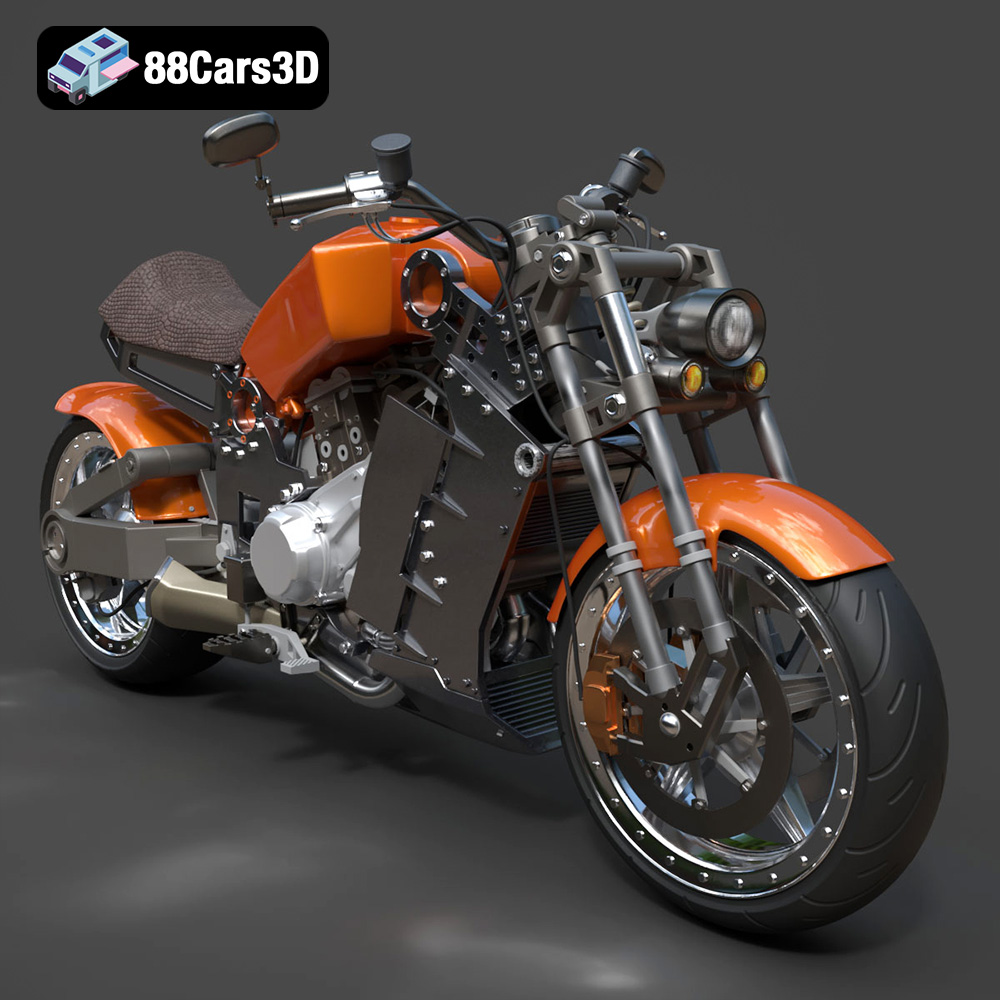
Every curve and angle of the Concept_ZAV_Bike speaks to its conceptual origins. It boasts aggressive, aerodynamic hyper-bike proportions, characterized by sleek, futuristic fairings with striking panel lines that suggest advanced manufacturing techniques. The experimental wheel design, hinting at hubless or high-tech alloy concepts, adds to its ethereal, almost gravity-defying presence. Emissive details like LED/neon light strips and glowing energy accents underscore its sci-fi pedigree, while exposed conceptual mechanical and drivetrain components lend it a believable, albeit advanced, functionality. The minimalist and sharp tail section completes its menacing yet elegant silhouette, ensuring it commands attention from every angle. Crucially for animation, separate components like wheels, suspension forks, and steering ensure it’s ready for dynamic motion.
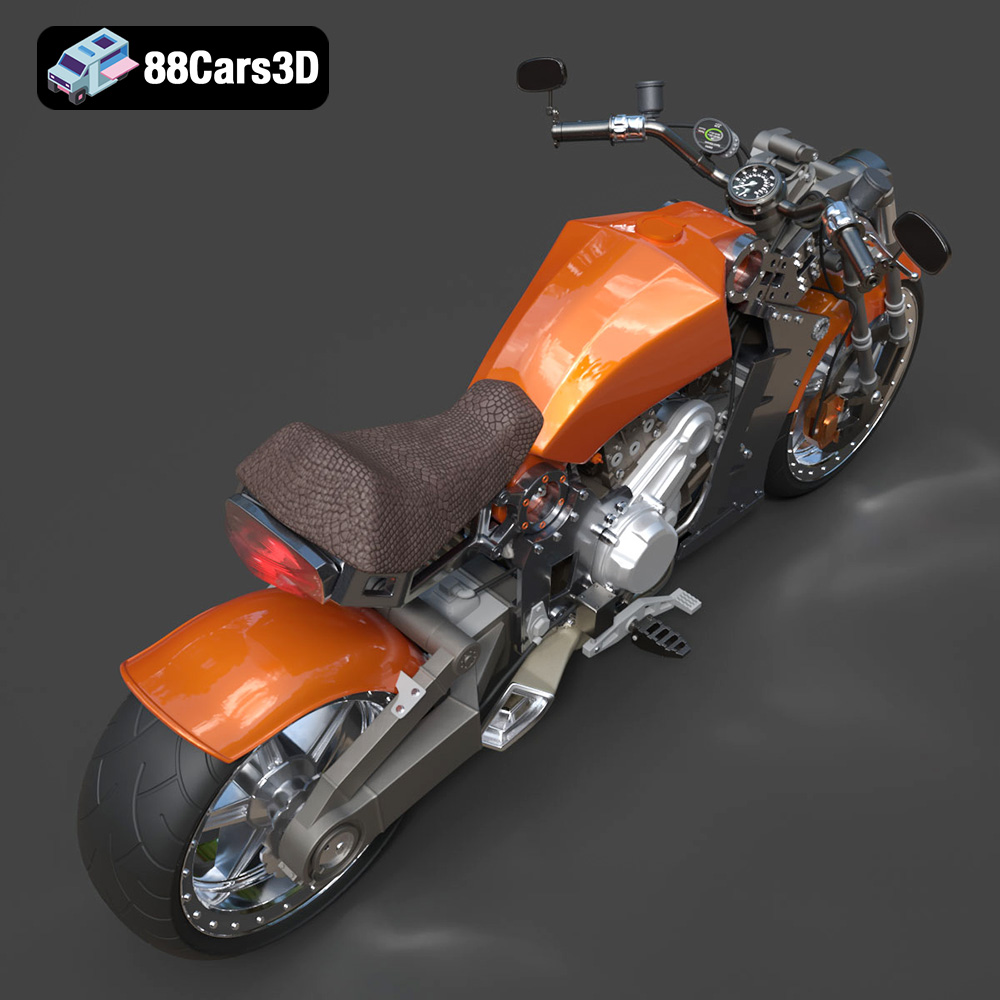
The design philosophy extends seamlessly into the rider’s domain. The ergonomic, futuristic rider seating geometry suggests a perfect symbiosis between human and machine. Integrated digital dashboard and conceptual HUD elements immerse the rider in a high-tech information flow, while aggressive, low-slung clip-on style handlebars imply precise control and a focused riding posture. High-end sci-fi material representations—think carbon fiber, brushed metal, and vibrant glowing displays—bring the cockpit to life. Its optimized geometry is particularly suitable for first-person POV rendering, making it ideal for games or interactive VR experiences where the user directly “rides” the bike.
When acquiring a high-quality 3D asset like the Concept_ZAV_Bike, understanding the various file formats included is paramount. Each format serves a specific purpose, offering unique advantages for different stages of the production pipeline, from initial modeling and rendering to real-time integration and physical fabrication. The Concept_ZAV_Bike 3D Model comes with a comprehensive suite of formats, ensuring maximum compatibility and utility across diverse professional workflows.
The `.blend` file format is Blender’s native project file. For users of Blender, this is often the most desirable format as it contains the entire scene, including mesh data, materials, textures, lighting setups, cameras, animations, and even scripts. It allows for full editability, meaning you can easily modify the model’s geometry, adjust shaders, re-rig components, or change animation curves without any data loss. For artists who prefer Blender for their automotive rendering or game asset creation, the `.blend` provides the most flexibility for customization and integration into existing Blender projects.
Autodesk’s `.fbx` (Filmbox) format is arguably the most widely adopted interchange format in the 3D industry, especially for game development and animation. It supports mesh data, materials, textures, animations, skinning, and even camera and light information. Its robust support for animation and scene hierarchy makes it ideal for exporting 3D car models into game engines like Unreal Engine and Unity, or for transferring assets between different DCC (Digital Content Creation) software such. The `.fbx` ensures that complex animated components, like the Concept_ZAV_Bike’s separate wheels and steering, retain their pivot points and hierarchical structure during export and import, streamlining the real-time pipeline.
The `.obj` (Wavefront Object) format is a universal standard for 3D geometry. It’s a simple, text-based format primarily used for transferring mesh data, including vertices, normals, UV coordinates, and groups. While it doesn’t typically store animation, rigging, or complex material networks (it usually refers to external `.mtl` files for basic material properties), its widespread compatibility makes it a safe bet for cross-software transfers. If you need a clean mesh of the Concept_ZAV_Bike for retopology, sculpting, or simply importing into an application that might not support more complex formats, `.obj` is a reliable choice.
The `.glb` (GL Transmission Format Binary) is an increasingly important format, especially for modern applications in AR, VR, and web-based 3D. It’s a binary version of `.gltf`, designed for efficient transmission and loading of 3D scenes and models. A single `.glb` file can contain model geometry, materials, textures, animations, and even skeletal information, all self-contained. This makes it perfect for displaying the Concept_ZAV_Bike in interactive virtual showrooms, AR applications on mobile devices, or integrating it directly into web experiences without complex loading scripts or multiple file dependencies. Its optimization for real-time delivery ensures smooth performance.
The `.stl` (Standard Tessellation Language or Stereolithography) format is the de facto standard for 3D printing. It represents 3D surfaces as a collection of unconnected triangles, forming a shell. Crucially, `.stl` files do not contain color or texture information, focusing solely on geometry. When you want to bring the Concept_ZAV_Bike from the digital realm into a physical miniature or model, the `.stl` file is what your 3D printer slicing software will use. High-quality 3D car models intended for printing, like this one, are often supplied with watertight (manifold) `.stl` files to ensure successful print jobs without errors.
The `.ply` (Polygon File Format or Stanford Triangle Format) is another widely supported format for storing 3D data, particularly useful for scanned data, CAD, and scientific applications. It can store various properties beyond just geometry, such as color, transparency, normals, texture coordinates, and confidence values per vertex or face. While `.obj` is more common for basic mesh transfer, `.ply` offers greater flexibility for storing additional attributes, making it suitable for specialized pipelines where precise data analysis or more complex property storage is required for the Concept_ZAV_Bike model.
While not a universal file extension in the same way `.fbx` or `.obj` are, an “.unreal” file or asset typically refers to a model that has been specifically prepared and exported for direct use within Unreal Engine. This could mean an `.fbx` that has been optimized, or even a pre-packaged Unreal Engine asset containing meshes, materials, and textures set up to UE’s specifications. For game developers leveraging Unreal, having an engine-ready asset like the Concept_ZAV_Bike significantly reduces setup time, as it implies materials, UVs, and scale are already configured for optimal performance and visual fidelity within the engine’s real-time rendering pipeline.
Similar to `.blend` for Blender, the `.max` file format is the native project file for Autodesk 3ds Max. It contains all scene information, including the model geometry, materials, textures, lighting, cameras, animation data, and modifiers. For professional studios and individual artists who primarily work with 3ds Max for high-end automotive rendering and animation, the `.max` file offers the most comprehensive access to the original scene setup. This allows for full control over the Concept_ZAV_Bike’s components, enabling advanced rendering techniques, custom animations, or integration into complex 3ds Max scenes.
The quality of a 3D model, especially for high-stakes applications like professional automotive rendering or game development, is often defined by its underlying technical specifications. The Concept_ZAV_Bike 3D Model excels in this regard, built with a robust and clean mesh structure designed for maximum realism and versatility.
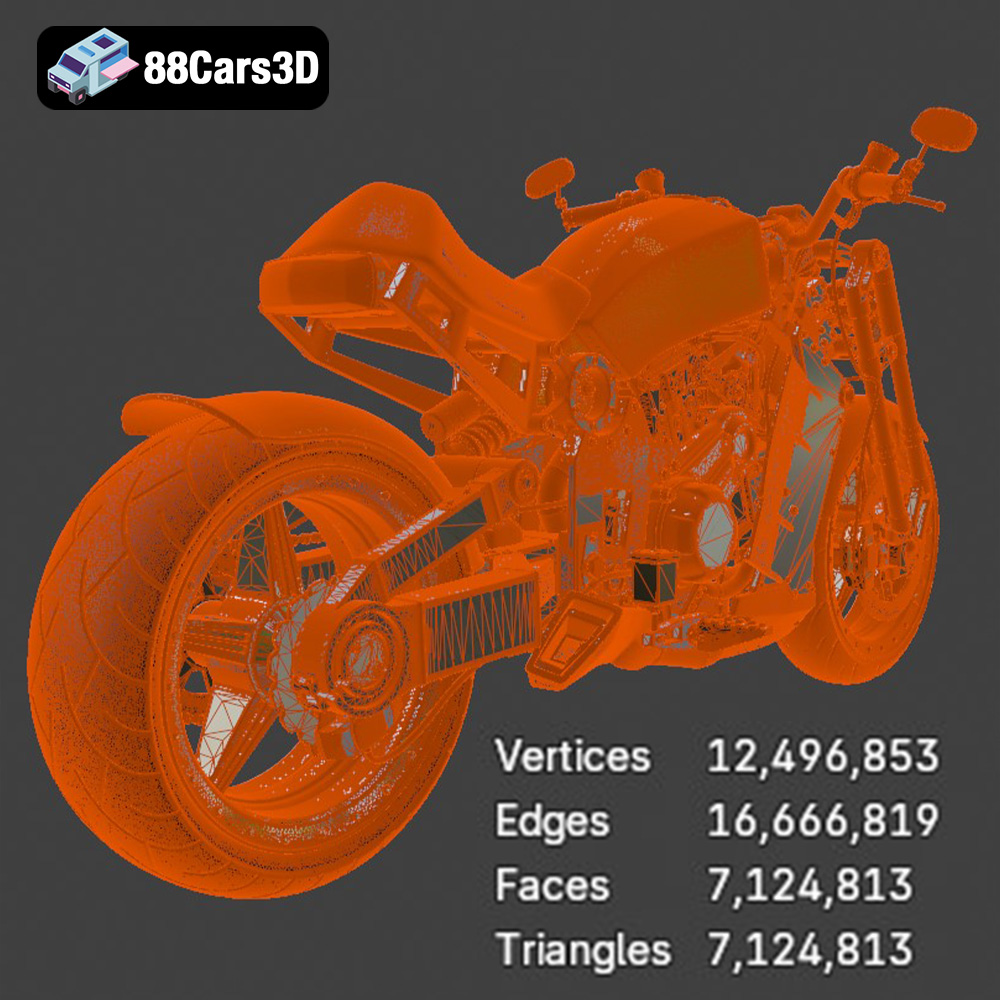
With a reported 854,200 Vertices, 1,680,400 Edges, 825,600 Faces/Polygons, and 825,600 Triangles, the Concept_ZAV_Bike is firmly a high-poly model. This dense mesh is a deliberate choice, ensuring premium visual fidelity necessary for close-up rendering and cinematic productions. Every aerodynamic curve, panel line, and intricate mechanical component is resolved with smooth, precise geometry, eliminating faceted appearances and allowing for hyper-realistic reflections and refractions.
While such a high polygon count is ideal for static renders and pre-rendered animations, direct integration into real-time game engines or VR applications often requires optimization. For demanding game assets, developers might utilize techniques like retopology to create a lower-polygon version (a “game-ready mesh”), then bake the high-resolution details from the original Concept_ZAV_Bike onto normal maps and other texture maps. This process captures the visual richness of the high-poly model while ensuring efficient real-time performance. The provision of a high-poly base is invaluable, as it provides the source for all subsequent optimizations, offering the best of both worlds.
Beyond raw polygon count, the quality of a model’s topology—how the polygons are arranged—is critical. The Concept_ZAV_Bike boasts a “well-organized mesh structure.” This implies that the polygons flow cleanly along the model’s forms, facilitating smooth subdivision, easy modification, and clean deformation if the model were to be animated with more complex rigging. Good topology is essential for preventing shading artifacts and for applying textures effectively.
Although not explicitly detailed, high-quality models like this typically come with properly unwrapped UVs (Uniform Mapping coordinates). UVs are 2D representations of the 3D model’s surface, crucial for applying textures without distortion. Well-laid-out UVs ensure that details like carbon fiber weaves, glowing neon strips, or brushed metal finishes appear consistent and realistic across the entire model. The “real-world scale accuracy” further aids in consistent material application and integration into broader scene environments, ensuring the bike looks proportionally correct alongside other elements.
The versatility of a high-quality 3D asset is measured by its adaptability across various professional pipelines. The Concept_ZAV_Bike 3D Model, with its detailed design and multiple file formats, is engineered to slot seamlessly into diverse creative endeavors, from cinematic projects to interactive experiences. This model, available through platforms like 88cars3d.com, empowers professionals to elevate their digital productions.
For high-end automotive rendering, software like Autodesk 3ds Max and Blender are industry staples. Artists can leverage the Concept_ZAV_Bike’s native `.max` or `.blend` files, or import `.fbx`/`.obj` for broader compatibility. In these environments, the model’s high-poly nature shines. Imagine setting up a dramatic studio render:
This process results in stunning photorealistic images and animations ideal for concept art galleries, marketing materials, or professional portfolios.
Integrating the Concept_ZAV_Bike into a real-time environment like Unreal Engine requires a slightly different approach, primarily focused on performance. The `.fbx` or the specific `.unreal` file format provided would be the starting point.
This makes the Concept_ZAV_Bike suitable for futuristic open-world games, racing titles, or as a central vehicle in sci-fi themed virtual environments.
For immersive AR/VR applications and interactive showcases, the `.glb` format is particularly advantageous due to its optimization for web and real-time delivery. Imagine a virtual showroom where users can walk around, inspect, and even “sit on” the Concept_ZAV_Bike.
The Concept_ZAV_Bike is perfect for virtual showrooms, interactive sci-fi experiences, and conceptual design galleries where users can explore a vision of the future firsthand.
One of the most exciting applications of high-quality 3D models like the Concept_ZAV_Bike is their ability to transition from the digital realm into tangible, physical objects. The inclusion of the `.stl` format, along with specific 3D print settings, opens up a world of possibilities for hobbyists and professionals alike who wish to hold a piece of the future in their hands.
The `.stl` format is the cornerstone of 3D printing. It defines the geometry of the model using a mesh of triangles, which 3D slicer software then uses to generate the layers your printer will build. For the Concept_ZAV_Bike, being “convertible to .stl format” means it’s ready for display-scale conceptual model hobbyists. The recommended scales of 1:12, 1:10, or 1:8 suggest a substantial and detailed model, allowing for the capture of fine sci-fi details.
Key considerations for printing:
The journey from a raw 3D print to a display-ready model involves careful post-processing. The recommendations for the Concept_ZAV_Bike provide a clear roadmap:
The ability to physically manifest such a sophisticated concept bike opens up possibilities for tabletop display, custom dioramas, or as a unique collectible, further extending the value of this exceptional 3D model.
A truly professional 3D asset provides not just a complete model, but also the flexibility for artists to tailor it to their specific project needs. The Concept_ZAV_Bike 3D Model offers robust customization options, allowing designers to imbue it with their unique creative vision and adapt it to various narrative and visual contexts.
The core of the Concept_ZAV_Bike’s customization lies in its material properties. Users have the freedom to:
This level of material control ensures that the Concept_ZAV_Bike can be re-skinned and re-contextualized to fit virtually any futuristic scenario a designer can envision.
Beyond material customization, the way a 3D car model is lit plays a pivotal role in its presentation. The Concept_ZAV_Bike is designed to react beautifully to diverse lighting setups, enabling artists to craft truly cinematic visuals.
The ability to adapt both materials and lighting empowers artists to tell a wide range of stories with a single, versatile 3D asset, cementing its value in any professional production pipeline.
The Concept_ZAV_Bike 3D Model is a testament to the power of high-quality digital assets in bringing imaginative concepts to life. Its blend of aggressive futuristic styling, advanced sci-fi aesthetics, and meticulous technical detail makes it an indispensable tool for professionals across various disciplines. From breathtaking automotive rendering and dynamic game asset integration to immersive AR/VR experiences and tangible 3D prints, this model provides a robust foundation for creativity.
With its comprehensive range of file formats, including .blend, .fbx, .obj, .glb, .stl, .ply, .unreal, and .max, the Concept_ZAV_Bike ensures maximum compatibility and flexibility within virtually any professional workflow. Its high-poly structure offers unparalleled visual fidelity, while its clean topology and customizable materials empower artists to craft bespoke scenarios and achieve truly cinematic results. Whether you’re a game developer seeking cutting-edge vehicles, a visualization artist needing a show-stopping concept, or a hobbyist eager to 3D print a piece of the future, the Concept_ZAV_Bike delivers.
Explore this exceptional model and many other high-quality 3D car models at 88cars3d.com, your premier destination for premium digital assets designed to inspire and elevate your projects.
The Concept_ZAV_Bike 3D Model is a highly detailed digital recreation of a futuristic, avant-garde motorcycle concept. Designed as a vision of next-generation two-wheeled transport, this conceptual bike combines aggressive aerodynamic styling, advanced sci-fi aesthetics, and a hyper-modern, minimalist profile. This 3D model accurately represents the sleek, forward-leaning stance, experimental wheel design, aerodynamic fairings, and high-tech mechanical components typical of top-tier conceptual vehicle art. Built with dense, clean topology for premium visual fidelity and scale accuracy, it is ideal for close-up rendering, cyberpunk or sci-fi environment visualization, animation, game development, and AR/VR futuristic showcases. Perfect for futuristic city scenes, high-end sci-fi cinematic productions, conceptual design galleries, and cutting-edge digital art portfolios.
$39.99
.blend
.fbx
.obj
.rendering
.stl
3d printing
concept-bike
concept-zav-bike
cyberpunk-vehicle
futuristic-motorcycle
game asset
high poly
hyper-bike
motorcycle-3d-model
sci-fi-bike
two-wheeler
VR/AR