Get 50% OFF All Premium 3D & STL Models!

The allure of a perfectly rendered automotive masterpiece, a seamlessly integrated car model in a cutting-edge game, or a stunning visualization in virtual reality, begins long before the final pixel is cast. It all starts with a meticulous and technically sound 3D modeling workflow. For 3D artists, game developers, automotive designers, and visualization professionals, mastering this journey from concept to final render is paramount. This comprehensive guide delves deep into the intricate processes, technical specifications, and industry best practices required to create high-quality 3D car models that stand out in any application.
We’ll explore everything from the foundational principles of clean topology and efficient UV mapping to the complexities of PBR material creation, advanced rendering techniques, and critical optimization strategies for game engines and AR/VR. Whether you’re aiming for photorealistic cinematic renders, high-performance game assets, or precise models for 3D printing, understanding these workflows is essential. Prepare to unlock the secrets behind professional-grade 3D car models, ensuring your creations are not only visually stunning but also technically robust and versatile across various platforms and applications. Let’s embark on this detailed technical expedition to elevate your 3D automotive modeling skills.
Every exceptional 3D car model begins with a solid foundation, meticulously planned and executed. This initial phase, encompassing blueprint setup and topology, dictates the quality, performance, and versatility of your model throughout its lifecycle. Precision is key, as any shortcuts taken here will inevitably lead to compounding issues later in the pipeline, from shading artifacts to unwieldy UVs and poor deformation.
The first critical step involves accurately setting up reference images. Gathering comprehensive blueprints or high-resolution photographic references—front, back, side, top, and sometimes perspective views—is essential. These images must be aligned perfectly within your 3D software (e.g., 3ds Max, Blender, Maya) to ensure accurate proportions and dimensions. Scaling is equally vital; working with real-world units from the outset (e.g., meters, centimeters) guarantees consistency and prevents scaling issues when exporting to other applications or rendering engines. Many artists create simple planes or backdrop images and meticulously adjust their positions and scales to match, often using a known measurement like a wheel diameter or the car’s overall length as a guide. This foundational alignment prevents distortion and ensures your model accurately represents its real-world counterpart, a crucial aspect for automotive rendering and visualization projects.
The bedrock of a high-quality 3D car model is its topology. This refers to the arrangement of polygons (faces, edges, vertices) that define the mesh surface. For automotive models, maintaining a clean, quad-based topology (where all faces are quadrilaterals, not triangles or N-gons) is an industry best practice. Quads deform smoothly, facilitate easy edge loop manipulation, and are crucial for subdivision surface modeling (e.g., using a Turbosmooth modifier in 3ds Max or Subdivision Surface modifier in Blender). The Blender 4.4 manual, for instance, provides detailed information on mesh structure and modeling techniques that emphasize good topology. Proper edge flow, where edge loops follow the natural contours and creases of the car body, is equally important. This ensures smooth reflections, avoids pinching, and allows for efficient creasing and hard surface definition without excessive polygon density. For example, edge loops should trace around wheel wells, door seams, hood lines, and character lines, guiding the flow of light and shadow accurately across the vehicle’s complex surfaces. Aim for a judicious balance—enough polygons to capture intricate curves and details, but not so many that the model becomes overly dense and cumbersome for real-time applications.
While detail is desirable, managing polygon count is a delicate balancing act, especially when preparing 3D car models for diverse applications like game development or AR/VR. High-fidelity rendering often demands millions of polygons, particularly with subdivision surfaces, to achieve photographic realism. However, for interactive experiences, optimization is critical. A typical high-quality base mesh for a hero car model might range from 100,000 to 300,000 polygons, which can then be subdivided for rendering or optimized further for real-time. This includes focusing on areas of high visual impact, like intricate grilles or wheel details, and simplifying less visible areas. Techniques like retopology can be employed to create a cleaner, lower-polygon mesh from a high-resolution sculpt or CAD data, ensuring an efficient and animation-friendly asset. Understanding the target platform’s performance limitations is key to setting appropriate polygon budgets from the outset, ensuring your model is not only beautiful but also performant.
Once the foundational geometry is solid, the next crucial step is to prepare the model for texturing and material application. This involves meticulous UV mapping and the creation of physically based rendering (PBR) materials, which are essential for achieving photorealistic results across various rendering engines and real-time platforms. The quality of your textures and materials can make or break the visual impact of your 3D car model.
UV mapping is the process of flattening the 3D surface of your model into a 2D space, allowing a 2D image texture to be applied accurately. For complex automotive surfaces with intricate curves and details, smart UV unwrapping strategies are paramount. The goal is to minimize distortion, maximize texture space utilization, and ensure clean, uninterrupted texture flow. This often involves segmenting the car model into logical parts (hood, doors, fenders, roof, interior, wheels, glass, etc.) and unwrapping each section individually. Overlapping UVs can be used for mirrored parts (e.g., left and right doors) to save texture space if unique weathering isn’t required, but unique UVs are often preferred for high-detail models to avoid repetition. Seams should be strategically placed in less visible areas, such as along natural panel lines, under the car, or within crevices, to hide them effectively. Advanced techniques include using UDIM workflows for extremely high-resolution models, allowing multiple texture maps to be applied to different UV tiles, which is especially common for professional cinematic assets. Ensuring consistent texel density across the model is also vital to avoid areas appearing blurry or overly pixelated compared to others, maintaining visual fidelity. Tools like Blender’s UV Editor, as detailed in the Blender 4.4 documentation, offer comprehensive features for precise control over UV layout.
Physically Based Rendering (PBR) has become the industry standard for creating realistic materials due to its ability to accurately simulate how light interacts with surfaces. PBR materials rely on a set of texture maps (e.g., Albedo/Base Color, Metallic, Roughness, Normal, Ambient Occlusion, Specular, Opacity) that define a surface’s properties in a physically plausible manner. For automotive models, this translates to accurately recreating car paint (with its metallic flake and clear coat properties), tire rubber, glass, chrome, and various interior materials. Car paint, in particular, is a complex PBR shader, often requiring intricate shader networks to simulate multi-layered clear coats, metallic flakes, and iridescent effects. Tools like Substance Painter, Mari, or even directly within renderers like V-Ray, Corona, Cycles, or Arnold, are used to generate these maps. Understanding the relationship between these maps—for instance, how a low roughness value on a metallic surface creates a mirror-like reflection, while a high roughness value scatters light for a more matte finish—is fundamental to achieving photorealism. When sourcing models from marketplaces such as 88cars3d.com, ensure that the PBR materials are correctly set up and come with high-quality texture maps suitable for your target application.
The resolution of your texture maps directly impacts the visual detail of your model. For high-fidelity automotive rendering, resolutions like 4K (4096×4096 pixels) or even 8K (8192×8192 pixels) are common for large panels, while smaller details might use 2K or 1K. However, for game engines and AR/VR, managing texture memory is crucial. Texture atlasing is a powerful optimization technique where multiple smaller textures are combined into a single, larger texture map. This reduces draw calls (the number of times the GPU is told to draw something), improving performance. For a car, this might involve atlasing all interior fabric textures, or combining various undercarriage elements onto one sheet. Careful planning during UV mapping is essential to facilitate efficient atlasing. Additionally, consider using texture compression formats (e.g., DXT for desktop, ETC/PVRTC for mobile) and mipmaps (pre-generated, lower-resolution versions of textures) to optimize performance and reduce visual artifacts when objects are viewed from a distance. Balancing visual quality with performance through judicious texture resolution and smart atlasing is a hallmark of professional 3D car asset development.
With a perfectly modeled and textured car, the next stage is to bring it to life through the art of rendering. This phase is where the technical precision of modeling meets artistic vision, utilizing sophisticated lighting, materials, and post-processing to create compelling images or animations. Achieving photorealistic automotive renders requires a deep understanding of light physics and renderer-specific settings.
Lighting is arguably the most critical element in rendering, dictating mood, realism, and visual impact. For automotive visualization, a common and highly effective setup involves High Dynamic Range Images (HDRIs) combined with targeted light sources. HDRIs provide an accurate representation of real-world lighting and reflections, contributing significantly to realism, especially on reflective surfaces like car paint and chrome. These often include studio setups, outdoor environments, or specific time-of-day scenarios. Beyond HDRIs, strategic placement of additional area lights, spot lights, or mesh lights can emphasize specific details, create dramatic shadows, or simulate studio softboxes. Rim lights are often used to define the car’s silhouette, separating it from the background, while fill lights soften harsh shadows. Physically accurate camera settings, mimicking real-world cameras (e.g., aperture, shutter speed, ISO, depth of field), further enhance believability. Understanding how different light sources interact with your PBR materials is key to achieving that coveted photorealistic sheen on the car’s body. The environment beyond the car—a realistic road, backdrop, or studio setup—also plays a crucial role in grounding the vehicle within a believable scene and providing relevant reflections.
Each rendering engine has its unique strengths and workflows, though the underlying principles of physically based rendering remain consistent.
Regardless of the renderer, meticulous attention to detail in material settings, light placement, and render settings (e.g., samples, ray depth, noise thresholds) is crucial for achieving high-quality output.
The render straight out of your 3D software is rarely the final product. Post-processing and compositing in applications like Adobe Photoshop, Affinity Photo, or Blackmagic Fusion are essential steps to elevate your render from good to exceptional. This stage involves adjustments to color grading, exposure, contrast, and adding effects such as bloom, glare, chromatic aberration, or vignetting to mimic real-world camera optics. Render passes (or AOVs – Arbitrary Output Variables) generated by the renderer (e.g., Z-depth, Ambient Occlusion, Reflection, Specular, World Position, Object ID) are invaluable during compositing. They allow for non-destructive adjustments and selective enhancements to specific parts of the image without re-rendering the entire scene. For instance, using an object ID pass, you can selectively adjust the reflections on the car body or enhance the chrome without affecting other elements. Adding motion blur (if animating) or subtle atmospheric effects further enhances realism and narrative. This final polish refines the visual narrative, making the automotive model truly captivating and ready for presentation.
For interactive experiences like video games, virtual reality (VR), and augmented reality (AR), a 3D car model needs to be more than just visually appealing; it must also be highly optimized for real-time performance. This involves a different set of technical considerations compared to offline rendering, focusing on efficiency without sacrificing too much visual fidelity.
One of the most crucial optimization techniques for real-time applications is Level of Detail (LOD). LODs are simplified versions of a 3D model that are automatically swapped in by the game engine when the object is further away from the camera. This drastically reduces the polygon count of distant objects, freeing up GPU resources for closer, more detailed elements. For a hero car model, you might have 3-5 LOD levels:
Creating these LODs often involves manual decimation, re-meshing, or automatic tools within game engines like Unity or Unreal Engine. The goal is to ensure a smooth transition between LODs, preventing noticeable “popping” as the camera moves. Properly implemented LODs are fundamental for maintaining high frame rates in graphically intensive racing games or large open-world environments featuring many vehicles.
Beyond polygon count, another significant performance bottleneck in real-time rendering is the number of draw calls. Each time the CPU tells the GPU to draw something, it incurs a performance cost. A highly detailed car model might have many separate meshes (body, wheels, windows, interior parts) and multiple materials, each potentially leading to a separate draw call.
Minimizing draw calls and utilizing culling techniques are crucial for ensuring smooth performance, especially in scenes with multiple vehicles or complex environments.
Augmented Reality (AR) and Virtual Reality (VR) impose even stricter performance requirements due to the need for high frame rates (e.g., 90 FPS for VR to prevent motion sickness) and often running on less powerful mobile hardware for AR.
The journey of a 3D car model doesn’t end with a final render or game integration. Its true value often lies in its versatility and adaptability across various platforms and purposes, necessitating an understanding of file formats and preparation for niche applications like 3D printing. A well-prepared model can serve multiple creative and professional needs.
The digital world of 3D relies on a myriad of file formats, each with its strengths and typical use cases. Understanding these is crucial for seamless asset exchange and deployment:
Platforms like 88cars3d.com typically offer their high-quality 3D car models in multiple formats like FBX, OBJ, GLB, and sometimes USDZ, ensuring compatibility across a wide range of creative and commercial projects.
Translating a beautiful 3D car model from a virtual render to a tangible, physical object via 3D printing introduces a unique set of challenges and requirements. The model must be “watertight” and structurally sound for successful fabrication.
For 3D printing, a model must be “manifold” or “watertight,” meaning it has no holes, non-manifold edges, or inverted normals. Every edge must be shared by exactly two faces, forming a continuous, enclosed volume.
Once the model is watertight and optimized, it can be exported to an STL (Stereolithography) or OBJ format, ready for slicing and 3D printing. This meticulous preparation ensures that your digital car model successfully transcends the screen and becomes a physical reality.
The journey from a conceptual sketch to a final, polished 3D car model is a testament to technical skill, artistic vision, and meticulous attention to detail. We’ve explored the critical stages of this workflow, from establishing a robust foundation with clean topology and efficient UV mapping to crafting visually stunning PBR materials and mastering advanced rendering techniques. We also delved into the crucial optimizations required for real-time applications in game engines and the unique considerations for AR/VR experiences, concluding with the essential steps for preparing models for diverse file formats and the tangible world of 3D printing.
Each step in this comprehensive workflow builds upon the last, emphasizing the importance of a structured approach. Understanding these technical nuances not only elevates the quality of your output but also ensures the versatility and performance of your 3D assets across various industries, from automotive design and cinematic rendering to interactive game development and immersive visualization. Whether you’re creating a high-fidelity render or an optimized game asset, the principles discussed here will serve as your guiding compass. Embrace continuous learning and experimentation, and remember that high-quality assets are readily available from platforms like 88cars3d.com, providing an excellent starting point for your projects. Master these workflows, and you’ll be well-equipped to drive your 3D automotive projects to unparalleled success.

Texture: Yes | Material: Yes | 3D Printable: Yes. Download the Italian Thoroughbreds Bundle featuring 5 iconic 3D models: Lamborghini Huracán Performante, Ferrari 458 Italia, Lamborghini Urus, Diablo SV, and Maserati GT. Optimized for 4K rendering and 3D printing (STL included). Save 50% with this ultimate Italian vehicle collection.
Price: $199.99

Download the Elite Future Mobility Bundle featuring 4 highly optimized 3D models: Tesla Model S, Avatr 11, Li L9, and Zoox Robotaxi. Perfect for ArchViz, Smart City renders, and game dev. Optimized for Unreal Engine and Blender. Includes .fbx, .obj, and .max formats.
Price: $99

🚗 5 Iconic German Cars (BMW M4 G82, M5 CS, X3, 1 Series & Mercedes E-Class). ✅ Optimized for ArchViz: Ready for Corona & V-Ray. 💰 Save €71 with this limited-time collection! 🚀 Instant Download after purchase.
Price: $119

Download the Extreme Off-Road & Survival 3D Models Bundle! Includes the Brabus 800 Adventure, Dodge Ram Bigfoot, Spec Truck, and a Caravan. Save over €210 on this premium 4-in-1 off-grid vehicle pack for ArchViz and game development.
Price: $149.99

Download the Heavy Duty & Commercial Logistics 3D Models Bundle! Includes the Ford Sterling, Caterpillar CT680, Mercedes Citaro Bus, and Vito Van. Save over €130 on this massive, game-ready 4-in-1 industrial vehicle pack.
Price: $109.99

Download the Ultimate Custom Motorcycles 3D Models Bundle. Includes a Custom Chopper, Ducati 916 Café Fighter, Harley XR1200X, and BMW K100. Perfect premium props for luxury ArchViz garages. Save over €250 today!
Price: $159.99

Download the ultimate JDM Street Racing 3D Models Bundle! Includes the Nissan GT-R, Toyota Supra, Mazda RX-7, Lancer Evo IX, and Honda NSX. Save big on this highly optimized, game-ready 5-in-1 Japanese legend car pack.
Price: $129.99

Download the ultimate American Muscle & Cinematic Classics 3D Models Bundle! Includes the Dodge Charger ’68, Mustang Eleanor GT500, Camaro Z28 ’79, and a custom ’69 Mustang. Save over €240 on this game-ready, premium 4-in-1 pack.
Price: $149.99

Download the Everyday City Traffic 3D Models Bundle. Includes the VW Golf, Kia Picanto, Hyundai Tucson, Toyota Yaris, and a DHL Ford Transit Van. Save big on this 5-in-1 pack, perfectly optimized for realistic ArchViz streets and game traffic.
Price: $99.99
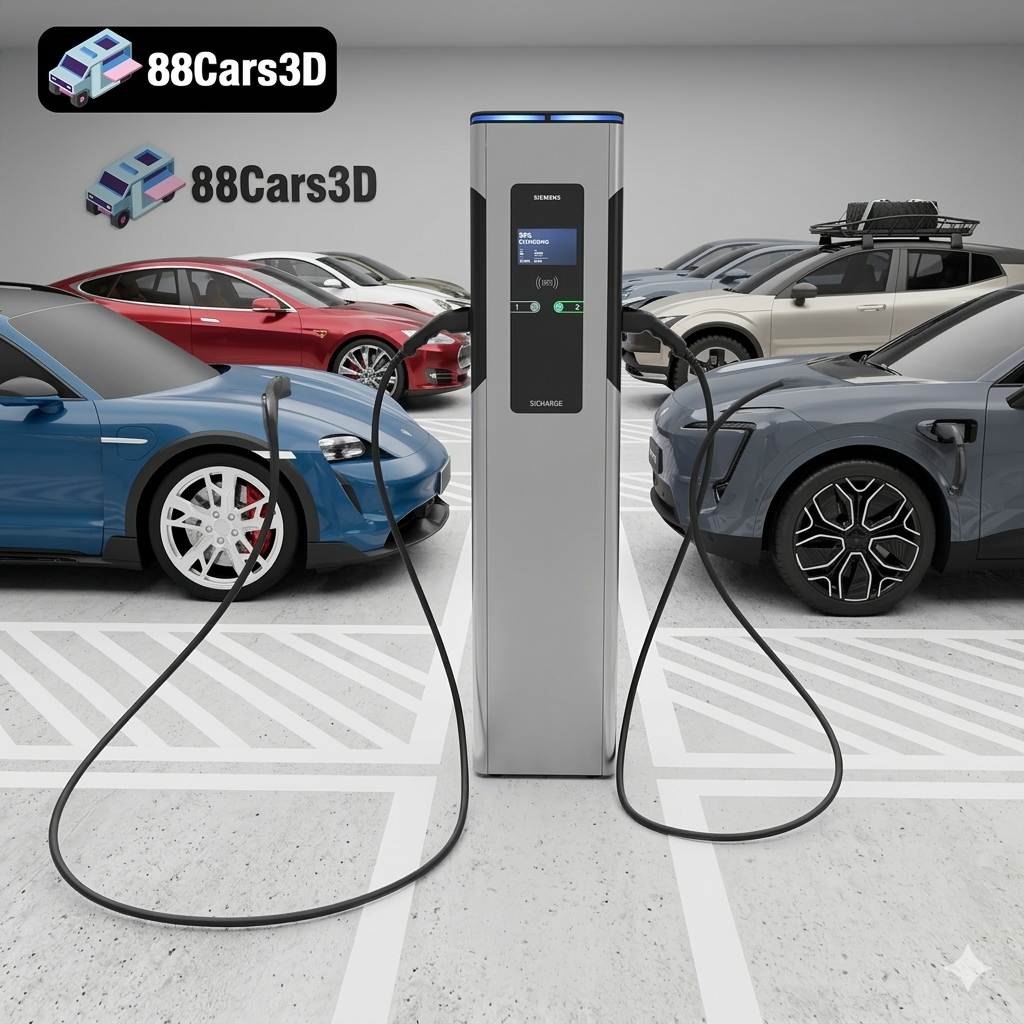
Download the Future of Mobility EV 3D Models Bundle. Includes the Volvo EX30, Tesla Model S, AVATR 11, Porsche Taycan, and a Siemens EV Charger. Save big on this highly optimized 5-in-1 pack for ArchViz and game development!
Price: $89.99

