Get 50% OFF All Premium 3D & STL Models!

“`html
Welcome to the exciting world of 3D printable automotive models! Whether you’re a seasoned maker looking to expand your collection, an engineer prototyping a new design, or a hobbyist aiming for hyper-realistic dioramas, understanding how to prepare your STL files is paramount to success. At 88cars3d.com, we pride ourselves on delivering high-quality, print-ready printable car models. However, even the best models can benefit from strategic adjustments to optimize them for your specific 3D printer settings and desired print speed. This guide will dive deep into the essential techniques of scaling, hollowing, and optimizing your STL models, transforming them into perfect prints that balance detail, material usage, and turnaround time. We’ll explore the nuances of slicing, discuss the trade-offs between FDM printing and resin printing, and provide actionable insights to elevate your 3D printing game.
Before we dive into manipulation, it’s crucial to understand what an STL file truly represents. STL, or STereoLithography, is the de facto standard file format for 3D printing. It describes the surface geometry of a three-dimensional object using a collection of triangular facets. Each facet is defined by three vertices and a normal vector, which indicates the outward direction. This seemingly simple structure forms the basis for how your 3D printer interprets and builds a physical object layer by layer.
The quality of an STL file is heavily influenced by its mesh topology. A well-formed mesh is “watertight” or “manifold,” meaning it has no holes, no non-manifold edges (edges shared by more than two faces), and no self-intersections. These imperfections, often referred to as “errors” or “defects,” can cause significant problems during the slicing process, leading to print failures, unexpected geometry, or incomplete models. Software like Meshmixer, Blender, or Netfabb are indispensable tools for analyzing and repairing these mesh issues. For instance, Meshmixer’s “Make Solid” and “Inspector” tools can automatically detect and fix many common STL errors. When downloading models from marketplaces such as 88cars3d.com, you can generally expect clean, manifold meshes, but understanding these concepts is vital for any custom modifications or troubleshooting.
While STL is ubiquitous, it’s not the only file format. OBJ and FBX files can store richer information, including color and texture data. However, for the raw geometry required by most 3D printers and slicers, STL remains the primary choice. Some advanced slicers can import other formats and convert them internally, but working with a clean STL is always the most reliable starting point. The simplicity of STL makes it universally compatible, ensuring that models from platforms like 88cars3d.com can be processed by virtually any slicing software and 3D printer.
Scaling is perhaps the most straightforward modification you’ll perform on an STL file. Whether you need a miniature version of a classic supercar for a diorama or a larger-than-life replica for a display piece, precise scaling is essential. Most slicing software, such as Cura or PrusaSlicer, offers intuitive scaling tools. You can scale uniformly (maintaining aspect ratio) or non-uniformly (stretching or compressing along specific axes).
When scaling uniformly, you’re essentially multiplying all dimensions by the same factor. For example, scaling by 200% will double the model’s length, width, and height, resulting in a larger object that retains its original proportions. This is ideal for creating scaled-down or scaled-up versions of existing models without distorting the fine details. When working with highly detailed printable car models, ensure that the scaled-up version doesn’t exceed your printer’s build volume or introduce issues with thin walls becoming too thick for effective printing. Conversely, scaling down too much can cause intricate details like badges or panel lines to disappear entirely, especially on FDM printers with larger nozzle sizes.
Non-uniform scaling allows for adjustments along the X, Y, or Z axes independently. This can be useful for fitting a model into a specific space or compensating for slight inaccuracies in a printer’s calibration. However, extreme non-uniform scaling can drastically alter the aesthetic and structural integrity of the model. For instance, stretching a car model excessively along the Z-axis might make it look unnaturally tall and unstable. Always preview your non-uniformly scaled model carefully in the slicer to ensure the proportions remain visually appealing and physically sound. For critical applications, it’s often better to scale uniformly and then make minor adjustments if absolutely necessary.
Resin printing, with its typically higher resolution, can often handle significant scaling down while preserving more detail compared to FDM. However, resin prints can become extremely fragile when scaled down too much, making support structures and careful handling even more critical. FDM printers, especially those with larger nozzle sizes (e.g., 0.6mm or 0.8mm), have limitations on the minimum feature size they can reproduce accurately. Scaling a model down too far might result in details being completely smoothed over or not printed at all. Always consider your nozzle size and layer height when determining the smallest feasible scale for your FDM prints.
Many printable car models, especially highly detailed ones, are designed as solid objects. While this ensures robustness, printing them solid consumes significant amounts of material and print time. Hollowing the model is a technique used to remove the internal volume, leaving only a thin shell. This dramatically reduces material usage and print duration, making large or complex models more feasible to print.
Most advanced slicing software and dedicated 3D modeling packages offer hollowing capabilities. In slicers like Cura, you can enable “Hollow” under the Shell settings, specifying a wall thickness. However, this method often creates a solid object with an internal offset, which might not be ideal for complex geometries. More robust hollowing is typically done in modeling software like Blender or Meshmixer. In Blender, you can use the “Solidify” modifier (applied in reverse to create an offset inwards) or boolean operations to subtract a scaled-down version of the model from itself. Meshmixer offers a straightforward “Hollow” tool where you can define the wall thickness and add escape holes for uncured resin (in resin printing) or uncured plastic (in FDM).
The crucial parameter in hollowing is **wall thickness**. For FDM printing, a minimum wall thickness of 1.2mm to 2.0mm is generally recommended, depending on the nozzle size and desired strength. For resin printing, thinner walls (0.5mm to 1.5mm) are often possible, but require careful consideration of support structures. A critical aspect of hollowing for *any* printing technology is the inclusion of **escape holes**. These are small holes (typically 2-3mm in diameter) that allow air and uncured material to escape from the hollow interior during printing. Without escape holes, trapped air or resin can lead to internal pressure, potentially causing the print to bulge, crack, or even explode. Ensure these holes are strategically placed on non-visible surfaces or designed to be easily filled or hidden post-processing.
Hollowing is almost mandatory for printing larger models with resin printers. Solid resin prints are not only material-intensive but also present significant challenges with print orientation and support placement. Trapped uncured resin inside a hollow model can leach out over time, potentially affecting the long-term durability and safety of the print. Furthermore, uncured resin inside can cure further with prolonged UV exposure, increasing internal stress. Ensuring proper escape holes and thorough post-processing washing and curing are vital when hollowing resin models. For resin prints, consider adding internal support structures within the hollow cavity if the model is very tall or has significant overhangs that might collapse without internal bracing.
Achieving a balance between high print quality and acceptable print times is the holy grail of 3D printing. While detailed printable car models might tempt you to use the slowest settings for maximum fidelity, there are numerous techniques to speed up the process without sacrificing too much quality, or even improving it in some cases.
Layer height is one of the most significant factors influencing print time. A lower layer height (e.g., 0.08mm for resin, 0.1mm for FDM) produces finer details and smoother surfaces but drastically increases print time. Conversely, a higher layer height (e.g., 0.15mm-0.3mm for FDM, 0.05mm for resin) prints much faster but results in more visible layer lines. For most car models, a layer height of 0.1mm to 0.15mm on FDM printers often strikes a good balance. For resin, 0.05mm is a common sweet spot. Experimentation is key; print a small, detailed section of a model at different layer heights to determine your acceptable threshold.
Beyond layer height, the actual print speed (measured in mm/s) plays a critical role. Slicers allow you to control speeds for different parts of the print: outer walls, inner walls, infill, and travel moves. Printing outer walls slower (e.g., 30-40 mm/s) generally improves surface finish, while infill can often be printed much faster (e.g., 60-100 mm/s or more for FDM). Different materials also have optimal printing speeds. PLA can typically be printed faster than PETG or ABS. For resin, print speed is often dictated by the exposure time per layer. Faster resins and high-power UV sources allow for quicker layer cures, reducing print times significantly.
When you hollow a model, you still need to consider the infill settings for the remaining solid areas (if any) or for parts that aren’t fully hollowed. For purely hollowed models, infill density is irrelevant unless you’re printing with a “vase mode” or “spiralize outer contour” setting, which creates a single-wall spiral. However, if you’re printing solid or partially hollowed models, infill density (typically 5-20%) and pattern (e.g., grid, gyroid, cubic) impact both strength and print time. Gyroid is a popular choice for its good strength-to-weight ratio and efficient printing. For display models, very low infill densities (5-10%) are often sufficient. Ensure your slicer is set up to correctly handle hollowed objects and doesn’t try to fill them unnecessarily.
Supports are often necessary to print overhangs and bridges, but they add significant print time and require post-processing for removal. Optimizing support placement and type can save time.
For resin printing, supports are even more critical due to the nature of layer-by-layer curing from the bottom up. Supports connect the model to the build plate and hold delicate features during printing. Optimizing support density and placement, using tools like Lychee Slicer or ChiTuBox’s auto-supports judiciously, is crucial for successful and timely prints.
Beyond basic scaling and hollowing, several advanced techniques and post-processing steps can further enhance your prints, especially for intricate models like those found on 88cars3d.com.
The orientation of your model on the build plate is critical. For FDM printing, orienting models to minimize Z-axis artifacts (layer lines are most visible on vertical surfaces) and to maximize the strength of critical components is important. For instance, printing car bodies with the underside facing down often hides layer lines better. For resin printing, orientation is crucial for managing support contact points and preventing suction forces from detaching prints. Angling models at 10-45 degrees is common practice to break up suction and reduce the area of each layer exposed to the vat.
Ensuring your print sticks reliably to the build plate is foundational. For FDM, this can involve using adhesives like glue stick or specialized sprays, ensuring the bed is clean and level, and utilizing brim or raft options in your slicer. For resin, a well-leveled build plate and a clean FEP film in the resin tank are essential. Sometimes, adding a few extra “adhesion” rafts or brim-like structures around the base of the model in the slicer can help prevent delicate parts from peeling away during the print.
Even perfectly printed models often require post-processing to achieve a professional finish.
The level of post-processing required will depend on your chosen printing technology, material, and desired final quality.
By mastering these techniques—understanding your STL files, strategically scaling and hollowing, and meticulously optimizing for print speed—you can unlock the full potential of your 3D printer. Whether you’re downloading exquisite printable car models from 88cars3d.com or working with your own designs, these skills will ensure your projects are not only visually stunning but also efficiently produced. Happy printing!
“`

Texture: Yes | Material: Yes | 3D Printable: Yes. Download the Italian Thoroughbreds Bundle featuring 5 iconic 3D models: Lamborghini Huracán Performante, Ferrari 458 Italia, Lamborghini Urus, Diablo SV, and Maserati GT. Optimized for 4K rendering and 3D printing (STL included). Save 50% with this ultimate Italian vehicle collection.
Price: $199.99

Download the Elite Future Mobility Bundle featuring 4 highly optimized 3D models: Tesla Model S, Avatr 11, Li L9, and Zoox Robotaxi. Perfect for ArchViz, Smart City renders, and game dev. Optimized for Unreal Engine and Blender. Includes .fbx, .obj, and .max formats.
Price: $99

🚗 5 Iconic German Cars (BMW M4 G82, M5 CS, X3, 1 Series & Mercedes E-Class). ✅ Optimized for ArchViz: Ready for Corona & V-Ray. 💰 Save €71 with this limited-time collection! 🚀 Instant Download after purchase.
Price: $119

Download the Extreme Off-Road & Survival 3D Models Bundle! Includes the Brabus 800 Adventure, Dodge Ram Bigfoot, Spec Truck, and a Caravan. Save over €210 on this premium 4-in-1 off-grid vehicle pack for ArchViz and game development.
Price: $149.99
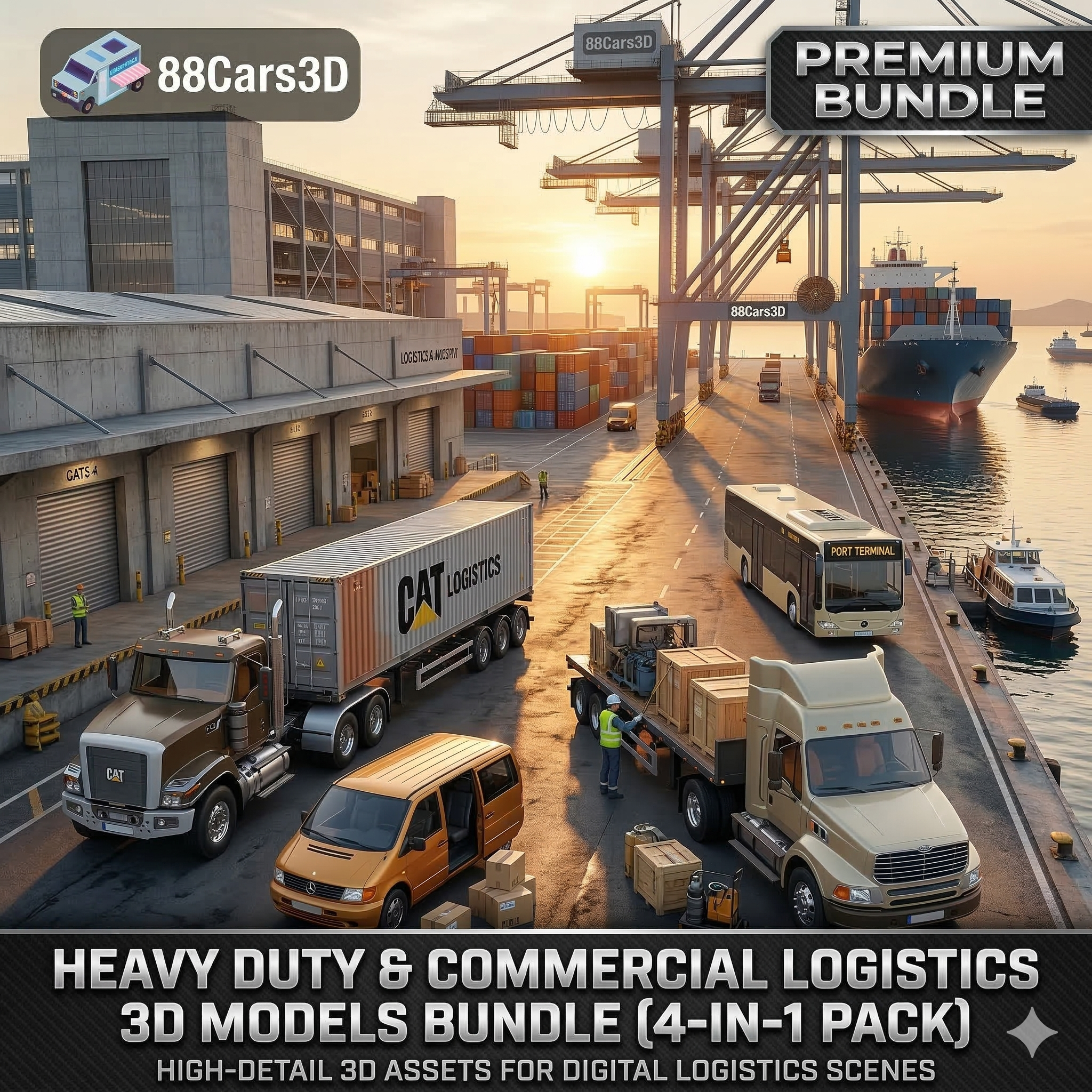
Download the Heavy Duty & Commercial Logistics 3D Models Bundle! Includes the Ford Sterling, Caterpillar CT680, Mercedes Citaro Bus, and Vito Van. Save over €130 on this massive, game-ready 4-in-1 industrial vehicle pack.
Price: $109.99

Download the Ultimate Custom Motorcycles 3D Models Bundle. Includes a Custom Chopper, Ducati 916 Café Fighter, Harley XR1200X, and BMW K100. Perfect premium props for luxury ArchViz garages. Save over €250 today!
Price: $159.99

Download the ultimate JDM Street Racing 3D Models Bundle! Includes the Nissan GT-R, Toyota Supra, Mazda RX-7, Lancer Evo IX, and Honda NSX. Save big on this highly optimized, game-ready 5-in-1 Japanese legend car pack.
Price: $129.99

Download the ultimate American Muscle & Cinematic Classics 3D Models Bundle! Includes the Dodge Charger ’68, Mustang Eleanor GT500, Camaro Z28 ’79, and a custom ’69 Mustang. Save over €240 on this game-ready, premium 4-in-1 pack.
Price: $149.99
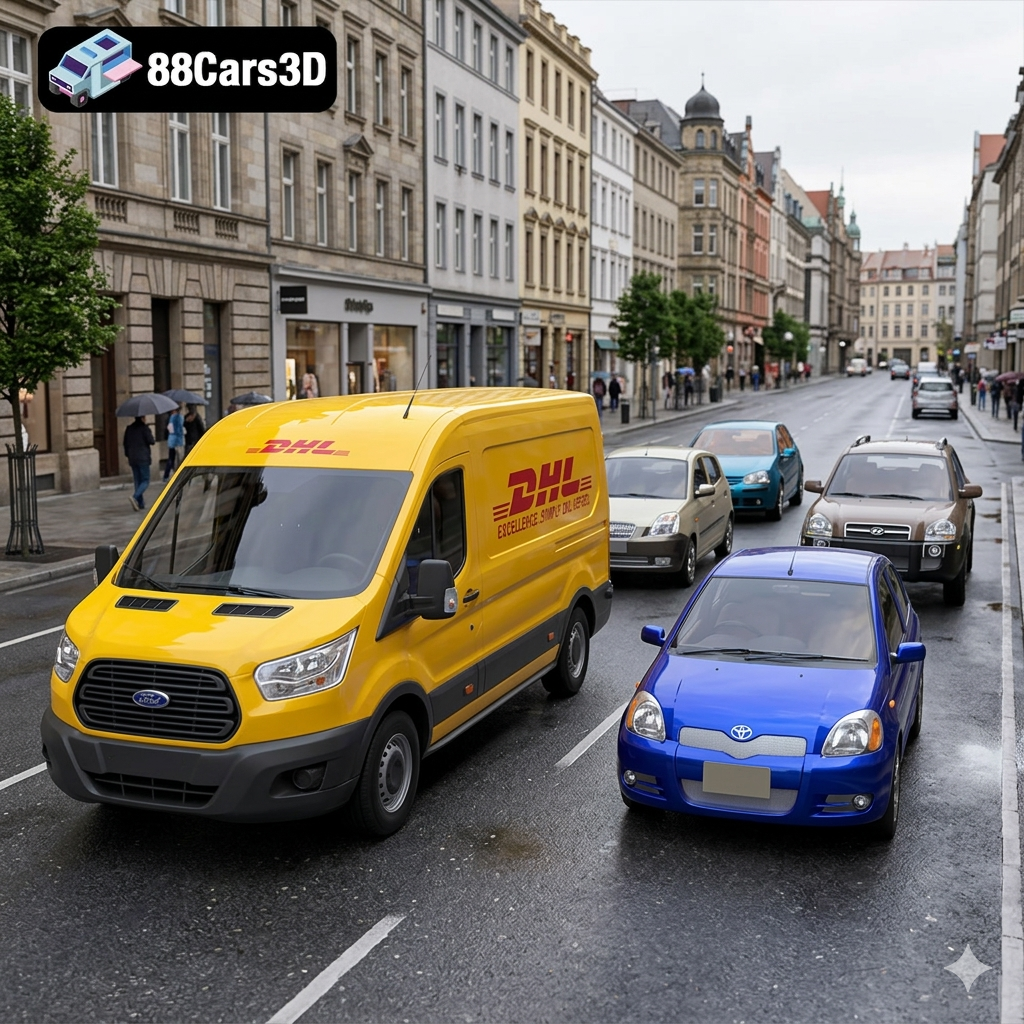
Download the Everyday City Traffic 3D Models Bundle. Includes the VW Golf, Kia Picanto, Hyundai Tucson, Toyota Yaris, and a DHL Ford Transit Van. Save big on this 5-in-1 pack, perfectly optimized for realistic ArchViz streets and game traffic.
Price: $99.99

Download the Future of Mobility EV 3D Models Bundle. Includes the Volvo EX30, Tesla Model S, AVATR 11, Porsche Taycan, and a Siemens EV Charger. Save big on this highly optimized 5-in-1 pack for ArchViz and game development!
Price: $89.99

