Get 50% OFF All Premium 3D & STL Models!

In the dynamic world of digital content creation, from cinematic automotive renders to immersive game environments and precise engineering visualizations, the quality of your 3D assets is paramount. It dictates not only the visual fidelity of your project but also the efficiency of your workflow. For enthusiasts and professionals alike, a meticulously crafted 3D model can be the cornerstone of a successful project, offering versatility across multiple platforms and applications.
Today, we’re diving deep into the realm of custom cruiser motorcycles, exploring how a prime example like the Honda Stateline Bagger Slammer 3D Model stands as a testament to exceptional digital craftsmanship. This article will unpack the technical intricacies of high-fidelity 3D models, discuss their diverse applications, and highlight how specialized assets, such as those found on 88cars3d.com, empower creators to achieve stunning results. Whether you’re an automotive designer, a game developer, an AR/VR innovator, or a 3D printing hobbyist, understanding the nuances of these digital masterpieces is crucial for elevating your projects.
Choosing the correct file format for your 3D model is as critical as the model’s design itself. Each format is optimized for specific workflows, software, and end-use applications. Misunderstanding these distinctions can lead to compatibility issues, lost data, or inefficient processes. The Honda Stateline Bagger Slammer 3D Model is available in a comprehensive range of formats, ensuring maximum flexibility for any project.
The .blend format is native to Blender, a powerful open-source 3D creation suite. When you receive a .blend file, you’re getting more than just a mesh; you’re getting a complete scene. This includes not only the geometry but also materials, textures, lighting setups, camera positions, animations, and even physics simulations if they were part of the original creation. This makes it incredibly valuable for artists who intend to deeply customize the model, make significant structural changes, or use Blender as their primary rendering or animation platform. The Honda Stateline Bagger Slammer in .blend format offers full access to its construction, allowing artists to modify its custom paint, alter components, or animate its separate wheels and steering with ease.
As a proprietary format developed by Autodesk, .fbx (Filmbox) has become the industry standard for interoperability between various 3D software and, crucially, game engines. It supports geometry, materials, textures, rigging, and animation data, making it a robust choice for transferring complex animated assets. For the Honda Stateline Bagger Slammer, the .fbx format is essential for integrating it into game development platforms like Unreal Engine and Unity. Its ability to efficiently store pivot information and hierarchical structures ensures that the motorcycle’s separate components (wheels, steering, suspension) can be easily animated and controlled within a real-time environment without losing their parent-child relationships.
The .obj (Wavefront OBJ) format is one of the most widely supported and universal 3D file types. It primarily stores geometry (vertices, normals, texture coordinates, and faces) and references to external material files (.mtl). While it doesn’t support animation or advanced scene data, its simplicity and widespread compatibility make it an excellent choice for basic mesh transfer between almost any 3D software application. If you need to import the Honda Stateline Bagger Slammer into a niche renderer or a less common modeling package, .obj is a reliable fallback that ensures the core geometry is preserved.
.glb (GL Transmission Format Binary) is the binary version of glTF, a royalty-free specification for the efficient transmission and loading of 3D scenes and models by applications. It’s designed to be a “JPEG for 3D,” packing all assets (geometry, textures, animations) into a single, self-contained file. This makes .glb highly optimized for web-based 3D viewers, AR/VR experiences, and applications where file size and loading speed are critical. The Honda Stateline Bagger Slammer in .glb format would be perfect for an interactive web configurator or an immersive virtual showroom experience, allowing users to explore the model directly in their browser or AR app.
The .stl (Stereolithography) format represents a 3D model as a series of connected triangles (a triangular mesh) without color, texture, or other CAD attributes. It is the de facto standard for 3D printing. For the Honda Stateline Bagger Slammer, an .stl file would be used to prepare the model for physical fabrication, creating a collectible scale motorcycle model. While the source model has high detail, converting to .stl often requires ensuring manifold geometry (watertight mesh) and sometimes simplification to meet printer-specific resolution requirements.
.ply (Polygon File Format, also Stanford Triangle Format) is another format used for storing 3D data, particularly from 3D scanners. It supports properties such as color, transparency, surface normals, and range data, making it useful for scientific applications, reverse engineering, and some CAD workflows where precise mesh information and additional per-vertex attributes are needed. While less common for everyday artistic interchange than .fbx or .obj, it offers a robust solution for preserving complex scanned or mathematically generated geometries of models like the Stateline Bagger.
The .unreal designation implies a highly optimized asset specifically prepared for direct import and use within Unreal Engine. This often means the asset has been properly scaled, pivoted, had its materials and textures configured for Unreal’s Physically Based Rendering (PBR) pipeline, and potentially even comes with pre-configured blueprints or skeletal meshes. For game developers using Unreal Engine, an .unreal file for the Honda Stateline Bagger Slammer would significantly streamline their workflow, minimizing setup time and ensuring optimal performance within the engine.
Similar to .blend for Blender, the .max format is the native file type for Autodesk 3ds Max, a leading software in architectural visualization, motion graphics, and game development. A .max file contains the complete 3ds Max scene, including geometry, materials, textures, lights, cameras, modifiers, and animation data. This format provides the highest level of editability for users working within 3ds Max, allowing them to leverage all of the software’s powerful tools for rendering, animation, and further customization of the Honda Stateline Bagger Slammer.
The Honda Stateline Bagger Slammer 3D Model from 88cars3d.com isn’t just a pretty picture; it’s a meticulously engineered digital asset designed for performance and realism across various creative applications. Its creation demands a deep understanding of automotive design, topology, and material science.
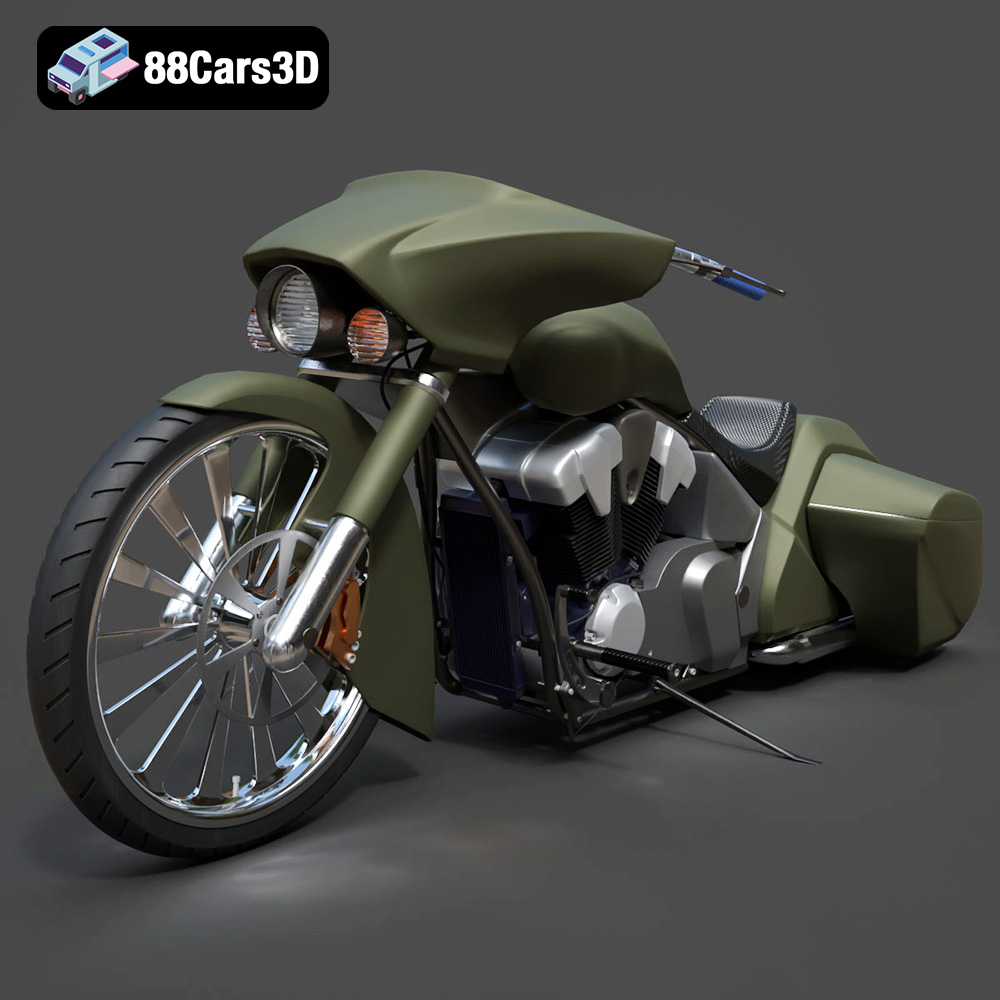
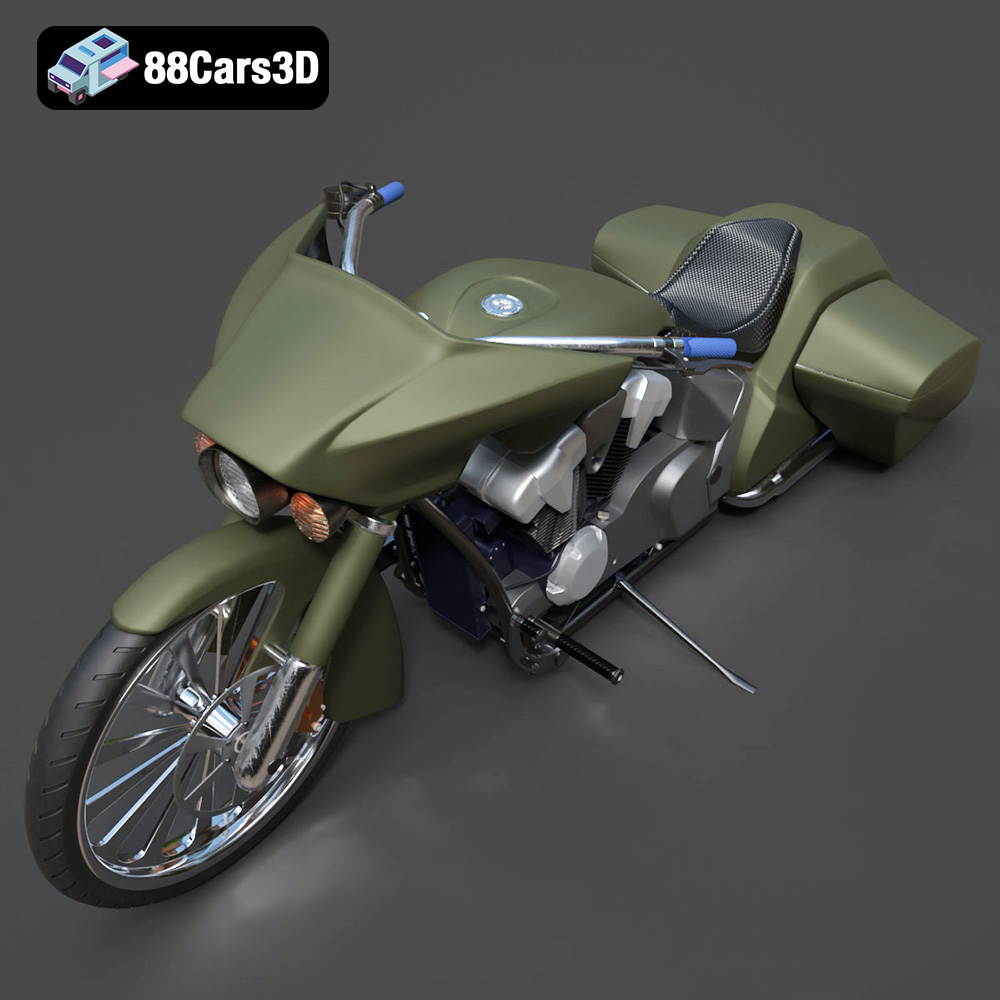
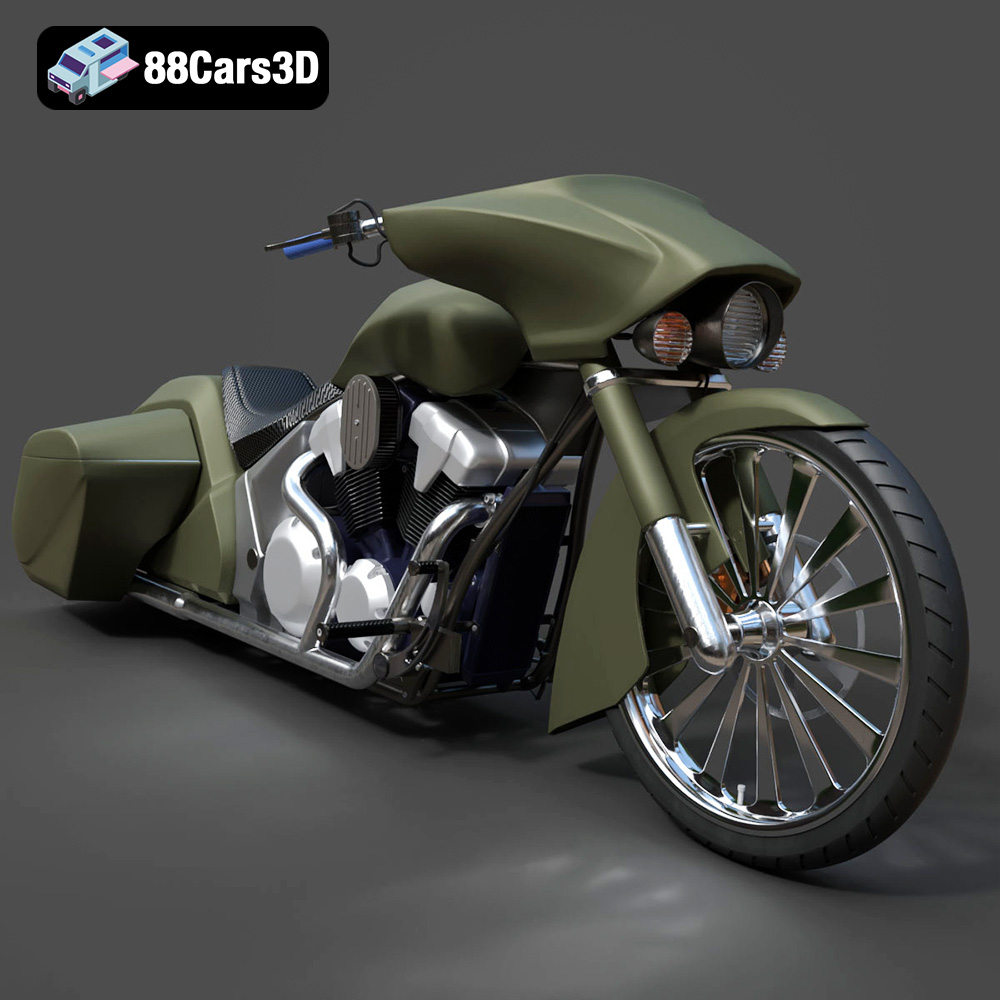
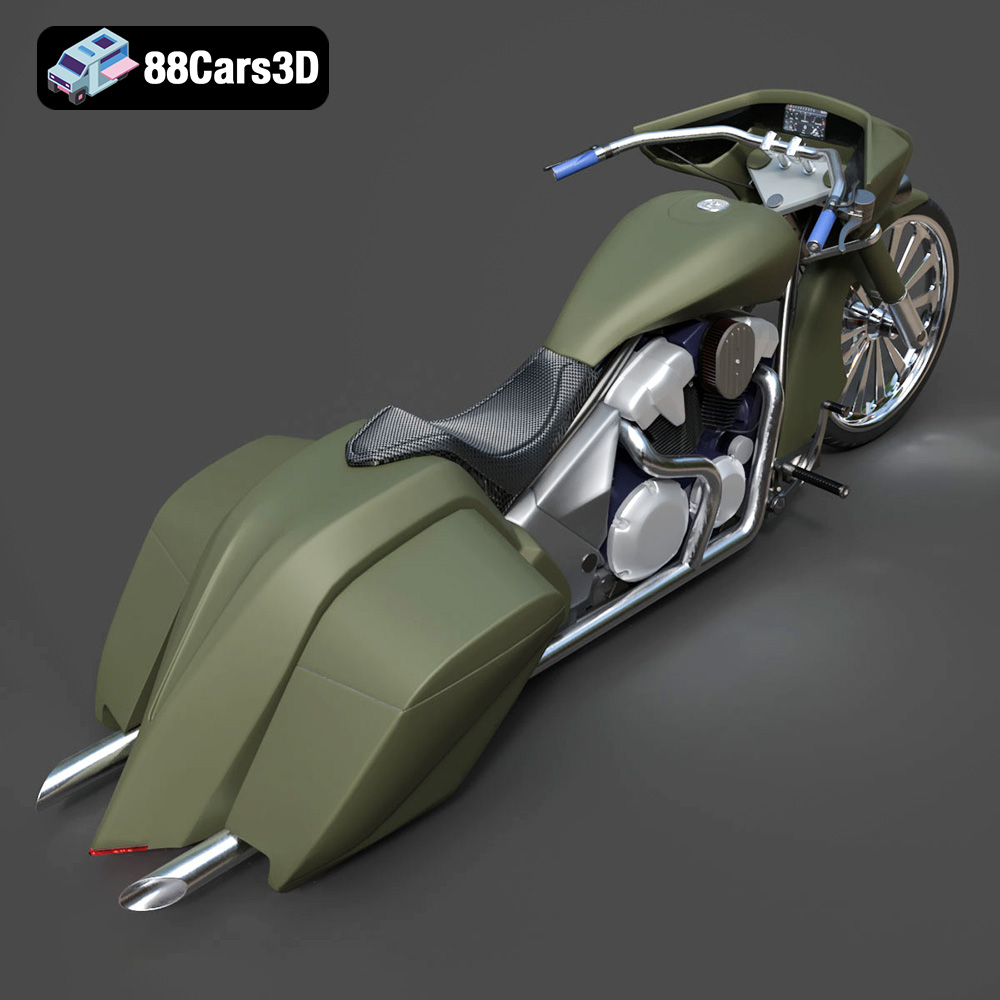
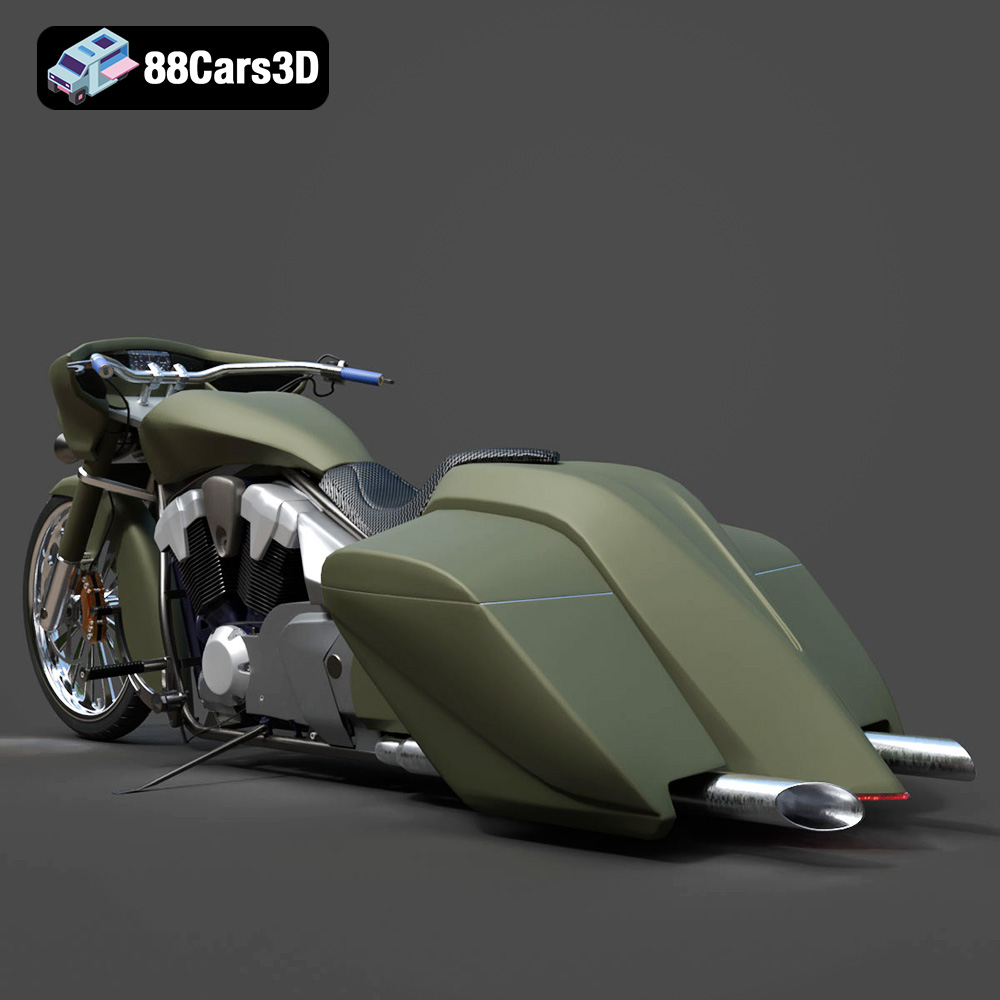
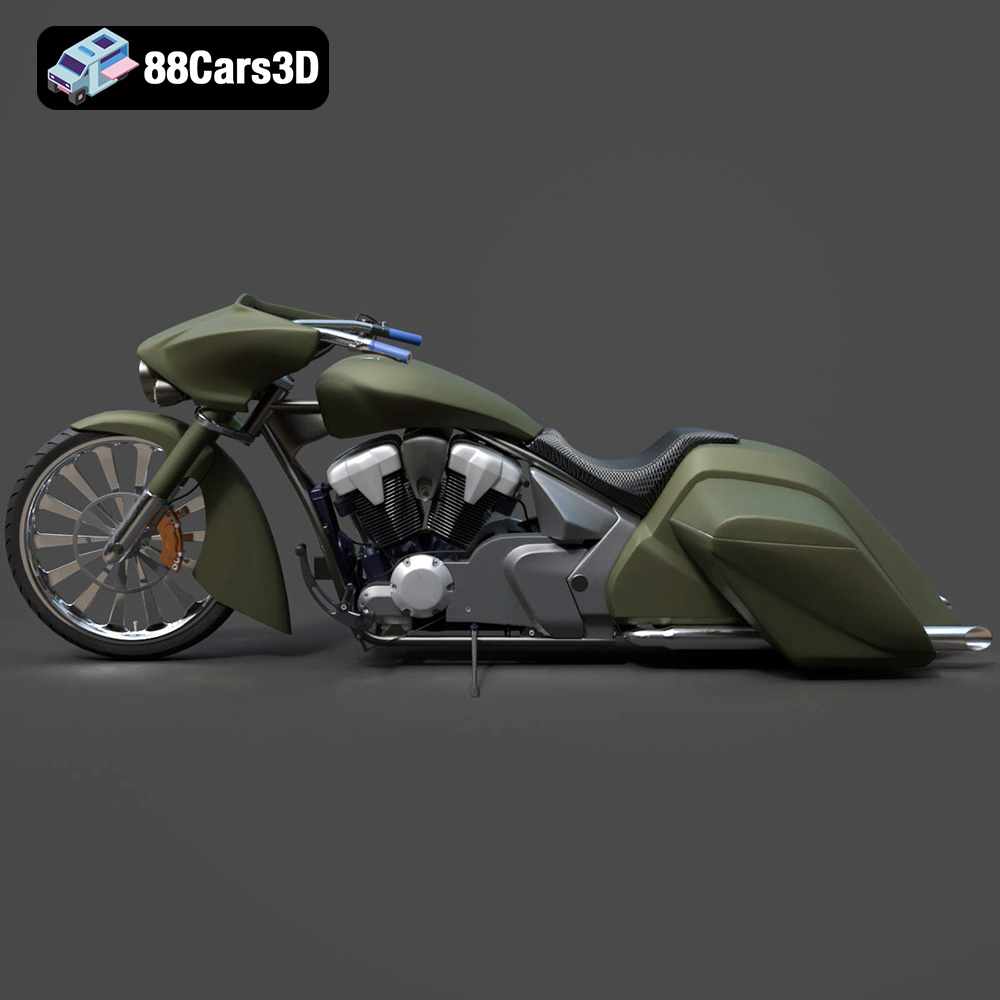
The essence of a custom bagger motorcycle lies in its aggressive stance and distinctive silhouette. This model captures that perfectly, starting with an accurate cruiser-style frame and a slammed suspension profile. Every element, from the elongated fuel tank to the wide handlebars and the custom bagger saddlebags, has been modeled with real-world proportions and an eye for the bold styling that defines this subculture. The extended fenders and stretched saddlebags are not merely artistic interpretations but carefully constructed elements that replicate the physical modifications seen on real custom bikes. This attention to detail ensures that the model not only looks correct but also feels authentic to those familiar with bagger culture.
Beyond the aesthetic shell, the mechanical details are where high-quality 3D models truly shine. The Stateline Bagger model features a detailed V-twin engine with discernible cooling fins and covers, showcasing the heart of the machine. The dual exhaust system boasts a custom finish, reflecting the craftsmanship often found in real-world custom builds. Crucial operational components like the front and rear disc brakes and calipers are accurately represented, adding to the realism whether the model is viewed up close in a showroom render or in motion within a simulation. These details are not just for show; they contribute to the overall believability and provide essential anchors for more technical visualizations or even potential disassembly animations.
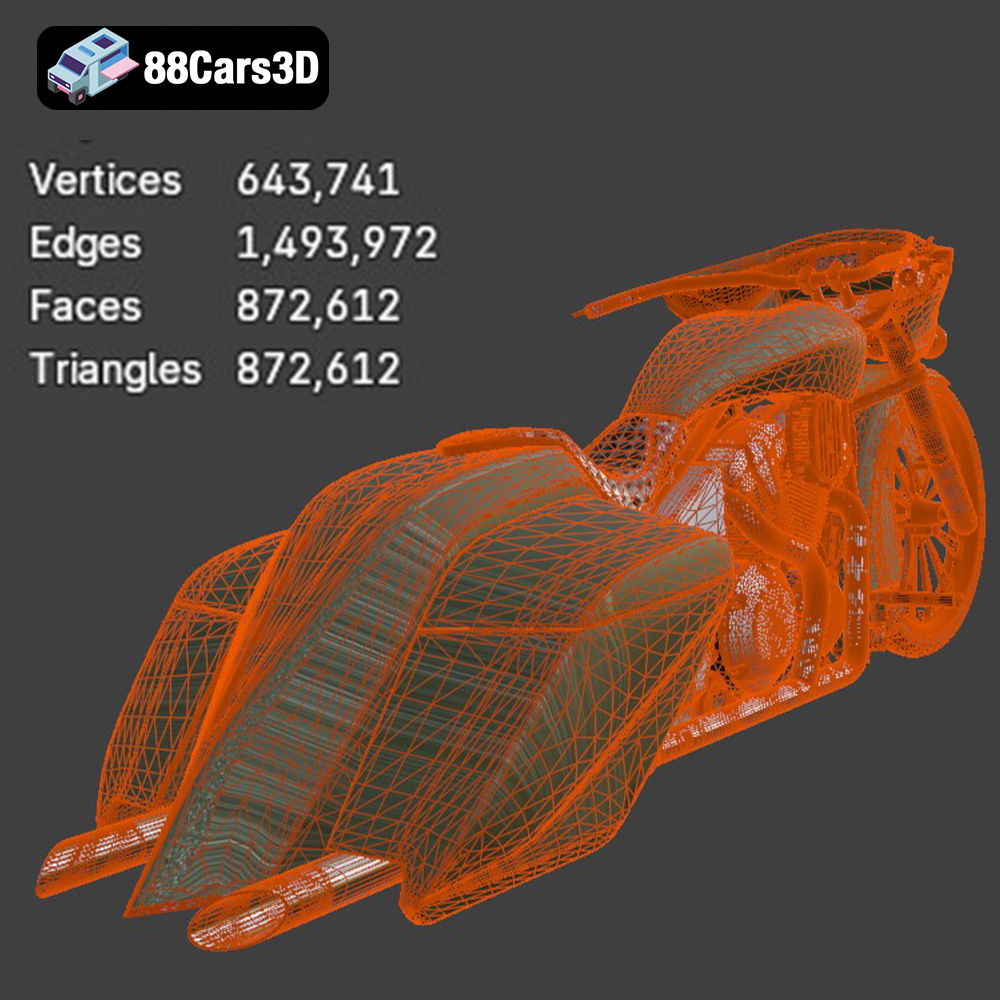
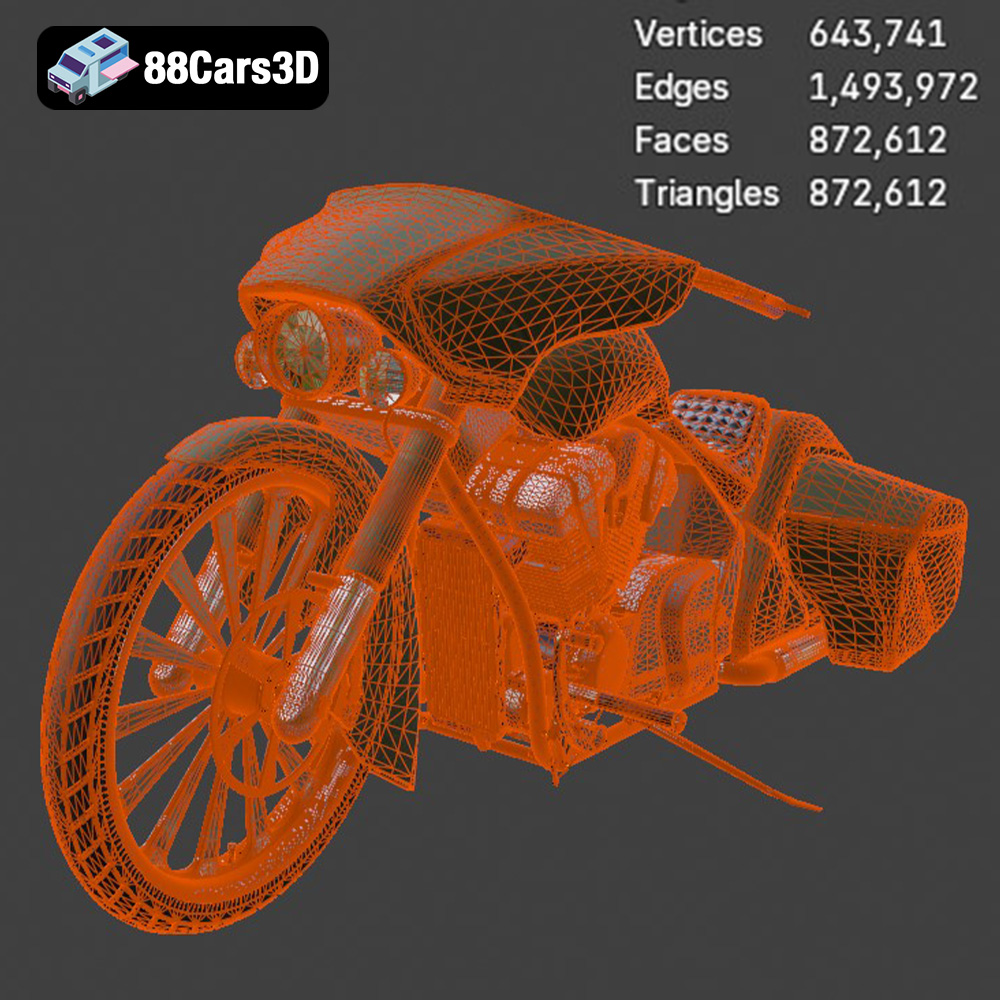
A key technical advantage of this model is its optimized geometry. “Clean topology” means the mesh is structured efficiently with good polygon flow, minimizing artifacts and facilitating smooth deformations if animated or subdivided. This optimization is crucial for achieving high-quality renders without excessive render times, and simultaneously ensuring solid performance in real-time environments like game engines. The product description highlights “optimized geometry for real-time engines and high-quality renders,” indicating a careful balance between polygon count and visual fidelity. Furthermore, the proper pivot setup for wheel rotation and steering is a subtle but critical detail for any interactive or animated use, enabling realistic movement right out of the box.
High-quality 3D car models and motorcycle models are indispensable tools across a spectrum of professional disciplines. The Honda Stateline Bagger Slammer 3D Model provides a versatile foundation for numerous projects, from captivating marketing visuals to engaging interactive experiences.
For automotive artists and marketing professionals, photorealistic rendering is paramount. Using software like 3ds Max or Blender, the Honda Stateline Bagger Slammer can be brought to life with stunning detail. The clean mesh structure and real-world scale of the model make it an ideal candidate for advanced material setups. Artists can apply PBR (Physically Based Rendering) materials to accurately simulate chrome, metallic paint, rubber tires, and leather seats, allowing for precise control over reflections, refractions, and surface imperfections. Imagine showcasing this model in a virtual showroom, bathed in dramatic studio lighting, or placed within a realistic urban street scene with ray-traced reflections off its custom finish. The inclusion of .max and .blend formats directly supports native workflows in these leading applications, reducing import issues and preserving intricate material assignments.
The demand for realistic vehicle assets in video games continues to grow. For game developers, the Honda Stateline Bagger Slammer 3D Model is game-ready, particularly with its .fbx and .unreal formats. Its optimized polygon flow ensures it performs well within real-time rendering constraints, while maintaining visual integrity. In Unreal Engine or Unity, developers can import the model, apply custom materials, set up collision meshes, and implement sophisticated physics systems to mimic realistic motorcycle handling. The separate wheels and steering setup, coupled with proper pivots, are critical for creating engaging driving mechanics and animation rigs. This model could serve as a hero vehicle in an open-world motorcycle game, a key asset in a racing title, or a detailed prop in a driving simulator, enhancing the player’s immersion.
Augmented Reality (AR) and Virtual Reality (VR) are transforming how we interact with digital content. The Honda Stateline Bagger Slammer 3D Model is perfectly suited for these immersive platforms, especially with its .glb format. Imagine an AR application where a user can place the virtual motorcycle in their driveway, examining it from every angle before making a purchase decision. Or a VR showroom experience where potential buyers can virtually sit on the bike, explore its features, and customize its appearance in real-time. The optimized geometry and clean mesh of the model ensure smooth performance in these demanding, interactive environments, providing a seamless and highly engaging user experience. This goes beyond simple visualization, offering a practical tool for sales, training, and experiential marketing.
The utility of a high-quality 3D model extends beyond digital displays, bridging the gap between virtual design and physical reality through advanced manufacturing techniques like 3D printing.
One of the most exciting applications for the Honda Stateline Bagger Slammer 3D Model is 3D printing. The inclusion of the .stl format, specifically designed for additive manufacturing, opens up possibilities for creating physical scale models and display miniatures. Converting a complex digital model into a printable format requires careful consideration of manifold geometry, wall thickness, and printability. The detailed features like the V-twin engine, custom saddlebags, and brake discs, when translated to a physical print, result in stunningly accurate collectibles. The recommended scales (1:18, 1:12, 1:10, 1:8) and print settings (layer height, wall thickness, infill, supports) provided with the product are invaluable for enthusiasts and model makers, guiding them through the process of bringing their digital asset to life. Post-processing steps like sanding, priming, and custom paint finishes further enhance the physical model, creating a truly unique piece.
While often associated with consumer goods, 3D printing of detailed models like the Stateline Bagger also finds niche applications in prototyping and mechanical study. Designers might 3D print components to assess fit and form factor before committing to expensive manufacturing processes. In an educational or engineering context, a physically printed model can serve as an excellent teaching aid for understanding motorcycle mechanics, chassis design, or custom modification principles. The ability to output the model in .ply format, known for precision mesh data, could be used for advanced dimensional analysis or even reverse engineering exercises, allowing for a deeper understanding of the bike’s structure and components.
A truly professional 3D model is not just about visual fidelity; it’s also about its underlying structure and the ease with which it can be integrated and customized within various projects. The Honda Stateline Bagger Slammer 3D Model exemplifies these principles.
The “clean and well-organized mesh structure” is a fundamental technical advantage. This typically means that parts are logically grouped, named appropriately, and potentially separated into distinct objects or layers. For the Stateline Bagger, details like separate wheels and a steering setup for animation are crucial. This modularity allows artists to easily select, modify, or animate individual components without affecting the entire model. For instance, a user might want to swap out the handlebars for a different style or animate the bike leaning into a turn. A well-organized scene drastically reduces preparation time and streamlines complex workflows, making the model an efficient asset for production pipelines. Furthermore, the “optimized polygon flow for performance and realism” ensures that while the model is detailed, it remains manageable for real-time applications and rendering, preventing unnecessary computational overhead.
The flexibility of a 3D model significantly enhances its value. The Honda Stateline Bagger Slammer offers extensive customization options, giving artists creative control. Changing body paint and saddlebag colors, adding custom decals or pinstriping, and even modifying handlebar style or exhaust type can dramatically alter the model’s appearance to fit specific project requirements. More advanced options, such as adjusting ride height for standard or extreme slammed stance, offer creative freedom for unique visualizations. For rendering artists, configuring lighting for showroom, sunset, or street-night scenes allows for diverse atmospheric presentations. This level of adaptability ensures the model isn’t a static asset but a dynamic canvas for artistic expression, ready to be integrated into a wide range of visual narratives and branding campaigns.
In a competitive digital landscape, selecting the right 3D assets is a critical decision that impacts project timelines, budgets, and overall quality. Platforms like 88cars3d.com specialize in providing high-quality 3D car models and motorcycle assets that meet professional standards.
While custom modeling offers ultimate control, it is often time-consuming and expensive. Purchasing pre-made, production-ready 3D models like the Honda Stateline Bagger Slammer provides an immense advantage. These models are typically created by experienced 3D artists, ensuring clean topology, accurate scaling, and optimized geometry. This significantly reduces the development cycle for projects requiring detailed vehicles, allowing artists and developers to focus on scene composition, animation, and interaction rather than asset creation from scratch. The immediate availability across multiple file formats also means quicker integration into existing workflows, minimizing compatibility headaches and accelerating project delivery.
When sourcing 3D assets, verifying their technical specifications and compatibility is crucial. The comprehensive list of included file formats (.blend, .fbx, .obj, .glb, .stl, .ply, .unreal, .max) for the Honda Stateline Bagger Slammer 3D Model is a clear indicator of its professional-grade readiness. This wide array covers everything from editable native scenes for major DCC (Digital Content Creation) tools to optimized formats for game engines, AR/VR, and 3D printing. Understanding these formats and matching them to your project’s specific needs—whether it’s for high-fidelity automotive rendering, creating engaging game assets, or producing detailed physical prototypes—ensures a smooth and efficient workflow, leading to superior final results.
The digital realm of 3D modeling offers unparalleled opportunities for creativity and innovation, with high-quality assets forming the backbone of compelling visual experiences. As we’ve explored, the Honda Stateline Bagger Slammer 3D Model is more than just a digital representation; it’s a meticulously crafted tool engineered for a broad spectrum of professional applications. From its authentic design and detailed mechanical features to its optimized geometry and wide file format compatibility, this model stands as an exemplary asset for automotive rendering, game development, AR/VR simulations, and even physical 3D printing.
By understanding the technical nuances of 3D model file formats, appreciating the dedication required for accurate digital recreation, and recognizing the advantages of production-ready assets, creators can significantly enhance their projects. Whether you are aiming for photorealistic renders in 3ds Max, integrating game assets into Unreal Engine, or producing a physical collectible via 3D printing, a robust foundation like this model ensures efficiency and stunning outcomes. For those seeking premium 3D car models and motorcycle assets that push the boundaries of digital realism and versatility, exploring the offerings at 88cars3d.com is an excellent next step.
The Honda Stateline Bagger Slammer 3D Model is a high-detail digital recreation of the custom low-slung cruiser motorcycle inspired by the Honda Stateline platform. Designed with an aggressive bagger stance and slammed suspension profile, this model captures the bold styling, extended fenders, stretched saddlebags, and powerful V-twin character that define the bagger culture. This 3D model accurately represents the elongated fuel tank, low ride height, wide handlebars, detailed engine components, dual exhaust system, front and rear disc brakes, and custom touring saddlebags. Built with clean topology and real-world proportions, it is ideal for rendering, animation, simulation, game development, and AR/VR motorcycle visualization.
$29.9
.arvr
.bagger
.blend
.cruisermotorcycle
.custombike
.fbx
.gameasset
.glb
.honda
.max
.motorcycle3dmodel
.obj
.ply
.rendering
.simulation
.stateline
.stl
.touringbike
.unreal
.v-twin