Get 50% OFF All Premium 3D & STL Models!

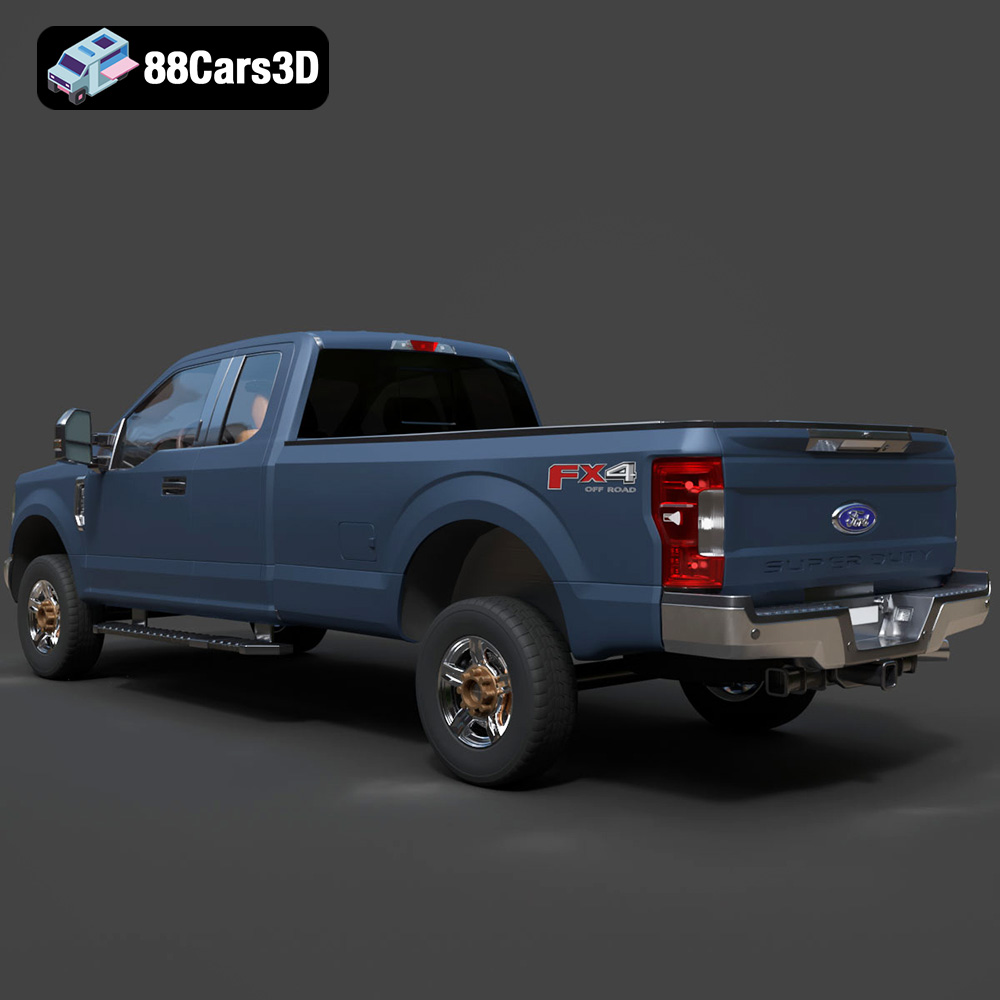
In the expansive realm of 3D visualization and simulation, the demand for highly detailed, authentic automotive assets is perpetual. Whether you’re an architect visualizing a construction site, a game developer crafting an immersive open-world environment, a filmmaker producing a cinematic sequence, or a hobbyist creating a custom RC model, the realism of your vehicles can make or break the immersion. Today, we delve deep into an exemplary asset that embodies this pursuit of fidelity: the Ford F-250 Super Duty Super Cab XLT 2015 3D Model. This isn’t just another digital car; it’s a meticulously engineered digital twin of America’s iconic heavy-duty workhorse, ready to power your most demanding projects. From its imposing grille to its robust utility bed, every curve and contour has been captured with uncompromising precision, making it an invaluable addition to any professional’s toolkit.
When acquiring a premium 3D asset like the Ford F-250 Super Duty Super Cab XLT 2015, understanding the various file formats it comes in is crucial. Each format serves specific purposes, offering different levels of compatibility, editability, and optimization for diverse workflows. The Ford F-250 model from 88cars3d.com is provided in a comprehensive suite of formats, ensuring maximum versatility across the industry.
The .blend format is native to Blender, a powerful open-source 3D creation suite. When you receive a .blend file, you’re not just getting the mesh; you’re getting the entire Blender scene. This typically includes the model, its materials, textures, lighting setups, cameras, and even animation data if present. For users of Blender, this is often the most convenient format as it requires no import/export translation, preserving all scene elements exactly as intended by the creator. It offers full editability, allowing designers to tweak topology, modify materials, adjust lighting, or integrate the F-250 seamlessly into their existing Blender projects without any loss of data integrity.
The .fbx (Filmbox) format is a proprietary file format owned by Autodesk, widely regarded as the industry standard for exchanging 3D data between various software applications. Its strength lies in its ability to store not only geometry but also materials, textures, animations, and rigging information in a single file. This makes it particularly ideal for game engines like Unreal Engine and Unity, where efficient asset transfer and animation support are paramount. For the F-250, the .fbx version ensures that separate components like wheels, doors, and the tailgate maintain their pivot points for easy animation, making it a go-to for game developers and real-time visualization specialists.
The .obj (Wavefront OBJ) format is one of the oldest and most universally supported 3D file formats. It’s a simple, text-based format that primarily stores geometric data – vertices, faces, normals, and UV coordinates – and can also link to external material (.mtl) files for basic color and texture information. While it doesn’t support complex features like rigging or animation, its widespread compatibility makes it a robust choice for moving models between almost any 3D software package, including 3ds Max, Blender, Maya, Cinema 4D, and more. For the Ford F-250, the .obj provides a clean, raw mesh that can be easily imported and re-textured in any application.
The .glb (GLB format, derived from glTF or GL Transmission Format) is a modern, efficient, and increasingly popular format for 3D models, especially within web-based and real-time applications like Augmented Reality (AR) and Virtual Reality (VR). It’s a self-contained format that bundles geometry, materials, textures, and animation data into a single file, making it incredibly easy to share and load. Its optimization for runtime delivery means that the F-250 in .glb format can be effortlessly integrated into web viewers, AR/VR experiences, or interactive product configurators, offering a streamlined asset for future-forward immersive applications.
The .stl (STereoLithography) format is the de-facto standard for 3D printing. It represents a 3D model as a series of connected triangles, describing only the surface geometry of an object without color, texture, or other attributes. For the Ford F-250, the .stl file is what you’d feed into your slicer software for physical production. The model’s “manifold geometry” – meaning it’s a completely sealed, watertight mesh – ensures it’s perfectly ready for additive manufacturing, whether you’re making a detailed scale model or a custom RC truck body.
The .ply (Polygon File Format) is another widely supported format, often used for storing 3D data from 3D scanners, or for scientific and engineering applications. It can store a variety of data, including color, transparency, surface normals, and range data, making it more versatile than .stl for complex data representation. While less common for general animation, the .ply format for the F-250 could be useful for CAD integration, precise measurement, or detailed mesh analysis in specific industrial or analytical contexts.
The .unreal format signifies an asset specifically prepared or packaged for direct import and use within Unreal Engine. This often implies that the model has been optimized, has proper material setups, and potentially has LODs (Levels of Detail) or collision meshes ready for the engine’s requirements. While the high-poly F-250 may require further optimization for drivable game use, the .unreal file aims to provide a head start, potentially including a skeletal mesh or basic material configurations optimized for Unreal’s rendering pipeline, simplifying the integration process for developers.
The .max format is the native file type for Autodesk 3ds Max, a leading software in architectural visualization, product design, and cinematic rendering. Similar to .blend for Blender, a .max file offers the complete scene, including the F-250 model, its sophisticated V-Ray or Corona materials, lighting, cameras, and any modifiers or animation applied within 3ds Max. For users of this robust software, the .max file provides the most complete and editable version of the model, allowing for full artistic control over every aspect of the truck’s presentation in high-end renders and animations.
The Ford F-250 Super Duty Super Cab XLT 2015 3D Model is a testament to the meticulous artistry and technical skill involved in creating premium 3D car models. This asset goes beyond generic vehicle representations, offering an unparalleled level of detail that makes it suitable for the most discerning projects, from photorealistic automotive rendering to commercial visualization.
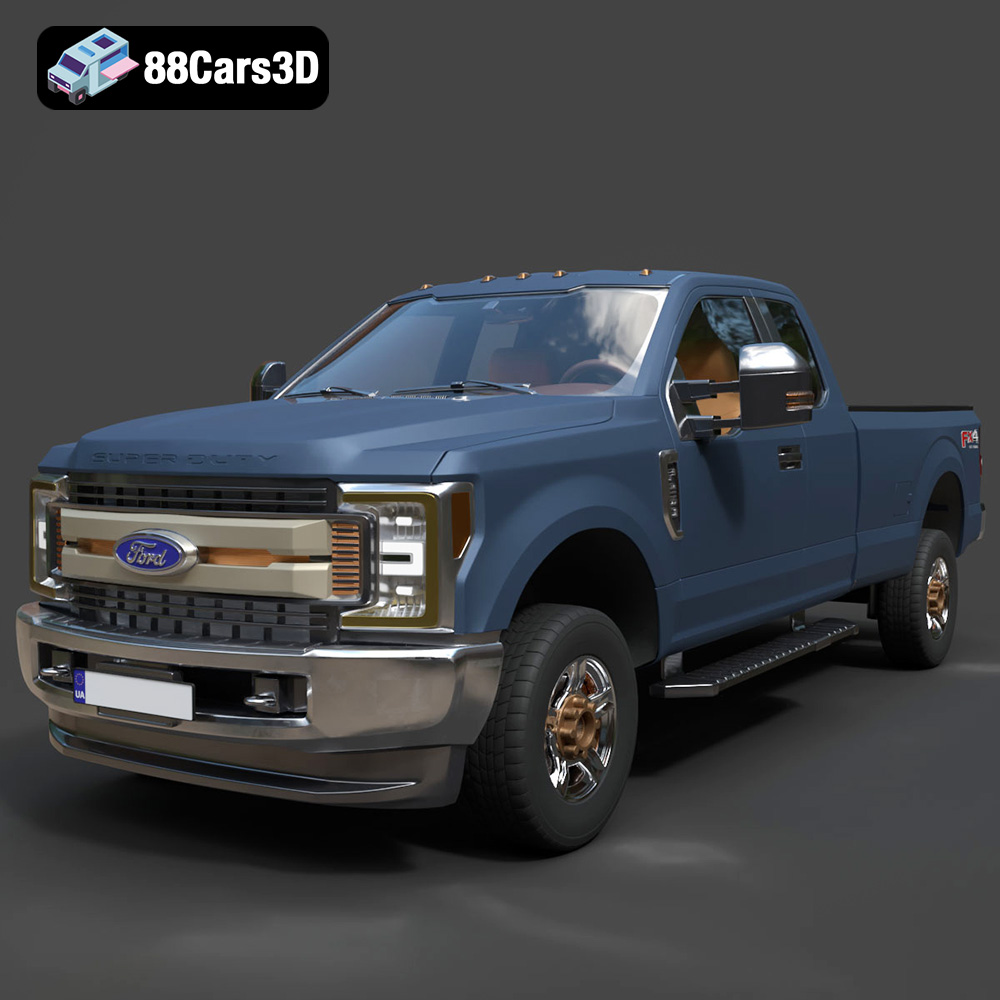
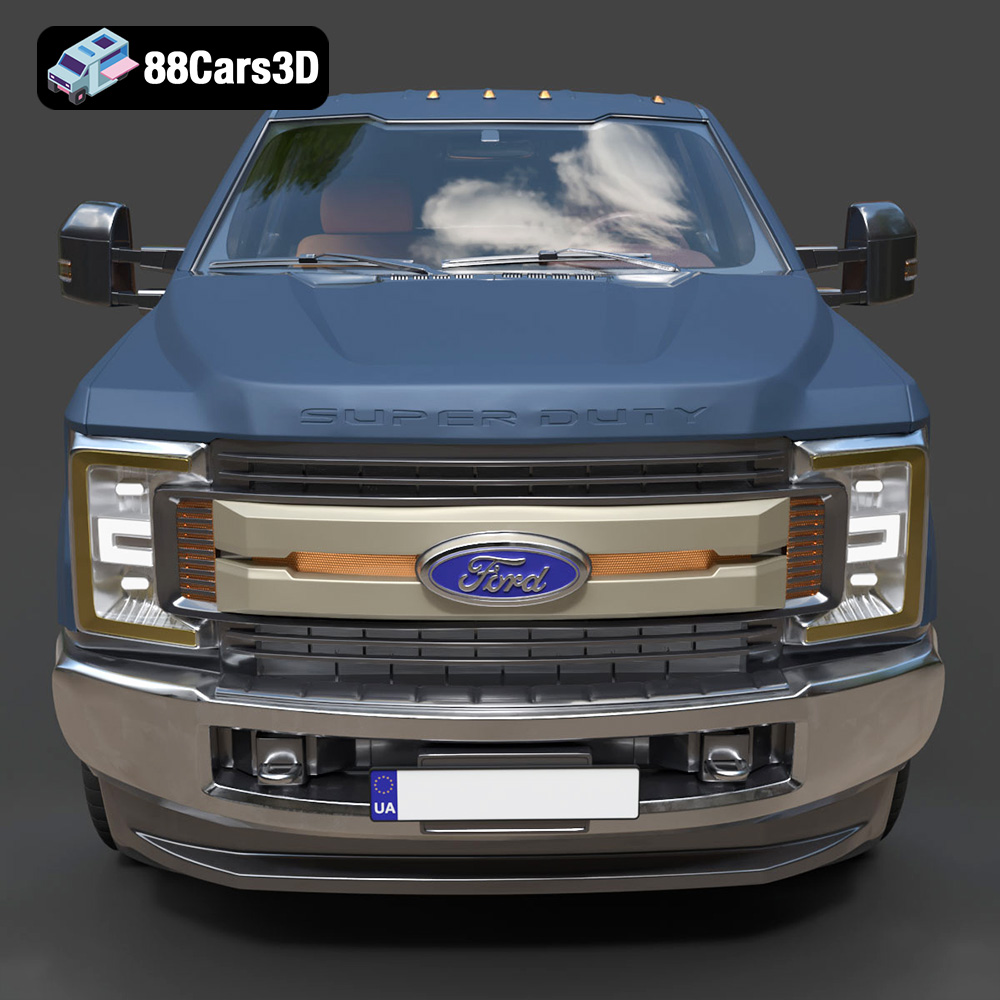
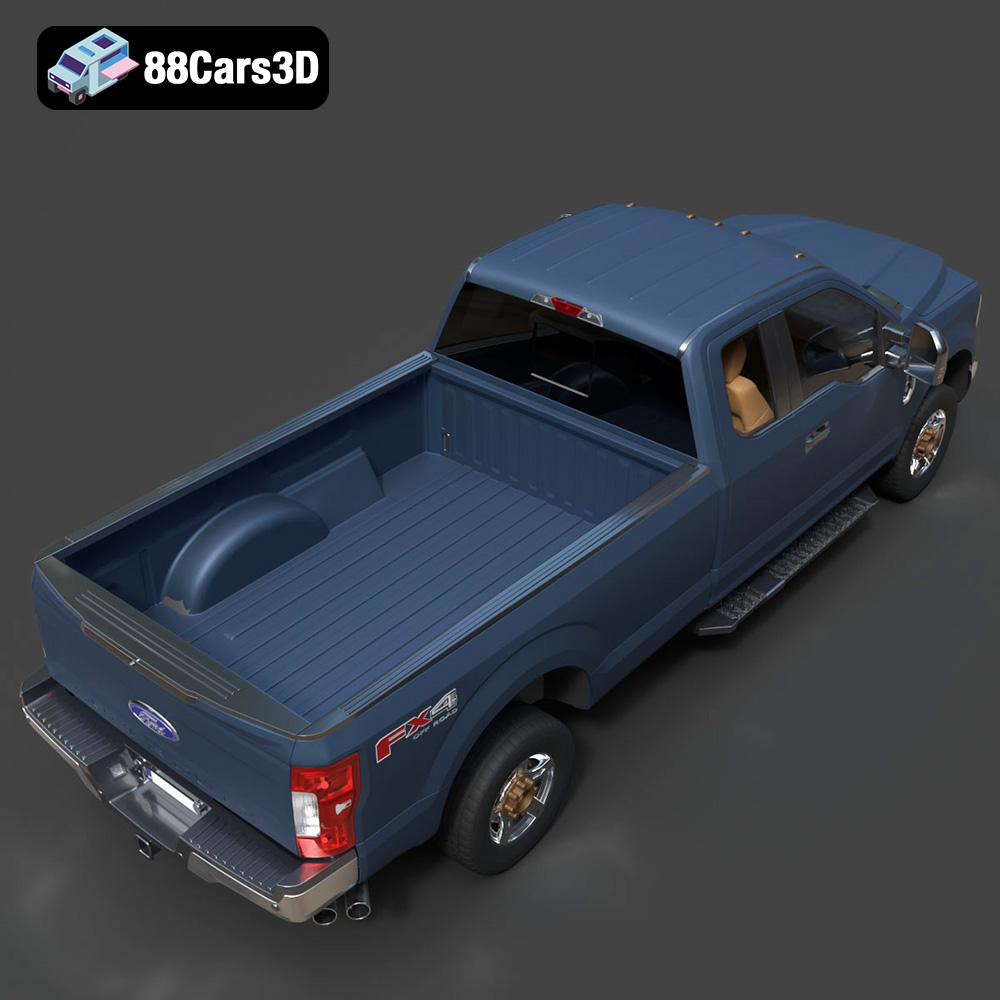
Every element of the 2015 F-250’s exterior has been painstakingly recreated. The distinctive XLT-spec chrome front grille, with its dual-bar design, commands attention, perfectly complemented by the massive stacked headlight clusters. The “Super Cab” extended cabin configuration is accurately proportioned, complete with precise door panel gaps that speak to the model’s structural integrity. Even the functional details, like telescoping trailer-tow side mirrors and heavy-duty chrome bumpers, are present and accounted for. The cargo bed is a feature unto itself, boasting a functional tailgate, bed rails, and rear step details, all ready to be showcased in rugged outdoor scenes. The standard XLT alloy wheels, wrapped in aggressive all-terrain tires, complete the imposing look. For animation specialists, the separate components like wheels, steering, doors, and tailgate with proper pivot setups ensure seamless and realistic movement.
The attention to detail doesn’t stop at the exterior. The spacious Super Cab interior is fully realized, featuring front bucket/bench seating and the practical rear folding seats. The XLT-spec cloth or durable vinyl seating geometry showcases authentic seam detailing, adding to the realism. The dashboard is an accurate representation, with its central infotainment screen layout and rugged, tactile climate controls. A heavy-duty multi-function steering wheel and column shifter further enhance the authenticity. This optimized geometry is specifically designed for high-resolution first-person POV rendering, allowing viewers to truly step inside the virtual truck, making it perfect for driving simulations or detailed interior shots in cinematic sequences.
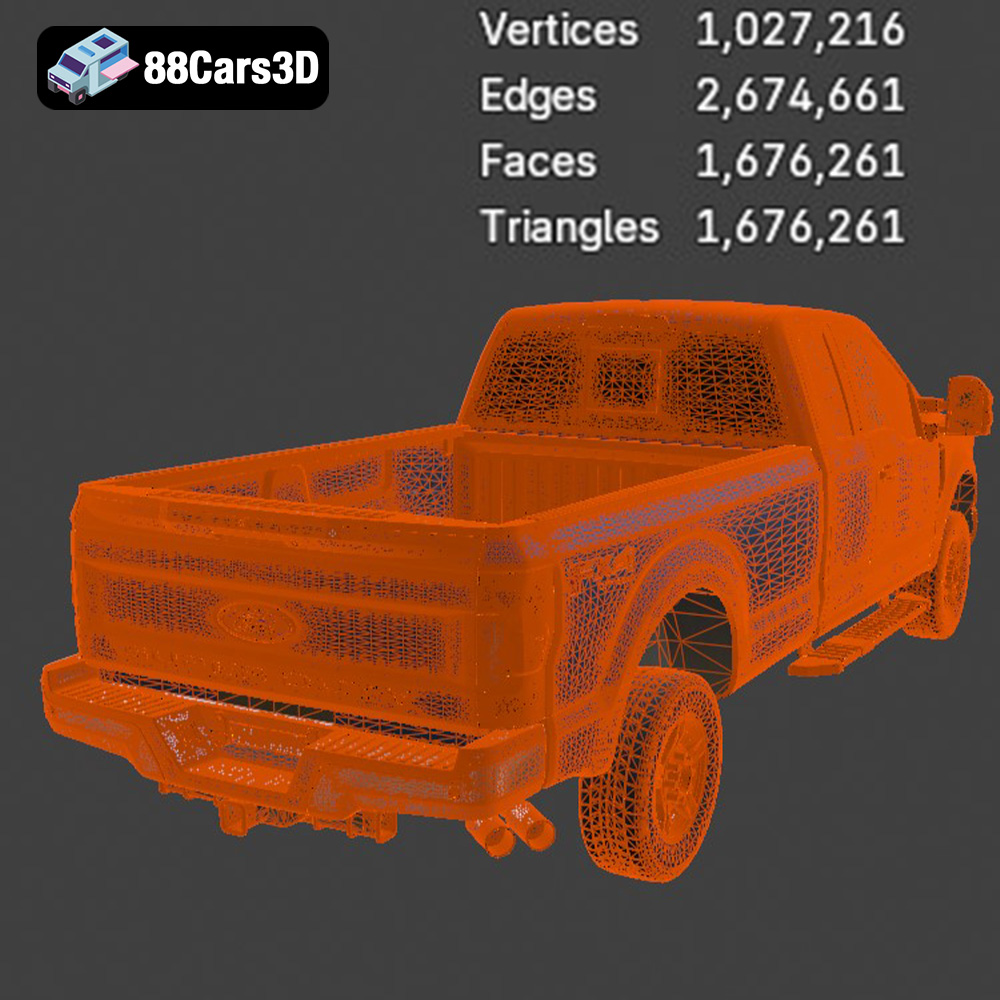
With an astounding 1,676,261 triangles (or faces/polygons), this Ford F-250 model is undeniably a “high-poly” asset. While some might question such a dense mesh, this technical specification is a significant advantage for specific applications. High polygon counts allow for extremely smooth surfaces without visible faceting, even in extreme close-up renders. This dense, well-organized mesh structure is critical for capturing the subtle curves, sharp edges, and intricate details of a modern vehicle’s design. For cinematic visualization, product showcases, and high-resolution still renders, this level of detail ensures maximum visual fidelity. It eliminates the need for complex normal mapping to fake detail, presenting a geometrically accurate model that looks stunning under any lighting condition. Such a robust mesh is also an excellent base for high-quality 3D printing, where physical accuracy translates directly from digital precision.
The Ford F-250 Super Duty 2015 3D model is designed to integrate flawlessly into professional rendering and visualization pipelines, offering artists and studios a solid foundation for stunning automotive imagery.
For users of industry-standard software like Autodesk 3ds Max and Blender, this model arrives ready to be rendered. The native .max and .blend formats ensure that materials, textures, and geometry are perfectly preserved. Artists can leverage powerful renderers like V-Ray, Corona Renderer (for 3ds Max), or Cycles and Eevee (for Blender) to achieve photorealistic results. The high-poly nature of the model means that reflections will be crisp, shadows accurate, and surface details exquisite. Imagine the F-250 parked at a digital construction site, mud splattering realistically, or gleaming under studio lights for a commercial ad – this model provides the necessary geometric backbone for such scenes.
In cinematic productions and high-end commercial visualization, every detail counts. The Ford F-250’s meticulous construction, from its accurate proportions to its articulated parts (separate wheels, doors, tailgate), makes it an ideal “hero” vehicle. Directors can use it for pre-rendered cinematic sequences, confident that the truck will hold up under close-ups. Marketing agencies can utilize it for commercial fleet branding mockups, showing off liveries and branding with unprecedented realism. The model’s real-world scale accuracy, based on Ford factory dimensions, ensures that it sits correctly within any virtual environment, interacting naturally with other scene elements. This allows for compelling storytelling and persuasive product pitches.
Beyond its default presentation, the F-250 model offers extensive customization options. Artists can easily change exterior paint colors to match classic 2015 Ford factory options, allowing for brand-accurate representations. The modular nature allows for swapping stock wheels for aggressive aftermarket lift-kit setups, transforming the truck for off-road scenarios. Adding bed accessories like a toolbox, tonneau cover, or a fifth-wheel hitch further enhances its utility and visual narrative. Furthermore, adjusting lighting to simulate sunny construction sites or moody, rain-slicked off-road trails can dramatically alter the perception and use of the vehicle within any scene. This flexibility ensures the F-250 can adapt to a vast array of creative briefs.
One of the most exciting applications for a highly detailed 3D car model like the Ford F-250 Super Duty is its potential for physical manifestation through 3D printing. The provided .stl format makes this a straightforward process, opening doors for hobbyists, collectors, and prototyping enthusiasts.
The F-250 model’s dense topology and accurate geometry are perfectly suited for 3D printing. The transition from digital mesh to physical object relies heavily on a clean, manifold (watertight) mesh, which this model possesses. This ensures that the 3D printer has a complete and unambiguous surface to build from, preventing errors and producing a structurally sound print. Hobbyists creating custom RC truck bodies or intricate diecast hobbyist prints will appreciate the precise rendering of details like the chrome grille, wheel arches, and even subtle undercarriage elements.
To achieve the best results when 3D printing the Ford F-250, specific settings are recommended. A scale of 1:24, 1:18, or 1:10 is ideal, especially for custom RC crawler bodies, allowing enough size to capture intricate features without becoming unwieldy. A layer height of 0.08–0.16 mm strikes a good balance between detail and print time, while a wall thickness of 1.5–2.5 mm is crucial for the structural integrity of a large truck body. An infill of 15–25% provides sufficient strength without excessive material consumption. Supports will be required for overhangs such as the tow mirrors, wheel arches, exhaust, and complex undercarriage details. Printing the cab and bed separately, or angling them, can improve surface finish and structural strength, with wheels always printed as individual components for optimal rotation and detail.
Once printed, the F-250 model becomes a canvas for further customization. Post-processing is key to achieving a professional finish. This typically involves sanding to smooth layer lines, followed by a primer coat. From there, the options are limitless. Enthusiasts can apply standard factory paint colors from 2015, such as Oxford White, Blue Jeans Metallic, or Ingot Silver, using automotive-grade paints. Silver metalizer paints can be used to meticulously recreate the chrome accents on the grille and bumpers, bringing an extra layer of realism to the physical model. This hands-on process allows creators to truly make the F-250 their own, building a tangible, highly detailed representation of this iconic truck.
While the Ford F-250 Super Duty 2015 3D model is presented as a high-poly “hero” asset, its robust foundation also makes it a valuable starting point for real-time applications, albeit with some necessary optimization.
At approximately 1.67 million polygons, the F-250 model is highly detailed, making it perfect for pre-rendered cinematics or as a static prop in a game engine where performance is not a critical factor. However, for use as a drivable vehicle in real-time game engines like Unreal Engine or Unity, this polygon count is typically too high for efficient rendering, especially across multiple instances or lower-spec hardware. Such an asset would need manual retopology or automated decimation to reduce its polygon count significantly, usually to tens or hundreds of thousands of triangles, depending on the game’s target performance. This process involves creating a new, lower-resolution mesh that accurately approximates the original high-poly surface, with details baked into normal maps.
For any complex vehicle in a game or interactive experience, Levels of Detail (LODs) are essential. LODs are progressively lower-polygon versions of the same model that are swapped in and out based on the camera’s distance from the object. This ensures that distant objects consume fewer rendering resources. Even if the F-250 starts as a hero asset, a professional game development workflow would involve creating at least 3-5 LODs. Additionally, optimized UV mapping, efficient material setups (using PBR workflows), and well-configured collision meshes are vital for seamless integration and smooth performance within a real-time environment. While the raw high-poly model provides an incredible visual benchmark, the “unreal” format offers a potential starting point for engine-specific setup, and a skilled technical artist can leverage the pristine high-poly mesh to bake down normal maps and other textures onto a game-ready low-poly version.
For Augmented Reality (AR) and Virtual Reality (VR) applications, the Ford F-250 model, especially in its optimized .glb format, offers immense potential. While full-scale drivable vehicles might still require optimization, the F-250 can serve as an incredibly detailed showcase model. Imagine placing a life-sized virtual F-250 in your driveway via AR, or exploring its detailed interior in a VR showroom. The high fidelity provides an unmatched sense of presence and realism, crucial for convincing AR/VR experiences, whether for automotive marketing, training simulations, or interactive product demonstrations. The tactile nature of interacting with such a highly detailed virtual object can leave a lasting impression on users, further highlighting the value of a premium 3D asset from 88cars3d.com.
In the competitive world of 3D asset creation, finding reliable, high-quality models is paramount. 88cars3d.com prides itself on offering premium 3D car models like the Ford F-250 Super Duty Super Cab XLT 2015, built to professional standards and designed for maximum versatility.
When you choose a 3D model from 88cars3d.com, you’re investing in an asset that has been crafted with precision and a deep understanding of automotive design. The Ford F-250 exemplifies this commitment, providing a robust, technically sound foundation for any project. The detailed product descriptions, clear technical specifications, and comprehensive file format offerings streamline the selection process, ensuring you get exactly what you need. This focus on quality and utility minimizes post-purchase headaches and allows artists to focus on their creative vision rather than fixing problematic geometry.
While the Ford F-250 is a powerhouse asset in its own right, 88cars3d.com offers a diverse catalog of 3D car models, catering to a wide range of needs. From classic cars to modern sports vehicles, each model adheres to the same high standards of detail and technical accuracy. This ensures that whether you’re building a virtual car dealership, populating an urban environment, or creating a historical simulation, you’ll find the perfect vehicle assets to elevate your project’s realism and visual appeal. The marketplace stands as a reliable resource for professionals seeking exceptional automotive assets for rendering, game development, AR/VR, and 3D printing.
The Ford F-250 Super Duty Super Cab XLT 2015 3D Model stands as an exceptional example of a meticulously crafted automotive asset. Its uncompromising detail, robust polygon count, and adherence to real-world specifications make it an ideal choice for high-fidelity rendering, cinematic productions, and precise 3D printing projects. While its high-poly nature requires thoughtful optimization for real-time game engines and AR/VR, its quality provides a perfect starting point for creating truly immersive experiences. The comprehensive file formats included, from native .blend and .max files to universal .fbx and 3D print-ready .stl, ensure its adaptability across virtually any professional workflow. Whether you’re aiming for photorealistic visualization or a tangible scale model, this F-250 asset from 88cars3d.com empowers creators to achieve stunning results, turning digital dreams into captivating realities.
The Ford F-250 Super Duty Super Cab XLT 2015 3D Model is a premium, high-detail digital recreation of America’s iconic heavy-duty work truck. Representing the final iteration of the legendary steel-body generation, this 2015 model captures the imposing, muscular stance that makes the F-250 a favorite for towing, off-roading, and commercial fleets. Built with dense, uncompromising topology (over 1.6 million polygons), it provides maximum visual fidelity for extreme close-up rendering, cinematic automotive visualization, commercial fleet mockups, and high-end 3D printing. Includes .blend, .fbx, .obj, .glb, .stl, .ply, .unreal, and .max formats.
$69.99
.automotive
.blend
.fbx
.ford
.obj
.rendering
.stl
.xlt
2015-ford
3d printing
car-3d-model
f-250
heavy-duty
high poly
pickup-truck
super-cab
super-duty