Get 50% OFF All Premium 3D & STL Models!

“`html
Welcome to the ultimate guide to preparing your STL files for flawless 3D printing! If you’re a 3D printing enthusiast, a meticulous model maker, or an automotive aficionado looking to bring classic cars to life with your printer, you’ve likely encountered the frustration of an STL file that just won’t slice correctly or results in a failed print. These digital sculpts, while visually stunning in design software, can harbor hidden errors that plague the 3D printing process. This article will demystify the common STL file issues, explain their impact on your prints, and provide you with actionable, step-by-step solutions using professional techniques and software. We’ll cover everything from understanding STL mesh topology to using advanced repair tools, ensuring that your journey from digital model to physical object is as smooth as a freshly painted car body.
Whether you’re downloading intricate printable car models from platforms like 88cars3d.com or creating your own designs, mastering STL file preparation is a foundational skill. By the end of this post, you’ll be equipped to identify, diagnose, and fix a wide range of STL errors, leading to higher quality prints, reduced material waste, and ultimately, more satisfying results for your hobbyist collections, prototyping needs, and educational projects.
Before we dive into fixing issues, it’s crucial to understand what an STL file is and how it represents 3D geometry. STL (STereoLithography) is a file format native to stereolithography CAD software. It describes the surface geometry of a three-dimensional object without representing the interior, using a collection of triangular facets. Each triangle is defined by a normal vector (indicating its outward direction) and its three vertices. This seemingly simple structure is where many printing problems originate.
The core principle of a printable 3D model is that it must represent a watertight or manifold object. This means the model’s surface must be continuous, with no holes, gaps, or self-intersections, effectively enclosing a volume. Think of it like a balloon – it has a closed surface, and you can’t see through it. When this condition isn’t met, slicer software, which translates 3D models into layer-by-layer instructions for your printer, can become confused, leading to unpredictable results.
A watertight mesh is paramount because the slicer software needs to determine which areas of the model are “inside” (requiring infill) and which are “outside” (forming the surface). If there are holes or gaps, the slicer cannot confidently define this boundary. This can result in:
These issues directly impact the integrity of your 3D prints. Imagine trying to fill a bucket with a hole in the bottom – the water (or filament, in this case) will just escape. For detailed printable car models, a watertight mesh ensures that delicate parts like spoilers, mirrors, and interior components are rendered accurately and completely.
STL errors often stem from the modeling process itself.:
Understanding these origins helps in preventing errors in future modeling efforts and in identifying what might have gone wrong with a downloaded file.
The first step to fixing STL files is knowing how to spot the problems. Fortunately, several tools, both within your slicing software and dedicated mesh editors, can help diagnose these issues. Most slicers, like Cura or PrusaSlicer, will flag simple errors during the import process, but a deeper analysis often requires more specialized software.
When you import an STL file into your slicer, pay attention to any warnings or error messages. These are usually the first line of defense. Slicers often perform a basic check for:
If your slicer flags these, it will often indicate the general area of the problem, but not always the precise vertex or face to fix. For instance, PrusaSlicer has a built-in “Check for manifold/invalid STL” feature. While useful, these built-in tools are often not sufficient for complex repairs, especially on intricate models like those found on 88cars3d.com.
For thorough analysis and repair, dedicated mesh editing software is indispensable. The most common and powerful tools include:
When using these tools, look for features that highlight problem areas. In Meshmixer, the Inspector will color-code different types of errors. In Blender, the 3D-Print Toolbox provides a clear summary of issues like non-manifold geometry, bad contours, and overhangs. Visualizing these errors helps you pinpoint exactly what needs fixing.
Understanding what you’re seeing is key. For example:
Thoroughly examining the model in these diagnostic tools before attempting any repairs is a critical step in the workflow. This proactive approach saves time and prevents further complications down the line.
Once errors are identified, it’s time to fix them. The approach will vary depending on the complexity of the error and the software you’re using. Many modern tools offer automated repair functions, but manual intervention is sometimes necessary for the best results, especially with highly detailed printable car models.
Most mesh editing software offers automated repair features that can handle common issues quickly.:
Tip: Always save a backup of your original STL file before applying any automatic repairs. While often effective, automated tools can sometimes alter the model in unintended ways, especially with complex geometry.
For more intricate models or when automated repairs don’t yield satisfactory results, manual intervention is key.:
When working with detailed automotive models, such as those from 88cars3d.com, careful manual editing is often required to preserve fine details while ensuring printability.
The repair process can also be influenced by your intended printing technology:
Understanding these nuances ensures your repairs are not just about watertightness but also about optimizing the model for the specific 3D printer settings and capabilities you plan to use.
Even with a perfectly repaired STL file, achieving high-quality prints relies heavily on correct slicing parameters. The slicer software is your bridge between the digital model and the physical print, and understanding its settings is as crucial as mastering mesh repair.
These two parameters have a direct and often inverse relationship with print quality and time. Layer height dictates the vertical resolution of your print. Lower layer heights (e.g., 0.05 mm to 0.1 mm) result in smoother surfaces and finer details, ideal for intricate printable car models, but significantly increase print time.
Print speed needs to be carefully balanced with layer height and material. Printing too fast can lead to under-extrusion, poor layer adhesion, and artifacts. For detailed automotive models, it’s often wise to reduce print speed, especially for outer walls, to ensure clean surfaces. A common starting point for PLA might be 50-60 mm/s for general printing, with outer walls at 25-30 mm/s.
Infill determines the internal structure of your model, affecting its strength, weight, and material usage. For most display models and hobbyist collections, high infill percentages are unnecessary.
Experimentation is key. For a collectible car model, an infill pattern like ‘Gyroid’ at 15% density might offer sufficient internal support without adding excessive print time or weight.
Complex geometries, especially those found in printable car models (overhangs, bridges, delicate parts like mirrors or spoilers), require support structures. Proper support generation and removal are critical for a clean finish.
For detailed printable car models, carefully review the generated supports and consider manually adding or removing them in your slicer or mesh editor to optimize for print quality and ease of post-processing.
The journey doesn’t end when the print is complete. Post-processing is essential to transform a raw 3D print into a polished display piece or functional component. This stage is particularly important for automotive models where aesthetics are paramount.
Carefully removing support structures is the first step. Use appropriate tools:
Take your time to avoid damaging the model. For resin prints, ensure they are thoroughly washed and cured before attempting support removal. If supports leave marks, light sanding or filling might be necessary.
Layer lines are inherent to FDM printing and can detract from the smooth finish of a car model. Sanding is the most common method to address this:
Achieving a mirror-smooth finish on a car model often requires significant dedication to the sanding process.
This is where your 3D printed car model truly comes to life. The preparation (sanding, priming) is crucial for a professional paint job.
The quality of the final painted model is a direct reflection of the care taken during the entire process, from STL file repair to the final brushstroke.
Mastering STL file preparation is an essential skill for any serious 3D printing hobbyist. By understanding the fundamental principles of mesh geometry, utilizing the right diagnostic and repair tools, and optimizing your slicing parameters, you can overcome common printing obstacles and achieve stunning results. Whether you’re printing intricate printable car models from marketplaces like 88cars3d.com or bringing your own creations to life, a well-prepared STL file is the bedrock of a successful print.
We’ve explored how to identify issues like non-manifold geometry and holes, and covered powerful techniques using software such as Meshmixer and Blender. Remember the importance of watertight meshes, the trade-offs in layer height versus print time, and the critical role of supports. Don’t underestimate the finishing touches; post-processing can elevate a good print to a great one.
Your next steps should involve practicing these techniques. Download a free STL from an online repository, analyze it for errors, and try repairing it. Experiment with different slicer settings for the same model. The more you practice, the more intuitive STL preparation will become, leading to more reliable, higher-quality prints and a more enjoyable 3D printing experience. Happy printing!
“`

Texture: Yes | Material: Yes | 3D Printable: Yes. Download the Italian Thoroughbreds Bundle featuring 5 iconic 3D models: Lamborghini Huracán Performante, Ferrari 458 Italia, Lamborghini Urus, Diablo SV, and Maserati GT. Optimized for 4K rendering and 3D printing (STL included). Save 50% with this ultimate Italian vehicle collection.
Price: $199.99

Download the Elite Future Mobility Bundle featuring 4 highly optimized 3D models: Tesla Model S, Avatr 11, Li L9, and Zoox Robotaxi. Perfect for ArchViz, Smart City renders, and game dev. Optimized for Unreal Engine and Blender. Includes .fbx, .obj, and .max formats.
Price: $99

🚗 5 Iconic German Cars (BMW M4 G82, M5 CS, X3, 1 Series & Mercedes E-Class). ✅ Optimized for ArchViz: Ready for Corona & V-Ray. 💰 Save €71 with this limited-time collection! 🚀 Instant Download after purchase.
Price: $119
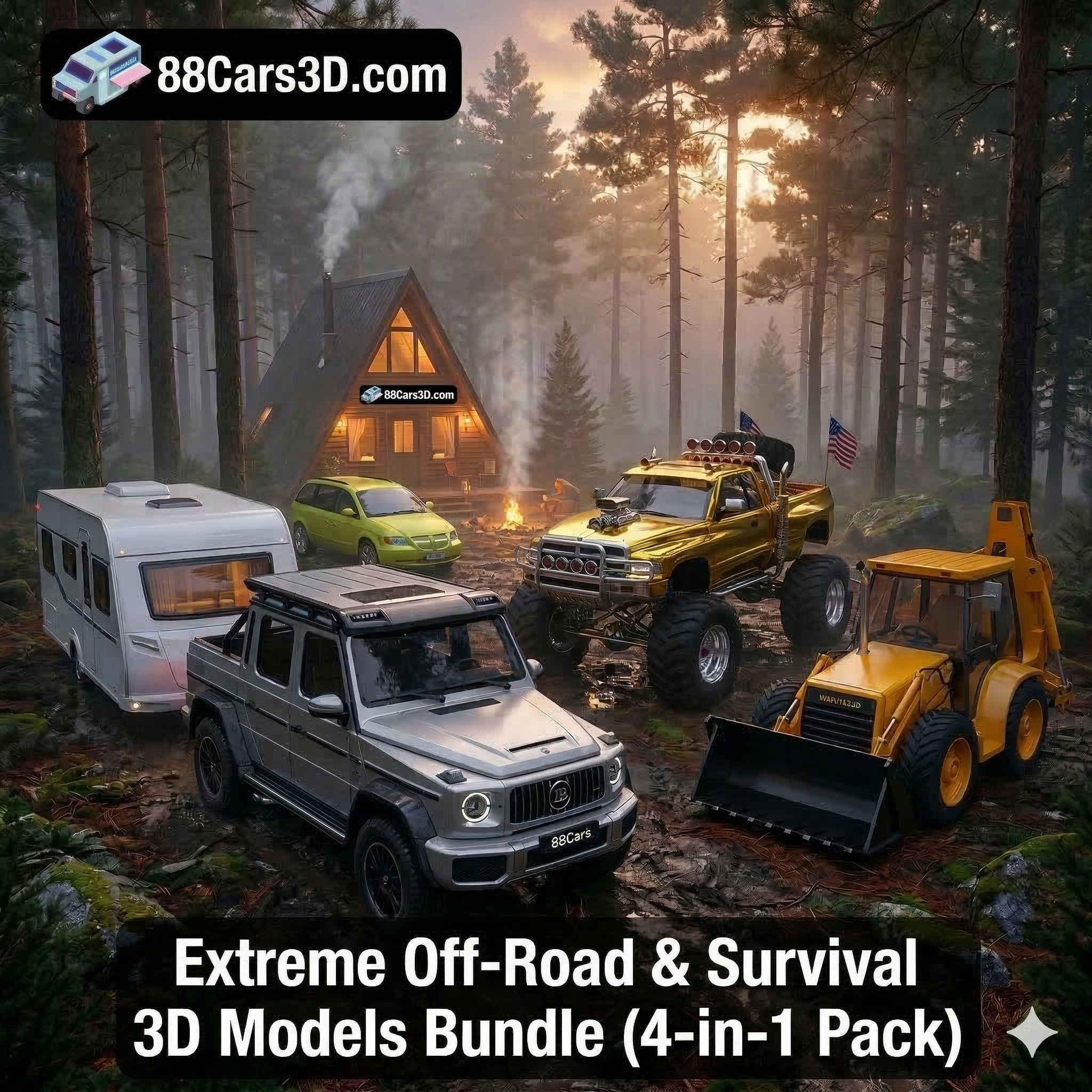
Download the Extreme Off-Road & Survival 3D Models Bundle! Includes the Brabus 800 Adventure, Dodge Ram Bigfoot, Spec Truck, and a Caravan. Save over €210 on this premium 4-in-1 off-grid vehicle pack for ArchViz and game development.
Price: $149.99
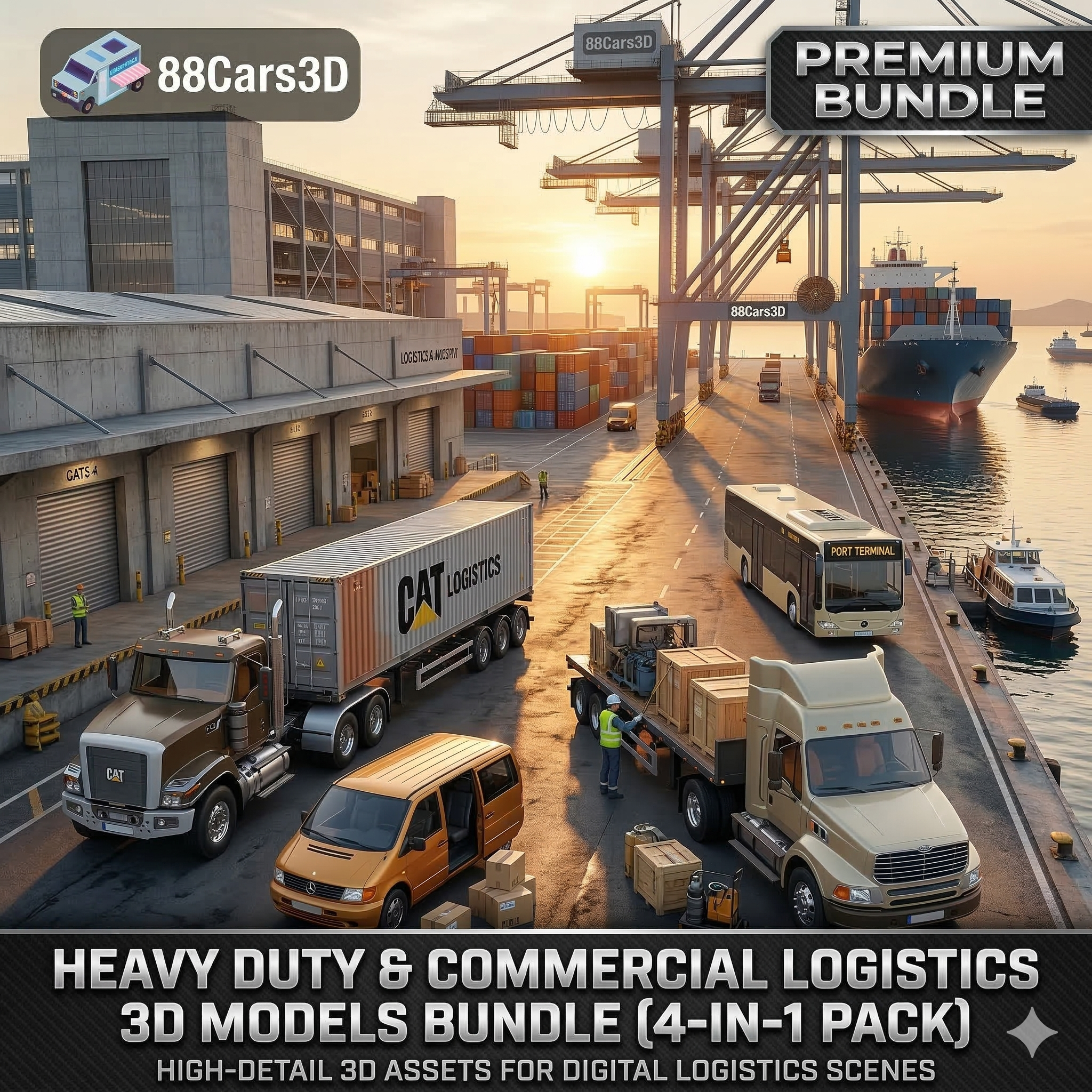
Download the Heavy Duty & Commercial Logistics 3D Models Bundle! Includes the Ford Sterling, Caterpillar CT680, Mercedes Citaro Bus, and Vito Van. Save over €130 on this massive, game-ready 4-in-1 industrial vehicle pack.
Price: $109.99

Download the Ultimate Custom Motorcycles 3D Models Bundle. Includes a Custom Chopper, Ducati 916 Café Fighter, Harley XR1200X, and BMW K100. Perfect premium props for luxury ArchViz garages. Save over €250 today!
Price: $159.99

Download the ultimate JDM Street Racing 3D Models Bundle! Includes the Nissan GT-R, Toyota Supra, Mazda RX-7, Lancer Evo IX, and Honda NSX. Save big on this highly optimized, game-ready 5-in-1 Japanese legend car pack.
Price: $129.99

Download the ultimate American Muscle & Cinematic Classics 3D Models Bundle! Includes the Dodge Charger ’68, Mustang Eleanor GT500, Camaro Z28 ’79, and a custom ’69 Mustang. Save over €240 on this game-ready, premium 4-in-1 pack.
Price: $149.99
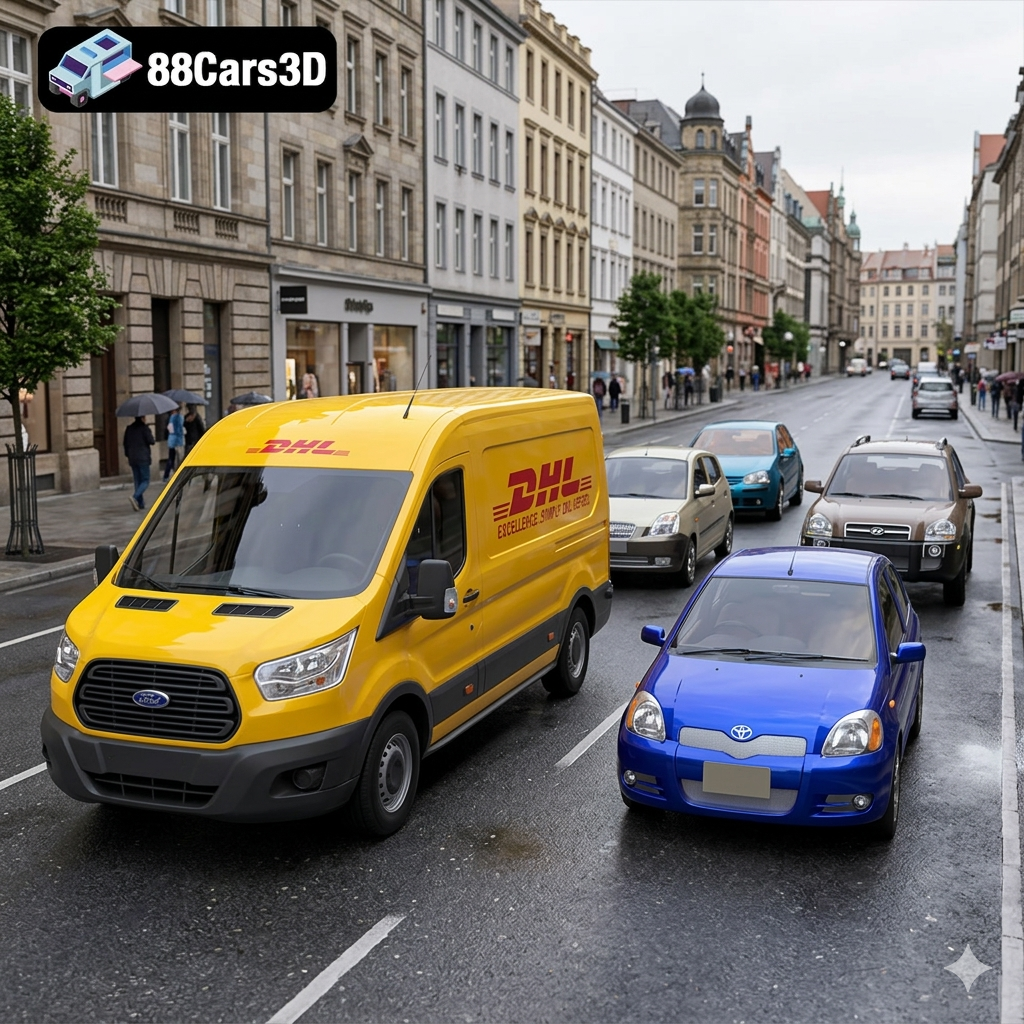
Download the Everyday City Traffic 3D Models Bundle. Includes the VW Golf, Kia Picanto, Hyundai Tucson, Toyota Yaris, and a DHL Ford Transit Van. Save big on this 5-in-1 pack, perfectly optimized for realistic ArchViz streets and game traffic.
Price: $99.99

Download the Future of Mobility EV 3D Models Bundle. Includes the Volvo EX30, Tesla Model S, AVATR 11, Porsche Taycan, and a Siemens EV Charger. Save big on this highly optimized 5-in-1 pack for ArchViz and game development!
Price: $89.99

