Get 50% OFF All Premium 3D & STL Models!

In the dynamic world of 3D visualization, the demand for high-fidelity, production-ready assets is ceaseless. Whether you’re crafting a cinematic automotive rendering, developing the next-generation open-world game, or designing immersive AR/VR experiences, the quality of your base models dictates the overall impact of your project. This is particularly true for iconic vehicles that carry a strong brand identity and a loyal following. Enter the Harley-Davidson FXDR 114, a motorcycle that embodies raw power, drag-strip attitude, and uncompromising style. Recreating such a distinctive machine in the digital realm requires precision, technical expertise, and an understanding of its unique character.
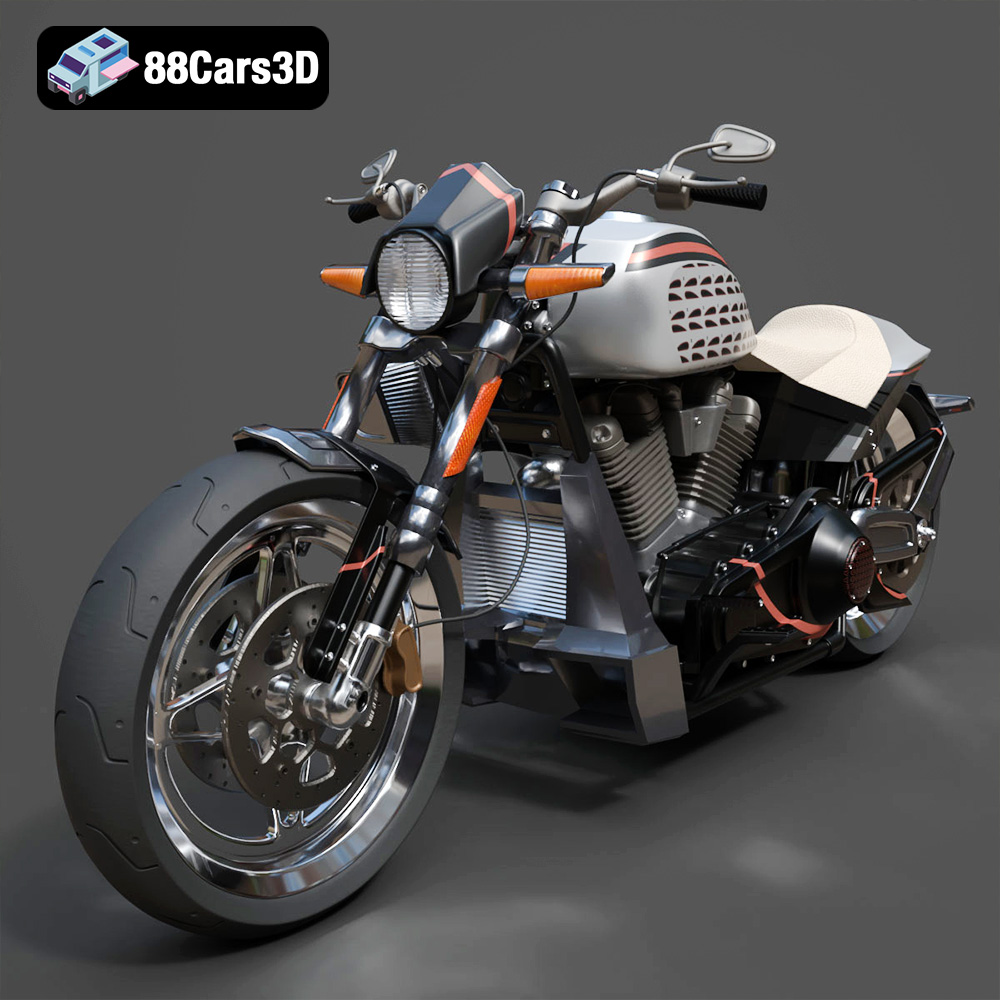
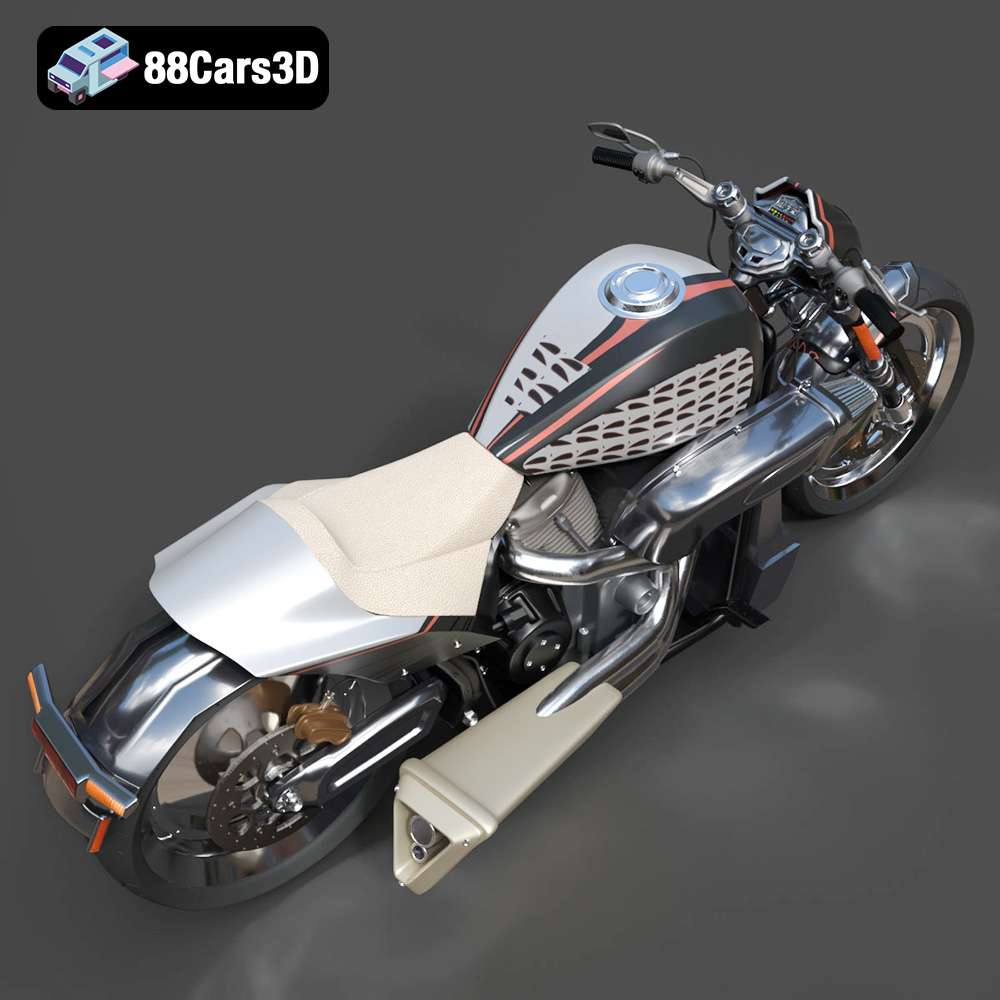
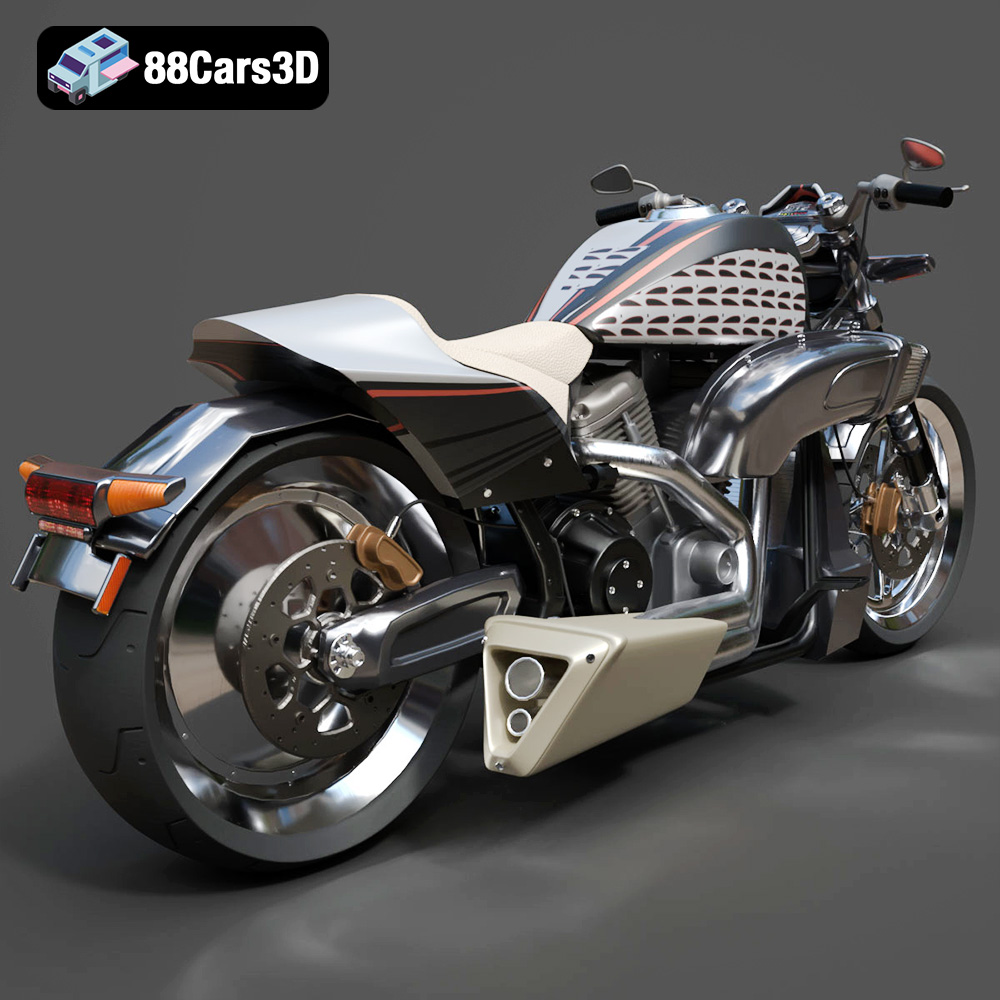
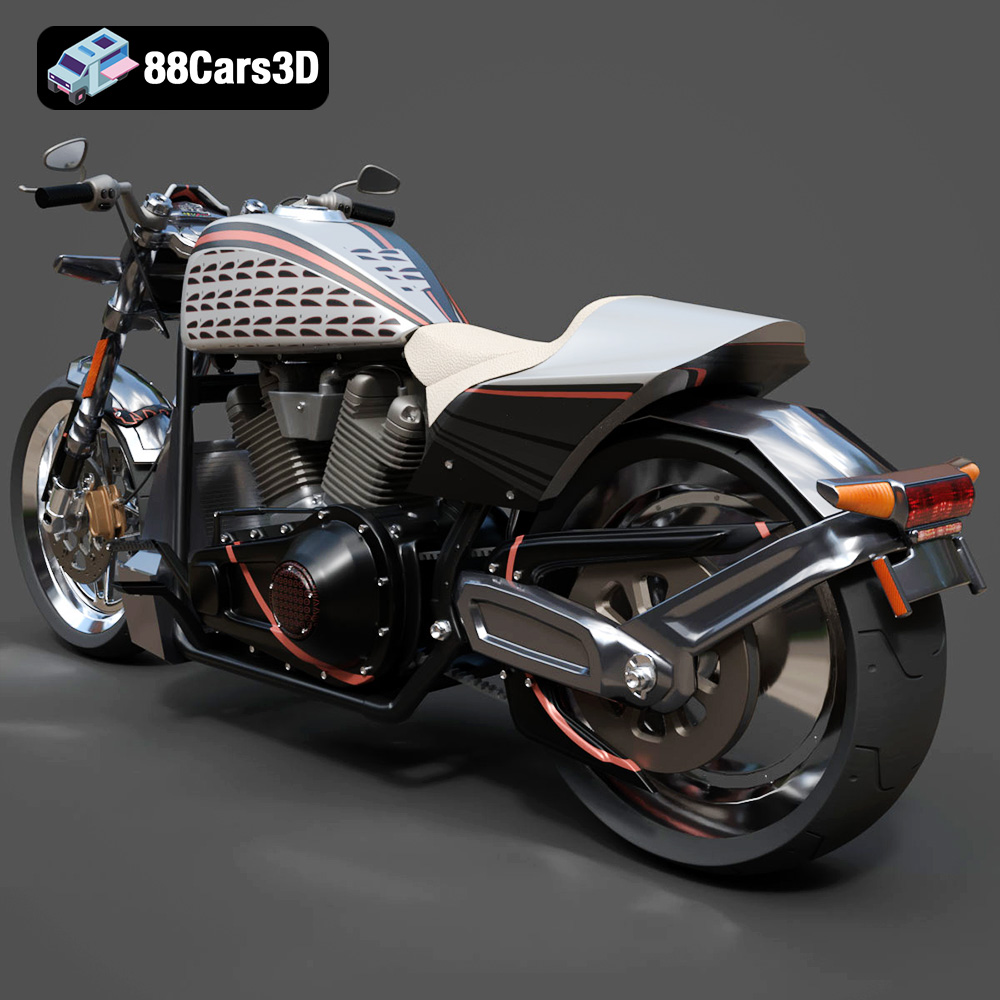
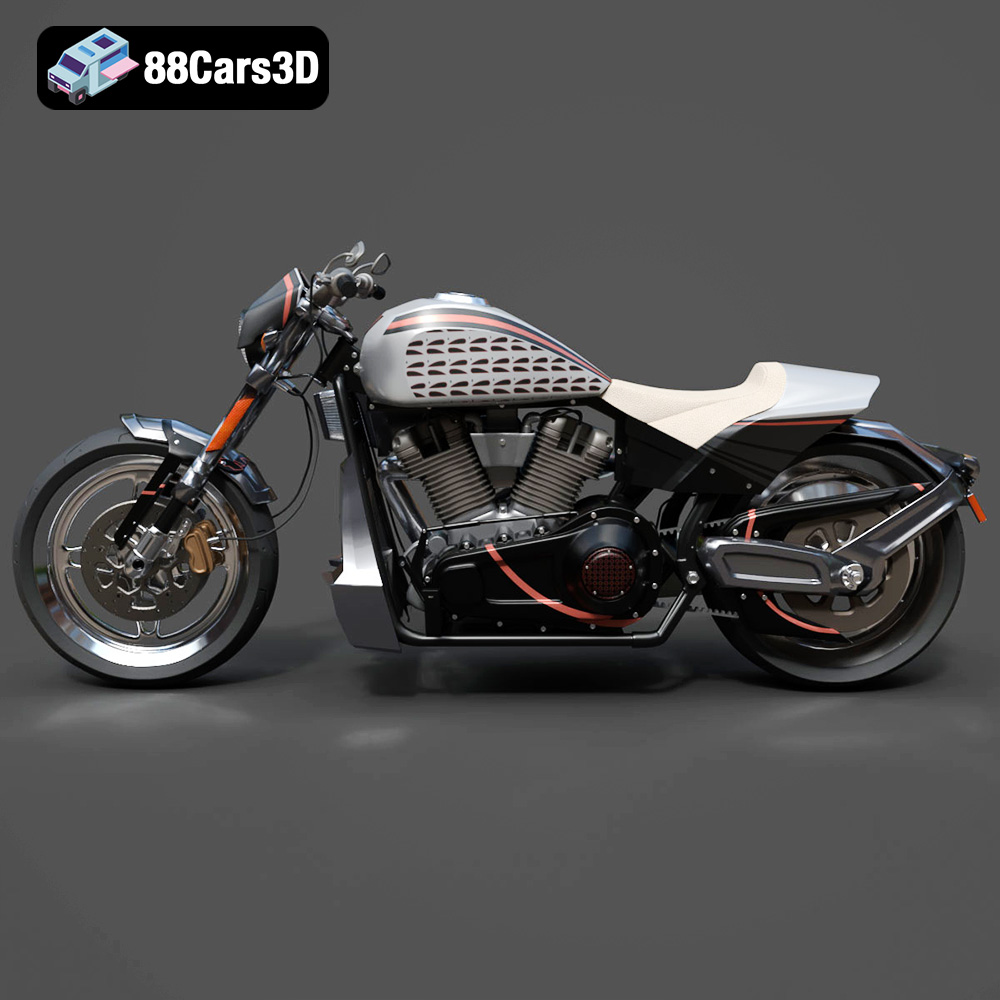
Today, we’re diving deep into a prime example of digital craftsmanship: the Harley-Davidson FXDR 114 3D Model. This isn’t just any motorcycle model; it’s a meticulously engineered asset, available on 88cars3d.com, designed to empower professionals across various industries. From its massive Milwaukee-Eight 114 V-Twin engine to its clipped drag-style tail section and formidable 240mm rear tire, every detail has been carefully sculpted to deliver an authentic digital experience. We’ll explore how this model, with its optimized topology and versatile file formats, serves as a cornerstone for advanced workflows in automotive rendering, game asset development, and even high-precision 3D printing.
When working with 3D models, especially complex automotive assets like the Harley-Davidson FXDR 114, understanding the various file formats is paramount. Each format is designed with specific use cases in mind, offering different levels of compatibility, data retention, and optimization for various software and pipelines. The FXDR 114 3D Model, recognizing this need for versatility, is provided in a comprehensive suite of formats, ensuring seamless integration into virtually any professional workflow. Let’s break down these essential formats:
The .blend format is the native file type for Blender, the powerful open-source 3D creation suite. When you receive an .blend file, you’re not just getting a mesh; you’re getting a fully editable Blender scene. This includes all materials, textures, lighting setups, cameras, animation data (if present), and modifiers. For artists who primarily work in Blender, this format offers the most flexibility for customization, rigging, and rendering within their preferred environment. It’s perfect for tweaking shaders, adjusting topology, or setting up complex scene compositions with the FXDR 114 3D Model.
FBX (Filmbox) is arguably the most widely adopted proprietary file format for 3D data exchange, developed by Autodesk. It’s the gold standard for transferring 3D models, animations, and scenes between different software applications like Maya, 3ds Max, Blender, and crucially, game engines such as Unreal Engine and Unity. An .fbx file can encapsulate meshes, materials, textures, rigging, skinning, and animation data, making it ideal for real-time pipelines. For game developers incorporating the FXDR 114 as a hero asset, .fbx ensures that all relevant data is efficiently transferred and ready for engine integration, often requiring minimal setup.
OBJ (or .obj) is a simple, universally compatible format that primarily stores geometry data – vertices, normals, UV coordinates, and faces. While it doesn’t typically include animation or advanced material definitions (it references external .mtl files for basic material properties), its strength lies in its widespread support across virtually all 3D software. For cross-software compatibility, especially when the primary focus is on the mesh itself, .obj remains a reliable choice. If you need to import the Harley-Davidson FXDR 114 into less common software or simply need the raw geometry for a specific task, .obj is an excellent fallback.
GLB (GL Transmission Format Binary) is a modern, royalty-free format designed for efficient transmission and loading of 3D scenes and models in web and immersive contexts (AR/VR). It’s a binary container format that includes geometry, materials, textures, and even animation in a single file, making it incredibly lightweight and fast to load. For showcasing the FXDR 114 in a virtual showroom, an AR app, or directly on a website, .glb offers optimal performance and a streamlined workflow, ensuring a smooth interactive experience.
STL (STereoLithography) is the de facto standard file format for 3D printing. It represents a 3D model as a series of connected triangles (a tessellation of the surface). Unlike other formats that describe surfaces, .stl explicitly describes the surface geometry of a 3D object without any color, texture, or other CAD attributes. For hobbyists and professionals looking to physically manifest the Harley-Davidson FXDR 114, converting the model to .stl (as the product description mentions is possible) is the crucial step. The model’s optimized mid-to-high poly count makes it suitable for detailed physical replicas.
PLY (Polygon File Format, or Stanford Triangle Format) is another format that describes 3D objects as a collection of polygons. It’s often used for scanned 3D data and can store information like color, transparency, and even properties for each vertex or face. While not as common for general asset exchange as .fbx or .obj, it’s favored in certain CAD applications, scientific visualization, and 3D scanning pipelines where precision and additional per-element data are critical. The inclusion of .ply for the FXDR 114 signifies its readiness for more specialized engineering or analysis workflows.
The .unreal format implies a file specifically prepared or optimized for direct import and use within Unreal Engine. This often means the model has already been properly scaled, pivot points set, materials configured (or at least mapped to Unreal’s PBR workflow), and potentially collision meshes generated. For game developers leveraging Unreal Engine, an .unreal file for the Harley-Davidson FXDR 114 means a significant head start, reducing the time spent on initial setup and allowing immediate focus on gameplay integration, lighting, and performance tuning.
Similar to .blend for Blender, .max is the native file format for Autodesk 3ds Max, a leading software for 3D modeling, animation, and rendering in the architecture, visualization, and entertainment industries. An .max file contains the complete scene data, including all geometry, modifiers, materials, textures, lighting, cameras, and animation. For 3ds Max users, this format offers full editing capabilities, making it easy to integrate the FXDR 114 into existing Max scenes, apply advanced V-Ray or Corona renders, or further refine its intricate details.
The provision of such a comprehensive array of file formats for the Harley-Davidson FXDR 114 3D Model highlights its professional-grade nature, ensuring that irrespective of your chosen software or end-use application, you have the right starting point for your creative journey, all available on 88cars3d.com.
Crafting a 3D model that genuinely captures the essence of a real-world machine, especially one as iconic as a Harley-Davidson, goes far beyond simply mimicking its shape. It demands an acute understanding of geometry, topology, and optimization. The Harley-Davidson FXDR 114 3D Model exemplifies this dedication, offering a robust foundation for any serious 3D project.
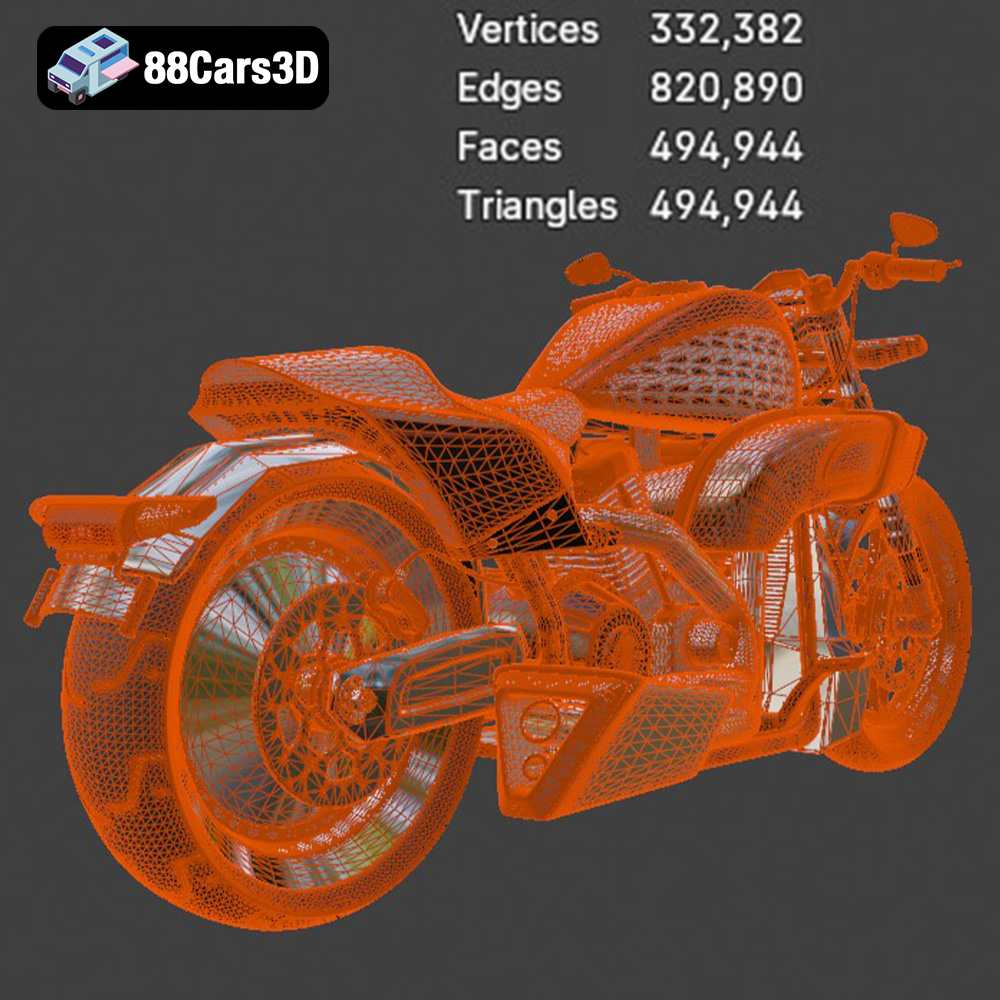
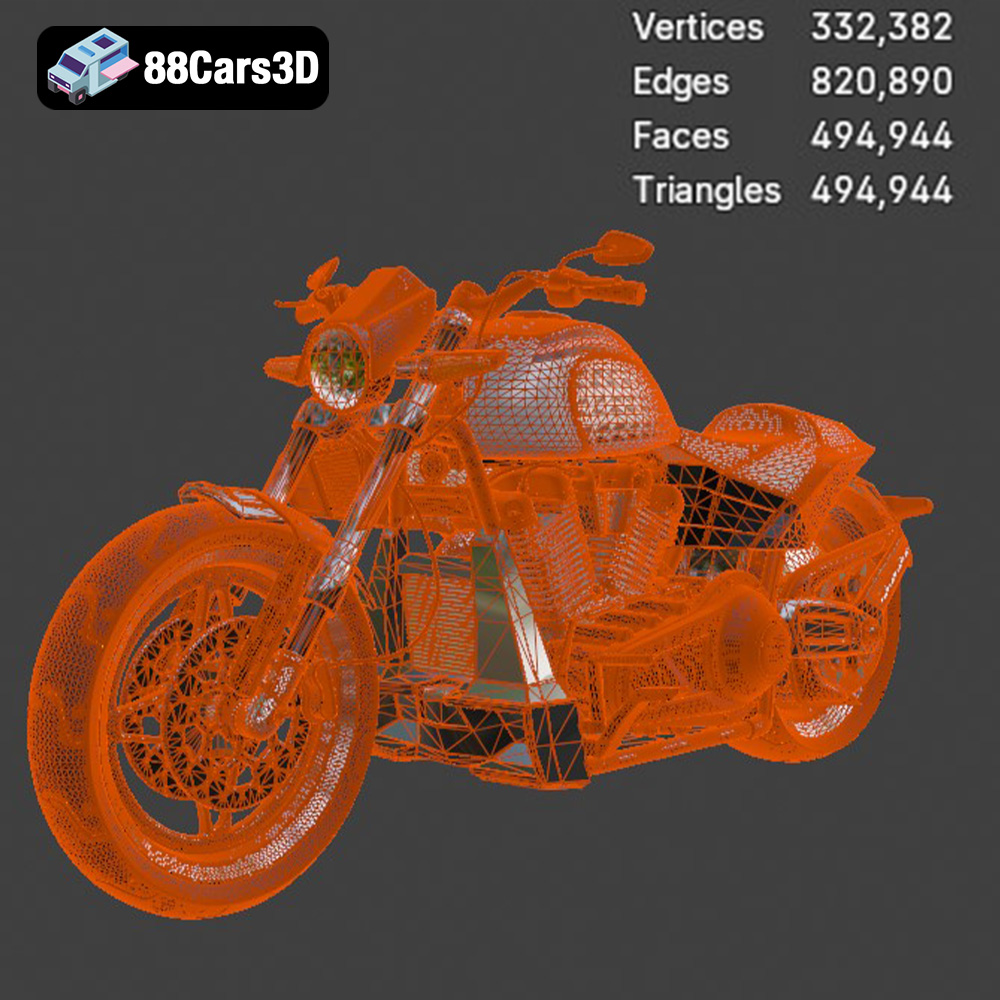
At the heart of any high-quality 3D asset lies its topology. The FXDR 114 model boasts a perfectly balanced topology, coming in at just under 500,000 triangles (specifically, 494,944 triangles). This figure is critical. It signifies a “mid-to-high” polygon count, which strikes an enviable balance: it’s high enough to retain premium visual fidelity for extreme close-up renders, capturing the intricate details of the Milwaukee-Eight 114 V-Twin engine block, the finely sculpted fuel tank, and the aggressive stance. Yet, it avoids the crushing engine load associated with multi-million polygon assets, making it exceptionally manageable for modern current-gen game engines and real-time applications.
This careful polygon allocation ensures that elements like the forward-reaching air intake, the performance 2-into-1 exhaust system, and the aggressive inverted front forks maintain their authentic shapes without relying solely on normal maps for detail. This level of geometric detail is particularly beneficial for projects where the model will be viewed from multiple angles or subject to dynamic lighting, revealing true dimensionality.
Beyond raw polygon counts, the utility of a 3D model often hinges on its foundational accuracy and preparation for interactivity. The FXDR 114 3D Model adheres to real-world scale accuracy, based directly on the FXDR Softail chassis. This is paramount for architectural visualization, automotive configurators, or any project requiring precise integration into existing scenes or environments.
Furthermore, the model is designed with animation in mind. Key components such as the wheels, steering components, and suspension are separated and feature proper pivot setups. This thoughtful preparation allows animators to effortlessly rig the model for dynamic sequences, whether it’s a motorcycle leaning into a turn, its suspension absorbing bumps, or the kickstand articulating for a stationary pose. This ‘animation-ready’ characteristic significantly reduces production time and effort for any project involving motion.
The journey of a high-detail 3D model from a static render to a drivable asset in a game engine is a complex yet rewarding one. The Harley-Davidson FXDR 114 3D Model is meticulously prepared for this transition, making it an excellent “hero” drivable vehicle for current-gen console and PC games. Its technical specifications align perfectly with the demands of modern game development.
Compatibility with major real-time engines like Unreal Engine 5 and Unity HDRP (High Definition Render Pipeline) is a significant advantage. The .fbx and .unreal file formats ensure that the model can be imported with its materials and (implied) UVs intact. Once in the engine, artists can leverage advanced rendering features to bring the FXDR 114 to life:
Imagine the Harley-Davidson FXDR 114 roaring through a meticulously rendered cityscape in a modern open-world video game. Its detailed design, from the aggressive LED Daymaker headlamp to the minimalist digital riser gauge cluster, enhances immersion. The cockpit and rider interface features, such as the deep drag-style solo saddle and forward foot controls, are optimized for first-person POV, providing an authentic riding experience. This level of detail is paramount for hero assets that players will interact with intimately, making the FXDR 114 3D Model a powerful tool for creating compelling virtual worlds.
The versatility of the Harley-Davidson FXDR 114 3D Model extends beyond digital screens into the physical realm through 3D printing. For custom motorcycle hobbyists, collectors, or even designers needing a tangible prototype, this model offers a unique opportunity to own a miniature replica of this iconic power cruiser.
The model’s adaptability to the .stl format is key for 3D printing. While the original description mentioned 1:24 / 1:32 / 1:43 for another product, the FXDR 114 is specifically recommended for larger, more detailed scales like 1:12, 1:10, or 1:8, allowing its intricate details to truly shine. The technical recommendations for printing are precise:
The journey doesn’t end with printing. Post-processing is where the model truly comes to life. Sanding, priming, and then painting are essential. The product description even suggests specific finishes: classic Vivid Black or Industrial Gray Denim for the tank, complemented by bronze or matte metallic finishes for the exhaust and engine accents. This meticulous attention to detail, from digital creation to physical manifestation, underscores the comprehensive nature of the Harley-Davidson FXDR 114 3D Model and its potential for passionate creators.
In an increasingly digital world, the applications for high-quality 3D assets are expanding rapidly into augmented and virtual realities, as well as high-impact visualization projects. The Harley-Davidson FXDR 114 3D Model, available on 88cars3d.com, is perfectly suited for these cutting-edge frontiers.
The FXDR 114 3D Model is described as “perfect for high-end virtual motorcycle showrooms and interactive part configurators.” In a virtual showroom, customers could walk around, inspect the bike from every angle, and even sit on it (virtually, of course). The model’s meticulous detail, from the Milwaukee-Eight 114 V-Twin engine to the individual components of the disc brake assemblies, would be fully appreciated in such an immersive environment. For interactive configurators, the separated components (wheels, steering, suspension) and customizable options (tank colors, exhaust swaps) provide the necessary modularity for users to personalize their dream bike in real-time, enhancing engagement and pre-sales visualization.
The .glb format, included with the model, is specifically optimized for these applications. Its lightweight, single-file structure ensures fast loading times and smooth performance on AR/VR devices, delivering a seamless and engaging user experience.
For cinematic sequences, advertising campaigns, or product showcases, the FXDR 114 3D Model excels in rendering and visualization. Its mid-to-high polygon count provides the necessary geometric detail for exquisite close-up shots without demanding excessive render times compared to astronomically high-poly models. This allows rendering artists to focus on:
A truly professional 3D asset offers more than just fidelity; it provides room for adaptation and evolution. The Harley-Davidson FXDR 114 3D Model is built with customization in mind, ensuring its longevity and versatility across diverse projects.
The model’s inherent structure allows for significant customization, empowering artists to tailor it to specific project requirements:
Investing in a high-quality 3D car model like the Harley-Davidson FXDR 114 from 88cars3d.com is an investment in efficiency and quality. Its balanced topology, real-world accuracy, and multi-format compatibility make it a future-proof asset. It can evolve with your projects, adapting to new rendering technologies, game engine updates, and emerging visualization platforms. This ensures that the digital muscle of the FXDR 114 remains a powerful tool in your creative arsenal for years to come.
The Harley-Davidson FXDR 114 3D Model stands as a testament to the meticulous craftsmanship required in high-end 3D asset development. We’ve explored its robust technical specifications, from its balanced mid-to-high polygon count perfect for both detailed rendering and efficient game development, to its real-world scale and animation-ready components. We’ve delved into the critical importance of diverse file formats, demonstrating how .blend, .fbx, .obj, .glb, .stl, .ply, .unreal, and .max each play a vital role in professional workflows across rendering, game design, AR/VR, and 3D printing.
This model is more than just a collection of polygons; it’s a versatile foundation for creators aiming to inject authentic automotive rendering into their projects, develop engaging game assets, or even bring digital designs into the physical world. Whether you’re a seasoned professional or an aspiring artist, the Harley-Davidson FXDR 114 3D Model provides the detail, flexibility, and compatibility needed to elevate your work. Discover this exceptional asset and many other high-quality 3D car models at 88cars3d.com, and unleash the full potential of your creative vision.
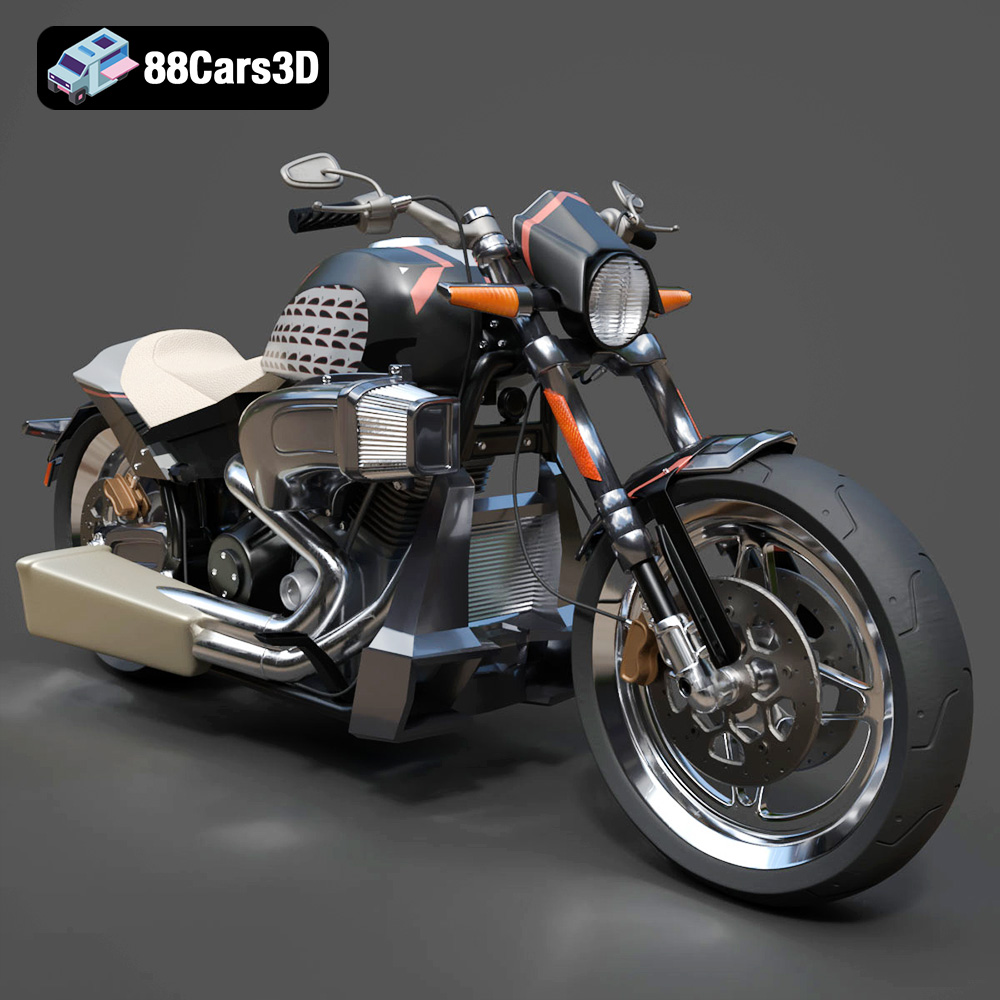
The Harley-Davidson FXDR 114 3D Model is a high-detail digital recreation of the aggressive, drag-inspired power cruiser. Built to represent raw, unapologetic muscle, the FXDR 114 combines the massive torque of the Milwaukee-Eight 114 V-Twin engine with weight-saving aluminum components, a clipped tail, and a massive 240mm rear tire. This 3D model accurately captures the drag-strip attitude of the original bike, featuring the signature forward-reaching air intake, 2-into-1 tuned exhaust, lightweight cast aluminum swingarm, and the sleek LED Daymaker headlamp surround. Built with an optimized mid-to-high polygon topology (just under 500k triangles), it strikes a fantastic balance between premium visual fidelity for close-up rendering and manageable performance for modern current-gen game engines as a hero asset.
$44.99
.blend
.fbx
.obj
.rendering
.stl
car-3d-model
drag-bike
fxdr
fxdr-114
game asset
harley-davidson
mid-poly
milwaukee-eight
motorcycle-3d-model
power-cruiser
softail
VR/AR