The Enduring Legacy of an Everyday Icon: Daewoo Nexia N100 in 3D
In the vast world of automotive design and visualization, the spotlight often falls on supercars, futuristic concepts, or meticulously restored classics. Yet, there’s a profound, often overlooked, beauty in the vehicles that truly shaped everyday life for millions. The Daewoo Nexia N100, a car synonymous with robust reliability and a ubiquitous presence across numerous global markets, embodies this understated significance. It’s more than just a car; it’s a cultural touchstone, particularly across Eastern Europe, Russia, and Central Asia.
Capturing the essence of such a vehicle in a high-fidelity 3D model is a testament to digital artistry and a crucial resource for professionals across various industries. Whether you’re an architect visualizing a period-accurate street scene, a game developer crafting an immersive open-world environment, or an animator seeking authentic background traffic, a precisely modeled classic like the Daewoo Nexia N100 offers unparalleled value. It provides that critical layer of realism and regional specificity that elevates a project from generic to genuinely compelling. The Daewoo Nexia N100 (Classic) 3D Model available at 88cars3d.com stands out as an exceptional example of this dedication to detail and practical utility, offering a perfectly balanced asset for diverse professional needs.
The Daewoo Nexia’s Global Footprint and Enduring Appeal
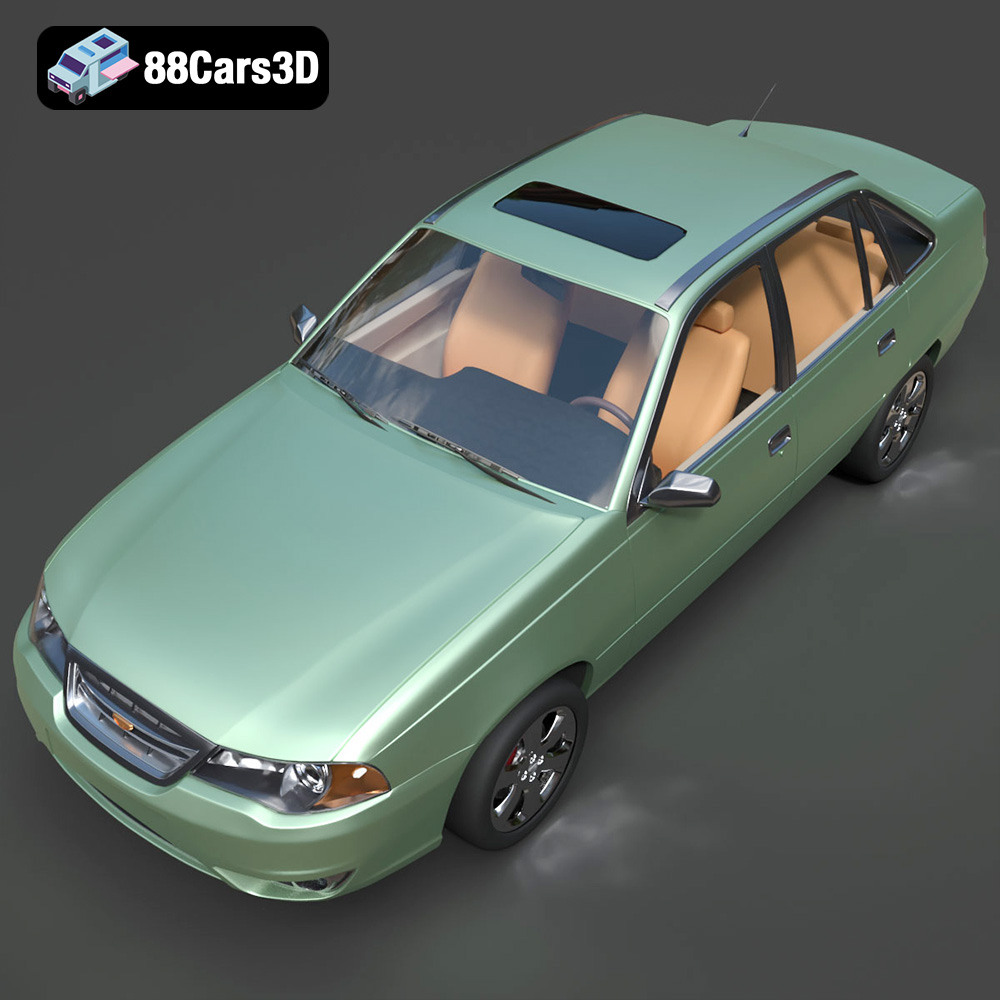
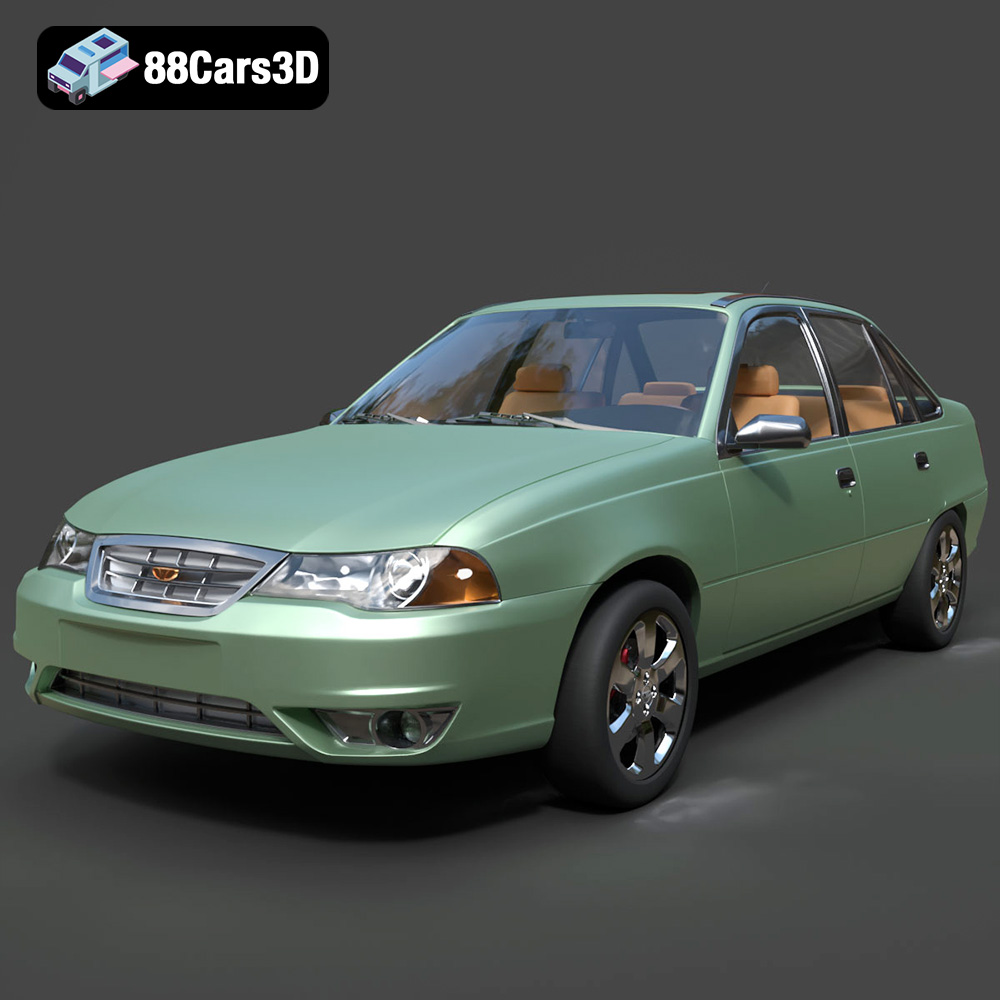
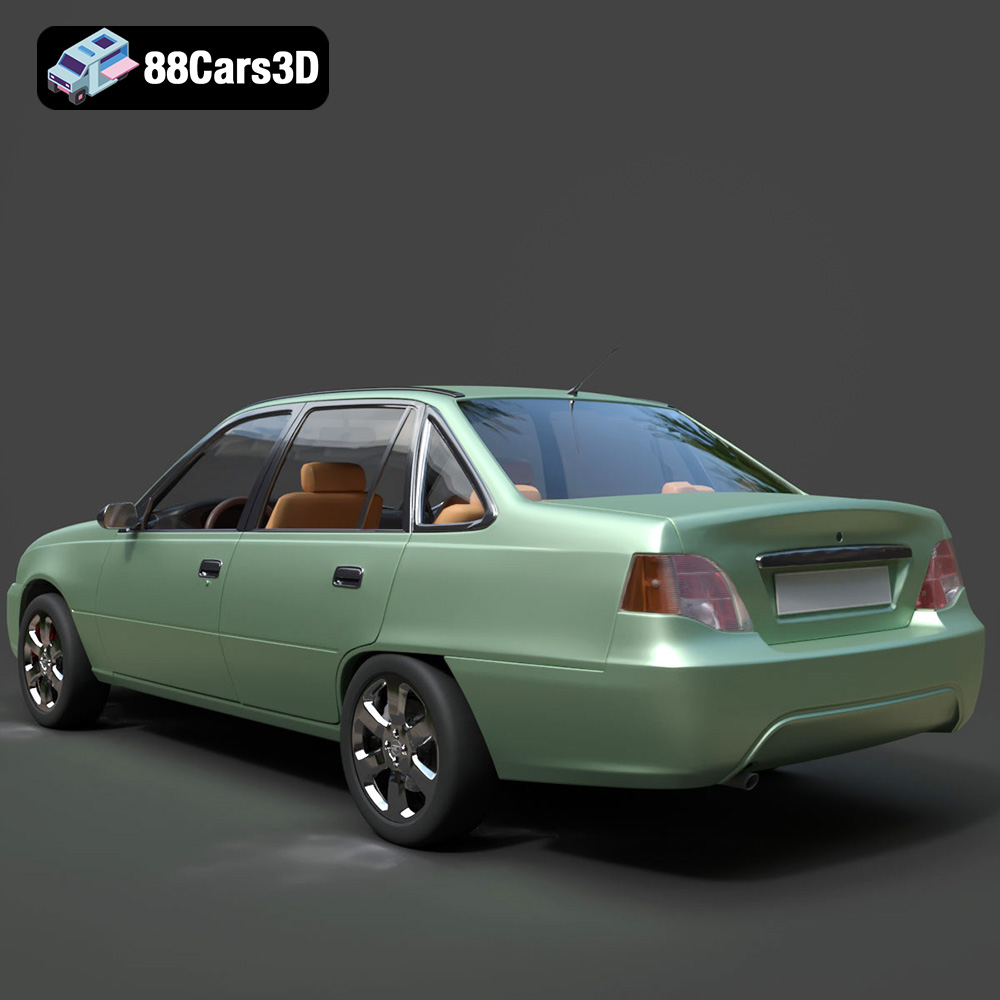
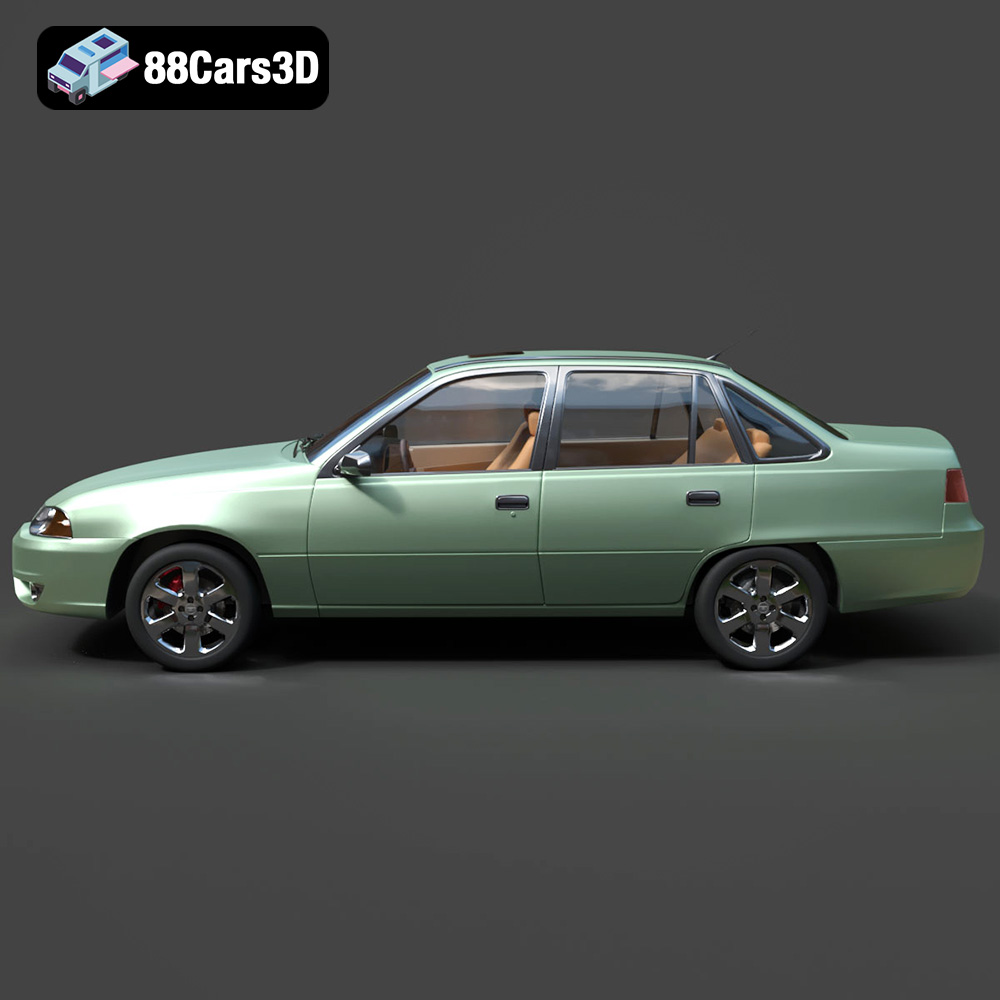
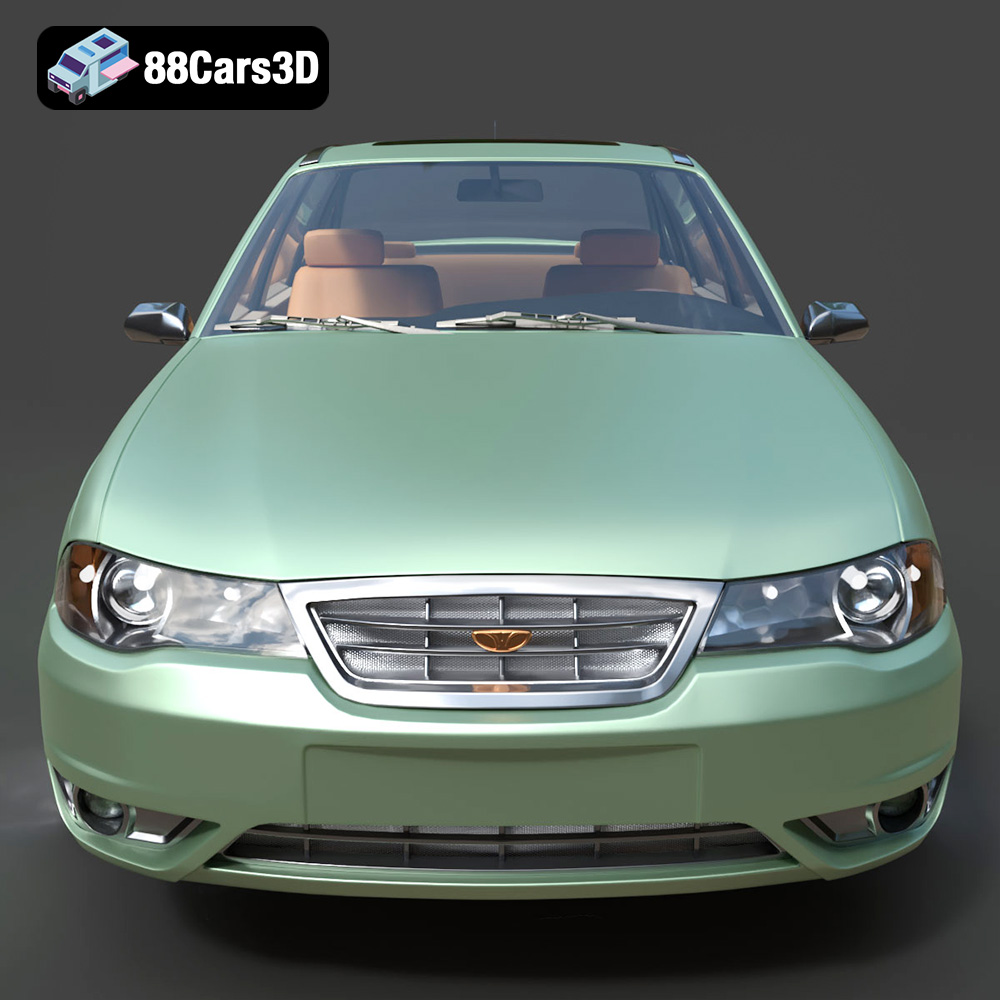
The Daewoo Nexia N100, originally derived from the venerable Opel Kadett E, carved out a unique place in automotive history. It was a no-frills, dependable workhorse, often the first car for many families, and an undisputed champion of taxi fleets. Its simple, functional 90s aesthetic – characterized by rectangular headlights, a distinctive split grille, and a classic three-box sedan silhouette – made it instantly recognizable. This ubiquity means that for any project aiming to evoke the atmosphere of its prime territories, the Nexia isn’t just an option; it’s an essential character.
Bringing this level of cultural specificity into 3D environments requires models that are not only accurate in their proportions but also rich in the details that define their era. From the authentic body moldings to the period-correct wheels, every element contributes to the immersive quality of the digital scene. The classic Nexia N100 isn’t merely background dressing; it’s a storyteller, hinting at economic realities, daily commutes, and the very fabric of urban life in its heyday and even today.
Bridging the Gap: Why Classic Everyday Vehicles Matter in 3D
While concept cars grab headlines, it’s the everyday vehicles that truly anchor a digital scene in reality. Imagine an architectural visualization of a residential area in a post-Soviet country; without cars like the Daewoo Nexia N100, the scene would feel incomplete, generic, or anachronistic. These vehicles provide a crucial visual language, instantly communicating time, place, and socio-economic context.
For game developers, incorporating such iconic yet common vehicles enhances immersion significantly. Players instantly recognize these cars, grounding them in the game world. For real-time applications, the challenge is to create models that are highly detailed for close-ups but also optimized for performance when populating dense traffic scenes. This balance of fidelity and efficiency is paramount, and it’s precisely where expertly crafted 3D car models prove their worth.
Understanding 3D Model File Formats: The Foundation of Digital Assets
The power and versatility of a 3D model aren’t just in its visual appeal, but in its underlying structure and the formats it supports. Different file formats cater to specific workflows, software, and application requirements. Understanding these nuances is critical for any professional working with 3D car models, ensuring seamless integration into projects ranging from high-fidelity rendering to real-time game development and even physical manufacturing. The Daewoo Nexia N100 (Classic) 3D Model comes packaged with a comprehensive array of formats, signifying its readiness for virtually any pipeline.
Universal Compatibility and Static Meshes: .obj and .ply
- .obj (Wavefront OBJ): This is arguably the most widely supported 3D file format, often considered the lingua franca of 3D modeling. It’s excellent for exchanging static mesh data between different software applications. An .obj file primarily stores geometric data (vertices, faces, UVs) and can reference external material files (.mtl) for textures. While it doesn’t support advanced features like animation, rigging, or scene hierarchies, its universal nature makes it indispensable for foundational asset sharing and archival. For the Daewoo Nexia N100, the .obj format ensures that the core mesh and UV mapping can be imported and utilized in almost any 3D package, providing a reliable fallback for cross-platform workflows.
- .ply (Polygon File Format / Stanford Triangle Format): The .ply format is primarily used for storing 3D data from 3D scanners, CAD software, and other precision modeling tools. It can store a wide range of properties, including color, transparency, normals, texture coordinates, and confidence values. While less common for general animation or game development compared to .fbx or .blend, .ply is excellent for tasks requiring precise mesh data, scientific visualization, or when working with highly detailed, often raw, geometric information. Its presence in the Nexia N100 package suggests a model built with precision and capable of handling detailed analysis or specialized CAD integration.
Real-time Engines and Animation: .fbx and .unreal
- .fbx (Filmbox by Autodesk): The .fbx format is the industry standard for transferring 3D data, particularly between Autodesk products (like 3ds Max and Maya) and across various game engines. It supports not only geometry and materials but also crucial elements like animation, rigging (skeletons and skinning), cameras, and lights. This makes it ideal for real-time pipelines like Unreal Engine and Unity, where animated objects and complex scene data need to be efficiently transferred. For a drivable 3D car model like the Daewoo Nexia N100, the .fbx ensures that separate components (wheels, doors, steering) with proper pivots can be rigged and animated within these engines, making it game-ready for simulations or open-world titles.
- .unreal (Unreal Engine Asset): This format signifies a native Unreal Engine asset. Unlike generic formats, an .unreal file is often pre-configured with Unreal-specific materials, collision meshes, LODs (Levels of Detail), and potentially even blueprints or physics assets. Importing a .unreal file directly into a project streamlines the integration process, drastically reducing setup time. It implies that the Daewoo Nexia N100 has been optimized and prepared specifically for Unreal Engine, ready to be dropped into a scene as a drivable car or traffic asset with minimal additional work, making it exceptionally valuable for developers working within this ecosystem.
Native Software and Collaborative Workflows: .blend and .max
- .blend (Blender Native Format): As the native file format for Blender, .blend files contain the entire scene data – geometry, materials, textures, lighting, cameras, animations, physics, and even custom scripts. This format is fully editable within Blender, providing maximum flexibility for users who wish to modify the model, adjust its topology, create custom shaders, or integrate it into a larger Blender-centric project. The inclusion of the .blend file for the Nexia N100 is a significant advantage for Blender users, offering complete control over the asset.
- .max (3ds Max Native Format): Similar to .blend for Blender, .max is the native project file format for Autodesk 3ds Max. It stores all scene information, including complex hierarchies, modifiers, materials, lighting, and animation. For professionals using 3ds Max for rendering, architectural visualization, or animation, the .max file provides the most complete and editable version of the model. This allows for fine-tuning materials with V-Ray or Corona renders, adjusting scene setups, or integrating the Nexia N100 into sophisticated rendering pipelines.
The Future of Web and Physical Prototyping: .glb and .stl
- .glb (GL Transmission Format Binary): .glb is the binary version of glTF, a royalty-free specification for the efficient transmission and loading of 3D scenes and models by engines and applications. It’s often called the “JPEG for 3D” due to its optimization for web-based 3D, AR, and VR applications. A .glb file packages all necessary data (geometry, materials, textures, animations) into a single, compact file, making it ideal for browser-based viewers, mobile AR experiences, and even some lightweight game engines. The Nexia N100 in .glb format is perfect for showcasing the model interactively on a website or integrating it into an AR app.
- .stl (Stereolithography): This format is the de facto standard for 3D printing. An .stl file represents the surface geometry of a 3D object using a collection of triangular facets. It doesn’t contain color or texture information, focusing solely on the object’s shape. For the Daewoo Nexia N100, the .stl file makes it possible to physically reproduce the classic sedan as a scale model, an essential feature for hobbyists, collectors, or even educational purposes. Ensuring the mesh is “manifold” (watertight) is crucial for successful 3D printing, which this model provides.
Each of these formats serves a distinct purpose, and the inclusion of such a broad spectrum with the Daewoo Nexia N100 (Classic) 3D Model underscores its versatility and value as a production-ready asset. Whether you are developing for a game, creating an architectural visualization, or pursuing a 3D printing project, the correct format ensures optimal results and a streamlined workflow.
Crafting Digital Realism: A Technical Deep Dive into the Nexia N100 3D Model
Achieving digital realism goes beyond simply capturing the correct shape; it involves meticulous attention to topology, material definition, and the strategic distribution of detail. The Daewoo Nexia N100 (Classic) 3D Model is a prime example of an asset engineered to meet these demanding professional standards, balancing visual fidelity with performance efficiency.
The “Goldilocks Zone” of Topology: Performance Meets Fidelity
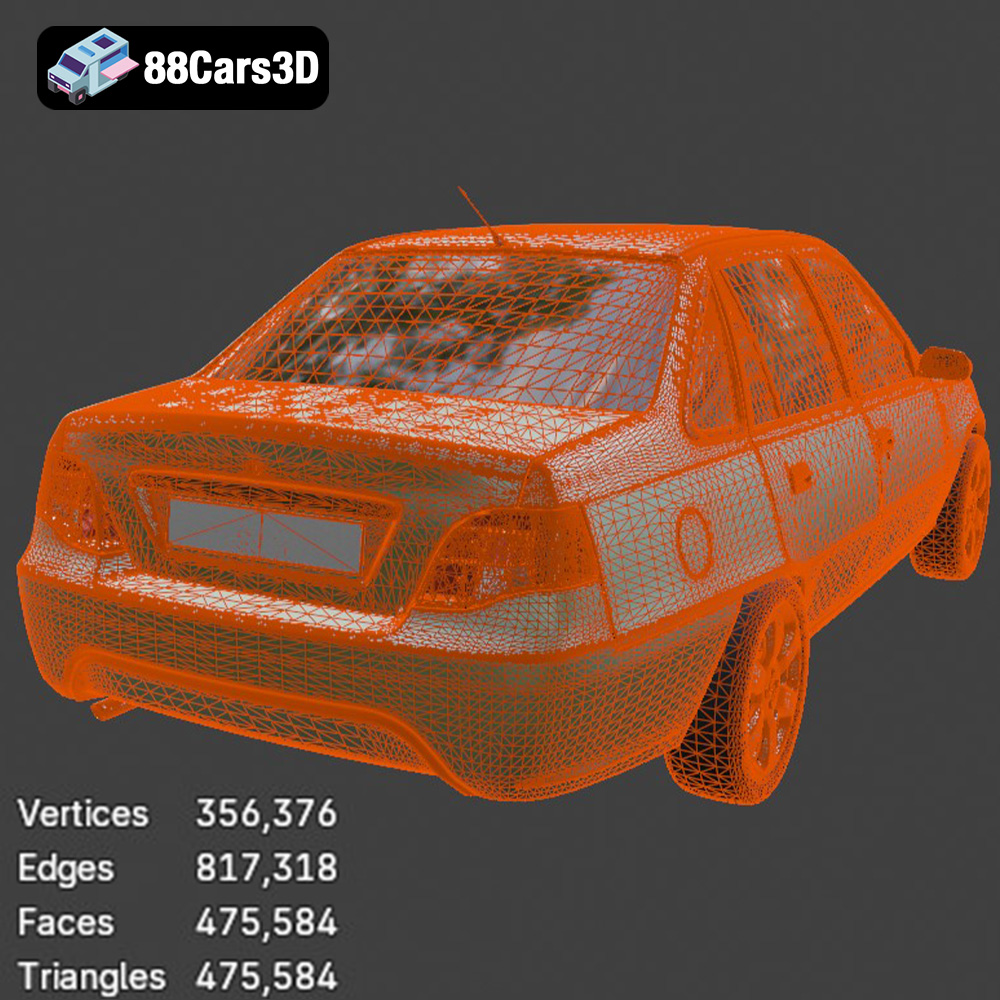
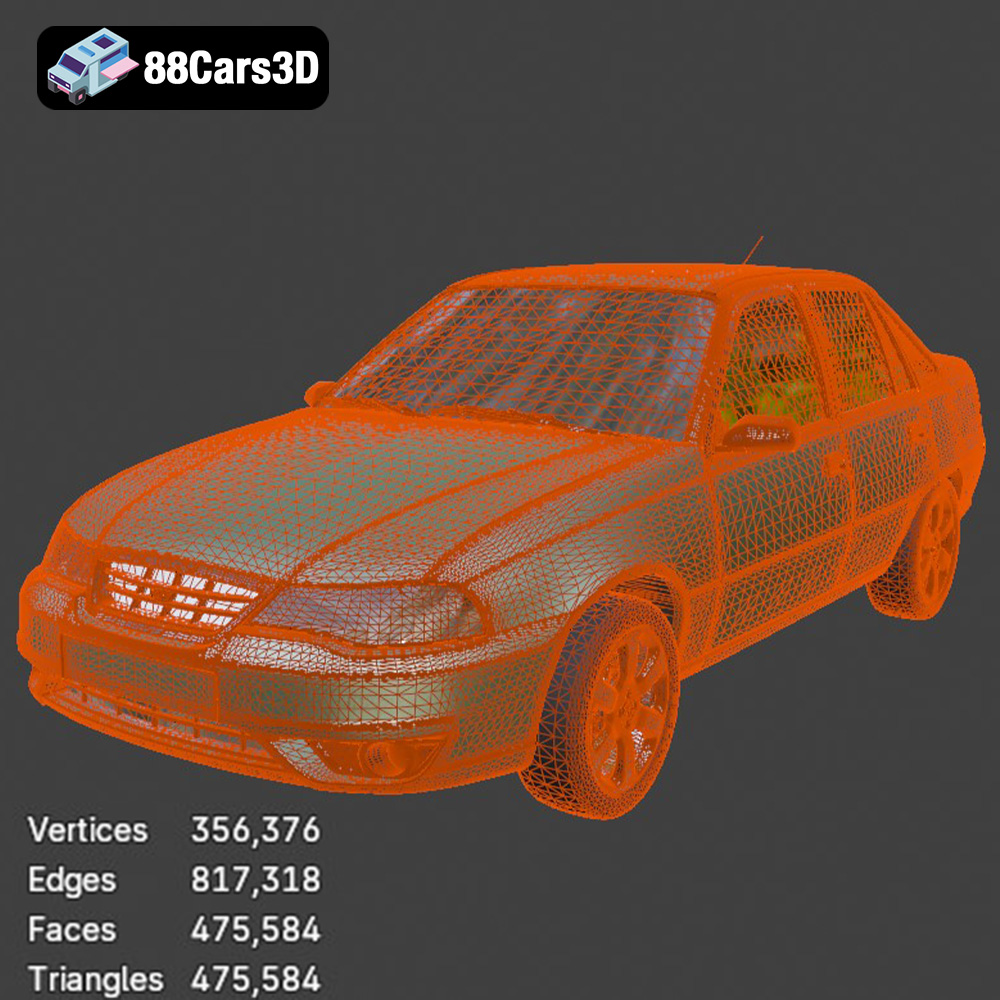
At approximately 475,584 triangles (475k triangles), the Daewoo Nexia N100 3D Model occupies a highly advantageous “Goldilocks zone” for 3D car models. This mid-to-high polygon count is meticulously balanced to provide several key benefits:
- High-Quality Rendering: For demanding applications like architectural visualization (ArchViz) or cinematic rendering, where the model might be a foreground element, 475k triangles offer sufficient geometric detail to hold up under close-up scrutiny. This allows for smooth curves, crisp panel lines, and convincing reflections without excessive tessellation.
- Real-Time Optimization: Simultaneously, this polygon count is optimized enough for use in modern game engines like Unreal Engine and Unity, even as a drivable hero car or a common background vehicle in dense traffic scenarios. It avoids the performance bottlenecks associated with excessively high-poly models while still delivering a realistic appearance. This balance means that developers don’t need to create separate low-poly versions for distant traffic, saving significant production time and resources.
- Clean and Balanced Mesh: Beyond the raw count, the quality of the topology itself is paramount. A clean, well-distributed mesh with efficient edge flow ensures smooth deformation if animated, accurate normal mapping, and predictable subdivision if required. This translates to better shading, easier UV unwrapping, and superior overall visual quality.
Exterior Authenticity: Capturing the N100’s Iconic Design
The exterior of the Nexia N100 model is a faithful recreation of the classic 1st generation sedan, capturing its distinctive 90s charm:
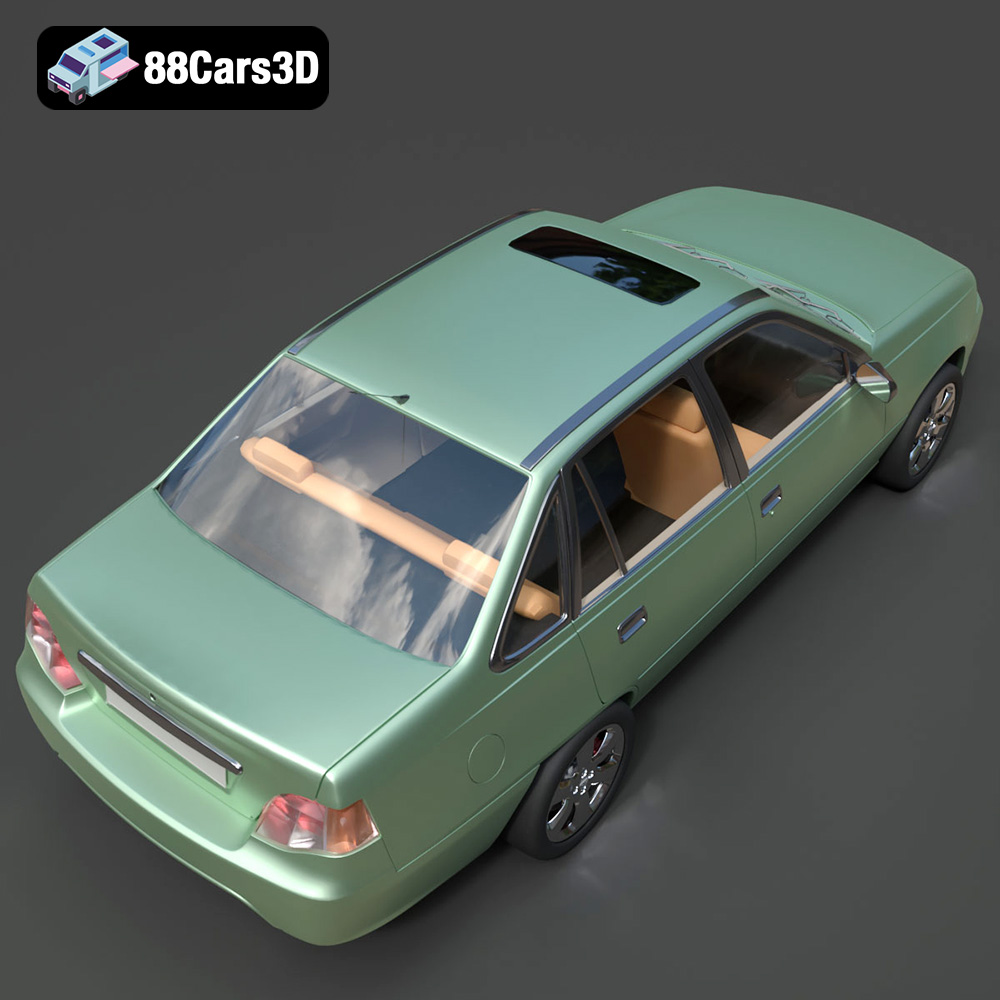
- Accurate Proportions and Styling: Every curve, panel gap, and body line adheres to the factory dimensions of the Daewoo Nexia N100. This ensures the model looks correct from all angles, whether in a static render or moving through a game environment. The authentic 90s aerodynamic styling, complete with functional black plastic side moldings and bumpers, contributes significantly to its period-correct look.
- Distinctive Features: Key identifiers like the iconic split front grille and the original rectangular halogen headlight assemblies are meticulously reproduced. These small details are crucial for instantly recognizing the vehicle and anchoring it in its specific era and region.
- Rigging-Ready Components: Separate meshes for wheels, steering components, and doors are included. This thoughtful design choice is vital for game development and animation, allowing for realistic vehicle dynamics, opening/closing actions, and interactive elements without complex mesh manipulation. Proper pivot setup further streamlines the rigging process.
- Detailed Wheels and Tires: The model includes detailed standard factory wheels (whether classic basic alloys or steelies with hubcaps) wrapped in street tires. These are often overlooked but critical for realism, providing correct proportions and tread patterns.
Interior Detailing for Immersive Experiences
While often viewed from the outside, a detailed interior can significantly enhance the immersion, especially in first-person game experiences or virtual reality (AR/VR):
- Authentic Cabin Layout: The interior accurately reflects the practical, driver-centric cabin layout typical of 90s budget sedans. This includes a detailed dashboard, classic center console, and an analog instrument cluster, all modeled to convey the simplicity and functionality of the original.
- Seating and Controls: Realistic seating geometry for a five-passenger layout, complete with retro cloth/vinyl texture mapping, adds a layer of authenticity. The classic two-spoke or three-spoke steering wheel and manual gear shifter representation further enhance the period feel.
- Optimized for Visibility: The interior geometry is specifically optimized to look excellent whether viewed through the windows from the exterior or experienced from within in VR. This balance ensures that performance is maintained without sacrificing the necessary detail for compelling interior shots or interactive gameplay.
The technical specifications—356,376 Vertices, 817,318 Edges, 475,584 Faces/Polygons, and 475,584 Triangles—confirm the model’s robust construction. This granular detail, combined with real-world scale accuracy, makes the Daewoo Nexia N100 a professional-grade asset ready for the most demanding digital environments.
From ArchViz to Open Worlds: Professional Applications and Integrated Workflows
The true value of a high-quality 3D asset lies in its versatility and seamless integration into various professional pipelines. The Daewoo Nexia N100 (Classic) 3D Model, with its detailed yet optimized topology and wide range of supported formats, is designed to be a cornerstone asset for several industries.
Populating Realistic Scenes: Architectural Visualization and Environmental Design
For architectural visualization (ArchViz) artists and environmental designers, context is everything. A beautiful building rendered in isolation often feels sterile. Populating a scene with appropriate vehicles breathes life, scale, and narrative into the environment. The Daewoo Nexia N100 is an unparalleled asset for:
- Region-Specific Context: Imagine an ArchViz project depicting a new urban development in Tashkent or a refurbished historical district in Kyiv. The presence of a Daewoo Nexia N100 instantly grounds the scene in its geographic and cultural reality, making it infinitely more convincing and relatable to a target audience familiar with the region.
- Era-Appropriate Detailing: For projects set in the 1990s or early 2000s, this model provides essential period accuracy. It can serve as a static background element, a car parked in a driveway, or even part of a dynamic traffic flow simulation, enhancing the historical fidelity of the visualization.
- Workflow with 3ds Max and Blender: With included .max and .blend files, ArchViz professionals can easily import the Nexia N100 into their preferred rendering software. They can then apply advanced V-Ray, Corona, or Cycles materials, adjust lighting setups, and integrate the car into complex scene graphs, leveraging the model’s clean topology for perfect shadows and reflections.
Driving Immersion: Game Development for Real-time Engines
In the rapidly evolving world of game development, authenticity and performance are key. The Daewoo Nexia N100 excels as a game-ready asset:
- Drivable Hero Car: Its mid-to-high polygon count makes it detailed enough to serve as a primary drivable vehicle in simulations or open-world games. Separate wheels, steering components, and doors, along with proper pivot setup, ensure it’s easily rigged for realistic physics and player interaction within Unreal Engine or Unity.
- Authentic Background Traffic: For large open-world games set in regions where the Nexia is common, this model is perfect for populating dense traffic scenes. Its optimized topology allows for many instances to be rendered simultaneously without severely impacting performance, crucial for creating believable cityscapes.
- Niche Game Genres: Consider a retro 90s delivery simulator, an urban taxi driving game, or a survival game set in an Eastern European landscape. The Nexia N100 would be an indispensable asset, providing iconic and recognizable transport that instantly evokes the game’s setting and narrative. The inclusion of the .unreal format further streamlines integration into Unreal Engine projects, significantly cutting down on asset preparation time.
Interactive Digital Experiences: AR/VR and Historical Recreations
The expanding fields of Augmented Reality (AR) and Virtual Reality (VR) demand highly optimized yet visually rich 3D assets. The Nexia N100 is well-suited for these interactive applications:
- Digital City Planning: Imagine a VR experience allowing urban planners to walk through a virtual city. The Nexia N100 can populate street scenes, providing realistic context and scale. Its optimized interior geometry also makes it suitable for interior viewing in VR, if a developer chooses to enable it.
- Historical Neighborhood Reconstructions: For educational or cultural heritage projects, the model can be used to recreate historical street scenes, allowing users to experience a particular era. Its .glb format is particularly useful for web-based AR/VR experiences, ensuring efficient loading and display across various devices.
- Interactive Product Showcases: While not a modern car, an interactive showcase of a classic vehicle like the Nexia could be used in museums or automotive history presentations, allowing users to explore the model from all angles in an AR or VR environment.
The adaptability of this 3D model across these diverse applications highlights its quality and the thoughtful design behind its creation. Professionals seeking reliable, high-fidelity 3D car models for any of these uses will find the Daewoo Nexia N100 an invaluable resource, readily available from platforms like 88cars3d.com.
Bringing Digital to Life: 3D Printing the Classic Nexia
The journey of a 3D model doesn’t always end on a screen. For hobbyists, collectors, and automotive enthusiasts, the ability to transform a digital asset into a tangible object through 3D printing offers a unique and satisfying experience. The Daewoo Nexia N100 (Classic) 3D Model is not only designed for digital environments but is also prepared for physical manifestation.
Optimizing the Model for Physical Production
3D printing introduces a distinct set of technical considerations compared to digital rendering. The Nexia N100 model includes the .stl format, specifically tailored for this purpose:
- Manifold Geometry: For successful 3D printing, a model must have “manifold” or “watertight” geometry, meaning there are no holes, gaps, or overlapping faces. The Nexia N100 is designed with this in mind, ensuring a solid, printable mesh.
- Recommended Scales: The product description provides recommended scales (1:24, 1:32, 1:43) that are perfect for urban dioramas, tabletop displays, or as part of a classic diecast hobbyist collection. These scales balance detail visibility with manageable print times and material usage.
- Layer Height and Resolution: Suggestions for layer height (0.04–0.12 mm) and the recommendation for resin printing are critical. Resin (SLA/DLP) printers excel at producing finer details—like the grille, wipers, and subtle body lines—which are essential for a realistic scale model, especially at smaller scales.
- Structural Considerations: Recommendations for wall thickness (1.2–2.0 mm) and infill (15–25%) provide guidance for structural integrity without making the model excessively heavy or material-intensive. Supports are explicitly noted as required for delicate overhangs such as side mirrors, wheel arches, and the exhaust pipe, ensuring a clean print without warping.
- Print Orientation: The advice to print the body angled for a smooth surface finish and to print wheels separately is a valuable tip for achieving optimal quality, minimizing support marks on prominent surfaces.
Post-Processing and Finishing Touches for Scale Models
Once printed, the physical model enters the realm of traditional modeling, where craftsmanship enhances the digital design:
- Sanding and Priming: Post-processing, including sanding away support marks and priming the surface, is crucial for preparing the model for paint, ensuring a smooth finish that hides print lines.
- Authentic Color Palettes: The suggestion of classic 90s factory colors like Metallic Silver, Cherry Red, or Navy Blue allows hobbyists to recreate the Nexia in its original glory, bringing an authentic touch to the finished product. This attention to detail extends the digital model’s accuracy into the physical world.
For those who appreciate both digital precision and tangible artistry, the 3D printable aspect of the Daewoo Nexia N100 model opens up exciting possibilities, allowing you to hold a piece of automotive history in your hands.
Customization and Creative Freedom: Adapting the Nexia N100 for Any Vision
A truly versatile 3D model offers more than just fidelity; it provides a canvas for creative expression and adaptation. The Daewoo Nexia N100 (Classic) 3D Model is designed with customization in mind, allowing artists and developers to tailor its appearance to fit specific narrative, aesthetic, or functional requirements within their projects.
Dynamic Aesthetics: Paint, Decals, and Regional Flair
The ability to alter a vehicle’s appearance significantly enhances its utility across different scenes and storylines:
- Exterior Paint Colors: The foundational model allows for easy modification of exterior paint colors. This means the Nexia can be transformed from a pristine factory vehicle to a striking, vibrant city car or a weathered, utilitarian transport. Imagine a fleet of Nexias in various hues populating a bustling street, each contributing to the unique visual tapestry of the scene.
- Adding Regional Identity: The suggestion to add classic yellow “Taxi” roof signs and checker decals is a prime example of narrative customization. Replicating a classic Moscow or Tashkent taxi instantly changes the car’s role and context, injecting specific regional character into a game or visualization. This level of detail makes the model invaluable for projects striving for hyper-local realism.
- Brand and Livery Integration: Beyond taxis, the clean mesh and UVs make it straightforward to apply custom liveries, company branding, or fictional decals, allowing the Nexia to serve diverse roles within a digital narrative, from delivery vehicles to police cars in alternative history scenarios.
Environmental Storytelling: Weathering and Lighting Techniques
Beyond static aesthetics, the model supports dynamic changes that react to its environment, enhancing storytelling:
- Applying Weathering Materials: The model is primed for the application of weathering materials. Artists can easily add dust, mud, or snow textures and shaders to create gritty, realistic winter environment scenes, rural roads, or abandoned vehicles. This capability allows the Nexia to tell a story about its usage and environment, adding depth to the visual narrative.
- Adapting Lighting for Mood: Its robust material setup allows for easy adaptation to various lighting scenarios. From sunny urban commutes to moody, rainy night-time city streets, the Nexia’s surfaces will react realistically, reflecting environmental light and contributing to the overall atmosphere of the scene. This flexibility in lighting allows for dramatic shifts in mood and time of day, crucial for dynamic game worlds or compelling cinematic renders.
- Damage and Wear: With its well-structured topology, artists could even simulate minor damage or wear and tear, further integrating the car into a narrative of prolonged use or specific events within a game or animation.
This inherent customizability ensures that the Daewoo Nexia N100 (Classic) 3D Model is not a static prop but a dynamic asset, capable of evolving with the demands of any creative project, offering boundless opportunities for digital artists and developers.
Choosing the Right 3D Car Models for Your Project
In the competitive landscape of 3D production, the decision to purchase a pre-made asset versus creating one from scratch often boils down to time, budget, and the specific needs of the project. When it comes to 3D car models, especially those that serve as critical background elements or recognizable cultural icons, the value of a high-quality, production-ready asset cannot be overstated.
The Value of Production-Ready Assets
A truly “production-ready” 3D model, like the Daewoo Nexia N100 (Classic) 3D Model from 88cars3d.com, offers numerous advantages:
- Time Efficiency: Creating a detailed 3D car model from scratch can take hundreds of hours, involving extensive research, modeling, UV mapping, texturing, and optimization. Purchasing a pre-made asset instantly bypasses this labor-intensive process, allowing your team to focus on core project development.
- Cost-Effectiveness: The cost of an individual artist’s time often far exceeds the price of a high-quality pre-made model. Investing in ready-to-use assets is a smart financial decision, freeing up resources for other critical aspects of your project.
- Guaranteed Quality and Compatibility: Reputable marketplaces like 88cars3d.com vet their models for technical specifications, clean topology, and compatibility with major software and engines. This eliminates the risk associated with building assets in-house or relying on unverified sources. The extensive list of included file formats for the Nexia N100 ensures it will slot seamlessly into almost any professional pipeline.
- Consistency Across Projects: Using curated assets can help maintain a consistent level of quality and detail across different projects or within a large-scale production.
Investing in Authenticity and Efficiency
For projects requiring specific geographical, historical, or cultural accuracy, generic models simply won’t suffice. The Daewoo Nexia N100, with its highly accurate digital recreation of a classic and culturally significant vehicle, fills a crucial niche. It’s not just a car; it’s a piece of history, an icon of daily life for millions, and a visual cue that instantly communicates context and authenticity.
Whether you are an individual artist, a small studio, or a large development team, selecting the right 3D car models is a strategic decision that impacts the quality, efficiency, and authenticity of your final product. Opting for meticulously crafted, optimized assets like the Daewoo Nexia N100 from trusted sources ensures you’re building on a solid foundation, allowing your creative vision to truly flourish.
Conclusion: Your Next Project’s Essential Element
The world of 3D modeling thrives on detail, accuracy, and the intelligent application of technical expertise. The Daewoo Nexia N100 (Classic) 3D Model stands as a testament to these principles, offering a meticulously crafted digital asset that transcends mere aesthetics to become a functional cornerstone for diverse professional projects. From its balanced “Goldilocks zone” topology ideal for both demanding renders and real-time game engines, to its comprehensive array of file formats ensuring universal compatibility, this model embodies true production readiness.
Whether you’re populating an architectural visualization with era-appropriate traffic, developing an immersive open-world game set in Eastern Europe, or bringing a piece of automotive history to life through 3D printing, the Nexia N100 provides unparalleled versatility. Its detailed exterior and interior, coupled with extensive customization options for paint, decals, and weathering, empower creators to weave rich, authentic narratives into their digital environments.
In a landscape where time is precious and authenticity paramount, investing in high-quality 3D car models like this Daewoo Nexia N100 from 88cars3d.com is a strategic decision. It allows professionals to sidestep the complexities of asset creation and focus on their core artistic and developmental goals, ensuring that every project is infused with the realism and character it deserves. Discover how this classic icon can elevate your next creation.
Featured 3D Model
Daewoo Nexia N100 (Classic) 3D Model
Product Title:
Daewoo Nexia N100 (Classic) 3D Model
Detailed Product Description:
The Daewoo Nexia N100 3D Model is a highly accurate digital recreation of the classic 1990s budget sedan that became a global phenomenon. Built on the proven architecture of the Opel Kadett E, the original N100 Nexia (also known in various markets as the Cielo or Heaven) earned a legendary reputation for rugged reliability. It remains an absolute icon of everyday commuting and taxi fleets across Eastern Europe, Russia, and Central Asia to this day.
This 3D model beautifully captures the quintessential 90s aesthetic of the pre-facelift N100. It features the classic rectangular headlight housings, the iconic split front grille, the simple yet functional body molding, and the timeless three-box sedan silhouette. Built with an incredibly clean and well-balanced mid-to-high polygon topology (approx. 475k triangles), it provides excellent visual fidelity for close-up automotive rendering while remaining highly optimized for background traffic in modern game engines and simulations.
Perfect for populating realistic 90s or modern CIS (Commonwealth of Independent States) street scenes, architectural visualizations, urban taxi simulators, and mobile game development.
Exterior Features:
• Accurate Daewoo Nexia N100 (1st Generation) classic sedan proportions
• Distinctive split front grille and original rectangular halogen headlight assemblies
• Authentic 90s aerodynamic styling with functional black plastic side moldings and bumpers
• Realistic panel gaps, classic door handles, and functional side mirrors
• Detailed standard factory wheels (classic basic alloys or steelies with hubcaps) wrapped in street tires
• Separate wheels, steering components, and doors for rigging and animation
Interior Features:
• Authentic, practical driver-centric cabin layout typical of 90s budget sedans
• Detailed dashboard featuring the classic center console and analog instrument cluster
• Realistic seating geometry for a five-passenger layout with retro cloth/vinyl texture mapping
• Classic two-spoke or three-spoke steering wheel and manual gear shifter representation
• Optimized interior geometry tailored to look great from the exterior or in VR
Technical Specifications & Advantages:
• Vertices: 356,376
• Edges: 817,318
• Faces / Polygons: 475,584
• Triangles: 475,584
• Highly Balanced Topology: At ~475k triangles, this model sits in the perfect “Goldilocks zone.” It is detailed enough for high-quality ArchViz foreground renders, yet optimized enough to be used as a drivable hero car or dense background traffic in real-time engines without causing severe lag.
• Real-world scale accuracy based on classic Daewoo factory dimensions
• Proper pivot setup for steering and wheel rotation
• Compatible with major 3D software platforms and real-time engines (Unreal Engine, Unity)
Applications:
• Rendering & Visualization: The absolute perfect vehicle for breathing life into architectural visualizations (ArchViz) set in Eastern Europe or Central Asia, providing highly recognizable, region-accurate, and era-appropriate traffic.
• Game Development: Excellent as a drivable vehicle or everyday traffic asset for open-world games, retro 90s delivery simulators, and taxi driving games.
• AR/VR: Great for interactive digital city-planning VR experiences or historical neighborhood reconstructions.
• 3D Printing: Convertible to .stl format for display-scale classic diecast hobbyists.
3D Print Setting:
• Recommended scale: 1:24 / 1:32 / 1:43 (Perfect for urban dioramas)
• Layer height: 0.04–0.12 mm (Resin printing recommended for the smaller scale details like the grille and wipers)
• Wall thickness: 1.2–2.0 mm
• Infill: 15–25%
• Supports: Required for side mirrors, wheel arches, and the exhaust pipe
• Print orientation: Body printed angled for a smooth surface finish; wheels printed separately
• Post-processing: Sanding, primer, and classic 90s factory colors (like Metallic Silver, Cherry Red, or Navy Blue)
Customization Options:
• Change exterior paint colors to match striking, vibrant, or weathered city-car palettes
• Add classic yellow “Taxi” roof signs and checker decals (perfect for replicating a classic Moscow or Tashkent taxi)
• Apply weathering materials (dust, mud, or snow) to create gritty, realistic winter environment scenes
• Adapt lighting for sunny urban commutes or moody, rainy night-time city streets
Included File Formats:
.blend, .fbx, .obj, .glb, .stl, .ply, .unreal, .max
Title Tag:
Daewoo Nexia N100 Classic Sedan 3D Model
Meta Description:
Texture: Yes | Material: Yes
Download the highly detailed Daewoo Nexia N100 (Classic) 3D Model (475k Triangles). Features the iconic 90s split grille, rectangular headlights, and a detailed interior. Perfectly balanced for ArchViz, regional background traffic, and game development. Includes .blend, .fbx, .obj, .glb, .stl, and .max formats.
Tags:
daewoo, nexia, daewoo-nexia, n100, classic-car, sedan, city-car, uzdaewoo, cis-traffic, mid-poly, game-ready, traffic-car, car-3d-model, archviz, rendering, blend, fbx, obj3D Print Setting: • Recommended scale: 1:24 / 1:32 / 1:43 • Layer height: 0.04–0.12 mm (Resin printing recommended for the smaller scale details like the Thor’s Hammer headlights) • Wall thickness: 1.2–2.0 mm • Infill: 15–25% • Supports: Required for side mirrors, wheel arches, and the subtle rear roof spoiler • Print orientation: Body printed angled for a smooth surface finish; wheels printed separately • Post-processing: Sanding, primer, and modern Volvo factory colors (like Sage Green, Glacier Silver, or Crystal White) paired with a gloss black roof.3D Printing, STL, 3D Printable, Miniature Car, Scale Model, FDM Ready, Resin Print, SLA, Digital Manufacture, Car Prototype, Automotive Collectible, 3D Print Model, Physical Asset, Tabletop Display, Manifold Geometry.
$35
View This Model