Get 50% OFF All Premium 3D & STL Models!

In the vast landscape of 3D visualization, the demand for highly detailed and versatile assets is constant. Whether you’re crafting a bustling urban scene, developing an immersive game world, or producing a compelling architectural rendering, the quality of your supplementary models can significantly elevate the final output. While 88cars3d.com is widely recognized for its exceptional collection of 3D car models, the same commitment to precision and realism extends to all vehicle categories, including this featured gem: the Bicycle Classic 3D Model.
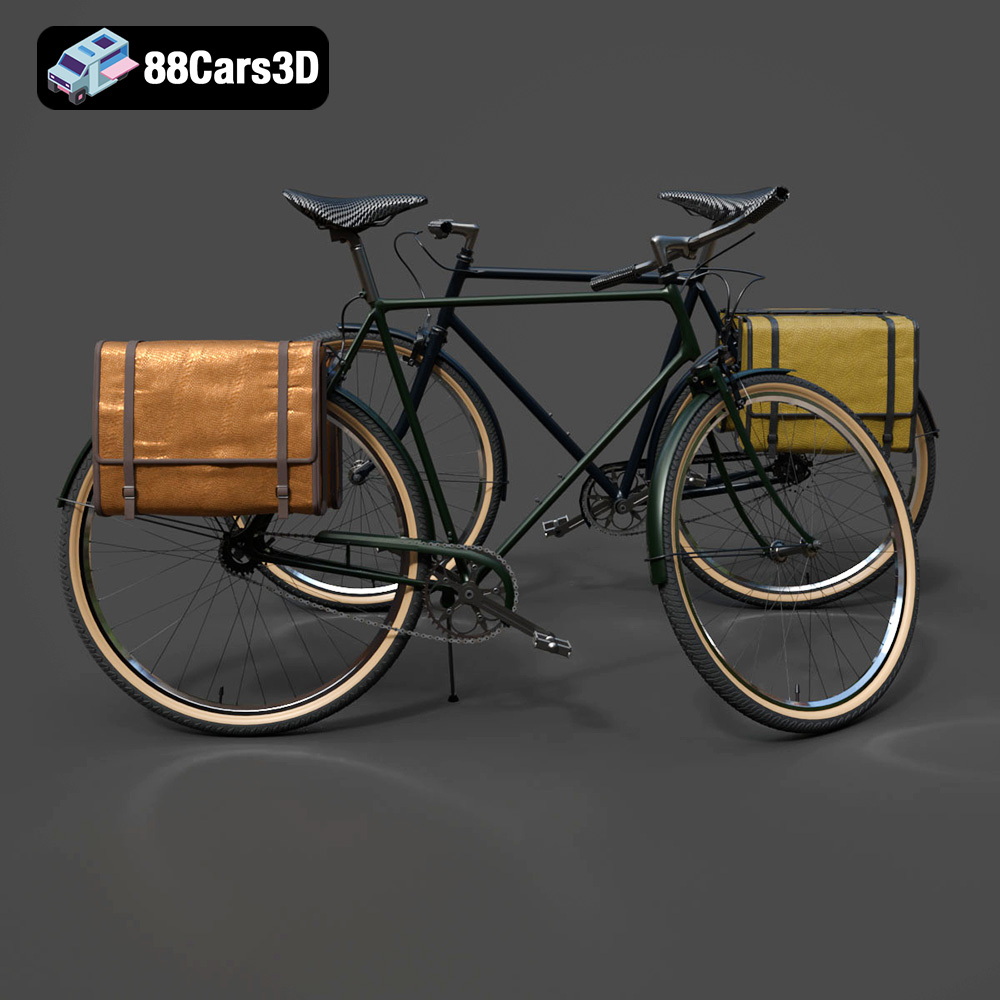
This particular model isn’t just a generic bike; it’s a meticulously crafted digital recreation of a traditional vintage-style bicycle, drawing inspiration from timeless European commuter designs. Its charm lies in the authenticity of its details: the elegantly curved steel frame, the upright riding position, slim road tires, and an array of retro embellishments. Such an asset offers unparalleled flexibility, serving as an anchor in a photorealistic street scene, a dynamic prop in a game, or an intricate detail in an AR/VR experience. It brings a touch of nostalgic character and environmental context that generic models often lack, allowing artists and developers to tell richer, more believable stories.
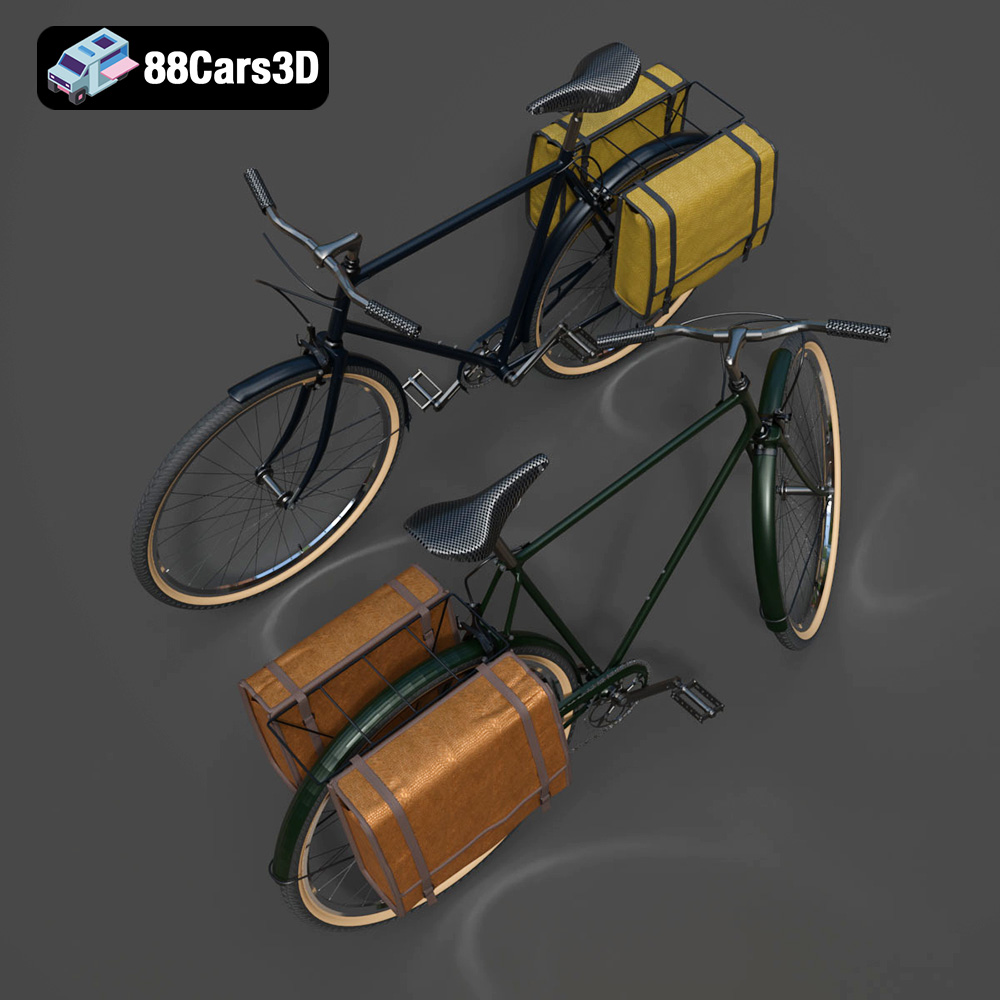
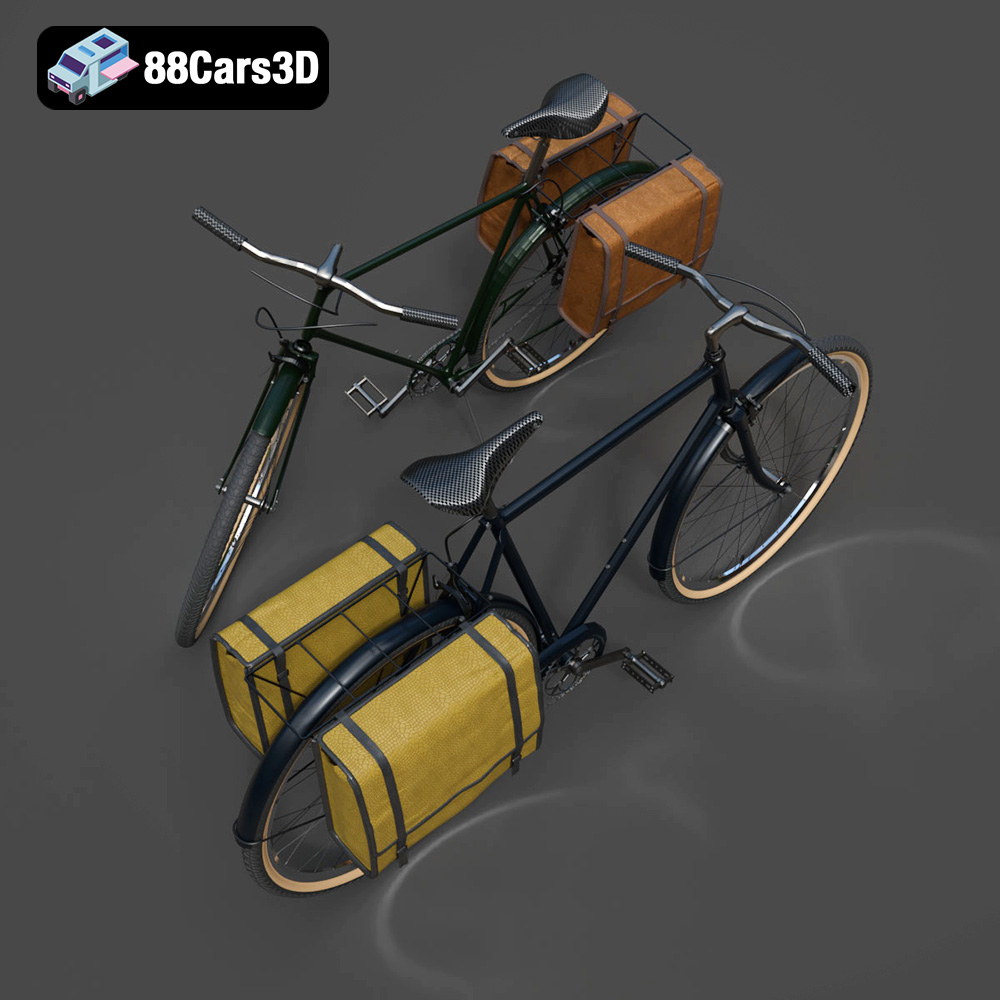
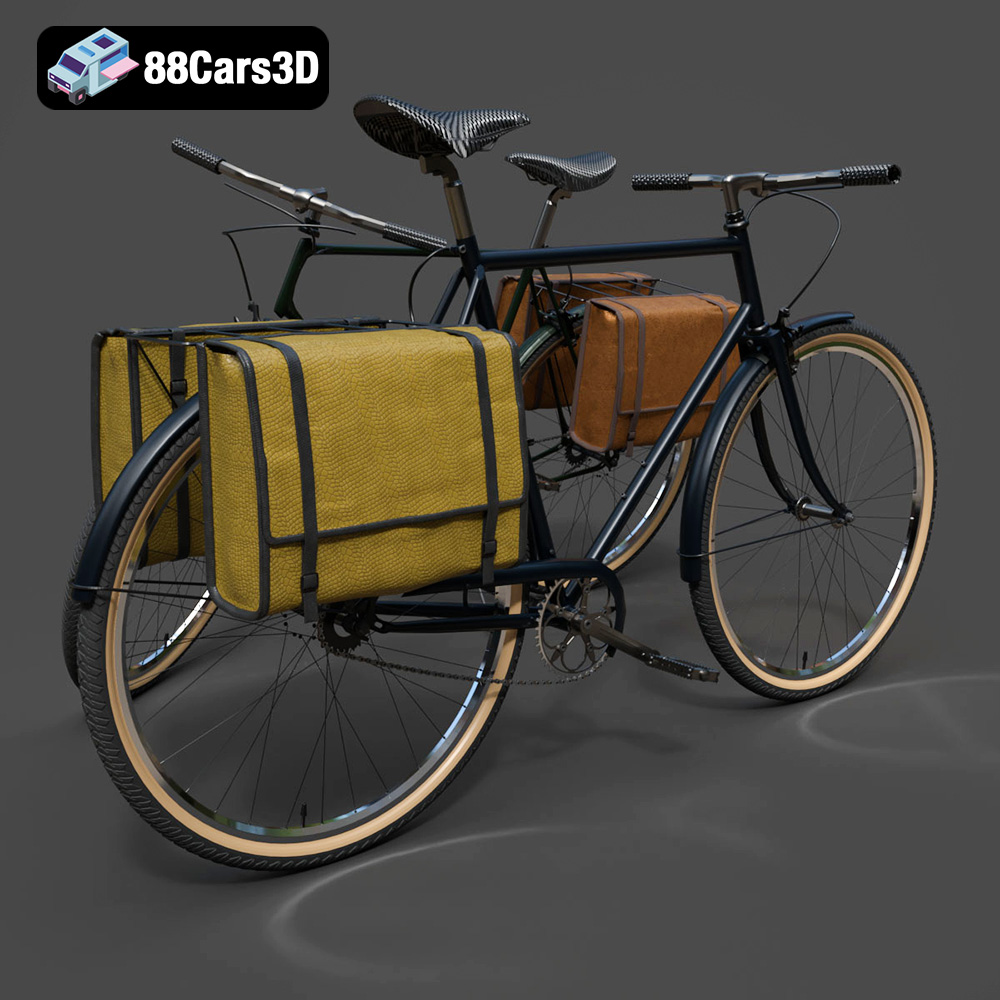
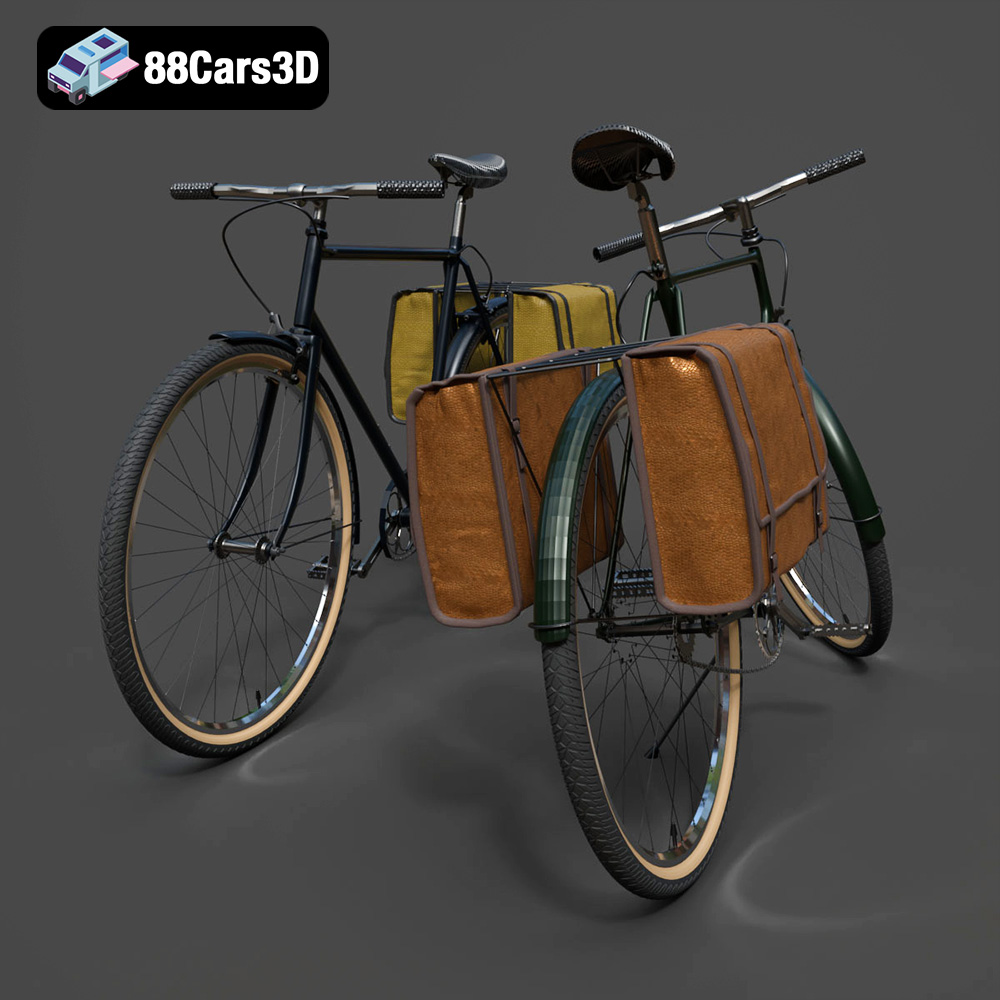
The essence of a classic bicycle lies in its distinctive silhouette and functional elegance. The Bicycle Classic 3D Model excels in capturing this authenticity. From its accurate step-through or diamond frame geometry to the finely spoked wheels and detailed chain-driven drivetrain, every component has been modeled with meticulous attention. Features like the front and rear fenders, a practical rear cargo rack, a protective chain guard, a classic saddle seat, and gracefully curved handlebars combine to create a coherent and believable vintage aesthetic. This level of detail is crucial for projects where visual fidelity is paramount, allowing the model to withstand close-up renders and detailed scrutiny.
Classic vehicles, be they 3D car models, motorcycles, or bicycles, add a layer of depth and historical context that enriches any digital environment. They evoke a sense of timelessness and often serve as visual storytelling elements, hinting at a scene’s history or character. For automotive rendering projects, incorporating such a bicycle alongside modern or period cars can create a dynamic narrative, illustrating the evolution of urban transport or simply adding a touch of everyday life to a sophisticated car showroom. Their inclusion can transform a sterile digital space into a vibrant, lived-in world, resonating more deeply with an audience.
The versatility of a 3D asset is often determined by the range and quality of its included file formats. For professional workflows, understanding the nuances of each format is critical for seamless integration, optimal performance, and preserving asset integrity across different software and platforms. The Bicycle Classic 3D Model from 88cars3d.com comes with a comprehensive suite of formats, each serving specific purposes within the 3D pipeline.
This comprehensive array of formats ensures that regardless of your specific 3D workflow—from high-fidelity automotive rendering to real-time game assets and even physical 3D prints—the Bicycle Classic 3D Model is ready to integrate seamlessly into your pipeline.
Beyond aesthetic appeal, the true value of a 3D model in professional pipelines lies in its technical foundation. The Bicycle Classic 3D Model is engineered with a focus on performance and flexibility, crucial for both high-fidelity rendering and real-time applications. This attention to detail ensures that the model not only looks good but also performs efficiently across diverse scenarios, from a complex architectural visualization in 3ds Max to an interactive scene in Unreal Engine.
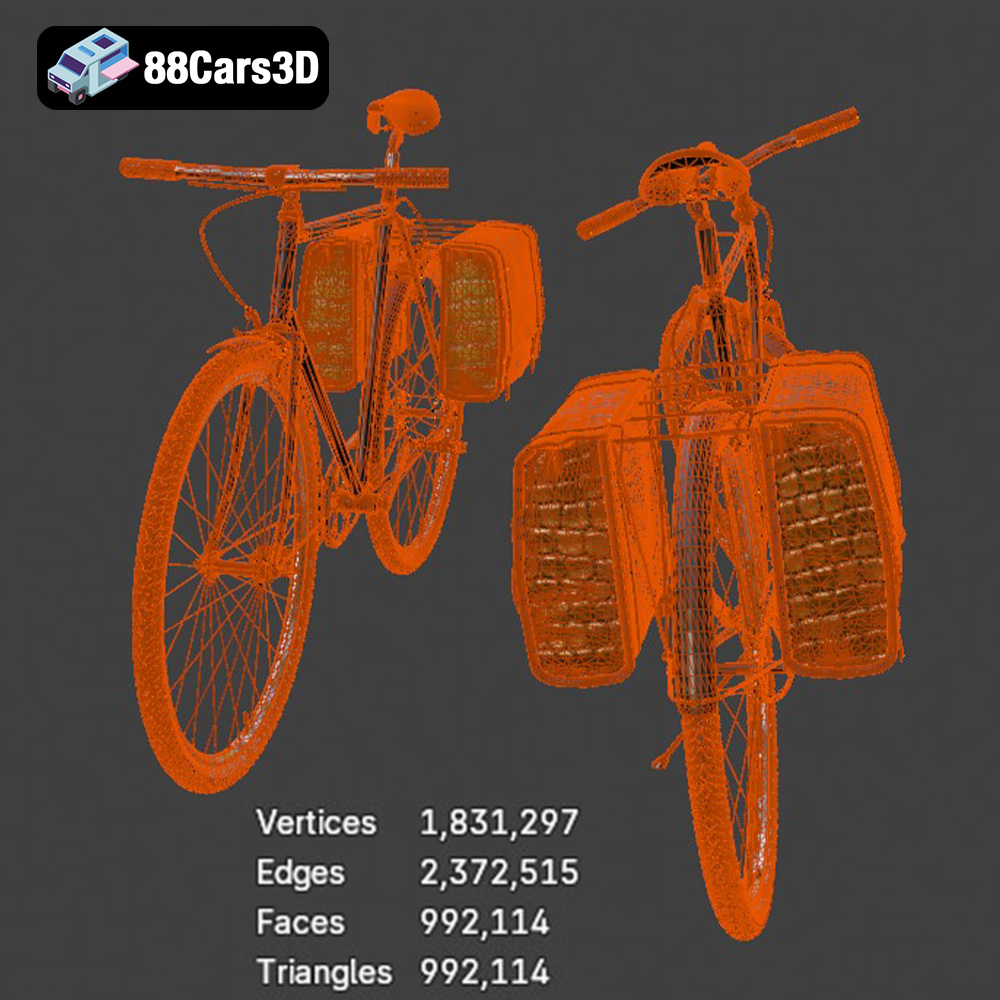
A hallmark of a professional 3D asset is its clean and well-organized mesh structure. The Bicycle Classic boasts optimized polygon flow, meaning its geometry is designed to maintain visual fidelity while keeping the poly count manageable. This is critical for preventing performance bottlenecks in real-time engines and ensuring smooth deformations during animation. The model adheres to real-world scale accuracy, which is non-negotiable for integration into realistic scenes, ensuring proper interaction with other 3D car models or architectural elements without requiring tedious scaling adjustments. Furthermore, the model is built for animation readiness: separate wheels and pedals, along with properly aligned steering pivots, allow for effortless rigging and dynamic movement. This enables artists to animate the bike realistically, whether it’s a subtle idle wobble, a full pedaling motion, or navigating a turn.
To achieve convincing realism, a 3D model needs more than just good geometry; it requires robust materials and textures. The Bicycle Classic 3D Model comes with materials designed to represent its vintage aesthetic, often incorporating Physically Based Rendering (PBR) textures. PBR ensures that materials react realistically to various lighting conditions, mimicking how surfaces reflect and absorb light in the real world. This means textures for the painted steel frame, rubber tires, leather saddle, and chrome accents will appear accurate and consistent across different rendering engines. Clean, non-overlapping UV maps are essential for applying these textures without distortion. This meticulous UV unwrapping ensures that texture artists can easily customize the appearance, perhaps adding dirt, rust, or different paint schemes, without having to re-unwrap the entire model.
The strength of a versatile 3D asset lies in its seamless integration into various professional pipelines. The Bicycle Classic 3D Model is designed to be a plug-and-play solution for a multitude of creative and technical applications, thanks to its high quality and diverse file format support.
For architectural visualization (ArchViz) artists, environmental designers, and product renderers, the Bicycle Classic is an invaluable asset. In software like 3ds Max (using the .max format) or Blender (with the .blend file), it can be dropped into a scene to immediately add character and realism. Imagine a rendering of a modern urban apartment with a vintage bicycle propped against a wall, or a bustling city park scene where the bike is ridden by a digital human. Its detailed tubular steel frame, spoked wheels, and classic saddle elevate the visual narrative, making scenes more believable and engaging. The optimized mesh and PBR-ready materials ensure stunning results with renderers like V-Ray, Corona, Cycles, or Eevee, achieving photorealistic quality for lifestyle advertising or urban promotional visuals.
In the realm of game development, AR, and VR, performance is as crucial as visual quality. The Bicycle Classic, provided in formats like .fbx and .unreal, is an excellent candidate for game assets. Its optimized polygon flow and clean topology make it efficient for real-time engines like Unreal Engine and Unity. Developers can easily import the FBX, set up physics, and integrate the separate animated components (wheels, pedals) for interactive gameplay or dynamic environmental props. Whether it’s populating an open-world city game with period-appropriate vehicles, serving as an interactive object in an educational VR simulation, or enhancing an AR experience with a historical context, the model’s readiness for real-time environments saves significant development time and resources.
The inclusion of the .stl file format opens up a fascinating avenue for the Bicycle Classic 3D Model: physical production. This makes it suitable for 3D printing, allowing hobbyists and professionals alike to bring the digital model into the tangible world. Imagine creating a detailed miniature bicycle for a tabletop diorama, a scale model for an automotive collectible display, or even a prototype component for a larger physical project. The recommended print settings (like scales, layer height, wall thickness, and support requirements) provided with the product guide users to achieve high-quality physical replicas. Post-processing, such as sanding and painting with a gloss or matte vintage finish, can further enhance the printed model’s realism, turning it into a truly unique physical asset.
To illustrate the practical application of a high-quality asset like the Bicycle Classic 3D Model, let’s explore a few hypothetical, yet entirely plausible, professional scenarios where it would shine.
A city council commissions an architectural visualization firm to create a detailed digital model of a proposed new pedestrian-friendly zone in the historic district. The firm needs to populate the scene with realistic street furniture, flora, and crucially, elements that depict human activity and daily life. While 3D car models are essential for surrounding streets, the inner pedestrian areas require human-scale vehicles. The Bicycle Classic 3D Model is chosen for its authentic vintage aesthetic, perfectly complementing the historic architecture. Artists import the .max files into 3ds Max, duplicate the model, apply various paint schemes, and pose them in different situations—some parked at bike racks, others leaning against benches. The separate wheels and pedals allow for subtle animation, showing a cyclist dismounting or a child pushing a bike, adding a dynamic and lived-in feel to the urban simulation that ultimately sways public opinion in favor of the project.
An indie game studio is developing an open-world exploration game set in a fictionalized European city from the mid-20th century. The narrative heavily relies on environmental storytelling, with objects in the world revealing clues about its history and inhabitants. To create believable street scenes and hint at character backstories, the studio requires a range of period-appropriate game assets. The Bicycle Classic 3D Model is a perfect fit. Imported via .fbx into Unreal Engine, its optimized mesh ensures it runs smoothly across different platforms. The developers integrate variations with weathered textures, some leaning forlornly against crumbling walls, others pristine and proudly displayed near shop windows. The model’s clean topology and accurate pivot points make it easy to implement simple physics for player interaction, such as knocking it over or pushing it along, further enhancing immersion and environmental interaction.
A local tourism board wants to create an augmented reality (AR) app that allows visitors to explore the city’s historical landmarks with an interactive overlay. One key feature is a “then and now” comparison for famous public squares. When users point their phone at a specific location, a virtual historical scene appears. The Bicycle Classic 3D Model is used to populate these AR scenes, representing period-appropriate transport. The .glb format is chosen for its efficiency and compatibility with AR platforms. When activated, virtual bicycles are seen “parked” or “riding” through the historical streetscape, giving users a tangible sense of what daily life was like decades ago. The real-world scale accuracy of the model ensures it aligns perfectly with the physical environment, creating a convincing blend of the past and present.
Investing in high-quality 3D assets like the Bicycle Classic 3D Model from 88cars3d.com is not just about immediate utility; it’s about future-proofing your projects and maximizing the longevity of your digital library. The inherent flexibility of such a well-constructed model allows for extensive customization, ensuring it remains relevant and adaptable to evolving project needs.
The provided detailed geometry and clean UVs of the Bicycle Classic allow for significant aesthetic modifications. Artists can easily change the frame color, experiment with different decal styles, or swap out material textures to create a unique look. Imagine applying a vibrant, modern paint job for a contemporary scene, or adding subtle rust and worn paint to depict an abandoned bike for a post-apocalyptic narrative. The ability to add accessories like a front basket, modify the handlebar type, or even attach lighting components further expands its versatility. For those aiming for hyper-realism, applying a weathered or restored finish through advanced texturing techniques can profoundly alter the model’s character, transforming it from a simple prop into a storytelling element with a rich history.
A meticulously crafted 3D model, with clean topology, proper pivot points, and accurate scale, represents a long-term asset. Unlike hastily built models that require constant fixes and rework, the Bicycle Classic 3D Model is designed for robustness. Its compatibility with major 3D software and engines, coupled with a wide range of file formats, ensures that it will remain usable across different versions of your preferred software and new project paradigms. This reliability is especially valuable in a fast-paced industry where time is money. Artists and studios can confidently integrate this model into multiple projects over many years, knowing it will provide consistent, high-quality results without unexpected technical hurdles, making it a truly smart investment for any professional working with 3D car models or other vehicle assets.
In the dynamic world of 3D modeling and visualization, the difference between a good project and an exceptional one often lies in the details. The Bicycle Classic 3D Model exemplifies the commitment to quality and versatility that professionals expect. Its exquisite vintage design, combined with meticulous technical execution—including clean topology, real-world scale, animation readiness, and PBR-friendly materials—makes it an indispensable asset for a diverse range of applications.
From enhancing the realism of automotive rendering and architectural visualizations in 3ds Max and Blender, to serving as an optimized game asset in Unreal Engine, or even coming to life as a physical collectible through 3D printing, this model offers unparalleled value. Its comprehensive suite of file formats ensures seamless integration into virtually any workflow, while the potential for customization guarantees it can be tailored to fit your unique creative vision.
By choosing premium 3D models like the Bicycle Classic, you’re not just acquiring digital data; you’re investing in efficiency, realism, and creative freedom. Explore this model and many other high-quality 3D car models and vehicle assets at 88cars3d.com, and elevate your projects to the next level of visual excellence.
The Bicycle Classic 3D Model is a high-detail digital recreation of a traditional vintage-style bicycle, inspired by timeless European commuter designs. Featuring a curved steel frame, upright riding position, slim road tires, and retro detailing, this model captures the charm and practicality of classic city bicycles. This 3D model accurately represents the step-through or diamond frame geometry, spoked wheels, chain-driven drivetrain, front and rear fenders, rear cargo rack, chain guard, classic saddle seat, and curved handlebars. Built with clean topology and real-world scale accuracy, it is ideal for rendering, animation, urban visualization, game development, and AR/VR applications.
$15.99
.arvr
.bicycle3dmodel
.bicycleclassic
.blend
.citybike
.classicbike
.fbx
.gameasset
.glb
.max
.obj
.ply
.rendering
.retrobike
.simulation
.stl
.unreal
.urbanvehicle
.vintagebicycle