Get 50% OFF All Premium 3D & STL Models!

In today’s fast-paced digital landscape, the demand for realistic, high-fidelity 3D assets is skyrocketing across diverse sectors. From Hollywood-level cinematic rendering to immersive virtual reality experiences, and from cutting-edge automotive design visualization to real-time game environments, the quality of a 3D model can significantly impact the final product’s success. Automotive models, in particular, require meticulous attention to detail, accurate proportions, and optimized topology to truly shine.
Professionals in fields such as marketing, engineering, game development, and simulation understand that investing in superior 3D car models is not just about aesthetics; it’s about efficiency, versatility, and achieving unparalleled realism. These models serve as foundational assets that can be adapted, animated, and integrated into complex scenes, saving countless hours of development time and resources. Imagine needing a robust heavy-duty truck for an industrial simulation or a detailed vehicle for an architectural visualization project. Creating such an asset from scratch, while possible, is often time-consuming and costly.
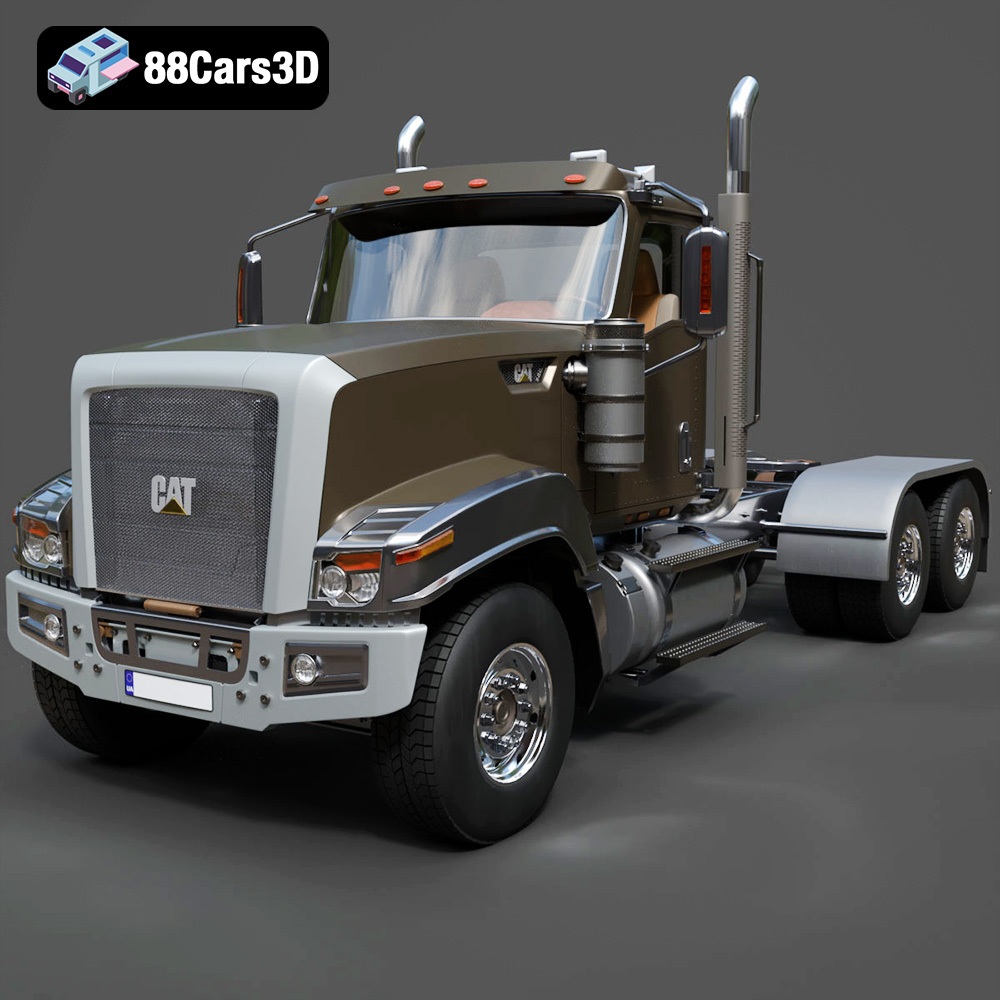
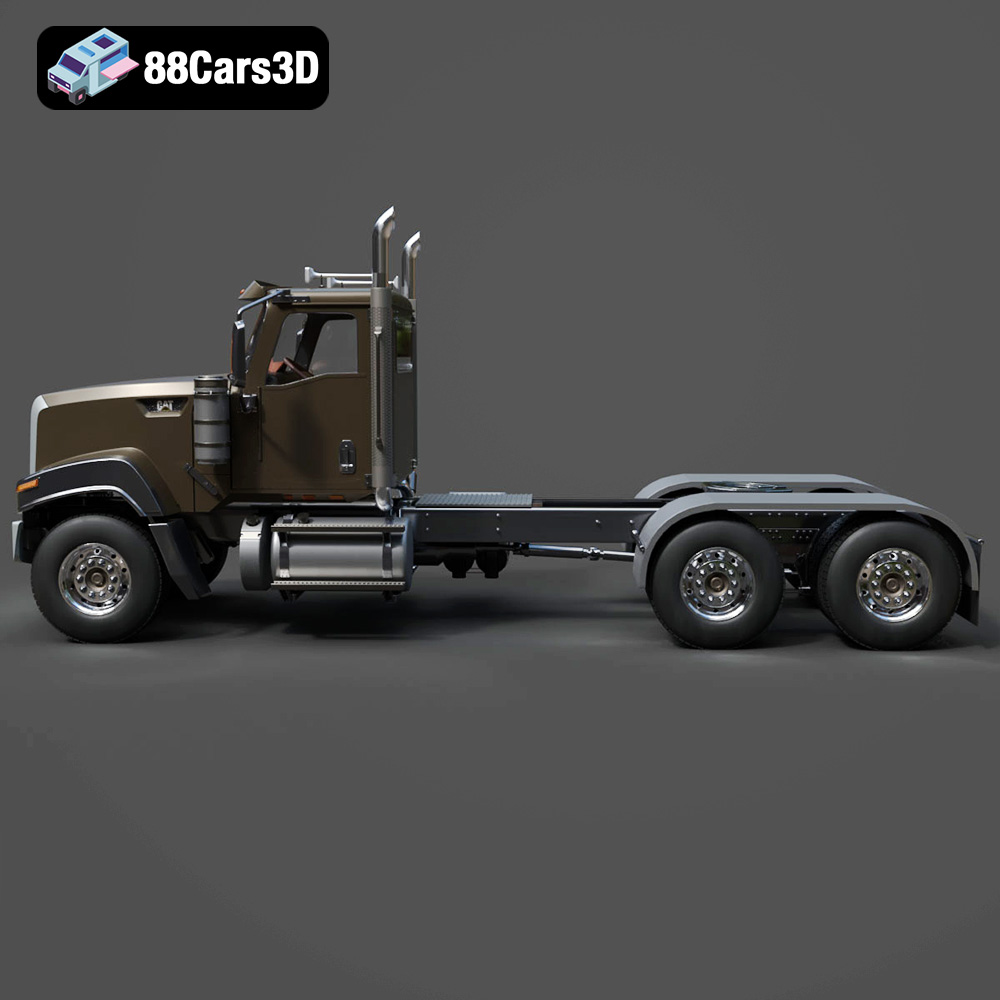
This is where expertly crafted assets like the Caterpillar CT680 Tractor Truck 2015 3D Model available on 88cars3d.com become indispensable. It represents a prime example of a professional-grade 3D asset that provides both the aesthetic fidelity and technical robustness required by demanding workflows. This model isn’t just a static representation; it’s a meticulously engineered digital twin, ready to be deployed across a spectrum of applications, from stunning automotive rendering to being a core component of interactive game assets.
The versatility of a 3D model often hinges on the file formats it supports. Different formats are optimized for various stages of a project, from initial design and editing to real-time display and manufacturing. Understanding which format to use and when is crucial for efficient workflows and ensuring compatibility across different software and platforms. The Caterpillar CT680 Tractor Truck 2015 3D Model comes with a comprehensive suite of formats, each serving a specific purpose.
The .blend file format is Blender’s native project file. It encapsulates the entire scene, including the 3D model geometry, materials, textures, lighting, camera setups, animations, and even physics simulations. For artists and studios primarily working within Blender, this format offers full editability. You can dive into the modifiers stack, adjust UV maps, tweak shader nodes, or even modify the mesh at a polygon level. For the CT680 model, the .blend file provides a complete, ready-to-render scene, allowing for seamless customization and integration into existing Blender projects, whether for Cycles or Eevee rendering.
Autodesk’s .fbx format is arguably the most widely adopted interchange format in the 3D industry. It’s designed to transfer a vast array of 3D data, including geometry, materials, textures (often embedded or referenced), animations, rigging, and cameras, between different 3D software applications. Its robustness makes it ideal for pipelines involving Unreal Engine, Unity, 3ds Max, Maya, Cinema 4D, and more. When importing the CT680 model into a game engine, .fbx is usually the preferred choice due to its ability to preserve animation data (like wheel rotations or steering pivots) and hierarchical structures, ensuring a smooth transition into real-time environments.
The .obj (Wavefront OBJ) format is a universal standard, known for its simplicity and wide compatibility. It primarily stores geometry data (vertices, normals, UV coordinates, and faces) and can reference external material files (.mtl) for basic material properties and texture paths. While it doesn’t support advanced features like animation or rigging, its widespread support makes it an excellent choice for cross-software compatibility when you only need the raw mesh data. The CT680 .obj file is perfect for importing into virtually any 3D application for basic rendering or as a base for further modeling or sculpting.
.glb (GLB, or Binary glTF) is an increasingly popular format optimized for efficient transmission and loading of 3D scenes and models in web, augmented reality (AR), and virtual reality (VR) applications. It bundles the model’s geometry, textures, and animations into a single, compact binary file, making it ideal for sharing and displaying 3D content quickly on various devices without requiring multiple asset downloads. For interactive fleet demonstrations or immersive industrial simulations involving the CT680 in a browser or AR app, the .glb format provides an optimized, lightweight solution.
The .stl (Stereolithography) format is the de facto standard for 3D printing. It represents a 3D model as a series of connected triangles (a triangulated surface mesh) without color, texture, or other CAD attributes. Its primary function is to define the surface geometry of a 3D object for additive manufacturing. The CT680 model’s .stl format ensures it is ready to be sliced and printed, allowing for the creation of physical scale models, prototypes, or display miniatures, as detailed in its product description for optimal print settings.
The .ply (Polygon File Format or Stanford Triangle Format) is another common format for storing 3D data, particularly useful for scanned data, CAD applications, and scientific analysis. Like .obj, it defines geometry, but it can also store additional properties such as color, transparency, surface normals, and even confidence values for each vertex or face. While less ubiquitous for general 3D interchange than .fbx, it offers a more robust data storage solution for specific engineering or analytical tasks where the CT680 model’s precise form might be subject to detailed examination.
The .unreal format signifies an asset specifically prepared and optimized for direct integration into Unreal Engine projects. This often means the model has already been through an export process from a DCC (Digital Content Creation) tool, potentially with specific naming conventions, LOD (Level of Detail) setups, collision meshes, and material assignments ready for the Unreal workflow. For the CT680, having an .unreal file dramatically streamlines the process of bringing this heavy-duty truck into a high-fidelity real-time simulation or game, reducing import issues and saving setup time.
Finally, the .max format is the native project file for Autodesk 3ds Max. Similar to .blend for Blender, it contains all scene data, including geometry, materials, textures, lighting, cameras, animation rigs, and any specific 3ds Max modifiers or plugins used. For users of 3ds Max, the .max file for the CT680 offers maximum flexibility and control over the model. It allows for advanced rendering with V-Ray or Corona, complex animation sequences, and precise adjustments to every aspect of the model within a professional production environment.
High-quality automotive rendering is a cornerstone of marketing, product design, and architectural visualization. The Caterpillar CT680 Tractor Truck 2015 3D Model provides an exceptional foundation for creating photorealistic imagery and compelling animations. Its detailed features and clean topology are specifically designed to excel in these demanding scenarios.
Whether you prefer the robust toolset of 3ds Max with renderers like V-Ray or Corona, or the open-source power of Blender’s Cycles and Eevee, the CT680 model is built for prime performance. In 3ds Max, importing the .max or .fbx file allows artists to immediately begin setting up complex studio lighting, applying advanced PBR (Physically Based Rendering) materials, and integrating the truck into intricate scenes – be it a bustling logistics yard or a serene highway vista. The model’s real-world scale accuracy ensures it fits seamlessly into environments built to architectural or engineering specifications.
Blender users benefit from the native .blend file, which often comes with pre-configured materials and a clean mesh structure. Artists can leverage Blender’s intuitive node-based material system to create custom paint finishes, weathered effects, or even dynamic dirt layers. The separate wheels and steering components are crucial for animations, allowing for realistic driving sequences, turns, and suspension articulation, making it ideal for everything from cinematic presentations to industrial training videos.
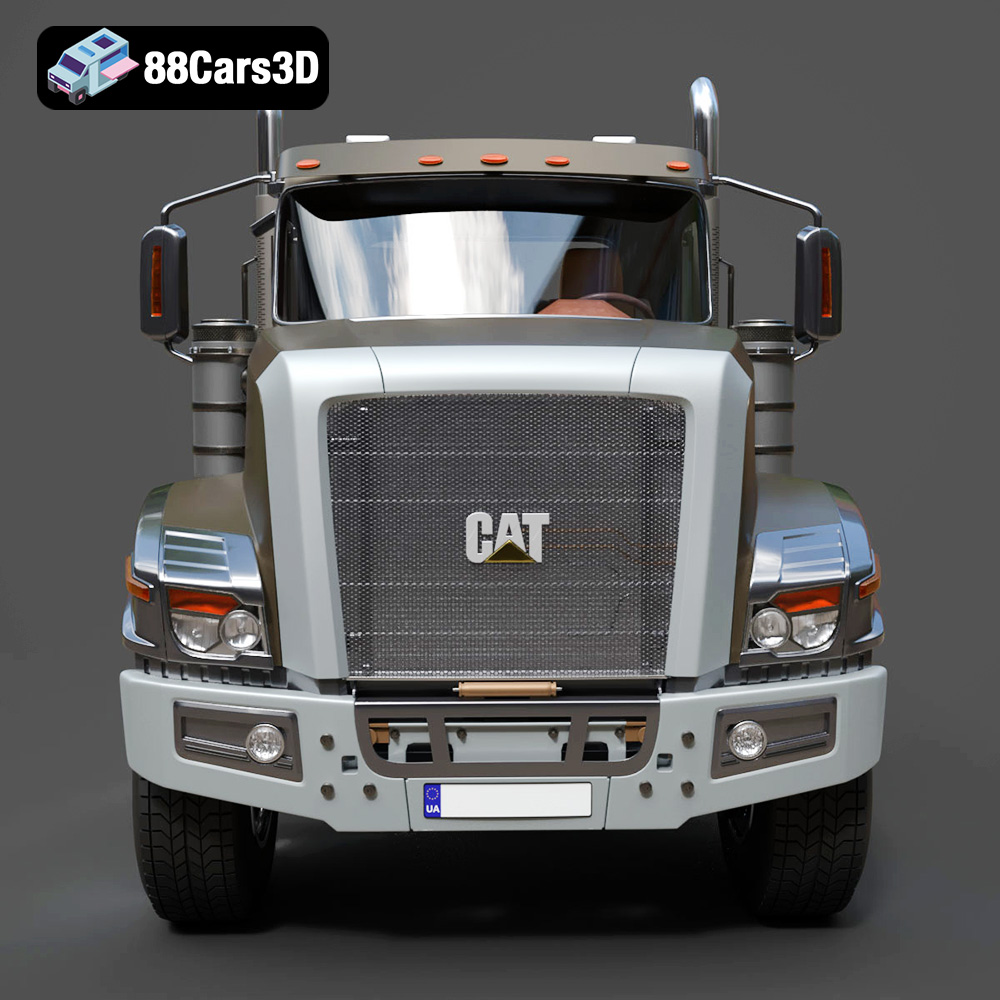
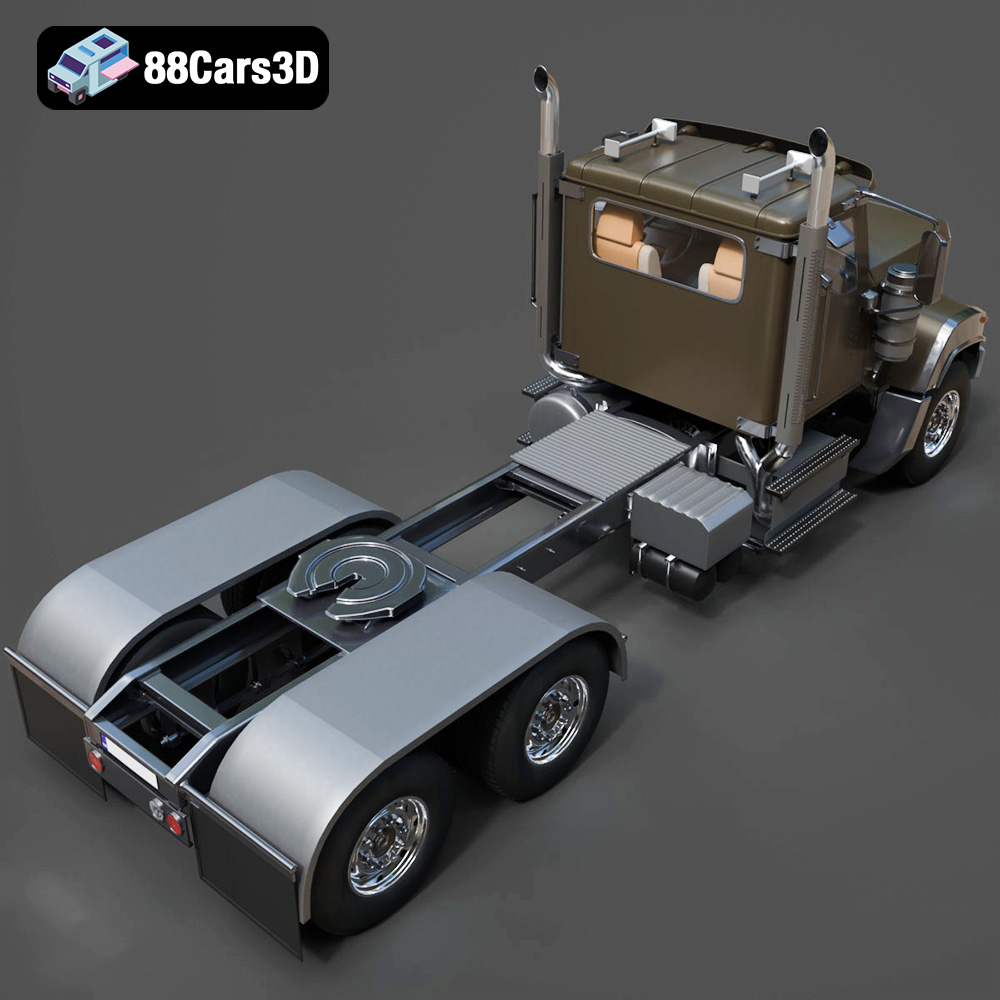
The Caterpillar CT680 is a symbol of heavy-duty reliability. Its 3D model is invaluable for industrial marketing and logistics presentations. Imagine a marketing campaign showcasing a new trailer design, where the CT680 serves as the powerful prime mover, or a simulation demonstrating optimized freight routes. The model’s accuracy allows for detailed visual communication of operational scenarios, vehicle capabilities, and even driver training modules. The attention to detail, from the bold grille to the fifth-wheel coupling system, ensures that every visual tells a story of strength and efficiency, reflecting Caterpillar’s brand ethos. Businesses seeking top-tier 3D car models for these applications will find 88cars3d.com a reliable source.
The gaming industry and real-time visualization platforms like Unreal Engine and Unity demand highly optimized assets that balance visual fidelity with performance. The Caterpillar CT680 Tractor Truck 2015 3D Model is engineered precisely for these requirements, making it an excellent game asset.
The .fbx and .unreal file formats are particularly suited for game development. When importing the CT680 into Unreal Engine, developers can leverage its clean mesh structure and optimized polygon flow to create efficient LODs (Levels of Detail), ensuring the truck looks great up close but doesn’t bog down performance from a distance. Proper pivot setup for steering and wheel rotation, as highlighted in the product’s technical advantages, is critical for realistic vehicle physics and animation in both Unreal and Unity.
Setting up materials with PBR workflows in game engines is straightforward, allowing artists to create realistic paint, metal, rubber, and glass surfaces that react correctly to dynamic lighting. Collision meshes can be easily generated or imported, enabling robust physics interactions within the game world. For truck simulators or open-world logistics games, the CT680 can become a central, playable vehicle, providing an authentic heavy transport experience.
Beyond traditional games, the CT680 model excels in augmented reality (AR) and virtual reality (VR) applications. With the .glb format, developers can integrate the truck into web-based AR experiences, allowing users to view the model in their real-world environment through a smartphone or tablet. In VR, the model can be used for immersive industrial simulations, offering interactive fleet demonstrations or training scenarios where users can explore the truck’s exterior and interior (with its modeled dashboard and instrument cluster) in a fully immersive 3D space. This brings a new dimension to vocational training and product showcases, allowing for hands-on, virtual interaction with complex machinery.
The digital realm often extends into the physical, and the Caterpillar CT680 Tractor Truck 2015 3D Model is designed with this in mind. Its suitability for 3D printing opens up a world of possibilities for creating tangible assets, from scale models to functional prototypes.
The .stl file format is the key to 3D printing. The CT680 model’s clean and manifold geometry ensures a smooth transition to a printable format. Whether for FDM (Fused Deposition Modeling) or resin (SLA/DLP) printers, the model is prepared to be sliced and printed. The product description provides specific recommendations for 3D print settings, which are crucial for achieving high-quality results:
After printing, post-processing steps such as sanding, priming, and painting are critical to achieve a professional finish. The ability to apply industrial paint finishes and optional decals means that 3D printed CT680 models can accurately represent real-world fleet vehicles or custom designs. This process transforms a digital file into a high-fidelity physical collectible, a detailed miniature for tabletop displays, or even a robust prototype for engineering review.
The customization options, like changing body colors, adding custom decals or company logos, modifying wheel configurations, and even attaching compatible trailer models, extend from the digital realm to the physical. This makes the 3D printable version of the CT680 not just a static model, but a platform for creative expression and personalized manufacturing.
The true value of a premium 3D model lies not just in its visual appeal, but in its underlying technical quality. The Caterpillar CT680 Tractor Truck 2015 3D Model boasts several technical advantages that streamline professional workflows and enhance project outcomes.
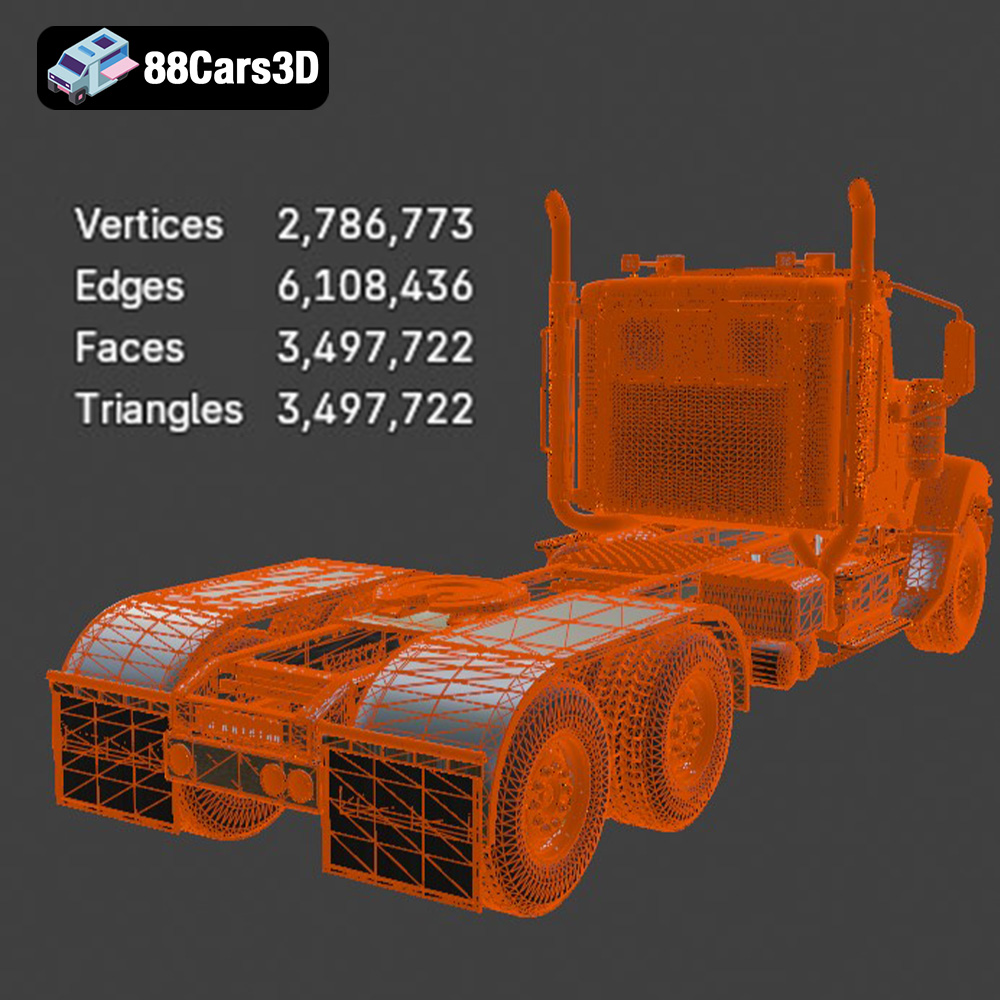
A “clean and well-organized mesh structure” is paramount for any 3D asset intended for professional use. This means the model uses efficient polygon counts, avoids ngons (polygons with more than four sides), and maintains consistent quad-based topology where possible. This quality ensures smooth deformations during animation, predictable rendering results, and ease of modification. The CT680’s real-world scale accuracy is another critical factor, allowing it to be dropped into any scene or simulation without requiring tedious resizing, maintaining environmental consistency.
The “optimized polygon flow for performance and realism” is particularly beneficial for close-up renders and real-time applications. It means that polygons are distributed intelligently, with higher density in areas requiring fine detail (like the grille or intricate mechanical parts) and lower density in flatter, less visible areas. This balance ensures both visual fidelity and efficient rendering or real-time processing.
The CT680 model features “proper pivot setup for steering and wheel rotation.” This might seem like a minor detail, but it saves animators significant time and effort. Correct pivot points mean that wheels rotate realistically around their axles, and the steering mechanism functions accurately, ready for immediate animation. This is indispensable for creating dynamic driving sequences, showcasing vehicle maneuvers, or developing interactive controls in game engines.
Beyond the inherent quality, the model offers extensive customization options:
Selecting the right 3D car models is a decision that impacts project timelines, budgets, and the overall quality of the final output. For professionals, the convenience and reliability of a dedicated marketplace are paramount. 88cars3d.com stands out as a premier destination for high-quality automotive 3D assets, offering meticulously crafted models like the Caterpillar CT680 Tractor Truck 2015 3D Model.
What sets platforms like 88cars3d.com apart is their commitment to quality. Each model is typically vetted for technical advantages such as clean mesh structures, real-world scale, and optimized polygon flow, ensuring that they meet the rigorous demands of professional production pipelines. The variety of vehicles available, from iconic passenger cars to heavy-duty industrial trucks like the CT680, ensures that artists and developers can find the perfect asset for any scenario.
The provision of multiple file formats (e.g., .blend, .fbx, .obj, .glb, .stl, .ply, .unreal, .max) with each purchase is a significant advantage. This multi-format support ensures compatibility with virtually any major 3D software platform or game engine, minimizing conversion headaches and maximizing flexibility across diverse workflows. This comprehensive approach means less time spent fixing models and more time spent on creative endeavors.
In the fast-paced world of 3D production, time is a critical resource. Purchasing a pre-made, high-quality asset from 88cars3d.com drastically reduces the time and cost associated with modeling a complex vehicle from scratch. For a project requiring a heavy-duty truck for a logistics simulation or an automotive rendering for a marketing campaign, the instant availability of a model like the Caterpillar CT680 means quicker turnaround times and the ability to meet tight deadlines without compromising on visual fidelity.
The detailed product descriptions, outlining exterior and interior features, technical advantages, and application scenarios, help users make informed decisions, ensuring the purchased model is perfectly suited for their specific needs, whether for creating stunning renders, building realistic game assets, or even producing physical 3D prints.
The digital age thrives on compelling visuals and immersive experiences, and at the heart of this revolution are high-quality 3D assets. The Caterpillar CT680 Tractor Truck 2015 3D Model is a testament to the power of precision in digital creation, offering unparalleled detail, technical robustness, and versatility for a wide array of professional applications.
From captivating automotive rendering for marketing campaigns and industrial visualizations to providing a core game asset for realistic simulations and interactive AR/VR experiences, this model stands ready. Its comprehensive file format support, including .blend, .fbx, .obj, .glb, .stl, .ply, .unreal, and .max, ensures seamless integration into virtually any production pipeline. Furthermore, its 3D printability opens avenues for physical prototyping and collectible creation, bridging the gap between digital design and tangible reality.
For professionals seeking to elevate their projects with superior 3D car models, investing in an asset like the Caterpillar CT680 Tractor Truck 2015 3D Model from 88cars3d.com is a strategic choice. It represents not just a digital truck, but a powerful tool designed to enhance efficiency, ignite creativity, and deliver exceptional results across the evolving landscape of 3D content creation.
The Caterpillar CT680 Tractor Truck 2015 3D Model is a high-detail digital recreation of the heavy-duty vocational tractor. Built for durability and on-highway performance, it combines industrial strength with aerodynamic efficiency, making it ideal for rendering, animation, simulation, game development, AR/VR industrial visualization, and even 3D printing.
$59.90
.arvr
.blend
.caterpillar
.ct680
.fbx
.gameasset
.glb
.heavydutytruck
.industrialvehicle
.logisticsvehicle
.max
.obj
.ply
.rendering
.simulation
.stl
.tractortruck
.truck3dmodel
.unreal