Get 50% OFF All Premium 3D & STL Models!

In the expansive world of 3D modeling, where every curve, shadow, and reflection contributes to the final illusion of reality, the creation of truly authentic automotive assets stands as a testament to skill and precision. From the sleek lines of a supercar to the rugged aesthetic of an off-road beast, 3D car models play a pivotal role in everything from cutting-edge automotive rendering to immersive game development and sophisticated visualization projects. Artists, designers, and developers constantly seek assets that not only look incredible but also possess the technical integrity to perform flawlessly across diverse pipelines.
Motorcycles, with their intricate mechanical components and iconic designs, present a unique challenge and opportunity for 3D artists. The balance of raw power, engineering finesse, and a distinct rebellious spirit must be meticulously translated into the digital realm. It’s a task that demands an uncompromising eye for detail, understanding that every bolt, every fin, and every stitch contributes to the overall character. This is where truly exceptional assets shine, offering a foundation for breathtaking visuals and engaging experiences. For those who appreciate the blend of raw power and iconic styling, the Harley-Davidson XR1200X holds a special place, embodying a rich flat-track racing heritage.
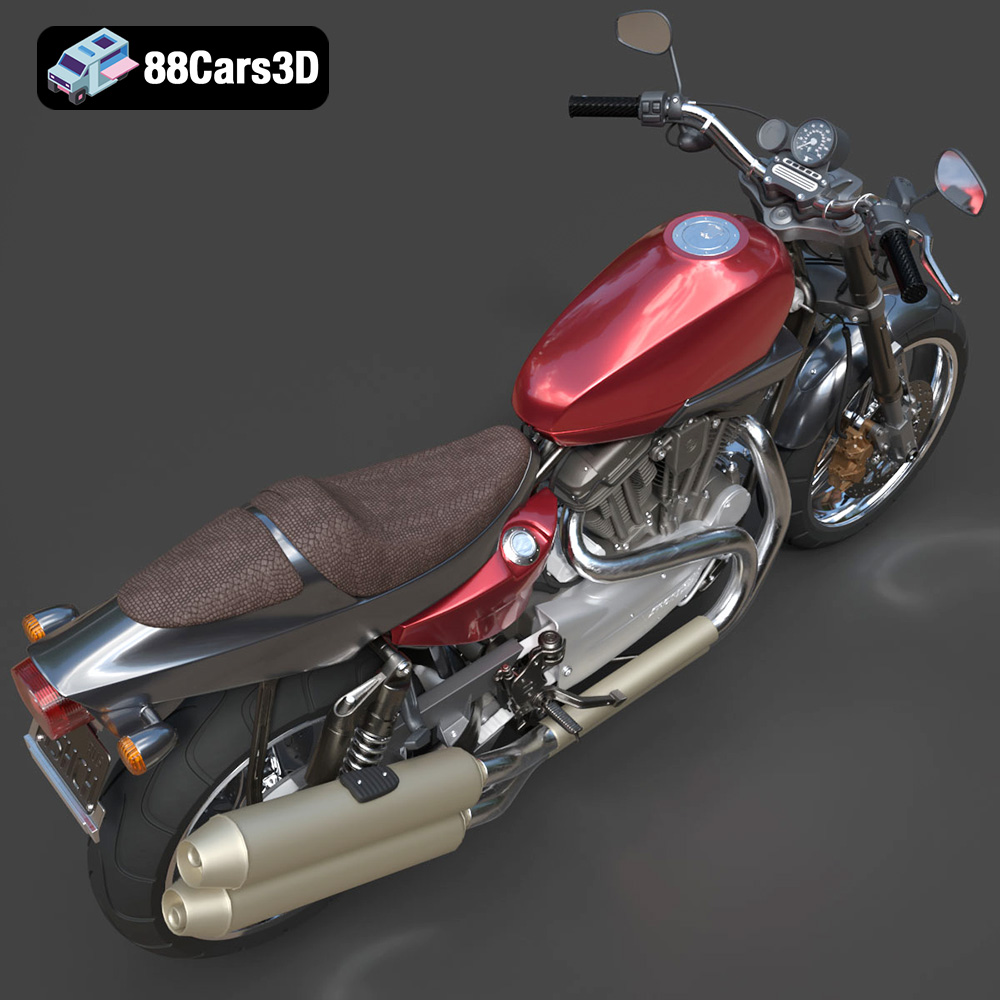
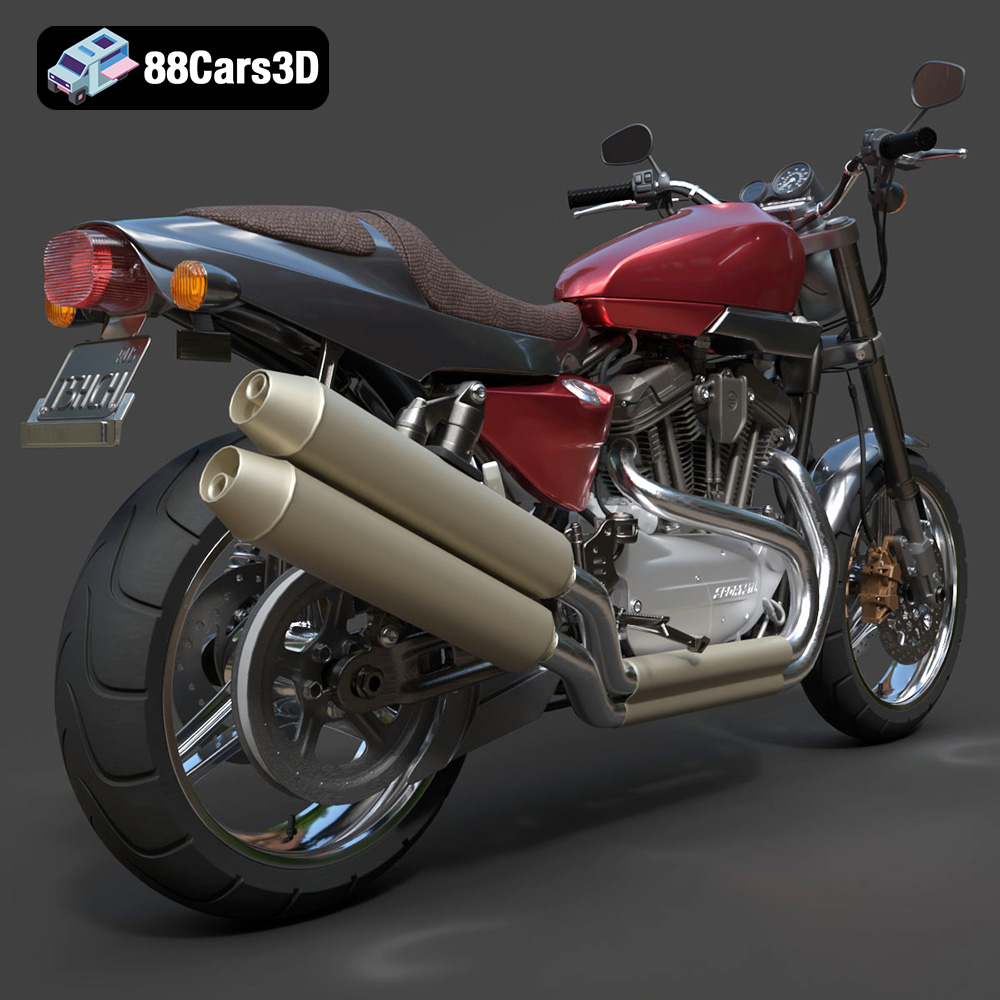
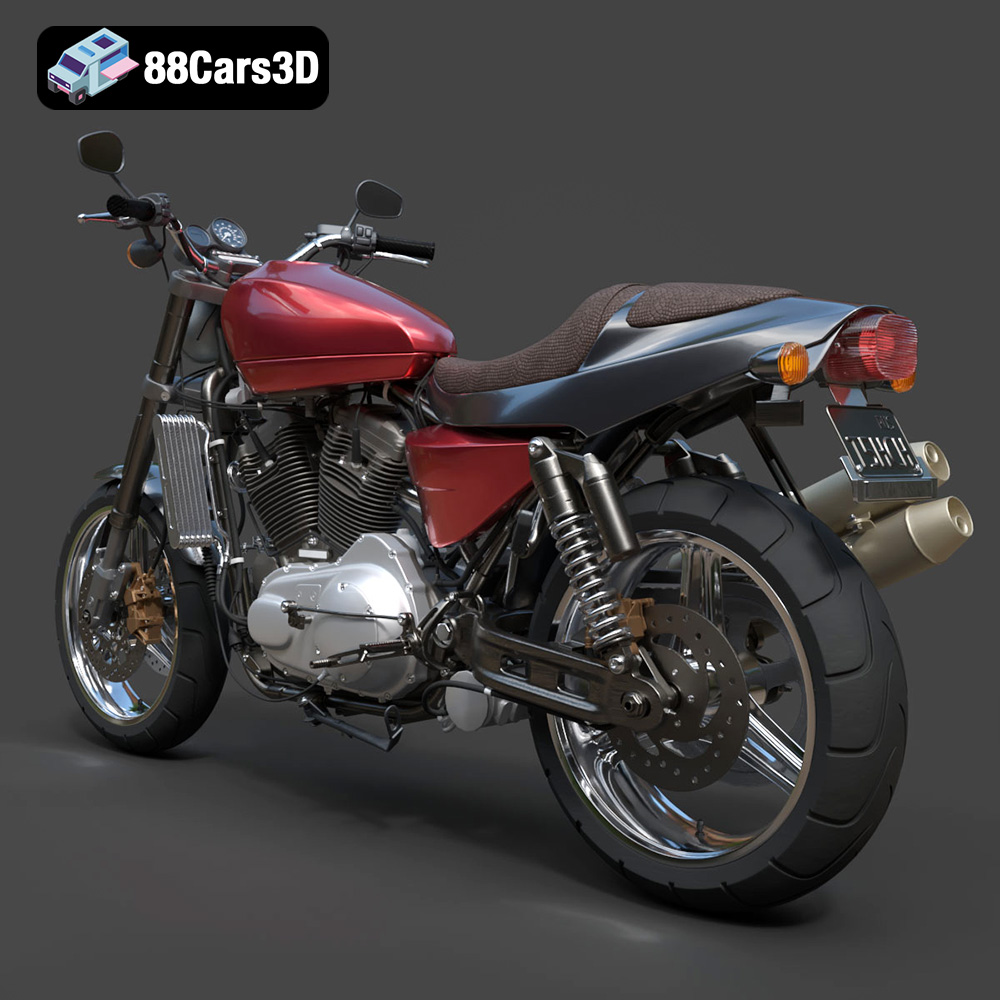
Today, we’re diving deep into a prime example of this digital craftsmanship: the Harley-Davidson XR1200X 3D Model. This isn’t just any model; it’s an ultra-high-detail digital recreation, perfectly suited for extreme close-up studio rendering, cinematic automotive visualization, and even high-end 3D printing. Available on 88cars3d.com, this model exemplifies the pinnacle of realistic 3D automotive assets, offering a robust solution for a wide array of professional applications.
The choice of a 3D model file format is far more than a simple preference; it dictates compatibility, functionality, and the efficiency of your workflow. Different formats are optimized for different stages of the 3D pipeline, from initial modeling and animation to real-time rendering and physical production. Understanding their nuances is crucial for any professional working with 3D car models or any complex asset. The Harley-Davidson XR1200X 3D Model, for instance, comes equipped with a comprehensive suite of formats, ensuring maximum flexibility for artists and developers.
The .blend format is the native file type for Blender, one of the most powerful and widely used open-source 3D creation suites. When you download a .blend file, you’re not just getting the mesh data; you’re receiving a fully editable Blender scene. This includes all materials, textures (packed or referenced), lighting setups, camera positions, animation data, and even modifiers and rigging. For users primarily working within Blender for automotive rendering or cinematic sequences, the .blend file offers unparalleled ease of use and the most direct access to the model’s underlying structure, allowing for deep customization and iteration without any data loss during import/export.
.fbx (Filmbox) is arguably the most ubiquitous proprietary 3D file format in the industry, developed by Autodesk. It’s a preferred choice for interoperability between various 3D applications like 3ds Max, Maya, and ZBrush, and is especially ideal for real-time pipelines such as Unreal Engine and Unity. FBX files can store a vast amount of data, including mesh geometry, materials, textures, animations, bones, and even camera and light data. Its robust support for animation makes it invaluable for game development and cinematic sequences where motion is key. For integrating assets like the Harley-Davidson XR1200X into a game engine, .fbx is often the go-to format due to its comprehensive nature and wide acceptance.
The .obj (Wavefront OBJ) format is a simple, universal geometry definition file. It’s a venerable ASCII-based format that primarily stores vertex positions, UV coordinates, normals, and polygonal faces. While it lacks support for animations, rigging, or advanced material properties, its simplicity makes it incredibly compatible across virtually all 3D software. For scenarios where you only need the raw mesh data, perhaps for sculpting or basic rendering in a new environment, .obj provides a robust, universally readable solution. It’s an excellent fallback format for ensuring cross-software compatibility, though you might need to re-apply materials and textures manually.
.glb is the binary version of glTF (GL Transmission Format), an open-standard 3D file format designed for efficient transmission and loading of 3D scenes and models by engines and applications. It is particularly optimized for AR, VR, and browser-based display, making it a cornerstone of the modern web3D ecosystem. A .glb file packages all necessary assets (geometry, materials, textures, animations) into a single, self-contained binary file, which significantly simplifies distribution and reduces load times. For displaying the Harley-Davidson XR1200X model on a website or in an augmented reality app, .glb is the most efficient and performant choice.
.stl (Stereolithography) is the de facto standard file format for 3D printing. It represents a 3D model as a series of connected triangles, describing only the surface geometry of an object without color, texture, or other CAD attributes. Its simplicity is its strength for additive manufacturing, providing a clear, unambiguous definition of the object’s surface for the printer to interpret. The Harley-Davidson XR1200X 3D Model, with its “3D Printable STL” designation, highlights its readiness for physical production. For motorcycle hobbyists and collectors, an .stl version means they can bring this detailed digital model to life as a tangible object, a testament to the model’s design integrity.
.ply (Polygon File Format) is another popular format for storing 3D data, particularly known for its use in 3D scanning and applications requiring precise mesh information. Unlike .stl, .ply can store a wider range of data, including color, transparency, surface normals, and even confidence values for each vertex or face. This makes it a powerful choice for scientific visualization, CAD, and situations where additional metadata beyond simple geometry is crucial. While less common for general rendering, its precision makes it valuable in specific technical workflows.
The inclusion of an .unreal file format indicates an asset that has been specifically prepared or optimized for direct import into Unreal Engine. While Unreal typically uses .fbx for import, an .unreal file might imply a pre-packaged asset bundle or a scene component that adheres to Unreal’s specific conventions and optimizations. This streamlines the workflow significantly, reducing the time and effort required to get the model running efficiently within the engine, even for heavy hero assets like the XR1200X, which would still require optimization within Unreal.
Similar to .blend for Blender, the .max file format is the native project file for Autodesk 3ds Max. This format contains the complete scene data, including all geometry, materials, textures, lighting, cameras, animation, and modifier stacks. For professionals working primarily in 3ds Max for high-end automotive rendering or detailed animation projects, the .max file provides full editability and access to every aspect of the model as intended by its creators. This ensures a seamless transition into a 3ds Max-centric pipeline, preserving all intricate details and setups.
The allure of a Harley-Davidson motorcycle extends far beyond its chrome and roar; it’s a testament to a specific culture, a rich history, and an unmistakable aesthetic. The XR1200X, in particular, stands out as a performance-focused Sportster, deeply rooted in the brand’s legendary flat-track racing heritage. Translating this heritage and mechanical integrity into a digital asset requires an expert touch, and the Harley-Davidson XR1200X 3D Model achieves this with remarkable fidelity.
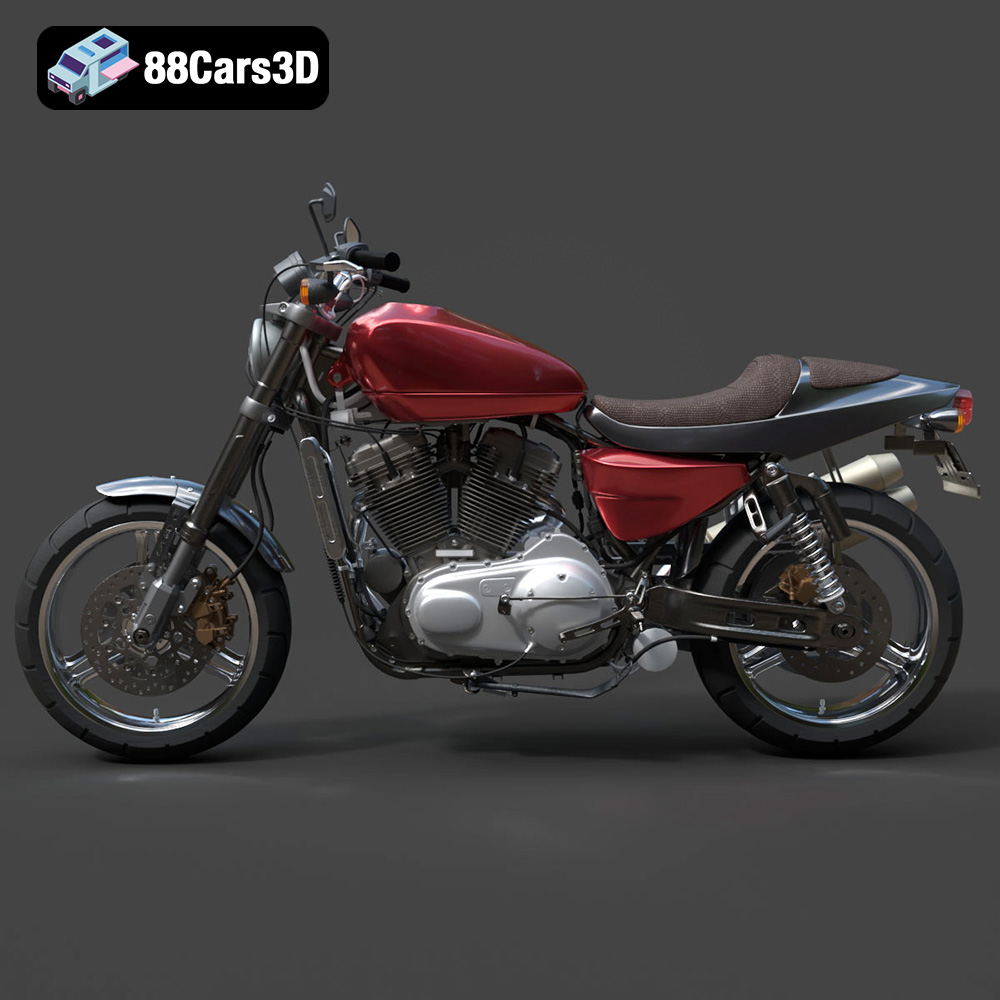
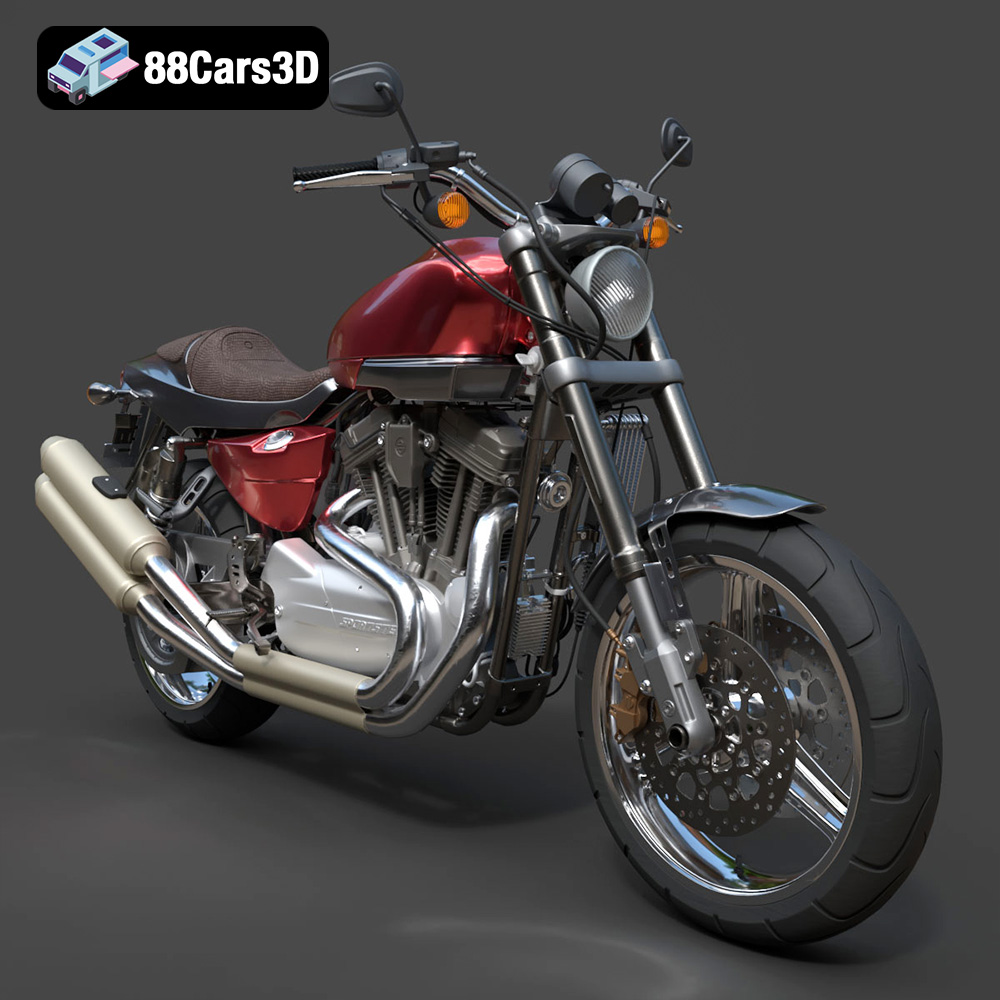
Inspired by the dominant XR750 flat-track racer, the XR1200X was engineered for handling and speed, a distinct departure from some of Harley-Davidson’s more cruiser-oriented offerings. This model boasts a blacked-out Evolution V-Twin engine, upgraded Showa suspension, and an aggressive dirt-tracker styling that immediately identifies its pedigree. The 3D model meticulously captures these signature elements: the sport-tuned chassis, the distinctive flat-track style tail section, wide handlebars, dual front disc brakes, fully adjustable piggyback rear shocks, and the iconic upswept exhaust system. Every design cue, from the classic XR-style teardrop fuel tank to the clipped rear tail cowl, is faithfully reproduced, allowing artists to leverage this rich history in their visualizations.
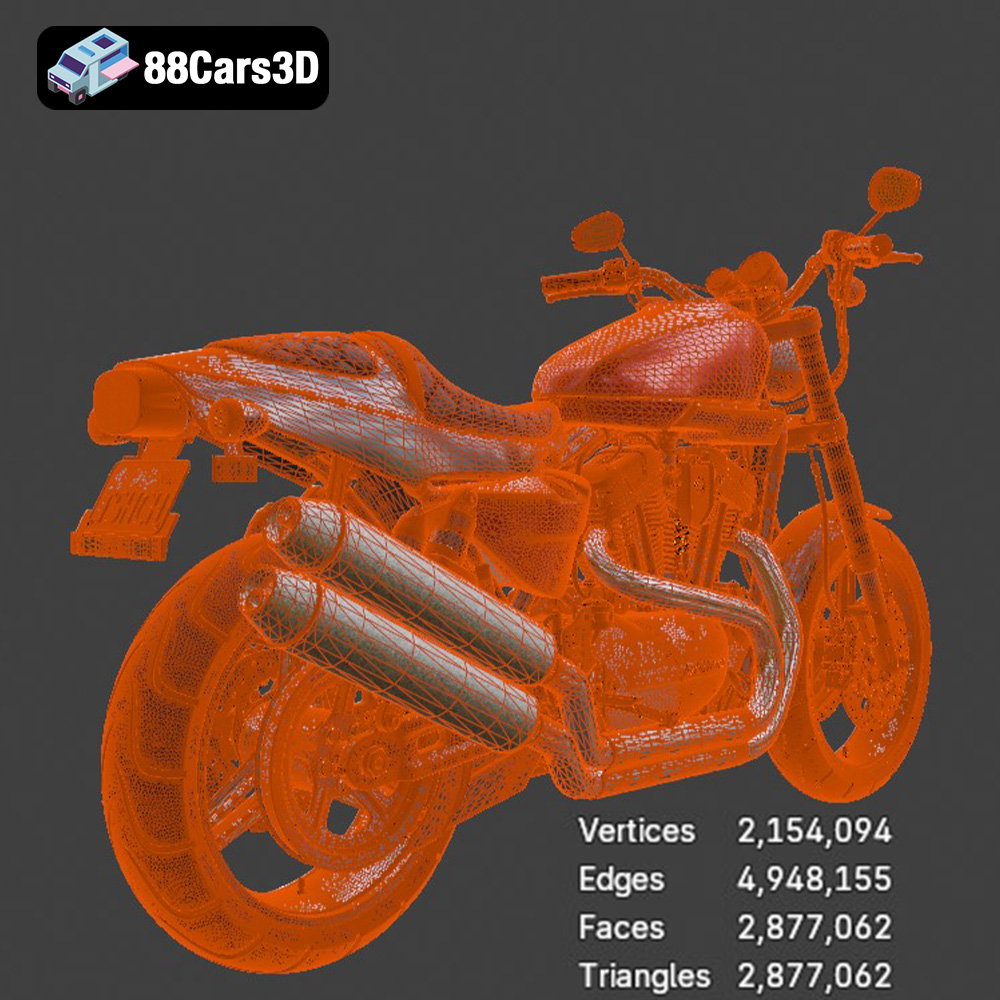
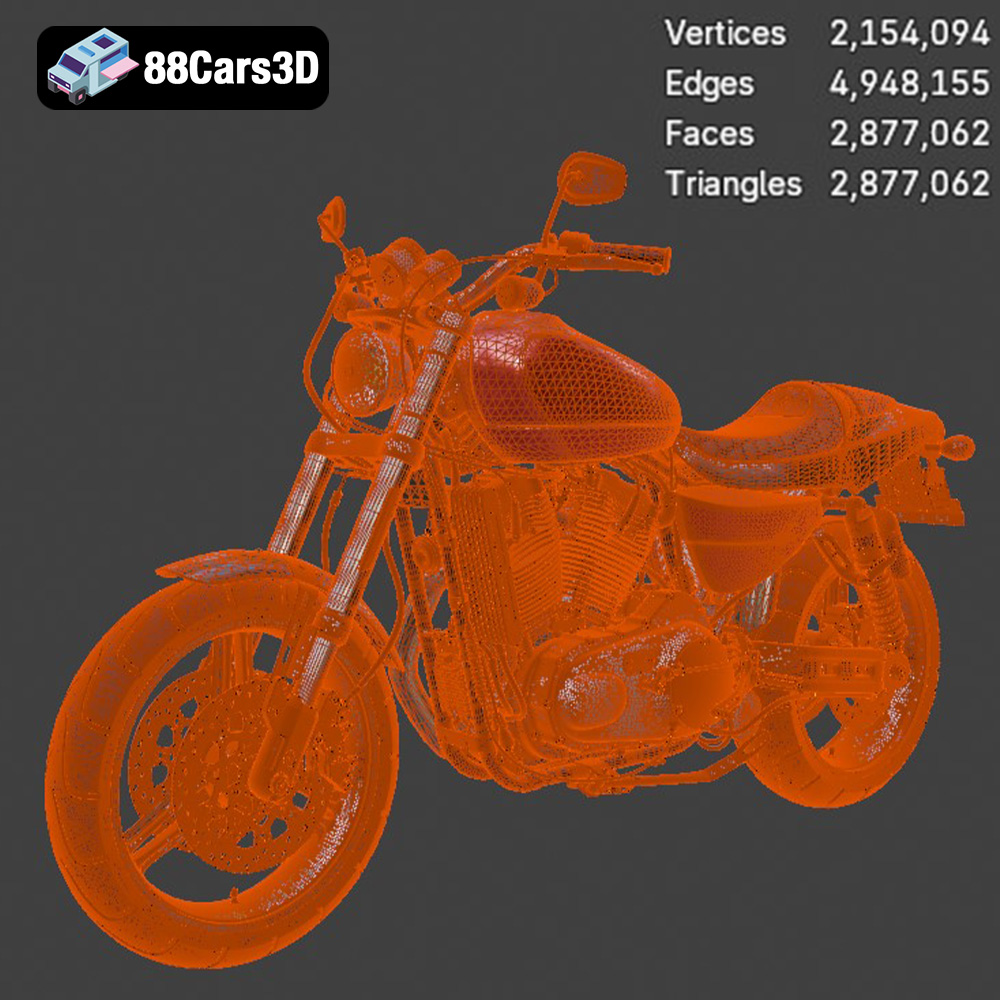
What truly sets this 3D model apart is its uncompromising, ultra-high-polygon topology. With nearly 2.9 million triangles (2,877,062 triangles, to be exact), this asset is engineered for absolute photorealism. This level of detail means that even in extreme close-up studio rendering or cinematic automotive visualization, every intricate component holds up to scrutiny. Imagine the glint on each cooling fin of the 1200cc Evolution V-Twin engine, the precise braiding of the brake lines leading to the Nissin calipers, or the subtle textures on the sporty, stepped solo seat. This isn’t a low-polygon approximation; it’s a digital twin, capturing every bolt, wire, and engineered curve with uncompromised geometric accuracy. It’s a “hero asset” in every sense, designed to be the star of any scene, ensuring maximum visual fidelity.
Beyond its stunning visual appearance, the true value of a professional 3D model lies in its technical specifications. For complex assets like the Harley-Davidson XR1200X 3D Model, these details dictate its suitability for various production pipelines, its performance, and its flexibility in an artist’s hands. Understanding the technical advantages is key to leveraging this asset to its fullest potential.
The statistics speak volumes: 2,154,094 Vertices, 4,948,155 Edges, and 2,877,062 Faces/Polygons/Triangles. This staggering polycount, close to 2.9 million triangles, is not an arbitrary number. It represents a deliberate decision to prioritize geometric detail over real-time performance, making this model an ideal choice for pre-rendered cinematic sequences and high-end still image production. For automotive rendering, where imperfections and minute details contribute significantly to realism, a high-poly count allows for incredibly smooth surfaces without visible faceting, sharp edges where intended, and intricate mechanical components to be fully modeled rather than faked with normal maps. This model captures every nuance, from the intricate cooling fins of the V-Twin engine to the detailed suspension springs and brake assemblies, ensuring that even under extreme close-up, the illusion of reality remains unbroken.
A static model, however beautiful, limits creative potential. The Harley-Davidson XR1200X 3D Model is built with animation in mind. It features proper pivot setups for crucial moving parts like steering, wheel rotation, and suspension articulation. This means artists don’t have to spend valuable time configuring pivot points; they can jump straight into animating realistic turns, bumps, and even full suspension compression. The model’s components—wheels, steering, and suspension—are separate entities, allowing for independent movement and dynamic scene creation. Furthermore, the model adheres to real-world scale accuracy based on the actual XR1200X chassis. This critical detail ensures that when integrated into larger scenes or alongside other assets, the motorcycle maintains correct proportions, aiding in realistic camera setup and environmental interaction. This commitment to structural and functional accuracy makes it a robust foundation for any project requiring dynamic motorcycle action.
The versatility of a high-quality 3D asset like the Harley-Davidson XR1200X 3D Model is defined by its applicability across different professional domains. While its ultra-high polycount clearly targets specific use cases, its thoughtful construction and included file formats ensure it can be adapted for a multitude of creative and technical endeavors.
This model is purpose-built for the demands of high-end cinematic production and extreme close-up studio rendering. Imagine it as the center piece of a premium studio lighting setup, showcasing every detail of its blacked-out Evolution V-Twin engine under a dramatic spotlight. Its intricate geometry allows for breathtaking reflections and refractions, making it perfect for high-octane lifestyle campaigns, luxury brand advertisements, or detailed mechanical design showcases. From capturing the texture of the seat to the gleam of the exhaust, every aspect is designed to hold up to the scrutiny of a high-resolution render. Automotive rendering studios will find this asset invaluable for creating photorealistic imagery that blurs the line between digital and reality, offering an unparalleled foundation for compelling visual narratives.
While the Harley-Davidson XR1200X 3D Model is an undisputed “hero asset” in terms of visual fidelity, its nearly 2.9 million triangle count means it’s a heavy asset for real-time game engines or AR/VR applications. However, this is not a limitation but an opportunity. For game developers or AR/VR creators who require the absolute highest quality for a primary vehicle or a central interactive piece, this model provides an exceptional starting point. The workflow would typically involve manual retopology, baking, or decimation. Retopology involves creating a lower-polygon mesh that still captures the essential forms, then baking the high-poly detail (normals, ambient occlusion, curvature, etc.) onto the low-poly version using texture maps. Alternatively, decimation tools can automatically reduce polygon count, though often with some loss of fine detail. This process allows developers to retain the model’s stunning detail while achieving the performance necessary for smooth, real-time interaction in game engines like Unreal Engine or Unity. The inclusion of .fbx and .unreal formats facilitates this process, offering a solid base for optimization.
One of the most exciting applications for such a meticulously crafted 3D model is 3D printing. The Harley-Davidson XR1200X 3D Model, with its “3D Printable STL” designation, is an absolutely incredible base for highly detailed, large-scale custom resin prints. Motorcycle hobbyists and collectors can transform this digital masterpiece into a tangible, collectible model. The product provides precise recommendations for achieving the best results:
This comprehensive guidance ensures that even those new to 3D printing can achieve impressive results, bringing a piece of Harley-Davidson’s legacy into the physical world.
A truly valuable 3D asset provides not just a perfect recreation, but also the flexibility for artists to make it their own. The Harley-Davidson XR1200X 3D Model is designed with this creative freedom in mind, offering numerous avenues for customization and seamless integration into diverse visual narratives.
The beauty of working with high-quality 3D car models is the ability to easily adapt them to specific creative visions. For the XR1200X, this means more than just minor tweaks. Artists can effortlessly change the fuel tank and tail cowl colors, experimenting with iconic finishes like Black Denim, White Hot Denim, or the classic XR Racing Orange to match different aesthetics or brand requirements. Imagine adding custom racing numbers to the flat-track style tail section, instantly transforming the model from a street performance bike into a dedicated racer ready for the dirt oval. Furthermore, the ability to modify the exhaust material—perhaps adding realistic thermal bluing effects or intricate heat wrap textures—enhances the storytelling potential, suggesting a bike that has been pushed to its limits. These customization options empower artists to create unique compositions and tailor the model to exacting client specifications.
Beyond individual component customization, the Harley-Davidson XR1200X 3D Model serves as an excellent centerpiece for crafting immersive digital environments. Its robust construction and detailed geometry allow it to shine in various settings. Picture it tearing through a sun-drenched dirt track, kicking up dust in a dynamic flat-track racing scene. Or visualize it carving through winding canyon roads, its aggressive stance emphasized by dramatic lighting. For more intimate showcases, the model looks equally at home in a moody, industrial garage environment or under the crisp, even illumination of a bright studio setup for product photography. The ability to adapt lighting—from harsh sunlight to soft studio lights—further enhances its versatility, allowing artists to evoke different emotions and highlight specific design features. This flexibility ensures that the XR1200X can be integrated into virtually any visual context, becoming a focal point in diverse narratives.
The Harley-Davidson XR1200X 3D Model stands as a pinnacle of digital craftsmanship, offering an ultra-high-detail recreation of an iconic motorcycle with a rich racing heritage. Its nearly 2.9 million triangles ensure absolute photorealism, making it an indispensable asset for professionals engaged in high-end cinematic production, extreme close-up studio rendering, and detailed automotive visualization. From its meticulously recreated blacked-out Evolution V-Twin engine to its high-performance Showa suspension and signature upswept exhaust, every element has been captured with uncompromised geometric accuracy and real-world scale.
While its formidable polycount requires optimization for real-time applications like game development and AR/VR, it provides an unparalleled foundation for retopology and baking, ensuring that even optimized versions retain maximum visual fidelity. Furthermore, its robust design and comprehensive 3D printing guidelines open up exciting avenues for physical production, allowing enthusiasts to bring this digital legend into the tangible world as highly detailed scale models. The inclusion of a wide array of file formats—including .blend, .fbx, .obj, .glb, .stl, .ply, .unreal, and .max—guarantees seamless integration into virtually any professional workflow.
For artists, designers, and developers seeking premium 3D car models and exceptional automotive assets, the Harley-Davidson XR1200X 3D Model offers not just a product, but a gateway to unparalleled creative possibilities. Discover this and many other high-quality 3D models at 88cars3d.com, where precision meets passion in the world of digital automotive design.
The Harley-Davidson XR1200X 3D Model is an ultra-high-detail digital recreation of the American brand’s legendary performance-focused Sportster. Deeply inspired by Harley-Davidson’s dominant XR750 flat-track racing heritage, the XR1200X was built for handling and speed, featuring a blacked-out Evolution V-Twin engine, upgraded Showa suspension, and aggressive dirt-tracker styling. This 3D model meticulously captures the sport-tuned geometry of the original bike, featuring the distinctive flat-track style tail section, wide handlebars, dual front disc brakes, fully adjustable piggyback rear shocks, and the signature upswept exhaust system. Built with an uncompromising, ultra-high-polygon topology (nearly 2.9 million triangles), it delivers absolute photorealism and maximum visual fidelity for extreme close-up studio rendering, cinematic automotive visualization, and high-end 3D printing. Perfect for flat-track racing scenes, dynamic canyon-carving renders, premium automotive galleries, and cinematic productions.
$69.99
.blend
.fbx
.obj
.rendering
.stl
.xr1200x
2m-polygons
3d printing
evolution-engine
flat-tracker
harley-davidson
hero-asset
high poly
motorcycle-3d-model
sportster
xr1200