Get 50% OFF All Premium 3D & STL Models!

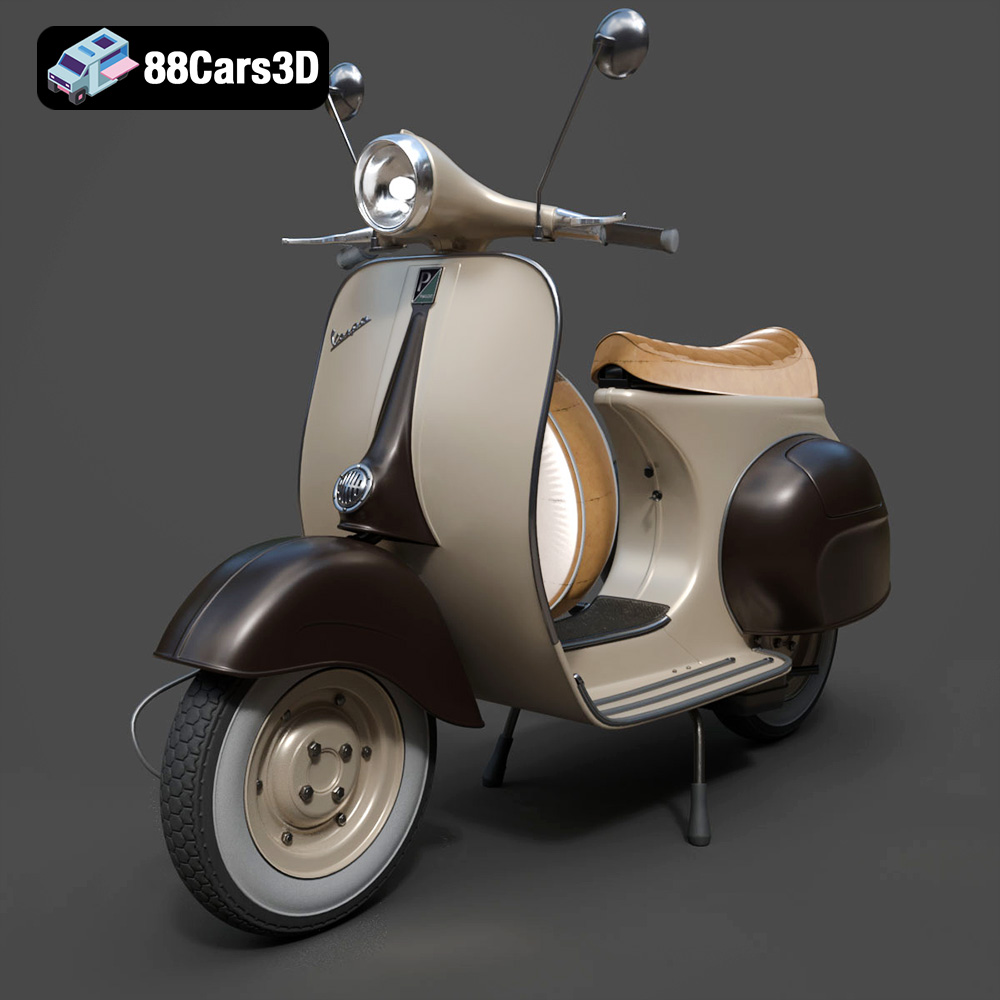
Few vehicles embody a sense of freedom, style, and iconic design quite like the Vespa. More than just a scooter, it’s a cultural phenomenon, an emblem of Italian ingenuity, and a symbol of mid-century cool. Among its storied lineage, the Vespa VNB 125, produced in the early 1960s, stands out with its elegant curves, robust monocoque steel body, and unparalleled urban practicality. It represents a golden era when design and functionality converged seamlessly.
For 3D artists, game developers, animators, and visualization specialists, recreating such a classic is often a labor of love, requiring meticulous attention to detail and a deep understanding of automotive aesthetics. Fortunately, the quest for a perfectly modeled vintage scooter ends here. The Vespa VNB 125 3D Model offers a high-detail digital recreation, capturing every nuance from its rounded leg shield to its period-correct wheel styling. This isn’t just a model; it’s a versatile asset designed to integrate flawlessly into a myriad of professional workflows, whether you’re crafting a photorealistic render, building an immersive game environment, or even preparing a collectible for 3D printing. It’s an essential tool for anyone seeking to infuse their projects with a touch of timeless retro charm, available now on 88cars3d.com.
The appeal of the Vespa VNB 125 lies in its distinctive visual language. Every curve, every chrome accent, and every proportion speaks of a bygone era of sophisticated simplicity. Translating this organic design into the digital realm requires more than just scanning; it demands artistic interpretation backed by technical precision. The Vespa VNB 125 3D Model achieves this delicate balance, delivering a digital asset that is both beautiful and robust.
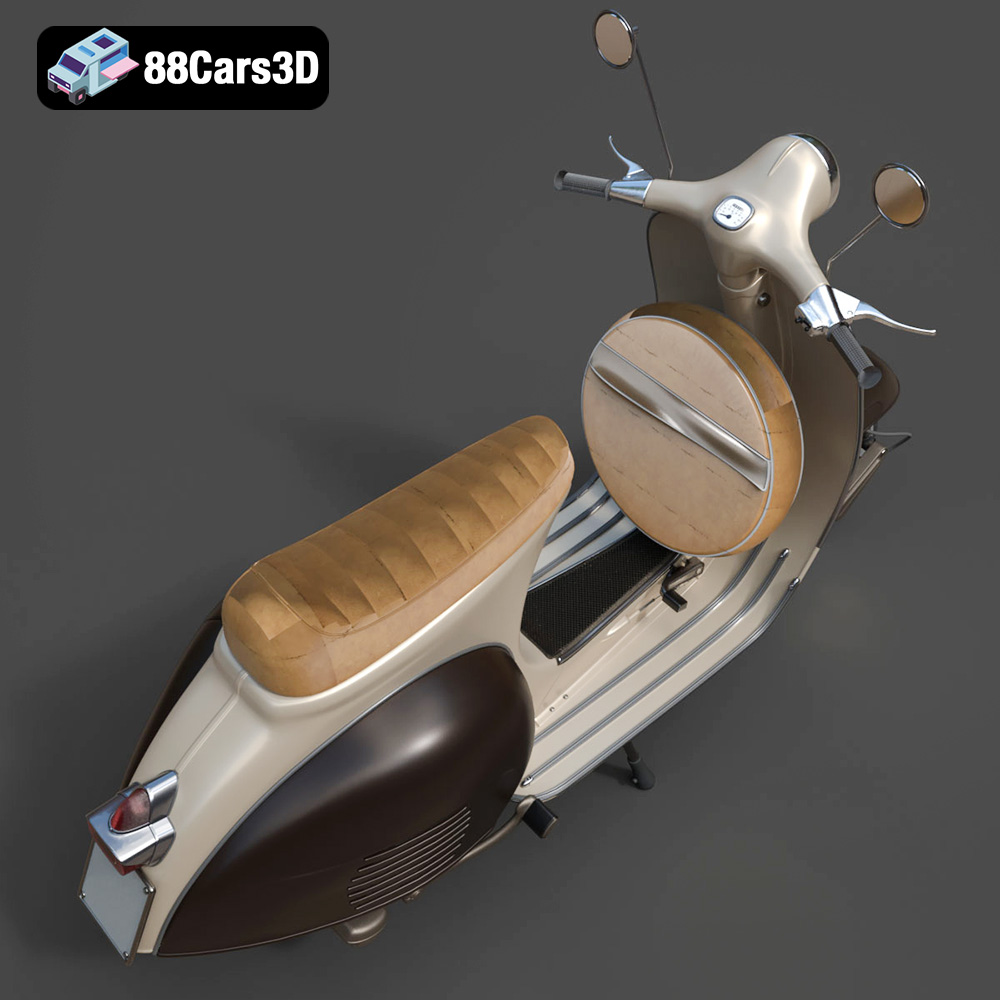
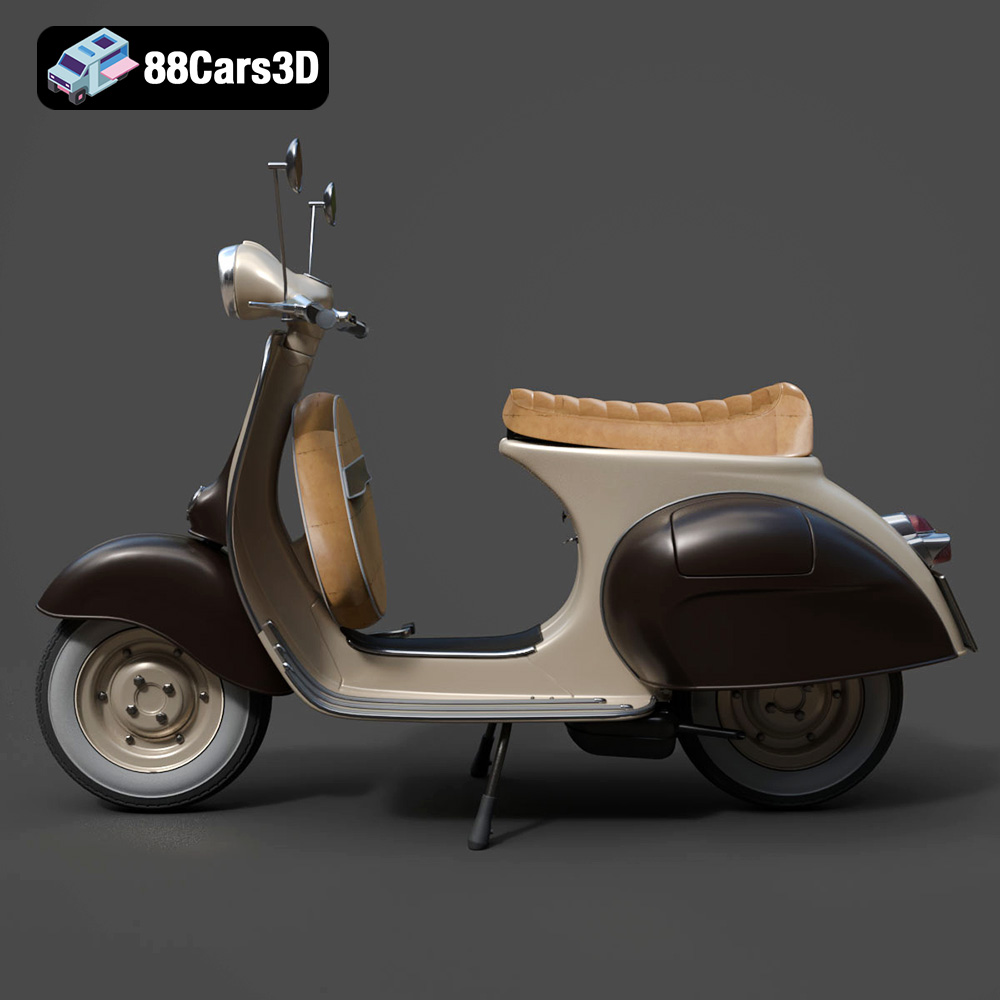
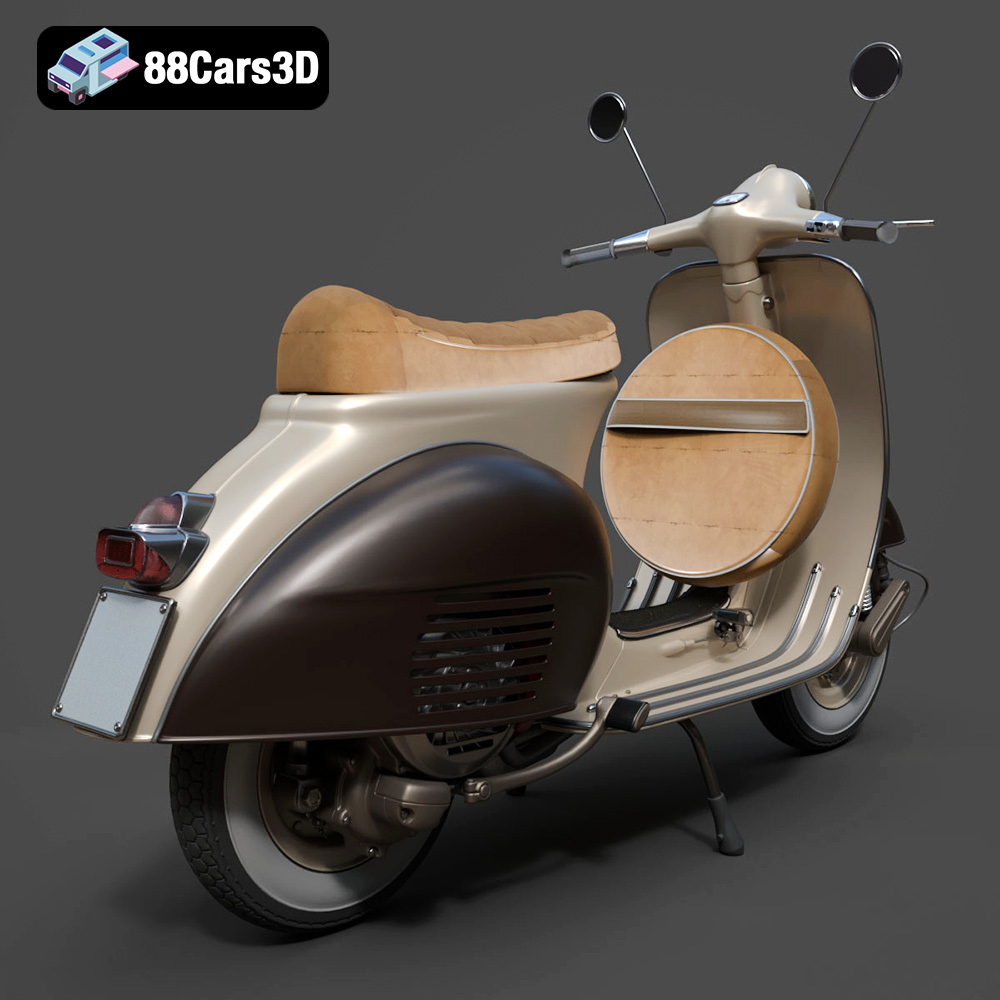
The developers of this 3D model have gone to great lengths to ensure historical accuracy. From the iconic rounded front leg shield and signature circular headlamp to the streamlined side panels with their subtle air vent details, every exterior feature is faithfully reproduced. The model boasts an accurate representation of the rear-mounted engine housing structure, the detailed exhaust system, and critical suspension components. For artists, this means less time spent on research and modeling, and more time on creative integration. The period-correct wheel and tire dimensions, along along with the separate wheels and steering assembly, aren’t just for static display; they are designed for animation, allowing for realistic turning and rolling motion.
Inside the rider’s area, the attention to detail continues. A meticulously crafted handlebar assembly, complete with speedometer housing, throttle, and brake lever detailing, adds to the authenticity. The footboard features its characteristic ribbed pattern, and the model is configured to be adaptable for either a single or dual-seat arrangement, offering flexibility for various scene compositions. These elements collectively make the Vespa VNB 125 3D Model a rich and convincing digital artifact.
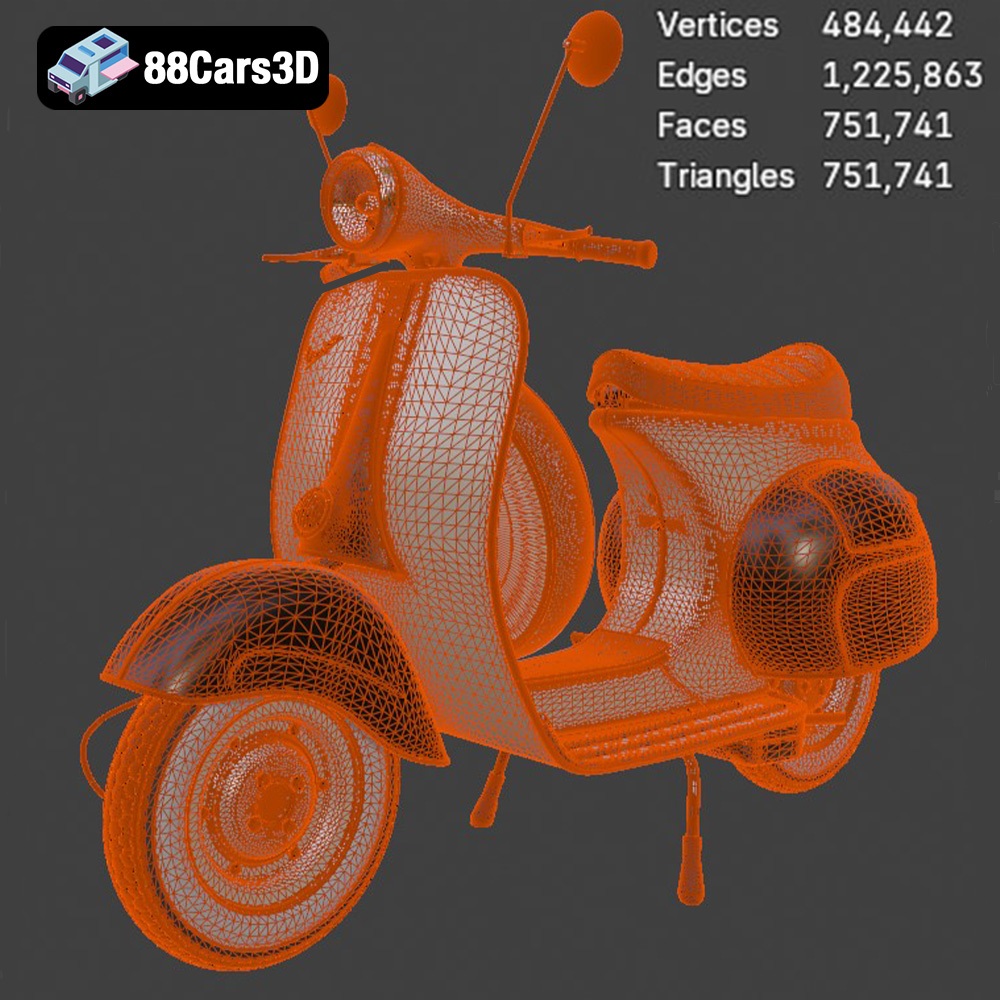
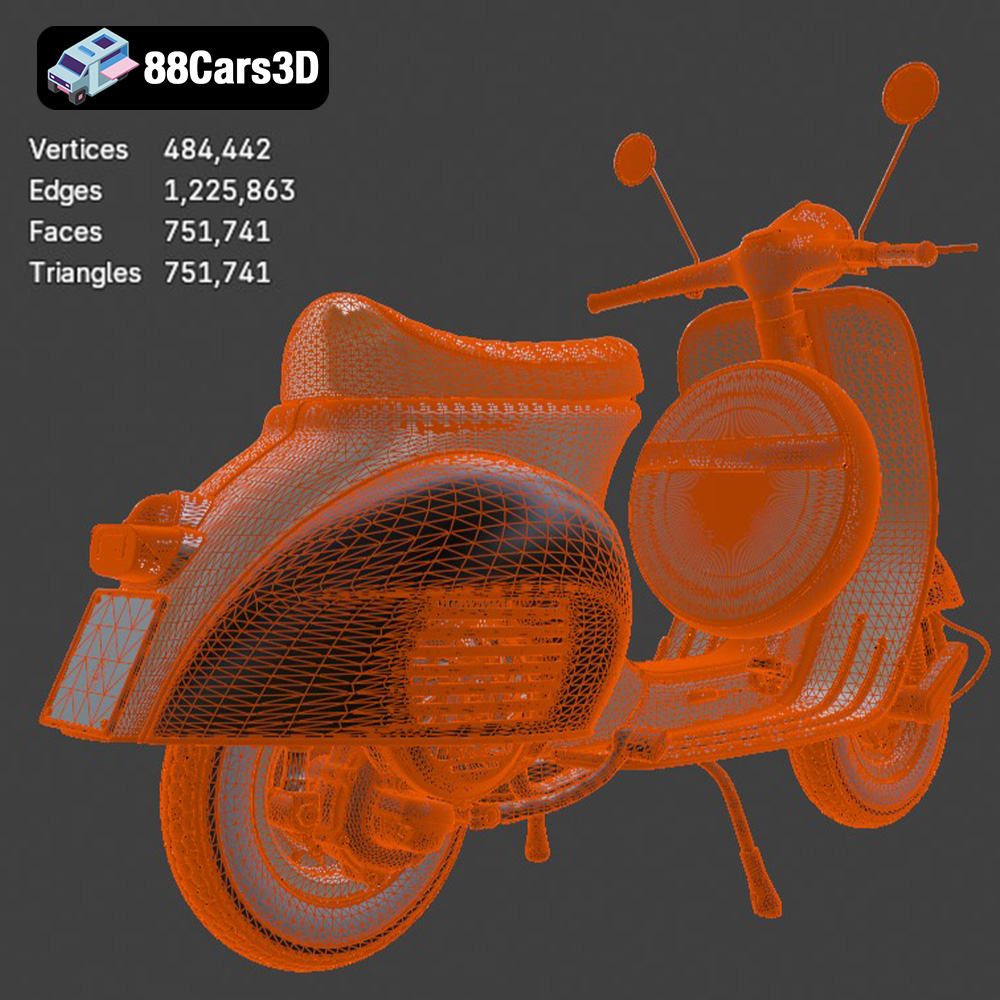
Beauty in 3D modeling is often skin deep without solid technical foundations. The Vespa VNB 125 3D Model excels here with a clean and well-organized mesh structure, a hallmark of professional-grade assets. This meticulous topology ensures smooth deformations for animation, efficient UV mapping for texturing, and predictable performance across different rendering engines. Crucially, the model is built to real-world scale accuracy, eliminating the need for tedious resizing and ensuring seamless integration with architectural scenes or other scaled assets. Proper pivot setups for steering and wheel rotation are pre-configured, simplifying the animation process significantly. This optimized polygon flow provides an excellent balance between visual realism and performance, making it suitable for both high-fidelity renders and real-time interactive experiences.
In the dynamic world of 3D content creation, selecting the right file format is as crucial as the model itself. The Vespa VNB 125 3D Model comes equipped with an extensive range of formats, ensuring maximum compatibility and utility across diverse platforms and workflows. Understanding each format’s strengths and ideal applications is key to leveraging this asset to its full potential.
The .blend format is native to Blender, the powerful open-source 3D creation suite. When you receive a .blend file, you’re getting a complete Blender scene, often including cameras, lights, materials, textures, and even animation data. This format is fully editable, offering artists complete control over the model’s structure, shaders, and rigging within Blender. It’s perfect for users who primarily work in Blender, allowing for direct modification, re-texturing, and complex scene integration without any data loss from conversion. The clean topology of the Vespa VNB 125 3D Model is readily accessible and manipulable within this format.
Autodesk’s .fbx (Filmbox) format is arguably the most widely adopted interchange format in the 3D industry, particularly for game development. It’s a robust, proprietary format capable of storing not just geometry, but also materials, textures, animations, skeletons, skinning, cameras, and lights. Its comprehensive nature makes it the go-to choice for transferring models between different 3D software packages (like 3ds Max, Maya, Cinema 4D) and, critically, into game engines such as Unreal Engine and Unity. The Vespa VNB 125’s pre-set pivots and optimized mesh make it an ideal candidate for smooth .fbx export, ready for real-time applications where performance and accurate animation data are paramount.
The .obj (Wavefront OBJ) format is a venerable and highly compatible format, often considered the “lingua franca” of 3D geometry. It primarily stores vertex positions, UV coordinates, normals, and polygonal faces. While it doesn’t embed animations or advanced rigging, it references material definitions and textures through an associated .mtl (Material Template Library) file. Its ASCII-based structure makes it incredibly versatile, readable by almost every 3D application, making it excellent for cross-software transfers where only the core geometry and basic material assignments are needed. For static renders or base models to be re-textured, the Vespa VNB 125 in .obj format provides a universally accessible starting point.
.glb is the binary version of glTF (GL Transmission Format), a modern, royalty-free specification for the efficient transmission and loading of 3D scenes and models by engines and applications. What makes .glb particularly powerful is its “self-contained” nature: it bundles the 3D model, textures, and animation data into a single file. This optimization makes it incredibly lightweight and perfect for web-based 3D viewers, AR/VR experiences, and social media platforms that support 3D content. The Vespa VNB 125 3D Model in .glb is instantly ready for showcasing on a website or integrating into an augmented reality app, providing an immersive experience with minimal loading times.
The .stl (STereoLithography) format is the standard for 3D printing. It represents a 3D model as a collection of unconnected triangular facets, defining the surface geometry without any color or texture information. While simple, its ubiquity ensures compatibility with virtually all 3D printers and slicing software. The Vespa VNB 125 3D Model’s availability in .stl format means it’s ready to transition from screen to tangible collectible, allowing enthusiasts to print their own scale models. This is a crucial format for designers looking to bridge the gap between digital creation and physical manifestation.
The .ply (Polygon File Format or Stanford Triangle Format) is another common format for 3D data, particularly in applications involving 3D scanning, scientific visualization, and CAD. It supports various properties such as color, transparency, surface normals, and range data, making it more comprehensive than .stl for certain analytical tasks. While less common for general asset exchange than .fbx or .obj, its ability to store precision mesh data can be valuable for specific engineering or reverse-engineering workflows where the Vespa VNB 125’s detailed geometry might undergo further analysis or modification.
The .unreal format, or more accurately, assets packaged for direct import into Unreal Engine projects, signifies a model specifically prepared for Epic Games’ powerful real-time engine. This often means the asset has been optimized with appropriate collision meshes, LODs (Levels of Detail), and material setups (like PBR textures) to ensure peak performance and visual quality within the Unreal ecosystem. For game developers and cinematic artists leveraging Unreal Engine, the Vespa VNB 125 3D Model in this optimized format provides a significant head start, minimizing setup time and ensuring engine-ready assets from the get-go.
The .max format is the native file type for Autodesk 3ds Max, one of the leading software packages for 3D modeling, animation, and rendering in the architectural visualization, film, and game industries. A .max file contains a complete 3ds Max scene, including geometry, materials, textures, lights, cameras, modifiers, and animation data. For professionals who primarily use 3ds Max, having the Vespa VNB 125 3D Model in its native .max format offers unparalleled flexibility for customization, advanced rendering setups with V-Ray or Corona, and integration into complex animation pipelines. It ensures that all original scene data, modifiers, and specific 3ds Max features are preserved and editable.
The Vespa VNB 125 3D Model is engineered to shine in rendering and animation projects, providing a solid foundation for stunning visual narratives. Its detailed geometry and clean mesh structure are prime for high-quality output, allowing artists to create everything from vintage advertising campaigns to cinematic sequences.
When it comes to rendering, the environment is as crucial as the subject. The Vespa VNB 125 can be placed in a controlled studio environment for pristine product shots, highlighting its elegant curves and chrome details against a minimalist backdrop. Alternatively, it can become the star of a bustling 1960s European street scene, a tranquil beach promenade, or a quaint café setting. Using software like 3ds Max with V-Ray or Corona Renderer, or Blender with Cycles or Eevee, artists can leverage the model’s clean topology to apply realistic PBR (Physically Based Rendering) materials. Imagine the metallic sheen of its paint under a Tuscan sun, or the subtle reflections on its chrome parts from streetlights in a twilight Parisian alley. The model’s real-world scale makes integration with pre-built environments or architectural models effortless.
Beyond static images, the Vespa VNB 125 3D Model is ready for animation. The separate wheels and steering assembly, coupled with proper pivot points, allow for realistic movement. A skilled animator can quickly rig the steering mechanism and connect wheel rotations to a path, making the scooter cruise convincingly through a scene. Simple animations could include a camera pan around the stationary vehicle, showcasing its design from all angles. More complex scenarios might involve the Vespa navigating city streets, performing a tight turn, or even being ridden by an animated character. The clean mesh ensures that deformations during animation, such as tire compression or suspension movement, appear natural and artifact-free, crucial for compelling cinematic storytelling or dynamic advertising.
Achieving photorealism is an art that blends masterful modeling with sophisticated material definition and lighting. The Vespa VNB 125, with its classic pastel finishes and chrome elements, offers a fantastic canvas for PBR workflows. Artists can create custom materials for the painted bodywork, ensuring accurate reflectivity and sheen, while separate materials can define the metallic elements, rubber tires, and leather seat. Lighting plays an equally vital role: a soft, diffused studio lighting setup can emphasize the scooter’s form, while a high-dynamic-range image (HDRI) of a vintage European city can provide realistic reflections and ambient light, immersing the Vespa in its intended context. The ability to easily customize colors and add vintage decals further enhances the creative possibilities, allowing for personalized renderings.
The demand for high-quality, optimized 3D car models and vehicles in interactive media is ever-growing. The Vespa VNB 125 3D Model is not just for beautiful renders; it’s a robust asset meticulously prepared for the rigorous demands of game development, augmented reality (AR), and virtual reality (VR) environments.
Game engines like Unreal Engine and Unity require assets that strike a delicate balance between visual fidelity and performance. The Vespa VNB 125 3D Model boasts optimized polygon flow, meaning its mesh is clean and efficient, preventing unnecessary draw calls and maintaining smooth frame rates. For even greater optimization, game developers can implement Levels of Detail (LODs), where simpler versions of the model are automatically swapped in when the scooter is further from the camera. The pre-set pivot points for wheels and steering are invaluable for integrating physics-based vehicle systems, enabling realistic driving mechanics. Its availability in .fbx and .unreal formats significantly streamlines the import and setup process, providing an engine-ready solution for open-world urban games, 1960s-themed environments, or even mobile scooter simulators.
The immersive potential of AR/VR thrives on detailed, yet performant 3D assets. The Vespa VNB 125 3D Model is perfectly suited for historical vehicle showcases in VR, allowing users to walk around, inspect details, and even sit on the scooter in a fully immersive environment. In AR, the model can be placed in a real-world setting through a smartphone or tablet, creating interactive classic scooter displays that blur the line between digital and physical. The .glb format, optimized for web and AR/VR, makes deployment straightforward, ensuring fast loading times and smooth interaction on various devices. Imagine a user exploring the history of the Vespa right in their living room, interacting with a life-sized digital replica that exhibits true-to-life proportions and details.
The utility of such a detailed vehicle model extends beyond entertainment. In simulation and training, the Vespa VNB 125 can be used for mechanical demonstration visuals, offering an accurate representation for educational purposes. Engineering students or restoration enthusiasts could use it to visualize component placement, explore assembly processes, or even simulate maintenance procedures. Its real-world scale and accurate component detailing make it valuable for classic vehicle restoration previews, allowing specialists to plan interventions or design custom parts in a virtual space before committing to physical modifications.
One of the most exciting aspects of the Vespa VNB 125 3D Model is its readiness for 3D printing. The ability to transform a digital asset into a tangible collectible or decorative miniature opens up a new dimension for enthusiasts and designers alike. The included .stl format is specifically designed for this purpose, providing a watertight mesh ready for slicing and printing.
To achieve the best results, specific print settings are recommended. For collectible scale models, the product suggests scales of 1:18, 1:12, or 1:10, offering a good balance between detail and manageable print time. A layer height between 0.08–0.16 mm is advised to capture the smooth curves and fine details of the Vespa’s body. A wall thickness of 1.2–2.0 mm ensures structural integrity, while an infill of 15–25% provides sufficient strength without excessive material usage. Crucially, supports will be required for intricate areas like the handlebar assembly, the exhaust system, and the center stand, preventing sagging during printing. For optimal surface quality, it’s recommended to print the main body upright to ensure smooth curves, while wheels should be printed separately to maintain their circular integrity and detail.
Once printed, the real magic of personalization begins. Post-processing is essential for achieving a professional finish. This typically involves sanding to remove layer lines and support marks, followed by applying a primer to create an even surface for painting. For a truly authentic look, a gloss pastel paint finish, reminiscent of the VNB 125’s original color palette, is highly recommended. Chrome detailing on the headlamp, trim, and exhaust can be achieved using chrome paints or specialized metallic coatings, adding that essential vintage sparkle. The ability to physically hold a miniature version of this iconic scooter, brought to life from a digital file purchased on 88cars3d.com, is a unique and rewarding experience.
The 3D printable nature of the Vespa VNB 125 3D Model also opens doors for creative customization. Collectors can experiment with different body colors, from classic cream to vibrant sky blue. Adding vintage decals, custom graphics, or country-specific license plates can further personalize each miniature. The model allows for configuration of either a single-seat or dual-seat version, and even opens up possibilities for adding a rear luggage rack or a spare wheel – details that would significantly enhance the realism and charm of the printed model. These customization options make each printed Vespa a unique piece of art.
In a saturated market of digital assets, the quality and versatility of a 3D model can significantly impact the success and efficiency of your projects. 88cars3d.com prides itself on providing meticulously crafted 3D car models and vehicles, and the Vespa VNB 125 3D Model is a prime example of this commitment to excellence.
The level of detail present in the Vespa VNB 125, from its accurate body proportions to its intricately modeled interior features, is a testament to the expertise behind its creation. This isn’t just a generic scooter; it’s a specific, historically accurate recreation of an iconic vehicle. Such precision saves countless hours of modeling and research for artists and developers. Furthermore, the extensive range of included file formats (.blend, .fbx, .obj, .glb, .stl, .ply, .unreal, .max) ensures that no matter your preferred software or target application, you have an immediate, compatible solution. This multi-format delivery philosophy is a cornerstone of the offerings at 88cars3d.com, recognizing the diverse needs of the professional 3D community. This flexibility ensures that whether you’re working on automotive rendering, developing game assets, or preparing for 3D printing, the asset is ready for your pipeline.
Time is a valuable commodity in any creative industry. By providing pre-optimized, real-world scale models with proper pivot setups and clean topology, 88cars3d.com empowers creators to skip the foundational modeling stages and dive straight into the creative aspects of their projects. For game developers, the availability of engine-ready assets significantly reduces integration time. For render artists, accurate models mean faster setup for lighting and materials. And for those venturing into 3D printing, a manifold .stl file ready for slicing eliminates geometric headaches. Investing in high-quality assets like the Vespa VNB 125 3D Model from 88cars3d.com is not just about purchasing a file; it’s about acquiring a reliable, versatile tool that enhances efficiency and elevates the final output of any digital project.
The Vespa VNB 125 is more than just a scooter; it’s a piece of history, an icon of design, and a testament to enduring style. The Vespa VNB 125 3D Model meticulously captures this essence, translating its classic charm into a versatile and technically robust digital asset. From its accurate exterior features and detailed rider area to its optimized mesh and multi-format compatibility, this model is a powerhouse for any creative endeavor. Whether your goal is to produce stunning automotive rendering visuals, develop immersive game assets, create interactive AR/VR experiences, or even bring a tangible scale model to life through 3D printing, this model provides the quality and flexibility required.
Its comprehensive file format support, encompassing everything from .blend for native Blender workflows to .stl for physical fabrication and .unreal for direct engine integration, ensures seamless usability across the entire spectrum of 3D production. By offering such a high-caliber product, 88cars3d.com continues to be a trusted source for professionals seeking premium 3D models that deliver on both aesthetics and technical performance. Embrace the timeless elegance of the Vespa VNB 125 and let it inspire your next masterpiece.
The Vespa VNB 125 3D Model is a high-detail digital recreation of the iconic Italian scooter produced during the early 1960s. Known for its elegant curves, monocoque steel body, and lightweight urban practicality, the VNB 125 represents the golden era of classic European scooter design. This 3D model accurately captures the rounded front leg shield, signature circular headlamp, streamlined side panels, single-seat or dual-seat configuration, exposed handlebar assembly, and period-correct wheel styling. Designed with clean topology and real-world scale accuracy, it is ideal for rendering, animation, game development, AR/VR environments, and historical vehicle visualization. Perfect for retro city streets, European alleyways, beach promenades, café scenes, and cinematic vintage productions.
$19.88