Get 50% OFF All Premium 3D & STL Models!

The demand for ultra-realistic automotive visualization and real-time rendering has surged across industries, from game development and film to marketing and product design. Professionals now require tools that can deliver unparalleled visual fidelity and interactivity at a rapid pace. Unreal Engine stands as the undisputed leader in this revolution, offering a robust suite of features that enable artists and developers to create breathtaking automotive experiences.
For those aiming to push the boundaries of realism, the quality of your 3D assets is paramount. This is where platforms like 88cars3d.com become invaluable, providing high-quality, meticulously crafted 3D car models optimized for Unreal Engine. These assets feature clean topology, realistic PBR materials, and robust UV mapping, serving as the perfect foundation for any project.
This comprehensive guide will walk you through the essential techniques and best practices for leveraging Unreal Engine with premium 3D car models. We’ll explore everything from project setup and advanced material creation to real-time lighting with Lumen, performance optimization with Nanite, interactive Blueprint scripting, and deployment for cutting-edge applications like virtual production and AR/VR. By the end, you’ll have a deeper understanding of how to transform your automotive visualization projects into truly immersive and photorealistic experiences.
Beginning any Unreal Engine project requires a solid foundation, especially when dealing with high-fidelity automotive assets. Proper project setup ensures optimal performance and a streamlined workflow, allowing you to maximize the potential of your 3D car models sourced from marketplaces such as 88cars3d.com.
Selecting the right Unreal Engine version and project template is crucial. For automotive visualization, it’s often recommended to use the latest stable Long Term Support (LTS) version of Unreal Engine to benefit from the newest features and stability updates. When starting a new project, consider the “Blank” template for maximum control, or the “Automotive Design” template if available in your version, which comes with pre-configured settings suitable for high-quality rendering. Essential plugins like Datasmith, which facilitates importing CAD data, are often pre-enabled in these templates, but always double-check. For advanced visual effects and physics, ensure plugins like Niagara and Chaos Vehicles are active in your Project Settings > Plugins menu.
Organizing your content effectively within the Content Browser is a best practice that pays dividends. Create logical folders for your car models, materials, textures, and Blueprints (e.g., /Cars/[CarModelName]/Meshes, /Materials, /Textures, /Blueprints). This not only keeps your project tidy but also improves team collaboration and asset management, allowing for quick navigation and identification of assets.
When you acquire a high-quality 3D car model from 88cars3d.com, it typically comes in professional, Unreal Engine-compatible formats like FBX, USD, or USDZ. Each format has its strengths:
During the import process in Unreal Engine, specific settings are critical. Always ensure “Combine Meshes” is unchecked if you need individual control over components (e.g., doors, wheels). Pay close attention to normal import method settings (e.g., “Import Normals and Tangents” or “Compute Normals”) to preserve the original mesh shading. Enabling “Import Materials” and “Import Textures” will often bring in basic material setups, which you can then refine. For detailed guidance on importing assets, refer to the official Unreal Engine documentation on Importing Content.
Upon import, always verify the model’s scale and pivot. Automotive models should typically be imported at real-world scale (1 unit = 1cm in Unreal Engine). Adjust the pivot point of individual mesh components (e.g., wheels, doors) to their rotational centers using the Modeling Tools in Unreal Engine or your 3D modeling software prior to export. This ensures correct rotation when creating interactive elements later. High-quality models from 88cars3d.com are known for their clean topology, which minimizes issues like shading artifacts and facilitates efficient unwrapping and texturing, a significant advantage for real-time performance.
The visual realism of your automotive visualization hinges significantly on the quality of your materials. Physically Based Rendering (PBR) is the cornerstone of modern real-time graphics, ensuring that materials react to light in a physically plausible way. Mastering PBR in Unreal Engine is essential for making your 3D car models truly shine.
PBR dictates that materials should behave as they would in the real world, based on properties like how reflective they are, how rough their surface is, and their base color. In Unreal Engine’s Material Editor, this translates to several key input channels:
When preparing textures, standard resolutions for high-fidelity assets typically range from 2K (2048×2048) to 4K (4096×4096) for large surfaces like the car body, and sometimes 8K for extremely close-up details or panoramic environments. It’s crucial to maintain a consistent PBR workflow, ensuring your texture maps are correctly authored (e.g., Roughness maps often require careful calibration to look right in-engine) and connected to the appropriate material inputs.
Automotive materials are notoriously complex due to their unique properties. Unreal Engine’s Material Editor provides the flexibility to replicate these intricate surfaces:
For efficient material management, always convert your master materials into Material Instances. This allows artists to quickly create variations (e.g., different car colors, tire types) without recompiling shaders, significantly speeding up iteration times and reducing overhead.
Lighting is arguably the most critical element in establishing the mood, realism, and visual appeal of any scene, especially in automotive visualization. Unreal Engine’s cutting-edge real-time global illumination and reflections system, Lumen, has revolutionized how we illuminate complex environments, bringing unprecedented dynamic lighting capabilities to artists and developers.
Lumen is Unreal Engine’s fully dynamic global illumination and reflections system, designed to deliver immediate, bounce-light updates and high-quality reflections without requiring lengthy light bakes or expensive ray tracing hardware (though it can leverage it). For automotive scenes, Lumen’s impact is transformative:
To enable Lumen, go to Project Settings > Engine > Rendering > Global Illumination and Reflections, and set both to “Lumen.” You can choose between Software Ray Tracing (CPU/GPU-based, broader compatibility) or Hardware Ray Tracing (GPU-based, higher quality and performance on compatible hardware). Tuning Lumen’s settings, such as “Final Gather Quality” and “Reflection Quality,” will help you balance visual fidelity and performance. Ensure your scene includes a Post Process Volume with “Lumen” enabled and configured to cover your entire scene.
While Lumen handles global illumination and reflections, core lighting components still play a vital role:
The Post Process Volume is your final canvas for enhancing the overall look. Beyond Lumen settings, use it for Exposure control, Bloom to simulate lens glow from bright lights, Lens Flares, and crucial Color Grading to set the mood and artistic style of your automotive scene. Applying LUTs (Look-Up Tables) can quickly achieve cinematic color palettes, transforming your render into a professional-grade image.
Automotive models are renowned for their intricate details and high polygon counts. Historically, this posed significant challenges for real-time rendering performance. However, Unreal Engine’s innovative technologies like Nanite and intelligent Level of Detail (LOD) management have revolutionized how we handle these complex assets, ensuring both visual fidelity and smooth framerates.
Nanite is Unreal Engine’s virtualized geometry system that allows artists to import and render film-quality source art, comprising billions of polygons, directly into the engine without noticeable performance degradation. It achieves this by intelligently streaming and processing only the necessary detail at screen resolution, eliminating traditional polygon budget constraints. For static mesh components of a high-fidelity car model – such as the main body, interior chassis, engine parts, and fixed exterior elements – Nanite is a game-changer.
Despite Nanite’s capabilities, traditional Level of Detail (LOD) management remains crucial for dynamic elements, skeletal meshes, and scenarios where Nanite might not be suitable (e.g., specific mobile AR/VR applications). LODs allow you to swap out high-polygon meshes for simpler versions as the camera moves further away, significantly reducing rendering overhead.
Beyond static renders, Unreal Engine excels at creating dynamic, interactive experiences and stunning cinematic sequences. Integrating high-quality car models from 88cars3d.com into these workflows allows for rich product configurators, immersive virtual tours, and captivating visual narratives.
Unreal Engine’s Blueprint Visual Scripting system empowers artists and designers to create complex gameplay and interactive functionalities without writing a single line of code. For automotive visualization, Blueprints are indispensable:
Sequencer is Unreal Engine’s powerful, non-linear cinematic editor, ideal for creating high-quality rendered videos, trailers, and virtual production sequences. It provides granular control over actors, cameras, and events over time, allowing you to craft professional-grade automotive cinematics:
For game developers and interactive simulations, realistic vehicle physics are paramount. Unreal Engine’s Chaos Vehicles plugin provides a robust and highly customizable framework for implementing complex vehicle dynamics:
The true power of Unreal Engine, combined with high-quality assets from 88cars3d.com, lies in its ability to transcend traditional rendering, enabling groundbreaking applications in diverse fields. From interactive sales tools to cutting-edge film production and immersive virtual experiences, the possibilities are vast.
Modern automotive sales and marketing increasingly rely on highly engaging virtual experiences. Unreal Engine provides the perfect platform to build state-of-the-art automotive configurators and virtual showrooms:
These configurators aren’t just for showcasing; they are powerful decision-making tools that immerse potential buyers in the product before it’s even manufactured, directly leveraging the quality and detail of models from 88cars3d.com.
The film and television industry has embraced virtual production, where digital environments are rendered in real-time and displayed on massive LED walls, allowing actors to perform within dynamic, virtual worlds. Automotive models play a significant role in this revolution:
Augmented Reality (AR) and Virtual Reality (VR) offer unparalleled immersion, allowing users to interact with vehicles in entirely new ways – from placing a car in their driveway via AR to taking a virtual test drive in VR. Optimizing for these platforms requires specific considerations:
Unreal Engine has firmly established itself as the premier platform for high-fidelity automotive visualization, offering an unparalleled suite of tools and features that cater to the demanding needs of real-time rendering. From meticulous project setup and the crafting of physically accurate PBR materials to the dynamic illumination provided by Lumen and the performance breakthroughs of Nanite, every aspect is designed to deliver breathtaking realism.
We’ve explored how Blueprint visual scripting can create rich, interactive experiences like automotive configurators, and how Sequencer empowers artists to produce cinematic masterpieces. Furthermore, the engine’s capabilities extend to advanced applications, enabling cutting-edge virtual production workflows and immersive AR/VR experiences that redefine how we interact with vehicles.
To embark on this journey or elevate your existing projects, the quality of your foundational 3D assets is non-negotiable. Platforms like 88cars3d.com provide a curated selection of high-quality, meticulously optimized 3D car models, ensuring you have the best possible starting point for your Unreal Engine endeavors. By combining these premium assets with the techniques outlined in this guide, you are well-equipped to create automotive visualizations that not only impress but truly immerse and engage your audience. The future of automotive design, marketing, and entertainment is real-time, and Unreal Engine is driving it forward.

Texture: Yes | Material: Yes | 3D Printable: Yes. Download the Italian Thoroughbreds Bundle featuring 5 iconic 3D models: Lamborghini Huracán Performante, Ferrari 458 Italia, Lamborghini Urus, Diablo SV, and Maserati GT. Optimized for 4K rendering and 3D printing (STL included). Save 50% with this ultimate Italian vehicle collection.
Price: $199.99

Download the Elite Future Mobility Bundle featuring 4 highly optimized 3D models: Tesla Model S, Avatr 11, Li L9, and Zoox Robotaxi. Perfect for ArchViz, Smart City renders, and game dev. Optimized for Unreal Engine and Blender. Includes .fbx, .obj, and .max formats.
Price: $99

🚗 5 Iconic German Cars (BMW M4 G82, M5 CS, X3, 1 Series & Mercedes E-Class). ✅ Optimized for ArchViz: Ready for Corona & V-Ray. 💰 Save €71 with this limited-time collection! 🚀 Instant Download after purchase.
Price: $119

Download the Extreme Off-Road & Survival 3D Models Bundle! Includes the Brabus 800 Adventure, Dodge Ram Bigfoot, Spec Truck, and a Caravan. Save over €210 on this premium 4-in-1 off-grid vehicle pack for ArchViz and game development.
Price: $149.99

Download the Heavy Duty & Commercial Logistics 3D Models Bundle! Includes the Ford Sterling, Caterpillar CT680, Mercedes Citaro Bus, and Vito Van. Save over €130 on this massive, game-ready 4-in-1 industrial vehicle pack.
Price: $109.99

Download the Ultimate Custom Motorcycles 3D Models Bundle. Includes a Custom Chopper, Ducati 916 Café Fighter, Harley XR1200X, and BMW K100. Perfect premium props for luxury ArchViz garages. Save over €250 today!
Price: $159.99

Download the ultimate JDM Street Racing 3D Models Bundle! Includes the Nissan GT-R, Toyota Supra, Mazda RX-7, Lancer Evo IX, and Honda NSX. Save big on this highly optimized, game-ready 5-in-1 Japanese legend car pack.
Price: $129.99

Download the ultimate American Muscle & Cinematic Classics 3D Models Bundle! Includes the Dodge Charger ’68, Mustang Eleanor GT500, Camaro Z28 ’79, and a custom ’69 Mustang. Save over €240 on this game-ready, premium 4-in-1 pack.
Price: $149.99
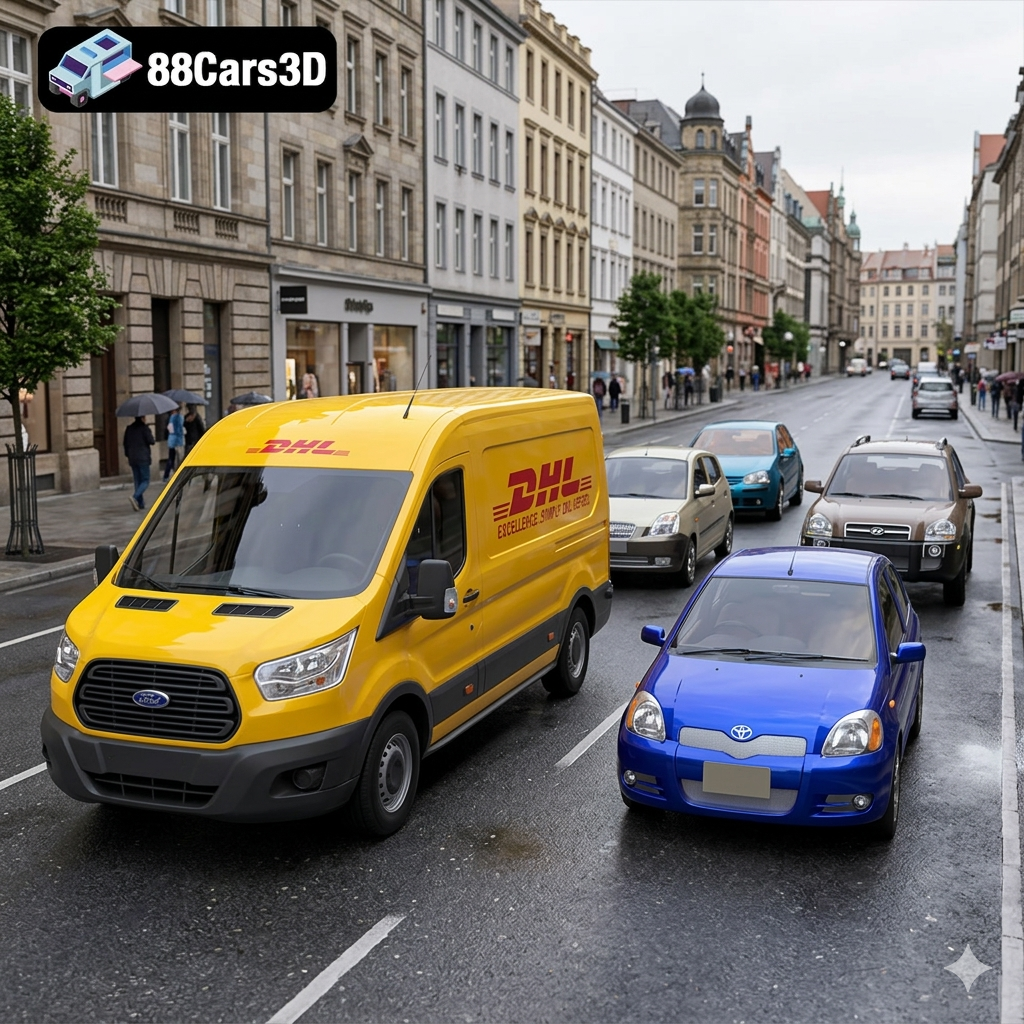
Download the Everyday City Traffic 3D Models Bundle. Includes the VW Golf, Kia Picanto, Hyundai Tucson, Toyota Yaris, and a DHL Ford Transit Van. Save big on this 5-in-1 pack, perfectly optimized for realistic ArchViz streets and game traffic.
Price: $99.99
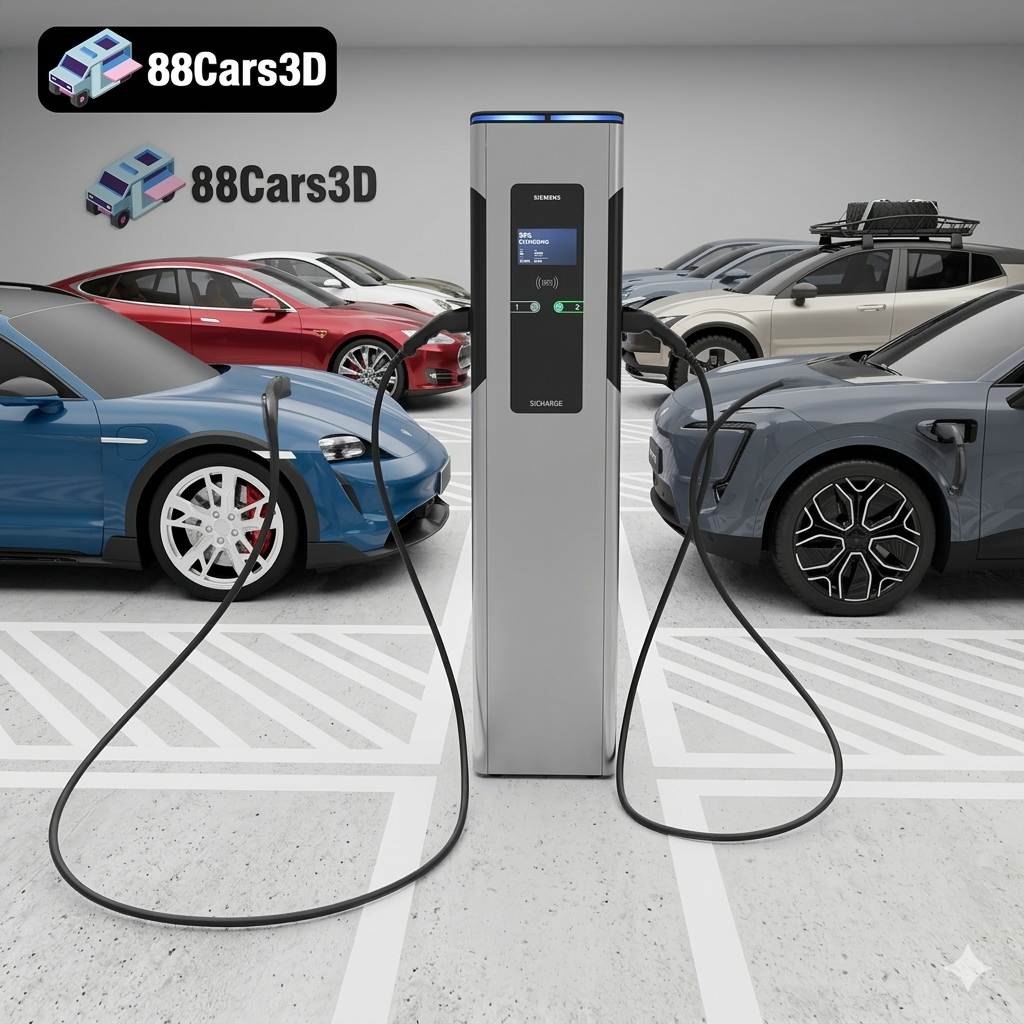
Download the Future of Mobility EV 3D Models Bundle. Includes the Volvo EX30, Tesla Model S, AVATR 11, Porsche Taycan, and a Siemens EV Charger. Save big on this highly optimized 5-in-1 pack for ArchViz and game development!
Price: $89.99

