Get 50% OFF All Premium 3D & STL Models!

In the dynamic world of 3D visualization, the quality of your assets dictates the impact of your project. From breathtaking cinematic sequences to immersive game environments and highly accurate prototypes, the foundational element is always a meticulously crafted 3D model. Automotive and motorcycle industries, in particular, demand unparalleled precision and aesthetic fidelity, pushing the boundaries of what digital artists can achieve. It’s not just about creating a recognizable shape; it’s about capturing the very soul of a machine, down to every bolt, weld, and surface imperfection. This pursuit of perfection is precisely where a model like the Harley-Davidson XR1200X 3D Model truly shines, offering an exceptional foundation for any professional endeavor demanding peak visual performance.
Whether you’re an automotive visualization specialist, a game developer crafting realistic virtual worlds, or a hobbyist venturing into advanced 3D printing, the need for robust, detailed, and versatile 3D car models and motorcycle models is universal. These assets form the backbone of compelling narratives and interactive experiences, driving engagement and delivering an authentic visual journey. The Harley-Davidson XR1200X, a performance-focused Sportster with deep flat-track racing heritage, presents a unique challenge to modelers – its aggressive styling, intricate engine, and specialized suspension require a level of detail that few models can genuinely provide. This particular model, available on 88cars3d.com, is engineered to meet these exacting standards, making it an invaluable addition to any digital arsenal.
Creating a digital twin of an iconic vehicle like the Harley-Davidson XR1200X is a complex blend of artistic skill and technical precision. It involves hours of meticulous observation, referencing blueprints, photographs, and even physical components to ensure every curve, every vent, and every mechanical part is faithfully reproduced. This process is crucial for achieving photorealism and ensuring the model holds up under extreme scrutiny, whether in a high-resolution render or a large-scale 3D print.
The journey of a high-fidelity 3D model begins long before the first polygon is laid down. For a motorcycle like the XR1200X, understanding its design philosophy—its inspiration from the legendary XR750 flat-track racer—is paramount. This understanding guides the modeler in emphasizing key features: the aggressive stance, the distinctive flat-track style tail section, and the purposeful engineering of its performance components. Each element contributes to the bike’s character, and failure to capture these details compromises the authenticity of the final 3D asset. The Harley-Davidson XR1200X 3D Model exemplifies this approach, translating the real-world machine’s character directly into its digital form.
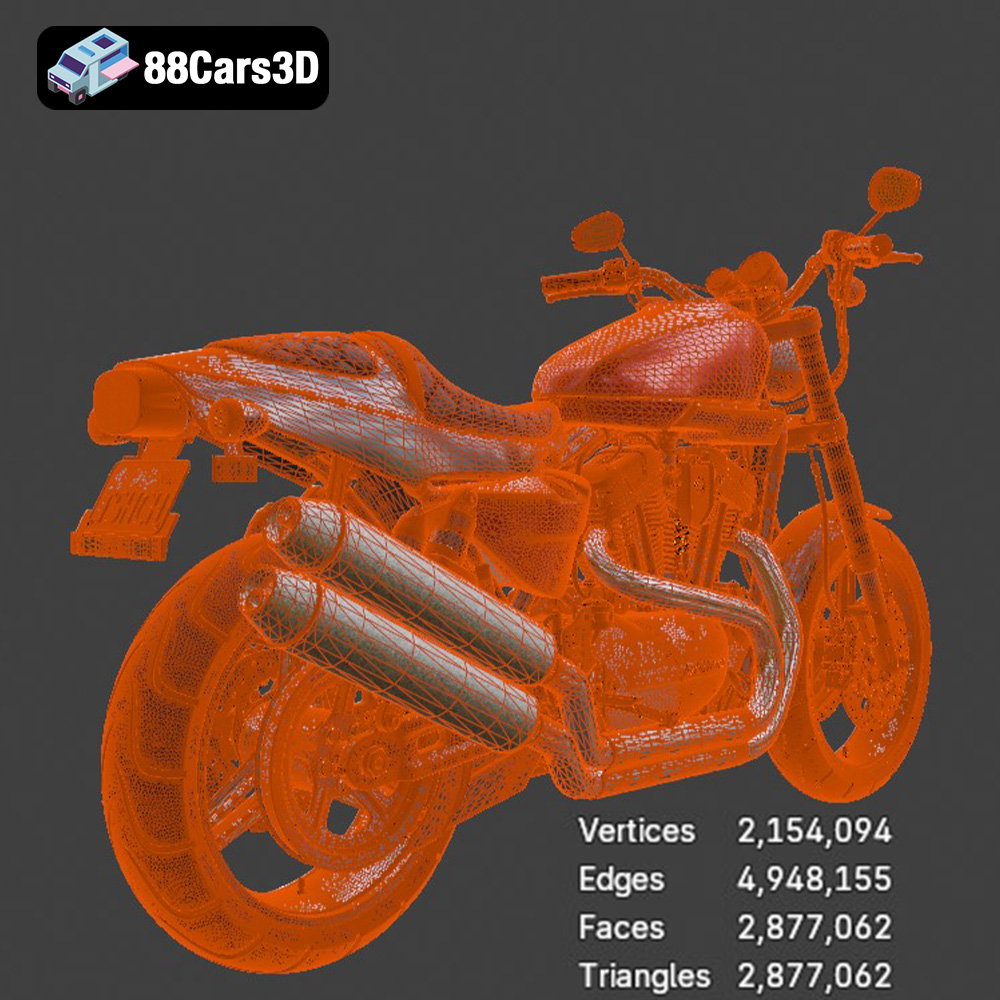
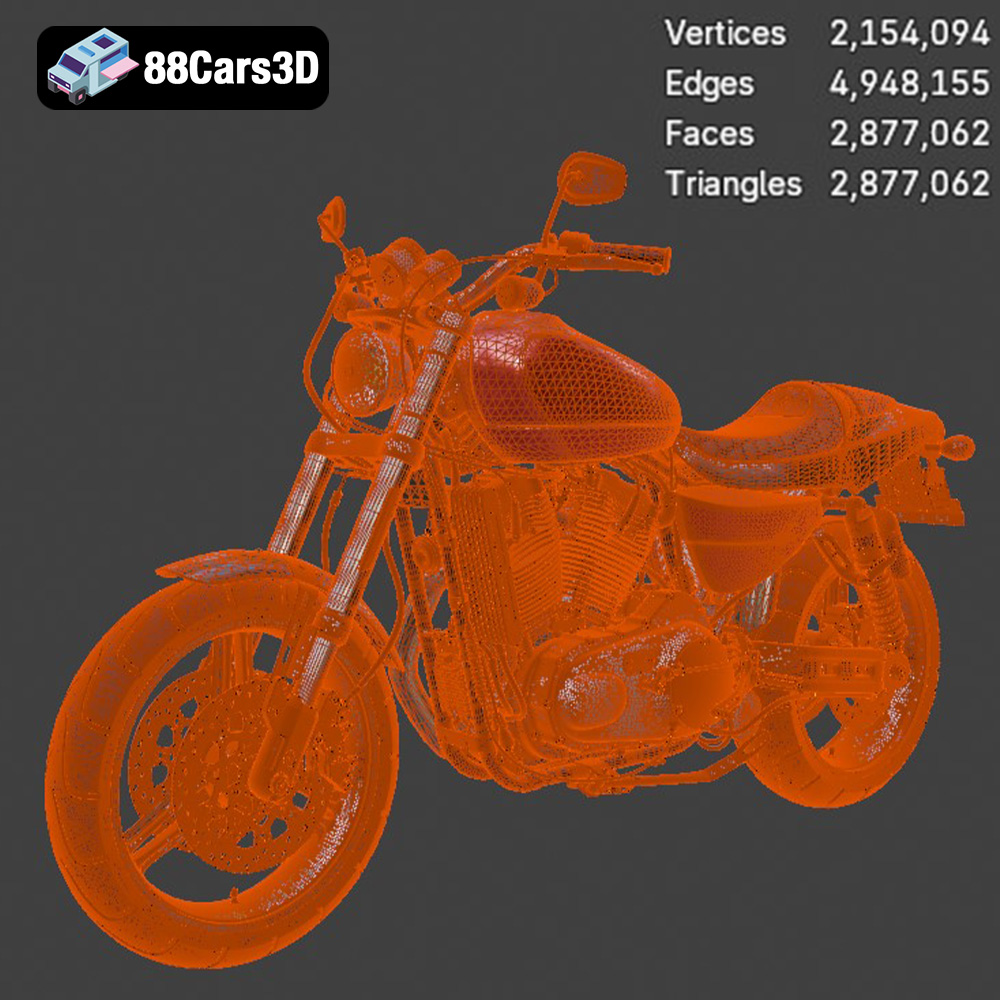
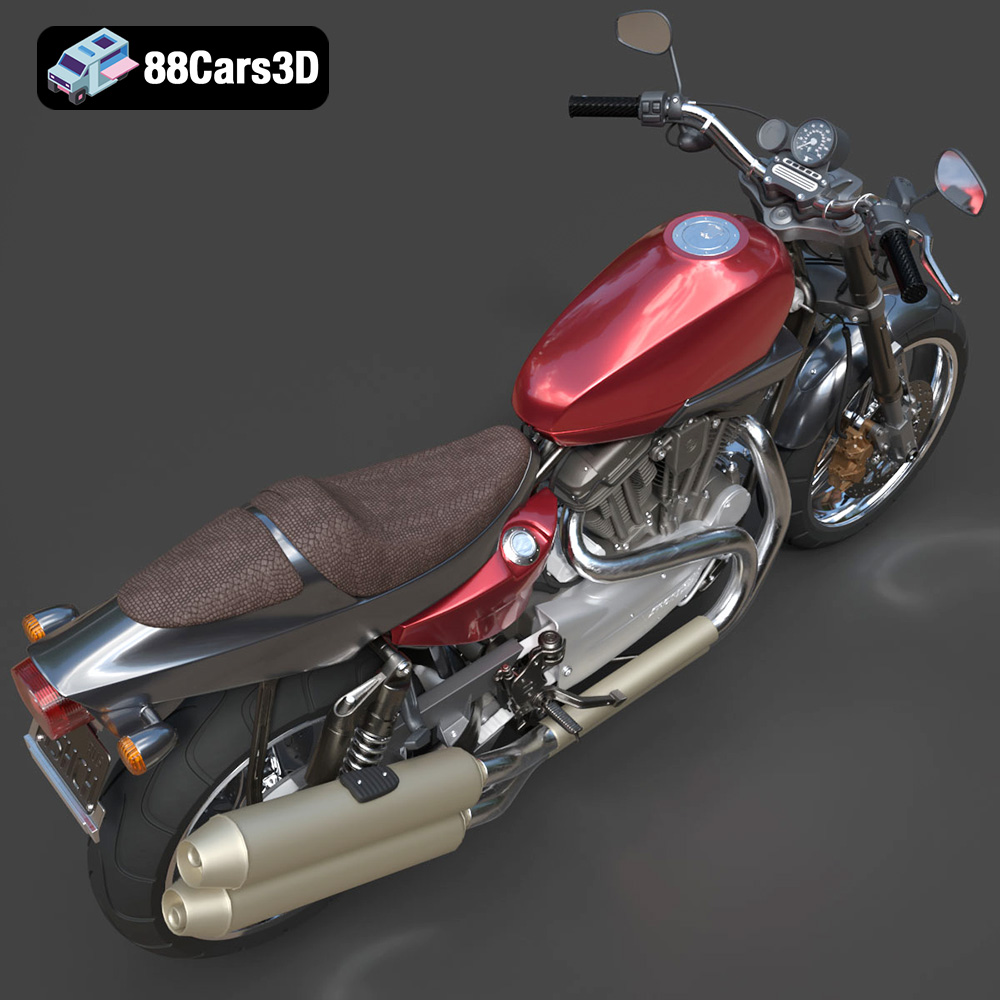
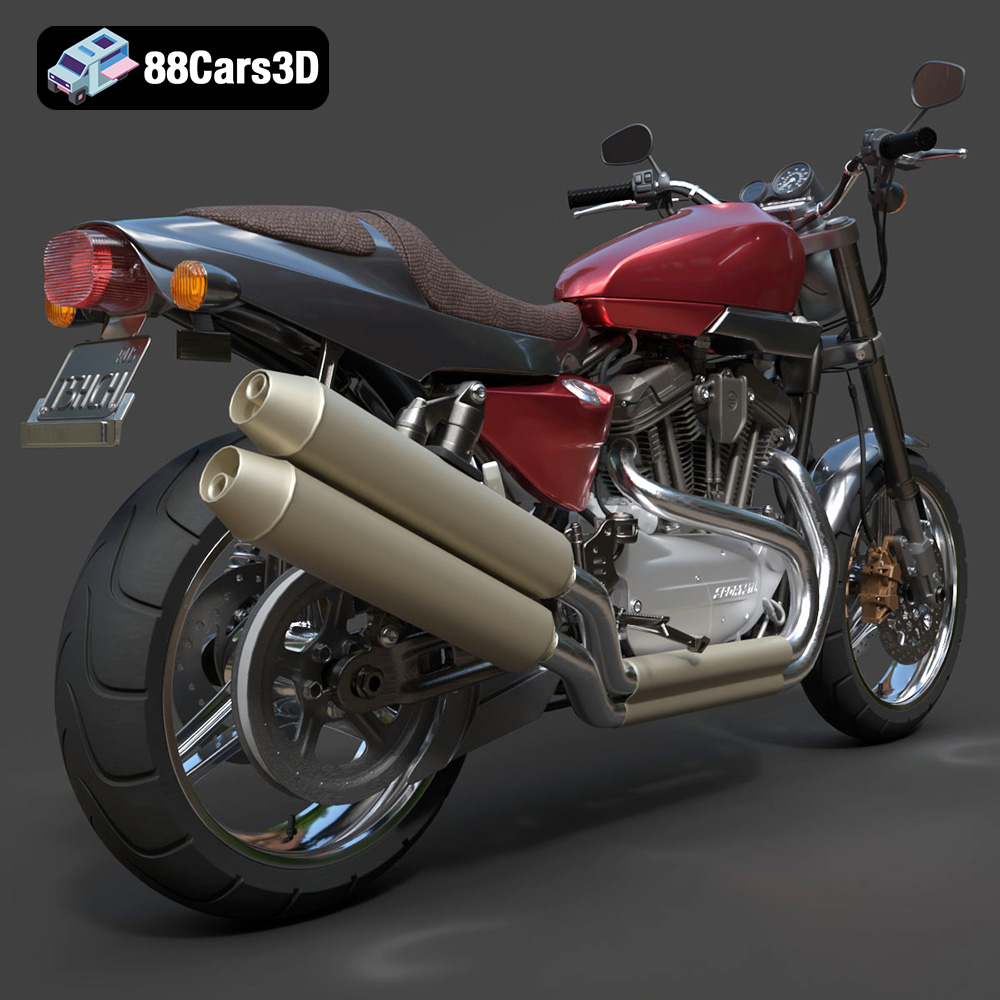
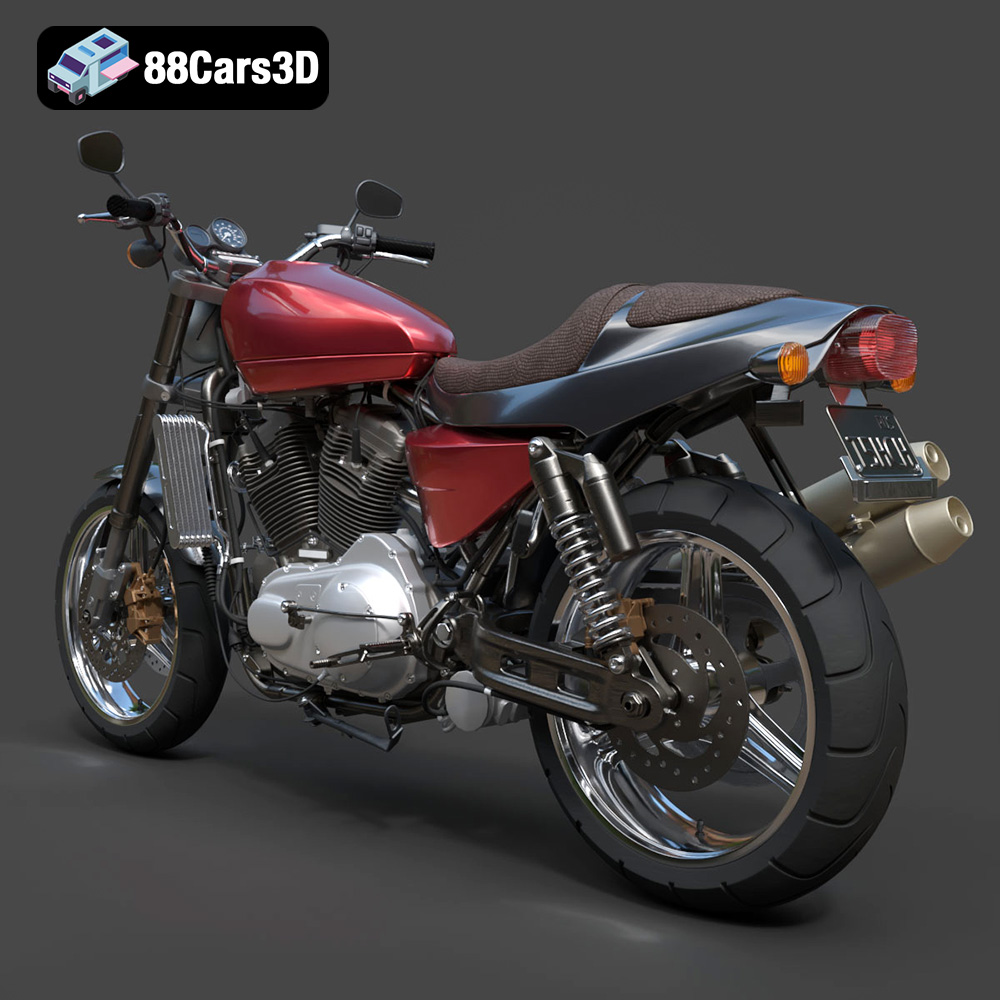
The product description highlights an uncompromising, ultra-high-polygon topology, boasting nearly 2.9 million triangles. This is not merely an impressive number; it’s a testament to the model’s commitment to detail. This dense mesh allows for the accurate representation of subtle curvatures, sharp edges, and complex geometries without relying heavily on normal maps or displacement for fine details. For instance, the intricate cooling fins of the blacked-out 1200cc Evolution V-Twin engine, the braided lines of the dual front disc brakes, and the precise mechanics of the Showa suspension are all geometrically present. This level of detail is critical for close-up shots, where every component is visible, preventing the “faking” of detail that often plagues lower-polygon models.
Beyond the exterior aesthetics, a truly professional 3D model includes functional considerations. The Harley-Davidson XR1200X 3D Model includes separate wheels, steering components, and suspension, all with proper pivot setups for animation. This means the model isn’t just a static representation; it’s an actionable asset. Artists can rig it for dynamic turns, suspension compression, and wheel rotation, making it suitable for animated sequences, virtual test rides, or interactive configurators. The accurate sport-tuned chassis and flat-tracker proportions ensure that any animation or physical reproduction maintains the real bike’s realistic behavior and appearance.
The choice of file format for your 3D models is far from arbitrary; it’s a strategic decision that impacts compatibility, performance, and the integrity of your asset across different software and pipelines. A comprehensive model like the Harley-Davidson XR1200X 3D Model offers a range of formats, ensuring maximum versatility for diverse professional applications. Understanding when and why to use each format is crucial for an efficient workflow.
The availability of such a wide array of formats for the Harley-Davidson XR1200X 3D Model ensures that whether your project is destined for a cinematic render, a real-time game, or a physical 3D print, you have the right tool for the job. This foresight in asset packaging saves considerable time and effort, preventing compatibility headaches and allowing artists to focus on creation rather than conversion.
A high-quality 3D asset like the Harley-Davidson XR1200X 3D Model is a versatile tool, adaptable to numerous professional pipelines. Its inherent detail and structural integrity make it a powerhouse for various applications, each leveraging its strengths in unique ways.
For advertising agencies, automotive design studios, and VFX houses, photorealistic rendering is the ultimate goal. The XR1200X model, with its nearly 2.9 million triangles, is purpose-built for this environment. In software like 3ds Max (using V-Ray or Corona Renderer) or Blender (with Cycles or Eevee), artists can create studio-quality images and animations that are virtually indistinguishable from real photography. The model’s intricate engine details, accurate reflections on the bodywork, and the realistic interplay of light on its metallic and rubber surfaces make it perfect for:
The availability of .max and .blend formats ensures native compatibility with industry-standard rendering engines, simplifying the process of applying sophisticated materials and lighting setups.
While the Harley-Davidson XR1200X 3D Model is an “ultra-high-poly hero asset” as specified, its potential in game development and real-time environments is immense, albeit with an important note. Its extreme polycount (2.87M triangles) means it’s not immediately suitable as a drivable vehicle in a typical game engine without optimization. However, it serves as an unparalleled source for:
The .fbx and .unreal formats are specifically tailored for these pipelines, though developers must account for the necessary retopology and optimization steps to integrate such a detailed model into a real-time engine efficiently.
Beyond digital screens, the Harley-Davidson XR1200X 3D Model bridges the gap to the physical world through 3D printing. The inclusion of a robust .stl file, along with detailed printing recommendations, makes this model an ideal candidate for creating highly accurate scale models. For motorcycle enthusiasts, collectors, or design students, this means:
The recommended resin printing and specific settings (layer height, supports, post-processing) are crucial advice, ensuring that the complex geometries and fine details, like those found on the engine and suspension, are preserved in the final physical print. This capability truly expands the model’s value beyond purely digital applications.
The true value of a professional 3D model lies in its technical specifications. These details dictate its performance, versatility, and suitability for various applications. The Harley-Davidson XR1200X 3D Model presents a compelling case study in high-fidelity asset creation.
With an astounding 2,877,062 triangles (faces/polygons), this model is firmly in the “ultra-high-poly hero asset” category. This dense mesh is the cornerstone of its photorealism. Every subtle curve of the teardrop fuel tank, every bolt on the engine casing, and every component of the Showa suspension system is represented by dedicated geometry, not just faked with textures. This level of detail is critical for:
While this high polycount necessitates powerful hardware for real-time manipulation and rendering, the visual payoff is undeniable, placing this model at the pinnacle of digital automotive assets.
The product description clearly states “Separate wheels, steering components, and suspension for animation” and “Proper pivot setup for steering, wheel rotation, and suspension articulation.” This is a critical technical advantage. It means the model is not just a static sculpture but an intelligently structured asset ready for dynamic animation. Animators can effortlessly:
This pre-rigging greatly streamlines production workflows for cinematic sequences, virtual rides, or interactive configurators, reducing the time and expertise required for preparing the model for movement.
Though not explicitly detailed in the specifications, the mention of “Real-world scale accuracy” and the high-resolution nature of the asset implies meticulous attention to UV mapping and material preparation. For an asset intended for “extreme close-up studio rendering” and “cinematic production,” high-quality, non-overlapping UV maps are essential for applying detailed textures without distortion. Similarly, professional-grade materials (often PBR – Physically Based Rendering) would be pre-configured or easily adaptable, allowing artists to quickly achieve realistic appearances for metal, rubber, plastic, and painted surfaces. These underlying technical considerations are what make the Harley-Davidson XR1200X 3D Model a truly premium asset, delivering a foundation upon which breathtaking visuals can be built.
The applications for such a high-fidelity 3D model are vast, spanning across industries. Let’s explore a few scenarios where the Harley-Davidson XR1200X 3D Model would be an indispensable tool.
Imagine a global advertising campaign for a new line of performance motorcycle gear. Instead of expensive photoshoots requiring physical bikes, specialized locations, and complex lighting setups, agencies can leverage the Harley-Davidson XR1200X 3D Model. They can place the digital bike in any conceivable virtual environment – a winding canyon road at sunset, a gritty urban landscape, or a pristine studio – and render stunning visuals with complete control over every element. The ability to change paint schemes (e.g., classic Black Denim or White Hot Denim, or even XR Racing Orange) and modify lighting with a few clicks offers unmatched flexibility and cost-efficiency. This model’s detail ensures that the motorcycle itself becomes a compelling character in the narrative, enhancing the appeal of the advertised products.
While the original XR1200X is a production model, high-fidelity 3D assets like this one are crucial in the automotive design process. Designers could use such a model as a base to experiment with modifications – new exhaust configurations, custom body kits, or alternative wheel designs – without the need for expensive physical prototypes. Engineering teams can conduct virtual fit-and-finish reviews, identify potential issues with clearances, or even run basic simulations on proposed modifications. The “real-world scale accuracy” ensures that any digital changes translate accurately to potential physical outcomes, making the XR1200X a valuable asset for virtual design iteration and review processes, providing a sandbox for creativity and problem-solving.
The 3D printing capabilities of the Harley-Davidson XR1200X 3D Model open up an exciting avenue for hobbyists and small-scale manufacturers. Imagine a custom workshop specializing in highly detailed motorcycle miniatures. Instead of hand-sculpting or modifying existing models, they can download this asset from 88cars3d.com, scale it to their desired size (e.g., 1:12 or 1:8), and print it with incredible precision using resin printers. The separate components, like the frame, wheels, and exhaust, can be printed individually, allowing for easier painting and assembly. This democratizes access to high-quality assets, enabling the creation of bespoke, high-end motorcycle collectibles that were previously only possible through expensive, large-scale manufacturing processes. The detailed instructions for print settings further empower users to achieve professional results.
Acquiring a premium asset like the Harley-Davidson XR1200X 3D Model is just the first step. To truly unleash its potential, understanding how to integrate it effectively into your workflow is key. Here are some tips to get the most out of this exceptional model.
Lighting is arguably the most critical factor in achieving photorealism in any 3D render. For a motorcycle model, strategic lighting can highlight its aggressive lines, intricate mechanical details, and material properties. Consider:
The ability to adapt lighting for various scenarios, as mentioned in the product description, is a powerful customization option that allows this model to fit any scene requirement.
Even the most perfect render can be enhanced through post-processing in software like Adobe Photoshop or Affinity Photo. While the Harley-Davidson XR1200X 3D Model provides an excellent base, a few post-render tweaks can elevate your images to cinematic quality:
These post-processing techniques, when applied judiciously, can transform a great render into an outstanding one, further enhancing the impact of your automotive rendering.
One of the greatest advantages of a well-structured 3D model is its flexibility for customization. The Harley-Davidson XR1200X 3D Model offers excellent starting points for personalization:
This inherent customizability ensures that the Harley-Davidson XR1200X 3D Model remains a versatile asset, capable of fulfilling a wide range of creative briefs without needing to start from scratch. These features underscore the model’s utility as a professional-grade asset from 88cars3d.com.
In the evolving landscape of 3D content creation, the demand for high-quality, technically robust 3D car models and motorcycle models continues to grow. Whether for cutting-edge automotive rendering, immersive game environments, or detailed 3D printing projects, the foundation of success lies in the fidelity of your assets. The Harley-Davidson XR1200X 3D Model stands as a prime example of such an asset, meticulously crafted to deliver absolute photorealism and maximum visual fidelity. Its ultra-high-polygon count, real-world scale accuracy, animation-ready structure, and extensive file format support make it an indispensable tool for professionals across various disciplines.
From cinematic sequences that capture every intricate detail of its Evolution V-Twin engine to physical scale models that bring the flat-track legend into your hands, this model provides an unparalleled starting point. It simplifies complex workflows, empowers creative customization, and ultimately helps you achieve stunning results that truly stand out. When you seek excellence in 3D automotive assets, remember that 88cars3d.com offers products like the Harley-Davidson XR1200X 3D Model that meet the most stringent professional standards, propelling your projects to new heights of digital artistry.
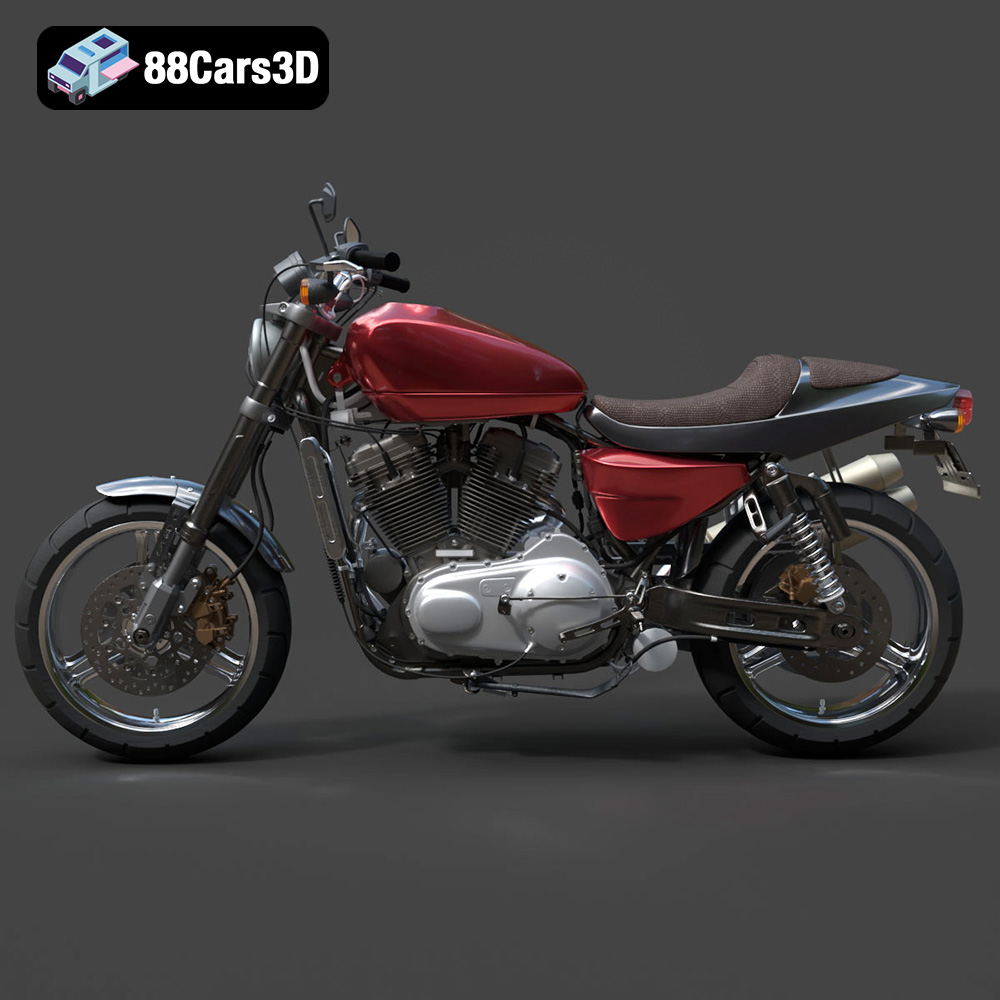
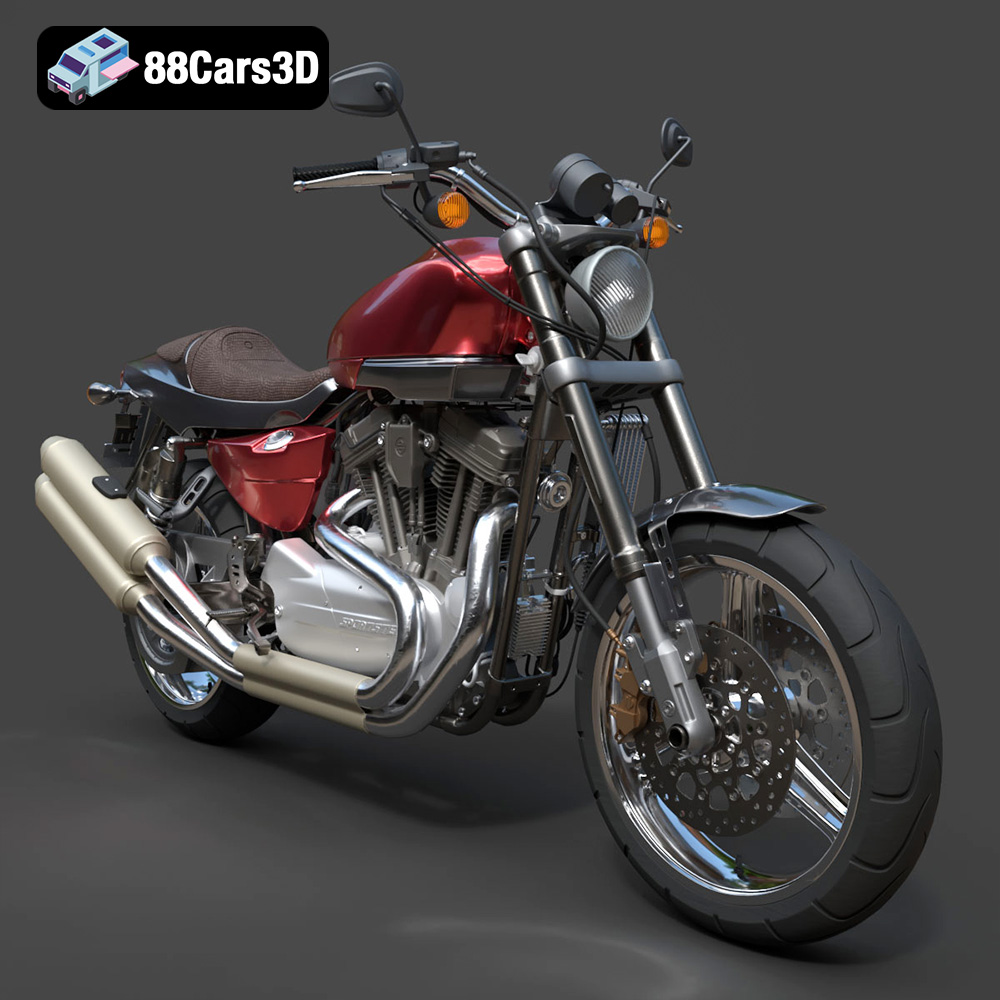
The Harley-Davidson XR1200X 3D Model is an ultra-high-detail digital recreation of the American brand’s legendary performance-focused Sportster. Deeply inspired by Harley-Davidson’s dominant XR750 flat-track racing heritage, the XR1200X was built for handling and speed, featuring a blacked-out Evolution V-Twin engine, upgraded Showa suspension, and aggressive dirt-tracker styling. This 3D model meticulously captures the sport-tuned geometry of the original bike, featuring the distinctive flat-track style tail section, wide handlebars, dual front disc brakes, fully adjustable piggyback rear shocks, and the signature upswept exhaust system. Built with an uncompromising, ultra-high-polygon topology (nearly 2.9 million triangles), it delivers absolute photorealism and maximum visual fidelity for extreme close-up studio rendering, cinematic automotive visualization, and high-end 3D printing. Perfect for flat-track racing scenes, dynamic canyon-carving renders, premium automotive galleries, and cinematic productions.
$69.99
.blend
.fbx
.obj
.rendering
.stl
.xr1200x
2m-polygons
3d printing
evolution-engine
flat-tracker
harley-davidson
hero-asset
high poly
motorcycle-3d-model
sportster
xr1200