The roar of a finely tuned engine, the screech of tires as they grip the asphalt, the precise weight transfer through a corner – these elements aren’t just for thrill rides; they are fundamental to creating truly immersive and believable vehicle experiences in any real-time application. Whether you’re developing a high-fidelity racing simulator, an open-world adventure, an interactive automotive configurator, or even a virtual production experience, realistic vehicle physics is paramount. Without it, even the most visually stunning 3D car models can feel disconnected and unsatisfying.
Unreal Engine stands at the forefront of real-time rendering and simulation, offering robust tools to bring complex vehicle dynamics to life. From its advanced physics engine, Chaos, to its powerful Blueprint visual scripting system and cutting-edge rendering features like Nanite and Lumen, Unreal Engine provides an unparalleled platform for developers and artists. This comprehensive guide will take you through the essential steps and advanced techniques for creating realistic vehicle physics in Unreal Engine, ensuring your automotive projects not only look incredible but also feel genuinely authentic. We’ll cover everything from initial setup and model preparation to fine-tuning suspensions, implementing interactive controls, and optimizing for peak performance, leveraging the power of high-quality assets like those found on 88cars3d.com.
Laying the Foundation: Project Setup and Vehicle Assets
Before diving deep into physics, a solid foundation is essential. This includes understanding Unreal Engine’s native vehicle systems and preparing your 3D car models for optimal integration. The quality of your source assets significantly impacts the realism and performance you can achieve.
Choosing the Right Vehicle Physics System in Unreal Engine
Unreal Engine has evolved its physics capabilities over the years, offering different systems for vehicle simulation. The primary modern solution, and the focus of this guide, is the Chaos Vehicles system. Introduced as part of the broader Chaos Physics Engine, it replaced the older PhysX-based Wheeled Vehicle Movement Component and offers significant advantages. Chaos is a lightweight, multi-threaded physics engine designed for real-time performance and provides a highly scalable and robust framework for complex simulations, including vehicle dynamics and destruction.
- Chaos Vehicles: This is the recommended and actively developed vehicle system within Unreal Engine. It’s integrated directly into the core physics engine, offering better performance, stability, and future compatibility. It provides granular control over engine, transmission, wheel, and suspension parameters. Its multi-threaded nature means it can effectively utilize modern CPU architectures, leading to smoother and more consistent physics simulation, even with multiple vehicles. For those transitioning from older projects, the deprecated PhysX-based system might still be present, but new projects should always leverage Chaos.
- Custom Physics: For highly specialized applications, some developers opt to implement entirely custom vehicle physics solvers using C++ for maximum control. However, this is a complex undertaking and generally not necessary given the sophistication of Chaos Vehicles for most use cases.
Understanding the capabilities of Chaos is your first step. It’s designed to be flexible enough for everything from arcade racers to highly realistic simulations, with the tuning parameters being the key differentiator. You can find detailed documentation on Chaos Physics and its vehicle components on the official Unreal Engine learning portal: dev.epicgames.com/community/unreal-engine/learning.
Importing and Preparing Your 3D Car Model
The quality and structure of your 3D car model are critical. A meticulously crafted model from a reputable source like 88cars3d.com will come pre-optimized for Unreal Engine, featuring clean topology, proper UV mapping, and realistic PBR materials, significantly streamlining your workflow. However, it’s still crucial to understand the preparation steps:
- Model Structure: For Chaos Vehicles, your vehicle mesh should typically be a Skeletal Mesh, with individual bones for the chassis (root), and each wheel. Sometimes, additional bones for doors, hoods, or other interactive parts are included. The model should ideally be separated into its main components: chassis, and four (or more) wheels. This allows the physics system to correctly apply forces and rotation.
- File Formats: The most common and robust file format for importing skeletal meshes into Unreal Engine is FBX. USD (Universal Scene Description) is also gaining traction, offering powerful capabilities for scene composition and data interchange. Ensure your FBX files include animations, blend shapes, and skeletal data if applicable.
- Scale and Pivot Points: Accuracy is key. Ensure your 3D model is built to real-world scale (e.g., 1 unit = 1 centimeter in Unreal Engine). The pivot point of the chassis bone should be at the vehicle’s center of mass, and each wheel’s pivot should be at its rotation axis. Incorrect scale or pivot points will lead to unrealistic physics behavior.
- Collision Meshes: While Unreal can generate basic collision meshes, for vehicles, it’s best practice to provide custom, simplified collision meshes. These usually consist of convex hulls or simple box shapes that accurately represent the vehicle’s form without being overly complex. This significantly improves performance compared to per-poly collision. The physics asset (PhAT) editor in Unreal Engine allows you to generate and refine these collision bodies for your skeletal mesh.
Once imported, apply your PBR materials. High-quality PBR textures for paint, glass, tires, and interior elements are essential for visual realism, complementing the physics simulation. Clean UV maps are prerequisite for proper texture application.
Configuring Chaos Vehicles: The Core of Realistic Dynamics
With your project set up and your vehicle model ready, the next step is to configure the Chaos Vehicle Component within a Blueprint. This is where you breathe life into your vehicle, defining its engine power, suspension characteristics, and tire grip.
Setting Up the Chaos Wheeled Vehicle Blueprint
To begin, create a new Blueprint Class and search for `WheeledVehiclePawn`. Select this as your parent class. This Blueprint will automatically contain a `SkeletalMeshComponent` and a `ChaosWheeledVehicleMovementComponent`. Alternatively, you can migrate the default ‘Vehicle’ project template assets and analyze their setup.
- Skeletal Mesh Assignment: In the `SkeletalMeshComponent`, assign your imported vehicle’s Skeletal Mesh. Ensure the physics asset (generated upon import, or custom-made) is also assigned correctly.
- Wheel Setups: Navigate to the `ChaosWheeledVehicleMovementComponent` in the Details panel. Here, you’ll find an array of ‘Wheel Setups’. For a standard four-wheeled car, you’ll have four entries. Each entry links a specific bone (e.g., `wheel_front_left_JNT`) to a `ChaosVehicleWheel` class. This class holds the specific physical properties for that wheel.
- Engine Setup: Define crucial parameters:
- Max Torque: The engine’s maximum rotational force. This directly influences acceleration. Start with realistic values (e.g., 400-800 Nm for a typical car, much higher for supercars).
- Max RPM: The engine’s maximum revolutions per minute.
- Torque Curve: A crucial factor. This FCurve (Float Curve) defines how much torque the engine produces at different RPMs. A realistic torque curve will have a peak around mid-range RPMs and then drop off. This makes the driving experience feel much more authentic.
- Drag and Rolling Resistance: These values simulate aerodynamic drag and the friction encountered by tires rolling on a surface.
- Transmission Setup: Configure gear ratios, differential type (e.g., rear-wheel drive, front-wheel drive, 4WD), automatic/manual settings, and clutch parameters.
- Gear Ratios: Define the ratio for each forward gear and reverse. These ratios, combined with the final drive ratio, determine the vehicle’s speed at a given engine RPM in each gear.
- Differential Type: Crucial for how power is distributed to the wheels. ‘Rear Wheel Drive’ for RWD cars, ‘Front Wheel Drive’ for FWD, and ‘All Wheel Drive’ for 4×4.
- Automatic Transmission: If enabled, define upshift/downshift RPMs.
Accurate initial values are key. Reference real-world vehicle specifications whenever possible to get a good starting point for your model’s engine and transmission.
Fine-Tuning Wheel Physics and Suspension
The behavior of your vehicle’s wheels and suspension is paramount to realism. This involves carefully balancing numerous parameters in the `ChaosVehicleWheel` class for each wheel.
- Suspension Parameters:
- Suspension Stiffness: How much force is required to compress the suspension. Higher values mean a stiffer ride.
- Suspension Damping: How quickly the suspension returns to its rest position after compression or extension. Too little damping leads to bouncy behavior; too much can make it feel rigid.
- Suspension Max Travel/Droop: The maximum distance the wheel can move up (compression) and down (extension) from its rest position. Realistic travel values prevent wheels from clipping through the body or floating above the ground.
- Suspension Natural Frequency & Damping Ratio: These advanced parameters offer more precise control over the spring-damper system, allowing for physically accurate tuning.
- Tire Properties:
- Tire Mass: The mass of the wheel and tire assembly.
- Tire Radius & Width: Physical dimensions of the tire, influencing grip patch and visual accuracy.
- Friction Scale (Lateral & Longitudinal): These curves define how much grip the tire has in sideways (lateral) and forward/backward (longitudinal) directions based on the slip ratio or angle. This is perhaps the most critical part for realistic handling. A high lateral friction value will make the car grip corners better, while low values will make it drift easily. Longitudinal friction affects acceleration and braking. Experiment with realistic friction curves to simulate different tire compounds (e.g., racing slicks vs. all-season tires).
- Slip Multipliers: These modify the friction calculation based on the amount of slip, allowing for more nuanced tire behavior at the limits of grip.
Debugging: Unreal Engine provides excellent debugging tools. In a running simulation, you can use the `pxvis` commands in the console (e.g., `pxvis wheel` or `pxvis suspension`) to visualize wheel forces, suspension compression, and tire slip. This visual feedback is invaluable for diagnosing issues and fine-tuning parameters. Iteration is key here; continuously test, adjust, and re-test until the vehicle feels just right. Realistic values from real-world vehicles are always the best starting point, but artistic adjustments for “feel” are often necessary.
Crafting Realistic Interactions: Input, PBR Materials, and Visual Feedback
A vehicle simulation isn’t just about the numbers; it’s about the interactive experience and the visual immersion. Integrating player input, leveraging physically based rendering (PBR) materials, and providing dynamic visual feedback are crucial for a believable vehicle.
Implementing Player Input and Control
Player input is the bridge between the user and the physics simulation. Unreal Engine’s Enhanced Input System offers a robust and flexible way to manage controls.
- Input Actions: Create Input Actions (e.g., `IA_Steer`, `IA_Accelerate`, `IA_Brake`). These are abstract events representing player intent.
- Input Mapping Contexts: Map physical input (keyboard keys, gamepad sticks) to your Input Actions within an Input Mapping Context (IMC).
- Blueprint Integration: In your `WheeledVehiclePawn` Blueprint, use the ‘Input Action’ events to read player input.
- Steering: The ‘Steering’ input action typically outputs a float value from -1.0 (full left) to 1.0 (full right). This value is directly fed into the `SetSteeringInput` function of the `ChaosWheeledVehicleMovementComponent`.
- Acceleration: The ‘Acceleration’ input (0.0 to 1.0) feeds into `SetThrottleInput`.
- Braking: The ‘Brake’ input (0.0 to 1.0) feeds into `SetBrakeInput`.
- Handbrake: A simple boolean or float input for `SetHandbrakeInput`.
For a smoother, more responsive feel, consider using interpolation or PID controllers for steering. Direct input can often feel too twitchy. For example, you can interpolate the steering value over time using an ‘FInterp To’ node in Blueprint, smoothing out rapid steering changes. This makes the vehicle feel less like a game object and more like a car with a physical steering rack.
Integrating PBR Materials and Visual Feedback
The visual realism of your vehicle, powered by PBR materials, directly enhances the perception of its physical behavior. High-quality 3D car models from marketplaces like 88cars3d.com typically come with advanced PBR material setups, ready for Unreal Engine.
- Realistic Car Paint: Achieving convincing car paint involves more than just a base color. In the Unreal Engine Material Editor, you’ll need to simulate multiple layers:
- Base Coat: The primary color.
- Metallic Flakes: Use a normal map with fine noise or a custom texture to simulate metallic flakes, giving the paint sparkle.
- Clear Coat: This is a highly reflective, glossy layer on top. Unreal Engine’s material system supports clear coat shading models directly, allowing you to control its roughness and reflectivity. This is crucial for realistic reflections from environment lighting and Lumen’s global illumination.
- Dirt/Wear: Adding subtle dirt, scratches, or wear through blend masks can make the vehicle feel lived-in and grounded in the environment.
- Tire Smoke and Skid Marks: Dynamic visual effects amplify the sensation of speed and friction.
- Skid Marks: When a tire loses grip, use Blueprint to spawn decal actors or dynamically draw textures on the ground. Check the `ChaosWheeledVehicleMovementComponent` for wheel slip information to trigger these effects.
- Tire Smoke: Integrate Niagara particle systems that emit smoke particles from the tires when slip values exceed a certain threshold (e.g., during hard braking, acceleration, or drifting). Niagara offers incredible control over particle behavior, allowing for dense, volumetric smoke effects.
- Headlights, Taillights, and Emissive Elements: Beyond physics, these visual details enhance realism. Use emissive material properties for light sources and combine them with actual ‘Spot Light’ or ‘Point Light’ components to cast dynamic illumination onto the environment. This is especially impactful when combined with Lumen for realistic global illumination.
Every visual detail, from the way light bounces off the metallic paint to the subtle wisps of tire smoke, contributes to the overall believability of your vehicle’s interaction with the world. This synergy between physics and rendering is what makes Unreal Engine so powerful for automotive visualization.
Advanced Physics and Optimization Strategies
Once you’ve achieved a foundational level of realism, you can delve into more advanced physics elements and, crucially, optimize your vehicle for peak performance in real-time environments. A complex simulation is only useful if it runs smoothly.
Enhancing Realism with Advanced Physics Elements
Beyond basic wheel and suspension tuning, several advanced features can push the realism envelope further:
- Anti-Roll Bars (Sway Bars): These components link opposing wheels (e.g., front left to front right) and resist body roll during cornering. In Chaos Vehicles, you can simulate this by linking wheel suspension forces in Blueprint or by directly applying inverse forces based on the suspension compression differences between opposing wheels. This significantly improves handling stability and body control.
- Downforce Simulation (Aerodynamics): For high-performance and racing vehicles, aerodynamic downforce is critical. You can implement this by applying a downward force vector to the vehicle’s center of mass, proportional to the square of the vehicle’s forward speed. This mimics the effect of wings and diffusers, providing more grip at higher speeds.
- Surface Interaction: Implement different friction properties for various ground materials. Use ‘Physical Material’ assets on your landscapes and meshes. When a wheel detects it’s touching a surface with a specific Physical Material, you can dynamically adjust the wheel’s tire friction scales to simulate driving on asphalt, dirt, gravel, or ice. This adds a layer of depth to the driving experience, requiring drivers to adapt to changing conditions.
- Damage Models and Procedural Destruction: Chaos Physics excels at destruction. While vehicle deformation is complex, you can leverage Chaos to create procedural destruction on parts of your vehicle mesh, or swap out undamaged parts for pre-damaged mesh variants based on impact forces. This brings a dynamic and visceral response to collisions.
Performance Optimization for Real-Time Vehicle Physics
Realistic vehicle physics, especially with many interacting components, can be computationally intensive. Optimization is crucial for maintaining smooth framerates.
- LODs (Level of Detail): Implement LODs for your vehicle’s skeletal mesh. At a distance, simpler meshes with fewer polygons are rendered, significantly reducing GPU load. Ensure your collision meshes also have simplified LODs. While a Skeletal Mesh has its unique LOD settings, the overall polygon budget saved by models from 88cars3d.com, which are often provided with multiple LODs, allows for more robust physics simulations.
- Nanite Virtualized Geometry: While primary vehicle meshes are typically skeletal (and thus don’t directly benefit from Nanite’s direct mesh processing), Nanite plays a crucial role in overall scene optimization. By using Nanite for the surrounding environment (terrain, buildings, props), you drastically reduce the geometric complexity of the scene for the GPU. This frees up valuable resources, allowing the CPU to dedicate more power to complex vehicle physics calculations and other dynamic elements like Niagara particle systems or Lumen’s real-time global illumination, without hitting performance bottlenecks.
- Physics Substepping: Crucial for consistent physics. In your project settings (`Engine – Physics – General`), enable ‘Substepping’ and set a fixed `Max Substep Delta Time` (e.g., 0.0166ms for 60fps) and `Max Substeps` (e.g., 8). This ensures that physics calculations are performed at a consistent rate, independent of the overall game framerate, preventing jittery or unstable vehicle behavior at low framerates.
- Collision Complexity: Use simplified collision meshes for your vehicle body and wheels rather than per-poly collision. The simpler the collision mesh, the faster the collision detection and response. This is often managed effectively through the Physics Asset (PhAT) editor.
- Blueprint Optimization: Write efficient Blueprint logic. Avoid unnecessary calculations on ‘Event Tick’. Use event-driven programming where possible. Cache references to components rather than searching for them repeatedly. Profile your Blueprint code using the ‘Blueprint Debugger’ to identify performance hotspots.
- Network Optimization: If your vehicle is multiplayer, optimize replication. Only replicate essential variables and transformations. Use dormancy to reduce network traffic for vehicles far away or not actively controlled.
By judiciously applying these optimization techniques, you can ensure your realistic vehicle physics runs smoothly even in demanding real-time scenarios, making the most of Unreal Engine’s capabilities for both high fidelity and performance.
Beyond Driving: Interactive Experiences and Cinematic Vehicles
Realistic vehicle physics isn’t just for driving games. It forms the backbone of highly interactive automotive configurators, immersive virtual reality experiences, and stunning cinematic sequences. Unreal Engine’s integrated tools extend the utility of your physically accurate vehicles far beyond a simple joyride.
Creating Interactive Automotive Configurators
Interactive configurators are a prime application for detailed 3D car models and realistic physics, particularly in automotive visualization. These tools allow users to customize a vehicle in real-time, often reflecting changes in appearance, performance, and even physical behavior.
- Modular Vehicle Design: Start with a modular 3D car model where components like wheels, paint finishes, interior trims, and even body kits are separate meshes or material instances. High-quality assets from 88cars3d.com are often structured for this very purpose.
- Blueprint for Customization Logic: Use Unreal Engine’s Blueprint visual scripting to create the interactive logic:
- Part Swapping: Implement functions to swap `SkeletalMesh` or `StaticMesh` components (e.g., changing wheel rims, spoilers) or switch between different material instances for paint colors or interior fabrics.
- UI Integration: Connect user interface (UI) widgets (buttons, sliders, dropdowns) to these Blueprint functions, allowing users to select options.
- Physics Feedback: This is where realistic physics truly shines. When a user swaps to heavier wheels, your Chaos Vehicle Blueprint can dynamically update the wheel mass parameter. If they add an aerodynamic spoiler, the downforce calculation can be adjusted. This provides tangible feedback that makes the configuration feel more substantial than just a visual change.
- Real-time Performance Metrics: Displaying simulated 0-60 mph times or top speeds, derived from the vehicle’s physics parameters, can further enhance the configurator’s interactivity and realism.
- Camera Control: Implement various camera modes, such as orbit cameras for external viewing, interior cameras for immersive exploration, and cinematic fly-throughs to showcase the configured vehicle from different angles.
For more details on Blueprint scripting fundamentals, the official Unreal Engine learning portal (dev.epicgames.com/community/unreal-engine/learning) is an excellent resource for getting started with creating complex interactive systems.
Cinematics and Virtual Production with Vehicles
Unreal Engine’s cinematic tools, combined with realistic vehicle physics, enable breathtaking virtual production and pre-rendered content for film, advertising, and marketing.
- Sequencer: Unreal Engine’s multi-track non-linear editor, Sequencer, is perfect for creating cinematic vehicle animations. You can record vehicle movements directly from gameplay (using the vehicle’s physics) or manually keyframe transformations for precise control.
- Recording Gameplay: Control your vehicle in a playable session, and then use the “Take Recorder” to capture the vehicle’s physics-driven movement, camera angles, and other dynamic events directly into Sequencer. This preserves the realistic bounces, drifts, and suspension work generated by Chaos.
- Keyframe Animation: For specific, highly controlled shots, you can animate the vehicle’s transform (location, rotation, scale) directly in Sequencer. Even here, having a physically accurate vehicle provides a robust base for animations that need to feel grounded. You can keyframe the vehicle’s overall movement while still allowing the physics system to handle individual wheel rotations, suspension compression, and minor body rolls.
- Camera Integration: Animate cinematic cameras in Sequencer to follow the vehicle, capture dramatic angles, and create dynamic transitions.
- Lighting and Effects: Control environmental lighting (Lumen for global illumination), post-processing effects, and Niagara particle systems (e.g., dust kicked up by tires, exhaust smoke) over time, perfectly synchronized with your vehicle’s actions.
- Virtual Production Workflows: With realistic vehicle physics, you can drive a real-world vehicle on a motion platform while its virtual counterpart is rendered in Unreal Engine and projected onto large LED walls. This allows actors to interact with the virtual environment in real-time, experiencing realistic vehicle movement and camera perspectives. The physical accuracy of the vehicle in Unreal Engine becomes crucial for the seamless blending of physical and virtual worlds. This technique is revolutionizing filmmaking and high-end automotive marketing.
Leveraging these tools, you can create compelling narratives and stunning visuals that truly showcase the dynamic capabilities and aesthetic appeal of your high-fidelity vehicle assets.
Conclusion
Creating realistic vehicle physics in Unreal Engine is a nuanced journey, demanding both technical prowess and an artistic eye for detail. From meticulously preparing your 3D car models to fine-tuning the intricate parameters of the Chaos Vehicle system, and integrating visually rich PBR materials, every step contributes to the immersive experience. We’ve explored the foundational setup, delved into the specifics of engine, transmission, wheel, and suspension tuning, and highlighted the importance of responsive input and dynamic visual feedback.
Beyond the core driving experience, we’ve seen how advanced physics elements like anti-roll bars and downforce can elevate realism, while crucial optimization strategies involving LODs, Nanite, and physics substeps ensure your simulations run smoothly. Finally, we touched upon the broader applications, from empowering interactive automotive configurators to driving the cutting edge of virtual production with cinematic vehicles in Sequencer.
The beauty of Unreal Engine lies in its comprehensive toolset, enabling developers and artists to iterate rapidly and achieve incredible fidelity. Remember that tuning vehicle physics is an iterative process; it requires continuous testing, adjustment, and a keen understanding of real-world vehicle dynamics. By starting with high-quality assets, such as the pre-optimized 3D car models available on marketplaces like 88cars3d.com, you lay a strong foundation for success.
Embrace the power of Unreal Engine, experiment with its robust physics and rendering features, and don’t hesitate to consult the official documentation for deeper insights. The journey to creating truly realistic and engaging vehicle experiences is challenging but immensely rewarding, opening doors to captivating games, groundbreaking visualizations, and innovative virtual productions.
Featured 3D Car Models

Texture: Yes | Material: Yes | 3D Printable: Yes. Download the Italian Thoroughbreds Bundle featuring 5 iconic 3D models: Lamborghini Huracán Performante, Ferrari 458 Italia, Lamborghini Urus, Diablo SV, and Maserati GT. Optimized for 4K rendering and 3D printing (STL included). Save 50% with this ultimate Italian vehicle collection.
Price: $199.99
View Product

Download the Elite Future Mobility Bundle featuring 4 highly optimized 3D models: Tesla Model S, Avatr 11, Li L9, and Zoox Robotaxi. Perfect for ArchViz, Smart City renders, and game dev. Optimized for Unreal Engine and Blender. Includes .fbx, .obj, and .max formats.
Price: $99
View Product

🚗 5 Iconic German Cars (BMW M4 G82, M5 CS, X3, 1 Series & Mercedes E-Class). ✅ Optimized for ArchViz: Ready for Corona & V-Ray. 💰 Save €71 with this limited-time collection! 🚀 Instant Download after purchase.
Price: $119
View Product

Download the Extreme Off-Road & Survival 3D Models Bundle! Includes the Brabus 800 Adventure, Dodge Ram Bigfoot, Spec Truck, and a Caravan. Save over €210 on this premium 4-in-1 off-grid vehicle pack for ArchViz and game development.
Price: $149.99
View Product

Download the Heavy Duty & Commercial Logistics 3D Models Bundle! Includes the Ford Sterling, Caterpillar CT680, Mercedes Citaro Bus, and Vito Van. Save over €130 on this massive, game-ready 4-in-1 industrial vehicle pack.
Price: $109.99
View Product

Download the Ultimate Custom Motorcycles 3D Models Bundle. Includes a Custom Chopper, Ducati 916 Café Fighter, Harley XR1200X, and BMW K100. Perfect premium props for luxury ArchViz garages. Save over €250 today!
Price: $159.99
View Product

Download the ultimate JDM Street Racing 3D Models Bundle! Includes the Nissan GT-R, Toyota Supra, Mazda RX-7, Lancer Evo IX, and Honda NSX. Save big on this highly optimized, game-ready 5-in-1 Japanese legend car pack.
Price: $129.99
View Product

Download the ultimate American Muscle & Cinematic Classics 3D Models Bundle! Includes the Dodge Charger ’68, Mustang Eleanor GT500, Camaro Z28 ’79, and a custom ’69 Mustang. Save over €240 on this game-ready, premium 4-in-1 pack.
Price: $149.99
View Product
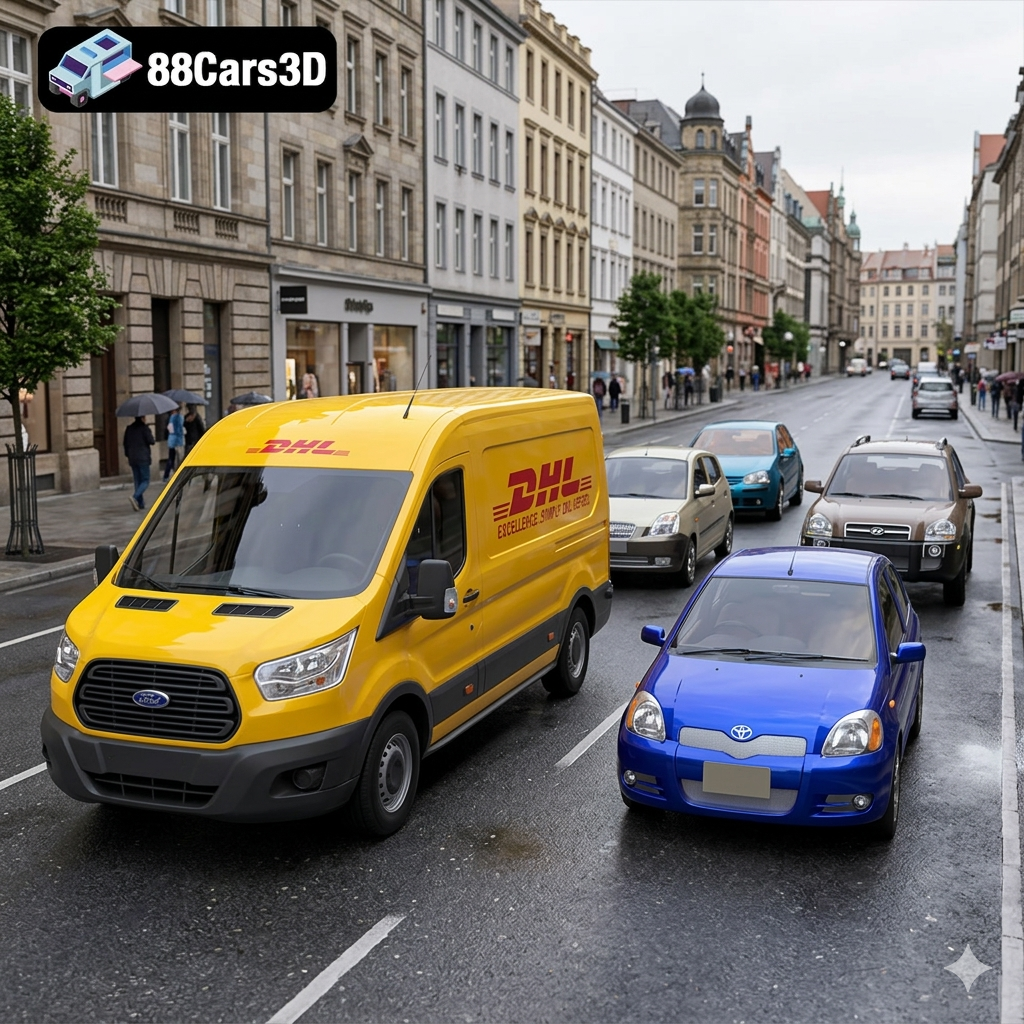
Download the Everyday City Traffic 3D Models Bundle. Includes the VW Golf, Kia Picanto, Hyundai Tucson, Toyota Yaris, and a DHL Ford Transit Van. Save big on this 5-in-1 pack, perfectly optimized for realistic ArchViz streets and game traffic.
Price: $99.99
View Product
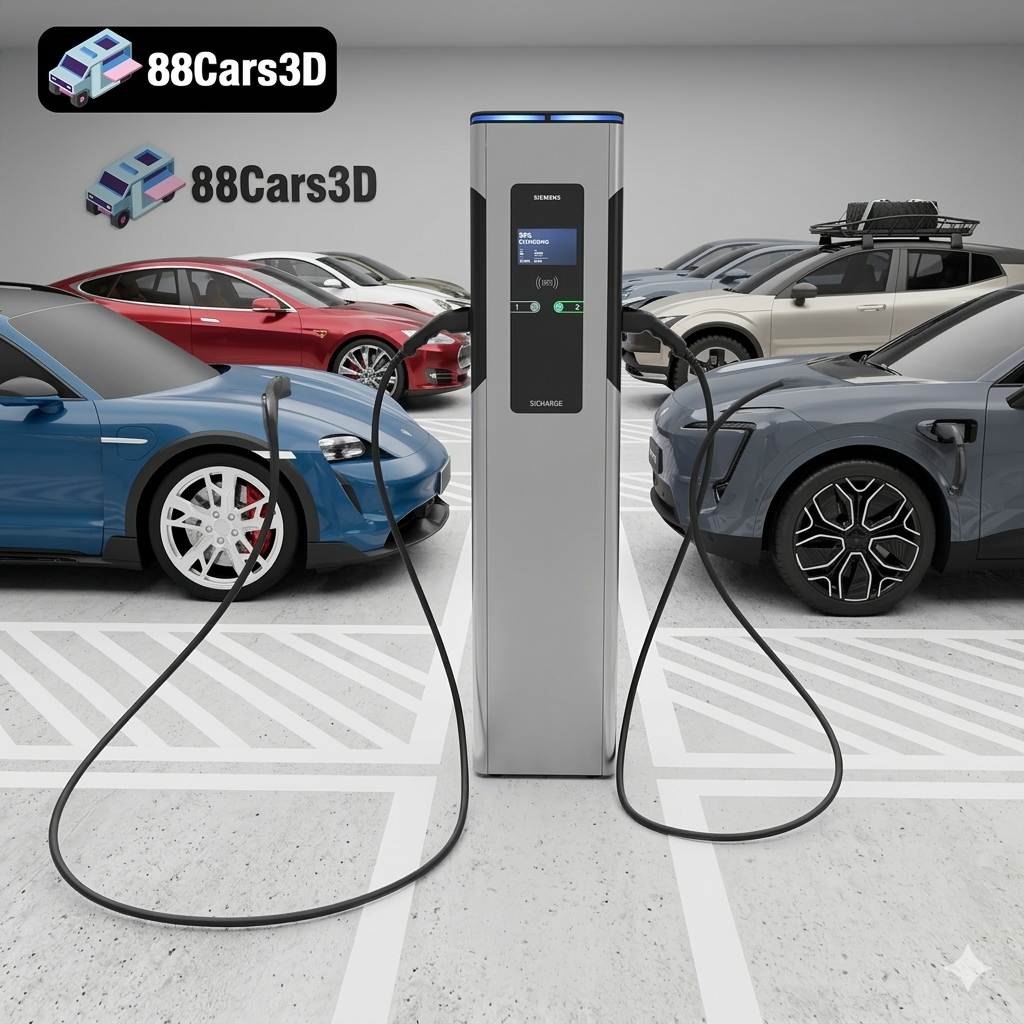
Download the Future of Mobility EV 3D Models Bundle. Includes the Volvo EX30, Tesla Model S, AVATR 11, Porsche Taycan, and a Siemens EV Charger. Save big on this highly optimized 5-in-1 pack for ArchViz and game development!
Price: $89.99
View Product


