The Engine of Innovation: Leveraging High-Quality 3D Car Models Across Industries
In the fast-paced world of digital creation, the demand for realistic and impeccably detailed 3D car models has never been higher. From breathtaking cinematic sequences and immersive virtual reality experiences to high-performance video games and precision engineering visualizations, these digital assets are the bedrock of innovation. Professional artists, developers, and engineers rely on accurate, well-optimized models to bring their visions to life, ensuring everything from aerodynamic simulations to showroom configurators looks and performs flawlessly.
The journey from a conceptual sketch to a fully rendered automotive masterpiece or a game-ready vehicle requires an intricate understanding of modeling techniques, file formats, rendering pipelines, and optimization strategies. This comprehensive guide will delve into the technical nuances of utilizing premium 3D car models, exploring their critical role in automotive rendering, game development, AR/VR applications, and more. We’ll uncover the essential considerations for professionals seeking to maximize the potential of these powerful assets, highlighting how sources like 88cars3d.com provide the high-fidelity foundations necessary for demanding projects.
The Foundation of Digital Automotive Design: Why Quality 3D Car Models Matter
At the heart of any successful digital automotive project lies the quality of its core 3D models. A superior model isn’t just about aesthetics; it’s about the underlying geometry, topology, and material setup that dictate its versatility and performance across various applications.
Precision in Design and Visualization
For automotive designers and visualization specialists, accuracy is paramount. High-quality 3D car models are built from meticulous blueprint references, capturing every curve, panel gap, and intricate detail with engineering precision. This attention to detail is crucial for:
- Photorealistic Automotive Rendering: Achieving lifelike renders requires models that accurately reflect light and shadow, with smooth surfaces, crisp edges, and correct proportions. Any imperfection in the model’s geometry will manifest as an artifact in the final render, detracting from realism.
- Design Prototyping and Review: Before physical prototypes are made, digital models allow designers to iterate rapidly, visualize changes in real-time, and make critical design decisions based on highly accurate representations.
- Marketing and Advertising: In commercials and promotional materials, a flawless 3D car model ensures the product is presented in the best possible light, conveying luxury, performance, or utility effectively.
Efficiency in Production Workflows
Building a complex car model from scratch can take hundreds, if not thousands, of hours. Acquiring pre-made, professional-grade 3D car models significantly streamlines production pipelines, offering substantial benefits:
- Time Savings: Instantly access a vast library of vehicles, allowing artists and developers to focus on scene creation, rendering, or game logic rather than foundational modeling.
- Cost-Effectiveness: The cost of purchasing a high-quality model is often a fraction of the labor cost involved in creating one internally, particularly for projects with tight budgets and deadlines.
- Consistency and Reliability: Reputable marketplaces ensure models adhere to industry standards, with clean topology, proper UVs, and PBR-ready materials, reducing the need for extensive post-acquisition cleanup.
Versatility Across Industries
The applications for high-quality 3D car models extend far beyond traditional rendering:
- Film and Television: For visual effects (VFX) shots, creating believable digital doubles or stunt vehicles.
- Architectural Visualization (ArchViz): Populating urban scenes or driveways with realistic vehicles to enhance environmental context.
- Training and Simulation: Developing realistic driving simulators for professional training or research.
Understanding 3D Model File Formats
Choosing the correct file format is a critical technical decision that impacts compatibility, feature retention, and overall workflow efficiency. Each format is designed with specific use cases in mind, optimized for different software, engines, or end applications. Knowing their strengths and limitations is key to a seamless production pipeline.
Industry-Standard Formats and Their Applications
High-quality 3D car models from sources like 88cars3d.com often come packaged with a variety of these formats to ensure maximum compatibility for professionals:
-
.blend (Blender): This is Blender’s native file format, offering a fully editable scene including geometry, materials, textures, lighting, cameras, animation, and rigging. For artists who primarily work within the Blender ecosystem, a .blend file provides the most flexibility for customization, allowing full access to modifiers, node-based shaders, and scene organization. It’s ideal for in-depth modifications or leveraging Blender’s robust toolset.
-
.fbx (Filmbox): Developed by Autodesk, FBX is arguably the most prevalent interchange format, especially for real-time applications. It efficiently transfers 3D models with geometry, materials (PBR maps often embedded or referenced), textures, skeletal animations, and rigging information between different 3D software and game engines like Unreal Engine and Unity. Its strength lies in maintaining complex scene hierarchies and animation data, making it the industry standard for game assets and real-time pipelines. Proper scaling and pivot points are crucial during export/import for optimal results.
-
.obj (Wavefront OBJ): A universal and widely supported format, .obj files primarily store geometry (vertices, normals, UVs) and material references (MTL file). While highly compatible across nearly all 3D applications, it is a static mesh format, meaning it does not support animation, rigging, or complex scene data. It’s excellent for transferring simple, static 3D models where only geometry and basic material assignments are needed, but it may require re-setup of advanced shaders in the target software.
-
.glb (GL Transmission Format Binary): GLB is the binary version of the glTF (Graphics Language Transmission Format), designed specifically for efficient transmission and loading of 3D scenes and models by engines and applications, particularly in web-based AR/VR and browser environments. It embeds all assets (geometry, materials, textures, animations) into a single file, making it highly optimized for performance and portability. If you’re developing for web AR, social media filters, or interactive online configurators, .glb is the format of choice.
-
.stl (Stereolithography): This format is the de facto standard for 3D printing. STL files represent a 3D model as a series of connected triangles, defining only the surface geometry. It lacks color, texture, and material information. For 3D printing, the model must be “manifold” (watertight with no holes or intersecting geometry) to ensure a successful print. Artists often convert high-poly render models to STL and use specialized software for repair and preparation before sending them to a 3D printer.
-
.ply (Polygon File Format): PLY is a versatile format often used for storing 3D data from 3D scanners, CAD software, and other precision mesh applications. It can store not only geometry but also color, transparency, and sometimes even texture coordinates and normal information per vertex or face. It’s common in scientific visualization, reverse engineering, and applications requiring highly detailed geometric data from real-world scans.
-
.unreal (Unreal Engine Asset): While not a single file format in the traditional sense, a “.unreal” asset typically refers to a pre-packaged asset optimized and configured specifically for Unreal Engine. This might be an FBX file that has been imported, had its materials set up, collision meshes generated, and LODs configured within Unreal Engine, then exported as an Unreal Engine asset package (.uasset). It represents an engine-ready asset, saving considerable setup time for game developers.
-
.max (3ds Max): Autodesk 3ds Max’s native project file. Similar to .blend for Blender, a .max file contains the entire scene, including all models, lights, cameras, materials, textures, animations, and modifiers specific to 3ds Max. It’s the most comprehensive format for 3ds Max users who require complete control over the scene and wish to leverage 3ds Max’s extensive modeling, rigging, and rendering capabilities, especially for high-end automotive rendering and animation.
Choosing the Right Format for Your Project
The decision on which format to use should be guided by your specific workflow and end goal:
- For maximum editability within a specific software, use its native format (.blend, .max).
- For game development or transferring animated models between software, .fbx is indispensable.
- For universal geometry transfer or static meshes, .obj is a reliable fallback.
- For web-based AR/VR, .glb offers superior performance.
- For 3D printing, .stl is the standard.
Always consider the level of detail, animation requirements, and the target platform when selecting or requesting 3D car models. A reputable provider will offer a range of formats, ensuring your assets are ready for immediate use in your preferred environment.
Mastering Automotive Rendering with High-Fidelity 3D Car Models
Automotive rendering is an art form that transforms a 3D car model into a photorealistic image or animation. It demands a deep understanding of lighting, materials, and camera optics to achieve believable results. High-fidelity 3D car models provide the necessary foundation for this demanding process.
Setting Up a Photorealistic Studio Environment
A convincing render starts with a meticulously crafted lighting setup:
- HDRI Lighting: High Dynamic Range Images (HDRIs) are crucial for realistic global illumination. They simulate real-world lighting environments, providing accurate reflections and ambient light, whether it’s an outdoor scene or a studio setup.
- Physical Lights: Augmenting HDRIs with virtual area lights, spotlights, and mesh lights allows for precise control over highlights, shadows, and mood. Understanding their size, intensity, and temperature is vital.
- Camera Settings: Replicating real-world camera parameters like focal length, f-stop, shutter speed, and depth of field helps ground the render in reality. Shallow depth of field can isolate the car, drawing the viewer’s eye.
- Backplates and Integration: Seamlessly integrating the 3D car into a photographic backplate requires precise camera matching, perspective correction, and balancing lighting conditions to ensure coherence.
Advanced Material and Shader Creation
The “wow” factor in automotive rendering often comes down to the quality of the materials:
- Car Paint Shaders: These are complex, typically involving multiple layers: a base metallic flake coat, a clear coat for reflections and refractions, and sometimes even subsurface scattering for depth. Advanced shaders allow control over flake size, intensity, color shift, and the clear coat’s roughness.
- Tire Rubber: Textured with subtle displacement or normal maps to simulate treads and sidewall details, with a slightly diffuse, matte finish.
- Glass: Realistic glass requires accurate refraction, reflection, and absorption properties, often with a slight tint.
- Chrome and Metallics: High reflectivity with appropriate Fresnel falloff and surface roughness maps are key to achieving believable metal finishes.
- PBR Workflows: Physically Based Rendering (PBR) is the industry standard, utilizing texture maps like Albedo (Base Color), Normal, Roughness, Metallic, and Ambient Occlusion to accurately simulate how light interacts with surfaces, ensuring consistency across different lighting environments.
Post-Production for Impact
The final polish often occurs in post-production software like Photoshop or Fusion:
- Color Grading: Adjusting overall color, tone, and contrast to enhance mood and visual appeal.
- Lens Effects: Adding subtle bloom, glare, chromatic aberration, or vignetting to simulate real camera optics.
- Sharpening and Denoising: Refining details and removing render noise for a cleaner image.
- Compositing Render Passes: Utilizing render layers such as reflections, diffuse, specular, shadows, and ID masks allows for non-destructive adjustments to specific elements of the scene, offering unparalleled control over the final image.
Integrating 3D Car Models into Game Development Pipelines
The requirements for game assets differ significantly from high-resolution rendering. Performance is paramount, demanding rigorous optimization without sacrificing visual quality. Professional 3D car models, especially those from 88cars3d.com, are often designed with game development in mind, providing clean topology and multiple LODs.
Optimization Techniques for Real-time Performance
Game engines need models that are efficient to render:
- Poly Count Reduction (LODs): Creating multiple Levels of Detail (LODs) is crucial. A high-poly model for close-ups might have 100,000+ polygons, while distant versions could drop to 5,000 or even a few hundred. This ensures the engine only renders necessary detail.
- Normal Map Baking: High-poly details (like panel lines, vents, or intricate trim) are “baked” onto a low-poly mesh as a normal map. This gives the illusion of high detail with minimal polygon count.
- Efficient UV Mapping and Texture Atlasing: UVs must be clean, non-overlapping, and efficiently packed to maximize texture resolution and minimize draw calls. Texture atlasing combines multiple smaller textures into one larger sheet, reducing memory overhead.
- Occlusion Culling and Instancing: Game engines use techniques like occlusion culling (not rendering objects outside the camera’s view or blocked by other objects) and instancing (rendering multiple identical objects using a single draw call) to boost performance.
Importing and Configuring Assets in Unreal Engine/Unity
Bringing a 3D car model into a game engine involves several critical steps:
- FBX Import Settings: When importing an FBX file, careful attention must be paid to scale (e.g., 1 unit = 1cm), pivot points (usually at the center of the vehicle’s base), and normal import settings.
- PBR Material Setup: Re-creating the PBR materials within the engine’s material editor, connecting Albedo, Normal, Roughness, Metallic, and Ambient Occlusion maps to their respective slots.
- Collision Meshes: Generating simple, low-polygon collision meshes that accurately represent the car’s physical boundaries for physics simulations (e.g., hitting walls, other cars).
- Physics Assets and Suspension: Setting up physics bodies for individual components (wheels, chassis) and configuring suspension systems within the engine to ensure realistic vehicle dynamics.
Real-World Case Study: Developing a Racing Game Asset
Consider a scenario where a studio is developing a new open-world racing game. They acquire a detailed sports car model from 88cars3d.com, which comes with a high-poly render mesh and a clean low-poly base. The workflow might look like this:
- Initial Import and Assessment: The high-poly model is imported into 3ds Max or Blender. The team assesses its topology, UVs, and PBR textures.
- LOD Generation: Using retopology tools or automated decimation, three additional LODs are generated: LOD1 (50,000 polys for medium distance), LOD2 (15,000 polys for far distance), and LOD3 (2,000 polys for very far distance).
- Normal and AO Baking: Details from the original high-poly model (like emblems, grilles, and intricate panel gaps) are baked onto the UV maps of the low-poly LOD0 and LOD1 meshes as normal maps and ambient occlusion maps using software like Substance Painter or Marmoset Toolbag.
- Texture Optimization: All textures (Albedo, Normal, Roughness, Metallic, AO) are optimized to game-friendly resolutions (e.g., 2048×2048 or 4096×4096) and packed into efficient channels where possible.
- Engine Integration: The optimized FBX files (containing LODs and baked maps) are imported into Unreal Engine. PBR materials are recreated, collision meshes are generated, and a vehicle physics blueprint is configured, attaching the wheel meshes and tuning suspension, engine power, and handling characteristics. This meticulous process ensures the car looks stunning and performs optimally under varying game conditions.
Beyond Visualization: 3D Car Models in AR/VR and 3D Printing
The utility of 3D car models extends into emerging technologies, creating new avenues for interaction and physical production.
Augmented and Virtual Reality Experiences
AR/VR offers immersive ways to experience vehicles, from virtual showrooms to interactive driving experiences. Here, optimization and specific formats are key:
- Optimized Formats (GLB): For web-based AR/VR, the GLB format is highly preferred due to its compact size and efficiency. It allows for quick loading and smooth interaction on mobile devices or in VR headsets.
- Performance Considerations: AR/VR environments demand even stricter polygon budgets and draw call limits than traditional games. Excessive polygons or complex shaders can lead to frame rate drops and user discomfort. LODs, efficient texture atlasing, and simplified materials are essential.
- Interactive Configurator Development: High-quality 3D car models form the basis for interactive configurators, allowing users to change paint colors, rims, interiors, and view the car in real-time within an AR/VR environment, offering a personalized buying experience.
Preparing Models for 3D Printing
Turning a digital 3D car model into a physical object via 3D printing requires specific preparations:
- Manifold Geometry: The model must be “watertight,” meaning it has no holes, gaps, or intersecting surfaces. All edges must connect cleanly to form a solid volume. Tools like Meshmixer or Netfabb can help repair non-manifold geometry.
- Wall Thickness: Ensure all parts of the model have sufficient wall thickness to be structurally sound once printed. Thin walls can break easily.
- Scale and Units: Models need to be scaled accurately to the desired print size. Consistent units (e.g., millimeters) are crucial.
- STL Format Conversion: Exporting the model as an STL file is the standard. This triangulated mesh format is directly readable by 3D printer slicing software.
- Considerations for Printing Technology: Different 3D printing methods (FDM, SLA, SLS) have varying tolerances and requirements. FDM might need larger wall thicknesses, while SLA can capture finer details.
Selecting and Customizing Professional-Grade 3D Car Models
The journey to leveraging 3D car models effectively often begins with selecting the right assets. Knowing what to look for and how to customize them ensures your projects stand out.
What to Look for in a High-Quality Asset
When sourcing 3D car models, especially from platforms like 88cars3d.com, consider these technical indicators:
- Clean Topology: Look for models built predominantly with quads (four-sided polygons) rather than triangles (tris) or N-gons (more than four sides). Quad-based topology allows for easier subdivision, deformation, and clean UV unwrapping.
- Accurate UV Mapping: UVs should be cleanly unwrapped, without overlapping islands, stretching, or excessive distortion. This ensures textures apply correctly and efficiently.
- PBR Textures: Verify that the model includes PBR texture maps (Albedo, Normal, Roughness, Metallic, AO) at sufficient resolutions (e.g., 4K or 8K) for realistic material representation.
- Real-World Accuracy: The model should faithfully reproduce the dimensions, proportions, and intricate details of the real vehicle.
- Included File Formats and Software Compatibility: Ensure the asset comes in formats compatible with your primary software (e.g., .max for 3ds Max, .blend for Blender, .fbx for Unreal/Unity).
- Level of Detail (LODs): For game development, check if optimized LODs are included, as this saves significant time in the production pipeline.
- Documentation and Support: Reputable vendors provide clear documentation, licensing terms, and customer support for their assets.
Advanced Customization and Modification Workflows
Even the best pre-made model often requires some level of customization to fit a unique project’s vision:
- Detailing Interiors and Engine Bays: High-end renders or close-up shots might necessitate adding more intricate interior components (dashboard buttons, stitching) or a fully modeled engine.
- Body Kit Modifications: Customizing the exterior with aftermarket body kits, spoilers, or bumpers requires careful modeling, blending new geometry with existing car panels, and re-texturing.
- Wheel Swaps and Tire Textures: Replacing default wheels with custom designs and applying detailed tire sidewall textures.
- Rigging for Animation: For animated sequences, the car model needs to be rigged. This involves creating a skeletal structure for components like doors, hoods, trunks, and steering wheels, and linking them with controls for easy animation. Wheels and suspension systems also require specialized rigging for realistic movement.
- Software-Specific Tools: Leveraging the powerful modeling tools in 3ds Max, Blender, or Maya allows artists to perform complex boolean operations, subdivision modeling, sculpting, and retopology to reshape or add new elements to the base model. This iterative process of refinement transforms a generic asset into a unique, project-specific vehicle.
Conclusion
The landscape of digital creation is continuously evolving, and at its core, the demand for exceptional 3D car models remains unwavering. These meticulously crafted digital assets are far more than just pretty pictures; they are robust technical foundations that drive innovation across film, advertising, game development, AR/VR, and engineering visualization. From achieving breathtaking automotive rendering to building high-performance game assets, the technical considerations surrounding file formats, optimization, material pipelines, and post-production are critical for success.
By understanding the nuances of each file format, mastering advanced rendering techniques, and applying rigorous optimization strategies, professionals can unlock the full potential of these complex models. Sourcing high-quality assets from trusted platforms like 88cars3d.com provides an invaluable head start, offering models that are already optimized, accurately detailed, and ready for integration into diverse workflows. As digital automotive design continues to accelerate, the ability to effectively acquire, prepare, and deploy these sophisticated 3D models will be a defining factor in shaping the next generation of immersive experiences and visual masterpieces.
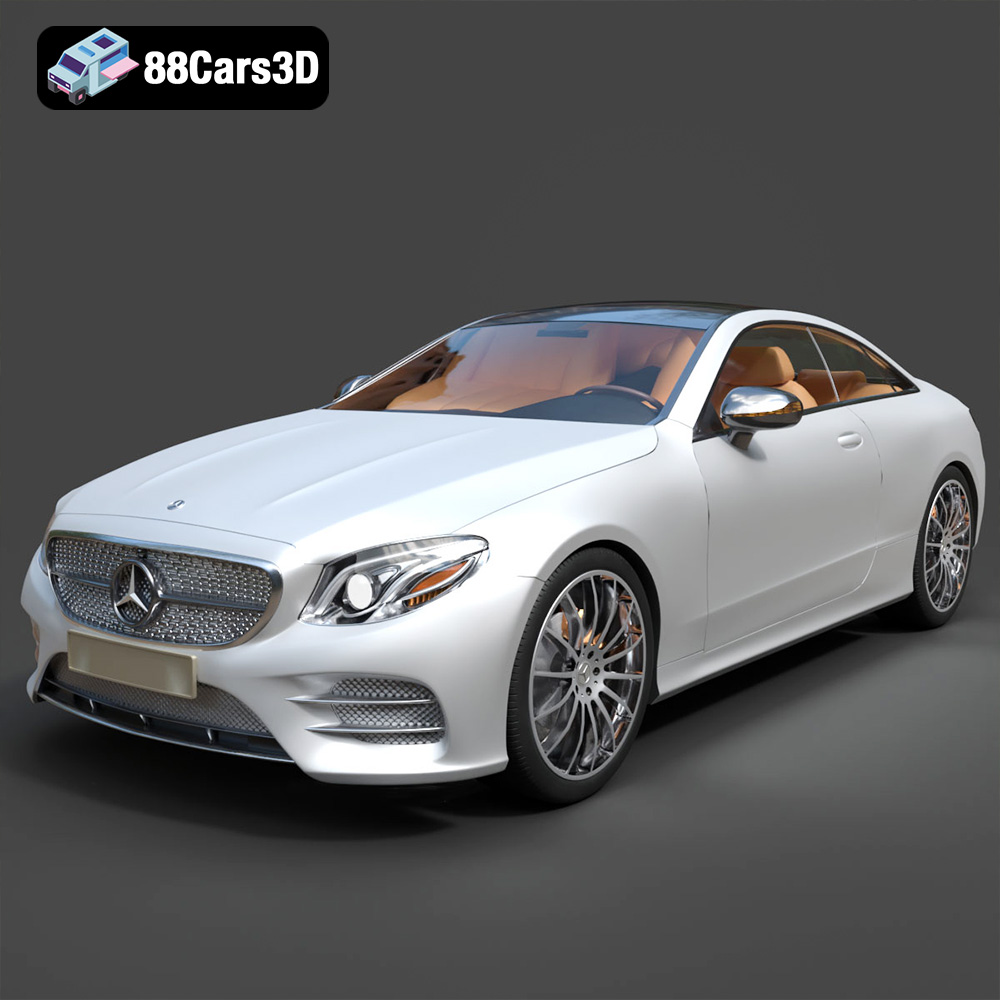
Featured 3D Car Models