Get 20% OFF All Premium 3D & STL Models!

In the dynamic world of real-time rendering, game development, and high-fidelity automotive visualization, static 3D models are just the beginning. To truly bring environments, characters, and even complex mechanical systems to life, animation is paramount. While platforms like 88cars3d.com excel in providing exquisite, highly detailed 3D car models for static renders and foundational assets, a critical next step for interactive experiences is mastering animation.
This is where Unreal Engine’s Animation Blueprints come into play. An Animation Blueprint (AnimBP) is not just a tool for playing back pre-recorded animation clips; it’s a powerful visual scripting system that allows developers and artists to define complex animation logic, blend animations seamlessly, react to gameplay events, and drive dynamic character or object behavior in real-time. From lifelike character locomotion systems to intricate mechanical animations like a car’s suspension system or an opening door, AnimBPs are the heart of responsive, compelling motion in Unreal Engine. This comprehensive guide will delve deep into the essentials of Animation Blueprints, providing you with the technical knowledge and practical workflows to elevate your Unreal Engine projects.
At its heart, an Animation Blueprint is a specialized Blueprint class designed exclusively for controlling the animation of a Skeletal Mesh Component. Unlike traditional Blueprints that manage gameplay logic, AnimBPs focus entirely on how a skeletal mesh’s bones move and deform over time, responding to various inputs and states. This powerful separation of concerns allows for incredibly robust and scalable animation systems, enabling everything from a character’s complex locomotion to the dynamic movement of a vehicle’s suspension or even the realistic steering wheel rotation based on player input.
The core concept behind an AnimBP is to define a flexible state machine that can smoothly transition between different animation states (e.g., Idle, Walking, Running) based on input variables like speed, direction, or interaction cues. Furthermore, it allows for sophisticated blending of multiple animations, driving bone rotations, and even influencing material parameters or morph targets through animation curves. For those sourcing high-fidelity skeletal car models or driver characters from marketplaces like 88cars3d.com, understanding how to integrate and animate these assets effectively using AnimBPs is crucial for achieving immersive real-time experiences.
Before you even open an Animation Blueprint, you need a solid foundation: a Skeletal Mesh, its associated Skeleton, and a set of animation sequences. A Skeletal Mesh is a 3D model with a hierarchical bone structure (the Skeleton) that allows for deformation. Each bone can be rotated, translated, and scaled, and the AnimBP’s job is to precisely control these transformations. The Skeleton dictates the possible movements and is shared across all animations and Animation Blueprints that use that particular mesh. Think of it as the underlying framework that provides articulation.
Animation Assets, such as Animation Sequences (individual clips like “walk_forward” or “door_open”), Blend Spaces (2D or 1D graphs that blend multiple animations based on input parameters), and Animation Montages (for granular, layered, and interruptible actions), are the raw data that your AnimBP orchestrates. When you import a skeletal mesh, Unreal Engine automatically generates a Skeleton asset. Subsequent animation files (typically FBX) imported for that skeleton will populate your Content Browser with Animation Sequence assets. For detailed workflows on importing, refer to the official Unreal Engine documentation on Skeletal Mesh and Animation Import.
An Animation Blueprint is comprised of two primary visual scripting graphs, each serving a distinct purpose:
Getting started with an Animation Blueprint involves a few foundational steps to ensure your skeletal mesh is ready to receive dynamic animation. This process typically begins with creating the AnimBP itself, associating it with your skeletal mesh’s skeleton, and then populating it with basic animation assets. For game developers and visualization artists aiming for interactive experiences, such as a driver character interacting with a car’s interior or dynamic car parts like suspension, this setup is the essential first stage.
Imagine you have a highly detailed character model, perhaps a driver figure, that you’ve acquired or created. You’ve ensured it has clean topology and a well-defined skeleton, ready for animation. The next step is to imbue it with life using an AnimBP, leveraging the animations you’ve imported or plan to create. This foundation ensures that when you place your animated asset into a scene, perhaps within a meticulously crafted vehicle from 88cars3d.com, it behaves realistically and responsively.
The initial creation process is straightforward:
Once created, double-clicking the AnimBP will open the Animation Blueprint Editor. Here, you’ll see the Anim Graph and Event Graph tabs. The left panel will display variables, functions, and various animation assets, while the right panel provides a preview of your skeletal mesh, allowing you to test animations in real-time. For robust skeletal mesh and animation import guidelines, it’s always good practice to consult the official Unreal Engine documentation, readily available at dev.epicgames.com/community/unreal-engine/learning.
After creating your AnimBP, you need animation data to work with. These are typically imported as FBX files containing animation sequences. For a character, this might include ‘idle’, ‘walk’, ‘run’, ‘jump’, ‘turn_left’, ‘turn_right’. For a vehicle, you might have animations for ‘suspension_compression’, ‘door_open’, ‘wheel_rotation_slow’, ‘wheel_rotation_fast’.
Animation Sequences: These are individual, linear animation clips. Once imported, they appear as individual assets in your Content Browser. You can drag and drop them directly into your Anim Graph.
Blend Spaces: A Blend Space is a powerful asset that allows you to blend multiple animation sequences based on one or more input parameters (e.g., Speed, Direction). For a character, a 1D Blend Space might blend ‘idle’ to ‘run’ based on a ‘Speed’ variable. A 2D Blend Space could blend ‘idle’, ‘walk_forward’, ‘walk_left’, ‘walk_right’, ‘walk_back’ based on ‘Speed’ and ‘Direction’ to create smooth, omni-directional locomotion. To create one:
Once your animation assets are ready, you can start wiring them up in the Anim Graph, feeding calculated variables from your Event Graph into your Blend Spaces or directly into animation sequence players, laying the groundwork for your character’s dynamic movements.
The Anim Graph is where you visually construct the logic that determines the final pose of your skeletal mesh. While individual animation sequences and Blend Spaces provide the raw motion, the State Machine is the architectural masterpiece within the Anim Graph that orchestrates how these animations play and transition between each other. It’s the brain that decides whether your character is idling, walking, running, jumping, or even performing a complex interaction like entering or exiting a vehicle.
This organized approach is crucial for managing the complexity of character animation, ensuring that transitions are fluid and responsive. Without a well-structured State Machine, you’d quickly find yourself tangled in a mess of blending nodes, making it nearly impossible to debug or expand your animation system. For realistic automotive visualizations, this could translate to defining states for a driver’s behavior, vehicle damage states, or even complex mechanical sequences like transformation animations.
A State Machine is fundamentally a collection of States connected by Transitions. Each State represents a distinct set of animations or a particular behavior, while Transitions define the rules for moving between these states. To create one:
Speed > 0.1).Speed <= 0.1. You can also specify a ‘Transition Duration’ for smooth blending.This structure allows for incredible control. You can add more complex states like ‘Jump’, ‘Falling’, ‘Driving’, or ‘Interacting’, each with its own specific animation logic and transition rules, ensuring a cohesive and natural animation flow.
Within your State Machine, or even directly in the main Anim Graph for simpler cases, Blend Spaces are indispensable for generating smooth, parametric animation. As discussed, they allow you to interpolate between multiple animation sequences based on one or more variables. This is far more efficient and realistic than trying to string together many discrete animation clips.
Beyond Blend Spaces, the Anim Graph offers a multitude of other blending and pose modification nodes:
Each of these nodes provides granular control over how animations are combined, ensuring that the final output pose is not only correct but also visually appealing and performance-optimized for real-time rendering environments.
While the Anim Graph is responsible for the visual blending and sequencing of animations, it’s the Event Graph that truly empowers an Animation Blueprint to be dynamic and responsive. This is where you calculate the variables, respond to gameplay events, and gather the necessary data to inform the Anim Graph’s decisions. Furthermore, to maintain optimal performance, especially with complex skeletal meshes, understanding and utilizing pose caching is an absolute necessity.
For an automotive project, the Event Graph could be calculating a vehicle’s current speed, steering angle, or the state of its doors. These values are then fed into the Anim Graph to drive appropriate animations—perhaps rotating wheels at the correct speed, articulating the steering wheel with the driver, or initiating a door-opening sequence. Integrating these two graphs effectively ensures that your animations are not just playing, but intelligently reacting to the environment and user input, making them feel truly alive.
The Event Graph operates much like a standard Blueprint. Its primary purpose within an AnimBP is to compute and update variables that the Anim Graph will consume. The most common entry point is the ‘Event Blueprint Update Animation’ node, which fires every frame (or at a specified tick rate) before the Anim Graph is evaluated. This is where you should perform most of your calculations. Key tasks include:
It’s crucial to keep the Event Graph as lean as possible. Avoid complex operations that aren’t strictly necessary every frame. If a variable only changes occasionally, consider updating it via an Anim Notify or a custom event instead of on every frame.
In complex animation setups, especially those involving multiple layered blends or expensive Inverse Kinematics (IK) calculations, performance can quickly become a bottleneck. This is where Animation Caching becomes invaluable. Caching allows you to store the result of a complex pose calculation at a specific point in the Anim Graph and then reuse that stored pose multiple times without recomputing it. This can lead to significant CPU savings.
This technique is particularly effective when you have a base pose that’s modified by several different, independent processes (e.g., an upper body aim animation, a head look-at IK, and a foot IK system). By caching the base locomotion pose, all subsequent modifications can build upon that already computed result without incurring redundant calculations. Regularly profiling your Animation Blueprints using Unreal Engine’s ‘Stat Anim’ or ‘Anim Debugger’ tools is recommended to identify bottlenecks and areas where caching can provide the most benefit.
Once you’ve mastered the fundamentals of State Machines and basic blending, Unreal Engine offers a suite of advanced features to push your animations to the next level of realism and interactivity. These techniques allow for extremely granular control, enabling you to animate specific parts of a skeletal mesh, trigger dynamic actions, and create procedurally driven movements that react to the environment in real-time. For a high-fidelity automotive visualization, these features become critical for elements like nuanced driver interaction, dynamic suspension based on terrain, or precise vehicle controls.
Consider a complex vehicle simulation. You might need a driver character whose upper body animates independently for steering or gear shifting, while their lower body follows the vehicle’s movement. You might also want specific, one-shot animations for opening doors or activating an engine start sequence. Furthermore, achieving realistic foot placement on pedals or hand placement on a steering wheel often requires inverse kinematics. These are the scenarios where advanced AnimBP techniques truly shine, ensuring that every detail contributes to a convincing and immersive experience.
One of the most powerful blending nodes in the Anim Graph is Layered Blend Per Bone. This node allows you to combine multiple animation streams by specifying a blend depth from a particular bone down the hierarchy. This is crucial for creating composite animations, such as:
To implement this, you feed your base animation (e.g., full body locomotion) into the ‘Base Pose’ input and your layered animation (e.g., upper body action) into ‘Blend Pose 0’. You then add a ‘Branch Filter’ array, specifying the bone name (e.g., ‘spine_01’, ‘clavicle_L’) and a ‘Blend Depth’ (how many children down from that bone the blend should apply). You can also use a ‘Bone Blend Mask’ asset to define more complex weighting per bone, offering even finer control over which bones are influenced by which animation layer. This ensures that only the intended parts of the skeleton are affected, preventing unwanted deformations.
Animation Montages are special animation assets designed for playing short, high-priority, and often interruptible animation sequences. Unlike regular animation sequences played within a State Machine, Montages can be triggered directly from Blueprint code (often from the character or vehicle Blueprint) and play on specific animation tracks, allowing them to overlay other animations without completely interrupting the current State Machine. Common uses include:
To use an Animation Montage: Create one (Right-click in Content Browser > Animation > Animation Montage), assign your animation sequences to it, and define ‘Slots’ for layering. In your Character or Vehicle Blueprint, you’d then use nodes like ‘Play Montage’ or ‘Stop Montage’ to control playback. In the Anim Graph, you need a ‘Slot’ node (e.g., ‘DefaultSlot’) which funnels all active Montages into your final pose, typically placed just before the ‘Output Pose’ node to ensure they play over the top of your State Machine’s output.
Inverse Kinematics (IK) is a powerful technique that allows you to control a chain of bones by manipulating the end effector (e.g., a hand or foot) rather than individually rotating each joint in the chain (forward kinematics). This is invaluable for:
Unreal Engine offers built-in IK nodes like ‘Two Bone IK’ and ‘Fabrik’ within the Anim Graph. For more complex, full-body IK and procedural animation, the Control Rig system is a game-changer. Control Rig allows you to create a custom rig directly within Unreal Engine, enabling procedural animation, pose correction, and even full-body IK solvers that can be run dynamically in the Anim Graph. This is particularly useful for:
Control Rig graphs are visual and node-based, similar to Blueprints, and can be integrated into your Anim Graph using a ‘Control Rig’ node. This provides a highly flexible and powerful way to add procedural realism to your animations without requiring complex external rigging solutions.
While Animation Blueprints offer unparalleled flexibility, unchecked complexity can quickly lead to performance bottlenecks, especially in real-time applications like games, AR/VR experiences, or high-fidelity automotive configurators. An optimized animation system is crucial for maintaining target frame rates and delivering a smooth user experience. This means being mindful of your Anim Graph’s complexity, understanding the cost of different nodes, and leveraging Unreal Engine’s built-in optimization tools.
For large-scale projects, multiple characters, or intricately animated vehicle components, even small inefficiencies can accumulate. Adhering to best practices in AnimBP design and implementing strategic optimizations will ensure your beautifully animated assets, whether they are detailed driver figures or dynamic car components, perform as flawlessly as they look.
Just like static meshes, skeletal meshes and their animations can benefit immensely from Level of Detail (LOD) systems. Unreal Engine supports multiple LODs for skeletal meshes, reducing polygon count and bone count at a distance. Crucially, AnimBPs can also adapt to these LODs:
Carefully managing LODs and update rates ensures that computational resources are focused on what the player can clearly see, providing a scalable animation solution for various hardware targets and scene complexities.
The Event Graph, while powerful, can become a performance drain if not managed carefully. Every node executed here contributes to the frame’s CPU budget. Follow these guidelines:
Understanding your animation system’s performance cost is critical. Unreal Engine provides excellent debugging tools:
By leveraging these tools and adhering to efficient design principles, you can create highly detailed and responsive animation systems that maintain optimal performance, even in the most demanding real-time environments.
The true power of Animation Blueprints lies in their versatility and ability to integrate seamlessly with other Unreal Engine systems. From driving interactive features in automotive configurators to breathing life into virtual actors for cinematic sequences, AnimBPs are a foundational component for dynamic content. Their ability to respond to external data and control complex motions makes them indispensable across various industries, including game development, architectural visualization, and virtual production.
For professionals working with automotive assets, perhaps sourcing pristine car models from 88cars3d.com, AnimBPs allow you to transcend static renders. You can turn a high-fidelity car model into an interactive experience, where users can open doors, adjust seats, or see the vehicle’s suspension react realistically to virtual terrain. This level of interaction and visual feedback significantly enhances immersion and utility in real-time applications.
In the realm of automotive visualization, Animation Blueprints are not just for characters; they can animate mechanical parts of a vehicle, making them interactive and dynamic:
Integrating these with a configurator UI (using UMG) allows users to explore a vehicle’s features interactively, showcasing the quality and design of models like those found on 88cars3d.com in a truly engaging way.
Unreal Engine’s Sequencer is a powerful non-linear editor for creating cinematic sequences, cutscenes, and cinematics. Animation Blueprints play a crucial role in Sequencer workflows, especially for animating virtual actors and props:
This hybrid approach leverages the best of both worlds: the procedural intelligence of AnimBPs for continuous background animation and the precision of Sequencer for directed, keyframed cinematic moments.
For AR/VR applications, performance is paramount due to the high frame rate requirements. Animation Blueprints, while powerful, need careful optimization:
In general game development, AnimBPs are the backbone of almost every animated character or complex interactive object. From player characters and NPCs to environmental interactives and bosses, a well-designed AnimBP is essential for creating responsive, immersive, and performant gameplay experiences across all platforms.
Unreal Engine’s Animation Blueprints are a cornerstone of real-time animation, offering unparalleled control and flexibility for bringing skeletal meshes to life. From simple character locomotion to complex mechanical systems and interactive vehicle features, understanding and mastering AnimBPs empowers artists and developers to create truly dynamic and responsive experiences. We’ve explored the fundamental concepts of the Anim Graph and Event Graph, delved into the intricacies of State Machines, and uncovered advanced techniques like layered blending, Montages, and Inverse Kinematics. Crucially, we’ve also highlighted essential performance optimization strategies to ensure your creations run smoothly, even in demanding real-time environments.
Whether you’re developing the next-generation game, crafting a high-fidelity automotive configurator with models from 88cars3d.com, or producing cinematic content, the principles and workflows outlined in this guide provide a robust foundation. By integrating Animation Blueprints effectively, you can transform static assets into vibrant, interactive elements that captivate your audience and elevate the realism of your Unreal Engine projects. Dive into your own Animation Blueprints, experiment with these techniques, and unleash the full potential of dynamic animation in Unreal Engine. The journey to creating truly immersive and interactive worlds starts here.

Texture: Yes | Material: Yes | 3D Printable: Yes. Download the Italian Thoroughbreds Bundle featuring 5 iconic 3D models: Lamborghini Huracán Performante, Ferrari 458 Italia, Lamborghini Urus, Diablo SV, and Maserati GT. Optimized for 4K rendering and 3D printing (STL included). Save 50% with this ultimate Italian vehicle collection.
Price: $199.99

Download the Elite Future Mobility Bundle featuring 4 highly optimized 3D models: Tesla Model S, Avatr 11, Li L9, and Zoox Robotaxi. Perfect for ArchViz, Smart City renders, and game dev. Optimized for Unreal Engine and Blender. Includes .fbx, .obj, and .max formats.
Price: $99

🚗 5 Iconic German Cars (BMW M4 G82, M5 CS, X3, 1 Series & Mercedes E-Class). ✅ Optimized for ArchViz: Ready for Corona & V-Ray. 💰 Save €71 with this limited-time collection! 🚀 Instant Download after purchase.
Price: $119

Download the Extreme Off-Road & Survival 3D Models Bundle! Includes the Brabus 800 Adventure, Dodge Ram Bigfoot, Spec Truck, and a Caravan. Save over €210 on this premium 4-in-1 off-grid vehicle pack for ArchViz and game development.
Price: $149.99

Download the Heavy Duty & Commercial Logistics 3D Models Bundle! Includes the Ford Sterling, Caterpillar CT680, Mercedes Citaro Bus, and Vito Van. Save over €130 on this massive, game-ready 4-in-1 industrial vehicle pack.
Price: $109.99

Download the Ultimate Custom Motorcycles 3D Models Bundle. Includes a Custom Chopper, Ducati 916 Café Fighter, Harley XR1200X, and BMW K100. Perfect premium props for luxury ArchViz garages. Save over €250 today!
Price: $159.99

Download the ultimate JDM Street Racing 3D Models Bundle! Includes the Nissan GT-R, Toyota Supra, Mazda RX-7, Lancer Evo IX, and Honda NSX. Save big on this highly optimized, game-ready 5-in-1 Japanese legend car pack.
Price: $129.99

Download the ultimate American Muscle & Cinematic Classics 3D Models Bundle! Includes the Dodge Charger ’68, Mustang Eleanor GT500, Camaro Z28 ’79, and a custom ’69 Mustang. Save over €240 on this game-ready, premium 4-in-1 pack.
Price: $149.99
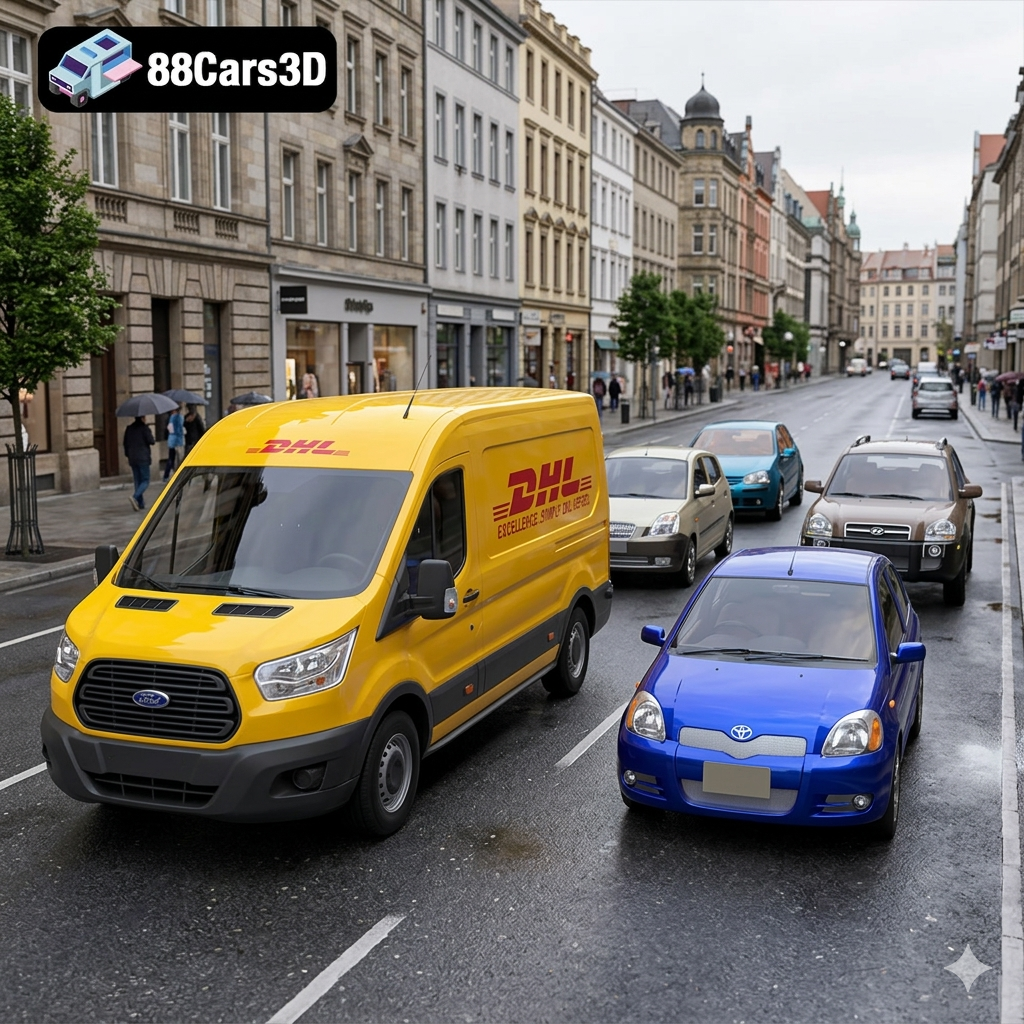
Download the Everyday City Traffic 3D Models Bundle. Includes the VW Golf, Kia Picanto, Hyundai Tucson, Toyota Yaris, and a DHL Ford Transit Van. Save big on this 5-in-1 pack, perfectly optimized for realistic ArchViz streets and game traffic.
Price: $99.99
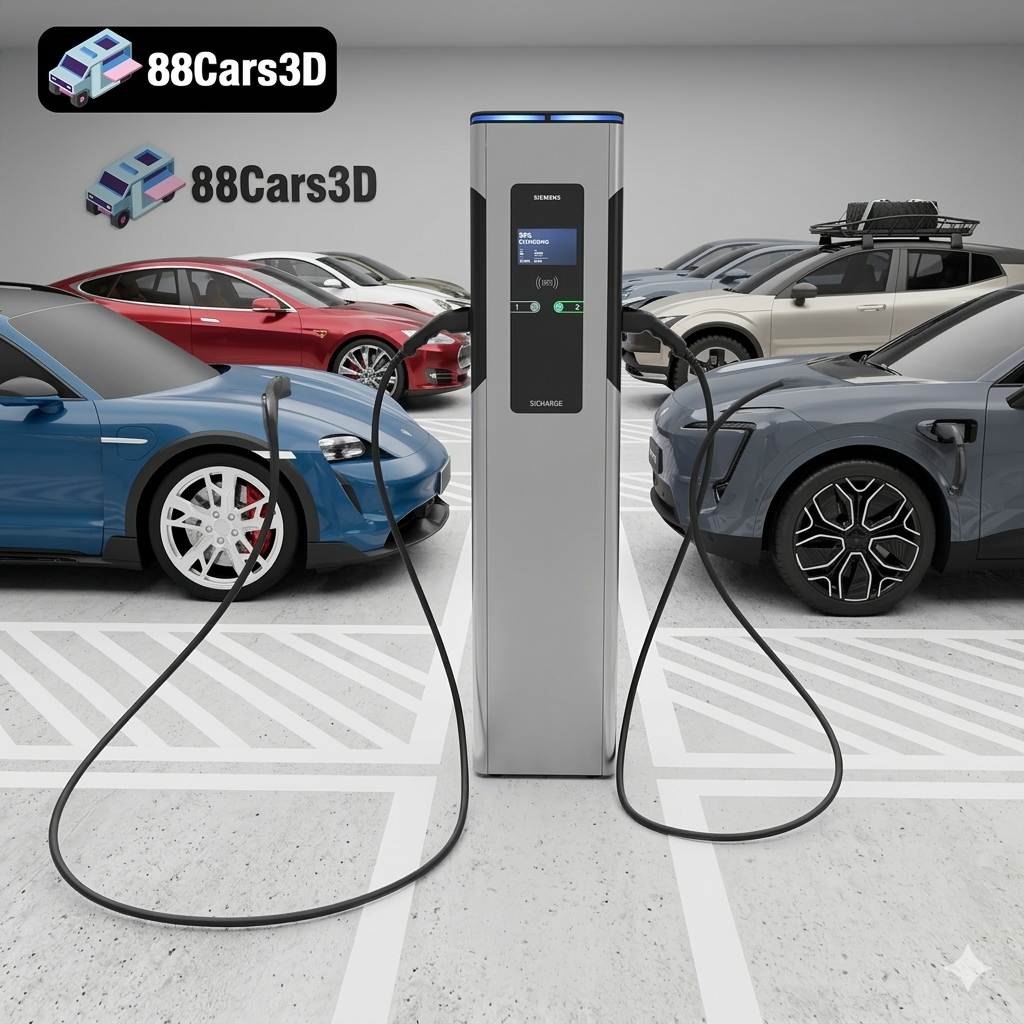
Download the Future of Mobility EV 3D Models Bundle. Includes the Volvo EX30, Tesla Model S, AVATR 11, Porsche Taycan, and a Siemens EV Charger. Save big on this highly optimized 5-in-1 pack for ArchViz and game development!
Price: $89.99

