Get 50% OFF All Premium 3D & STL Models!

In the dynamic worlds of game development, cinematic rendering, and advanced military simulations, the quality of 3D assets can make or break a project’s immersive appeal. Every detail, from the subtle curves of an armored plate to the intricate articulation of a tank track, contributes to the overall realism and believability. Professionals in these fields understand that starting with a meticulously crafted base model is not just a convenience, but a strategic advantage.
Today, we’re diving deep into what makes a superior 3D combat vehicle model truly shine, focusing on its technical prowess, versatility, and the myriad ways it can elevate your projects. We’ll explore the critical aspects of asset optimization, workflow integration, and the crucial role of diverse file formats. Our journey will highlight the exceptional capabilities of the Heavy Armored Tank 3D Model, a standout offering available on 88cars3d.com, designed to be a hero asset in any digital battlefield.
When acquiring a sophisticated 3D model like the Heavy Armored Tank, understanding the various file formats included is paramount. Each format serves a specific purpose, catering to different software environments, project requirements, and output destinations. The Heavy Armored Tank 3D Model, for instance, comes packed with a comprehensive suite of formats, ensuring maximum compatibility and flexibility for professionals. Let’s break down these essential formats:
The .blend file provides a fully editable Blender scene. For users of Blender, this is often the most desirable format as it retains all scene data: geometry, materials, textures, lighting, cameras, rigging, and even animations. It allows for deep customization, tweaking materials with Blender’s Cycles or Eevee renderers, adjusting mesh details, or integrating the tank directly into existing Blender projects without any loss of information. It’s perfect for artists who want to dissect the model, learn from its construction, or make significant modifications.
FBX (Filmbox) is a proprietary file format developed by Autodesk, widely recognized as the go-to format for exchanging 3D data between different software applications. Its strength lies in its ability to store not just mesh data, but also materials (though often simplified), textures, animations, and skeletal data. For game engines like Unreal Engine and Unity, .fbx is often the preferred import format due to its robust support for animation and hierarchy. The Heavy Armored Tank’s .fbx file would be meticulously prepared to ensure smooth integration into real-time pipelines, preserving its articulated turret, gun barrel, and track systems.
The Wavefront .obj format is one of the oldest and most universally supported 3D file formats. It’s a simple, text-based format that primarily stores geometric data (vertices, normals, UV coordinates) and references to external material files (.mtl). While it doesn’t support animation or rigging directly, its widespread compatibility makes it ideal for cross-software transfers where only the mesh data is required. For archival purposes or when you need a clean mesh to start fresh with materials in a new software, .obj is incredibly reliable.
GLB (GL Transmission Format Binary) is the binary version of glTF, an open-standard 3D file format for scenes and models. It’s specifically designed for efficient transmission and loading of 3D scenes by applications. GLB bundles all assets (geometry, materials, textures, animations) into a single file, making it perfect for AR/VR experiences, web-based 3D viewers, and mobile applications where performance and small file size are critical. Its PBR (Physically Based Rendering) material support ensures consistent visual fidelity across compatible platforms.
STL (Standard Tessellation Language or Stereolithography) is the dominant file format for 3D printing. It represents a 3D model as a collection of unconnected triangular facets, defining only the surface geometry of an object without color, texture, or other CAD attributes. For those looking to bring the Heavy Armored Tank 3D Model into the physical world – perhaps for tabletop wargaming or a display model – the .stl format is essential. It requires careful preparation to ensure manifold geometry and adherence to print tolerances, which a professionally crafted asset like this would provide.
The Polygon File Format (.ply) is a general-purpose format for storing graphical objects that are described as a collection of polygons. It can store a variety of properties including color, transparency, surface normals, and range data. While less common for general asset exchange than FBX or OBJ, .ply is often used in scientific, engineering, and 3D scanning applications where precision mesh data and additional per-vertex or per-face attributes are crucial for analysis or reverse engineering into CAD. It’s a solid option for applications requiring detailed mesh integrity beyond simple visual representation.
While not a standalone file format in the same way as .fbx or .obj, the inclusion of “.unreal” typically signifies that the model has been specifically prepared or even pre-imported into an Unreal Engine project. This means it might come with optimized materials, collision meshes, LODs (Levels of Detail), and a proper skeletal hierarchy configured for Unreal’s animation system. For game developers, this can be a massive time-saver, indicating a truly plug-and-play experience within the engine, minimizing import headaches and setup time.
Similar to .blend, the .max file is the native project file for Autodesk 3ds Max. This format retains the complete scene information, including the model’s geometry, modifiers, materials, lighting, cameras, rigging, and animation data. 3ds Max is a powerhouse in architectural visualization, product design, and cinematic animation. For professionals working within the 3ds Max ecosystem, this file provides the highest level of editability and allows for seamless integration into complex rendering pipelines, leveraging tools like V-Ray or Corona Renderer.
The provision of such a comprehensive array of formats for the Heavy Armored Tank 3D Model underscores its professional-grade nature and commitment to cross-platform usability, making it a truly versatile asset for any designer or developer.
What sets a premium 3D model apart from a basic one? It’s often found in the intricate balance of visual detail and performance optimization. The Heavy Armored Tank 3D Model exemplifies this balance, offering impressive fidelity without crippling system resources.
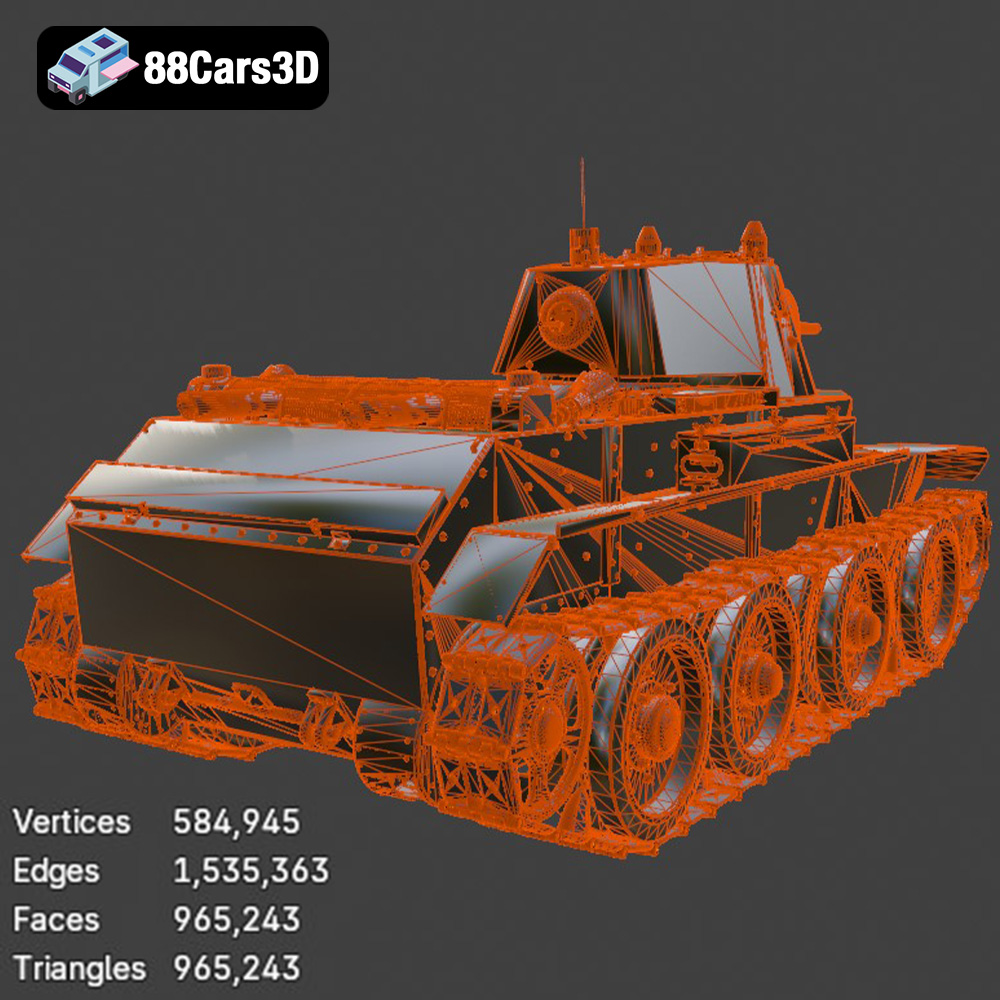
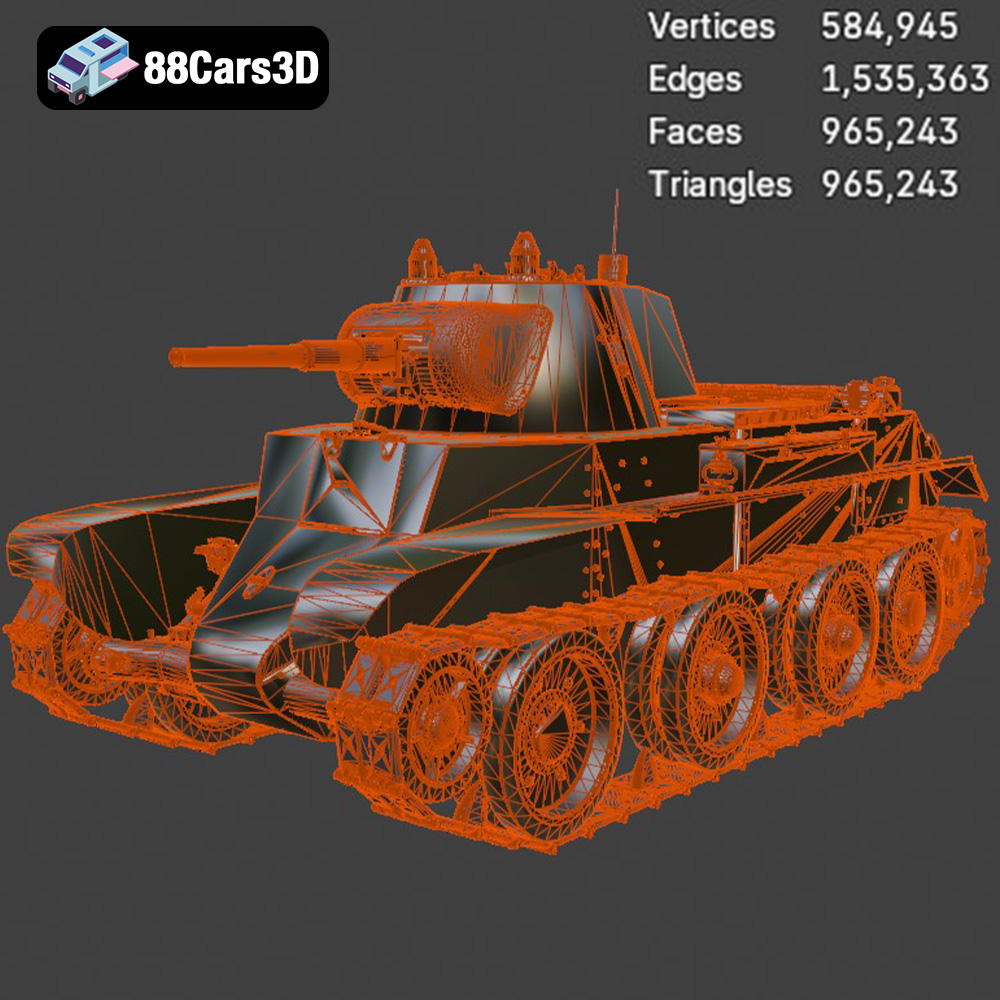
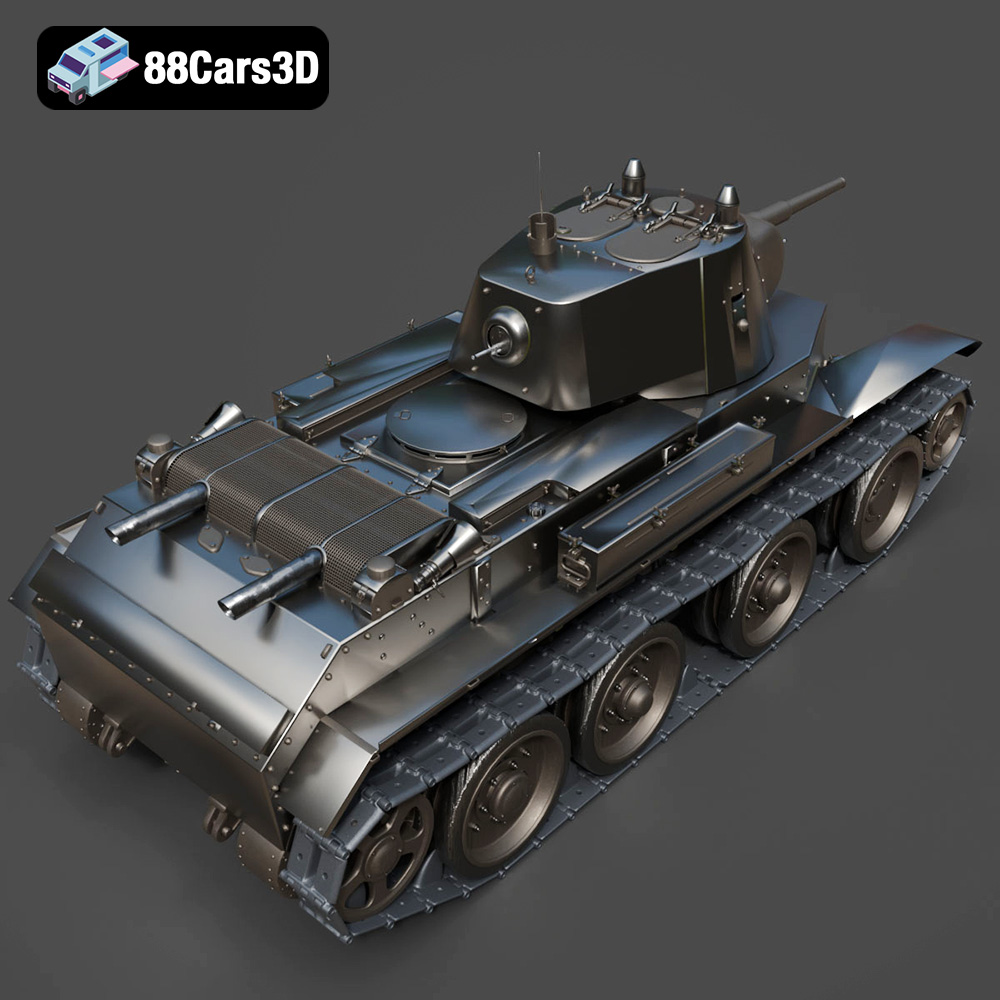
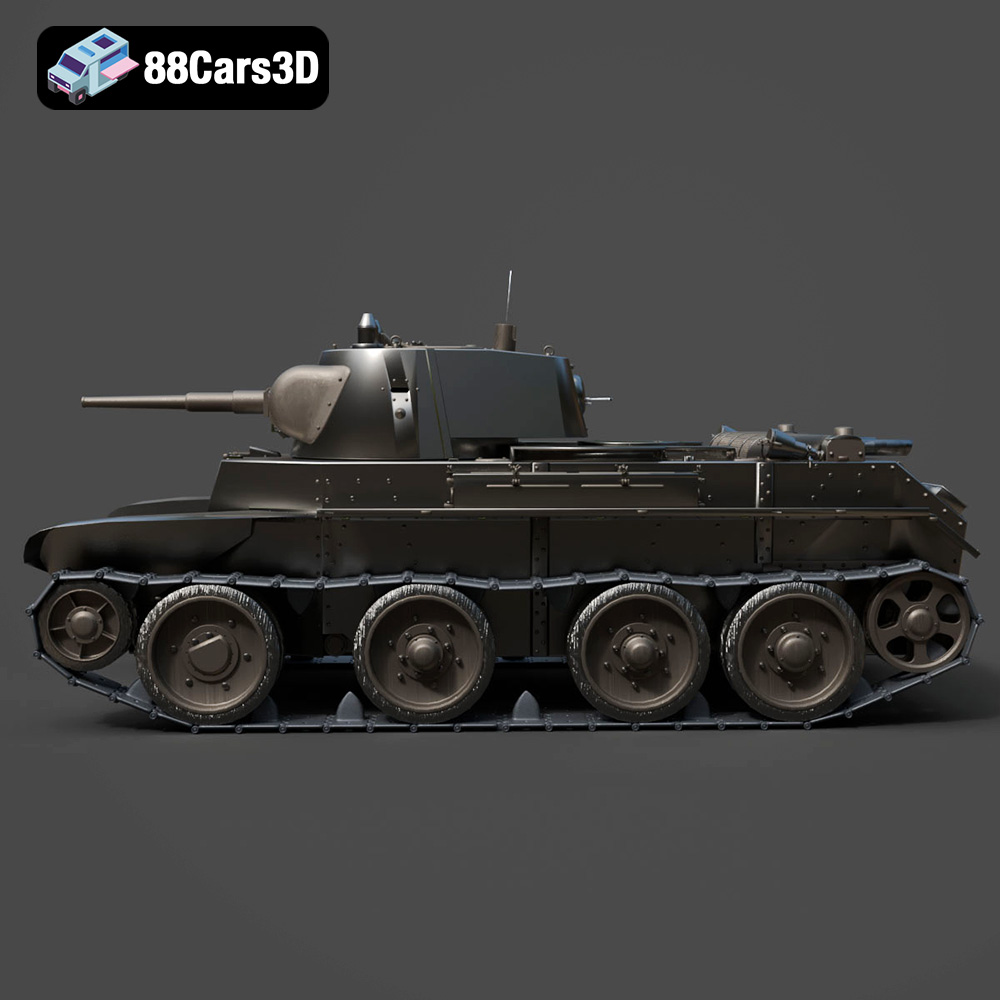
With 584,945 vertices and 965,243 triangles, the Heavy Armored Tank 3D Model boasts a perfectly balanced topology. This isn’t just a number; it represents a deliberate design choice. Nearly a million triangles might sound high for some applications, but for a hero asset in current-gen games or high-resolution cinematic renders, this level of detail is crucial for realism. The model delivers intricate mechanical details on the tracks, heavy armor plating, and weaponry, ensuring it holds up under close-up scrutiny. Crucially, “perfectly balanced topology” means the polygons are distributed efficiently, avoiding unnecessary density in flat areas while providing ample resolution where detail is needed most, like the complex continuous track system or the articulated turret assembly. This optimization prevents bogged-down rendering times and maintains smooth frame rates in real-time environments.
A static model, no matter how detailed, has limited utility in interactive or animated contexts. The Heavy Armored Tank is built with animation in mind, featuring separate components for its turret, main gun, wheels, and individual track links. This modularity is vital for realistic animation and physics rigging. Imagine the main gun barrel elevating independently, the turret rotating to track a target, and the continuous tracks articulating realistically over uneven terrain. These separated elements, combined with a proper pivot setup, enable animators and technical artists to create dynamic, believable movement for battlefield cinematics or drivable vehicles in a game. Even for static renders, the ability to pose these elements adds significant artistic flexibility.
Accuracy in scale is often overlooked but is fundamental for believable scenes. The Heavy Armored Tank 3D Model adheres to real-world scale based on standard Main Battle Tank (MBT) dimensions. This ensures that when the tank is placed alongside other models or characters, it looks proportionally correct. This is critical for everything from military training simulations, where accurate dimensions are paramount, to game development, where a disproportionate vehicle can break immersion. It also aids in setting up realistic lighting and camera perspectives, as real-world scale translates directly into correct light falloff and depth of field effects.
The versatility of the Heavy Armored Tank 3D Model from 88cars3d.com extends across multiple professional disciplines, each benefiting from its high detail and optimized structure.
For cinematic artists, this tank model is a dream. In software like 3ds Max or Blender, the included .max and .blend files provide native access to the model’s complete structure. Artists can leverage powerful renderers like V-Ray, Corona, Cycles, or Octane to create stunning, photorealistic visuals. The high polygon count supports fine surface details and enables advanced material setups, including PBR (Physically Based Rendering) textures for realistic metallic sheens, rough armor plating, and weathered surfaces. Imagine dramatic warzone lighting setups: the glint of sunlight off sloped armor, the muzzle flash of the main gun, or the subtle dust kicked up by the tracks. The model’s detailed external features – from exhaust grilles to commander hatches – provide ample opportunities for close-up shots that convey narrative and impact. Animators can rig the separate components, allowing for dynamic camera movements that follow the tank’s articulated movements, bringing battlefield dioramas to life with unparalleled realism.
Game developers constantly seek assets that balance visual fidelity with real-time performance. The Heavy Armored Tank, with its balanced topology and inclusion of .fbx and .unreal formats, is an excellent candidate for a “hero” drivable vehicle in current-gen PC/console shooters, strategy games, or tank simulators. Importing the .fbx into Unreal Engine or Unity is straightforward. Developers can then apply engine-native PBR materials, set up collision meshes for realistic interaction, and create animation blueprints to control the turret, gun, and tracks based on player input or AI behavior. The optimized mesh (just under a million triangles) means it can serve as a primary vehicle asset without excessive performance overhead, especially when combined with proper LOD (Levels of Detail) implementation for distant views. The detailed exterior is perfect for first-person “commander view” perspectives, immersing players directly into the action.
Beyond entertainment, the demand for highly accurate 3D models in military simulation and training is immense. The Heavy Armored Tank 3D Model is highly useful for tactical military training software and combat vehicle identification. Its real-world scale accuracy and detailed external features ensure that trainees are interacting with a digital representation that closely mirrors its real-life counterpart. Simulators can leverage the model for vehicle recognition exercises, tactical scenario planning, and even virtual driving practice. The ability to articulate components (turret, gun, tracks) allows for complex physics-driven behaviors, essential for realistic simulations where precision matters.
A great 3D model is not just a finished product; it’s a canvas for further creativity. The Heavy Armored Tank provides a robust foundation for extensive customization and diverse applications.
The provided base model is ready for extensive texturing. Artists can apply various camouflage liveries, ranging from Desert Storm and Winter Splinter to Urban Digital or Classic Olive Drab. Utilizing industry-standard tools like Substance Painter, detailed PBR textures can be created to define every material aspect: the rough, chipped paint on the armor, the worn rubber of the road wheels, the grimy, metallic sheen of the track links. Going further, intense weathering effects can transform the tank from factory fresh to battle-hardened. Imagine mud-caked tracks from a recent engagement, scorch marks on the barrel from sustained firing, rusted exhaust ports, or dust accumulated on every surface from a desert campaign. These layers of detail tell a story, enhancing realism and adding character to the model.
A hero asset like this tank thrives in a rich environment. Its presence instantly elevates any scene, whether it’s a desolate battlefield under a stormy sky, a convoy rolling through a dusty urban landscape, or a tense standoff at dawn. Artists can adapt lighting for dramatic nighttime firefights, casting long shadows and muzzle flashes, or bright, dusty desert engagements, with harsh sunlight emphasizing every surface detail. Combining the Heavy Armored Tank with other environmental assets – ruined buildings, debris, combat personnel, or other military vehicles – allows for powerful environmental storytelling. Each element contributes to a narrative, making the scene more engaging and immersive. The accurate proportions and detailed features ensure it integrates seamlessly into these complex scenarios.
One of the most exciting applications of this 3D model is its convertibility to .stl format for 3D printing. This opens up a world of possibilities for display-scale military modelers and tabletop wargaming enthusiasts. The product description even provides detailed 3D print settings:
These detailed guidelines ensure that hobbyists and professionals can successfully bring this formidable machine from the digital realm into a physical, tangible collectible, ready for painting and display.
The journey of creating a high-quality 3D asset from scratch is long and resource-intensive, requiring specialized skills in modeling, texturing, rigging, and optimization. This is where marketplaces like 88cars3d.com provide immense value to professionals across industries.
Investing in a pre-made, professionally optimized 3D model like the Heavy Armored Tank from 88cars3d.com significantly reduces development time and costs. Instead of dedicating hundreds of hours to modeling and optimizing a complex vehicle, studios and individual artists can acquire a production-ready asset instantly. This allows teams to focus their efforts on other critical aspects of their project, such as level design, animation, or unique gameplay mechanics. The cost savings are often substantial when factoring in artist salaries and software licenses.
Models purchased from reputable sources like 88cars3d.com are built to industry standards. The Heavy Armored Tank 3D Model is a prime example, offering detailed exterior features, balanced topology, and a comprehensive suite of file formats. This ensures not only visual excellence but also seamless compatibility with major 3D software platforms and modern real-time engines. Artists can be confident that the asset will integrate smoothly into their existing pipelines, minimizing technical hurdles and maximizing creative output. Whether for cinematic realism, game performance, or accurate simulations, the quality is guaranteed, providing a robust foundation for any project requiring a formidable armored vehicle.
The Heavy Armored Tank 3D Model stands as a testament to the power of high-fidelity digital assets in today’s demanding creative and technical fields. From its meticulously balanced topology and modular design, enabling dynamic animation and efficient real-time performance, to its unparalleled versatility across multiple file formats and applications, this model is a true hero asset. Whether you’re crafting immersive game environments, producing cinematic spectacles, developing critical training simulations, or even bringing digital designs to life through 3D printing, its professional-grade quality and detailed features provide an invaluable starting point.
By leveraging assets like the Heavy Armored Tank from 88cars3d.com, professionals can streamline their workflows, save valuable resources, and elevate the realism and impact of their projects. It’s more than just a 3D model; it’s a strategic investment in quality and efficiency, ready to dominate any digital battlefield you envision.
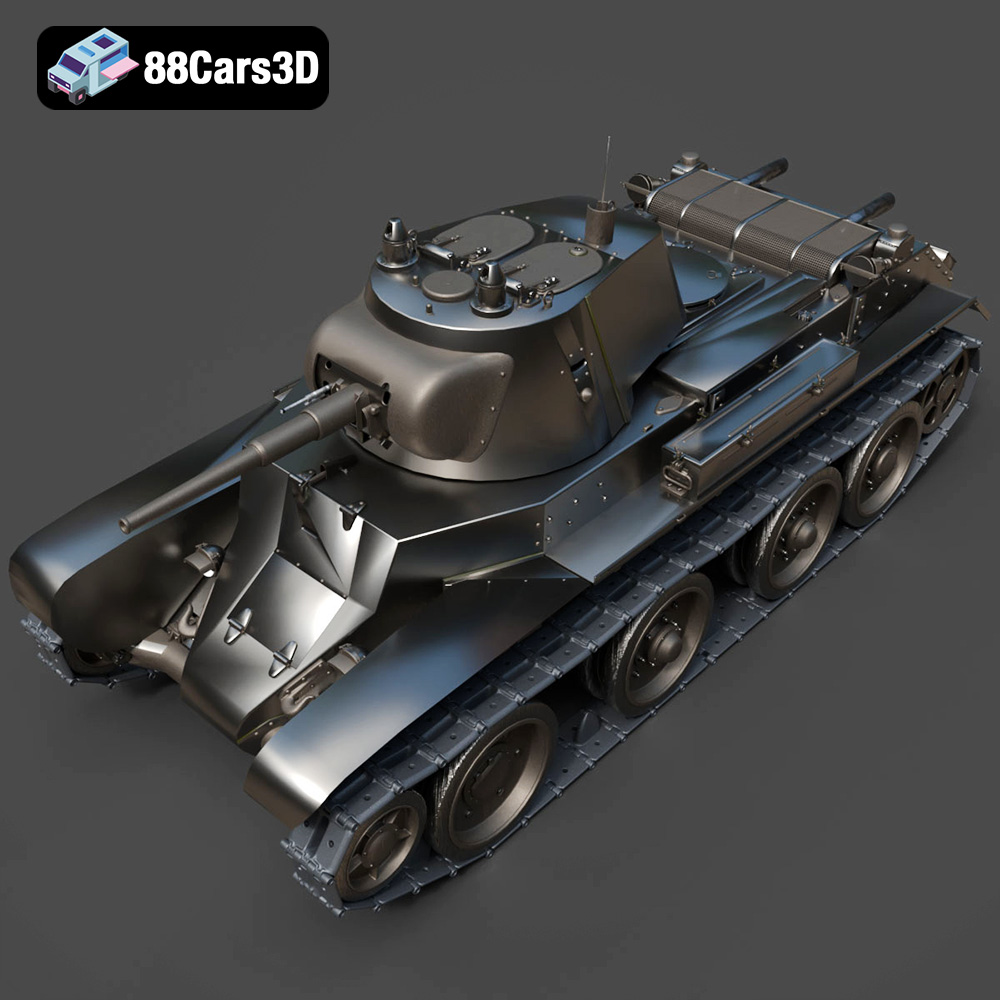
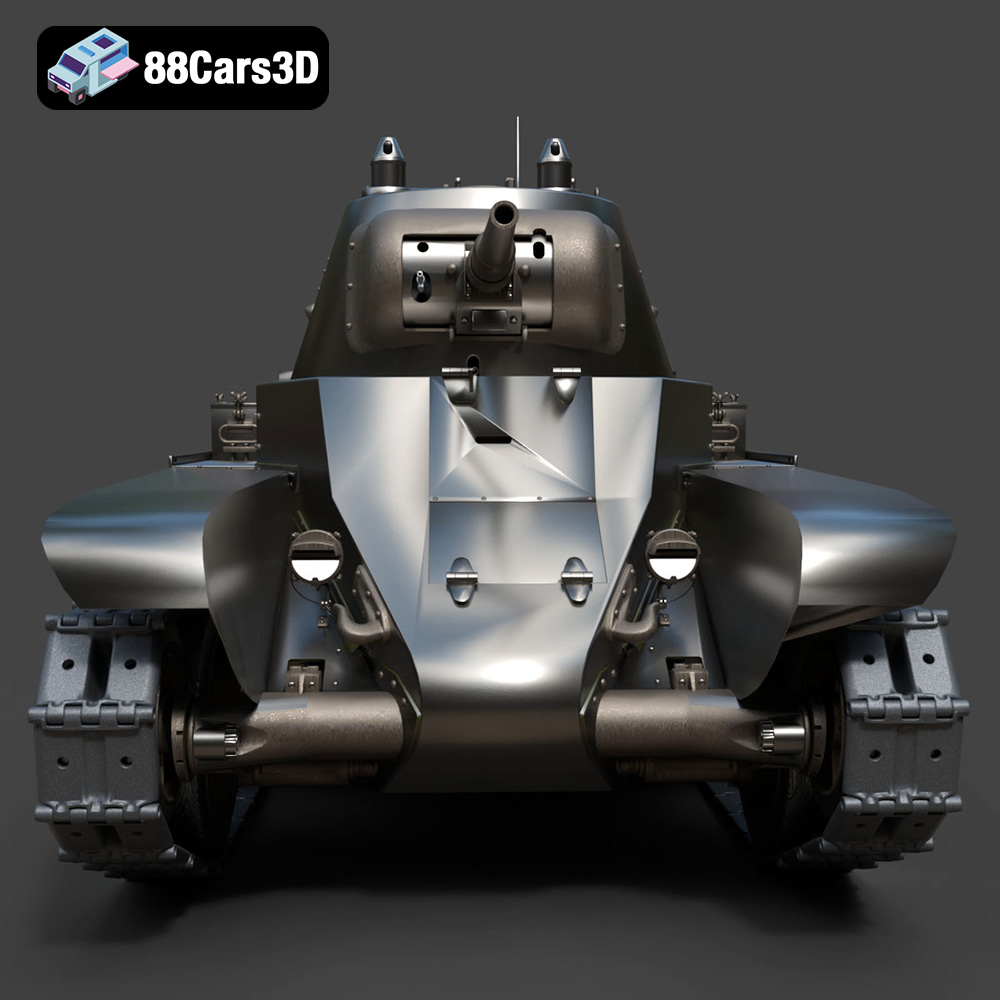
The Heavy Armored Tank 3D Model is a high-detail digital recreation of a formidable tracked combat vehicle. Designed to represent the raw power and tactical dominance of armored warfare, this model features heavy plating, a commanding main gun barrel, a fully articulated turret, and intricate continuous track (caterpillar) systems. This 3D model accurately captures the rugged, battle-ready aesthetic of modern or classic armored cavalry. It features detailed road wheels, drive sprockets, exhaust grilles, external storage compartments, and commander hatches. Built with an optimized, highly balanced topology (just under 1 million triangles), it provides fantastic visual fidelity for close-up rendering while remaining efficient enough to serve as a high-end hero asset in modern game engines or military simulators. Perfect for intense battlefield cinematic scenes, military strategy games, historical or modern combat simulations, and highly detailed diorama renders.
$29
.blend
.fbx
.mbt
.military
.obj
.rendering
.stl
.tank
3d printing
armored-vehicle
combat
game asset
main-battle-tank
mid-poly
military-3d-model
tracks
turret
war