Get 50% OFF All Premium 3D & STL Models!

The world of 3D modeling is an intricate dance between artistic vision and technical precision. For automotive enthusiasts and digital artists alike, the allure of recreating iconic vehicles, or even designing bespoke customs, in the virtual realm is undeniable. This pursuit demands not just skill, but also access to exceptional digital assets that can elevate a project from good to truly breathtaking. Whether you’re crafting cinematic visualizations, developing immersive game environments, or even producing high-fidelity 3D prints, the quality of your foundational 3D model is paramount. It’s here that specialized marketplaces like 88cars3d.com shine, offering meticulously engineered 3D car models that cater to the most demanding professional workflows.
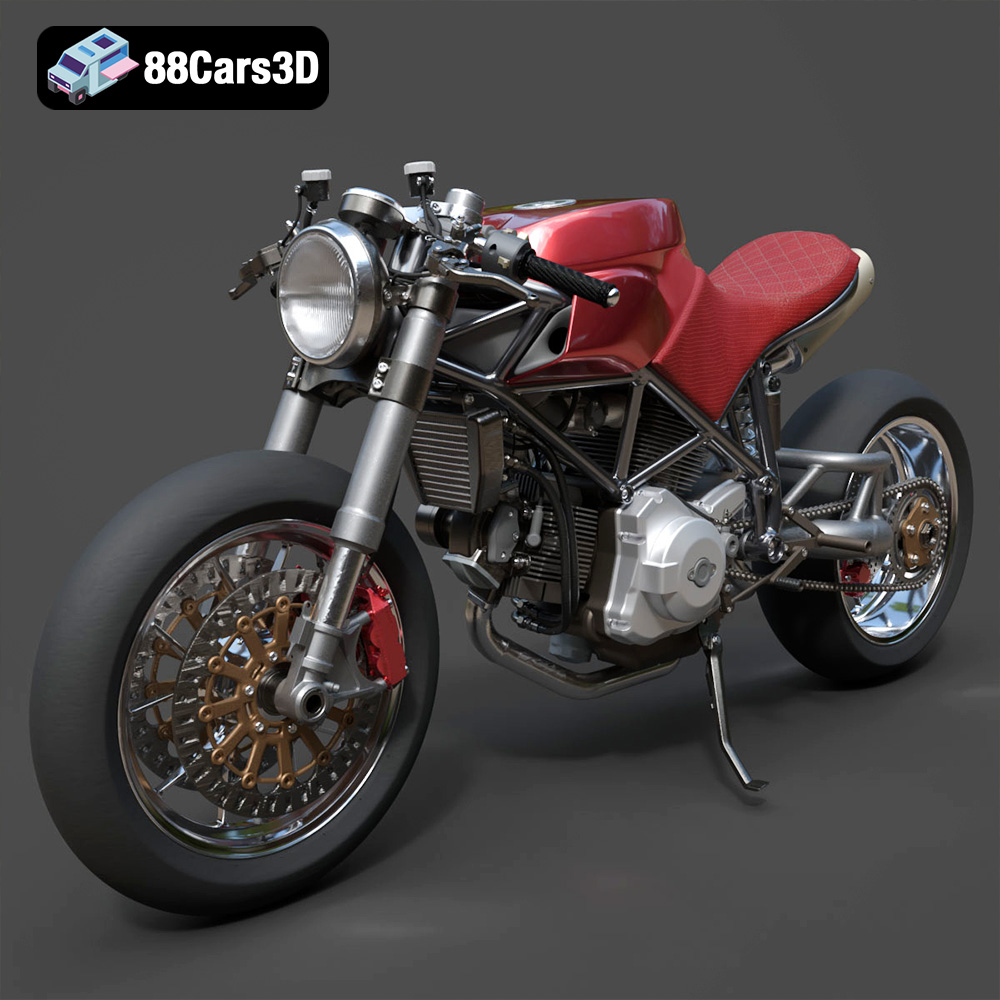
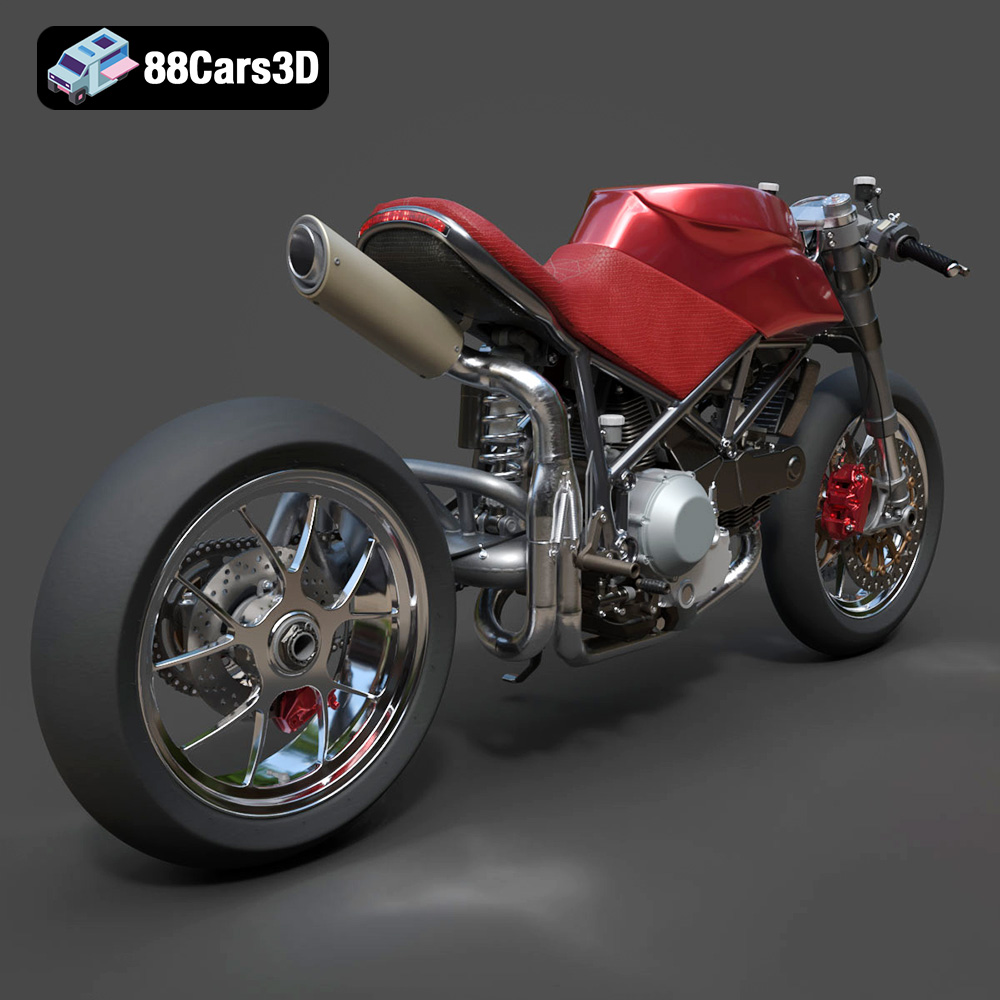
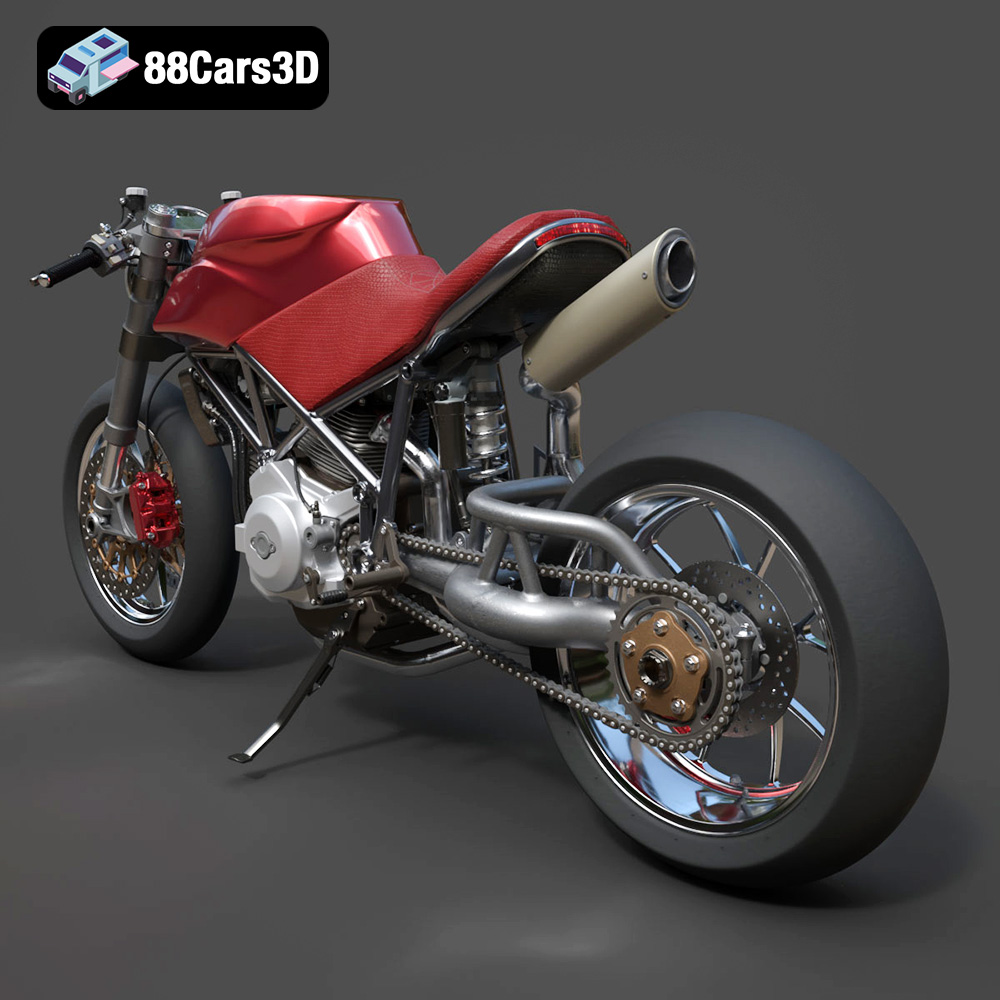
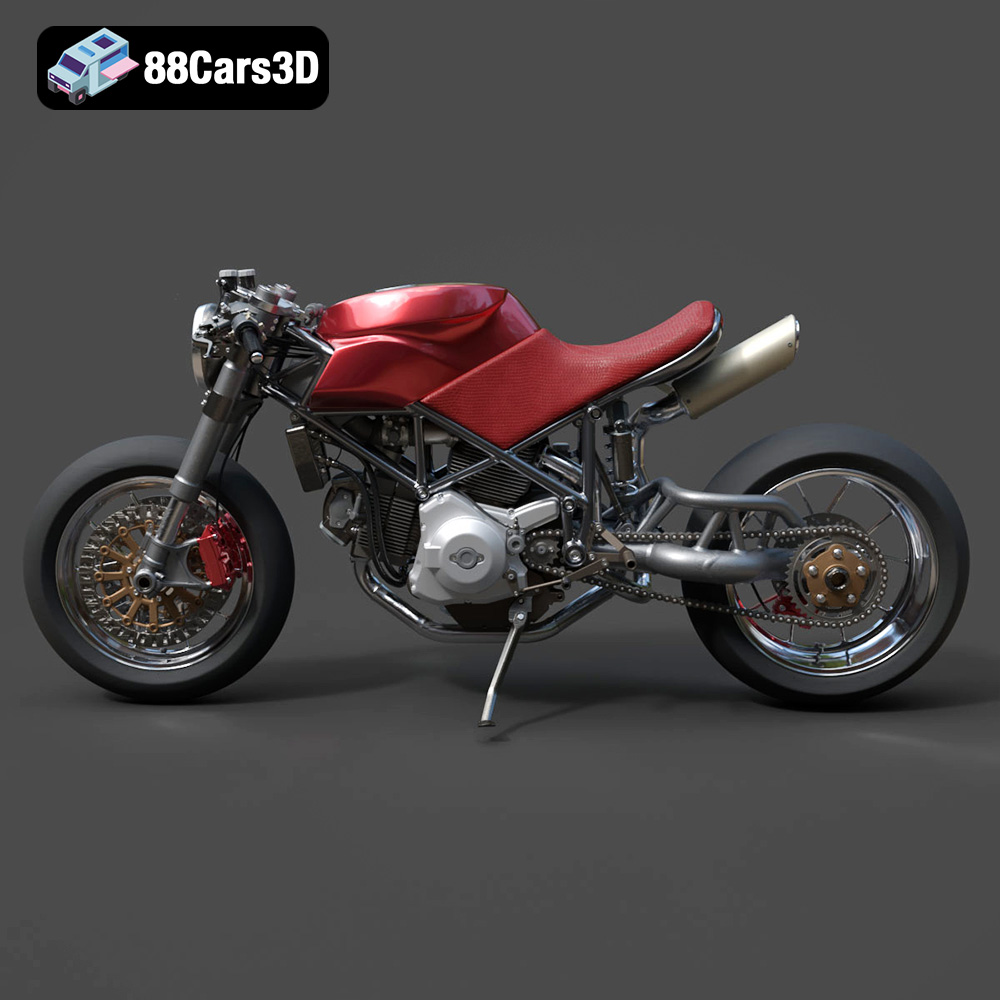
Consider a model that encapsulates both raw mechanical beauty and refined custom design: the Ducati 916 Custom Café Fighter 3D Model. This isn’t merely a static representation; it’s a digital sculpture, boasting an extreme polygon count and an uncompromised level of detail that brings every bolt, wire, and sculpted curve to life. It represents the pinnacle of what advanced 3D modeling can achieve, providing an incredible foundation for a myriad of projects, from gritty urban scenes to high-end automotive galleries.
Automotive 3D modeling stands as one of the most challenging and rewarding disciplines within the broader field of digital art. It requires not only a keen eye for form and proportion but also a deep understanding of mechanical engineering and material science. Every surface, every component, must be rendered with absolute precision to convince the viewer of its tangibility.
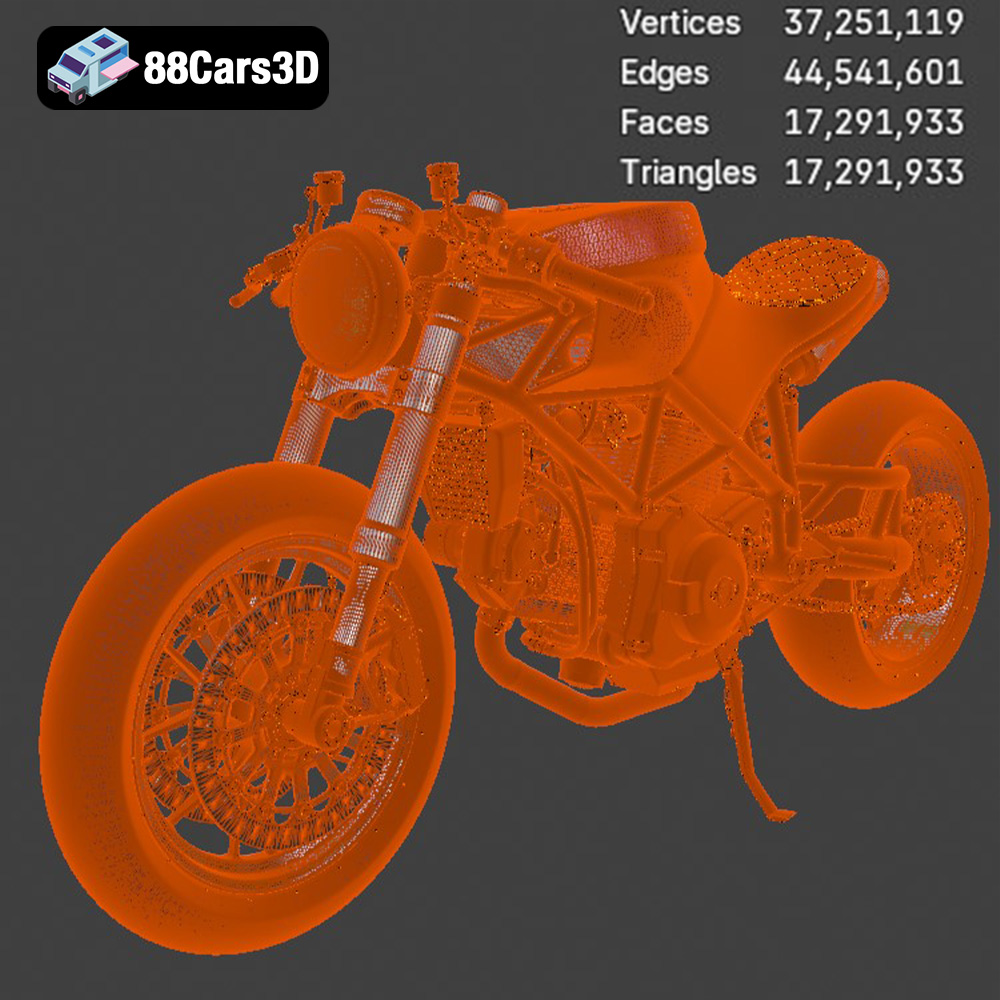
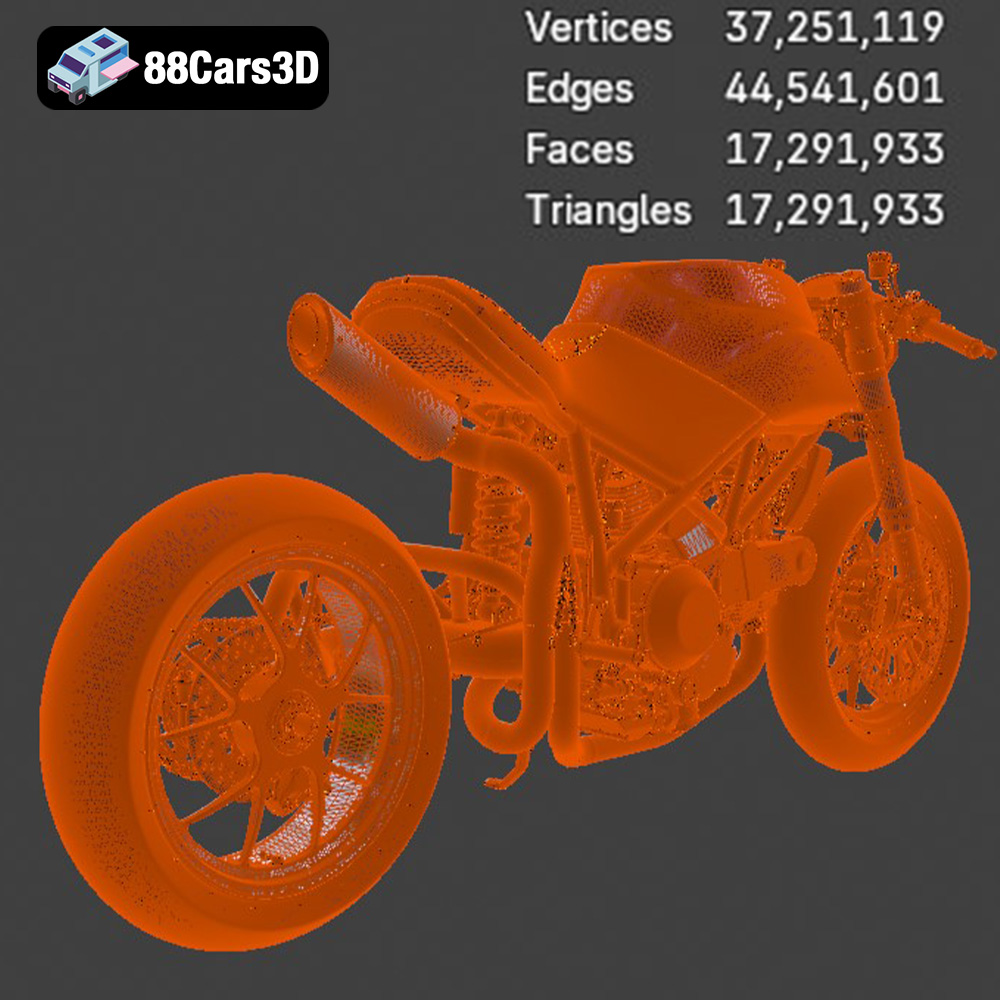
At the core of any high-quality 3D model lies its mesh structure. For automotive subjects, particularly those intended for extreme close-up rendering or physical 3D printing, an “ultra-high-poly” count is often a deliberate choice. This means millions of polygons, each contributing to the smooth curvature of a fender, the sharp edge of a bespoke headlight, or the intricate details of an exposed engine block. The Ducati 916 Custom Café Fighter 3D Model, with its astounding 17.2 million polygons, exemplifies this approach. This geometric richness allows for incredibly smooth surfaces without relying heavily on normal maps for detail, making it ideal for scenarios where light interaction and silhouette accuracy are critical, such as cinematic product showcases or photorealistic still renders. It ensures that even at extreme magnification, the model holds up, revealing the nuanced forms of its L-twin engine, the delicate lattice of its trellis frame, and the custom heat-stained exhaust system.
Developing a complex 3D car model from scratch is an incredibly time-consuming endeavor, often requiring hundreds of hours of work by highly skilled artists. This makes high-quality, pre-built 3D car models invaluable to studios and individual artists operating under tight deadlines. Purchasing a model like the Ducati 916 Custom Café Fighter 3D Model means immediately gaining access to a production-ready asset, freeing up valuable time to focus on creative aspects like scene composition, lighting, texturing, and animation. Beyond saving time, it also guarantees a level of consistency and technical excellence that might be difficult to achieve in-house, especially for specialized subjects like custom motorcycles. These assets often come with proper pivot setups for animation and real-world scale accuracy, ensuring seamless integration into existing scenes and environments.
The versatility of a 3D model is often defined by the range of file formats it supports. Different stages of a project, different software packages, and different end-use scenarios each demand specific file types optimized for their unique requirements. Knowing which format to use and why is a fundamental technical skill for any 3D professional. The Ducati 916 Custom Café Fighter 3D Model from 88cars3d.com offers a comprehensive suite of formats, ensuring broad compatibility across various pipelines.
When it comes to active development and integration into live projects, several formats stand out:
Beyond active production, other formats cater to universal compatibility, archival, or specialized outputs like 3D printing:
Understanding these formats is crucial for maximizing the utility of any 3D asset, especially a rich one like the Ducati 916 Custom Café Fighter.
The Ducati 916 Custom Café Fighter 3D Model is not just another vehicle asset; it’s a statement piece. It embodies the spirit of bespoke craftsmanship, meticulously translated into the digital realm with an obsessive attention to detail. This model is a testament to the fact that high-quality 3D car models can be both technically superior and aesthetically compelling.
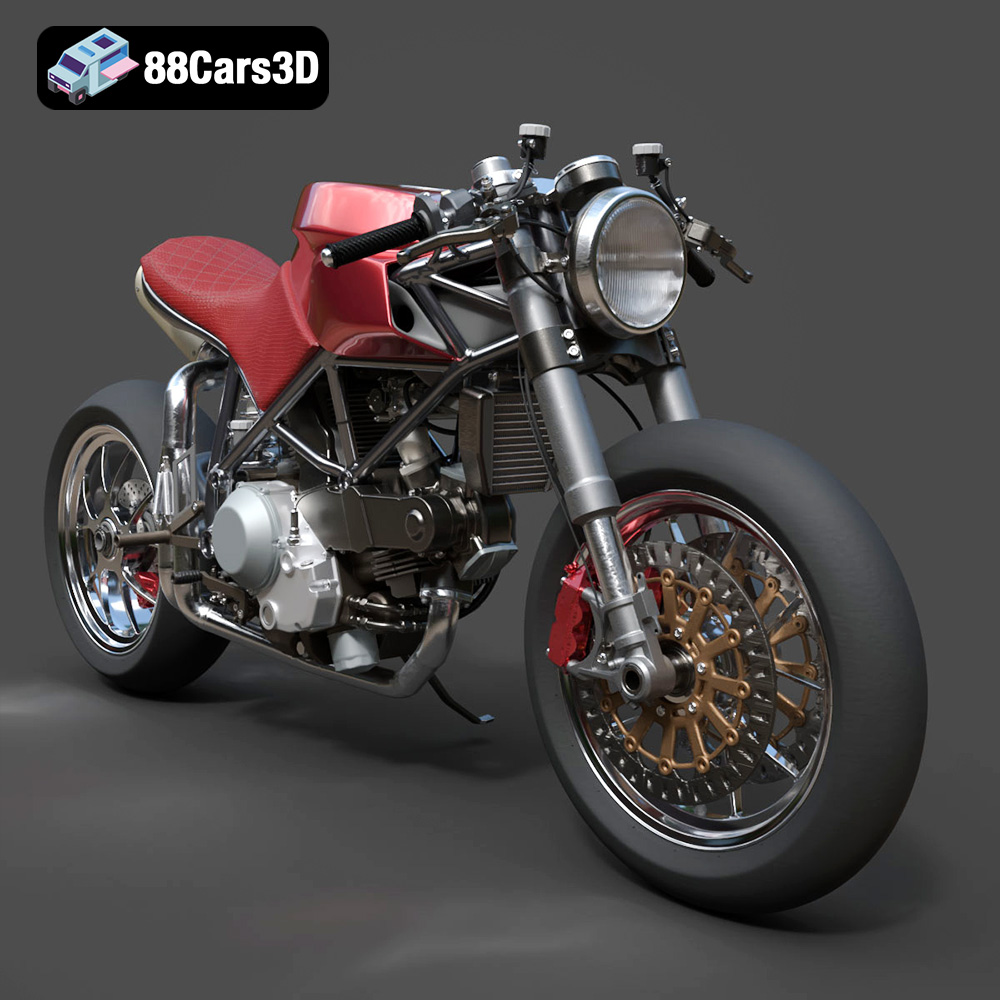
Every component of this Ducati model has been sculpted with extreme precision. The decision to strip away the factory fairings and expose the internal mechanics is a bold design choice that truly shines in a high-polygon model. You can discern the intricate cooling fins of the legendary L-twin engine, the exposed dry clutch cover, and the robust transmission housing. The iconic Italian steel trellis frame, a hallmark of Ducati design, is rendered with such fidelity that one can almost feel its structural integrity. The single-sided swingarm, a mechanical marvel, is also faithfully recreated, ready to articulate for animation purposes. Even elements like the custom swept exhaust system boast realistic heat-stain material zones, adding another layer of authenticity that makes this model stand out from generic 3D car models.
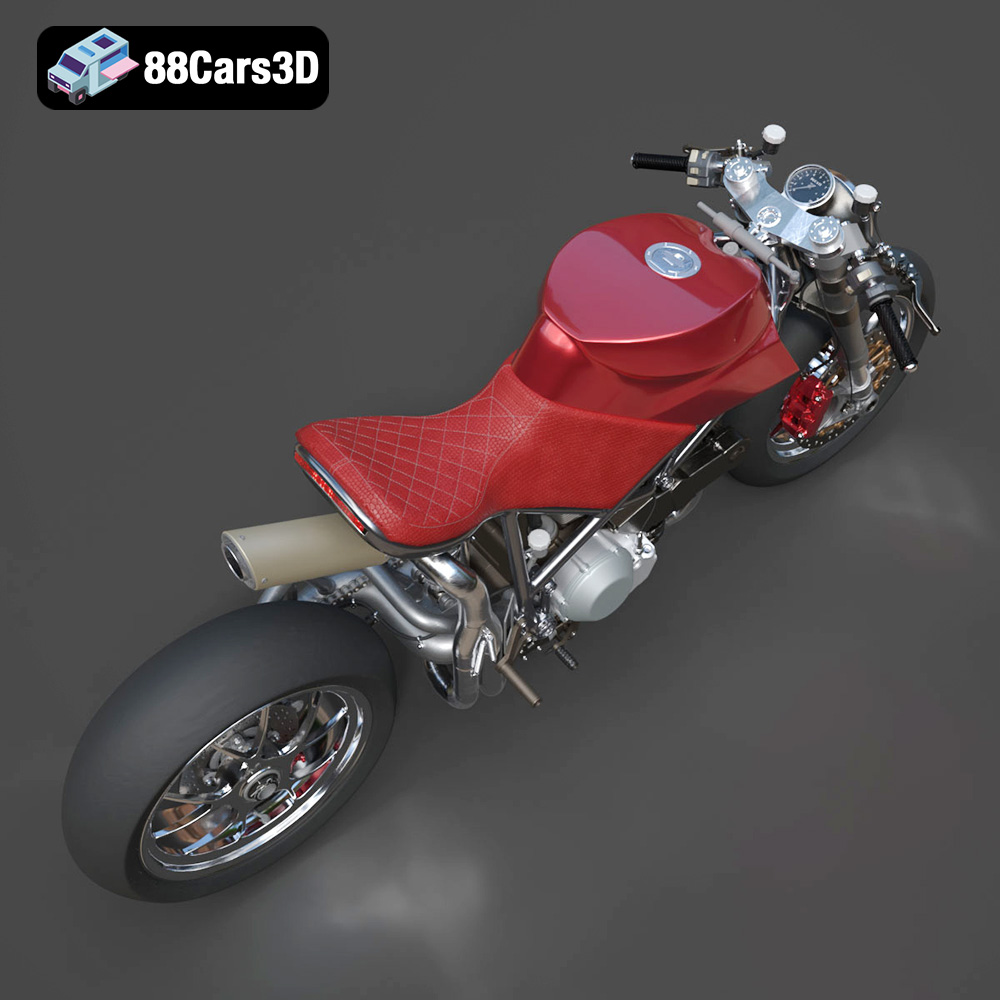
The “Café Fighter” aesthetic is all about raw, aggressive elegance. This model captures that perfectly with its aggressive, forward-leaning stance, custom minimalist tail section, and bespoke front LED headlight assembly. From the custom stitched leather seat to the aggressive clip-on handlebars with bar-end mirrors, and the aftermarket rear-set footpegs, every element contributes to an uncompromised, high-resolution first-person POV rendering experience. The specialized custom wheel design further enhances its unique identity, whether it’s the iconic 3-spoke or a custom alloy. This level of granular detail allows for cinematic camera angles that showcase the motorcycle’s power and attitude, making it an ideal asset for high-end lifestyle brand campaigns or digital design showcases.
While the model comes pre-built with extraordinary detail, its structure allows for extensive customization. Users can easily modify fuel tank and tail cowl colors – imagining it in classic Ducati red, stealthy matte carbon fiber, or a pearl white. Engine and exhaust finishes can be swapped, perhaps from a high-polish titanium look to a rugged blacked-out thermal wrap. Seat materials can be altered from distressed brown leather to sleek black Alcantara. These options enable artists to adapt the Ducati 916 Custom Café Fighter 3D Model to fit diverse project requirements, whether it’s a moody, garage-lit scene or a bright, high-key studio setup, ensuring maximum flexibility for creative vision.
Once an exceptional 3D model like the Ducati 916 Custom Café Fighter is acquired, the next step is to breathe life into it through rendering and visualization. This is where the model’s ultra-high-poly structure truly pays off, allowing for photorealistic output that is virtually indistinguishable from real photography.
Professional automotive rendering often begins with a studio lighting setup. In software like 3ds Max or Blender, this involves carefully positioned area lights, HDRI (High Dynamic Range Image) environment maps for realistic reflections, and often a backdrop or infinite floor. The Ducati’s extreme detail, particularly on the exposed engine and frame, benefits immensely from intricate light interaction. Artists can focus on fine-tuning material properties – the metallic sheen of the engine block, the subtle grain of the leather seat, the heat-discoloration of the exhaust, or the gloss of the custom paintwork. Physically Based Rendering (PBR) materials, which simulate how light interacts with surfaces in the real world, are crucial here. The pre-existing texture maps and material zones on the Ducati 916 Custom Café Fighter 3D Model provide a powerful starting point, accelerating the material setup process and ensuring consistent, high-quality results.
For cinematic productions, the goal is often to tell a story or evoke an emotion through motion and dramatic visuals. This involves not just high-resolution renders but also dynamic camera work, depth of field effects, and atmospheric elements. The Ducati model’s proper pivot setup for steering, wheel rotation, and even kickstand articulation makes it ideal for animation. Imagine a slow, sweeping camera move revealing the intricate details of the exposed engine, or a dynamic shot of the bike leaning into a turn. Software like 3ds Max, with its robust animation tools and integrated renderers like V-Ray or Corona, can be leveraged to create stunning sequences. The sheer polygon count of the Ducati 916 Custom Café Fighter allows for exquisite detail even in rapid-motion blur, making it perfect for pre-rendered cinematic sequences that demand uncompromised mechanical detail.
One of the most exciting applications of highly detailed 3D models is the ability to transform them into physical objects through 3D printing. The Ducati 916 Custom Café Fighter 3D Model is not only designed for stunning renders but also built as an excellent base for highly detailed, large-scale custom motorcycle resin prints.
While the .stl format is ideal for 3D printing, preparing a model with over 17 million polygons for optimal print quality requires careful consideration. The model’s manifold geometry—meaning it’s a closed, solid mesh without gaps or internal intersections—is critical for successful printing. For a model of this complexity, software like Meshmixer or Blender’s 3D Print Toolbox can be used for final checks, ensuring all normals are correctly oriented and identifying any potential issues like thin walls or non-manifold edges that could cause print failures. The recommended scales (1:12 / 1:10 / 1:8) are crucial for balancing detail retention with manageable print size and material consumption.
The product description specifically recommends resin printing (SLA/DLP) for the Ducati 916 Custom Café Fighter 3D Model, particularly for fine mechanical details like the trellis frame and spokes. Resin printers achieve significantly higher resolution and smoother surfaces compared to FDM (Fused Deposition Modeling) printers, which extrude plastic filament. A layer height of 0.04–0.12 mm, as suggested, is achievable with resin printers and will bring out the nuances of the engine, cockpit, and frame. Supports will be required for delicate overhangs, such as the handlebars, exhaust pipes, and certain frame sections. Post-processing, including sanding, priming, and a meticulous paint job – perhaps applying the iconic Ducati Red for the frame and metallicizer paints for the engine – would bring the physical model to life, echoing the customization options available in its digital form. This transformation from a digital file purchased from 88cars3d.com to a physical collectible is a testament to the versatility of these assets.
The true value of a premium 3D asset lies in its seamless integration into various professional pipelines. Whether for game development, high-end animation, or architectural visualization, the Ducati 916 Custom Café Fighter 3D Model offers a robust starting point, albeit with considerations for its extreme detail.
For real-time applications like game development in Unreal Engine or Unity, a direct import of a 17.2-million-polygon model is generally not feasible due to performance constraints. Game engines require highly optimized meshes to maintain high frame rates. This is where workflows involving retopology, baking, and decimation come into play. Artists would typically create a much lower-polygon version of the Ducati model (the “low-poly” mesh) while projecting the intricate details of the original high-poly model onto it using normal maps, ambient occlusion maps, and other texture maps. This process, known as “baking,” allows the low-poly mesh to visually retain the fidelity of its high-poly counterpart without the performance overhead. While the Ducati 916 Custom Café Fighter 3D Model provides an unparalleled source of detail for this process, manual intervention is key to transforming it into a game-ready asset.
The Ducati model’s technical specifications mention proper pivot setups for steering, wheel rotation, and kickstand articulation. This is a crucial advantage for animators. Instead of spending hours setting up origins and hierarchies, artists can immediately begin animating the motorcycle’s components. This “pre-rigging” simplifies complex mechanical movements, allowing for more efficient and realistic animation cycles for cinematic shots, product visualizations, or even interactive experiences where the motorcycle might need to move or interact with an environment.
While the Ducati 916 Custom Café Fighter 3D Model is presented as an ultra-high-poly asset primarily for rendering and 3D printing, its robust foundation makes it an excellent candidate for optimization to fit into real-time interactive experiences like game development, Augmented Reality (AR), and Virtual Reality (VR).
As mentioned, the 17.2 million polygon count of the Ducati 916 Custom Café Fighter 3D Model is far too dense for direct use in real-time engines. The key optimization steps involve:
These processes require technical skill but are essential for leveraging such a beautiful asset in interactive environments.
After retopology, the stunning visual detail of the high-poly Ducati model is transferred to the low-poly version through texture baking. This involves generating a suite of PBR (Physically Based Rendering) texture maps:
These maps, combined with the optimized geometry, allow the Ducati 916 Custom Café Fighter 3D Model to look incredibly realistic in real-time engines while maintaining excellent performance, making it a viable (after optimization) asset for high-fidelity game or AR/VR experiences.
In the demanding world of 3D content creation, the availability of high-quality, technically sound 3D car models is a game-changer. The Ducati 916 Custom Café Fighter 3D Model stands as a prime example of such an asset – a hyper-detailed digital recreation that serves as an unparalleled foundation for a wide array of projects. From cinematic automotive rendering in 3ds Max or Blender, where its 17.2 million polygons ensure uncompromising visual fidelity, to being the perfect candidate for a stunning 3D printed collectible model, its versatility is immense.
Whether you’re a professional looking to save production time with a meticulously crafted asset, an automotive designer needing to visualize bespoke concepts, or a hobbyist aspiring to produce gallery-worthy renders, this model provides the raw quality needed to excel. While its extreme polygon count necessitates optimization for real-time applications like Unreal Engine or Unity, its inherent detail is a treasure trove for texture baking and LOD generation, paving the way for breathtaking interactive experiences. Exploring the offerings at 88cars3d.com provides access to a world of such exceptional 3D car models, designed to push the boundaries of digital artistry and engineering. The Ducati 916 Custom Café Fighter 3D Model isn’t just a purchase; it’s an investment in the highest standard of 3D realism and creative potential.
The Ducati 916 Custom Café Fighter 3D Model is an ultra-high-detail digital recreation of a bespoke custom motorcycle build, based on the legendary 1990s Italian sportbike. Built with an extreme, uncompromised level of geometric detail (over 17 million polygons), it provides maximum visual fidelity for extreme close-up rendering, cinematic automotive visualization, and high-end 3D printing. Perfect for gritty urban street scenes, high-end automotive galleries, cinematic productions, and extreme-detail mechanical renders.
$130
.blend
.ducati
.fbx
.obj
.rendering
.stl
.streetfighter
17m-polygons
3d printing
916
cafe-racer
car-3d-model
custom-motorcycle
engine-details
l-twin
trellis-frame
ultra-high-poly