Get 50% OFF All Premium 3D & STL Models!

In the dynamic world of 3D modeling, bringing historical artifacts to life requires a unique blend of technical precision and artistic vision. Whether for captivating game environments, historically accurate cinematic sequences, or museum-quality visualizations, the digital recreation of iconic vehicles presents both challenges and immense creative opportunities. Few vehicles embody the spirit of post-war engineering and enduring simplicity quite like the IZ-49 motorcycle. This classic Soviet machine, produced from 1951 to 1958, is more than just a mode of transport; it’s a piece of history. Capturing its essence in a digital format allows designers and developers to integrate this heritage into modern projects, offering unparalleled versatility for a wide array of applications.
Today, we’re diving deep into the technical intricacies and creative potential of a meticulously crafted digital asset: the IZ-49 Classic Motorcycle 3D Model. This model stands as a testament to detailed craftsmanship, offering artists and studios a robust foundation for their most demanding projects. From high-fidelity rendering to real-time game integration and even precision 3D printing, this model, available on 88cars3d.com, is designed to meet professional standards across the board. We will explore how such high-quality 3D models serve as invaluable game assets and tools for automotive rendering, discussing specific workflows, technical specifications, and real-world applications that leverage its authentic design.
Navigating the landscape of 3D production often means understanding the nuances of various file formats. Each format serves a specific purpose, offering different levels of compatibility, data retention, and optimization for distinct workflows. The IZ-49 Classic Motorcycle 3D Model comes packaged with a comprehensive suite of formats, ensuring seamless integration into virtually any professional pipeline. Choosing the right format is paramount to maintaining fidelity, optimizing performance, and facilitating efficient collaboration.
The .blend file format is native to Blender, a powerful open-source 3D creation suite. When you receive a .blend file, you’re getting the complete scene, including not just the mesh geometry but also materials, textures, lighting, camera setups, and even animation data if present. For the IZ-49 model, this means access to fully editable components, allowing artists to fine-tune every aspect within Blender. It’s ideal for users who primarily work in Blender and require maximum flexibility for customization, material adjustments, or rendering with Cycles or Eevee.
Autodesk’s .fbx (Filmbox) format is arguably the most ubiquitous 3D exchange format in the industry. It supports a wide range of data, including geometry, UVs, textures, materials (though material definitions can vary between software), bones, skinning, and animation. Its robust support for animation and hierarchal data makes it an ideal choice for importing the IZ-49 into game engines like Unreal Engine and Unity, or into other DCC (Digital Content Creation) applications such as 3ds Max, Maya, or Cinema 4D. For real-time pipelines, .fbx is often preferred due to its efficiency in transferring rigged and animated models.
The .obj (Wavefront OBJ) format is a classic, highly compatible standard for transferring 3D geometry between different software packages. It primarily stores vertex positions, UV coordinates, normals, and face information. While it doesn’t typically carry complex material definitions or animation data directly, it’s excellent for ensuring universal compatibility of the mesh itself. If you need to import the IZ-49 model into a less common application or simply require clean geometric data, .obj is a reliable choice. Textures are usually referenced via an accompanying .mtl (material) file.
.glb (GL Transmission Format Binary) is a modern, efficient, and versatile format for 3D scenes and models, specifically designed for web-based applications, AR (Augmented Reality), and VR (Virtual Reality). It’s a self-contained format that embeds all necessary data – geometry, materials, textures, and even animations – into a single binary file, making it highly portable and fast to load. For showcasing the IZ-49 in a web browser, integrating it into an AR app, or creating interactive virtual displays, .glb offers optimal performance and ease of use.
The .stl (Stereolithography) format is the de facto standard for 3D printing. It represents 3D surfaces as a series of connected triangles, essentially describing the outer geometry of an object without color, texture, or internal structure. While it’s a “dumb” format in terms of artistic data, its simplicity makes it universally understood by slicing software for 3D printers. The IZ-49 model’s availability in .stl ensures it’s ready for physical production, allowing enthusiasts to 3D print scale models or prototypes of this classic motorcycle.
The .ply (Polygon File Format) is another widely supported format for storing 3D data, particularly popular in fields like 3D scanning, CAD (Computer-Aided Design), and scientific visualization. It can store a variety of properties beyond just geometry, such as color, transparency, and normal vectors per vertex or face. For the IZ-49, the .ply format provides a robust option for applications requiring high precision mesh data, potentially for engineering analysis, reverse engineering, or integration into specific CAD workflows.
The .unreal file format, or more accurately, Unreal Engine-ready assets, signifies that the model has been specifically prepared and optimized for direct import and use within the Unreal Engine environment. This often means proper scaling, collision geometry setup, optimized material instances, and sometimes even pre-configured blueprints or animation states. For game developers working on projects requiring historical vehicles, the IZ-49 in this format offers a significant head-start, reducing the time and effort typically spent on asset preparation and optimization.
Similar to .blend for Blender, the .max file format is native to Autodesk 3ds Max, a leading software for 3D modeling, animation, and rendering in architectural visualization, product design, and cinematic production. A .max file contains the complete 3ds Max scene, including all models, lights, cameras, materials, textures, and animation data. For professionals using 3ds Max, this format provides full editability and allows for deep customization of the IZ-49 model within their preferred environment, leveraging 3ds Max’s powerful rendering engines like V-Ray or Corona.
Understanding these formats is crucial for leveraging the full potential of the IZ-49 Classic Motorcycle 3D Model across diverse creative and technical applications. The comprehensive offerings from 88cars3d.com demonstrate a commitment to providing versatile and production-ready assets.
The IZ-49 Classic Motorcycle 3D Model is not merely a collection of polygons; it’s a digital archive of a bygone era. Its creation involved a deep dive into historical documentation, photographic references, and a meticulous understanding of the original vehicle’s design philosophy. This attention to detail transforms a utilitarian vehicle into a valuable asset for preserving and presenting history in an engaging, interactive format.
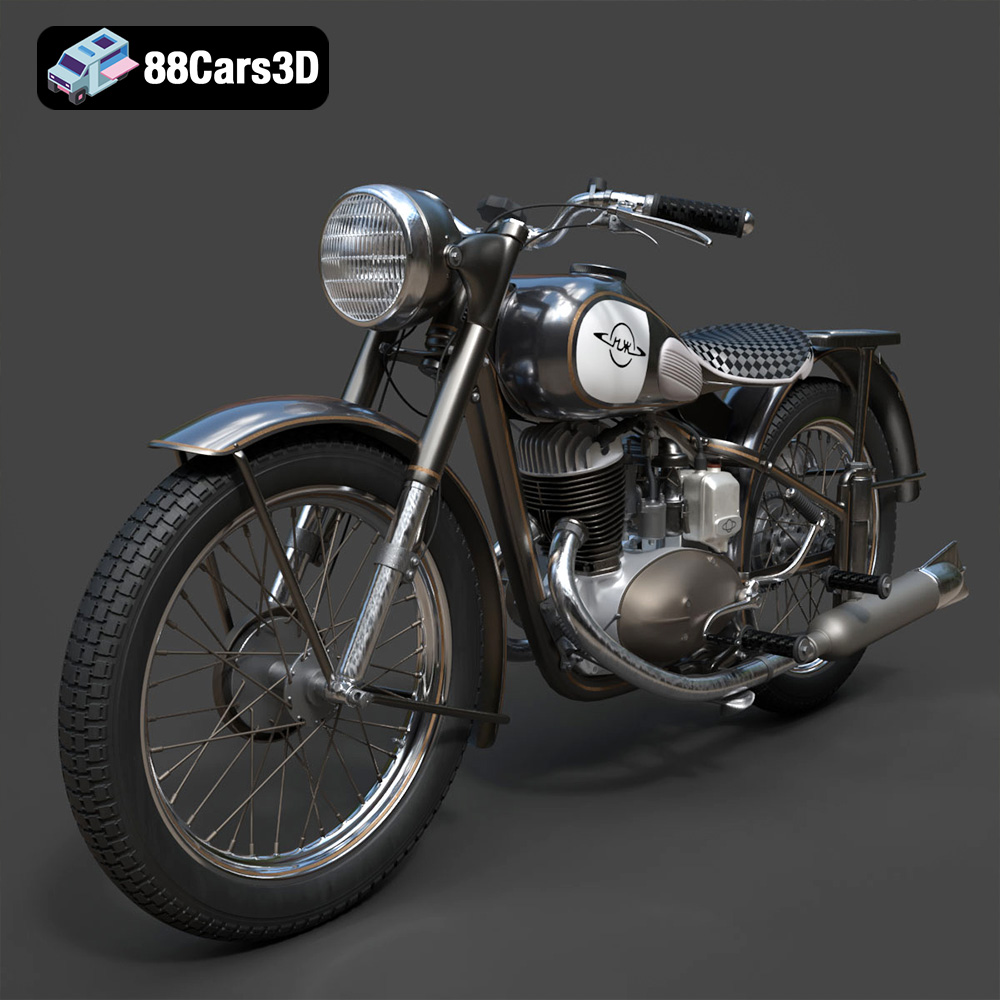
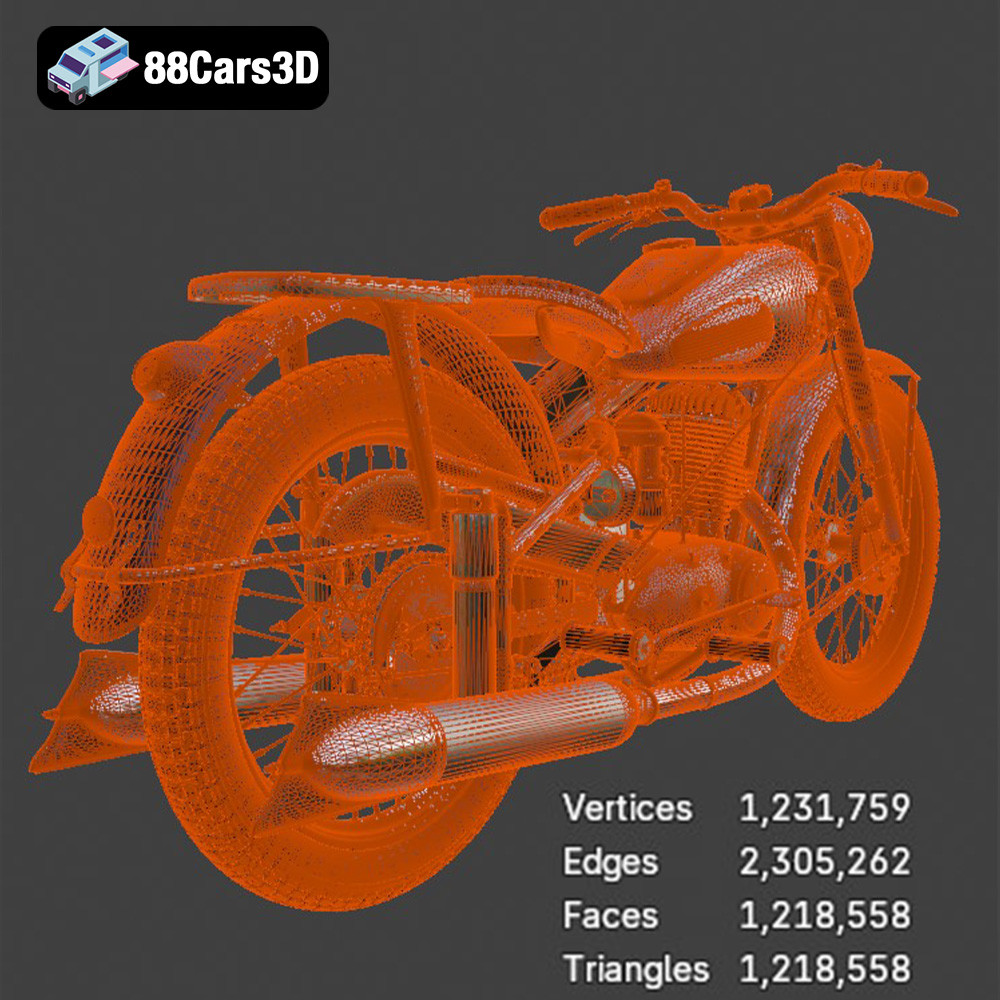
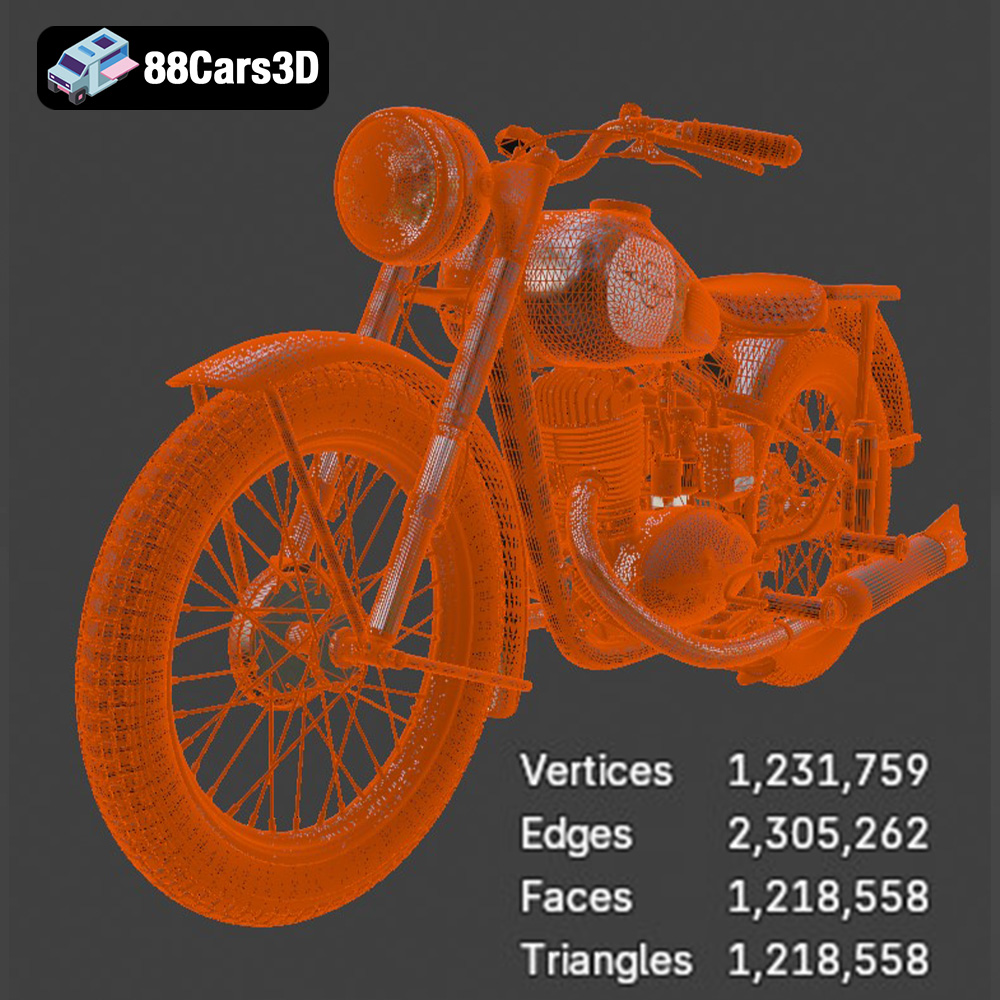
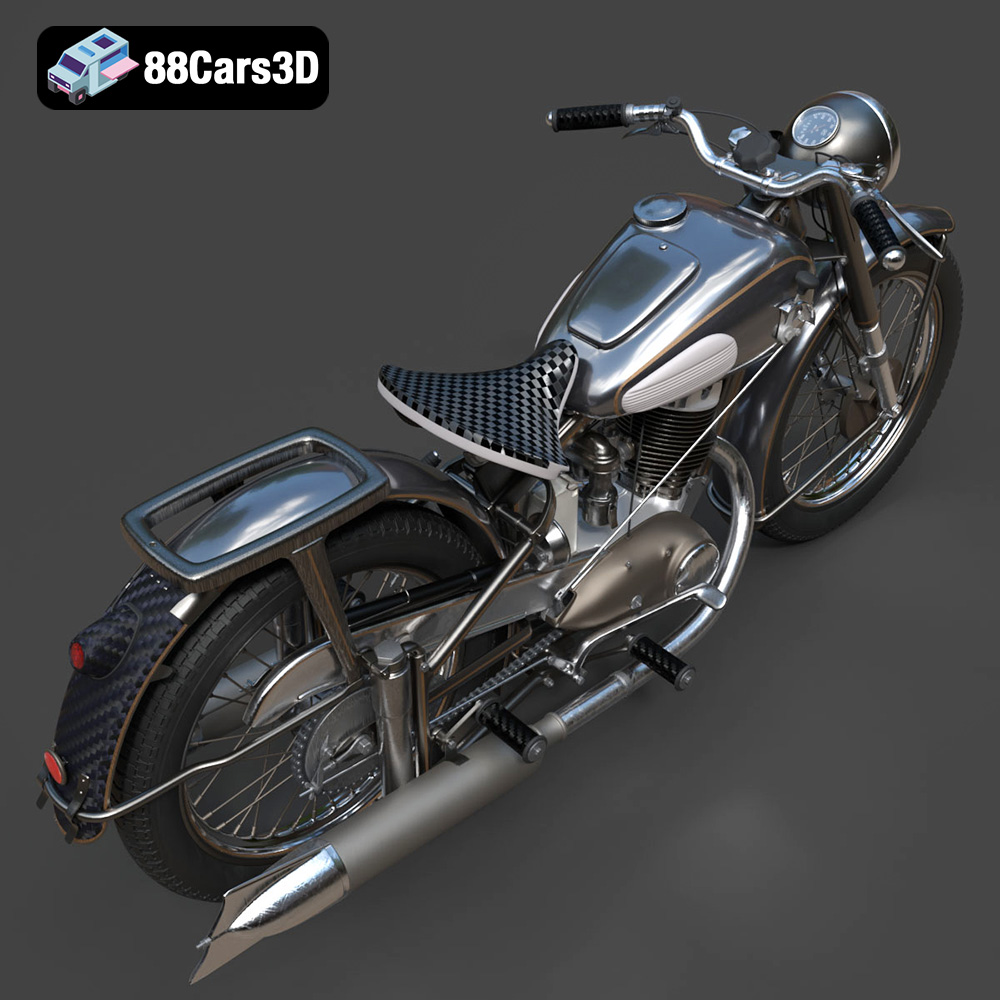
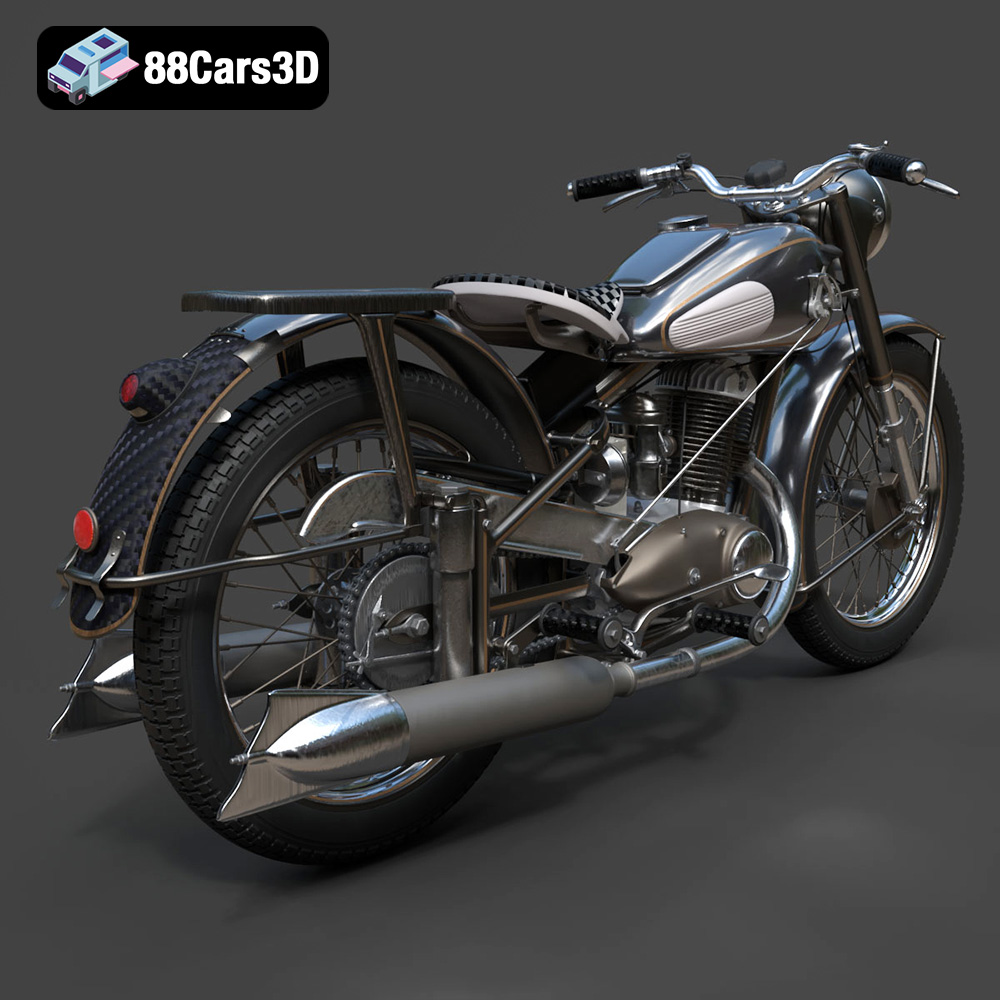
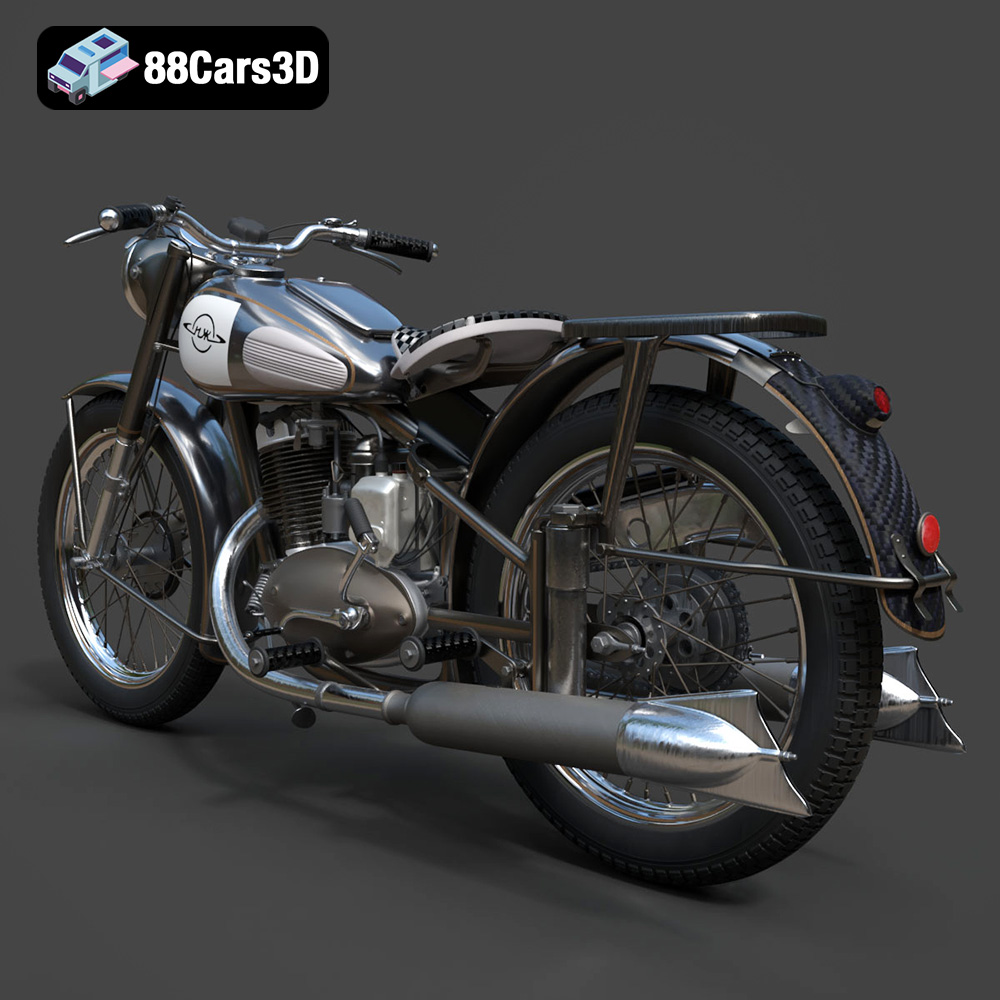
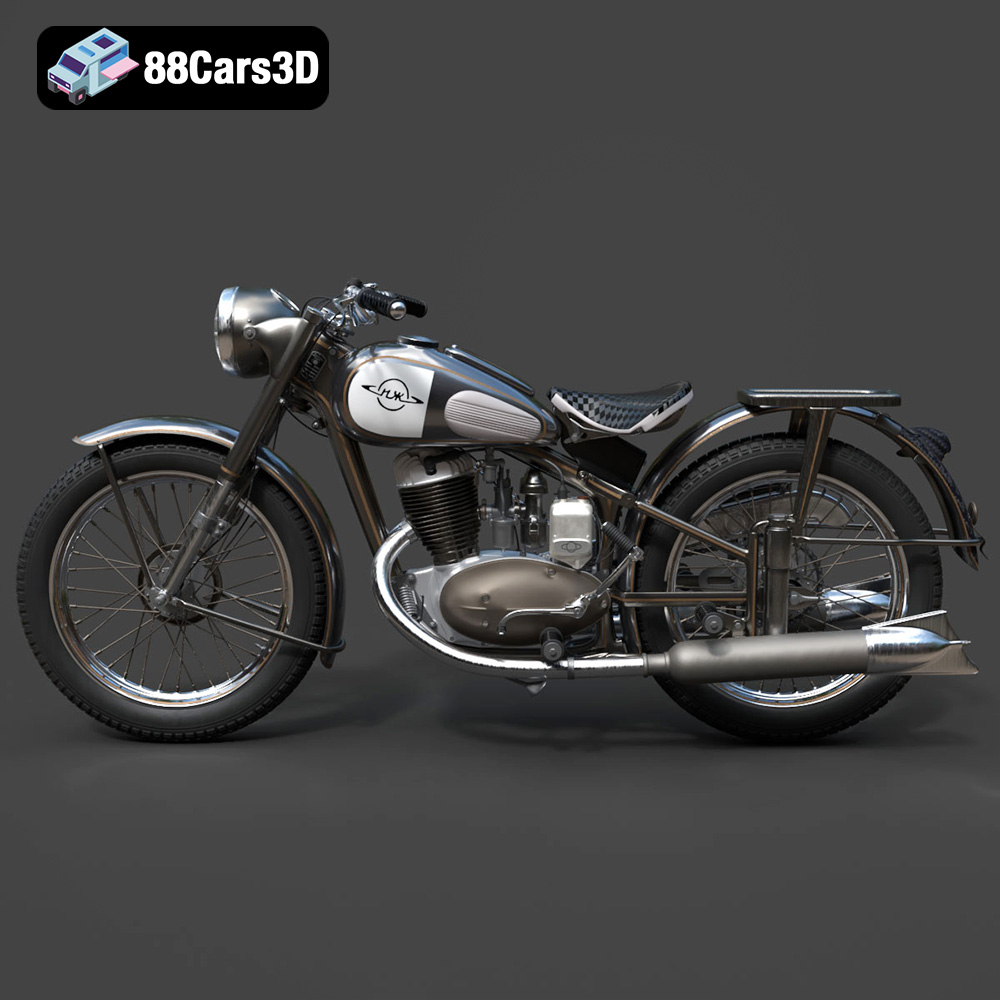
The historical significance of the IZ-49, a workhorse of Soviet transportation, necessitated an uncompromised approach to its digital recreation. Every curve of the rounded fuel tank, the sturdy silhouette of the vintage steel frame, and the characteristic profile of the single-cylinder engine configuration have been faithfully replicated. The classic spoked wheels, complete with realistic hub detailing, and the period-correct headlamp housing, are not just aesthetic additions but crucial components that define the motorcycle’s mid-century aesthetic. This level of accuracy is paramount for projects where historical fidelity is critical, such as documentaries, educational simulations, or museum exhibits. The model’s clean topology ensures that while it is highly detailed, it remains optimized for various uses, preventing unnecessary polygon count issues in demanding real-time environments or complex rendering scenarios.
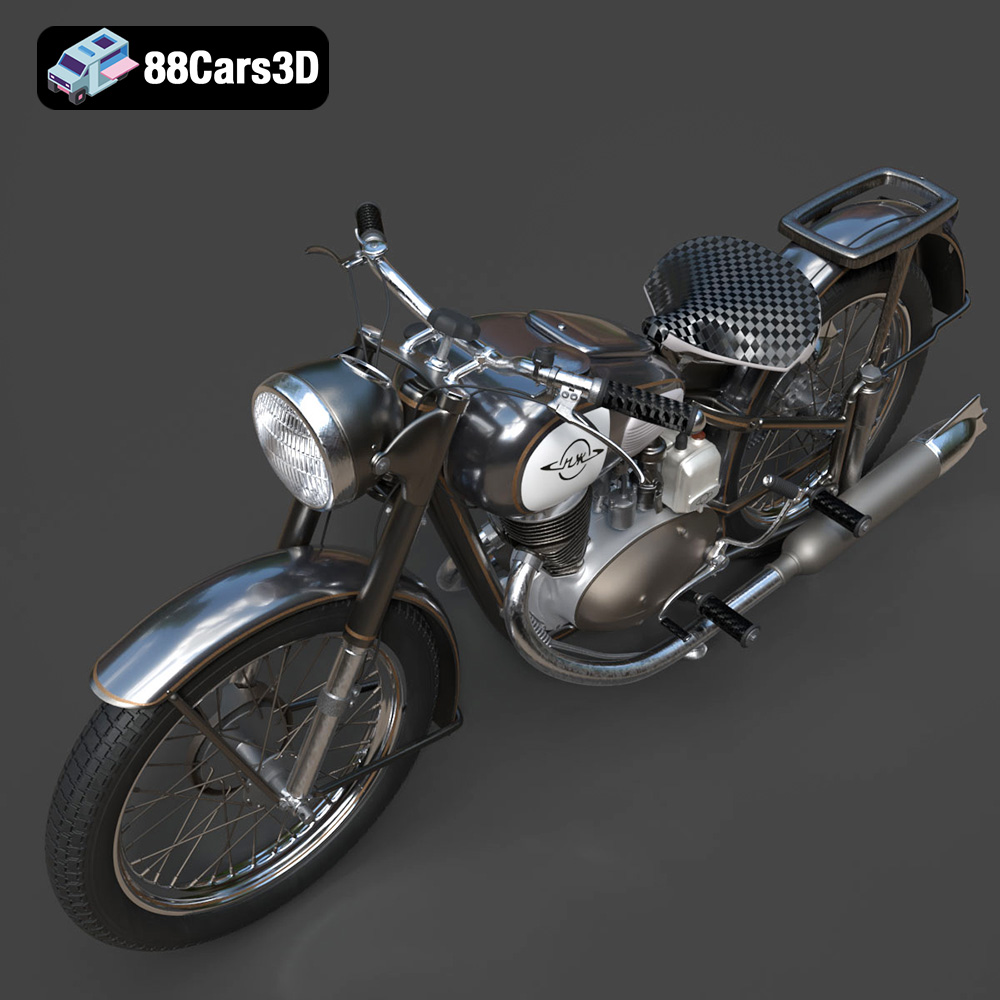
Beyond its exterior form, the IZ-49 model delves into the mechanical heart of the machine. The exposed suspension components are accurately modeled, showcasing the engineering solutions of its time. The chain drive assembly, a key functional element, is present, as is the realistic routing of the exhaust pipe. These details are often overlooked in less professional models but are vital for truly convincing automotive rendering and simulation. Furthermore, the model features a properly modeled suspension system, allowing for accurate visual representation of movement and weight distribution. A significant advantage for animators and game developers is the inclusion of separate wheels and steering components with proper pivot setups. This enables realistic rotation and steering animations, transforming a static model into a dynamic, interactive element for game assets or cinematic sequences.
The IZ-49 Classic Motorcycle 3D Model from 88cars3d.com is designed to integrate seamlessly into a variety of professional 3D production workflows. Its versatility makes it an indispensable tool for artists and developers working on projects ranging from hyper-realistic visualizations to immersive interactive experiences.
For artists focused on photorealistic imagery, the IZ-49 model provides an excellent foundation for high-end automotive rendering. In software like 3ds Max or Blender, paired with powerful renderers such as V-Ray, Corona Renderer, or Cycles, this model can be brought to life with stunning realism. Imagine using it in a retro advertising visual, where the gleam of its vintage paint is enhanced by studio lighting, or as a centerpiece in a digital museum exhibit, showcasing its historical details under carefully controlled illumination. Artists can leverage the clean mesh and accurate proportions to apply sophisticated physically based rendering (PBR) materials, creating textures that mimic aged metal, worn leather, and polished chrome. Customization options, such as changing the paint color to military green, classic cream, or a deep black, further enhance creative freedom, allowing the model to fit specific historical contexts or artistic moods. The proper pivot setup for components like wheels and steering ensures that if the model is placed in an action shot, it can be easily posed for maximum impact.
The demand for high-quality game assets is ever-increasing, and the IZ-49 Classic Motorcycle 3D Model is perfectly suited for modern game development. Its optimized mesh and real-world scale make it ready for integration into game engines like Unreal Engine and Unity. Developers can utilize the .fbx or .unreal formats for efficient import, taking advantage of the pre-configured elements for immediate use. For historical open-world games, retro driving simulations, or period-based environments, this motorcycle can serve as a key visual element, NPC vehicle, or even a player-controllable asset. Performance optimization is crucial in real-time applications, and a well-built model like the IZ-49 minimizes draw calls and maintains consistent frame rates. Developers can also implement Level of Detail (LOD) systems, ensuring that the model maintains visual fidelity at close range while transitioning to simpler versions at a distance to save computational resources. The ability to easily animate its separate wheels and steering components is a significant boon for creating engaging driving mechanics and cinematic in-game sequences.
Beyond the screen, the IZ-49 Classic Motorcycle 3D Model offers exciting opportunities in physical and immersive digital realms, demonstrating its broad utility across cutting-edge technologies.
The availability of the IZ-49 Classic Motorcycle 3D Model in .stl format opens the door to the tangible world of 3D printing. This capability transforms a digital asset into a physical collectible, a scale model for display, or even a detailed prototype. For enthusiasts of vintage motorcycles or model makers, producing a highly detailed replica of the IZ-49 is now within reach. The product description provides essential 3D print settings to ensure successful output: recommended scales (1:18, 1:12, 1:10, 1:8) cater to various display preferences, while suggested layer heights (0.08–0.16 mm) allow for fine detail capture. Wall thickness (1.5–2.5 mm) ensures durability, and infill (15–25%) balances strength with material consumption. Crucially, specific support requirements for elements like the exhaust pipe, handlebars, and fender edges are highlighted, ensuring successful overhang printing. Post-processing recommendations, including sanding, priming, and applying a vintage matte paint finish with optional weathering, guide users toward achieving a truly authentic look. Whether using FDM (Fused Deposition Modeling) for larger, more robust models or resin (SLA/DLP) printing for intricate details at smaller scales, this model is designed for physical manifestation, adding a unique dimension to the world of 3D car models.
In the rapidly expanding fields of Augmented Reality (AR) and Virtual Reality (VR), the IZ-49 Classic Motorcycle 3D Model shines as a prime candidate for immersive experiences. Optimized with the .glb format, it is perfect for interactive historical demonstrations and virtual museum environments. Imagine holding a virtual IZ-49 in your living room via an AR app, rotating it to inspect its intricate details, or stepping into a VR museum where you can walk around a life-sized, digital replica of the motorcycle, learning about its history and engineering. The compact nature of the .glb file, which bundles geometry, materials, and textures, ensures efficient loading and smooth performance in real-time AR/VR applications. This capability extends to educational platforms, allowing students to explore the mechanics and design of a historical vehicle in an engaging, three-dimensional context. The proper pivot setup for components like wheels and steering also means that basic interactivity, such as rotating parts, can be easily implemented, enhancing the immersive learning or entertainment experience.
The true value of a premium 3D model lies not just in its initial fidelity but also in its adaptability and underlying technical excellence. The IZ-49 Classic Motorcycle 3D Model offers substantial advantages for designers seeking both creative freedom and robust performance.
For creative professionals, the ability to customize an asset is paramount. The IZ-49 model provides a broad spectrum of options to tailor its appearance to specific project needs. Designers can easily change the paint color, selecting from historically accurate hues like military green, black, red, or classic cream, or even venturing into more stylized schemes. The addition of weathered or restored finishes allows for artistic storytelling, enabling the motorcycle to appear freshly rolled off the assembly line or as a battle-hardened survivor. Modifying the seat texture or material can further enhance realism, whether simulating aged leather or a pristine reupholstered look. Adjusting lighting for studio or historical scene setups is made effortless due to the model’s clean UVs and well-defined material zones. Furthermore, the capacity to add period-correct decals allows for meticulous historical accuracy or the creation of unique custom livery, pushing the boundaries of what is possible with a single digital asset. These customization options ensure that the IZ-49 model can seamlessly integrate into diverse visual narratives.
Beyond aesthetics, the technical advantages of the IZ-49 Classic Motorcycle 3D Model contribute significantly to its professional utility. Its clean and well-organized mesh structure is a cornerstone of a high-quality asset. This means fewer errors, easier editing, and predictable deformation during animation. The model adheres to real-world scale accuracy, which is vital for seamless integration into existing scenes, accurate physics simulations, and consistent visual fidelity across different software platforms. A proper pivot setup for wheel rotation and steering, as previously mentioned, is a small but critical detail that saves animators countless hours. The optimized polygon flow is another key technical advantage, ensuring that the model renders efficiently and performs well in real-time engines without compromising visual detail. This optimization is particularly important for large-scale environments where many 3D car models or vehicle assets are present. Compatibility with major 3D software platforms and engines, reinforced by the array of included file formats, guarantees that the IZ-49 model is a versatile and future-proof investment for any design studio or individual artist.
The IZ-49 Classic Motorcycle 3D Model represents a benchmark in digital asset creation, bridging historical accuracy with modern 3D production demands. Its meticulous detail, flexible file formats, and robust technical foundation make it an exceptional resource for a wide spectrum of applications—from captivating automotive rendering and dynamic game assets to tangible 3D prints and immersive AR/VR experiences. Whether you are a professional animator seeking authentic period vehicles, a game developer crafting a historical open world, or an architect visualizing complex scenes, this model provides the quality and versatility required for top-tier results.
By offering such comprehensive and well-prepared assets, 88cars3d.com empowers creators to focus on their artistic vision, confident in the technical integrity of their digital tools. The IZ-49 Classic Motorcycle 3D Model is more than just a model; it’s an invitation to explore history, innovate with technology, and create compelling visual narratives that resonate. Discover this and other high-quality 3D car models and vehicle assets on 88cars3d.com today, and elevate your next project with unparalleled realism and historical authenticity.
The IZ-49 Classic Motorcycle 3D Model is a high-detail digital recreation of the iconic mid-20th century Soviet motorcycle known for its simplicity, durability, and post-war engineering heritage. This 3D model accurately represents the vintage steel frame, rounded fuel tank, single-cylinder engine configuration, classic spoked wheels, exposed suspension components, rear luggage rack, and period-correct exhaust system. Designed with clean topology and real-world proportions, it is ideal for rendering, animation, historical visualization, simulation, game development, and 3D printing.
$25.9
.arvr
.blend
.classicmotorcycle
.fbx
.gameasset
.glb
.historicalvehicle
.iz49
.max
.motorcycle3dmodel
.obj
.ply
.rendering
.retrovehicle
.simulation
.sovietbike
.stl
.unreal
.vintagemotorcycle