Get 50% OFF All Premium 3D & STL Models!

In the vibrant world of 3D modeling, where digital realism constantly pushes boundaries, the demand for meticulously crafted assets is ever-present. From the roar of a virtual engine in a next-gen game to the polished gleam of a vehicle in an architectural visualization, high-quality 3D car models and motorcycle assets form the backbone of immersive experiences. Among the diverse range of digital vehicles, retro-inspired scrambler motorcycles hold a special place, blending classic aesthetics with rugged versatility. This unique appeal makes them perfect candidates for various creative projects.
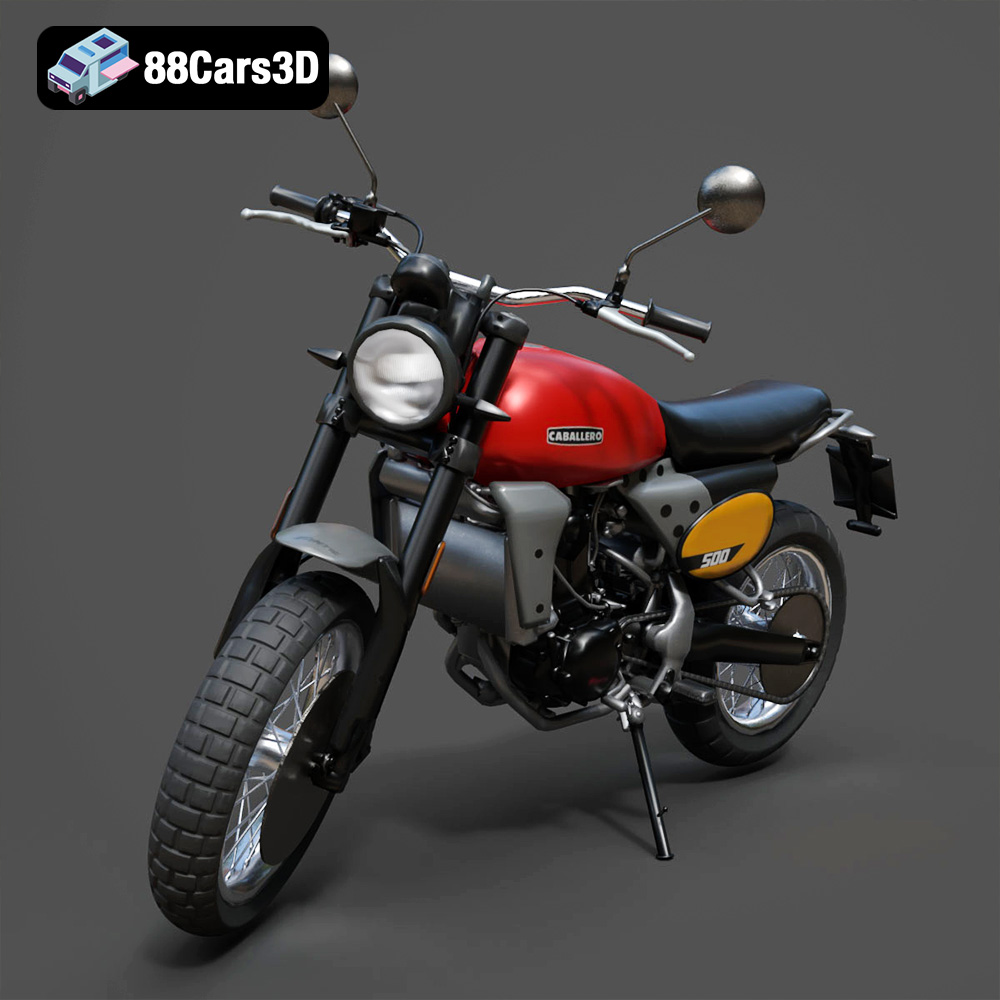
Today, we’re taking a deep dive into an exceptional example of digital craftsmanship: the Fantic Caballero 500 Scrambler 3D Model, available on 88cars3d.com. This isn’t just any motorcycle model; it’s a meticulously optimized asset designed to bring the spirit of the iconic Italian scrambler to life across multiple platforms. Whether you’re a game developer seeking authentic vehicles, an AR/VR creator building interactive showrooms, or a visualization artist crafting compelling lifestyle scenes, understanding the technical prowess and versatility of such a model is crucial. Let’s explore how this digital masterpiece can elevate your projects.
Motorcycles, particularly those with a strong heritage and distinctive style, translate beautifully into the digital realm. The Fantic Caballero 500 Scrambler is a prime example, embodying a specific lifestyle and design philosophy that resonates with audiences. Recreating such a machine in 3D requires an understanding not only of its physical form but also its intangible character.
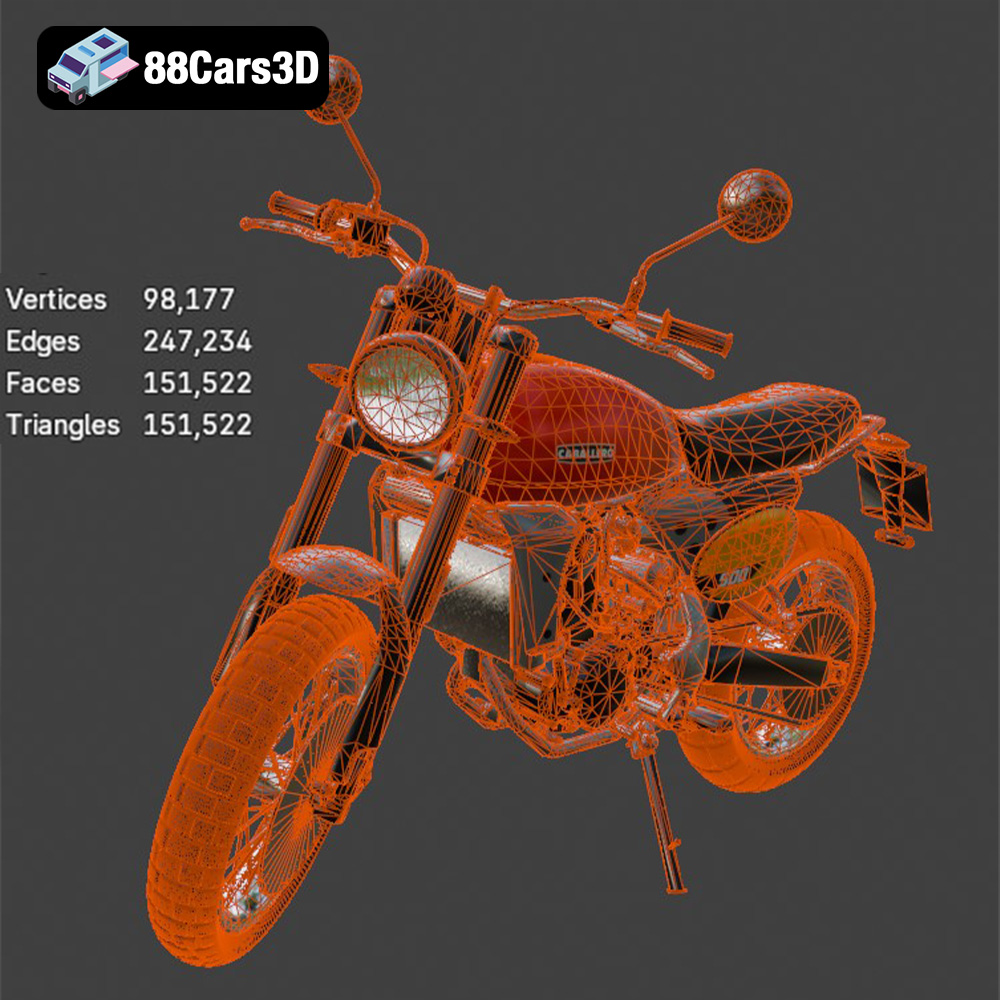
In digital automotive rendering, realism is paramount. For a model like the Fantic Caballero 500 Scrambler, this means accurately representing every curve of its teardrop tank, the exposed single-cylinder engine block, the signature high-mount Arrow exhaust, and even the aggressive tread patterns of its knobby tires. These details are not merely aesthetic; they contribute to the authenticity that makes a virtual experience truly immersive. For game assets, this level of detail must be achieved within strict performance budgets, making optimized topology a critical advantage. The Fantic Caballero 500 Scrambler 3D Model achieves this balance, offering rich visual fidelity at a game-ready polygon count of just over 150k triangles.
The appeal of a scrambler extends beyond racing or off-road simulation. Its retro-modern aesthetic makes it ideal for a wide range of visualization tasks. Imagine it parked outside a rustic cafe in an architectural visualization, cruising through a stylized urban environment in an animation, or even as the centerpiece of a virtual showroom where users can interact with its features in AR/VR. This broad applicability underscores the value of a well-crafted motorcycle 3D model. Its “rugged off-road stance” and “1970s retro dirt-track aesthetics” translate into versatile visual storytelling opportunities.
Navigating the landscape of 3D design and development requires a solid grasp of various file formats. Each format serves specific purposes, offering different levels of compatibility, data retention, and optimization for particular workflows. For a comprehensive asset like the Fantic Caballero 500 Scrambler 3D Model, having multiple formats available is a significant advantage, ensuring seamless integration into virtually any pipeline. Let’s demystify these essential formats.
The .blend format is the native file type for Blender, the popular open-source 3D creation suite. A .blend file typically contains a complete Blender scene, including the 3D model’s geometry, materials, textures, lighting, animation data, camera setups, and even user interface layouts. This format is ideal for artists who primarily work in Blender, offering full editability and the ability to leverage all of Blender’s powerful features. When you download a .blend file, you’re getting the raw, unadulterated project, allowing for deep customization and iteration on the Fantic Caballero 500 Scrambler model, from adjusting its shaders to modifying its mesh or rigging it for advanced animation sequences.
Autodesk’s .fbx (Filmbox) format is arguably the most widely used proprietary 3D exchange format in the industry, particularly favored in game development and animation pipelines. It excels at transferring 3D models with animation, rigging, skinning, materials, and textures between different software applications like 3ds Max, Maya, Blender, Unity, and Unreal Engine. For the Fantic Caballero 500 Scrambler, the .fbx format ensures that its “separate wheels, suspension forks, and steering components for animation” are preserved, along with its proper pivot setups. Its robust support for hierarchies and animations makes it the go-to choice for importing complex game assets into real-time engines, where performance and correct asset setup are crucial.
The .obj (Wavefront OBJ) format is a simple, universally accepted geometry definition file format. It’s an excellent choice for basic mesh data exchange, supporting vertices, faces, normals, UV coordinates, and groups. While it doesn’t typically store animation or rigging data, it’s highly compatible with virtually all 3D software. For simple static meshes or when you need a clean geometric base without extra scene data, .obj is a reliable option. It’s often used as a fallback or for archival purposes, ensuring the core geometry of the Fantic Caballero 500 Scrambler is accessible regardless of software.
.glb (GL Transmission Format Binary) is the binary version of glTF, a royalty-free specification for the efficient transmission and loading of 3D scenes and models by engines and applications. .glb packages all necessary data (geometry, materials, textures, animations) into a single compact file. It’s rapidly becoming the standard for 3D content on the web, in augmented reality (AR), and virtual reality (VR) applications due to its small file size and runtime efficiency. The Fantic Caballero 500 Scrambler in .glb format would be perfect for “immersive virtual motorcycle showrooms, configurators, and mobile AR experiences,” offering quick loading times and broad platform compatibility.
.stl (STereoLithography) is the most common file format for 3D printing. It represents a 3D model as a series of connected triangles, describing only the surface geometry of an object without color, texture, or other CAD attributes. While simple, its ubiquity makes it essential for physical fabrication. The Fantic Caballero 500 Scrambler 3D Model’s inclusion of an .stl format means it’s “convertible to .stl format for display-scale retro motorcycle hobbyists,” enabling enthusiasts to bring the digital design into the physical world through 3D printing.
The .ply (Polygon File Format, or Stanford Triangle Format) is a file format for storing 3D data from 3D scanners. It can store a wider range of information than .obj or .stl, including color, transparency, surface normals, and even confidence values for each vertex. While not as universally used as .obj for general model exchange, it’s valuable in scientific, engineering, and CAD applications where precise mesh data, often derived from real-world scans or complex simulations, is critical. For the Fantic Caballero, it offers a high-fidelity representation of the mesh, potentially useful for technical analysis or reverse engineering tasks.
The inclusion of an .unreal file (or an Unreal Engine-optimized .fbx, sometimes referred to colloquially as .unreal in the context of engine-ready assets) signifies that the model is prepared for direct import into Unreal Engine. This often implies that the asset has undergone specific optimization steps, has materials configured to leverage Unreal’s physically based rendering (PBR) system, and has its pivots and collision meshes set up correctly. This format ensures that the Fantic Caballero 500 Scrambler is “absolutely ideal for modern open-world games” and “real-time engines,” saving developers significant time on asset preparation.
Similar to .blend for Blender, the .max format is the native file type for Autodesk 3ds Max, another industry-leading 3D modeling, animation, and rendering software. A .max file contains the complete 3ds Max scene, including geometry, materials, lights, cameras, modifiers, and animation data. This format provides full editability within 3ds Max, allowing users to delve into the construction of the Fantic Caballero 500 Scrambler, modify its components, re-texture it, or integrate it into complex animation sequences with ease, taking full advantage of 3ds Max’s extensive toolset.
The true value of a premium 3D asset lies in its technical foundation. The Fantic Caballero 500 Scrambler 3D Model is engineered for performance and visual fidelity, making it a stellar choice from 88cars3d.com for demanding creative projects.
One of the standout technical advantages is its optimized geometry. With a total of 98,177 Vertices, 247,234 Edges, and precisely 151,522 Faces/Polygons/Triangles, this model strikes an exceptional balance. This isn’t a simple low-poly model; it’s a meticulously crafted asset with a “game-ready & optimized” polycount that ensures smooth performance in real-time engines like Unreal and Unity, without sacrificing the intricate details that define the Caballero’s character. The “incredibly clean, game-ready topology” means fewer issues with deformation during animation and better performance with real-time lighting and shadows.
Accuracy is paramount in automotive visualization. This 3D model boasts “real-world scale accuracy based on the real Fantic Caballero chassis,” which is critical for believable scenes and consistent integrations. Beyond overall scale, the individual components are designed for functional realism:
The true test of any high-quality 3D asset is its seamless integration into diverse professional pipelines. The Fantic Caballero 500 Scrambler 3D Model excels in this regard, offering flexibility and robustness for various applications.
For game developers, performance and authenticity are key. The Fantic Caballero 500 Scrambler’s “highly optimized polycount” (151,522 triangles) makes it an “absolutely ideal” game asset. The clean topology minimizes draw calls and allows for efficient real-time rendering. The inclusion of an Unreal-ready format (or optimized FBX) means drag-and-drop functionality with minimal setup. Developers can quickly integrate it into racing games, open-world adventures, or simulation titles, leveraging its pre-rigged components for dynamic vehicle physics and animation. The detailed cockpit is also crucial for first-person gameplay, enhancing player immersion.
Augmented and Virtual Reality platforms demand lightweight, performant models that retain visual quality. The Fantic Caballero 500 Scrambler, with its optimized geometry and .glb format support, is “perfect for immersive virtual motorcycle showrooms, configurators, and mobile AR experiences.”
For high-end marketing, advertising, and cinematic visualization, the Fantic Caballero 500 Scrambler offers exceptional detail for static renders and animations.
Rendering is where the 3D model transcends its geometric data and becomes a photorealistic image or animation. Mastering automotive rendering involves a keen eye for detail, understanding physically based materials, and expert lighting techniques.
A high-quality model like the Fantic Caballero 500 Scrambler comes with textures that adhere to PBR (Physically Based Rendering) principles. This means separate maps for albedo (base color), roughness, metallic, normal, and potentially ambient occlusion. These maps accurately simulate how light interacts with different surfaces, from the matte finish of the frame to the polished chrome of the exhaust and the rubber of the knobby tires. Proper UV mapping, while not explicitly detailed in the product spec, is implied by the “game-ready” designation, ensuring textures apply cleanly and efficiently across the mesh.
Effective lighting is crucial for showcasing the Fantic Caballero. Different lighting setups can completely change the mood and perception of the motorcycle.
The Fantic Caballero 500 Scrambler 3D Model offers a unique pathway for enthusiasts and designers to bring their digital asset into the physical world through 3D printing. The inclusion of the .stl format, alongside detailed print settings, makes this a tangible reality.
Converting a high-detail rendering model into a successful 3D print requires careful consideration. The provided “3D Print Setting” details are invaluable for hobbyists and professionals alike:
Once printed, the physical model enters the post-processing phase, which is where the true craftsmanship shines through. The recommendations include “Sanding, primer, classic Fantic Red for the tank, matte black for the frame, and metallic finishes for the Arrow exhaust.” This transforms a raw print into a detailed scale replica, reflecting the classic Fantic aesthetic and allowing for personal touches and customization by the hobbyist. Imagine a beautifully hand-painted miniature of the Caballero, proudly displayed, a testament to both digital design and physical fabrication.
The Fantic Caballero 500 Scrambler 3D Model stands as a testament to the power of expertly crafted digital assets. Its blend of accurate detail, optimized geometry, and versatile file formats makes it an invaluable resource for professionals across various industries, from game development and AR/VR to high-end automotive rendering and even 3D printing.
Whether you’re building the next open-world adventure, designing an interactive showroom, or creating breathtaking visual campaigns, this model provides the foundation for success. The thoughtful inclusion of multiple formats and specific technical optimizations ensures that the Fantic Caballero can be seamlessly integrated into virtually any workflow, saving precious development time and enhancing visual quality. For those seeking premium 3D car models and motorcycle assets that truly deliver, exploring the offerings at 88cars3d.com, including this exceptional Fantic Caballero 500 Scrambler, is a wise investment in quality and efficiency.
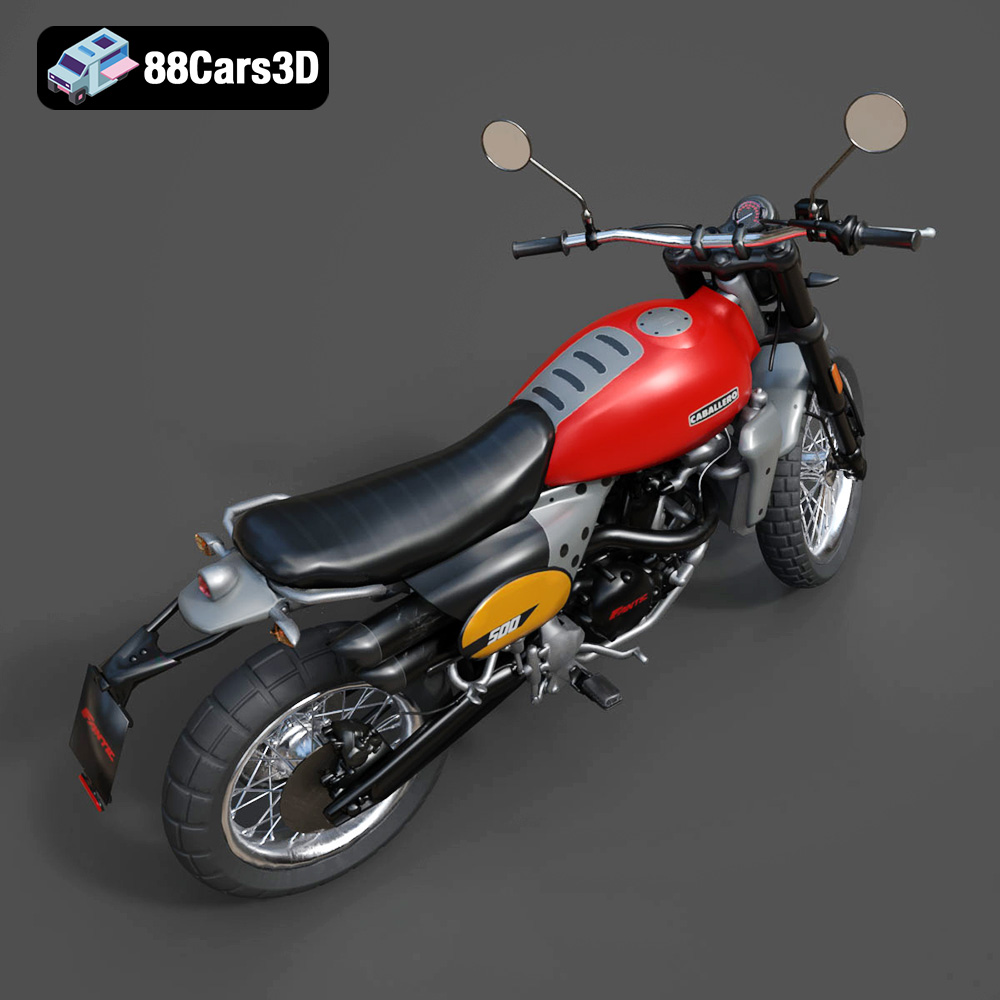
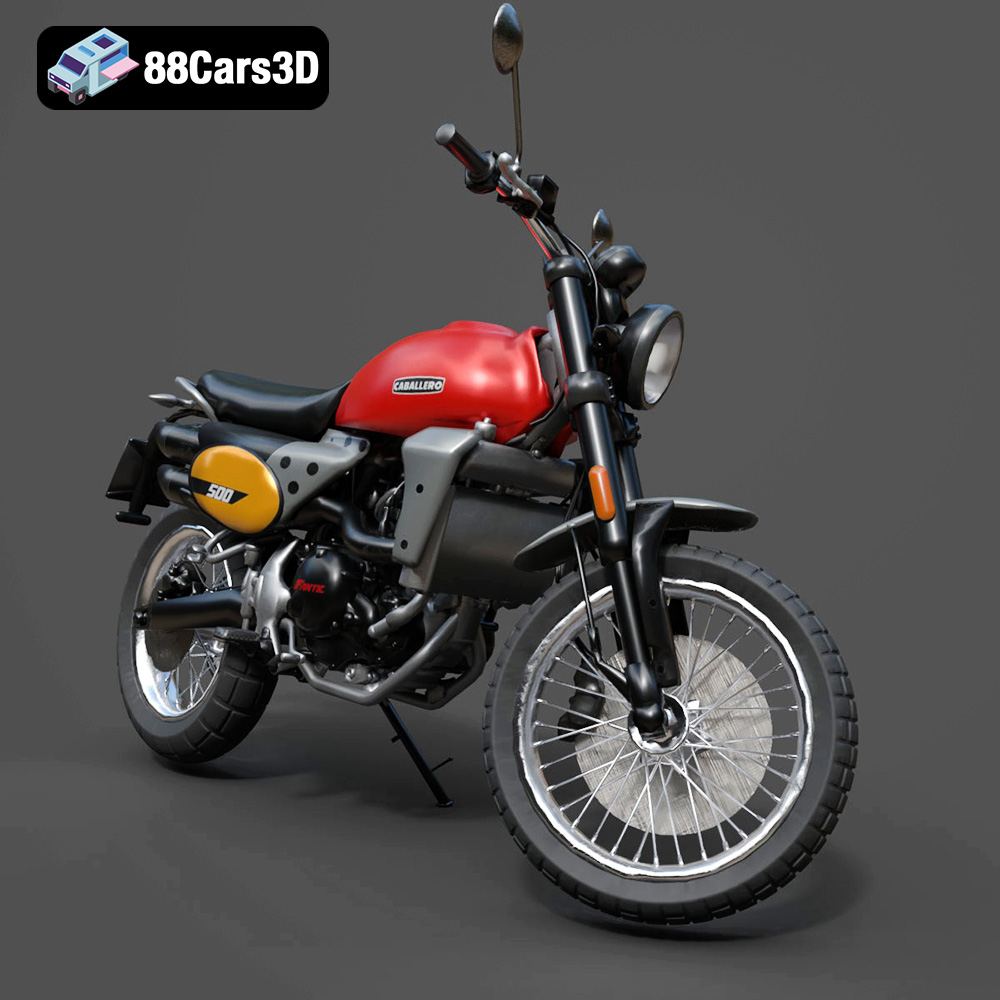
The Fantic Caballero 500 Scrambler 3D Model is a highly detailed, optimized digital recreation of the iconic Italian modern-classic motorcycle. Blends 1970s retro dirt-track aesthetics with contemporary engineering, the Caballero 500 is famous for its rugged off-road stance, punchy single-cylinder engine, signature dual Arrow exhaust, and aggressive knobby tires. This 3D model accurately captures the essence of the scrambler lifestyle, featuring the classic round LED headlight, teardrop fuel tank with authentic badging, exposed steel tube frame, and flat dirt-style saddle. Built with incredibly clean, game-ready topology (just over 150k triangles), it delivers premium visual fidelity without bogging down real-time engines. It is the perfect asset for game development, AR/VR experiences, animation, and lifestyle automotive visualization. Perfect for rugged off-road scenes, urban retro street environments, biker lifestyle campaigns, and modern open-world video games. Also convertible to .stl format for display-scale retro motorcycle hobbyists.
$39.99
.blend
.fbx
.obj
.rendering
.scrambler
caballero-500
dirt-bike
fantic
flat-tracker
game asset
game-ready
low-poly
motorcycle-3d-model
optimized
retro-motorcycle
VR/AR