Get 50% OFF All Premium 3D & STL Models!

In the vibrant world of 3D visualization, where realism and historical accuracy often dictate the success of a project, the demand for meticulously crafted assets is ever-present. From the glistening chrome of vintage muscle cars in cinematic productions to the subtle curves of an antique automobile gracing a digital showroom, high-quality 3D car models serve as the backbone for countless creative endeavors. These digital masterpieces are more than just static objects; they are gateways to storytelling, immersive experiences, and a deep appreciation for automotive heritage.
The creation of such models requires a blend of artistic vision and technical precision, a delicate balance that ensures every rivet, every curve, and every reflection contributes to an authentic representation. Whether it’s for an exhilarating racing game, a photorealistic architectural visualization scene, or an interactive AR/VR experience, the underlying quality of the 3D model is paramount. This commitment to excellence is precisely what we see in the Buick Wildcat Convertible 1963 3D Model, a stunning digital recreation that encapsulates the bold styling and open-top cruising appeal of a true American classic.
At 88cars3d.com, a premier online marketplace for exceptional 3D car models, the focus remains on delivering assets that not only look impressive but also perform flawlessly across various professional pipelines. This featured Buick Wildcat model is a prime example, offering unparalleled detail and flexibility for designers, game developers, animators, and enthusiasts looking to infuse their projects with a touch of timeless elegance and power. Its robust construction and comprehensive file format support make it a versatile asset, ready to be dropped into virtually any 3D environment.
When sourcing 3D car models, especially for professional use, understanding the various file formats available is as crucial as evaluating the model’s visual quality. Each format serves specific purposes, offering different levels of compatibility, editability, and optimization for distinct workflows. The Buick Wildcat Convertible 1963 3D Model, offered by 88cars3d.com, exemplifies versatility by providing a comprehensive suite of these essential formats, ensuring it seamlessly integrates into almost any creative pipeline.
The .blend file format is native to Blender, the powerful open-source 3D creation suite. When you acquire a .blend file for the Buick Wildcat, you’re not just getting the model; you’re getting the entire scene setup within Blender. This means access to the original mesh data, materials, textures, lighting, camera setups, and even any animation rigs or modifiers that were used during its creation. For artists working primarily in Blender, this format offers the highest degree of editability and customization. You can easily modify geometry, tweak materials, adjust UV maps, or even re-rig components like the convertible soft-top or steering for bespoke animations. It’s the go-to choice for those who need deep creative control and plan extensive modifications.
.fbx (Filmbox) stands as one of the most widely adopted proprietary file formats for 3D data interchange. Developed by Autodesk, it is universally supported across major 3D software applications like 3ds Max, Maya, and Blender, and is the preferred format for real-time engines such as Unreal Engine and Unity. The .fbx version of the Buick Wildcat model efficiently stores geometry, materials, textures, rigging, and animation data in a single package. Its strength lies in its ability to maintain scene hierarchy and object relationships, making it ideal for exporting complex animated assets directly into game engines or other production pipelines without significant loss of data fidelity. For game development, AR/VR, and cross-software workflows, .fbx is often the most reliable choice.
The .obj (Wavefront OBJ) format is a venerable and widely supported open standard for 3D geometry. While it doesn’t typically store animation or rigging information, it excels at representing polygonal meshes, UV coordinates, and material references (via an accompanying .mtl file). The .obj version of the Buick Wildcat is a robust choice for maximum cross-software compatibility, making it readable by virtually any 3D application, CAD software, or even some 3D printing slicers. It’s perfect for static renders, archival purposes, or as a base mesh for sculpting and retopology in programs where .fbx might introduce compatibility quirks. Its simplicity ensures broad accessibility.
.glb (GL Transmission Format Binary) is the binary version of glTF, a royalty-free specification for the efficient transmission and loading of 3D scenes and models by applications. It’s rapidly becoming the “JPEG of 3D” due to its optimization for web-based, AR, and VR experiences. The .glb file for the Buick Wildcat is a single, self-contained file that includes geometry, materials, textures, and even animations, all compressed for quick loading. This makes it an excellent choice for interactive product viewers on websites, mobile AR applications, and lightweight VR scenes where performance and ease of deployment are critical.
The .stl (Stereolithography) format is the undisputed king of 3D printing. It represents a 3D model as a series of connected triangles, describing only the surface geometry without color, texture, or other attributes. For anyone planning to physically manifest the Buick Wildcat Convertible 1963 as a collectible scale model or a display miniature, the .stl file is indispensable. It’s the direct input for most 3D slicing software, preparing the digital model for additive manufacturing. The availability of this format ensures that the classic design can transcend the digital realm.
.ply (Polygon File Format) is another format that describes 3D objects as a list of polygons. It’s known for its ability to store a wider range of properties than .obj, including color, transparency, texture coordinates, and even reliability information. While less common for general animation or game development, .ply is frequently used in scientific applications, CAD, and 3D scanning, where precision and additional data per vertex or face are important. It offers a robust alternative for specific engineering or analytical tasks involving the Wildcat model.
The .unreal designation often refers to assets that are specifically packaged or optimized for direct import into Unreal Engine projects. While usually an .fbx file is imported into Unreal and then processed, having an “engine-ready” asset implies it’s been pre-configured with materials, collision meshes, LODs (Levels of Detail), and pivot points appropriate for the engine. For the Buick Wildcat, this means a significantly streamlined workflow for game developers and real-time visualization artists, minimizing setup time and ensuring optimal performance within the Unreal ecosystem.
The .max file format is the native scene file for Autodesk 3ds Max, a leading software for 3D modeling, animation, rendering, and visualization. Similar to the .blend file for Blender, the .max file provides full access to the original project, including all geometry, modifiers, materials, textures, lighting setups, cameras, and animation data within 3ds Max. For professionals entrenched in the 3ds Max environment, this offers the most flexibility for high-fidelity rendering (e.g., with V-Ray or Corona Renderer), complex animation sequences, or integration into architectural visualization scenes. It is the ultimate source for artists needing to integrate the Buick Wildcat into a high-end production pipeline that relies on 3ds Max.
The availability of these diverse file formats for the Buick Wildcat Convertible 1963 3D Model truly underscores its value as a professional asset, catering to the specific needs of different software and use cases, from cinematic rendering to physical 3D printing.
The 1963 Buick Wildcat Convertible is more than just a car; it’s a statement of American luxury and performance from an era defined by bold designs. Bringing such an iconic vehicle into the digital realm as a high-quality 3D car model requires an immense commitment to historical accuracy and artistic interpretation. The Buick Wildcat Convertible 1963 3D Model excels in this regard, meticulously replicating the essence of this classic.
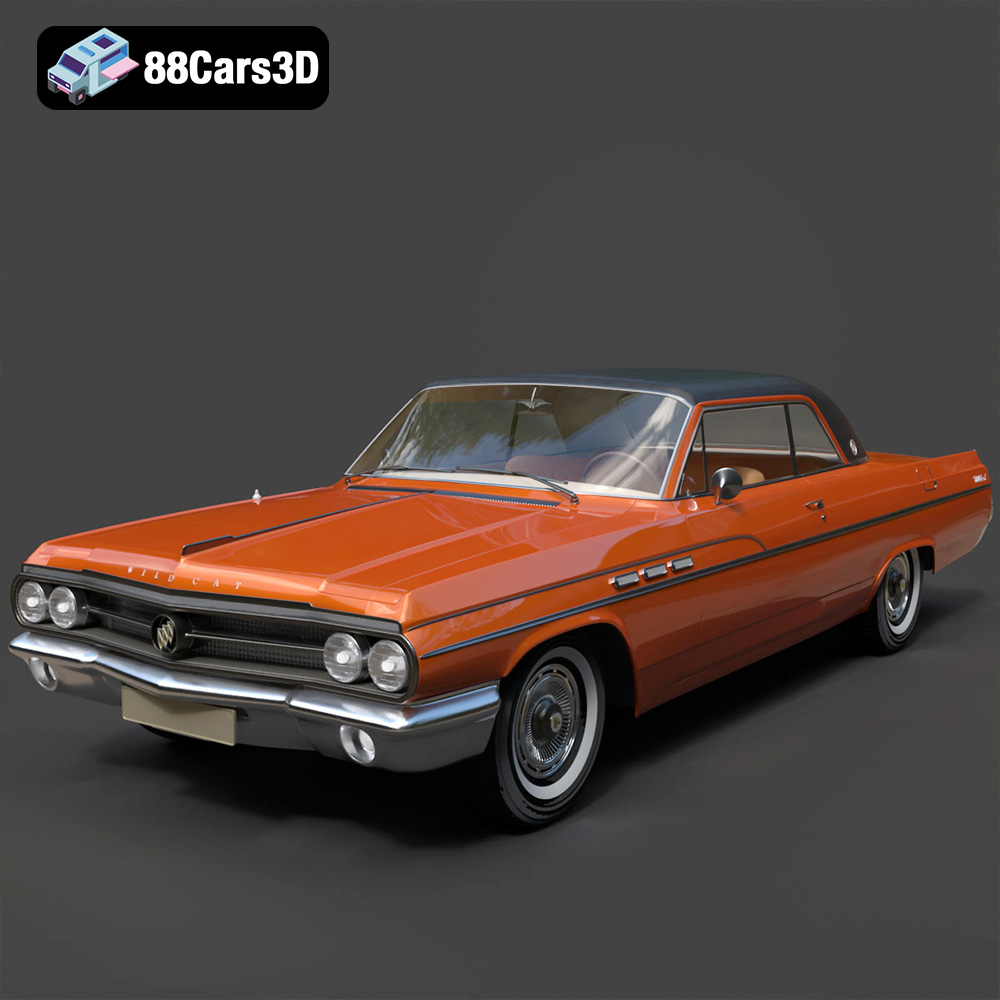
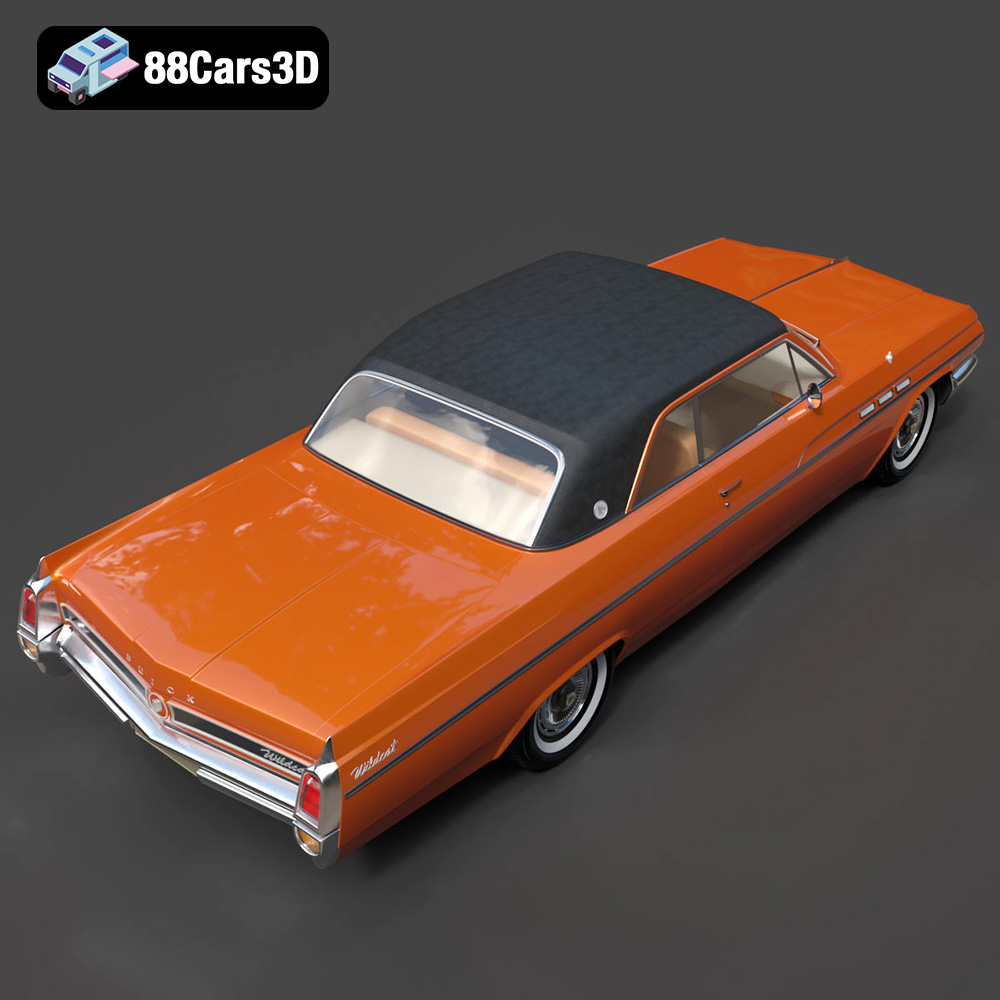
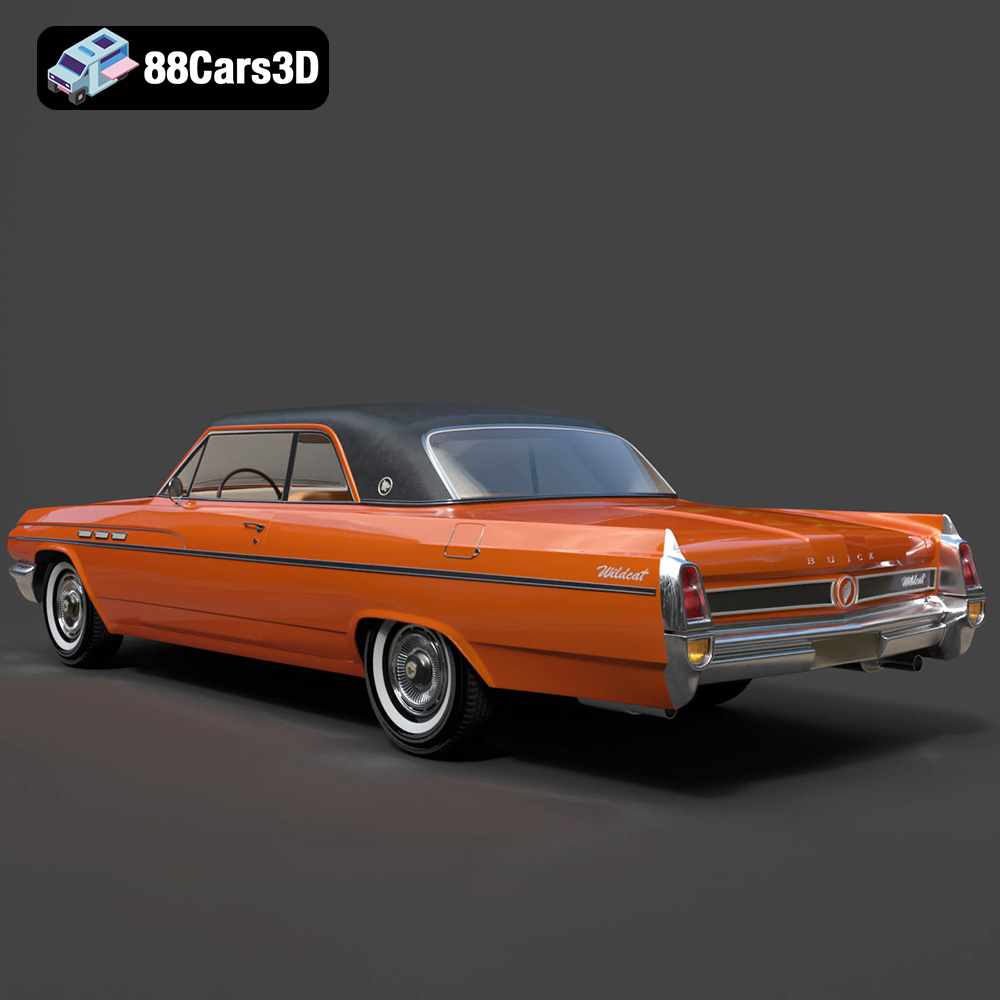
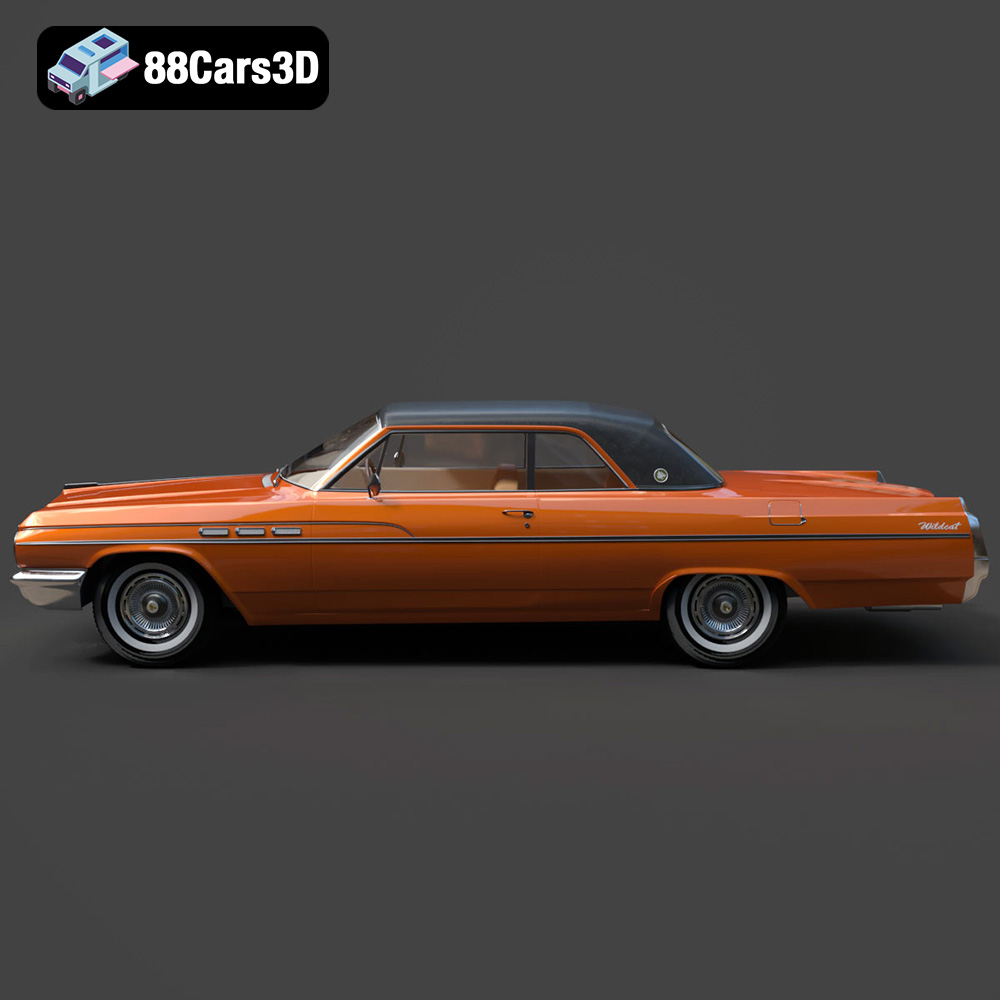
Every curve, every line of the original 1963 Wildcat has been faithfully translated into its 3D counterpart. The model accurately represents the car’s distinctive long and wide body proportions, a hallmark of full-size American automobiles of the period. Attention to detail extends to the dual headlight front fascia, which gleams with chrome grille accents, capturing the car’s powerful presence. The chrome front and rear bumpers are precisely modeled, reflecting light just as they would on the physical vehicle. The sculpted side lines and emblem detailing, crucial elements of the Wildcat’s aesthetic, are rendered with sharp precision, ensuring that the model feels authentic from every angle. Even the classic chrome wheels and whitewall tire styling are period-correct, contributing to the overall retro appeal. The inclusion of a convertible soft-top, ready for both up and down configurations, adds another layer of versatility for dynamic scene creation.
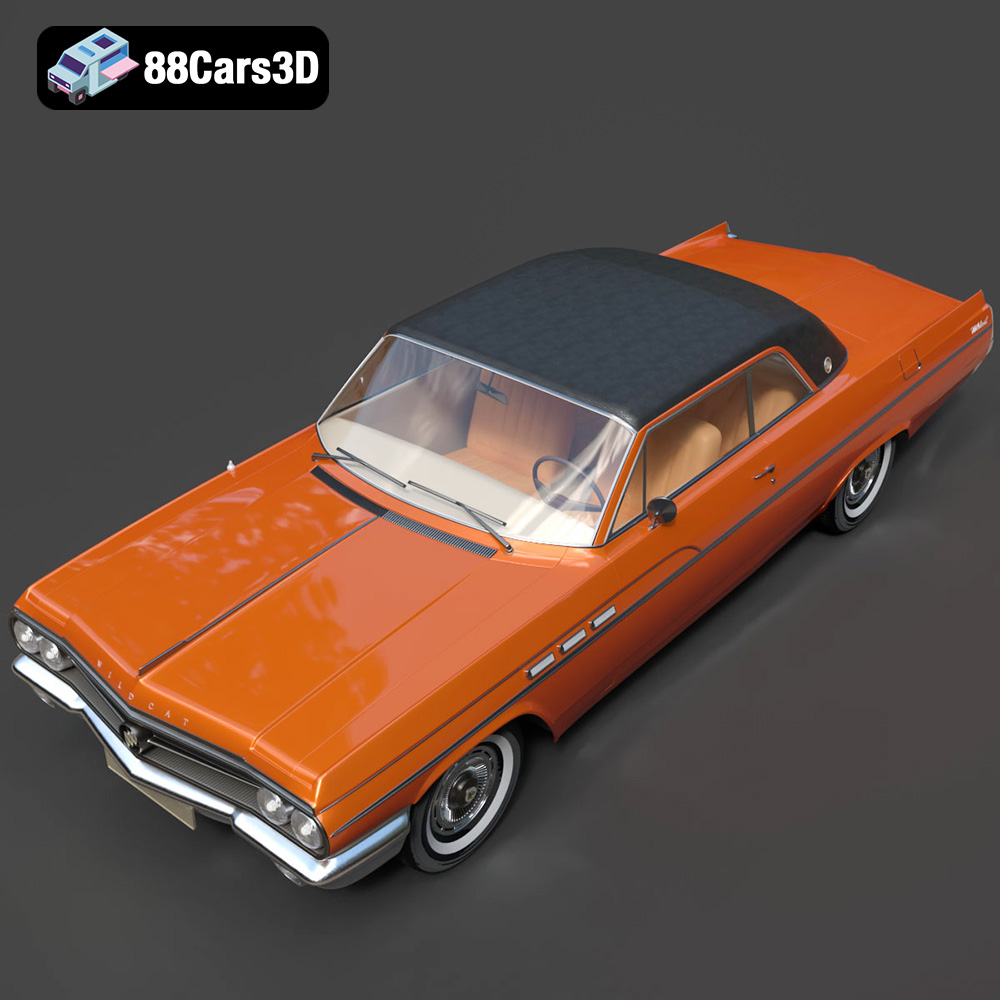
The artistry doesn’t stop with the exterior; the interior of the Buick Wildcat Convertible 1963 3D Model is equally impressive. Stepping into the digital cockpit, one finds a vintage dashboard complete with an analog gauge cluster, faithfully recreating the instrumentation of the era. The classic steering wheel design is a focal point, inviting interaction within virtual environments. Whether it’s the front bench or bucket seat configuration, the detailing is consistent with the Wildcat’s luxurious yet sporty interior. The center console and gear selector further immerse the viewer, along with door panels adorned with chrome trim accents. The optimized geometry for both real-time engines and high-quality renders ensures that whether you’re close up in an AR experience or viewing from a distance in a cinematic shot, the interior maintains its fidelity and contributes to a truly immersive automotive visualization.
For professionals across various industries, the Buick Wildcat Convertible 1963 3D Model is not just a digital asset; it’s a powerful tool designed to streamline complex workflows and elevate the quality of their output. Its comprehensive technical advantages and multi-format availability ensure compatibility and ease of use in even the most demanding production environments.
In the realm of high-fidelity automotive rendering and architectural visualization, 3ds Max remains a titan. The inclusion of the .max file format for the Wildcat model provides artists with a native, fully editable project file. This allows for seamless integration into existing 3ds Max scenes, whether you’re populating a retro street scene or showcasing a classic car in a modern architectural garage. The model’s clean and well-organized mesh structure, combined with optimized polygon flow, means less time spent on geometry cleanup and more time dedicated to lighting, material refinement, and camera work. Artists can leverage advanced rendering engines like V-Ray or Corona Renderer to produce photorealistic images, capturing the nuanced reflections of chrome, the subtle textures of the interior, and the gloss of the paint finish, transforming the Wildcat into a star of any marketing visual or cinematic production. The proper pivot setup for steering and wheel rotation also facilitates dynamic animation sequences, adding life to still renders.
The world of game development and interactive AR/VR experiences demands assets that are not only visually appealing but also highly optimized for real-time performance. With .fbx and .unreal formats, the Buick Wildcat is perfectly poised for these applications. The .fbx format ensures excellent compatibility with both Unreal Engine and Unity, allowing developers to import the model with its clean UVs and optimized geometry, ready for the creation of game-ready materials. For Unreal Engine users, the .unreal file or an optimized .fbx means minimal setup, with crucial elements like collision meshes, LODs (Levels of Detail), and appropriate pivot points already configured. This makes the Wildcat ideal for open-world driving games set in the 1960s, interactive classic car showrooms in VR, or AR applications where users can virtually place and inspect the vehicle in their own environment. Its efficient polygon flow contributes to smooth frame rates, crucial for immersive real-time simulations and game assets.
Blender’s rise as a powerhouse in 3D creation has made the .blend format indispensable for a growing community of artists. The availability of the Buick Wildcat in its native .blend format caters directly to indie game developers, freelance artists, and enthusiasts who prefer Blender’s flexible and intuitive workflow. This format grants full access to the original model’s construction, allowing for extensive customization. Users can easily modify body colors with classic 1960s finishes, add whitewall or custom wheel variations, adjust the convertible soft-top configuration, or even integrate vintage license plates. The clean topology and real-world scale accuracy make it a solid foundation for any modifications, ensuring that even custom versions maintain their integrity and appeal within personal projects or larger productions. For those seeking deep creative control over their 3D car models, the .blend file provides an unparalleled starting point.
The evolution of 3D printing technology has opened new avenues for bringing digital designs into the physical world. For automotive enthusiasts and collectors, this means the ability to own tangible, scale models of their favorite classic cars, meticulously detailed and ready for display. The Buick Wildcat Convertible 1963 3D Model, with its dedicated .stl format and specified print settings, makes this transition seamless and rewarding.
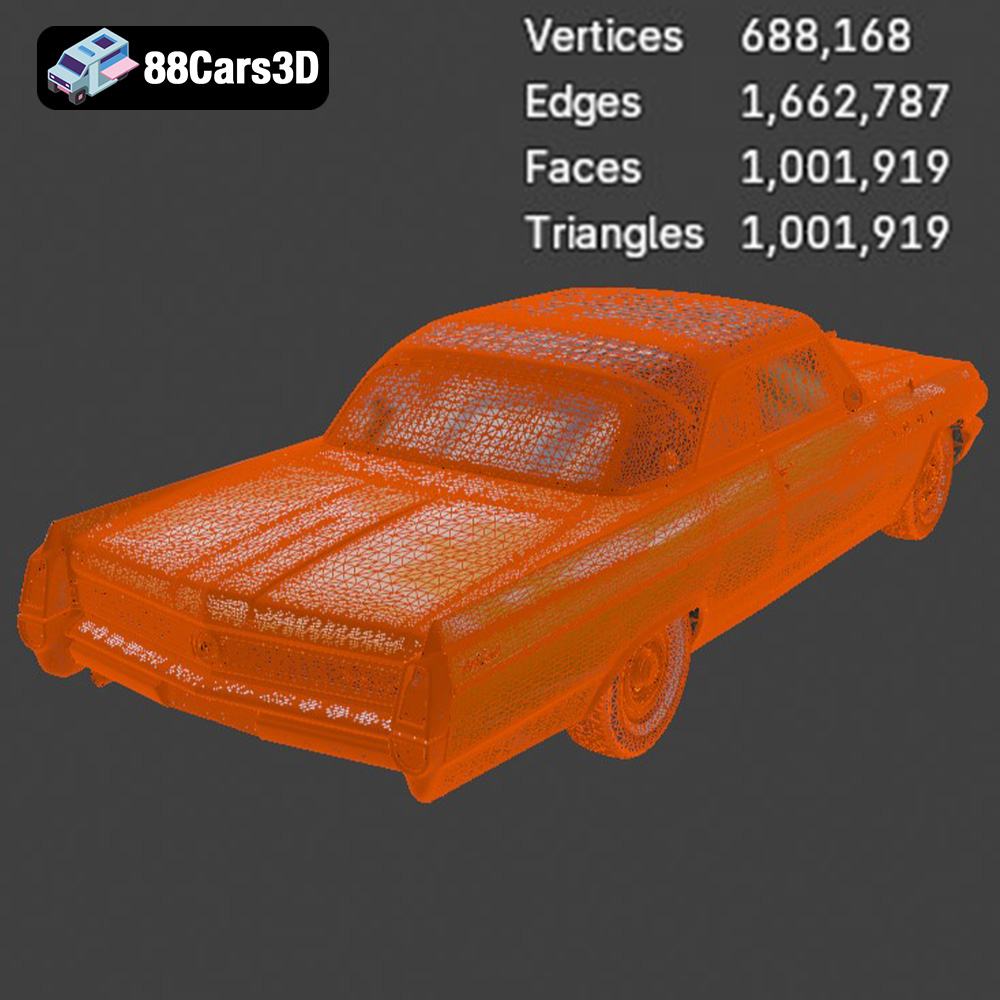
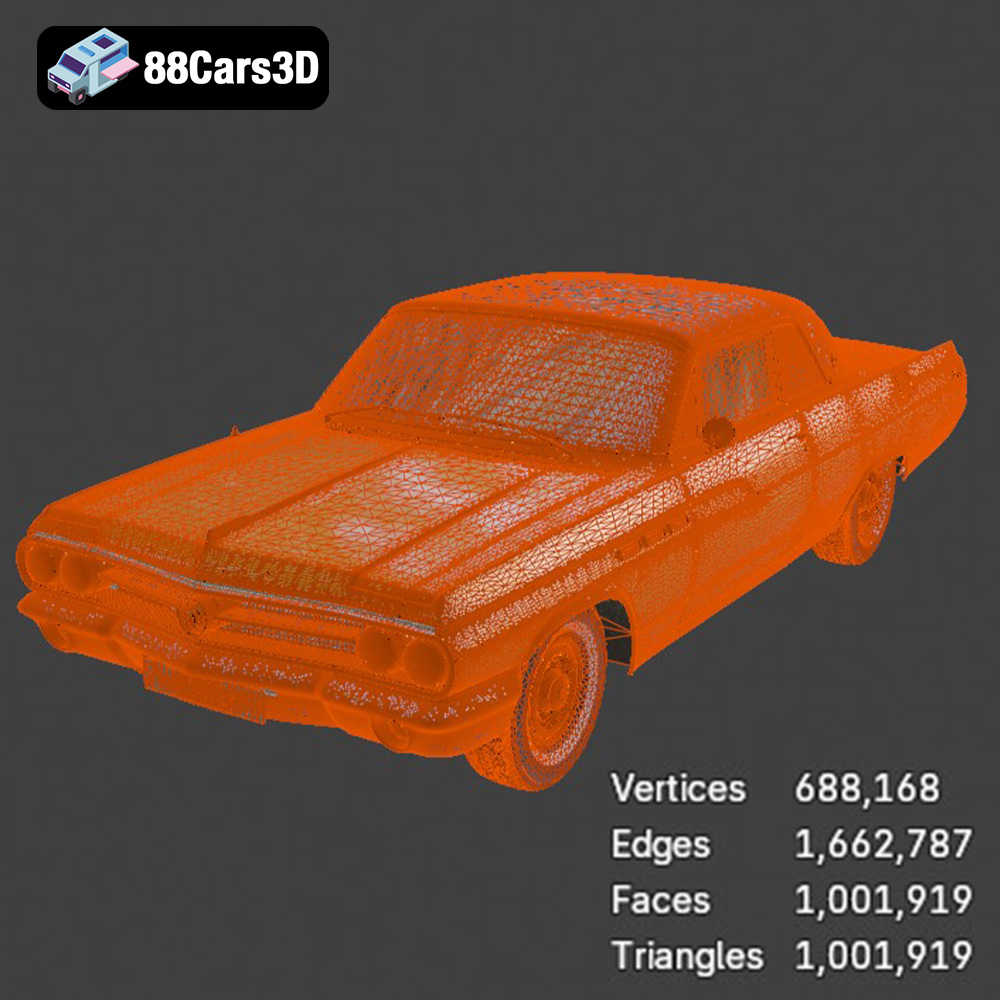
The .stl file is the workhorse of 3D printing, translating the complex geometry of the digital Buick Wildcat into a format that 3D printers can understand. This process begins by loading the .stl into a slicing software, which then “slices” the model into hundreds or thousands of horizontal layers. The software then generates toolpaths for the 3D printer, guiding it to deposit material layer by layer until the physical model emerges. For a detailed automotive model like the Wildcat, the fidelity of the .stl mesh is critical to capturing the intricate chrome details, the sleek body lines, and the distinct features like the dual headlights and sculpted side trim. The clean topology and manifold geometry of the Buick Wildcat 3D model ensure that the .stl conversion is smooth, minimizing errors and facilitating a higher quality physical print.
Achieving a high-quality physical model of the Buick Wildcat requires careful consideration of 3D print settings. The product description provides excellent guidance, recommending scales of 1:32, 1:24, 1:18, or 1:12, allowing for flexibility in display size. A layer height of 0.08–0.16 mm is suggested, indicating a balance between print speed and detail. For smaller scales or finer details, resin printing (SLA/DLP) would likely yield superior results compared to FDM, capturing elements like the steering wheel spokes and dashboard gauges with greater precision. The specified wall thickness (1.2–2.0 mm) and infill (15–25%) ensure the model’s structural integrity without excessive material usage. Supports are explicitly recommended for delicate overhangs such as mirrors, bumper overhangs, and the windshield frame, preventing printing failures. Furthermore, the advice to print the body angled for a smooth surface finish and wheels separately highlights an expert understanding of optimal print orientation for automotive subjects. Post-processing, including sanding, primer, and a gloss pastel or metallic paint finish with chrome detailing, is essential to bring the printed Buick Wildcat to life, transforming it into a truly stunning automotive collectible.
One of the significant advantages of leveraging high-quality 3D car models like the Buick Wildcat Convertible 1963 3D Model from 88cars3d.com is the inherent flexibility they offer for customization. This adaptability allows creators to tailor the model to the precise demands of their project, ensuring perfect integration and maximizing visual impact.
The inherent versatility of the Wildcat model allows for extensive aesthetic modifications. Whether you’re aiming for a pristine, factory-fresh look or a slightly weathered, vintage appearance, the model serves as an excellent foundation. Artists can easily change the body color, experimenting with classic 1960s finishes like Seafoam Green, Daytona Blue, or even a bold Flame Red. Beyond paint, the model can be enhanced with various wheel options, from the standard whitewall tires to custom period-correct variations, further cementing its place in a specific scene. The ability to configure the convertible soft-top up or down is invaluable for narrative flexibility – imagine the car cruising with the top down on a sunny beach or parked elegantly with the top up in a rainy city street. Adding subtle touches like vintage license plates from specific states or years can also significantly enhance realism and storytelling, grounding the model within a historical context. These customization options ensure that the Buick Wildcat isn’t just a generic classic car, but a character within your scene, perfectly tuned to your creative vision.
For projects requiring movement, the Buick Wildcat Convertible 1963 3D Model is meticulously prepared. The separate wheels and steering components are not merely an aesthetic detail; they are a fundamental technical advantage for animators. This separation allows for realistic wheel rotation and steering articulation, crucial for creating believable driving sequences. The proper pivot setup ensures that these components rotate around their correct axes, avoiding common animation errors. Coupled with optimized polygon flow for performance, this makes the Wildcat an excellent asset for cinematic animations, virtual driving simulations, or even game cinematics where the vehicle needs to perform dynamic actions. Artists can easily adjust lighting for specific moods, whether it’s the warm glow of a sunset cruise or the dramatic shadows of a retro city scene, further enhancing the dynamic appeal of this classic car in motion. The model’s readiness for animation significantly reduces production time and effort, making it a valuable asset for any studio or individual looking to create compelling automotive narratives.
The world of 3D modeling continually pushes the boundaries of digital realism, bringing to life objects and experiences that were once confined to imagination. The Buick Wildcat Convertible 1963 3D Model stands as a testament to this craft, offering an exquisitely detailed and technically robust asset for a myriad of applications. From its faithful recreation of the Wildcat’s bold styling and luxurious interior to its readiness for diverse professional workflows across rendering, game development, AR/VR, and even 3D printing, this model represents a pinnacle of digital automotive artistry.
Its comprehensive file format support—including .blend, .fbx, .obj, .glb, .stl, .ply, .unreal, and .max—ensures unparalleled compatibility and flexibility, catering to every artist’s toolset and project requirement. Whether you’re an animator creating a vintage driving sequence, a game developer populating a 1960s open-world, an architect seeking a stylish vehicle for a visualization, or a hobbyist eager to 3D print a scale model, the Buick Wildcat Convertible 1963 3D Model delivers.
At 88cars3d.com, the commitment to providing high-quality 3D car models like the Wildcat ensures that creative professionals have access to the best tools for their automotive visualization and digital production needs. This model isn’t just a purchase; it’s an investment in authenticity, versatility, and the enduring charm of American automotive history, ready to drive your next digital masterpiece.
The Buick Wildcat Convertible 1963 3D Model is a high-detail digital recreation of the classic American full-size performance convertible known for its bold styling, powerful V8 engine heritage, and open-top cruising appeal. The 1963 Wildcat combined luxury comfort with muscle-era presence, making it a standout of early 1960s American automotive design. This 3D model accurately represents the long and wide body proportions, dual headlight front fascia, chrome grille and bumpers, sculpted side lines, convertible soft-top configuration, rear deck detailing, and period-correct wheel design. Built with clean topology and real-world scale accuracy, it is ideal for rendering, animation, automotive visualization, game development, and AR/VR experiences. Perfect for retro boulevard scenes, beach environments, classic car showcases, cinematic productions, and vintage driving simulations.
$29.9
.1960scar
.americanclassic
.arvr
.automotive
.blend
.buick
.car3dmodel
.classiccar
.convertible
.fbx
.gameasset
.glb
.max
.obj
.ply
.rendering
.simulation
.stl
.unreal
.vintagecar
.wildcat1963