Get 50% OFF All Premium 3D & STL Models!

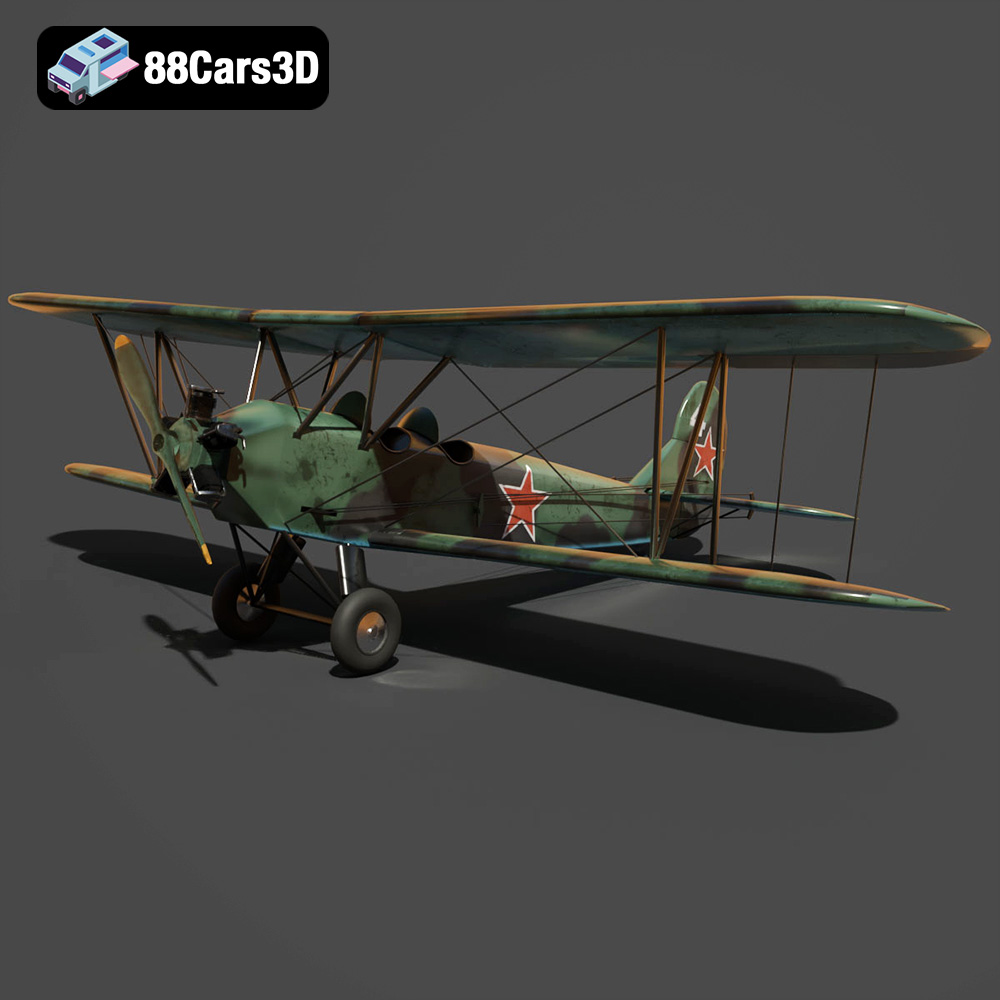
In the vast world of 3D modeling, precision and historical accuracy often stand as paramount requirements, particularly when dealing with iconic vehicles. Whether for rendering, animation, historical visualization, simulation, or game development, having access to meticulously crafted digital assets can make all the difference. Today, we delve into a remarkable example of such craftsmanship: the Polikarpov Po-2 3D Model. This legendary Soviet multi-role biplane, known affectionately as the “Kukuruznik,” played a pivotal role throughout the mid-20th century, serving in capacities from training and reconnaissance to light bombing missions. Its simple yet effective design, characterized by a lightweight wooden structure and fabric-covered wings, made it one of the most produced biplanes in aviation history.
For digital artists, game developers, and historical enthusiasts, recreating such a significant piece of aviation history demands a 3D model that not only captures its distinctive silhouette but also offers the technical robustness for demanding applications. The Polikarpov Po-2 3D Model delivers on all fronts, providing an exceptional foundation for projects ranging from cinematic war projects to immersive AR/VR experiences. Available through marketplaces like 88cars3d.com, this model represents a commitment to quality and versatility, empowering creators to bring this storied aircraft back to life in stunning detail.
The Polikarpov Po-2 is more than just an aircraft; it’s a symbol of resilience and ingenuity. Its widespread use, from agricultural dusting to night bombing by the famed “Night Witches,” cemented its place in history. Translating such a rich narrative into a digital asset requires a deep understanding of its form and function.
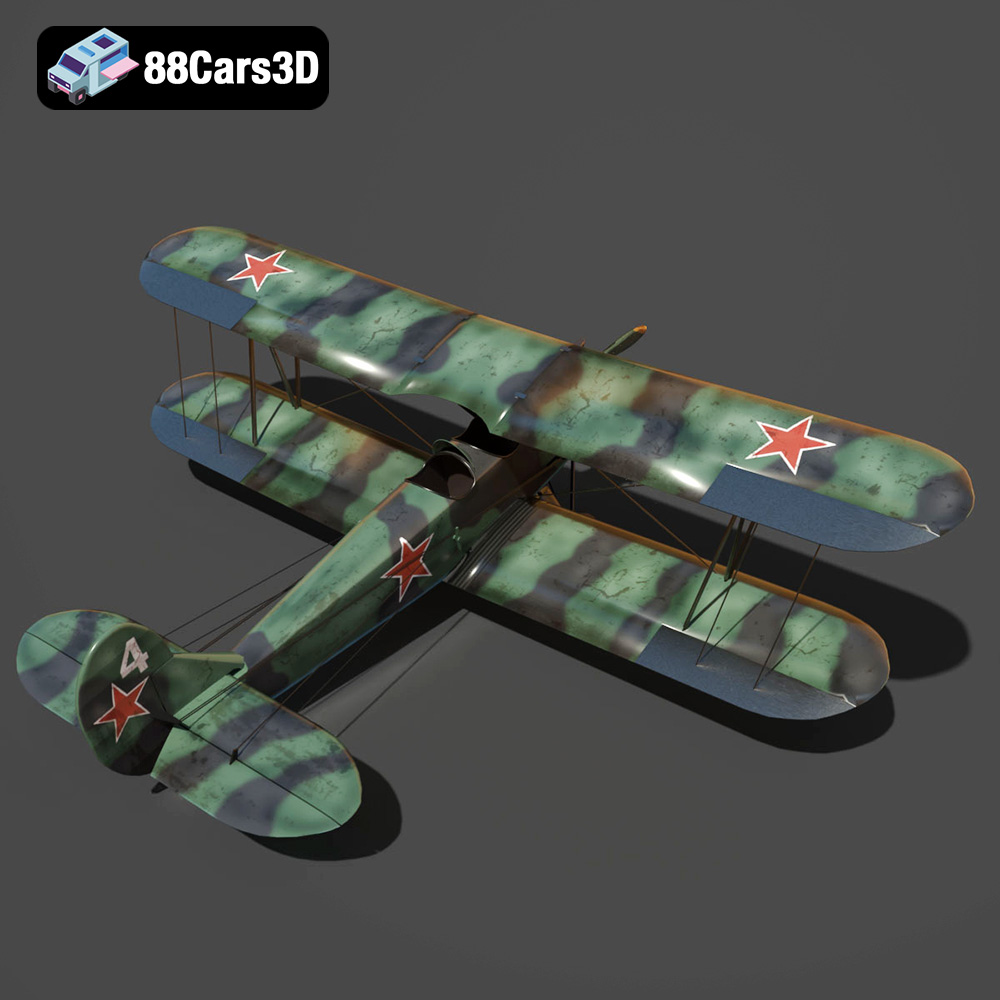
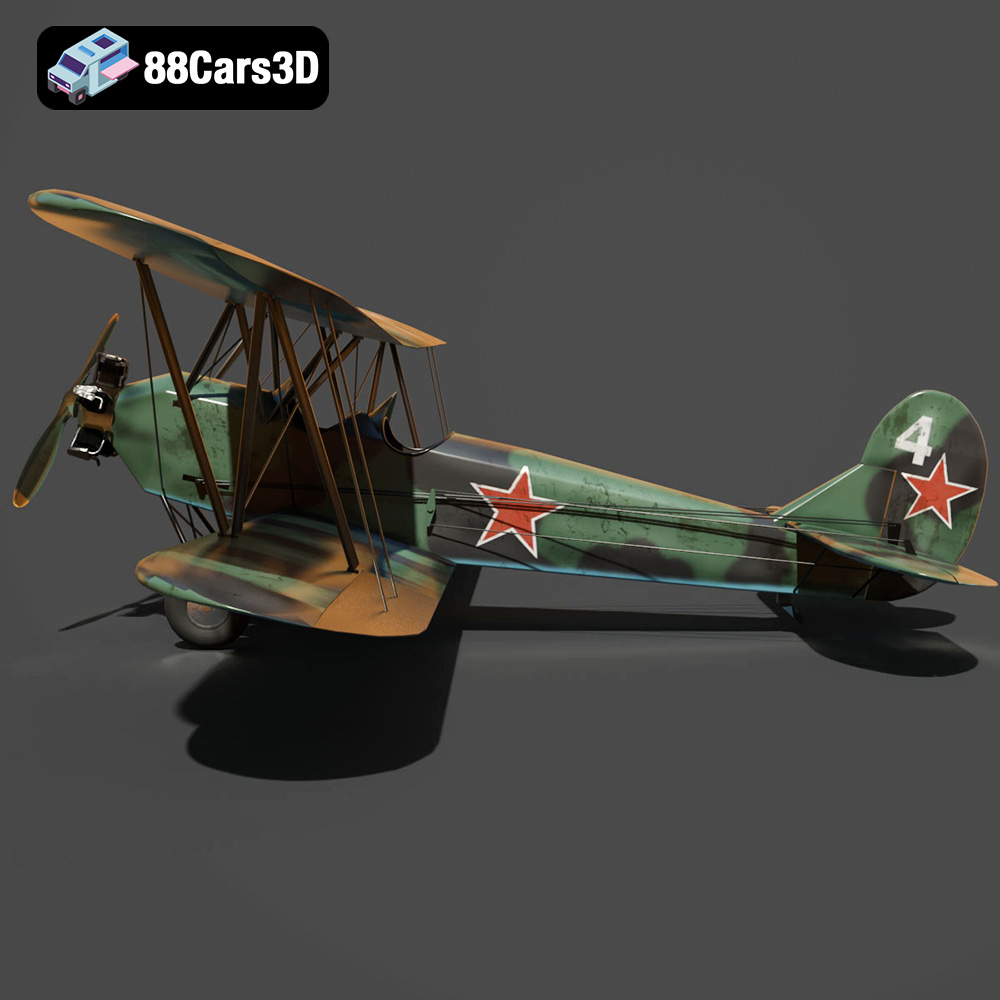
From its initial flight in 1928, the Po-2 (originally U-2) was designed by Nikolai Polikarpov as a primary trainer, but its robust and forgiving nature quickly led to its adoption for a multitude of roles. Its defining features – the dual-wing configuration, strut-supported wing assembly, radial engine housing, fixed landing gear, and open cockpit layout – are instantly recognizable. The aircraft’s construction, primarily wood and fabric, gave it a distinctive look that designers strive to emulate in digital form. This Polikarpov Po-2 3D Model meticulously captures these elements, ensuring historical fidelity in every polygon and texture.
Accurately representing an aircraft with such unique construction poses specific challenges for 3D artists. The model’s accurate biplane wing structure with support struts, realistic propeller assembly, and fabric-style control surfaces (ailerons, rudder, elevators) are all crucial details. The product description highlights the detailed radial engine cowling and open dual cockpit configuration, which are essential for adding depth and realism to any scene. Furthermore, the separate propeller and control surfaces for animation are invaluable for bringing the aircraft to dynamic life, whether in a flight simulator or a cinematic sequence.
When acquiring a high-quality 3D asset like the Polikarpov Po-2, understanding the various file formats included is crucial for integrating it seamlessly into diverse production pipelines. Each format serves a specific purpose, offering different levels of editability, optimization, and compatibility across software and engines. The Polikarpov Po-2 3D Model provides a comprehensive suite of formats, ensuring maximum flexibility for any project.
The inclusion of native project files, such as .blend for Blender and .max for 3ds Max, offers the highest degree of creative control. A .blend file provides a fully editable Blender scene, complete with materials, textures, lighting, and even animation setups. This is ideal for artists who use Blender as their primary DCC (Digital Content Creation) tool, allowing them to dissect the model, make specific modifications, re-texture, or adapt it for complex animation sequences. Similarly, the .max file is an editable 3ds Max project, catering to professionals in architectural visualization, automotive rendering, and high-end animation who rely on 3ds Max for its robust modeling and rendering capabilities. These native formats ensure that all aspects of the original artist’s setup are preserved, from material nodes to scene organization.
Beyond native files, cross-application compatibility is key. The .fbx (Filmbox) format is a widely adopted standard, making it ideal for Unreal, Unity, and real-time pipelines. It can store not just geometry and materials, but also animations, cameras, and lights, ensuring a rich transfer of data between different software. For game developers, .fbx is often the go-to format for importing game assets. The .obj (Wavefront Object) format is another universal option, renowned for its simplicity and broad support. While it doesn’t typically carry animation data, it’s excellent for geometry and basic material information, making it a reliable choice for cross-software compatibility when transferring static meshes for rendering or further modeling. For emerging technologies, the .glb (GL Transmission Format Binary) format is optimized for AR, VR, and browser-based display. It packages 3D models, textures, and animations into a single, efficient file, making it perfect for web-based interactive experiences or mobile AR applications. Finally, .ply (Polygon File Format) is a precision mesh format often used for CAD, 3D scanning, or scientific analysis, providing a robust representation of geometry, including color and other properties per vertex or face.
The .stl (Stereolithography) format holds particular importance for physical creation. It’s the industry standard for 3D printing output, representing a 3D model as a series of connected triangles. While it doesn’t carry color or texture information, its simplicity makes it universally compatible with 3D printers and slicing software. The Polikarpov Po-2, with its defined 3D Print Settings, is designed to be easily convertible to .stl for creating stunning scale aircraft models. For professionals working specifically within the Unreal Engine ecosystem, the .unreal format signifies an engine-ready asset, often pre-optimized and configured for real-time environments, materials, and LODs (Levels of Detail). This streamlines the integration process, allowing developers to drop the asset directly into their projects with minimal setup. This comprehensive file format support underscores the versatility and professional readiness of the Polikarpov Po-2 3D Model, making it a truly adaptable asset for any digital endeavor.
A truly versatile 3D model is one that seamlessly integrates into various professional pipelines. The Polikarpov Po-2 3D Model is engineered with this philosophy in mind, offering flexibility for artists and developers working across diverse industries.
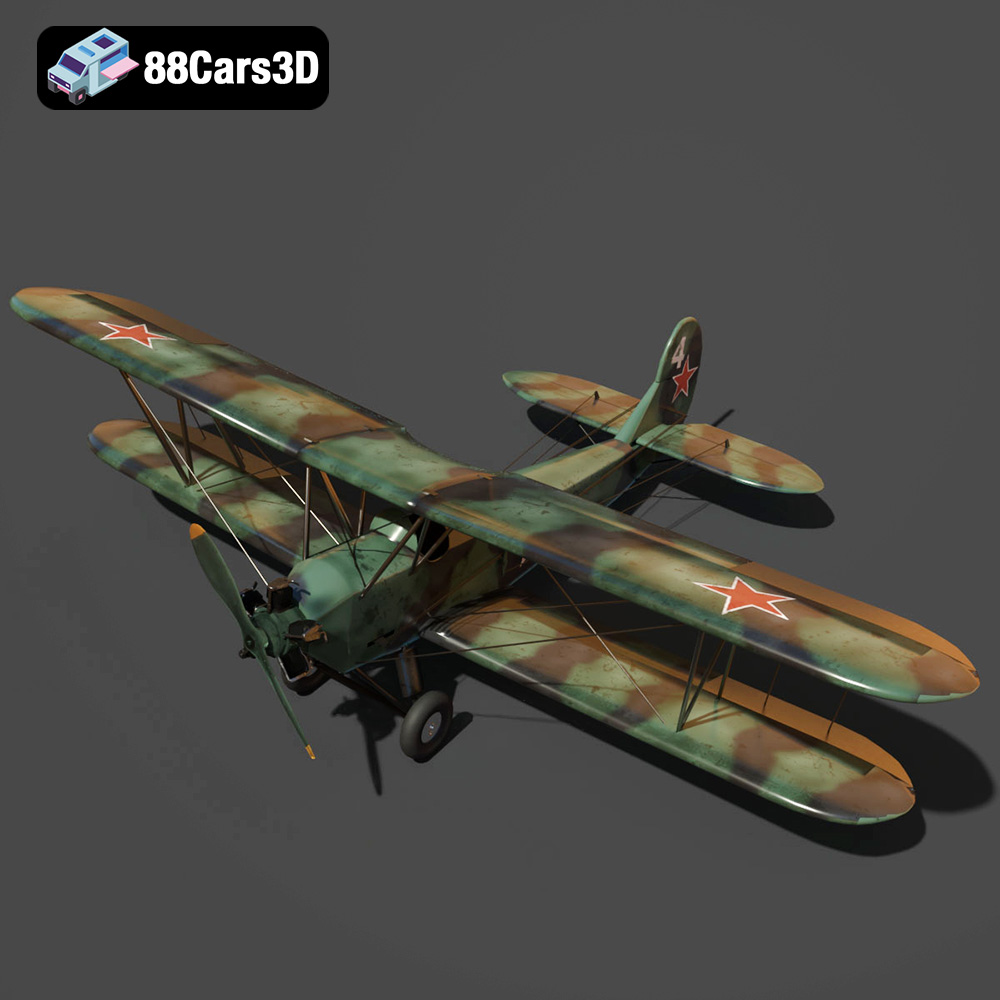
For cinematic sequences, promotional materials, or museum displays, photorealistic rendering is paramount. The Polikarpov Po-2, with its clean and well-organized mesh structure and optimized geometry for real-time engines and high-quality renders, is an ideal candidate. In workflows using 3ds Max with renderers like V-Ray or Corona, or Blender with Cycles/Eevee, artists can leverage the model’s clean topology to apply advanced PBR (Physically Based Rendering) materials. This allows for realistic fabric textures, weathered metal on the engine cowling, and authentic paint finishes. The ability to customize camouflage or training livery and adjust weathering for operational realism means the aircraft can be precisely depicted for aviation marketing visuals, museum displays, and historical promotional materials.
The demands of game development are unique, requiring a balance of visual fidelity and performance. The Polikarpov Po-2 3D Model, optimized for polygon flow and real-world scale, is perfectly suited for modern game engines like Unreal Engine and Unity. Its proper pivot setup for propeller rotation and control surface animation is crucial for dynamic gameplay. Developers can integrate this model into flight simulators, WWII-themed games, and historical open-world environments, creating immersive experiences without compromising frame rates. The inclusion of engine-ready formats like .unreal further streamlines this process, providing assets that are already configured for real-time lighting and physics interactions.
Augmented Reality (AR) and Virtual Reality (VR) platforms offer unparalleled immersion, and the Polikarpov Po-2 is an excellent asset for these applications. Its optimized geometry ensures smooth performance in computationally intensive AR/VR environments. Imagine a virtual museum where users can walk around a life-sized Po-2, examining its construction, or an interactive training simulation where pilots can virtually experience flying this historic biplane. The .glb format, specifically optimized for such experiences, simplifies deployment to web-based AR/VR viewers or standalone applications, making it perfect for immersive aviation demonstrations and interactive historical simulations.
The true value of a professional 3D model lies in its underlying technical quality. The Polikarpov Po-2 3D Model exemplifies meticulous attention to detail, making it a robust and reliable asset for any demanding project.
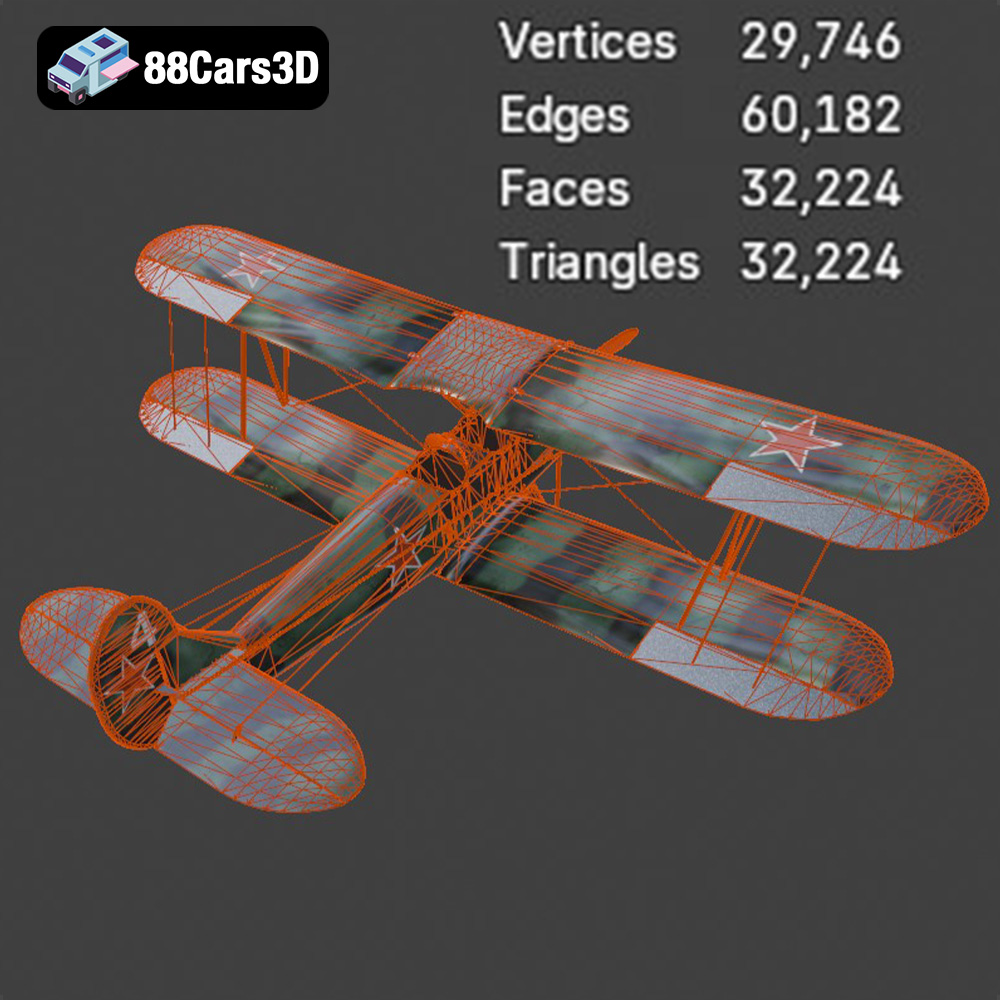
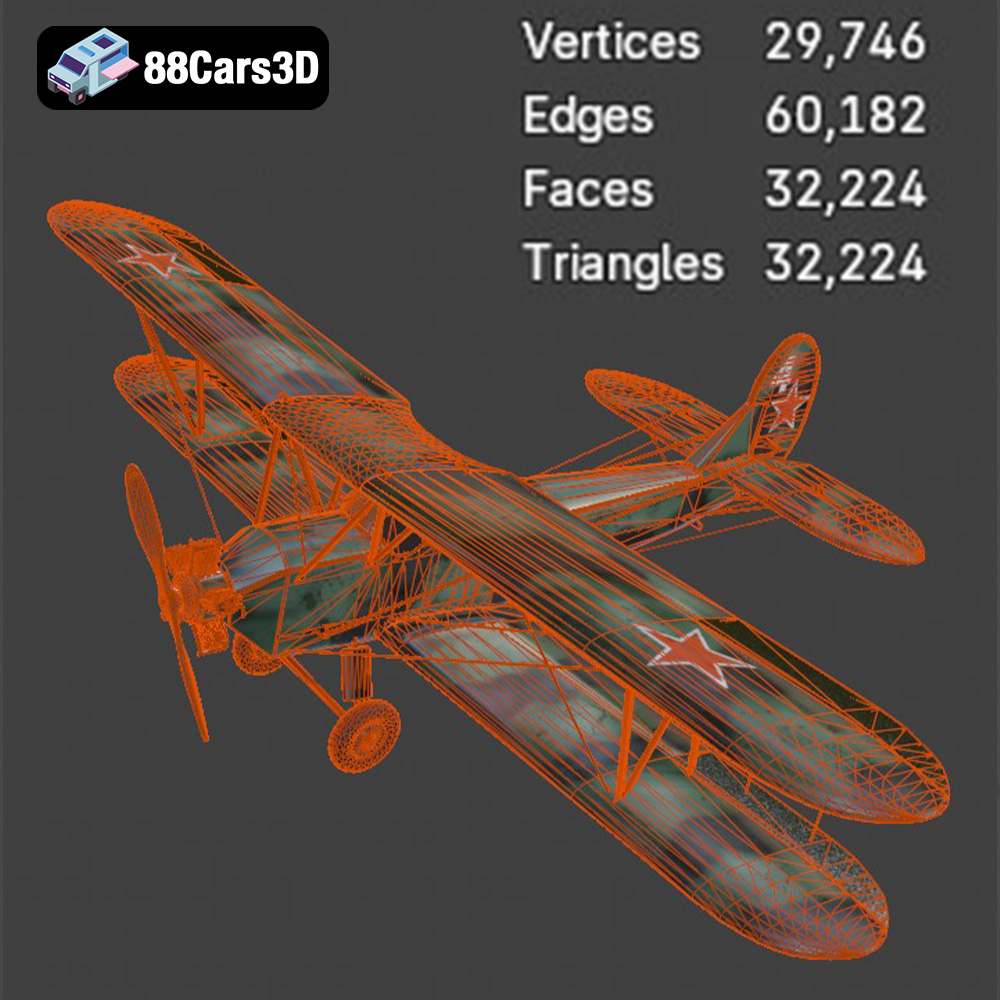
A clean and well-organized mesh structure is fundamental. This model boasts clean topology, typically using quads where appropriate, which is essential for smooth deformations during animation and allows for easy subdivision if higher detail is required. While specific poly counts aren’t listed, a high-quality model like this would typically range from 50,000 to 200,000 polygons for the base mesh, striking a balance between detail and performance. Crucially, the model features unwrapped UVs, allowing for efficient and high-resolution PBR (Physically Based Rendering) texturing. This means artists can apply realistic materials with maps for albedo (color), roughness, metallic, normal, and ambient occlusion, ensuring the aircraft’s fabric, wood, and metal components react authentically to light. The product description’s mention of fabric-style control surfaces directly implies such a texturing approach.
Dynamic scenes require an animation-ready model. The Polikarpov Po-2’s design includes separate propeller and control surfaces for animation. This is critical because it allows for easy rigging and independent movement. The proper pivot setup for propeller rotation and control surface animation means that these individual components are correctly positioned to rotate or articulate as they would on a real aircraft. This significantly reduces setup time for animators, enabling quick creation of flight sequences, taxiing, or even ground crew interactions. The internal modeling of the control stick and rudder pedals further suggests an intention for potential cockpit animation or interactive elements.
Real-world scale accuracy is a non-negotiable for professional applications, especially in simulation, architectural visualization, and game development where objects must interact realistically with their environments. The model adheres to the authentic proportions of the Polikarpov Po-2, ensuring it looks correct when placed alongside other real-world scale assets or within accurately scaled environments. This attention to detail extends to the period-correct fuselage proportions and the detailed exterior features like the accurate biplane wing structure and detailed radial engine cowling, all contributing to an authentic digital representation of this historical aircraft.
The versatility of the Polikarpov Po-2 3D Model extends across numerous creative and technical fields, allowing its historical significance to be explored and presented in innovative ways.
For filmmakers and documentary producers, accurate historical models are indispensable. The Polikarpov Po-2 3D Model can be integrated into CGI sequences, allowing for stunning reconstructions of WWII battles, training exercises, or even peaceful agricultural scenes where the Po-2 often operated. Its optimized geometry for high-quality renders ensures it holds up under close-up shots and high-resolution outputs. Imagine a historical documentary where archival footage is seamlessly blended with a digitally rendered Po-2, taking viewers on a journey through time. The model’s ability to configure lighting for sunrise airfield or in-flight scenes provides cinematographers with endless possibilities for dramatic visuals.
The realm of flight simulation demands precision in flight dynamics and visual representation. The Polikarpov Po-2 3D Model is perfectly suited for flight simulators, offering an authentic cockpit experience with its modeled dual-seat cockpit layout, instrument panel detailing, and control stick and rudder pedals. This level of detail is invaluable for educational aviation projects and flight training visualization, allowing aspiring pilots or aviation enthusiasts to experience the mechanics and feel of this vintage biplane. Its inclusion of engine-ready formats like .unreal makes integration into popular simulation platforms efficient and effective.
Beyond digital displays, the Polikarpov Po-2 can transition into the physical realm through 3D printing. The model is specifically designed to be convertible to .stl format, enabling the creation of collectible scale aircraft models and display miniatures. The detailed 3D Print Settings provided – including recommended scales (1:72 / 1:48 / 1:32 / 1:24), layer height, wall thickness, infill, and support requirements – guide users through the process. Printing the fuselage horizontally and wings separately, followed by post-processing like sanding, primer, matte military paint finish, and optional historical decals, allows enthusiasts to craft stunning physical replicas of this iconic aircraft, a perfect showcase for history in their own homes or offices.
A truly valuable 3D asset offers room for creative customization, allowing artists to adapt it to specific project needs and ensure its longevity in evolving production pipelines.
The Polikarpov Po-2 3D Model serves as an excellent base for various visual treatments. Artists can easily change camouflage or training livery, transforming the aircraft’s appearance from a wartime bomber to a vibrant crop duster or a civilian trainer. The ability to add historical insignia or squadron markings allows for incredible historical accuracy, depicting specific units or famous pilots. Furthermore, modifying weathering for operational realism can convey the aircraft’s journey and usage, adding depth to storytelling. From a pristine museum piece to a battle-worn veteran, the model can be tailored to fit any narrative.
Beyond individual customization, the Polikarpov Po-2’s versatility shines in its integration into larger scenes. Its real-world scale accuracy ensures it fits naturally within various environments, whether an expansive airfield, a bustling agricultural landscape, or a tense wartime scenario. The proper pivot setup for propeller rotation and control surface animation also means it can be readily animated as part of a complex sequence involving other vehicles, characters, or environmental effects. This model isn’t just a static object; it’s a dynamic component ready to enhance any digital tableau, ensuring that projects relying on 3D car models or other vehicle assets find a compelling aerial counterpart.
The Polikarpov Po-2 3D Model stands as a testament to what high-quality digital asset creation can achieve. It’s not merely a collection of polygons and textures; it’s a meticulously engineered digital recreation of an iconic aircraft, ready to serve in a multitude of professional applications. From high-fidelity rendering and immersive game development to detailed historical visualization and tangible 3D printing, this model provides the technical foundation and artistic flexibility demanded by today’s leading creators.
Its comprehensive file format support, ranging from native .blend and .max projects to universal .fbx and specialized .stl, ensures seamless integration into virtually any workflow. For anyone seeking to bring the charm and historical significance of the Polikarpov Po-2 to their projects, this 3D model from 88cars3d.com offers an unparalleled asset. It’s more than just a purchase; it’s an investment in quality, versatility, and the power to accurately recreate history in the digital domain.
The Polikarpov Po-2 3D Model is a high-detail digital recreation of the legendary Soviet multi-role biplane widely used for training, reconnaissance, and light bombing missions during the mid-20th century. Known for its lightweight wooden structure and fabric-covered wings, the Po-2 became one of the most produced biplanes in aviation history. This 3D model accurately represents the aircraft’s dual-wing configuration, strut-supported wing assembly, radial engine housing, fixed landing gear, open cockpit layout, tailwheel structure, and fabric-textured control surfaces. Designed with clean topology and real-world scale accuracy, it is ideal for rendering, animation, historical visualization, simulation, and game development.
$15.9
.aircraft3dmodel
.arvr
.aviation
.biplane
.blend
.fbx
.flightsimulator
.gameasset
.glb
.historicalaircraft
.max
.obj
.ply
.po2
.polikarpov
.rendering
.simulation
.stl
.unreal
.wwiiaircraft