Get 50% OFF All Premium 3D & STL Models!

In the world of automotive design, few names command as much awe and reverence as Bugatti. Their vehicles aren’t just cars; they are rolling sculptures, engineering marvels, and symbols of extreme luxury and performance. For 3D artists, designers, game developers, and visualization specialists, recreating such masterpieces in a digital environment presents both a significant challenge and an immense opportunity.
Imagine needing to populate a virtual showroom with the latest hypercars, develop a next-generation racing game, or create a stunning promotional animation. The foundational element for all these endeavors is a meticulously crafted 3D model. This is where premium 3D car models like the Bugatti Centodieci 2020 3D Model become indispensable. Sourced from experts at 88cars3d.com, these assets provide the precise detail and technical integrity required to bring the digital automotive world to life.
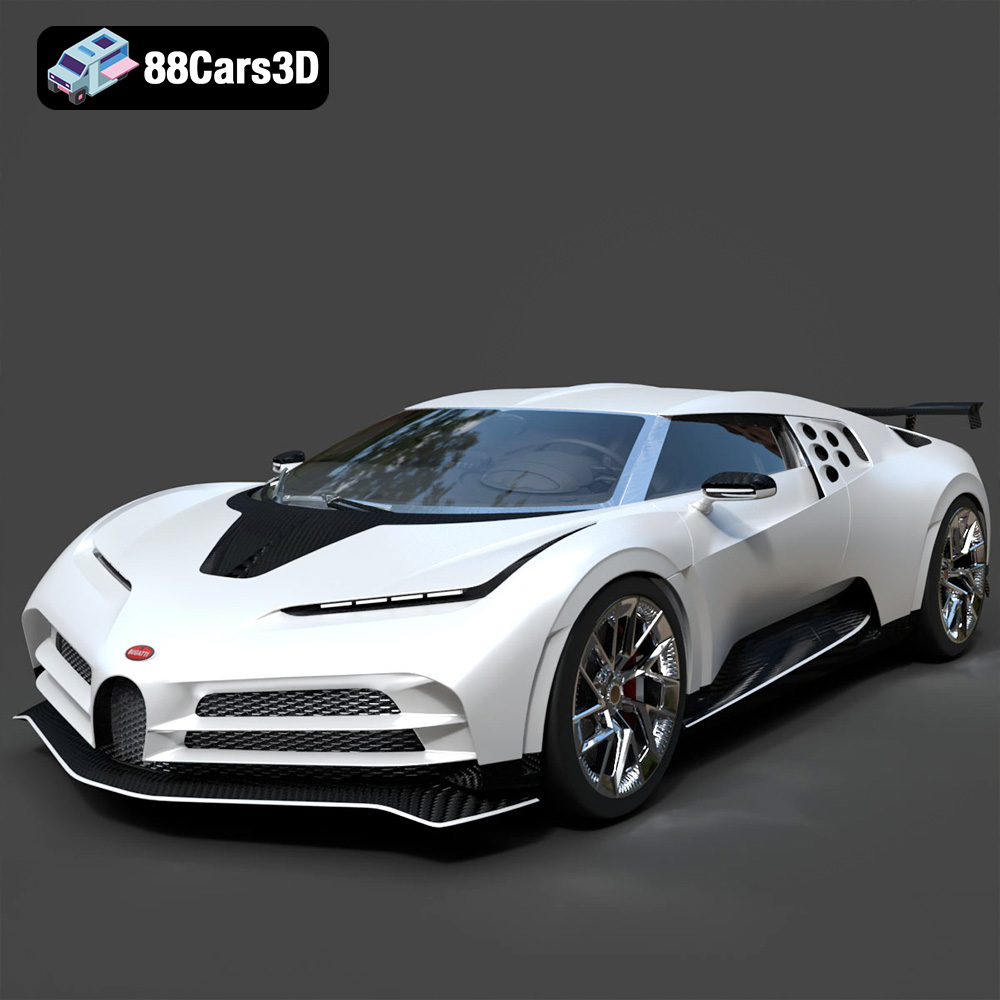
The Bugatti Centodieci, a tribute to the legendary EB110, is a hypercar of unparalleled exclusivity and breathtaking design. Its aggressive lines, powerful stance, and intricate aerodynamic elements make it a prime candidate for detailed digital representation. This article will delve into the technical intricacies, diverse applications, and professional workflows enabled by high-quality 3D models, using the Centodieci as our prime example, demonstrating why investing in such assets is crucial for cutting-edge projects.
Navigating the landscape of 3D content creation means understanding the various file formats, each tailored for specific workflows, software, and end-uses. A versatile 3D asset, such as the Bugatti Centodieci 2020 3D Model, is often provided in multiple formats to ensure maximum compatibility and utility across different professional pipelines. Let’s explore the critical formats:
The .blend format is Blender’s native file type, offering a complete, editable scene with all its components. When you receive a .blend file, you’re not just getting the mesh; you’re getting the entire project: materials, textures, lighting setups, camera positions, animations, modifiers, and even custom node setups. This makes it ideal for users who primarily work in Blender and want full control over every aspect of the model. It’s an excellent starting point for customization, rendering in Cycles or Eevee, or further development within the Blender ecosystem, allowing for detailed adjustments to the Centodieci’s aesthetics or internal structure.
.fbx (Filmbox) is arguably the most widely adopted interchange format in the 3D industry. Developed by Autodesk, it’s designed for efficient data exchange between various 3D applications and real-time engines like Unreal Engine and Unity. FBX files can carry a wealth of information, including mesh data (geometry), materials, textures, animations, skinning, and even camera and light data. Its robustness makes it the go-to choice for game development, cinematic animation, and architectural visualization projects where assets need to move seamlessly between different software environments without losing critical data integrity. For the Bugatti Centodieci, an .fbx offers a ready-to-import solution for most professional pipelines.
The .obj (Wavefront OBJ) format is a venerable and universally supported file type, primarily known for storing geometry data—vertices, normals, texture coordinates, and faces. While it can reference external material files (.mtl), it doesn’t embed textures or complex rigging. Its simplicity and widespread compatibility make it an excellent choice for basic mesh exchange when you need a clean, unadorned model that can be easily imported into virtually any 3D software for texturing and rendering. It’s a reliable fallback for cross-software compatibility when other formats might present issues, ensuring the core shape of the Centodieci is always accessible.
.glb (GL Transmission Format Binary) is a relatively newer format gaining rapid traction, especially for web-based 3D, augmented reality (AR), and virtual reality (VR) applications. It’s a compact, binary form of the glTF format, designed to be highly efficient for transmission and loading. A .glb file embeds all necessary assets—geometry, materials, textures, and animations—into a single file, making it incredibly convenient for sharing and deploying interactive 3D content directly in browsers or mobile AR/VR experiences. For showcasing the Bugatti Centodieci in an immersive virtual showroom, a .glb file is the perfect, optimized solution.
.stl (Stereolithography) is the standard file format for 3D printing. It represents the surface geometry of a 3D object using a collection of interconnected triangles, creating a solid, “manifold” mesh. Unlike other formats, .stl doesn’t contain color or texture information; it purely defines the object’s shape for physical fabrication. When preparing the Bugatti Centodieci 2020 3D Model for 3D printing, converting it to an .stl ensures the geometry is watertight and suitable for slicing software, allowing you to produce collectible hypercar miniatures or display models.
The .ply (Polygon File Format) is another format for storing 3D data, particularly popular in academic and scientific fields for storing point clouds and mesh data from 3D scanners. It can store not only geometry but also properties like color, transparency, and surface normals per vertex or face. While less common for general 3D asset exchange, its precision makes it valuable for applications requiring accurate scan data or detailed analysis of complex shapes, such as aerodynamic studies of the Centodieci.
The .unreal format signifies an asset specifically optimized and prepared for direct integration into Unreal Engine. While typically derived from an FBX import, an asset provided in an “.unreal” context often implies it has already undergone engine-specific preparation: proper scaling, collision geometry generation, level of detail (LOD) setup, and possibly even pre-configured material instances using Unreal’s physically based rendering (PBR) system. This format significantly streamlines the workflow for game developers and real-time visualization artists, minimizing setup time and maximizing performance within the engine.
Similar to .blend for Blender, the .max format is the native file type for Autodesk 3ds Max. It contains an entire 3ds Max scene, including all 3D geometry, materials (like V-Ray or Corona), textures, lights, cameras, animations, and scene settings. This format is indispensable for professionals working with 3ds Max, providing the most flexible and complete environment for advanced rendering, animation, and scene construction. For detailed cinematic productions or high-end architectural visualizations involving the Bugatti Centodieci, the .max file allows for unparalleled control and customization.
Creating a high-fidelity 3D model of a hypercar like the Bugatti Centodieci is a testament to precision and artistic skill. It’s not merely about replicating shapes; it’s about capturing the essence of its design, engineering philosophy, and the emotion it evokes. The Bugatti Centodieci 2020 3D Model exemplifies this dedication.
The first and most critical step in automotive 3D modeling is achieving absolute accuracy in design and proportions. The Centodieci, with its unique blend of modern Bugatti aesthetics and EB110 heritage, demands meticulous attention to every curve and line. Artists rely heavily on detailed blueprints, CAD data, and extensive photographic references to ensure the digital model matches the real-world vehicle. This involves:
A truly exceptional 3D car model goes beyond the exterior shell. The devil is in the details, both inside and out. The Bugatti Centodieci 2020 3D Model delivers on this promise:
This comprehensive approach to modeling ensures that the asset is not just a visual placeholder but a fully realized digital twin, capable of performing across a spectrum of demanding applications.
High-quality 3D car models like the Bugatti Centodieci 2020 3D Model are essential tools in various professional creative pipelines. Their versatility allows them to be seamlessly integrated into diverse projects, from photorealistic advertising to immersive gaming experiences.
For cinematic visuals and marketing materials, photorealistic rendering is key. The Centodieci model, with its clean topology and accurate real-world scale, is perfectly suited for this:
Both environments enable artists to produce stunning visuals that rival real-world photography, perfect for luxury automotive marketing and hypercar showcases.
In the fast-paced world of game development, high-quality assets are crucial for immersive experiences. The Bugatti Centodieci model is designed with real-time performance in mind:
The utility of a meticulously crafted 3D model extends far beyond traditional rendering and game development. The Bugatti Centodieci 2020 3D Model is a versatile asset capable of driving innovation in emerging technologies and niche applications.
Augmented Reality (AR) and Virtual Reality (VR) are transforming how we interact with digital content, offering unprecedented levels of immersion. High-fidelity 3D car models are at the forefront of this revolution:
The model’s optimized geometry and realistic detailing make it an ideal foundation for crafting compelling, immersive hypercar experiences that blur the line between the digital and physical worlds.
The technical precision of the Bugatti Centodieci model also lends itself to more analytical and tangible applications.
This transforms the digital asset into a tangible item, appealing to collectors and enthusiasts who appreciate the craft of both digital and physical model-making.
The true value of any professional 3D asset lies in its underlying technical quality. For the Bugatti Centodieci 2020 3D Model, this translates into a robust foundation that supports high-end rendering, real-time performance, and seamless workflow integration.
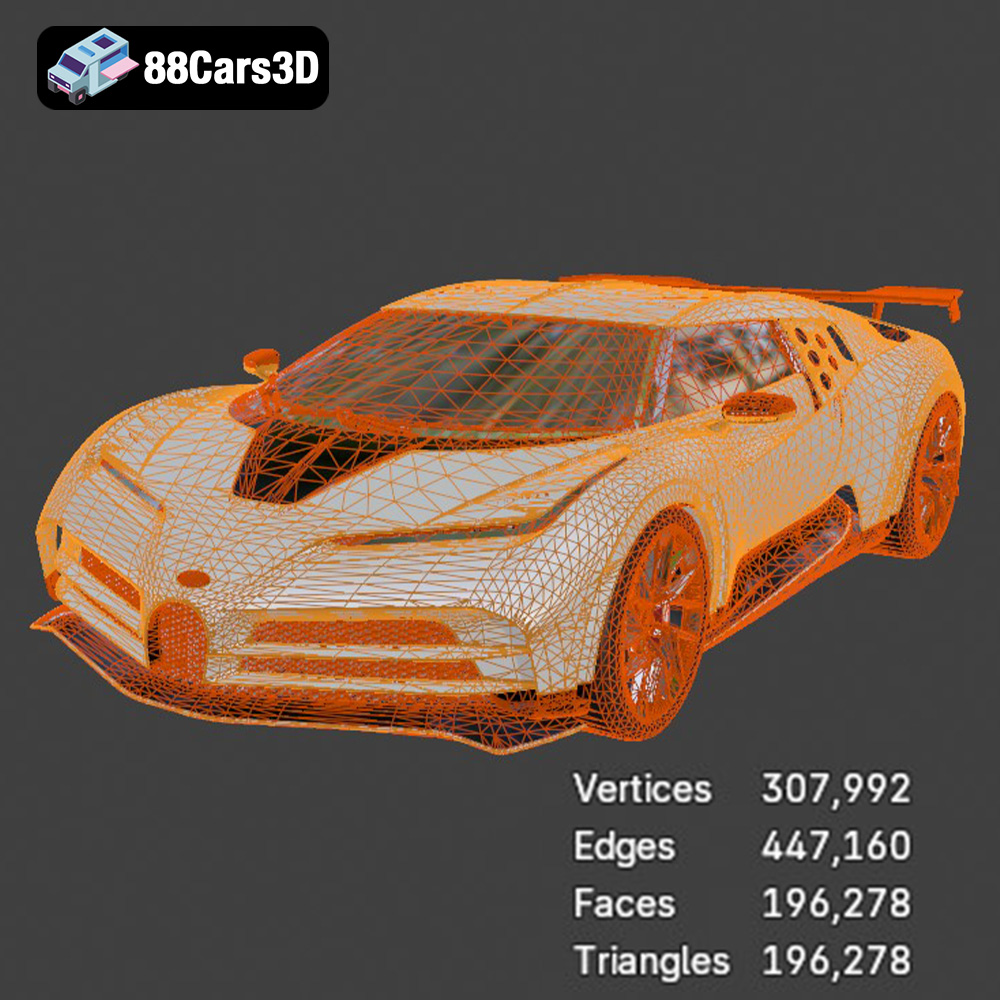
At the heart of any high-quality 3D model is its mesh structure. The Centodieci model boasts:
Beyond the mesh itself, practical considerations for asset integration are paramount:
The digital realm offers boundless possibilities for creative expression, and in the world of automotive visualization, high-quality 3D models are the engines that drive these innovations. The Bugatti Centodieci 2020 3D Model stands as a prime example of what meticulous craftsmanship and technical expertise can achieve.
From delivering photorealistic automotive rendering for luxury marketing campaigns in 3ds Max and Blender, to serving as a high-performance game asset in Unreal Engine, or even enabling immersive AR/VR experiences and physical 3D prints, this model demonstrates unparalleled versatility. Its clean topology, real-world scale, detailed interior and exterior features, and broad file format support make it an indispensable tool for professionals seeking to elevate their projects.
For anyone looking to integrate a truly exceptional hypercar into their digital or physical productions, the Bugatti Centodieci 2020 3D Model offers the fidelity and flexibility required. Explore this and many other premium 3D car models by visiting 88cars3d.com, where quality meets innovation.
The Bugatti Centodieci 2020 3D Model is a high-detail digital recreation of the ultra-exclusive hypercar inspired by the legendary EB110. Limited to only a handful of units worldwide, the Centodieci combines modern Bugatti engineering with 1990s design heritage, delivering extreme performance and rare collector prestige. This 3D model accurately represents the aggressive aerodynamic bodywork, sharp front fascia with ultra-slim LED headlights, large side air intakes, sculpted rear with stacked exhaust outlets, fixed rear wing, and distinctive multi-spoke wheel design. Built with clean topology and real-world scale accuracy, it is ideal for rendering, animation, hypercar visualization, game development, and AR/VR luxury automotive projects.
$39.99
.2020hypercar
.arvr
.automotive
.blend
.bugatti
.car3dmodel
.centodieci
.exoticcar
.fbx
.gameasset
.glb
.luxurycar
.max
.obj
.ply
.rendering
.simulation
.stl
.supercar
.unreal