Get 50% OFF All Premium 3D & STL Models!

The world of 3D modeling is a fascinating intersection of art and engineering, particularly when it comes to automotive design. Capturing the essence of a classic vehicle, with its unique curves, chrome accents, and historical significance, requires meticulous attention to detail and a deep understanding of digital craftsmanship. Imagine bringing the charm of a bygone era to life in a cinematic rendering, an immersive game environment, or even a tangible 3D print model. This is precisely the power offered by expertly crafted 3D car models.
Among the pantheon of classic European automobiles, the Ford Taunus (P6) 12M Station Wagon 1967 holds a special place. Known affectionately as the “Turnier” in some markets, this vehicle embodies the practical elegance and distinct styling of 1960s family motoring. It’s a car that evokes memories of simpler times, cross-country family adventures, and a design philosophy that prioritized character over aerodynamics. For 3D artists, game developers, architects, and product designers seeking to infuse their projects with authentic vintage flair, a high-quality digital representation of such an icon is invaluable. The Ford Taunus (P6) 12M Station Wagon 1967 3D Model provides just this—a meticulously detailed asset ready to be deployed across a multitude of professional applications, from high-fidelity rendering to real-time interactive experiences, and even physical fabrication. Available at 88cars3d.com, this model represents a commitment to historical accuracy and technical excellence, making it a cornerstone for any project demanding authentic retro automotive presence.
In the complex ecosystem of 3D production, choosing the right file format for your automotive asset is as crucial as the model’s design itself. Each format serves a specific purpose, offering unique advantages in terms of compatibility, data retention, and optimization for various stages of the workflow. The Ford Taunus (P6) 12M Station Wagon 1967 3D Model comes bundled with a comprehensive suite of formats, ensuring maximum flexibility for any professional pipeline. Understanding these formats is key to leveraging the full potential of your 3D car models.
The `.blend` file is the native format for Blender, a powerful and increasingly ubiquitous open-source 3D creation suite. When you receive a `.blend` file, you’re getting the complete Blender scene, including all mesh data, materials, textures, lighting setups, cameras, animation data, and even modifiers. This format is ideal for users who primarily work in Blender, offering the highest level of editability and direct access to all components and settings. For the Ford Taunus model, a `.blend` file allows artists to easily adjust materials using Blender’s node-based shader editor (Cycles or Eevee), modify mesh components, or integrate the vehicle into an existing Blender-based scene with minimal effort. It ensures that the original artistic intent and technical setup are preserved.
The `.fbx` (Filmbox) format, owned by Autodesk, has become an industry standard for exchanging 3D data between various software applications and game engines. It is exceptionally versatile, capable of storing not just geometry, but also materials, textures, animations, skinning, and camera data. For game development, particularly with engines like Unreal Engine and Unity, `.fbx` is the go-to format for importing animated characters, environmental props, and, critically, detailed 3D car models. Its robust support for skeletal animation and blend shapes makes it perfect for vehicles where components like doors, wheels, and steering need to be independently animated. When integrating the Ford Taunus into a real-time environment, the `.fbx` file ensures that all transform data and potential rigging are correctly transferred, streamlining the development process.
The `.obj` (Wavefront Object) format is one of the oldest and most widely supported 3D file formats. It’s a universal standard primarily for transferring geometry data—vertices, normals, texture coordinates, and faces—across virtually any 3D software. While it can reference external `.mtl` (material) files for basic color and texture assignments, it doesn’t support advanced material properties, rigging, or animation. Despite this limitation, its widespread compatibility makes it an excellent choice for basic mesh exchange, especially when starting a project in a new software or needing a clean mesh for sculpting or retopology. The `.obj` version of the Ford Taunus provides a solid foundation for artists who may want to rebuild materials from scratch in their preferred renderer or preprocess the geometry for specific tasks.
The `.glb` (GL Transmission Format Binary) format is a relatively newer contender, specifically designed for efficient transmission and loading of 3D scenes and models in web and XR (Extended Reality) applications. It packs geometry, materials, textures, and animations into a single, self-contained binary file, making it incredibly streamlined for AR, VR, and browser-based 3D viewers. The `.glb` format is a game-changer for showcasing 3D car models directly on websites or integrating them into interactive AR/VR experiences without complex server-side processing. For presenting the Ford Taunus in a virtual showroom or an augmented reality app, the `.glb` variant offers unparalleled ease of use and performance.
The `.stl` (Stereolithography) format is the ubiquitous standard for 3D printing. It represents a 3D model as a series of connected triangles, forming a watertight mesh. Unlike other formats that focus on visual rendering, `.stl` prioritizes manifold geometry—meaning every edge is shared by exactly two triangles, ensuring a solid, printable object without holes or self-intersections. The Ford Taunus (P6) 12M Station Wagon 1967 3D Printable STL is specifically prepared for this purpose, allowing hobbyists and professionals to physically manifest this classic vehicle. Detailed printing instructions, such as recommended scales (1:32, 1:24, 1:18), layer heights, and support requirements, are provided to ensure a successful print.
The `.ply` (Polygon File Format, also known as Stanford Triangle Format) is a versatile format often used for storing 3D data from 3D scanners, CAD systems, and scientific applications. It supports geometry, colors, transparency, normals, texture coordinates, and even reliability information for data points. While less common for general 3D asset exchange than `.fbx` or `.obj`, `.ply` is valued for its precision and ability to handle complex data structures, making it useful for engineering analysis, reverse engineering, or integrating the Taunus model into a larger CAD-driven project.
The `.unreal` format denotes assets specifically prepared or optimized for direct import and use within Unreal Engine. This often implies that the asset has undergone certain optimizations, material setups, and potentially even LOD (Level of Detail) generation within the Unreal pipeline itself or prepared with Unreal’s import settings in mind. For developers working with Unreal Engine, having a dedicated `.unreal` file (or an `.fbx` optimized for Unreal import) for the Ford Taunus means fewer import errors, correctly assigned materials, and often pre-configured collision meshes, significantly accelerating integration into game worlds or real-time architectural visualizations.
Finally, the `.max` file is the native format for Autodesk 3ds Max, another industry-leading software for 3D modeling, animation, and rendering. Similar to `.blend`, a `.max` file contains the complete scene with all objects, materials, textures, lighting, cameras, and animation data specific to 3ds Max. This format is indispensable for professionals deeply embedded in the Autodesk ecosystem, offering full editability and direct compatibility with 3ds Max’s powerful rendering engines like V-Ray or Corona Renderer. For complex automotive rendering or animation projects involving the Ford Taunus, the `.max` file provides the ultimate flexibility for scene setup, material customization, and intricate animation sequences.
This diverse range of formats ensures that regardless of your preferred software or project requirements, the Ford Taunus (P6) 12M Station Wagon 1967 3D Model from 88cars3d.com offers seamless integration and maximum utility.
Recreating a classic automobile in 3D is a highly specialized skill, demanding both artistic vision and technical prowess. It’s not merely about copying shapes; it’s about understanding the nuances of historical design, the manufacturing processes of the era, and how light interacts with vintage materials. The Ford Taunus (P6) 12M Station Wagon 1967 3D Model exemplifies this dedication, offering a digital artifact that is as historically accurate as it is visually stunning.
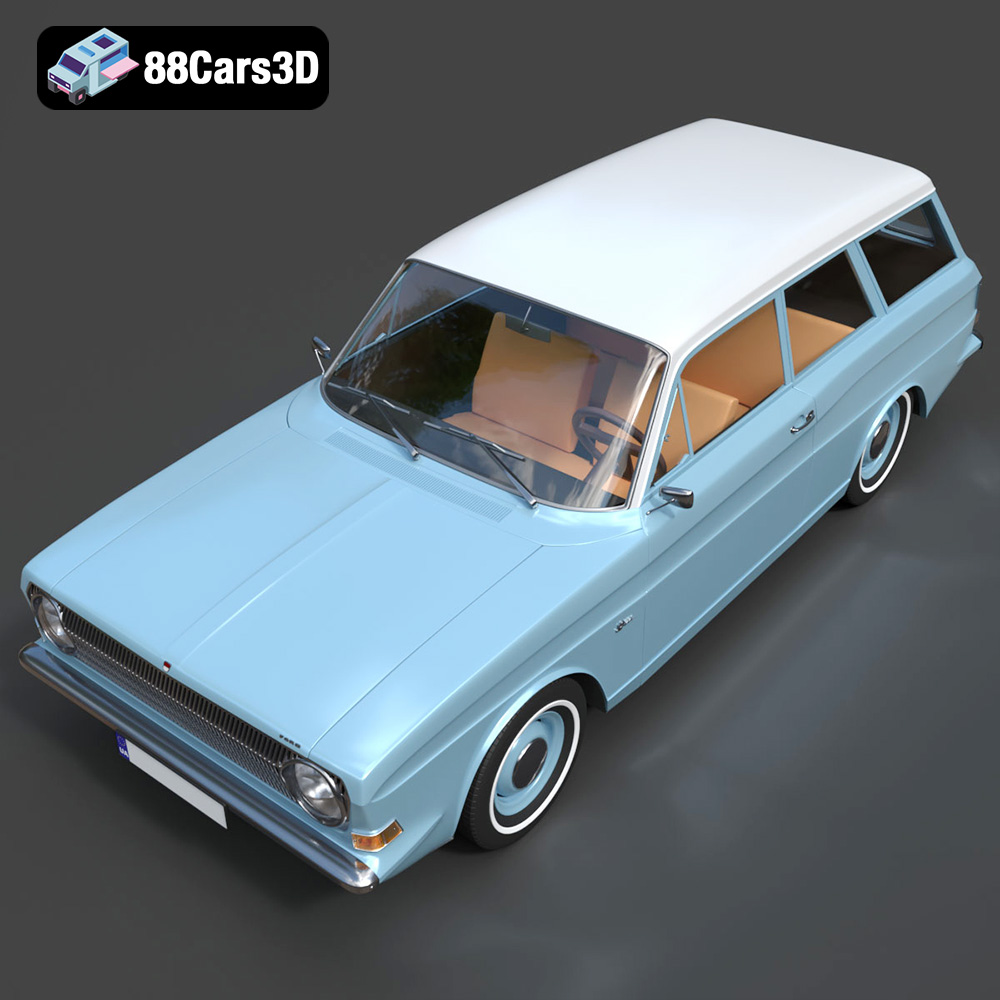
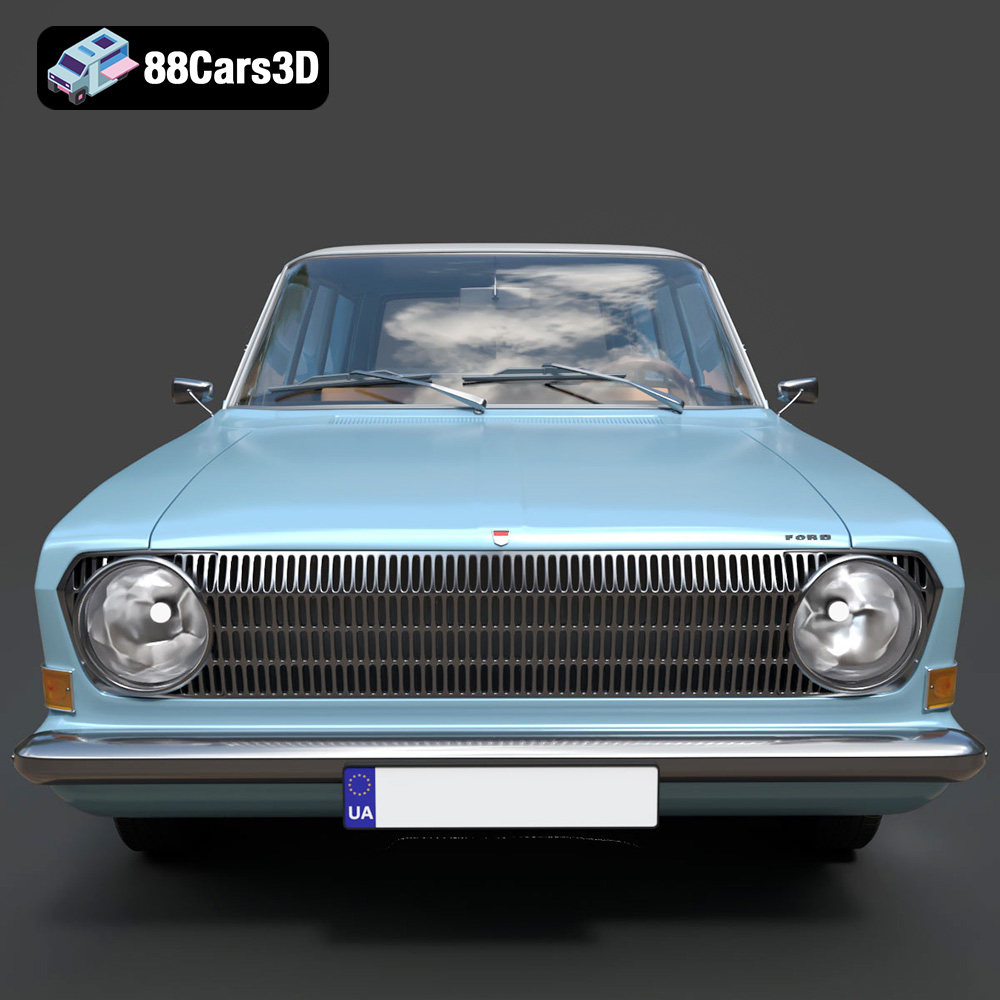
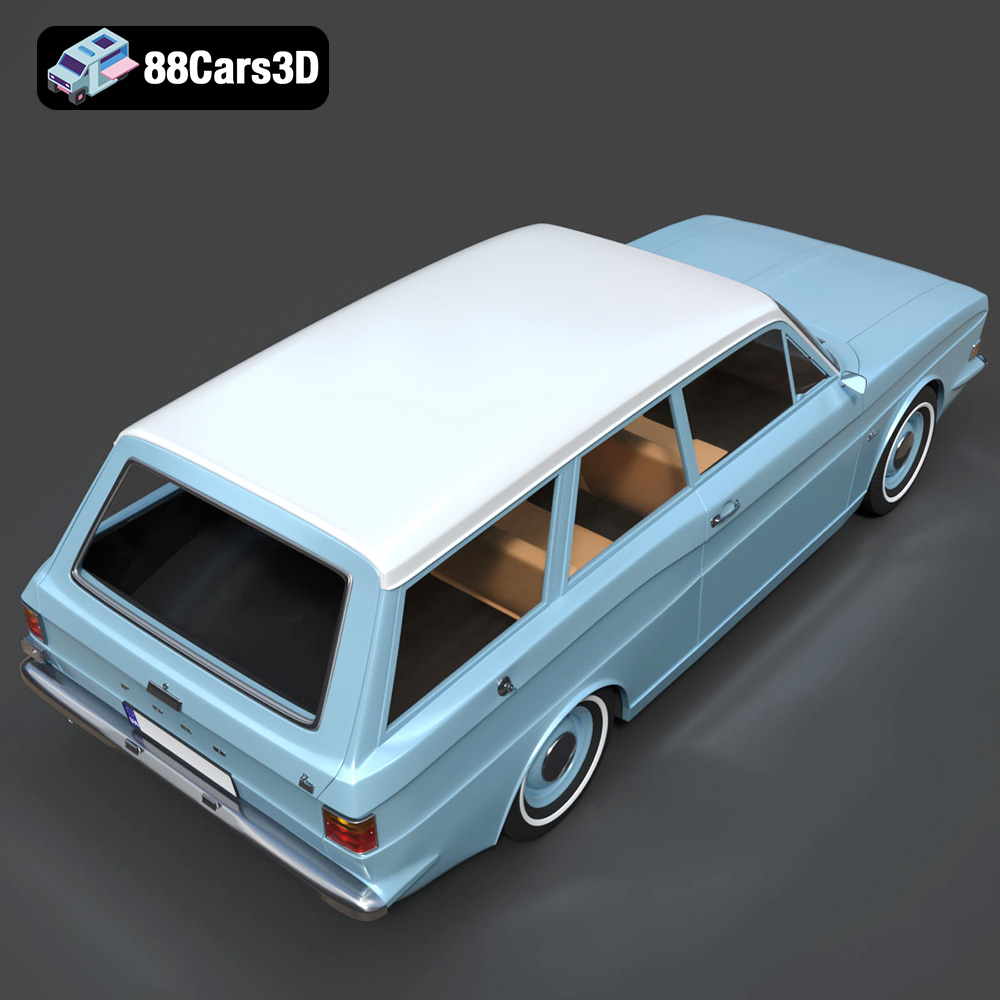
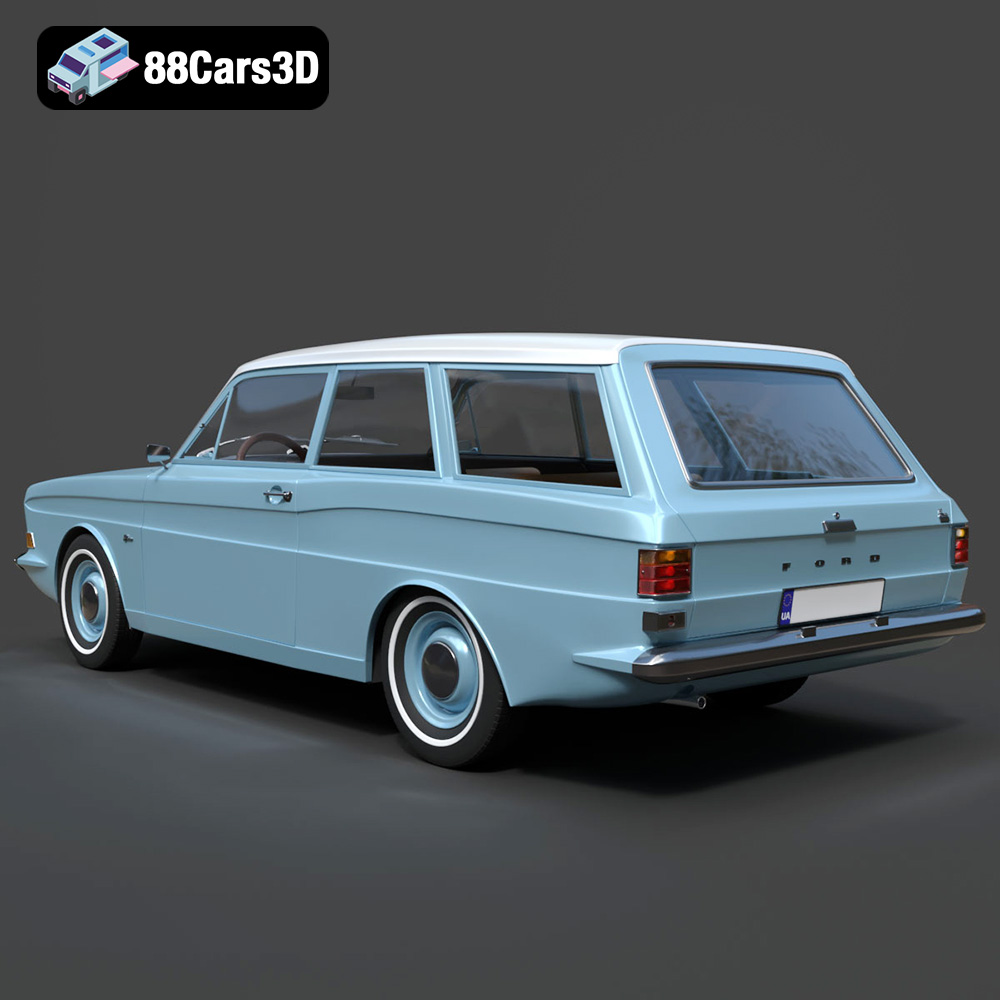
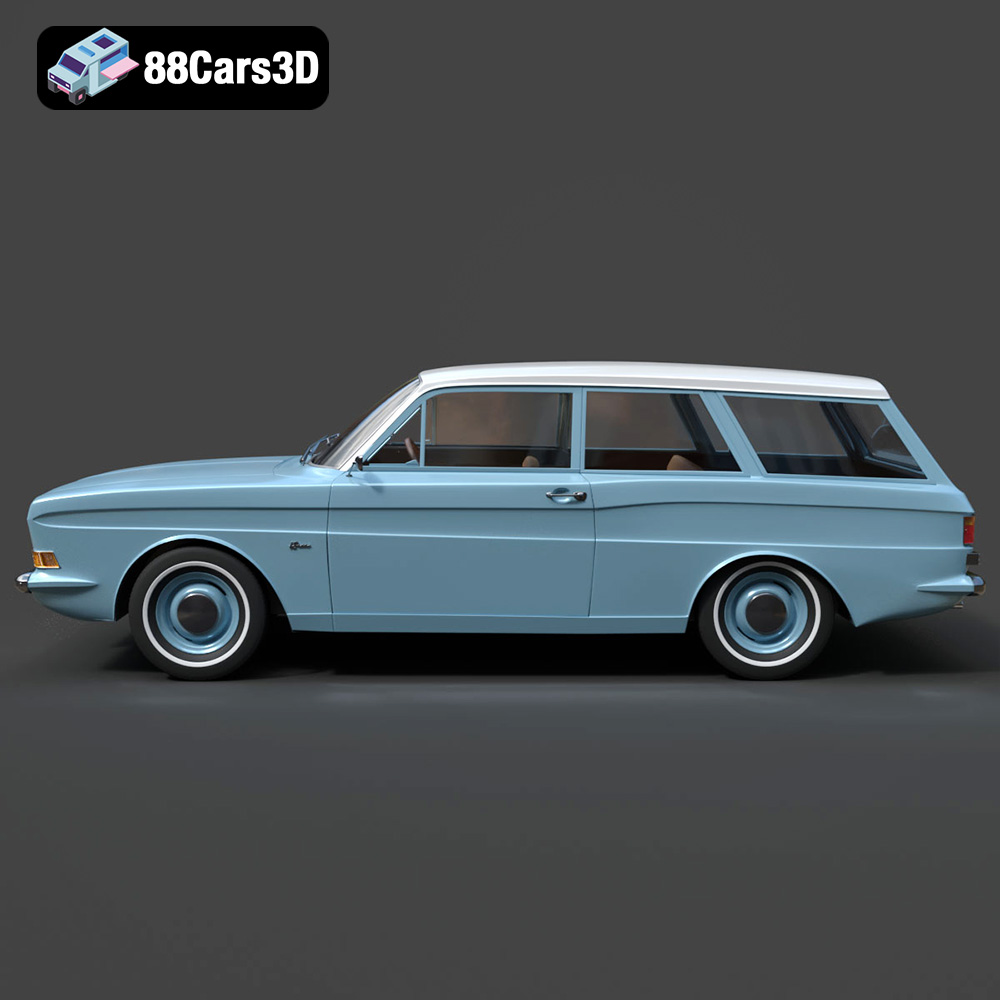
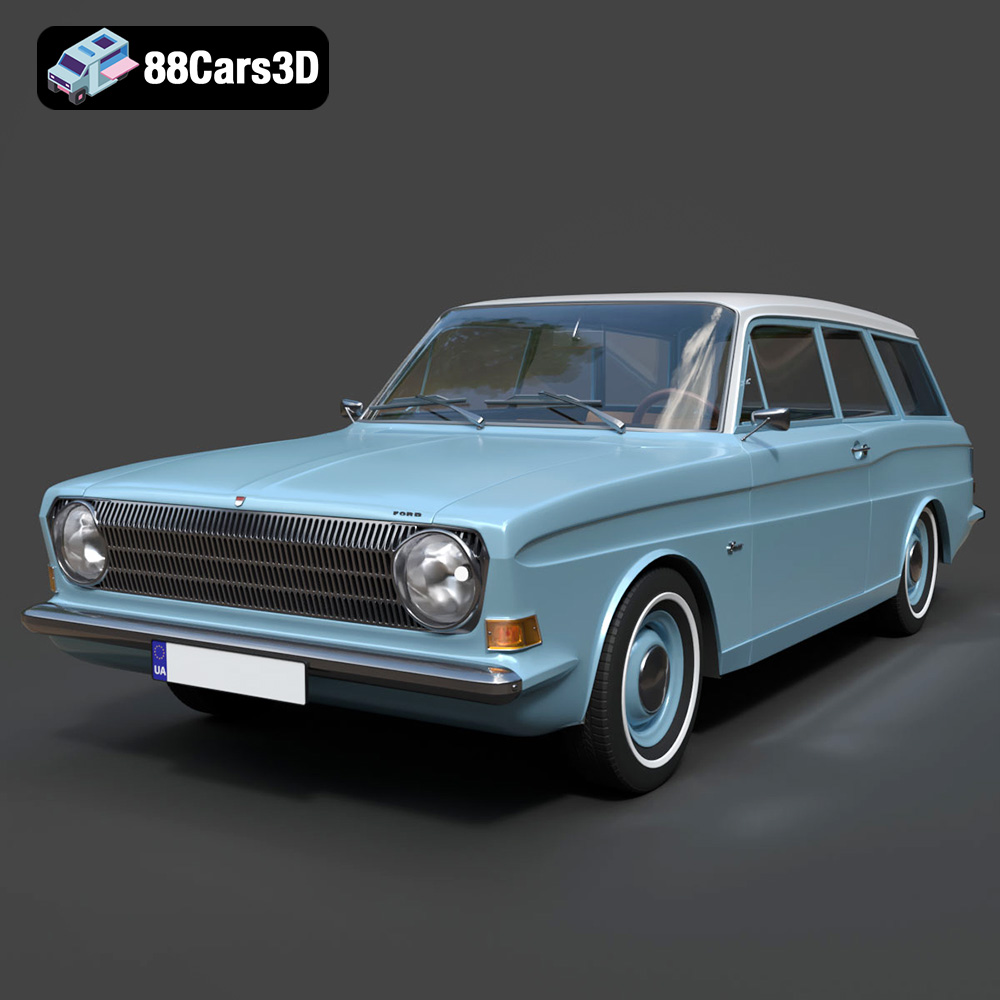
The exterior of the 1967 Ford Taunus P6 Station Wagon is a masterclass in 1960s European automotive design. The 3D model meticulously reproduces its distinctive classic horizontal grille, framed by the iconic round headlight enclosures—a hallmark of its era. Every detail, from the robust chrome bumpers that define its front and rear profiles to the subtle curvature of the elongated estate/wagon roofline, has been captured with precision. The large glass greenhouse, characteristic of family wagons, is accurately represented, offering realistic reflections and light transmission in renders. Furthermore, the model includes period-correct chrome window trim, side mirrors, and authentic vintage wheel designs with classic Ford hubcaps, elevating its visual authenticity. Even the highly detailed taillight clusters and the specific design of the rear tailgate are faithful to the original, allowing for convincing close-up shots and historically accurate scene compositions. This level of detail, combined with real-world scale accuracy based on original blueprints, ensures that the model isn’t just a generic car, but the unmistakable 1967 Ford Taunus P6.
While often unseen in wide shots, the interior of a 3D car model is crucial for truly immersive experiences and detailed visualizations. The Taunus model’s interior is a journey back to the 1960s, featuring a classic, spacious family cabin layout complete with a generous rear cargo area. Artists will appreciate the retro dashboard design with its period-accurate analog dials, which can be individually lit for night scenes or instrument panel close-ups. The thin-rimmed classic steering wheel geometry, a characteristic feature of vintage vehicles, adds to the authenticity. The vintage seating upholstery with its authentic seam detailing speaks volumes about the attention to detail. A minimalist center console and a manual gear shifter complete the period-correct feel. The geometry is optimized for interior close-up rendering, meaning you can open a door, pan the camera inside, and still maintain high visual fidelity without encountering overly simplified or unrealistic elements. This makes the model perfect for virtual tours, classic car gallery showcases, or even narrative-driven animations where interior shots are essential.
The true value of a professional 3D asset lies not just in its visual appeal but also in its underlying technical structure. The Ford Taunus (P6) 12M Station Wagon 1967 3D Model is engineered for maximum versatility and performance across various production pipelines.
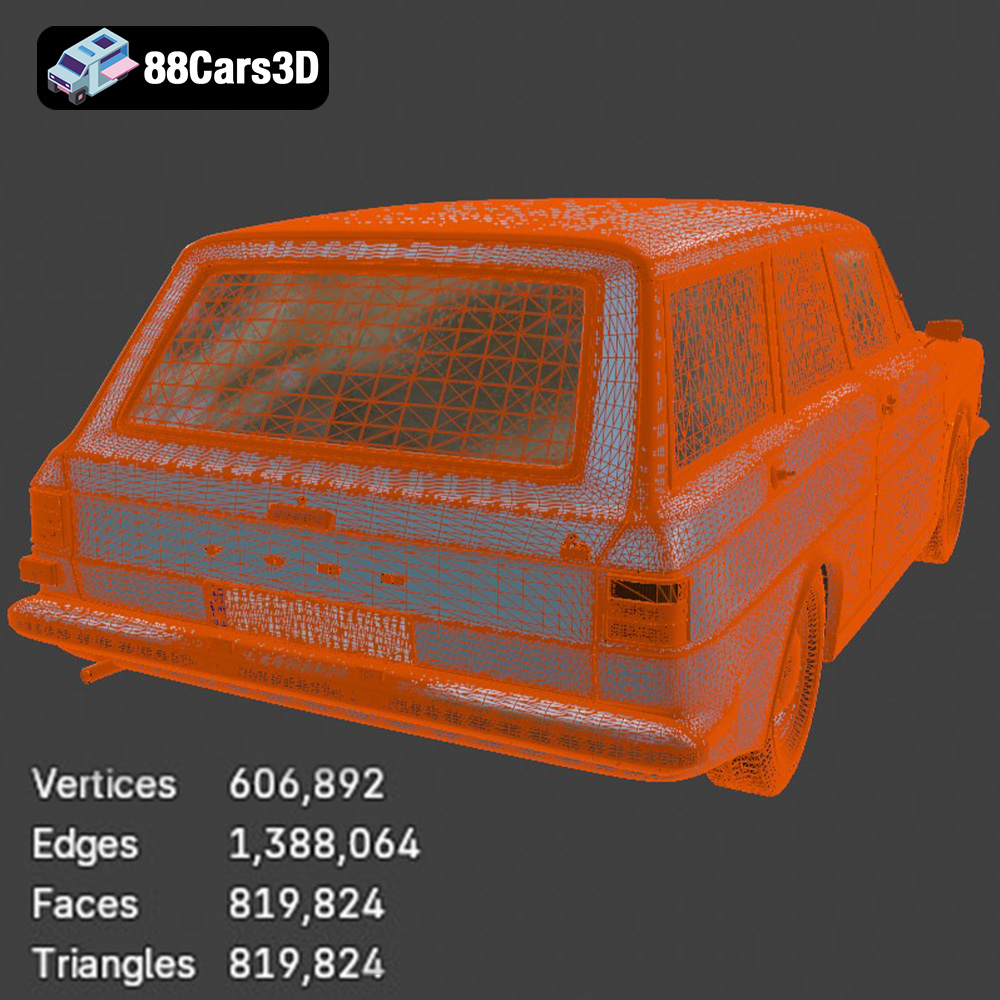
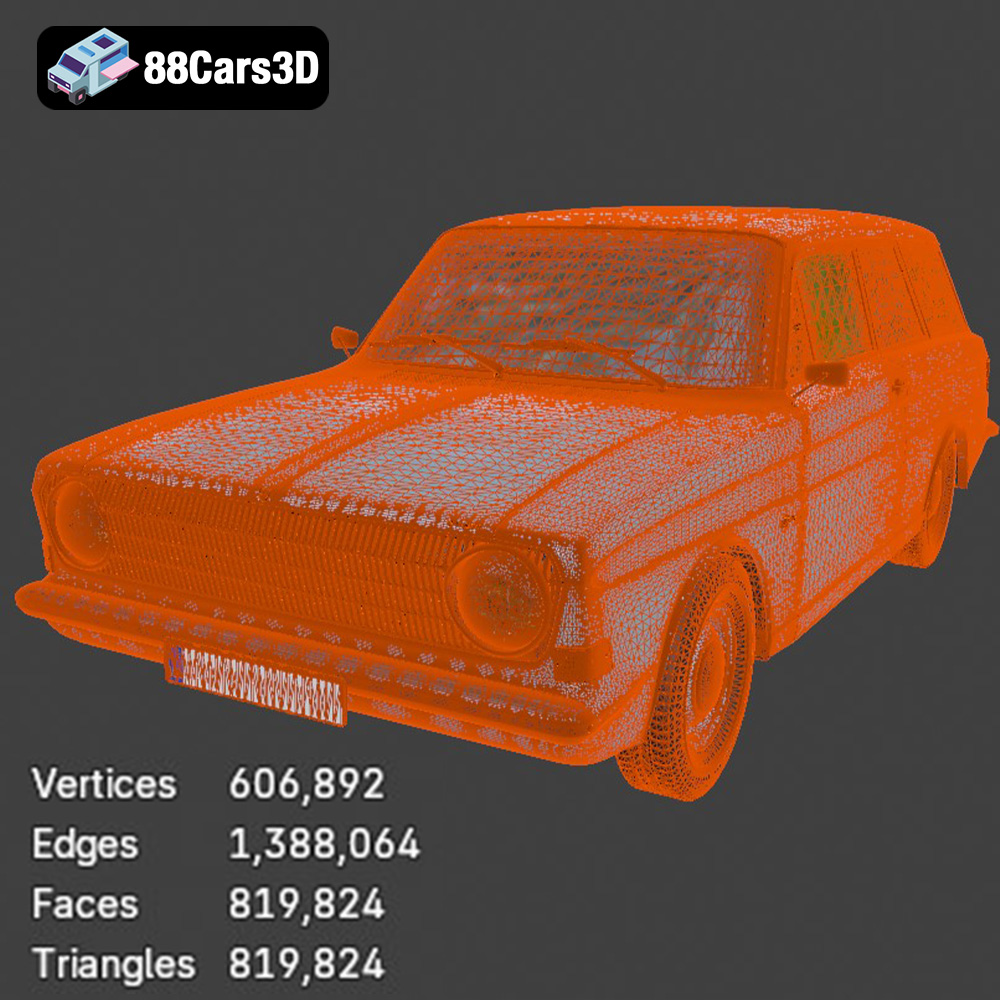
With a staggering 1,185,400 vertices, 2,350,100 edges, 1,215,800 faces/polygons, and 1,215,800 triangles, this is unequivocally a high-polygon model. This dense mesh structure is the foundation for its premium visual fidelity and realism. For applications like high-resolution automotive rendering, detailed cinematics, or archival visualization, a high-poly model eliminates the need for complex normal mapping to fake detail, allowing for smoother reflections, accurate shadows, and crisp edges, even in extreme close-ups. While such polygon counts might require optimization for real-time game engines (often through retopology or decimation), they are absolutely essential for achieving the highest quality static renders and pre-rendered animations where visual integrity is paramount. This robust geometry ensures that the classic lines and intricate details of the Taunus are perfectly preserved, ready for a discerning audience.
For any interactive or animated project, the model’s structure for movement is critical. The Ford Taunus model is designed with “separate wheels, steering components, and doors for animation,” alongside “proper pivot setup for steering, wheel rotation, and tailgate hinges.” This means that animators and game developers can immediately begin to rig and animate the vehicle without tedious setup work. For example, in 3ds Max or Blender, each movable component (wheels, doors, steering wheel, tailgate) has its pivot point correctly positioned, allowing for realistic rotations and translations right out of the box. This saves countless hours of pre-production and ensures that the car behaves physically correctly when animated. Whether it’s driving through a virtual 1960s street scene or simply opening the tailgate to reveal the cargo area, the model is built to move realistically.
The versatility of the Ford Taunus (P6) 12M Station Wagon 1967 3D Model makes it a valuable asset for a wide array of professional applications. Its adaptability allows artists and developers to seamlessly integrate it into their specific creative pipelines.
For filmmakers, advertisers, and architectural visualizers, the ability to create photorealistic images is paramount. The Taunus model is ideal for period-accurate film/TV backgrounds, where its authentic 1960s styling can ground a scene in a specific historical context. Imagine a classic Taunus parked on a cobblestone street in a historical drama, or featured prominently in a vintage brand campaign, evoking a sense of nostalgia.
Workflows often involve importing the model into powerful rendering software such as V-Ray or Corona Renderer within 3ds Max, or Cycles/Eevee in Blender. Artists can then apply advanced material shaders to simulate authentic paint finishes, chrome reflections, and vintage fabric textures. Lighting setups are crucial for classic cars; soft, diffused lighting can highlight the car’s curves and chrome, while a more dramatic, high-contrast setup can create a moody, cinematic feel. The high-poly count ensures that even close-up renders of the grille, headlights, or hubcaps will maintain exceptional detail and realism, making the Ford Taunus (P6) 12M Station Wagon 1967 3D Model an excellent choice for classic automotive showcases and virtual museums.
While the high-poly nature of the Ford Taunus model is perfect for rendering, game development often demands optimized assets for real-time performance. This necessitates a discussion of “retopology/decimation for real-time performance.” Developers can use tools within Blender, 3ds Max, or dedicated software like ZBrush to create a lower-polygon version (a ‘game mesh’) while baking the high-detail information onto normal maps, which are then applied to the optimized mesh. This process ensures the visual fidelity is maintained without taxing the game engine.
Once optimized, the model can be imported into game engines like Unreal Engine or Unity via its `.fbx` or `.unreal` formats. Here, materials are set up using PBR (Physically Based Rendering) workflows, and the separate components (wheels, doors) can be rigged and animated using the engine’s animation tools. For AR/VR applications, the `.glb` format is particularly useful. Imagine an immersive virtual classic car museum where users can walk around the Taunus, inspect its interior, or even experience it in augmented reality overlaid onto a real-world environment. This opens up new avenues for interactive retro vehicle experiences, offering unique engagement for enthusiasts and educational platforms alike.
Beyond pixels and polygons, the Ford Taunus (P6) 12M Station Wagon 1967 3D Model bridges the gap to the physical world through 3D printing. The inclusion of a specifically prepared `.stl` format makes this model convertible for display-scale classic model car hobbyists.
The provided 3D print settings are critical for success:
This comprehensive guidance ensures that whether you’re using an FDM or resin printer, you can bring a tangible piece of automotive history to your desk, thanks to the robust design of 88cars3d.com’s assets.
A high-quality 3D model serves as an excellent starting point, but its true power often lies in the flexibility it offers for customization. The Ford Taunus (P6) 12M Station Wagon 1967 3D Model provides ample opportunities for artists to tailor its appearance and integrate it seamlessly into unique creative visions.
The ability to customize the vehicle’s aesthetics is key to fitting it into diverse project contexts. Artists can easily “change exterior color” to typical 1960s palettes such as Pastel Blue, Seafoam Green, Classic White, or Muted Mustard. These color choices are essential for period authenticity and setting the right mood. Furthermore, options to “modify wheel design” (e.g., swapping between steel wheels and more ornate chrome hubcaps) can subtly alter the car’s perceived trim level or age. Internally, adjustments to “interior materials” from a retro vinyl representation to a fabric texture can further refine the vintage feel. These customization options allow the Taunus to appear as a well-maintained family car, a slightly weathered daily driver, or even a meticulously restored showpiece, depending on the project’s narrative.
Beyond surface aesthetics, the model’s structural preparation for animation extends to scene interactivity. The option to “configure tailgate or doors open/closed presentation” allows for dynamic storytelling. Imagine a scene where the Taunus is being unloaded at a picnic, or a character is stepping out, with the doors ajar. These details add realism and narrative depth. Additionally, the model is adaptable for various “lighting for vintage photography studio setups or classic street environments.” Whether you need the soft, even light of a professional studio shoot to highlight its form, or the dramatic shadows and reflections of a sun-drenched European street, the model’s well-structured geometry and material separation make it responsive to complex lighting scenarios. This creative freedom ensures that the Ford Taunus (P6) 12M Station Wagon 1967 3D Model can be a central element in a wide range of visually compelling scenes.
The 1967 Ford Taunus (P6) 12M Station Wagon is more than just a classic car; it’s a piece of automotive history, a symbol of practicality, and a design icon of its era. Bringing such a vehicle to life in the digital realm requires unparalleled technical skill and a profound appreciation for detail. The Ford Taunus (P6) 12M Station Wagon 1967 3D Model delivers precisely that, offering a meticulously crafted, high-fidelity asset built for professional applications.
From its stunning exterior accuracy—complete with distinctive grille, chrome accents, and period-correct hubcaps—to its faithfully recreated 1960s interior, every aspect of this model speaks to a commitment to authenticity. Technically robust, with a high-polygon count ideal for breathtaking renders and proper pivot setups for seamless animation, it stands ready for integration into the most demanding projects. Its versatility is further highlighted by its comprehensive range of file formats, ensuring compatibility with major 3D software like 3ds Max and Blender, integration into game engines like Unreal, optimization for AR/VR, and even the unique capability for 3D printing in `.stl`.
Whether your goal is to render a cinematic masterpiece, populate an open-world game, create an immersive virtual museum, or bring a tangible classic model to life, this 3D model provides the foundational excellence you need. It embodies the blend of technical precision and artistic vision that empowers creators. Explore this exquisite piece of digital automotive history and elevate your projects. Discover the Ford Taunus (P6) 12M Station Wagon 1967 3D Model and a curated selection of other high-quality 3D car models at 88cars3d.com, where fidelity meets functionality.
The Ford Taunus (P6) 12M Station Wagon 1967 3D Model is a high-detail digital recreation of the classic European family estate, also known as the “Turnier.” Designed during the golden era of 1960s automotive manufacturing, the Taunus P6 combines a charming, boxy silhouette with practical station wagon proportions, chrome accents, and distinctive vintage Ford styling. This 3D model accurately represents the retro exterior styling, including the iconic round headlights, wide horizontal front grille, classic chrome bumpers, elongated estate roofline, and period-correct hubcaps. Built with dense, high-polygon topology for premium visual fidelity and real-world scale accuracy, it is ideal for close-up rendering, period-accurate historical visualization, animation, game development, and AR/VR classic car showcases. Perfect for retro street scenes, 1960s cinematic productions, classic automotive galleries, and vintage vehicle collections.
$49.99
.automotive
.blend
.fbx
.obj
.rendering
.stl
1967-classic
3d printing
car-3d-model
estate-car
ford-taunus
game asset
german-ford
high poly
p6-12m
retro-auto
station-wagon
turnier
vintage-car