Get 50% OFF All Premium 3D & STL Models!

In the dynamic world of 3D visualization, the demand for hyper-realistic and meticulously crafted automotive assets continues to soar. From blockbuster film sequences and immersive game environments to cutting-edge product configurators and detailed engineering simulations, a high-quality 3D car model is the foundation for success. It’s not just about aesthetic appeal; it’s about technical precision, optimized geometry, and seamless integration into diverse professional pipelines.
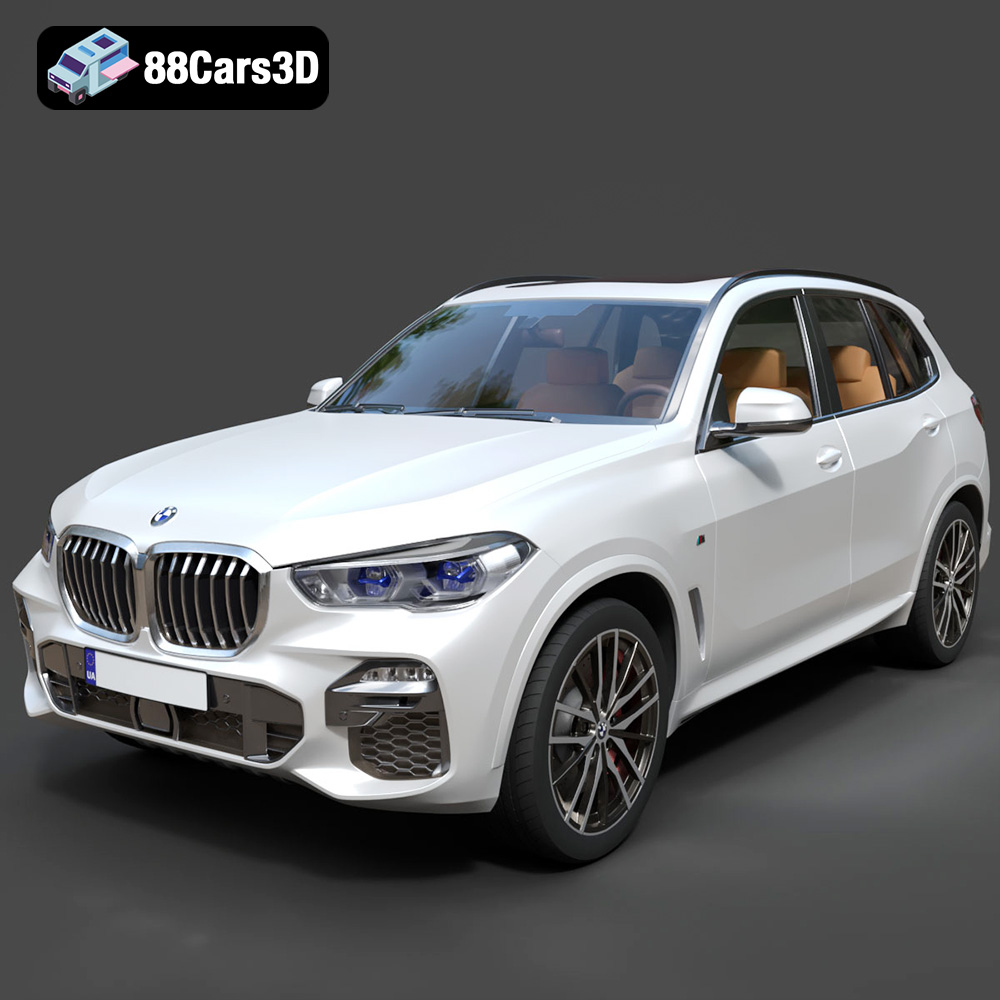
The BMW X5 (G05) M Sport 2019 stands as a paragon of modern luxury and performance in the SUV segment. Its aggressive M Sport styling, commanding presence, and sophisticated interior make it a prime candidate for digital recreation. For 3D artists, game developers, architects, and product designers, bringing such an iconic vehicle to life in the digital realm requires an asset that truly captures its essence while offering unparalleled flexibility. This is where a professional-grade model like the BMW X5 (G05) M Sport 2019 3D Model available on 88cars3d.com shines.
This comprehensive article will explore the intricate details and technical advantages of working with a premium 3D car model, using the BMW X5 (G05) M Sport 2019 as our exemplary subject. We’ll delve into the critical aspects of file formats, discuss professional workflows in popular software like 3ds Max and Blender, examine its utility in real-time environments such as Unreal Engine, and even explore the exciting possibilities of 3D printing. Our goal is to illustrate how a single, well-engineered 3D asset can serve as a versatile cornerstone for a multitude of creative and technical projects.
The choice of a 3D model file format is far more than a technicality; it’s a strategic decision that impacts compatibility, feature retention, performance, and the ultimate utility of your asset. The BMW X5 (G05) M Sport 2019 3D Model comes equipped with a comprehensive suite of formats, each serving distinct purposes in various professional pipelines. Understanding these formats is crucial for optimizing your workflow and ensuring your investment delivers maximum value.
The .blend format is the native file type for Blender, an increasingly popular open-source 3D creation suite. When you acquire a .blend file, you’re getting a complete, fully editable Blender scene. This typically includes the mesh data, materials, textures, lighting, camera setups, and often animation data. For users deeply integrated into the Blender ecosystem, a .blend file offers the most flexibility for customization, material tweaking using Cycles or Eevee renderers, and further development within a familiar environment. Its advantages lie in its comprehensive nature and full interoperability within Blender, making it ideal for artists who wish to dissect, modify, and render the model directly.
The .fbx (Filmbox) format developed by Autodesk, is arguably the most widely adopted 3D exchange format in the industry. It’s designed to facilitate data exchange between different 3D software applications and game engines like Unreal Engine and Unity. An FBX file can store not only mesh geometry but also materials, textures, rigging, skinning, and animation data. This makes it incredibly versatile for transferring complex animated assets. For the BMW X5 (G05) M Sport model, the .fbx format ensures that the detailed geometry, proper pivot setups for wheels and steering, and material assignments translate cleanly into your preferred rendering or real-time environment, making it a go-to for production pipelines where multiple software packages are used.
The .obj (Wavefront OBJ) format is a universal, open standard that has been around for decades. While it typically stores only geometric data (vertices, normals, texture coordinates, and faces), it’s highly compatible across virtually all 3D software. Materials and textures are usually referenced in a separate .mtl (material) file. The .obj format is excellent for reliable geometry transfer, especially when you need a clean mesh without complex animation or rigging data. For the BMW X5, it provides a robust, universally readable mesh that can be imported into any 3D package for new material assignments, scene integration, or architectural visualization projects where geometry fidelity is paramount.
The .glb (GL Transmission Format Binary) format is a relatively newer standard specifically optimized for efficient transmission and loading of 3D scenes and models in web applications, AR (Augmented Reality), and VR (Virtual Reality) experiences. It’s a self-contained binary file that includes geometry, materials, textures, animations, and other scene data, making it very portable and easy to implement. For showcasing the BMW X5 in an interactive web viewer, a virtual showroom, or an AR car configurator on a mobile device, .glb is the format of choice due to its compact size and performance-driven design.
The .stl (Stereolithography) format is the ubiquitous standard for 3D printing. It represents a 3D model as a series of connected triangles, defining only the surface geometry without color or texture information. Crucially, for a model to be 3D printable, its geometry must be “manifold” – meaning it has a watertight, closed surface with no holes or intersecting polygons. The BMW X5 (G05) M Sport model provided in .stl format is specifically prepared for physical fabrication, allowing users to create stunning scale models or prototypes of the vehicle. This format emphasizes precision in mesh integrity for reliable output on FDM, SLA, or other 3D printers.
The .ply (Polygon File Format or Stanford Triangle Format) is another format for storing 3D data, often used in scientific and engineering applications, particularly for scanned data. It can store not only geometry but also color, transparency, normals, and other properties associated with vertices or faces. While less common for everyday artistic exchange than FBX or OBJ, its strength lies in precision and the ability to capture complex data, making it suitable for reverse engineering, CAD integration, or detailed analysis of the BMW X5’s form.
The .unreal format represents an asset specifically prepared or exported for direct use within the Unreal Engine. While typically assets are imported via .fbx, having an .unreal file often implies that the asset has already been optimized, configured with proper materials, collision meshes, LODs (Levels of Detail), and potentially Blueprints for immediate implementation in an Unreal Engine project. This significantly accelerates workflow for game developers and real-time visualization specialists looking to integrate the BMW X5 directly into their interactive environments without additional setup time.
Finally, the .max format is the native file type for Autodesk 3ds Max, a powerful 3D modeling, animation, and rendering software widely used in architectural visualization, automotive design, and media & entertainment. Similar to .blend, a .max file contains the complete scene data, including geometry, modifiers, materials, lighting, cameras, and animation. For professionals working within 3ds Max, this format provides full creative control over every aspect of the BMW X5 model, enabling detailed animation sequences, advanced rendering setups, and deep customization using Max’s extensive toolset.
The availability of such a diverse range of formats for the BMW X5 (G05) M Sport 2019 3D Model from 88cars3d.com ensures that regardless of your specific project requirements or software ecosystem, you have the right tool for the job.
Recreating a modern vehicle like the BMW X5 (G05) M Sport in 3D is an exacting process that demands an obsessive attention to detail. This particular model stands out due to its commitment to accuracy, from its exterior curves to its interior craftsmanship. The team at 88cars3d.com understands that true realism is built upon a foundation of precise measurements and expert modeling.
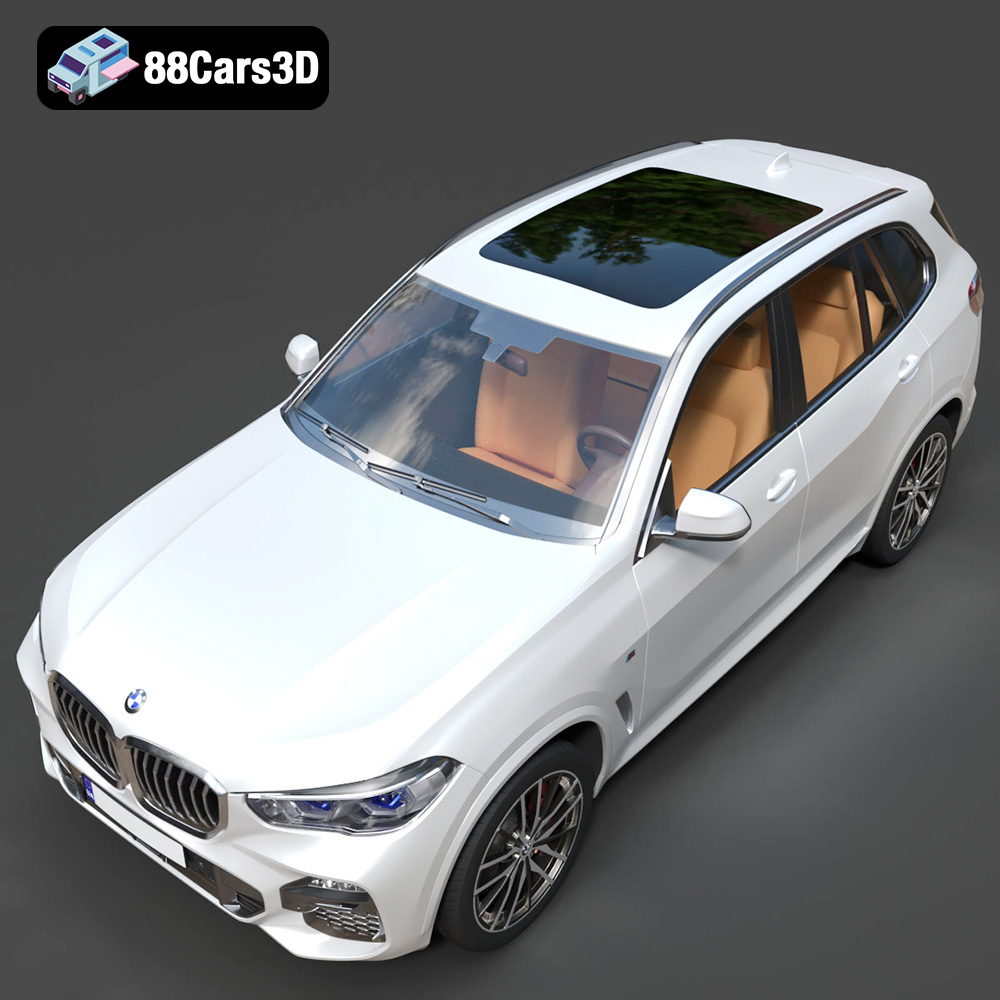
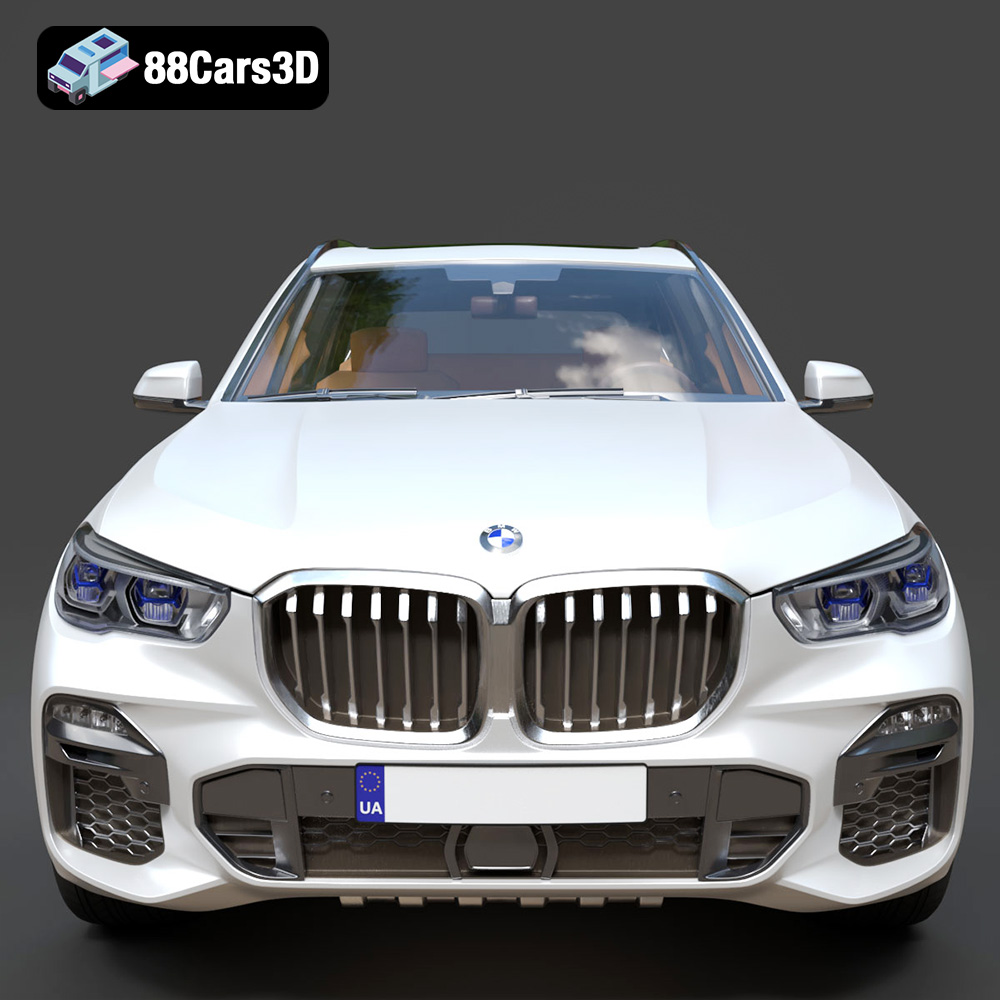
The 2019 G05 X5 is characterized by its bold road presence, and the 3D model faithfully reproduces every element that contributes to this iconic look. The enlarged BMW kidney grille, a signature design element, is accurately modeled with its intricate vertical slats. The sharp adaptive LED headlights and taillights feature meticulous detailing, ready to be illuminated for striking renders. Crucially, the M Sport package’s aggressive front and rear bumper styling, along with the sculpted side air intakes, are precisely translated into the digital form, capturing the dynamic performance aesthetic.
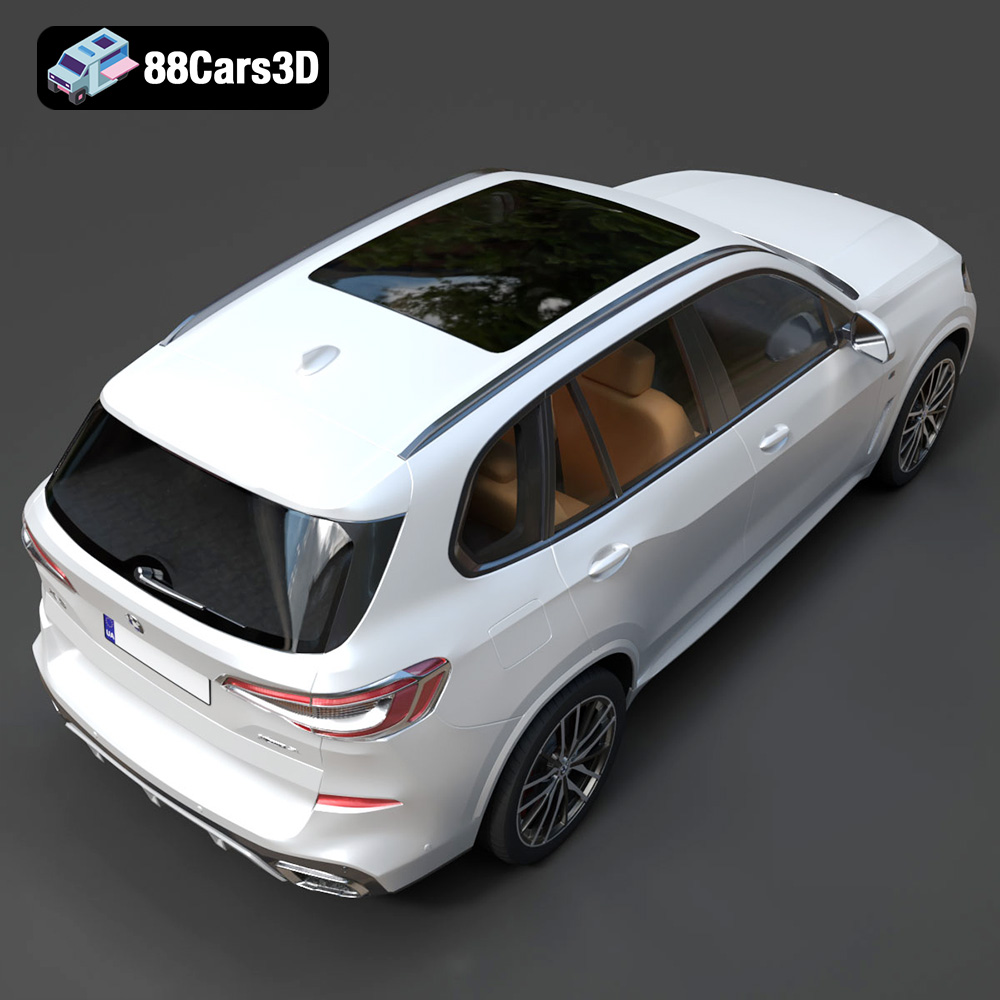
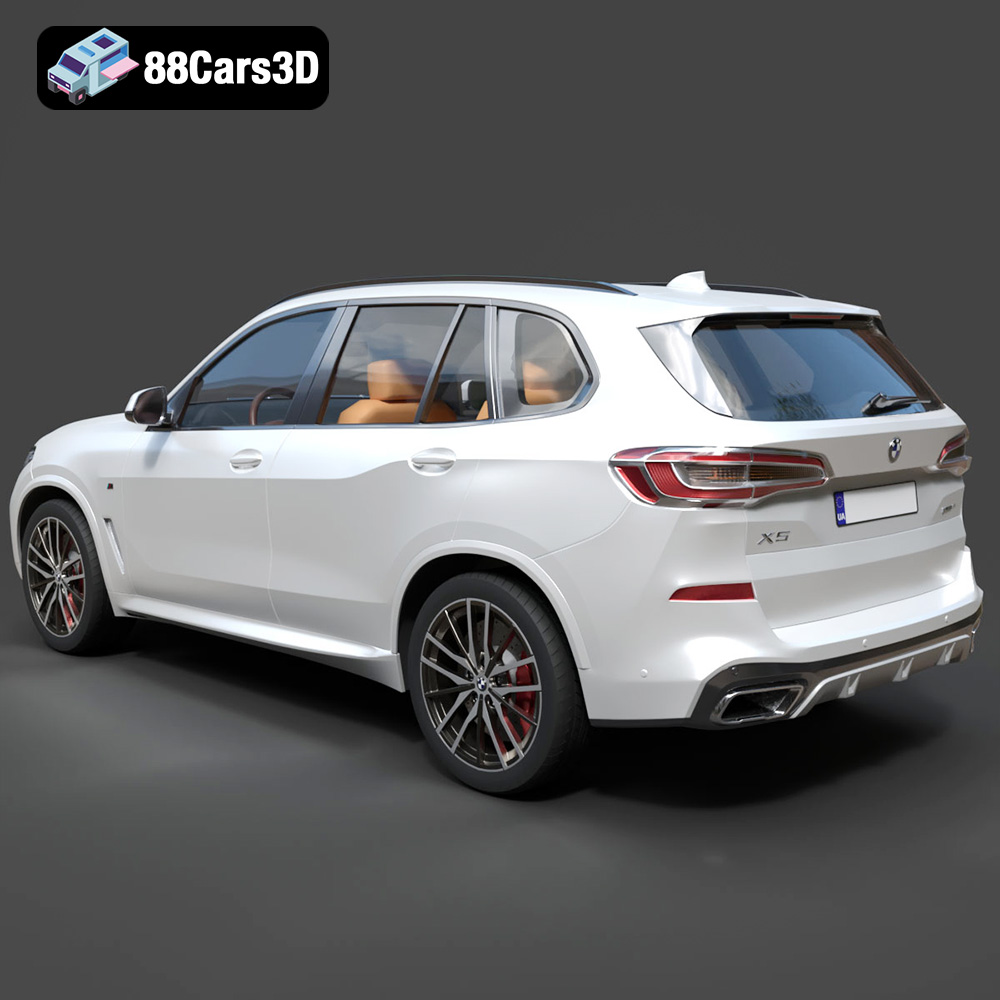
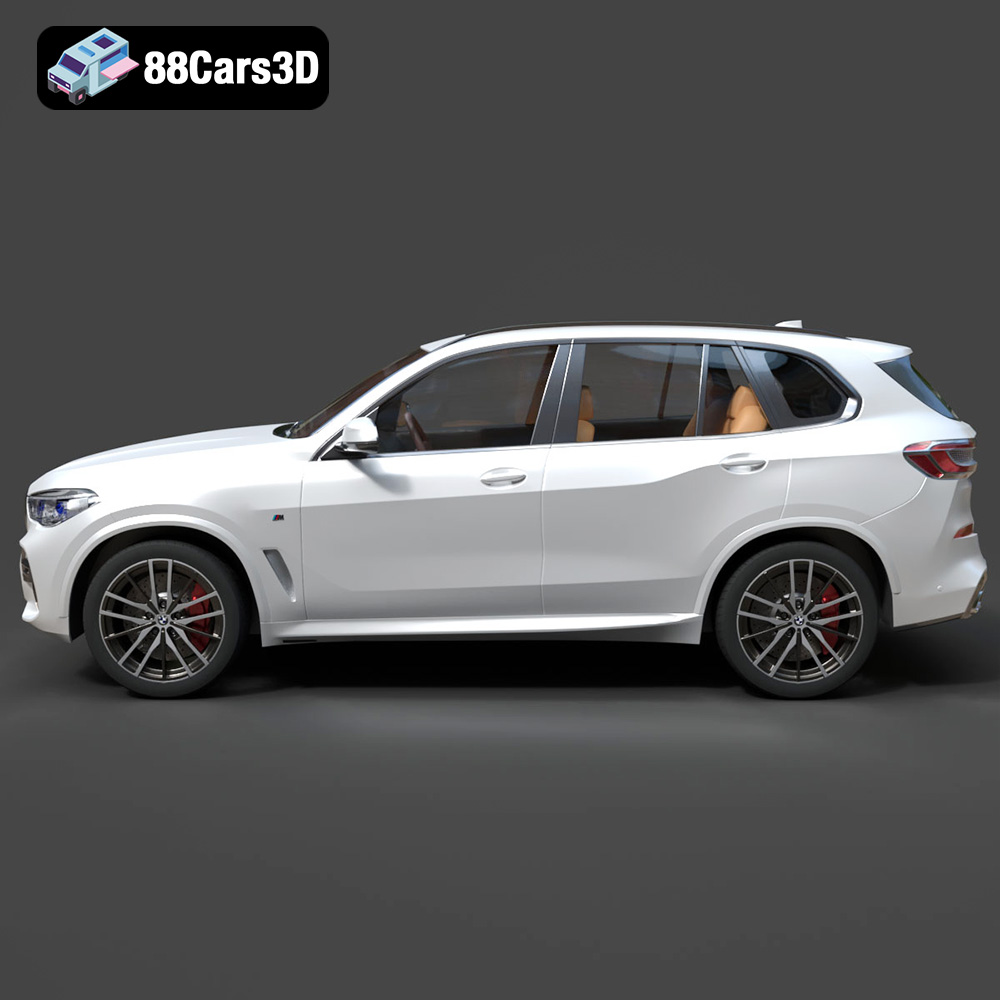
The model’s accurate body proportions, sculpted hood lines, and character lines running along the sides ensure that the vehicle looks correct from every angle, not just a few hero shots. Even subtle details like roof rails and window trim are present, adding to the overall authenticity. The inclusion of large multi-spoke M Sport alloy wheels, with separate components for animation, speaks to the model’s readiness for dynamic scenes and close-up renders where tire and wheel details are paramount.
The interior of a luxury SUV like the X5 is just as important as its exterior, and this 3D model does not disappoint. It features a premium dashboard with an accurately represented digital instrument cluster, giving artists a high-fidelity environment to work with. The multifunction M Sport steering wheel, center console with infotainment display, and luxury seat geometry, complete with stitching detail, all contribute to a rich and convincing cabin. Door panel trim and metallic accent detailing further enhance the feeling of opulence.
Beyond the visual fidelity, the interior geometry is optimized for real-time engines and high-quality renders. This means that while it maintains a level of detail suitable for close-up shots, its polygon count and structure are managed to ensure efficient rendering performance. This balance is critical for projects ranging from cinematic productions to interactive AR/VR experiences, where smooth performance is key.
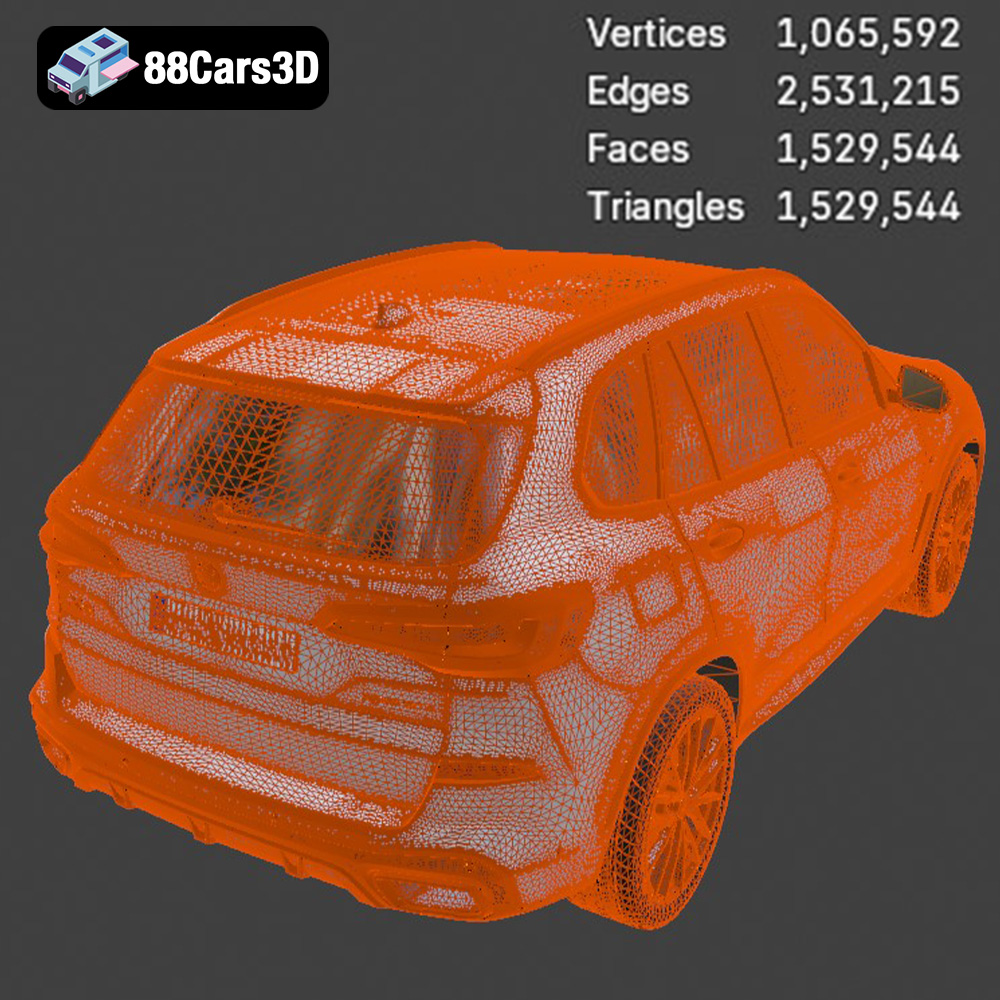
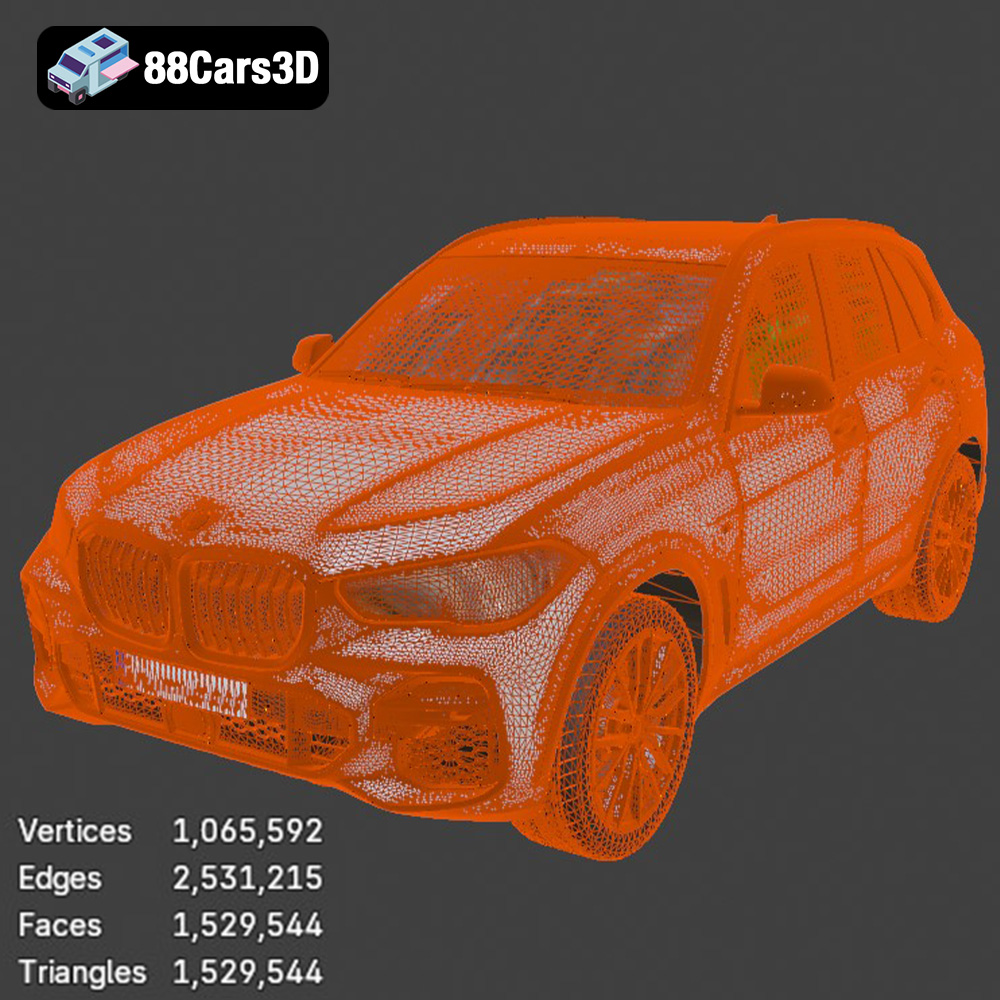
A truly professional 3D model distinguishes itself through its underlying technical quality. The BMW X5 (G05) M Sport 2019 3D Model boasts a clean and well-organized mesh structure, typically composed of quad-based polygons where appropriate. This clean topology is vital for smooth subdivisions, distortion-free deformations during animation, and ease of modification. It also minimizes rendering artifacts and ensures that lighting reacts realistically across the surfaces.
The model is built with real-world scale accuracy, which is non-negotiable for architectural visualization, engineering simulations, and integrating the car seamlessly into photographed or scanned environments. Furthermore, proper pivot setups for steering and wheel rotation are implemented, a seemingly minor detail that saves countless hours in animation workflows. Efficient and clean UV mapping is also implied, ensuring that textures can be applied without stretching or seams, and that materials appear consistent across different rendering engines. This attention to technical advantages ensures that the model isn’t just a pretty picture, but a robust and reliable asset for any professional project.
The real value of a premium 3D car model, such as the BMW X5 (G05) M Sport 2019, lies in its versatility and ease of integration into established professional workflows. Whether your goal is a photorealistic still image, a dynamic animation, an interactive game asset, or an augmented reality experience, this model is engineered to fit seamlessly into various pipelines.
For automotive advertising agencies, architectural visualization studios, and product designers, photorealistic rendering is paramount. With the .max and .blend formats, artists gain full creative control within industry-standard software. In 3ds Max, a typical workflow might involve importing the .max file, setting up V-Ray or Corona Renderer, fine-tuning PBR (Physically Based Rendering) materials using the clean UVs, adding studio-grade lighting (HDRI or area lights), and positioning cameras for dramatic angles. The “proper pivot setup for steering and wheel rotation” is a huge time-saver for creating driving animations or turntable renders.
Case Study: Luxury Car Advertisement. Imagine a scenario where a marketing agency needs to create a series of high-resolution images and a short animation for the new BMW X5. By starting with this pre-modeled, accurately scaled, and properly pivoted asset from 88cars3d.com, the artists can jump straight into lighting and material development. They can quickly configure the car in various colors, swap out wheel designs using the customization options, and place it in different virtual environments – from sleek urban streetscapes to sprawling mountain roads. This significantly reduces production time and costs compared to modeling from scratch, allowing more budget for creative iteration and rendering farm time.
The world of gaming and simulation demands not only visual quality but also optimal performance. The BMW X5 (G05) M Sport 2019 3D Model, with its “optimized geometry for real-time engines,” is an ideal game asset. Using the .fbx or .unreal formats, developers can import the model directly into Unreal Engine or Unity. The “clean and well-organized mesh structure” facilitates the creation of LODs (Levels of Detail) to ensure smooth framerates even in complex open-world environments. Proper material setup and collision meshes are often integral to such assets, making them drop-in ready for driving simulations, open-world racing games, or even urban role-playing titles.
Case Study: Open-World Driving Simulator. A game studio developing a next-generation driving simulator requires a fleet of realistic vehicles. The BMW X5 model can be quickly integrated. Its separate wheels and steering components mean developers can easily rig it for advanced physics-based driving mechanics. The optimized polygon flow ensures it performs well without significant impact on the game’s framerate, allowing for a rich, detailed driving experience across diverse terrains. For professional training simulators, where accuracy is paramount, this model’s real-world scale and detailed interior provide an authentic training environment.
Augmented Reality (AR) and Virtual Reality (VR) are transforming how we interact with products, offering immersive virtual showrooms and interactive experiences. The .glb format is particularly beneficial here, designed for compact size and efficient rendering in web-based or mobile XR applications. The BMW X5 model is perfect for creating virtual test drives or product configurators where users can explore the vehicle’s features in a fully immersive 3D space.
Case Study: Virtual Car Showroom. An automotive manufacturer wants to launch an interactive AR experience for potential buyers to explore the new X5 from their homes. By leveraging the .glb version of this 3D model, they can create a mobile AR app where users can virtually “place” the car in their driveway, walk around it, change its color, open doors, and even peek inside the meticulously detailed interior. The optimized geometry ensures smooth performance on various mobile devices, delivering a compelling and informative customer engagement tool.
The journey of a 3D model doesn’t always end on a screen. For enthusiasts, collectors, and prototyping professionals, the ability to transform a digital asset into a physical object through 3D printing opens up exciting new avenues. The BMW X5 (G05) M Sport 2019 3D Model is also provided in .stl format, specifically engineered for this purpose.
When transitioning from a digital render to a physical print, the technical requirements shift significantly. The .stl format is the industry standard for 3D printing precisely because it defines the surface geometry in a way that 3D printers can understand. A key aspect for successful printing is “manifold” geometry – ensuring the model has no holes, gaps, or intersecting surfaces that would confuse the printer. The BMW X5’s .stl file is prepared with this in mind, offering a robust, watertight mesh ready for slicing.
The .ply format, while less common for direct printing, can also be used in certain advanced scenarios or for models requiring precise data capture, often for highly technical applications or custom fabrication processes where fine mesh detail is important.
The product description provides excellent guidelines for 3D printing the BMW X5 (G05) M Sport 2019. Recommended scales (1:32 / 1:24 / 1:18 / 1:14) cater to different display needs, from tabletop miniatures to larger, more detailed collectibles. For optimal results, especially at smaller scales, resin printers (SLA/DLP) are often recommended due to their ability to reproduce fine details like sharp edges, small vents, and intricate headlight designs with superior accuracy compared to FDM (Fused Deposition Modeling) printers.
Key print settings like layer height (0.08–0.16 mm for FDM, even finer for resin), wall thickness (1.2–2.0 mm), and infill (15–25%) are crucial for structural integrity and surface finish. Supports are almost always required for complex automotive models due to overhangs (mirrors, bumper overhangs, underbody details, wheel arches). The suggested print orientation – body angled for smooth surface finish and wheels printed separately – is a tried-and-true method to minimize visible layer lines and simplify support removal.
Post-processing is where the model truly comes to life. Sanding removes layer lines and imperfections, primer creates a uniform base, and a careful application of gloss or metallic paint finishes brings the X5 to its showroom glory. Optional M Sport decals can add the final touch, transforming a raw 3D print into a stunning, personalized automotive collectible or prototype.
A high-quality 3D asset like the BMW X5 (G05) M Sport 2019 from 88cars3d.com isn’t just a static model; it’s a dynamic foundation for endless creative possibilities. Its inherent flexibility and detailed construction allow for extensive customization, extending its utility across numerous projects and ensuring a long-term return on your investment.
The base model provides a solid canvas for customization. Artists can easily change the body color and trim accents to match specific brand guidelines, client requests, or personal aesthetic preferences. Want to explore a stealthy look? Add blacked-out styling packages. Prefer a classic luxury feel? Configure chrome trim. The ability to modify wheel designs and brake caliper colors further enhances personalization, allowing designers to experiment with different aesthetics or even integrate custom aftermarket parts.
Beyond visual tweaks, functional modifications are also straightforward. Adjusting the ride height or stance can dramatically alter the vehicle’s character, transforming it from a standard luxury SUV to a lowered, aggressive performance machine or a lifted off-road concept. The model’s readiness for animation means lighting configurations can be set up for city, highway, or showroom scenes, offering dynamic versatility for video productions and interactive presentations.
This level of adaptability means the same base model can be repurposed for multiple campaigns or projects, each time presenting a fresh, unique iteration of the BMW X5 M Sport without the need for extensive re-modeling. This saves valuable time and resources, allowing creative teams to focus on artistic direction rather than foundational asset creation.
In the fast-paced world of 3D, efficiency is key. Starting with a robust, well-engineered 3D car model from 88cars3d.com provides an invaluable head start. It eliminates the time-consuming and often complex process of modeling a vehicle from scratch, allowing artists and developers to immediately dive into the more creative and value-added aspects of their projects. This could involve developing complex material shaders, crafting intricate environmental storytelling, or implementing advanced physics and interactivity.
The technical advantages, such as clean mesh topology, real-world scale, and proper pivot setups, ensure that the model is future-proof. It will integrate smoothly with emerging rendering technologies, real-time engines, and XR platforms. As software evolves, a clean, foundational model will always be easier to update and adapt than a poorly constructed one. This makes the BMW X5 (G05) M Sport 2019 3D Model not just an asset, but a strategic investment in efficiency and quality for any professional working with 3D automotive content.
The digital automotive landscape demands excellence, and the BMW X5 (G05) M Sport 2019 3D Model exemplifies what a premium 3D asset should be. From its stunning exterior accuracy and luxurious interior detailing to its meticulously optimized geometry and multi-format compatibility, this model is designed to empower professionals across diverse industries.
Whether you are an automotive renderer striving for photorealism in 3ds Max or Blender, a game developer integrating high-fidelity vehicles into Unreal Engine, an AR/VR creator building immersive experiences, or a hobbyist eager to 3D print a detailed scale model, this BMW X5 asset provides the robust foundation you need. Its careful construction ensures seamless integration into workflows, saving precious development time and allowing artists to focus on creative execution.
Investing in a high-quality 3D car model like this isn’t just about acquiring data; it’s about gaining a versatile tool that enhances productivity, elevates visual standards, and unlocks new creative possibilities. Explore the BMW X5 (G05) M Sport 2019 3D Model and other exceptional 3D car models at 88cars3d.com, and drive your projects forward with unparalleled digital automotive excellence.
BMW X5 (G05) M Sport 2019 3D Model
The BMW X5 (G05) M Sport 2019 3D Model is a high-detail digital recreation of the fourth-generation luxury SUV enhanced with the aggressive M Sport package. Combining premium comfort with dynamic performance styling, the 2019 G05 X5 delivers a bold road presence, advanced technology, and refined interior craftsmanship.
This 3D model accurately represents the large kidney grille, sharp adaptive LED headlights, sculpted hood lines, aerodynamic M Sport bumpers, side air intakes, roof rails, muscular rear profile, and performance alloy wheels. Built with clean topology and real-world scale accuracy, it is ideal for rendering, animation, automotive visualization, game development, and AR/VR experiences.
Perfect for luxury urban scenes, executive environments, promotional campaigns, cinematic productions, and driving simulations.
Accurate 2019 G05 X5 body proportions
Enlarged BMW kidney grille design
Adaptive LED headlight and taillight detailing
M Sport front and rear bumper styling
Sculpted side character lines
Roof rails and window trim detailing
Large multi-spoke M Sport alloy wheels
Separate wheels and steering components for animation
Premium dashboard with digital instrument cluster
Multifunction M Sport steering wheel
Center console with infotainment display
Luxury seat geometry with stitching detail
Door panel trim and metallic accent detailing
Optimized geometry for real-time engines and high-quality renders
Clean and well-organized mesh structure
Real-world scale accuracy
Proper pivot setup for steering and wheel rotation
Optimized polygon flow for performance and realism
Compatible with major 3D software platforms and engines
Ideal for luxury SUV marketing, dealership presentations, and promotional materials.
Suitable for open-world driving games, premium SUV simulations, and modern city environments.
Perfect for immersive virtual showrooms and interactive luxury vehicle experiences.
Useful for automotive visualization and driver simulation projects.
Convertible to .stl format for collectible scale SUV models and display miniatures.
Recommended scale: 1:32 / 1:24 / 1:18 / 1:14
Layer height: 0.08–0.16 mm
Wall thickness: 1.2–2.0 mm
Infill: 15–25%
Supports: Required for mirrors, bumper overhangs, and underbody details
Print orientation: Body printed angled for smooth surface finish; wheels printed separately
Post-processing: sanding, primer, gloss or metallic paint finish, optional M Sport decals
Change body color and trim accents
Add blacked-out or chrome styling packages
Modify wheel design and brake caliper color
Adjust ride height or stance
Configure lighting for city, highway, or showroom scenes
.blend
.fbx
.obj
.glb
.stl
.ply
.unreal
.max
BMW X5 (G05) M Sport 2019 3D Model
Texture: Yes
Material: Yes
Download the BMW X5 (G05) M Sport 2019 3D Model featuring aggressive M Sport styling, detailed luxury interior, and accurate SUV proportions. Includes .blend, .fbx, .obj, .glb, .stl, .ply, .unreal, and .max formats for rendering, simulation, AR/VR, game development, and 3D printing.
.bmw, .x5g05, .msport, .2019suv, .luxurysuv, .bmwx5, .car3dmodel, .automotive, .simulation, .gameasset, .rendering, .arvr, .blend, .fbx, .obj, .glb, .stl, .ply, .unreal, .max
3D Print Setting: • Recommended scale: 1:24 / 1:32 / 1:43 • Layer height: 0.04–0.12 mm (Resin printing recommended for the smaller scale details like the Thor’s Hammer headlights) • Wall thickness: 1.2–2.0 mm • Infill: 15–25% • Supports: Required for side mirrors, wheel arches, and the subtle rear roof spoiler • Print orientation: Body printed angled for a smooth surface finish; wheels printed separately • Post-processing: Sanding, primer, and modern Volvo factory colors (like Sage Green, Glacier Silver, or Crystal White) paired with a gloss black roof.3D Printing, STL, 3D Printable, Miniature Car, Scale Model, FDM Ready, Resin Print, SLA, Digital Manufacture, Car Prototype, Automotive Collectible, 3D Print Model, Physical Asset, Tabletop Display, Manifold Geometry.
$39.99
.2019suv
.arvr
.automotive
.blend
.bmw
.bmwx5
.car3dmodel
.fbx
.gameasset
.glb
.luxurysuv
.max
.msport
.obj
.ply
.rendering
.simulation
.stl
.unreal
.x5g05