Get 50% OFF All Premium 3D & STL Models!

In the dynamic world of 3D visualization, from cinematic automotive rendering to intricate game asset development, the demand for high-quality, technically sound models is unwavering. Professionals across industries, including logistics, architecture, and entertainment, consistently seek assets that offer both visual fidelity and practical utility. Whether you’re building a sprawling open-world game, simulating a complex supply chain, or crafting a stunning commercial advertisement, the authenticity of your digital environment hinges on the quality of its components. Today, we delve into the technical intricacies of acquiring and utilizing a truly versatile asset: the Fuel Tank Trailer 3D Model, a premium offering designed to meet the rigorous demands of modern 3D pipelines. This model, available at 88cars3d.com, exemplifies the blend of realism and technical robustness that defines a truly professional 3D asset.
The choice of 3D model file format is a critical decision that impacts compatibility, workflow efficiency, and the final quality of your project. Different formats excel in specific use cases, offering unique advantages whether you’re aiming for high-fidelity renders, real-time game performance, or physical fabrication. Understanding these distinctions is paramount for any professional working with 3D car models and other complex assets.
The .blend format is native to Blender, a powerful open-source 3D creation suite. When you acquire a .blend file, you’re getting a complete Blender scene, often including materials, textures, lighting setups, and even animation data. This format is ideal for users deeply embedded in the Blender ecosystem, offering full editability of the mesh, modifiers, and custom properties. For the Fuel Tank Trailer 3D Model, a .blend file allows artists to meticulously adjust its clean topology, modify material nodes, or prepare it for complex simulations directly within their primary DCC (Digital Content Creation) application.
As one of the most widely adopted interchange formats, .fbx (Filmbox) is an indispensable asset for collaborative workflows. Developed by Autodesk, it efficiently transfers 3D data between various software applications like 3ds Max, Maya, and ZBrush, and is particularly optimized for real-time engines such as Unreal Engine and Unity. An .fbx file can encapsulate meshes, materials, textures, animations, and even rigging information. For game assets like the Fuel Tank Trailer, .fbx ensures that the detailed chassis, separate wheels, and optimized polygon flow translate seamlessly into the game engine, preserving crucial data like proper pivot points for animation.
The .obj (Wavefront Object) format stands as a universal standard for geometry exchange. It’s renowned for its simplicity and broad compatibility, making it readable by virtually all 3D software. While it primarily handles mesh data (vertices, UVs, normals), it often relies on an accompanying .mtl (Material Template Library) file for basic material properties and texture references. For projects prioritizing mesh fidelity and cross-software compatibility, such as importing the Fuel Tank Trailer into an older rendering pipeline or a less common CAD application, .obj remains a robust choice, ensuring the core geometry of the model is accessible.
.glb (GL Transmission Format Binary) is increasingly important for modern web-based and AR/VR applications. This binary format bundles 3D models, textures, animations, and PBR (Physically Based Rendering) materials into a single, compact file, optimizing them for efficient loading and display in browsers or on mobile devices. Its single-file nature simplifies distribution and integration. When showcasing the Fuel Tank Trailer in an interactive AR fleet demonstration or a browser-based configurator, the .glb format provides the lightweight, performant solution needed for immersive and accessible experiences.
The .stl (Stereolithography) format is the cornerstone of 3D printing. It represents a 3D model as a collection of triangulated surfaces, defining only the surface geometry without color, texture, or other attributes. For anyone looking to convert the digital Fuel Tank Trailer into a physical scale model for display or prototyping, an .stl file is essential. The product description emphasizes its suitability for 3D printing, recommending scales like 1:32 or 1:18, highlighting the importance of manifold geometry and proper wall thickness for successful physical output.
The .ply (Polygon File Format) is often used in scientific applications, 3D scanning, and CAD/CAM. It can store not only polygonal mesh data but also additional properties for each vertex, face, or entire object, such as color, normal vectors, transparency, or even confidence values from a scan. For detailed analysis or high-precision engineering visualization of the Fuel Tank Trailer’s structure, .ply offers a robust format capable of handling complex attribute data.
While not a standalone file format in the same way as .fbx or .obj, the .unreal designation often implies an asset package or a specifically optimized .fbx/AEC (Asset Exchange Collaboration) file configured for direct import and optimal performance within Unreal Engine. This means the asset comes pre-structured with LODs (Levels of Detail), collision meshes, proper material instances, and possibly even Blueprint functionality to be “engine-ready.” For game developers utilizing the Fuel Tank Trailer, this format ensures minimal setup time and maximum performance within their real-time environments.
The .max format is the native file type for Autodesk 3ds Max, one of the leading software packages for 3D modeling, animation, and rendering, particularly strong in architectural visualization and product design. A .max file contains the complete scene, including geometry, lights, cameras, materials, textures, modifiers, and animation data. For professionals using 3ds Max for automotive rendering or creating high-end visualizations of industrial yards and refinery visuals with the Fuel Tank Trailer, this format offers full project editability and access to all original scene components.
The Fuel Tank Trailer 3D Model is not merely a collection of polygons; it’s a meticulously engineered digital twin designed for realism and functionality. Its creation adheres to principles that prioritize both visual accuracy and technical performance, making it an invaluable asset for a diverse range of projects.
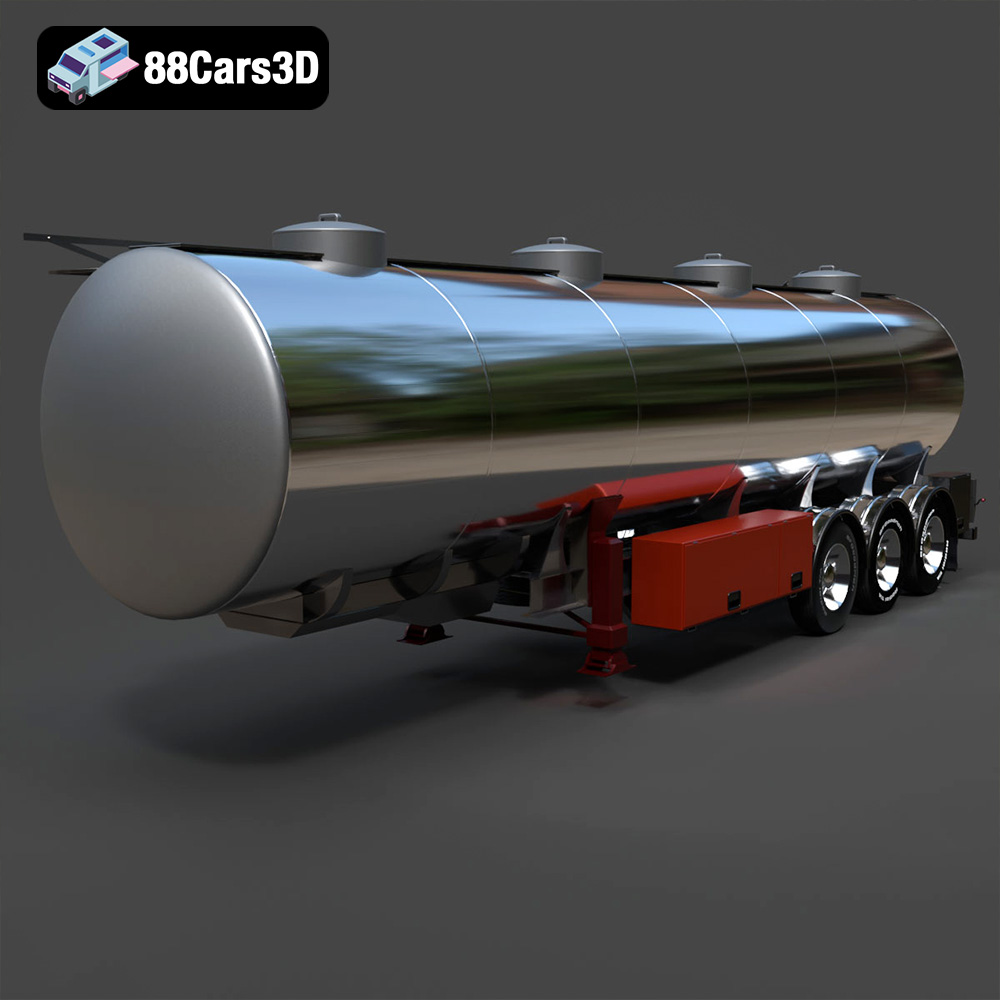
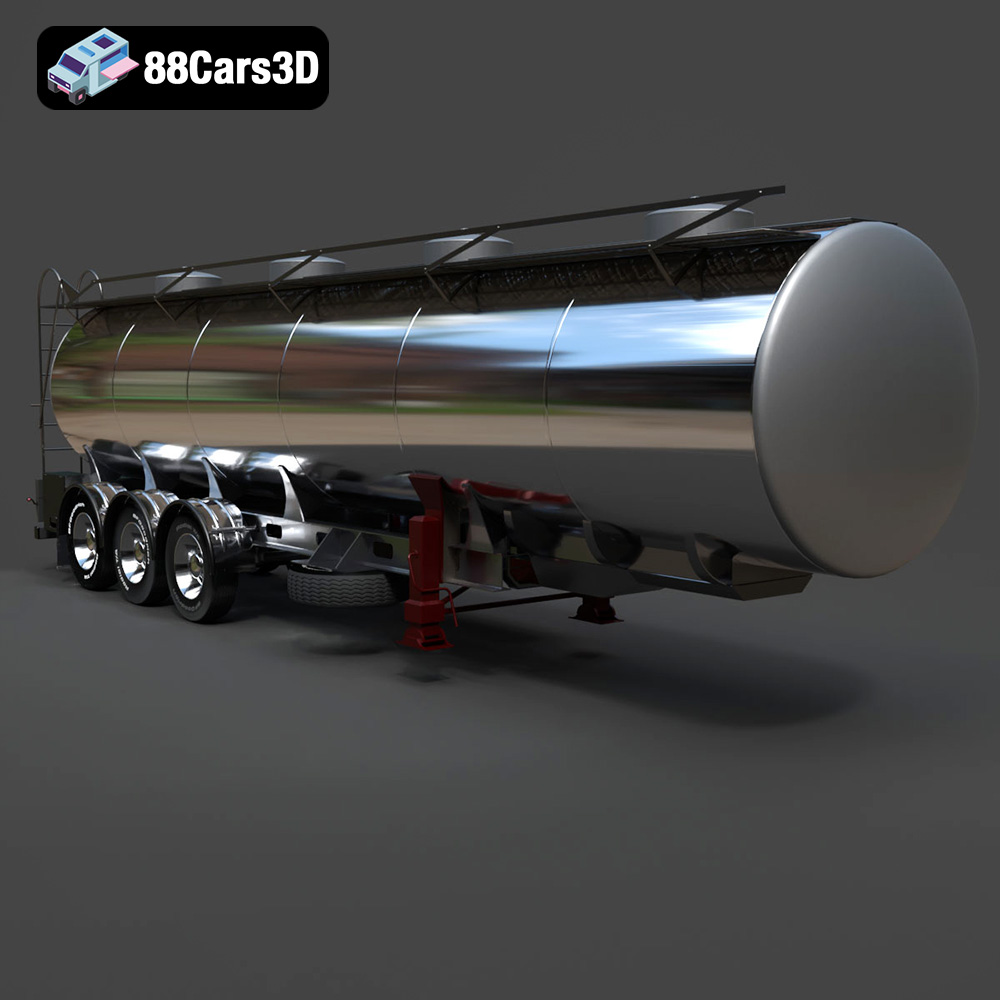
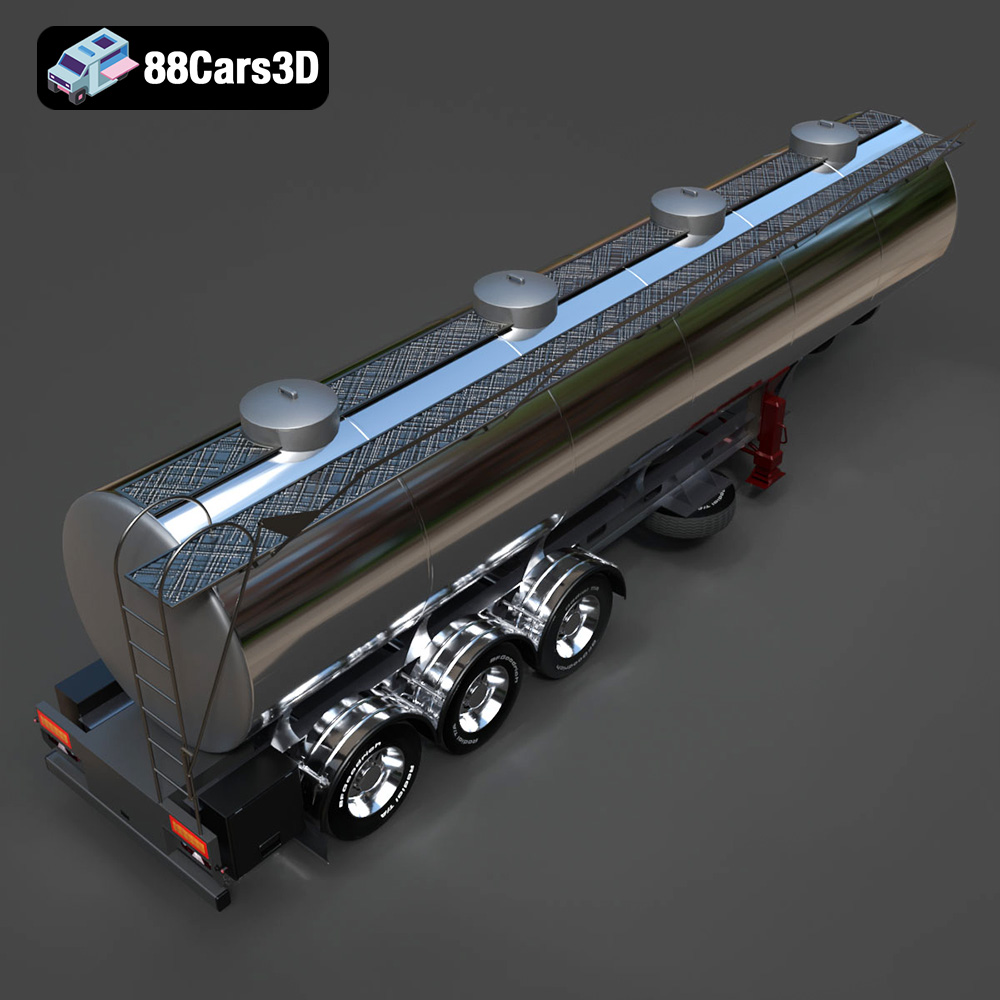
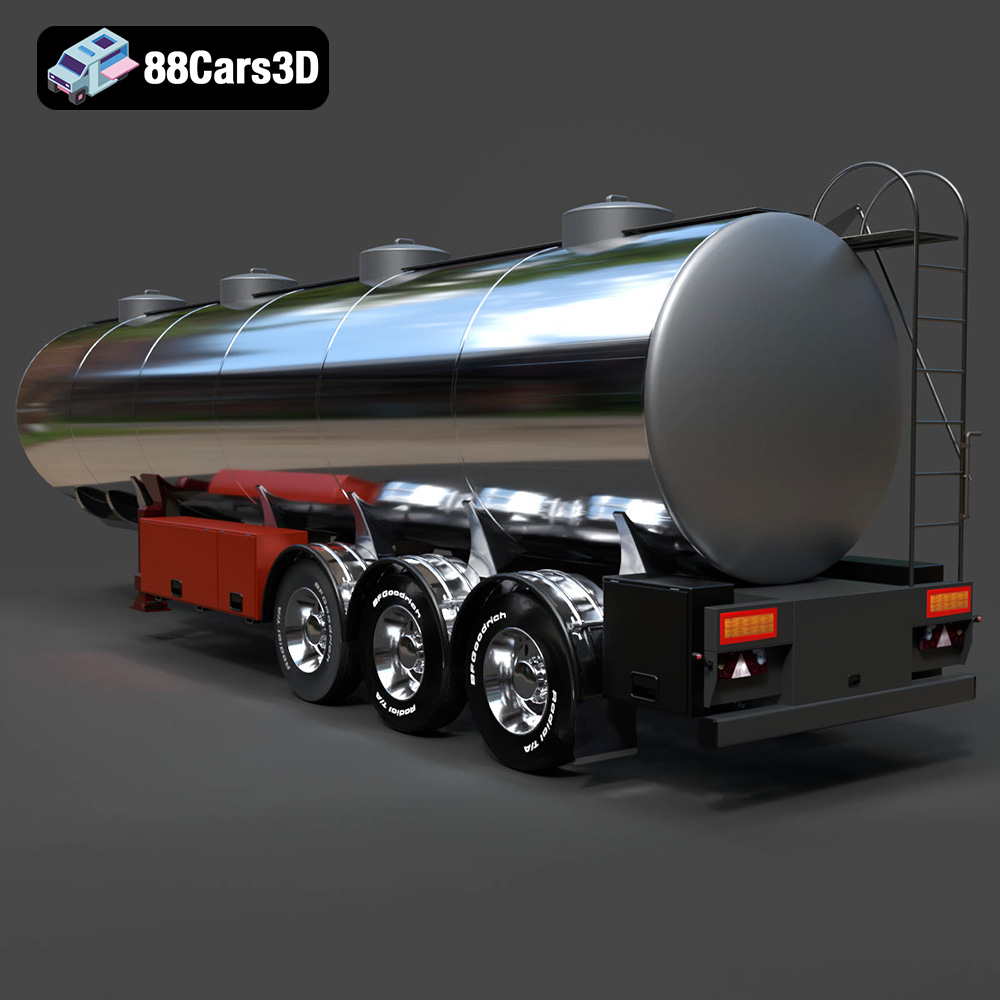
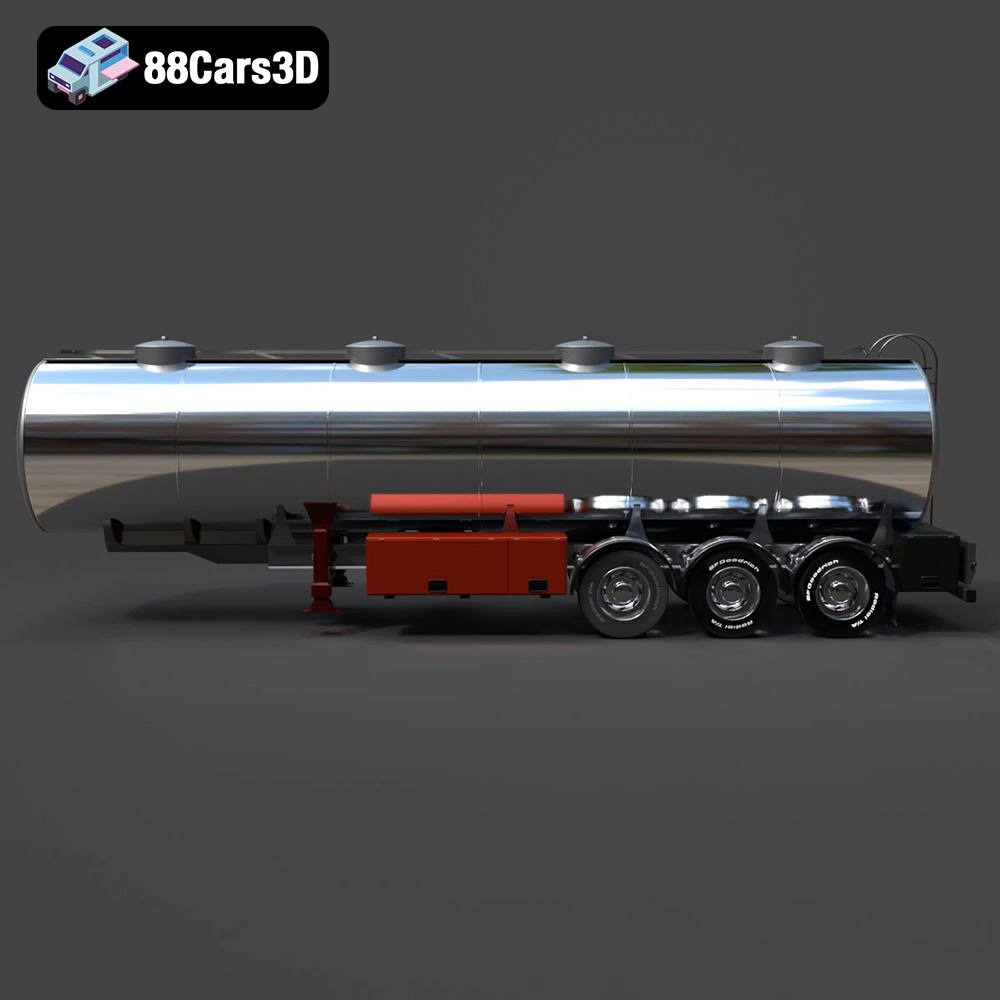
The model’s exterior boasts an accurate cylindrical tank body with realistic proportions, echoing the real-world vehicles seen on highways. Details extend to the robust chassis frame and support structure, which provides the foundational integrity. A realistic axle configuration, complete with a suspension system, not only adds visual weight but also allows for convincing animation in simulations. Crucial functional elements such as modeled fuel discharge valves, a comprehensive piping system, a rear ladder for access, and top safety railings are all present, contributing to the model’s authenticity. Thoughtful inclusions like hose storage compartments, mudguards, reflectors, and safety markings further enhance the realism, ensuring the trailer appears ready for heavy-duty operation. The separate wheels with proper pivot setups are a critical feature for any animation or interactive application, allowing for realistic rotation and movement.
Beyond the visible, the model integrates key structural details. While potentially not fully modeled for external view, the mention of “internal tank segmentation (for multi-compartment versions)” indicates a thoughtful approach to potential customization and a deeper understanding of real-world tanker design. Reinforced mounting brackets and realistic connection points for tractor attachment are vital for creating believable coupling dynamics in simulations or showcasing the trailer as part of a larger commercial fleet presentation. The focus on optimized geometry means that these details are achieved without an excessive polygon count, striking a balance between visual quality and performance.
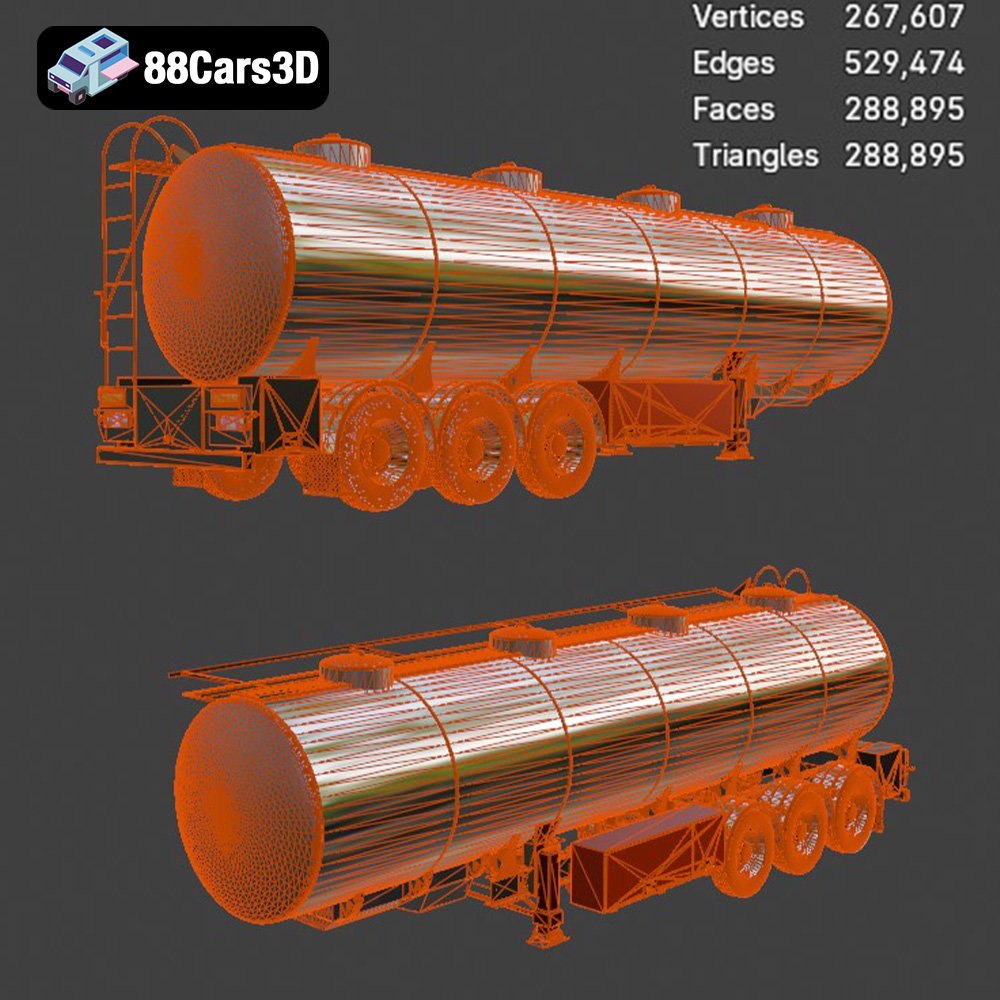
At the core of any professional 3D asset lies its technical foundation. The Fuel Tank Trailer 3D Model excels with a clean and well-organized mesh structure, which is crucial for easy manipulation, texturing, and rigging. This clean topology prevents rendering artifacts and ensures smooth deformations if animated. Adherence to real-world scale accuracy is another significant advantage, guaranteeing that the model fits seamlessly into scenes alongside other assets or architectural plans without requiring tedious resizing. The optimized polygon flow is a testament to efficient modeling practices, ensuring that details are present where needed without bogging down real-time engines. This optimization is particularly beneficial for game development and AR/VR applications where performance is paramount. Furthermore, its advertised compatibility with major 3D software platforms and engines means artists and developers can integrate it into their existing pipelines with minimal friction, leveraging its versatility across different rendering and simulation environments.
High-quality 3D assets like the Fuel Tank Trailer 3D Model from 88cars3d.com are designed to streamline professional workflows across various disciplines. Its versatility and robust construction make it a valuable addition to projects ranging from hyper-realistic automotive rendering to interactive game environments.
For professionals in automotive rendering and visualization, 3ds Max provides a powerful environment to showcase the Fuel Tank Trailer 3D Model with stunning fidelity. Importing the .max file or an optimized .fbx allows for full access to the model’s detailed geometry. Artists can apply advanced PBR materials, utilizing the included textures or creating custom ones to achieve photorealistic finishes, simulating the sheen of industrial paint or the weathered look of a long-haul veteran. With its clean mesh, the model responds exceptionally well to complex lighting setups, allowing for dramatic studio shots or integration into dynamic outdoor scenes. The separate wheels and properly set pivots are essential for creating compelling hero renders or short animations, demonstrating the trailer in motion or parked in a fuel depot environment. The ability to customize tank colors, add company logos, and integrate hazard markings directly within 3ds Max provides endless possibilities for branding and specific client presentations.
The demands of game development require assets that are not only visually appealing but also highly optimized for real-time performance. The Fuel Tank Trailer 3D Model, particularly in its .fbx or .unreal formats, is an ideal game asset for truck simulators, open-world logistics games, or even tactical hazardous material transport systems. Developers can import the model into Unreal Engine, where its optimized geometry and clean topology ensure efficient rendering. Properly unwrapped UVs (implied by “clean topology” and “optimized geometry”) allow for the application of detailed texture maps, including albedo, normal, roughness, metallic, and ambient occlusion, bringing the trailer to life within the engine’s advanced rendering pipeline. The separate wheels with correct pivot points are crucial for setting up physics-based vehicle systems and realistic animation. Furthermore, the model can be easily integrated with Unreal’s Blueprint system for interactive elements, such as opening hose compartments or simulating fuel discharge, enhancing gameplay and immersive realism in virtual industrial yards.
Blender, with its comprehensive toolset, offers an excellent platform for animating and simulating the Fuel Tank Trailer 3D Model. Utilizing the .blend file provides direct access to the model’s original structure, allowing for easy rigging of the axle system and attachment points. Artists can create complex animations, from the trailer detaching and reattaching to a truck, to simulating its movement over varied terrain within a logistics simulation. The clean mesh structure facilitates smooth deformations and realistic physics simulations, such as the subtle sway of the tank or the interaction of the suspension system. For educational or training purposes, the Fuel Tank Trailer can be integrated into detailed industrial training modules, where animations demonstrate proper handling, safety procedures, or operational sequences of fuel transport, all rendered with Blender’s Cycles or Eevee engines.
The utility of the Fuel Tank Trailer 3D Model extends beyond traditional digital rendering, reaching into the realms of physical fabrication and immersive interactive experiences.
The explicit mention of 3D printing capabilities and the inclusion of an .stl format underscore the model’s potential for physical output. Converting the Fuel Tank Trailer 3D Model into a tangible object opens up possibilities for scale model enthusiasts, industrial prototyping, or unique desktop displays. The provided 3D print settings are critical for success: recommended scales (1:32 / 1:24 / 1:18 / 1:14), specific layer heights (0.12–0.20 mm), wall thickness (2–3 mm), and infill percentages (20–35%) guide users to optimal print quality. Furthermore, advice on support structures for intricate details like the ladder and valve assemblies, along with print orientation (tank horizontally, chassis flat, wheels separately), ensures the integrity and detail of the final physical model. Post-processing steps like sanding, priming, and applying industrial paint finishes, possibly with optional hazard decals, allow for a highly personalized and professional-looking miniature, bridging the gap between digital design and physical reality.
For cutting-edge applications, the Fuel Tank Trailer 3D Model is perfectly suited for AR/VR industrial visualization. Whether for interactive fleet demonstrations, immersive training simulations, or virtual refinery tours, this asset brings a new dimension to visualization. The .glb format, optimized for web and AR/VR, facilitates smooth integration into platforms like WebXR or Unity/Unreal-based AR/VR experiences. Imagine a sales team showcasing new fleet configurations to clients through an AR app, projecting a realistic 3D model of the Fuel Tank Trailer into their physical environment. Or a training program where new recruits can virtually walk around, inspect, and interact with the tanker’s various components in a VR environment, learning about fuel discharge valves or safety railings in a risk-free setting. The model’s real-world scale accuracy is paramount here, ensuring that virtual interactions feel natural and authentic, providing a powerful tool for education and demonstration.
A truly valuable 3D asset offers more than just out-of-the-box quality; it provides the flexibility for artists and developers to adapt it to specific project requirements. The Fuel Tank Trailer 3D Model excels in its customization potential.
One of the most immediate customization options is the ability to change the tank color and apply unique fuel branding. This is crucial for commercial fleet presentations or integrating the trailer into specific company visuals. Adding company logos or hazard markings, as suggested, personalizes the asset, making it suitable for a wide array of industrial advertising content. Whether it’s a specific fuel company’s livery or a generic transportation firm’s branding, the model’s clean topology and material setup allow for straightforward texture modifications within any major 3D software. This level of aesthetic control ensures that the Fuel Tank Trailer can be a perfect fit for diverse client briefs.
Beyond branding, the model offers deeper customization to enhance realism. The option to modify the axle configuration (e.g., between 2-axle and 3-axle versions) is a significant technical advantage, allowing for regional variations or different load capacities to be represented accurately. This is particularly valuable for detailed logistics simulations where vehicle specifications matter. Furthermore, the ability to adjust weathering is key for achieving specific atmospheric effects. A brand-new trailer for a showroom render will look vastly different from a seasoned vehicle operating in harsh industrial environments. Adding grime, rust, or dust maps can dramatically alter the perception of the model, conveying a story and adding a layer of authenticity to highway transport scenes or industrial yard visuals. This flexibility ensures that the Fuel Tank Trailer 3D Model is not a static asset but a dynamic component that can evolve with the narrative and aesthetic demands of any project.
In the expansive landscape of 3D modeling, the acquisition of truly professional-grade assets is a game-changer for studios and independent artists alike. The Fuel Tank Trailer 3D Model stands out as an exceptional example of an asset engineered for realism, versatility, and technical performance. From its meticulously detailed exterior and structural components to its comprehensive file format support, it is designed to integrate seamlessly into diverse workflows, be it for high-end automotive rendering in 3ds Max, optimized game development in Unreal Engine, or intricate simulations in Blender. Its capabilities extend beyond the digital realm, offering robust support for 3D printing and facilitating immersive AR/VR experiences, pushing the boundaries of industrial visualization and training. With extensive customization options for branding, aesthetics, and technical configurations, this model empowers creators to tailor it precisely to their vision.
Ultimately, investing in assets like the Fuel Tank Trailer 3D Model from 88cars3d.com significantly reduces production time, enhances visual quality, and ensures technical stability across a multitude of applications. It’s more than just a 3D model; it’s a foundation for creating compelling, realistic, and technically sound digital experiences. Explore the full potential of high-quality 3D car models and industrial assets at 88cars3d.com and elevate your next project.
The Fuel Tank Trailer 3D Model is a high-detail digital recreation of a heavy-duty tanker trailer designed for transporting fuel and liquid petroleum products. Engineered for realism and industrial accuracy, this model reflects the structural integrity and cylindrical tank design commonly used in logistics, petroleum distribution, and hazardous material transport operations. This 3D model accurately represents the elongated cylindrical tank body, reinforced chassis frame, axle system, rear ladder access, safety railings, hose compartments, and fuel discharge valves. Designed with clean topology and real-world proportions, it is ideal for rendering, animation, simulation, game development, and AR/VR industrial visualization.
$14.9
.arvr
.blend
.fbx
.fueltanktrailer
.fueltransport
.gameasset
.glb
.industrialvehicle
.logisticsvehicle
.max
.obj
.petroleumtransport
.ply
.rendering
.simulation
.stl
.tankertrailer
.trucktrailer
.unreal