Get 50% OFF All Premium 3D & STL Models!

In the dynamic worlds of digital entertainment, simulation, and visualization, the demand for hyper-realistic and functionally robust 3D assets continues to escalate. From blockbuster game titles and cinematic sequences to advanced military training simulators and intricate architectural visualizations, the foundation of immersion lies in the quality of the digital models. Crafting these complex assets from scratch, especially something as intricate as a modern combat vehicle, can be an immensely time-consuming and resource-intensive endeavor for even the most seasoned 3D artists and studios.
The challenge extends beyond mere aesthetics; it encompasses precise technical specifications, optimized topology for diverse applications, and meticulous attention to detail that withstands the scrutiny of close-up renders and demanding real-time environments. Imagine the complexity of accurately modeling a heavy armored tank: every rivet, every track link, the intricate mechanics of its turret, and the subtle wear and tear of battle. This is where expertly crafted, pre-made 3D models become indispensable tools. They not only save hundreds of hours of development time but also provide a benchmark of quality for any project.
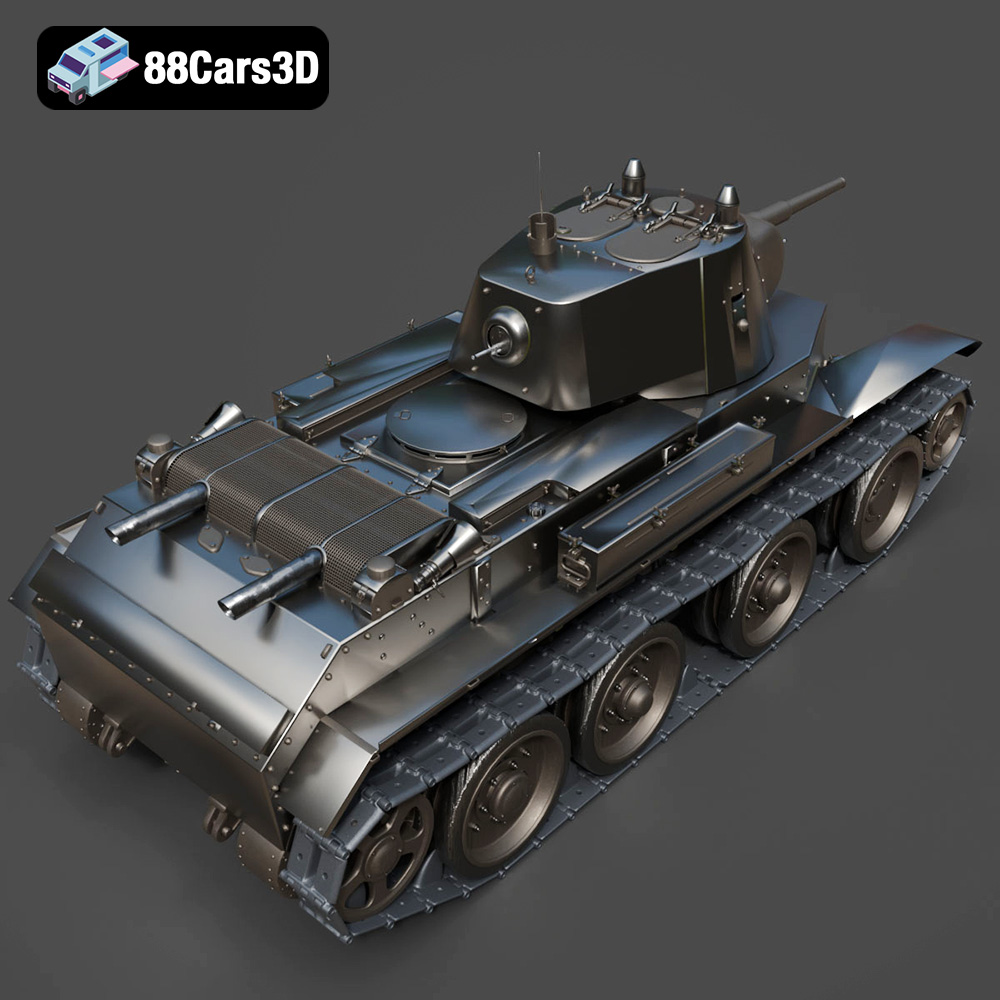
Today, we delve into the technical prowess and versatile applications of such an asset – the Heavy Armored Tank 3D Model. This formidable digital creation is more than just a static mesh; it’s a meticulously engineered piece of digital art designed to bring unparalleled realism and tactical depth to your projects. Whether you’re a game developer seeking a hero asset, a rendering artist crafting a dramatic battlefield scene, or a military enthusiast looking to 3D print a scale replica, this model, available on 88cars3d.com, offers a robust and ready-to-deploy solution.
Choosing the correct file format is a critical first step for any 3D project, directly impacting compatibility, workflow efficiency, and the capabilities of your digital asset. The Heavy Armored Tank 3D Model offers an extensive suite of formats, each tailored for specific professional applications. Understanding their nuances is key to leveraging this asset to its fullest potential.
The .blend format is Blender’s native file type, offering a complete and editable scene. When you download the Heavy Armored Tank 3D Model in .blend format, you’re getting not just the mesh, but also the full material setup, potentially lighting, cameras, and any modifiers or rigging that were applied during its creation. This is ideal for artists who primarily work in Blender, allowing for deep customization, re-texturing, animation, and integration into existing Blender projects without any loss of data. Its open-source nature means consistent support and a thriving community for troubleshooting and advanced techniques.
FBX (Filmbox) is an Autodesk-developed proprietary format that has become an industry standard for interoperability, particularly for animation, rigging, and complex scene data. For the Heavy Armored Tank 3D Model, the .fbx version is crucial for game development with engines like Unreal Engine and Unity. It efficiently transfers geometry, UVs, materials (though material conversion might be necessary in engine), skeletal animation, and rigging information. Its binary structure makes it efficient for import and export, ensuring that articulated parts like the turret and tracks maintain their hierarchy and pivot points for realistic animation and physics implementation in a real-time environment.
OBJ (or Wavefront OBJ) is a widely supported, simple geometry definition file format that is almost universally compatible across 3D software. It stores mesh data (vertices, normals, UV coordinates) and can reference external material files (.mtl). While it doesn’t support animation or rigging, its strength lies in its simplicity and universal acceptance, making it an excellent fallback for transferring the Heavy Armored Tank’s core geometry between different sculpting, modeling, or rendering packages. It’s often preferred when only static mesh data is required, ensuring maximum compatibility.
GLB (GL Transmission Format Binary) is the binary version of glTF, a royalty-free specification for the efficient transmission and loading of 3D scenes and models by engines and applications. It’s quickly becoming the “JPEG of 3D” due to its optimization for web-based, AR (Augmented Reality), and VR (Virtual Reality) applications. A .glb version of the tank model would be self-contained, including geometry, materials, textures, and even animation in a single file, making it perfect for rapid deployment on websites, social media filters, or interactive product viewers where real-time performance and small file size are paramount.
STL (STereoLithography) is the de facto standard file format for 3D printing. It represents a 3D model as a collection of unconnected triangular facets, defining only the surface geometry of an object without any color, texture, or material information. The .stl format for the Heavy Armored Tank is essential for physical manufacturing. It describes the tank’s watertight mesh, ready to be sliced by a 3D printer’s software into layers for production. This makes it ideal for hobbyists, scale modelers, or even rapid prototyping in engineering contexts.
PLY (Polygon File Format) is a file format for storing three-dimensional data from 3D scanners. It supports properties such as color, transparency, surface normals, texture coordinates, and data confidence values, which OBJ does not. While less common for general asset distribution, its ability to store vertex colors and more detailed mesh information can be valuable for certain scientific, CAD, or reverse-engineering applications where precise surface data is required. For the Heavy Armored Tank, a .ply file would offer a robust, detailed representation of the mesh’s geometric properties.
The “.unreal” format likely refers to an asset that has been specifically prepared or exported for direct use within Unreal Engine, often as a Uasset or a package designed for seamless import. This could mean it’s already optimized with LODs (Levels of Detail), correct material assignments, collision meshes, and potentially even basic animation setups (like skeletal rigging for the tracks or turret movement) tailored for Unreal’s rendering pipeline and physics system. This drastically cuts down on the integration time for developers working in Unreal, making it a truly “plug-and-play” solution.
Similar to .blend for Blender, .max is Autodesk 3ds Max’s native file format. It contains the entire 3ds Max scene, including geometry, materials, textures, lighting, cameras, animation, and any modifiers or plugins used. For professionals using 3ds Max for high-end rendering, architectural visualization, or cinematic animation, the .max file of the Heavy Armored Tank offers maximum flexibility. Artists can directly access the original model’s construction, make extensive modifications, re-light the scene, or integrate it into complex V-Ray or Corona Renderer setups with complete control over every parameter.
The true value of a premium 3D asset lies not just in its appearance, but in its underlying technical foundation. The Heavy Armored Tank 3D Model is a testament to meticulous craftsmanship, striking a crucial balance between visual fidelity and operational efficiency. Let’s examine its core technical specifications and design philosophy.
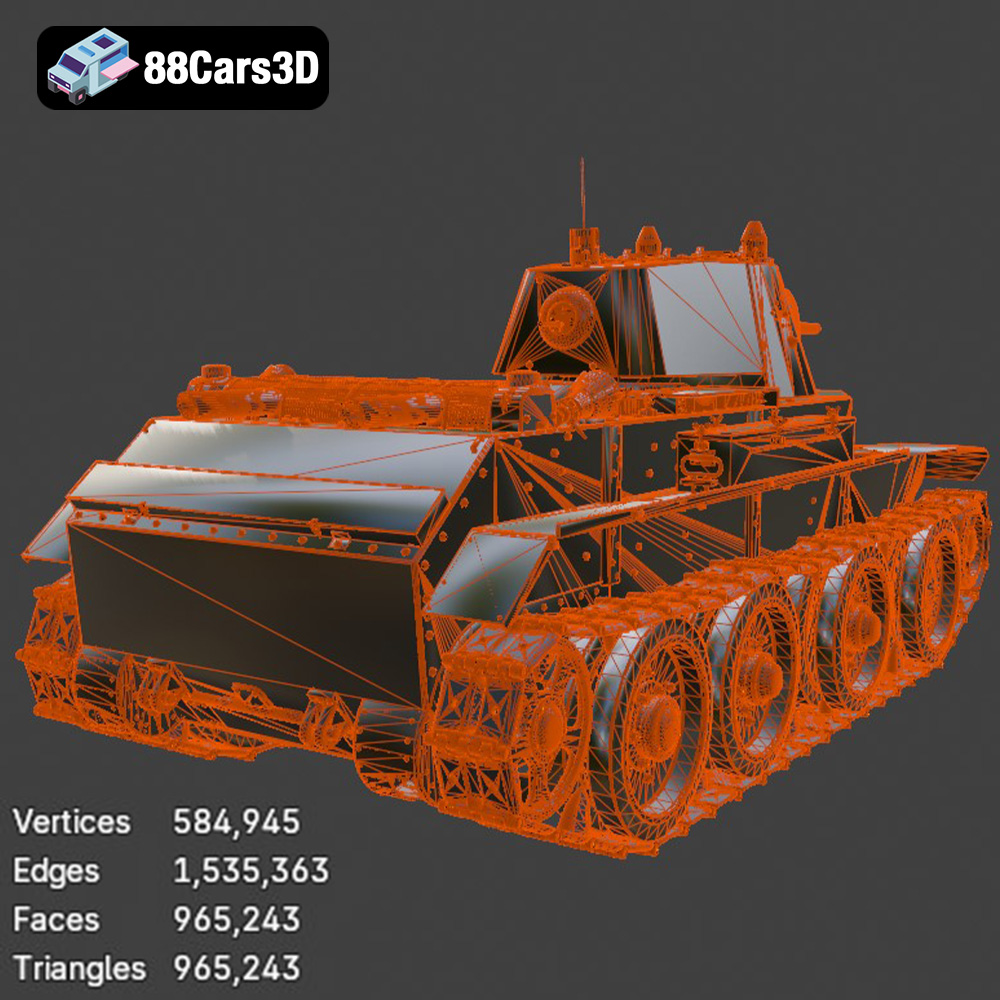
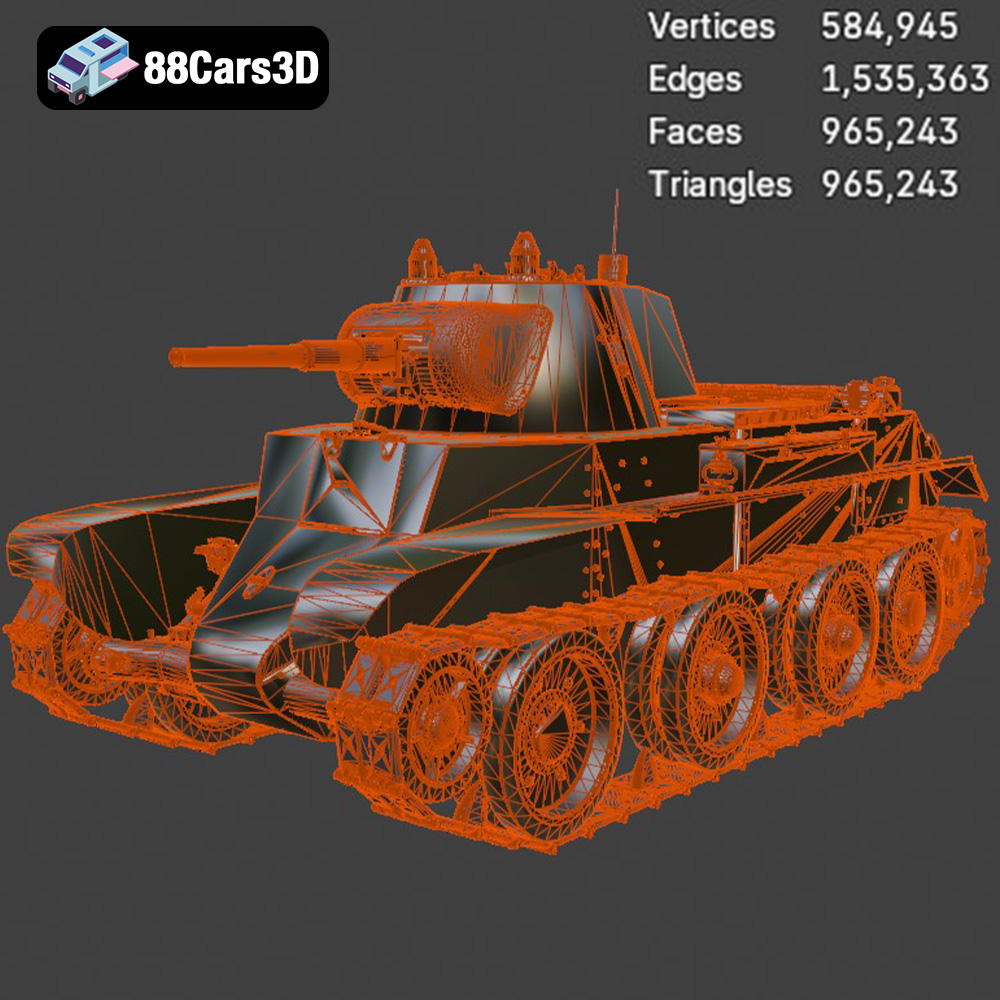
With 965,243 triangles (faces/polygons) and 584,945 vertices, this model achieves what is known as “perfectly balanced topology.” This isn’t just a marketing term; it signifies a deliberate design choice. A model with fewer polygons might perform better in older game engines but would lack the intricate detail necessary for close-up shots or high-resolution rendering. Conversely, a model with excessively high polygon counts (many millions) becomes unwieldy, taxing real-time engines and increasing rendering times exponentially.
A static model, no matter how detailed, limits creative possibilities. The Heavy Armored Tank 3D Model is engineered for dynamic interaction, featuring separate, articulated components that are essential for realistic animation and physics simulations.
The model focuses its detail where it matters most for its intended applications, providing a robust exterior while optimizing for specific interior views.
The versatility of the Heavy Armored Tank 3D Model truly shines when integrated into various professional pipelines. Thanks to its balanced topology and wide array of included file formats, it’s ready for immediate deployment in rendering, game development, simulation, and even physical manufacturing.
For cinematic artists and visualization specialists, photorealism is paramount. The Heavy Armored Tank 3D Model, particularly in its .max or .blend formats, provides an excellent starting point for stunning visual effects and dramatic scenes.
The model’s “perfectly balanced topology” and dedicated .fbx and .unreal formats make it an exceptional asset for modern game development, particularly for “hero” drivable vehicles.
Beyond entertainment, the demand for highly accurate 3D models in simulation and training is critical. The Heavy Armored Tank 3D Model offers precision suitable for serious applications.
The digital realm isn’t the only frontier for the Heavy Armored Tank 3D Model. Its inclusion of the .stl format opens up exciting possibilities for physical fabrication, catering to model builders, wargamers, and collectors alike. From a digital blueprint, a tangible, highly detailed replica can emerge, ready for display or tabletop action.
The .stl file format is the universal language of 3D printing. It represents the surface geometry of the tank as a series of interconnected triangles, creating a watertight mesh that slicing software can interpret into printable layers. This means the intricate details – the individual track links, the delicate machine gun barrels, the exhaust grilles – are preserved and ready for physical manifestation.
The ability to print at these specific scales ensures compatibility with existing model collections and accessories, making the tank model a versatile addition to any military enthusiast’s arsenal.
Successfully printing a complex model like an armored tank requires careful consideration of print settings. The provided recommendations are invaluable for achieving the best results.
A high-quality 3D model is a canvas, and the Heavy Armored Tank 3D Model offers ample opportunities for artistic customization, allowing creators to tailor it to specific narratives, historical periods, or imaginative scenarios. This flexibility is key to achieving true battlefield immersion.
The appearance of a tank is often defined by its camouflage. The digital nature of this asset allows for endless variations, far beyond what a physical model could easily achieve.
Beyond surface textures, the model’s design encourages the addition of secondary elements and adaptation to specific environments.
In the fast-paced world of 3D content creation, efficiency and quality are paramount. The Heavy Armored Tank 3D Model exemplifies the caliber of assets that can significantly accelerate your projects and elevate their visual impact. This isn’t just about downloading a mesh; it’s about acquiring a professionally engineered digital tool.
The comprehensive nature of this model—from its optimized topology and articulated components to the wide array of included file formats—ensures it’s ready for virtually any professional pipeline. Whether you’re tasked with creating a hyper-realistic cinematic, developing the next-generation game, designing a crucial military simulation, or even producing a physical model for a diorama, this tank model provides the foundational excellence you need.
By investing in such high-quality 3D car models (and in this case, a formidable tank model) from reputable sources like 88cars3d.com, you are not just saving time on modeling; you are ensuring technical accuracy, performance optimization, and artistic integrity that would otherwise require hundreds of hours of dedicated work. The ability to instantly deploy a highly detailed asset like the Heavy Armored Tank 3D Model means your team can focus on the creative aspects of storytelling, animation, lighting, and gameplay, rather than reinventing the wheel.
From its formidable exterior features and battle-ready aesthetics to its carefully balanced poly count and versatile format support (including .blend, .fbx, .obj, .glb, .stl, .ply, .unreal, and .max), every aspect of this model is designed with the professional workflow in mind. It’s a robust solution for anyone seeking to inject realism, power, and tactical dominance into their digital or physical creations. Explore this and other premium 3D models at 88cars3d.com to unlock new possibilities for your projects.
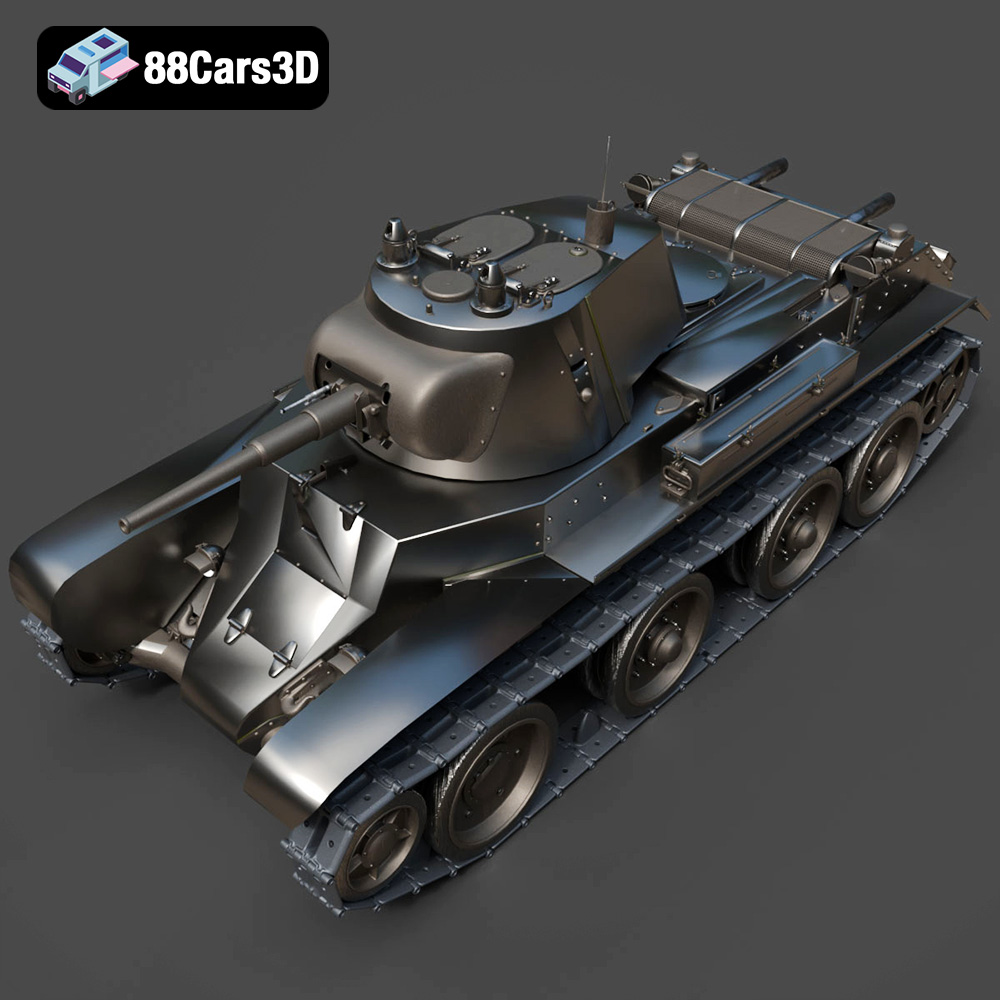
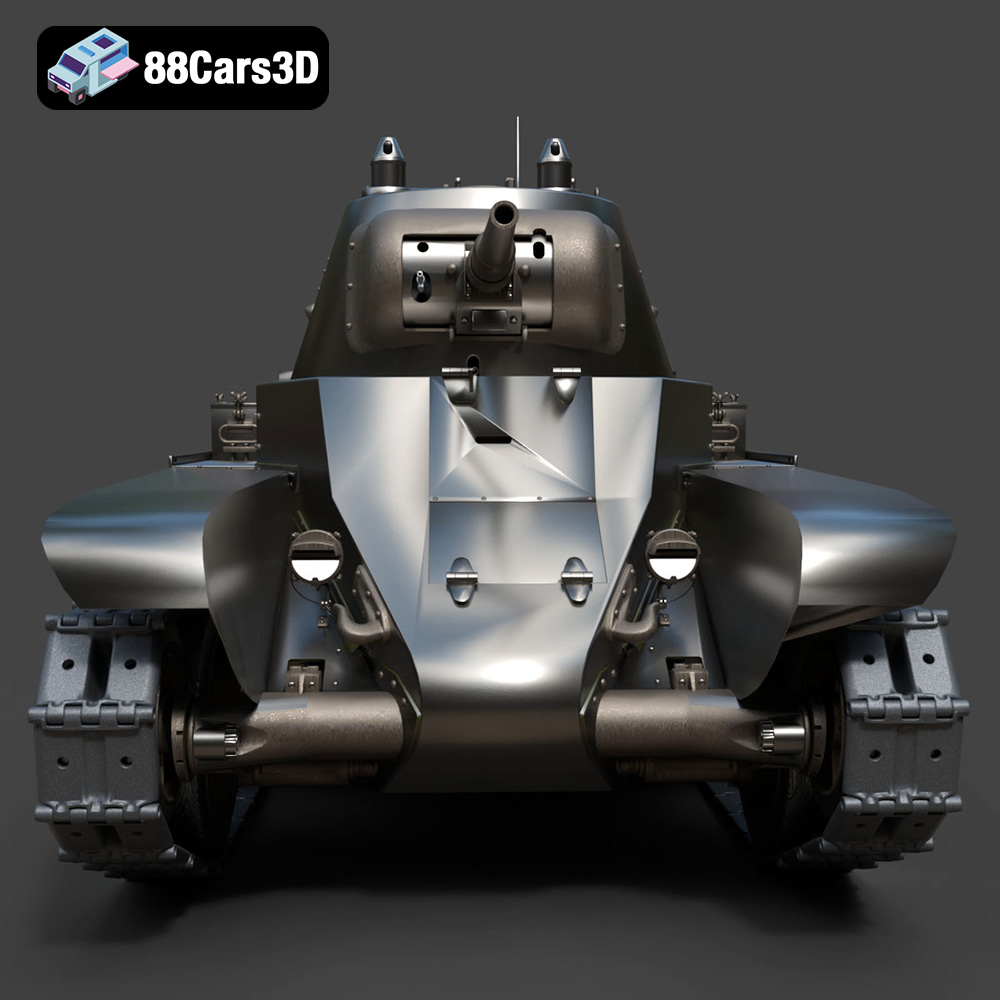
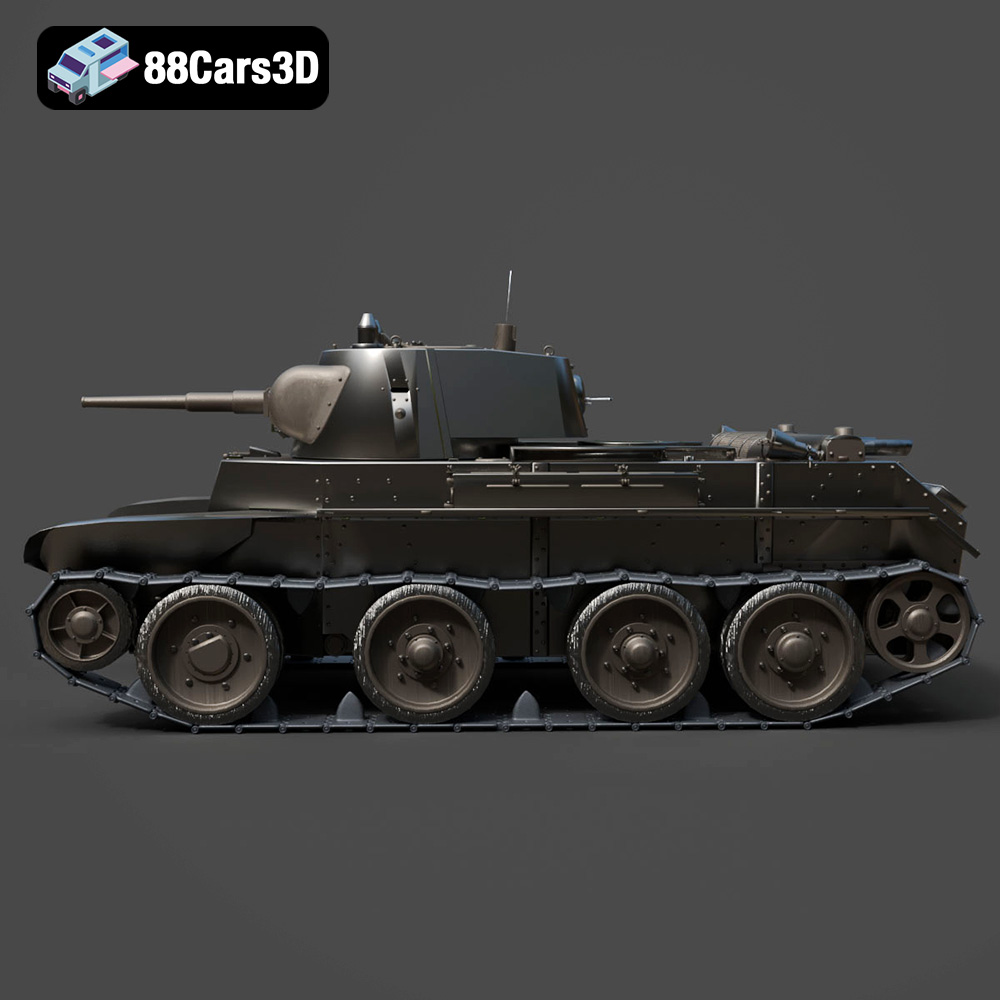
The Heavy Armored Tank 3D Model is a high-detail digital recreation of a formidable tracked combat vehicle. Designed to represent the raw power and tactical dominance of armored warfare, this model features heavy plating, a commanding main gun barrel, a fully articulated turret, and intricate continuous track (caterpillar) systems. This 3D model accurately captures the rugged, battle-ready aesthetic of modern or classic armored cavalry. It features detailed road wheels, drive sprockets, exhaust grilles, external storage compartments, and commander hatches. Built with an optimized, highly balanced topology (just under 1 million triangles), it provides fantastic visual fidelity for close-up rendering while remaining efficient enough to serve as a high-end hero asset in modern game engines or military simulators.
$29
.blend
.fbx
.mbt
.military
.obj
.rendering
.stl
.tank
3d printing
armored-vehicle
combat
game asset
main-battle-tank
mid-poly
military-3d-model
tracks
turret
war