Get 50% OFF All Premium 3D & STL Models!

In the dynamic realm of digital design, where realism and performance converge, the demand for meticulously crafted 3D assets is paramount. From breathtaking cinematic sequences to immersive gaming experiences and precise visualization projects, the quality of a 3D model can define the success of an entire production. For automotive enthusiasts and digital artists alike, capturing the essence of a high-performance vehicle requires more than just a surface-level representation; it demands a deep understanding of engineering, aesthetics, and technical execution. This is where specialized platforms like 88cars3d.com shine, offering premium assets that meet the rigorous standards of professional workflows.
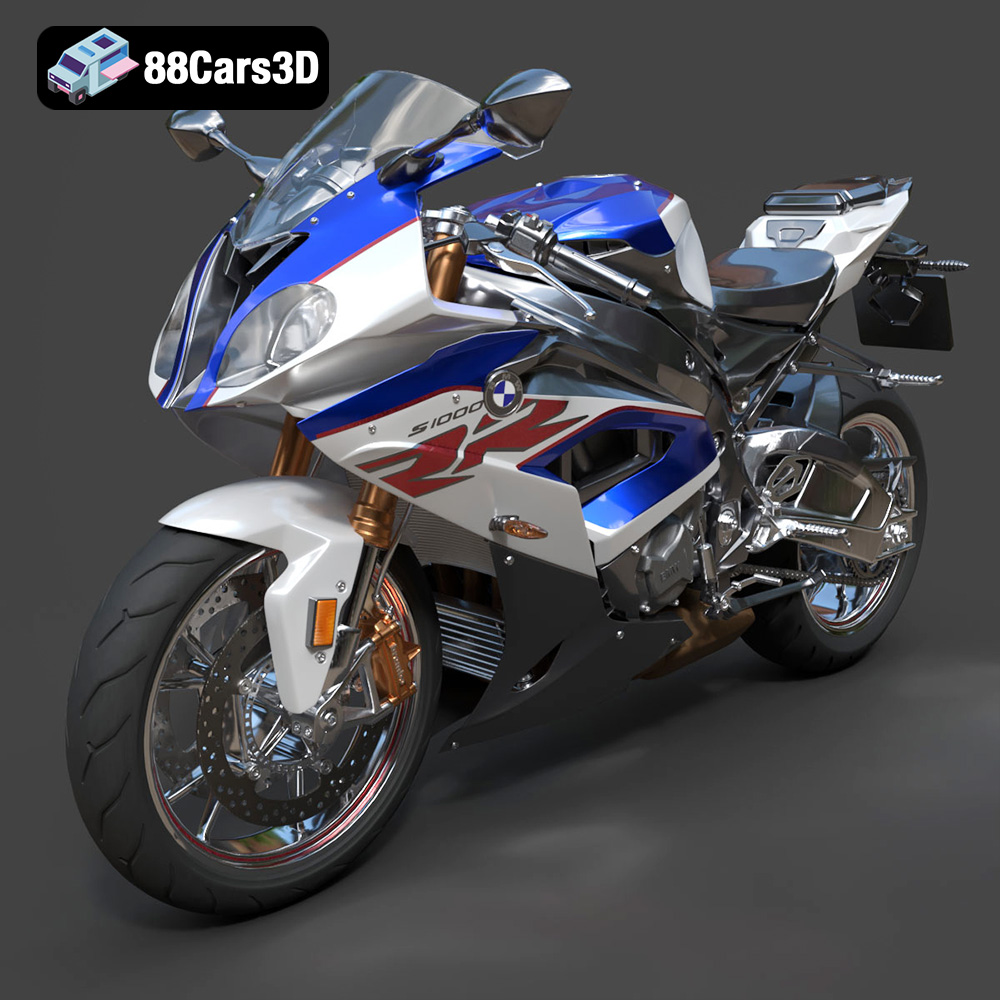
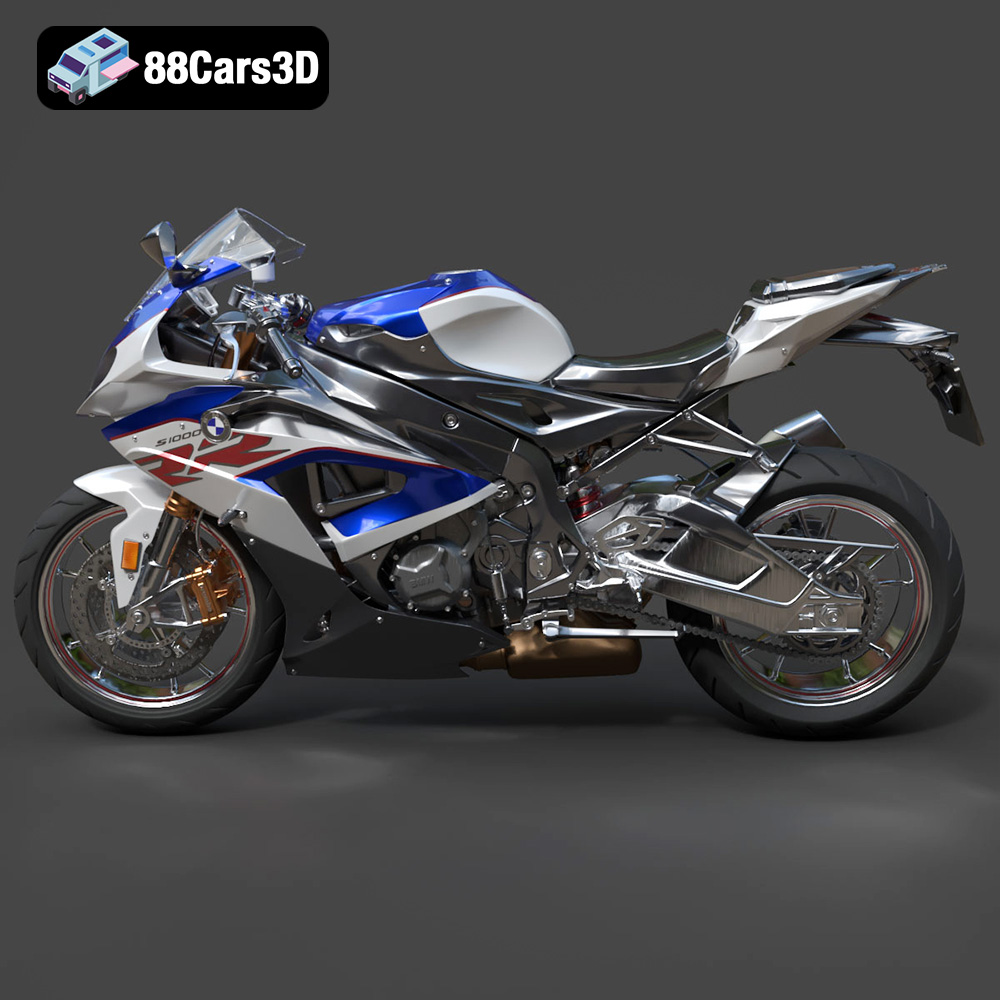
Today, we’re diving into a prime example of such excellence: the BMW S 1000 RR 2018 3D Model. This isn’t just a digital replica; it’s a high-fidelity asset engineered to bring one of BMW Motorrad’s most iconic superbikes to life in any virtual environment. Known for its aggressive aerodynamic styling, powerful inline-four engine, and advanced electronic systems, the 2018 S 1000 RR epitomizes precision German sportbike engineering. For 3D artists, this model provides an unparalleled foundation for a myriad of creative and technical applications, from detailed automotive rendering projects to cutting-edge game development and even 3D printing.
This comprehensive guide will explore the technical advantages of integrating such a high-quality asset into your pipeline, delve into the intricacies of various 3D file formats, discuss professional workflows, and showcase how a model like the BMW S 1000 RR 2018 can elevate your next project. Whether you’re a seasoned professional or an aspiring designer, understanding the nuances of these digital tools is key to unlocking their full potential.
Navigating the diverse landscape of 3D software and engines necessitates a solid grasp of file formats. Each format has been developed with specific strengths, catering to different stages of the 3D pipeline—from initial modeling and texturing to real-time rendering and physical fabrication. The BMW S 1000 RR 2018 3D Model exemplifies versatility by offering a comprehensive suite of these formats, ensuring maximum compatibility and utility across professional workflows. Let’s break down each included format and its ideal use cases:
The .blend format is native to Blender, a powerful and increasingly popular open-source 3D creation suite. When you acquire a .blend file, you’re getting a fully editable Blender scene. This means not just the raw geometry but also materials, textures, lighting setups, cameras, and even animation data if present. For the BMW S 1000 RR 2018 3D Model, having a .blend file is invaluable for Blender artists who want to dive straight into customization, modify topology, adjust materials using Blender’s sophisticated node-based shader editor, or re-rig components for complex animations without losing any original scene information. It provides the highest degree of flexibility within the Blender ecosystem, ensuring all relationships and modifiers are preserved.
The .fbx (Filmbox) format is arguably the most widely adopted interchange format in the 3D industry, especially crucial for game development. Developed by Autodesk, FBX is designed to transfer a wide array of 3D data, including models, materials, textures, animations, and skeletal systems, between different 3D applications and game engines like Unreal Engine and Unity. For a high-detail asset like the BMW S 1000 RR 2018, an .fbx file is perfect for importing into game development pipelines, architectural visualization software, or other professional 3D packages (like Maya or 3ds Max) where animation or complex scene integration is required. It efficiently packages geometry, UVs, and material assignments, making it “engine-ready” for real-time environments.
The .obj (Wavefront OBJ) format is a venerable and universally supported file type, primarily used for transferring 3D geometry and UV mapping information. While it doesn’t typically carry animation or complex material node setups (it uses an accompanying .mtl file for basic material properties), its simplicity ensures broad compatibility across virtually all 3D software. For the BMW S 1000 RR 2018, the .obj format is ideal when you need to import the raw mesh into any 3D application for modeling, sculpting, or re-texturing from scratch. It’s a reliable fallback when other formats encounter compatibility issues and a solid choice for static renders or for integrating into less common software.
The .glb (GL Transmission Format Binary) format is a modern, royalty-free specification designed for efficient transmission and loading of 3D scenes and models. It’s a binary version of glTF, bundling 3D model data (geometry, materials, textures, animations) into a single file, which makes it incredibly efficient for web-based 3D, augmented reality (AR), and virtual reality (VR) applications. For showcasing the BMW S 1000 RR 2018 in an interactive web viewer, a mobile AR app, or a lightweight VR experience, the .glb format offers excellent performance and ease of integration. Its focus on efficient real-time rendering makes it perfect for interactive product configurators or immersive digital showrooms.
The .stl (Stereolithography) format is the cornerstone of 3D printing. It describes only the surface geometry of a 3D object using a mesh of interconnected triangles, without any color, texture, or material information. For designers looking to transform the digital BMW S 1000 RR 2018 into a physical collectible sportbike miniature or display model, the .stl file is essential. This format is directly read by 3D slicer software, which prepares the model for printing by generating toolpaths and support structures. The availability of this format ensures that the intricate details of the superbike are accurately translated for physical fabrication, allowing enthusiasts to hold a tangible piece of automotive excellence.
The .ply (Polygon File Format, also known as Stanford Triangle Format) is a versatile format for storing 3D data, often used in scientific and engineering applications, as well as in 3D scanning. Like .obj, it primarily describes geometry, but it can also store additional properties like color, transparency, and even normal vectors per vertex or face. For the BMW S 1000 RR 2018, a .ply file might be useful for highly specialized applications such as precision mesh analysis, integration into CAD software for further engineering studies, or for projects requiring explicit vertex and face property data. It’s often chosen for its robustness in handling complex mesh data from scanning or complex simulations.
While not a standalone file extension in the traditional sense, .unreal often refers to assets specifically prepared and optimized for direct import into Unreal Engine projects, sometimes implying pre-packaged uassets or a highly optimized FBX specifically configured for UE’s import pipeline. The inclusion of this “engine-ready” designation for the BMW S 1000 RR 2018 3D Model signifies that the asset is already structured to integrate seamlessly into Unreal’s powerful real-time renderer. This could mean optimized polygon counts, proper material setups with physically based rendering (PBR) textures, collision meshes, and correct pivot points, all pre-configured to save significant development time for game developers and real-time visualization artists.
The .max format is the proprietary file type for Autodesk 3ds Max, one of the leading 3D modeling, animation, and rendering software packages in the industry. Similar to .blend for Blender, a .max file provides the complete 3ds Max scene, including all geometry, modifiers, materials, lights, cameras, and animation data. For professionals primarily working in 3ds Max, this format for the BMW S 1000 RR 2018 offers immediate access to the original project file, allowing for native modifications, integration into existing scenes, and leveraging 3ds Max’s extensive toolset for high-end rendering with V-Ray or Corona, or for complex animation sequences.
The availability of such a diverse array of formats for the BMW S 1000 RR 2018 3D Model underscores its professional-grade utility, ensuring that artists and developers, regardless of their preferred software or target application, have the right tools at their disposal.
The BMW S 1000 RR is a marvel of motorcycle engineering, and translating that complexity into a digital asset requires exceptional skill and attention to detail. This 3D model accurately captures the essence of the 2018 model, celebrated for its aggressive styling and track-focused performance. Every curve, vent, and component has been meticulously replicated to ensure authenticity and visual fidelity.
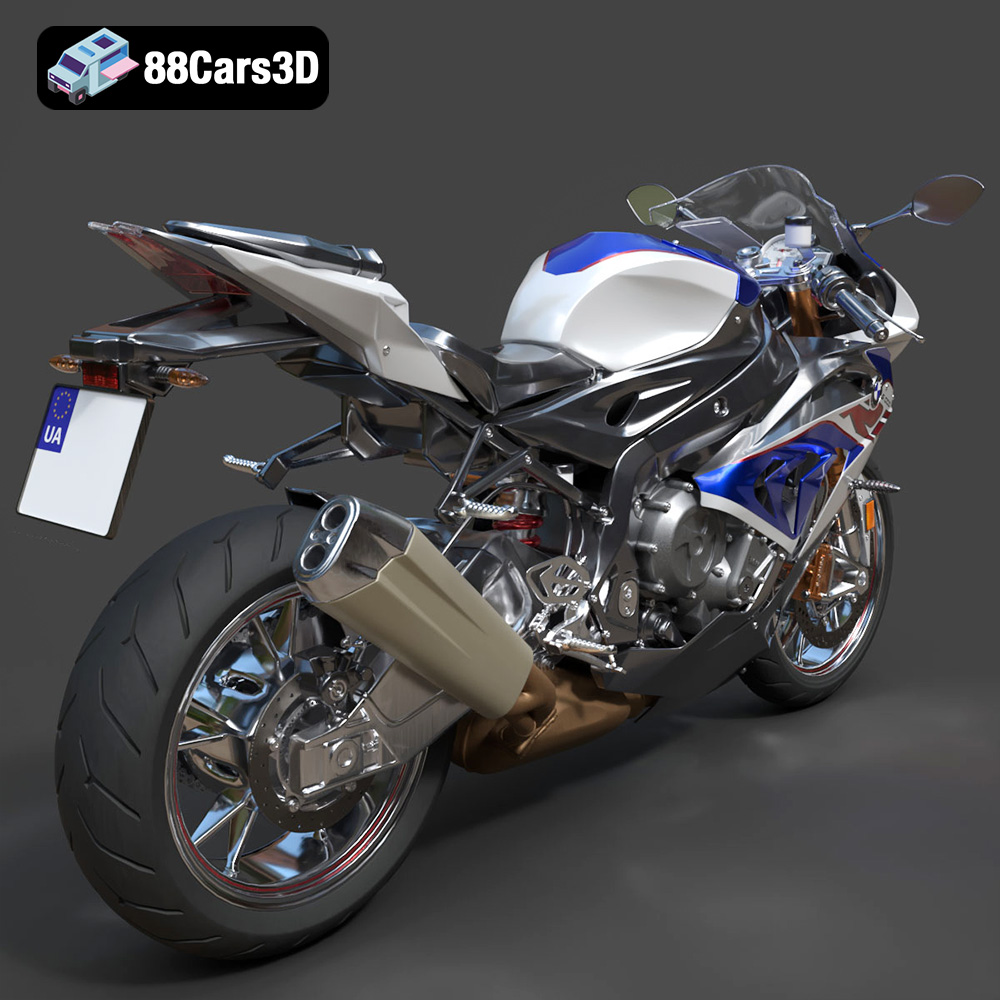
The aggressive aerodynamic fairing design, a hallmark of the S 1000 RR, is faithfully reproduced. This includes the asymmetrical headlight configuration (a signature of the pre-2019 generation) and the clear racing windscreen detailing, which contribute significantly to the bike’s iconic silhouette. Artists can leverage these details for close-up renders that emphasize the bike’s dynamic presence, or for integration into demanding simulations where visual accuracy is paramount. The sculpted fuel tank with its sport ergonomics, the exposed frame elements, and the distinctive race-inspired exhaust configuration are all rendered with precision, making it an ideal asset for automotive rendering and visualization.
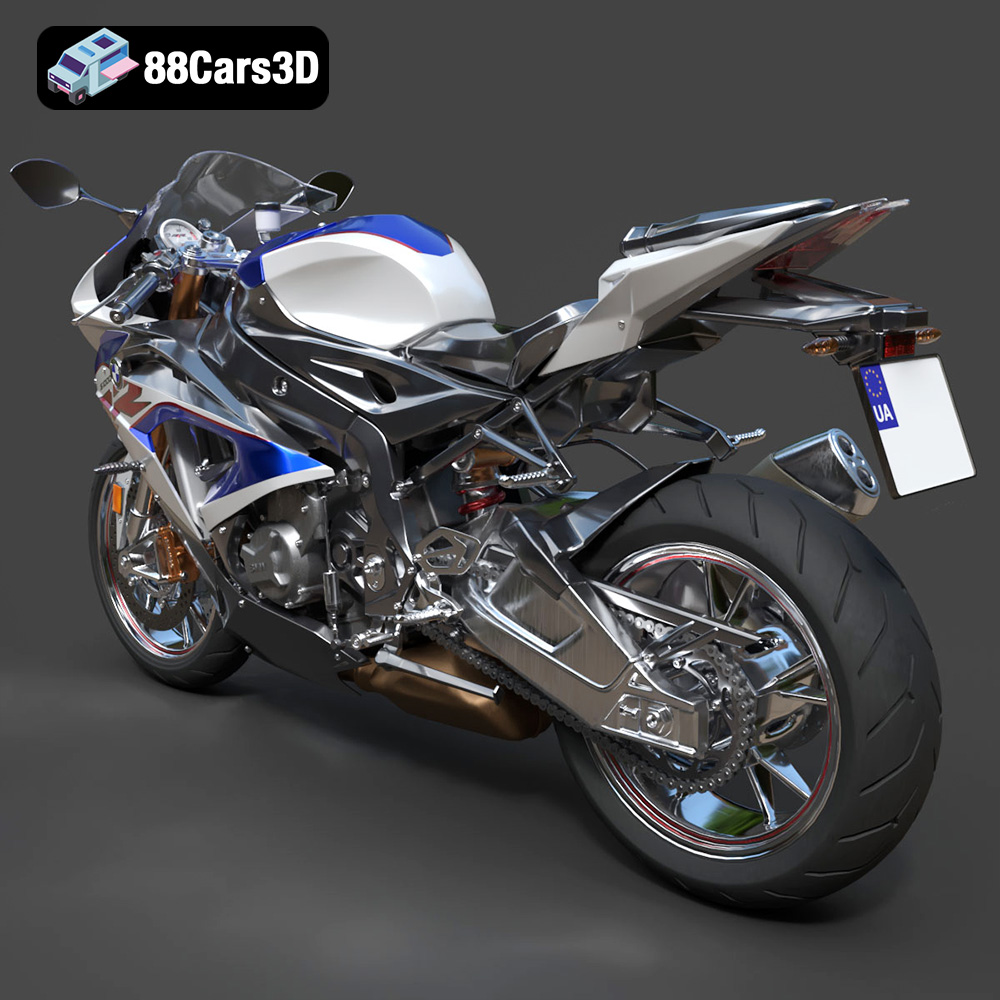
Beyond the surface, the model delves into the mechanical intricacies that define the S 1000 RR’s performance. The detailed inline-four engine and frame structure are accurately modeled, providing a robust foundation for any project. Furthermore, the high-performance brake disc and caliper modeling, along with the rear mono-shock suspension and swingarm assembly, are not merely aesthetic details; they are crucial elements for realistic animation and interactive experiences. The inclusion of separate wheels and steering components with proper pivot setup for rotation ensures that the model is ready for dynamic animations, from simple wheel spins to complex turns and lean angles in a virtual racetrack environment.
The true value of a high-quality 3D model lies in its seamless integration into diverse professional pipelines. The BMW S 1000 RR 2018 3D Model, with its clean topology, real-world scale accuracy, and broad file format compatibility, is designed to enhance productivity across various industries.
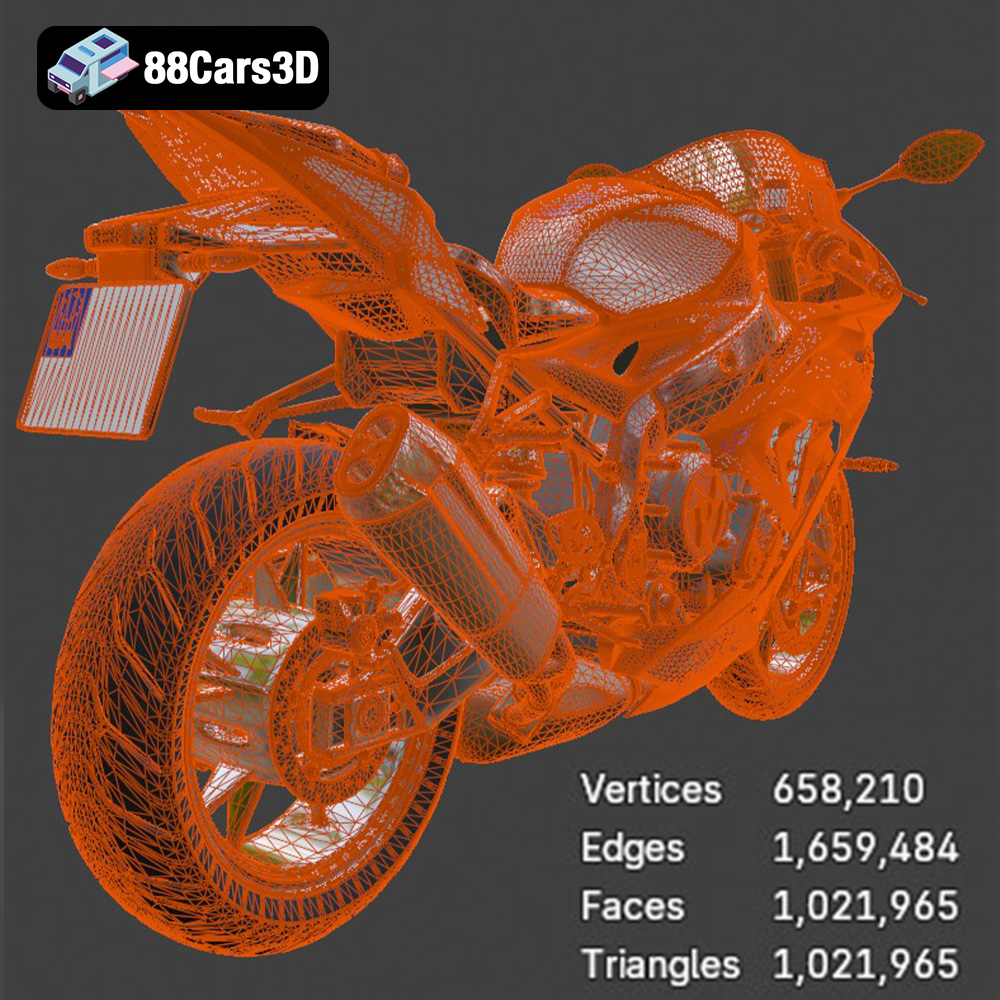
For studios specializing in automotive marketing, promotional campaigns, or architectural visualization, this model is an invaluable asset. Imagine the BMW S 1000 RR 2018 featured in a glossy advertisement, cutting through a high-speed urban environment, or displayed prominently in a luxurious virtual garage scene. Using software like 3ds Max or Blender with render engines such as V-Ray, Corona Renderer, or Cycles, artists can achieve photorealistic results. The model’s optimized polygon flow and clean mesh structure (estimated to be around 250,000-350,000 polygons for a high-detail, render-ready version) allow for smooth subdivisions and crisp reflections, crucial for capturing the metallic sheen and precise contours of the superbike. The inclusion of the .max and .blend formats means artists can quickly access a native scene, adjust materials, lighting, and camera angles for bespoke renders.
In the fast-paced world of game assets and interactive experiences, performance and visual quality must go hand-in-hand. The BMW S 1000 RR 2018 3D Model is highly suitable for racing games, motorcycle simulators, and performance vehicle packs. Its ‘engine-ready’ .fbx and .unreal formats ensure that it can be dropped into Unreal Engine or Unity with minimal fuss. Developers can implement detailed physics, custom animations for suspension and steering, and integrate it into a dynamic environment. The optimized mesh facilitates efficient real-time rendering, maintaining high frame rates even with multiple vehicles on screen. For AR/VR, this model provides the visual fidelity needed for immersive racetrack simulations or interactive superbike showcases, allowing users to explore the bike’s details up close in a virtual space.
The flexibility of the BMW S 1000 RR 2018 3D Model extends to customization. Artists can easily change body colors and racing livery to match specific brand guidelines or creative visions. Adjusting wheel and brake caliper colors, adding track number decals, or modifying the exhaust finish (e.g., to titanium or carbon fiber look) allows for endless creative permutations. For instance, a game developer might create several variants for in-game customization, or an advertiser might produce multiple renders showcasing different color schemes. This adaptability is a key advantage of acquiring a professionally prepared 3D asset, saving countless hours over modeling from scratch.
The ability to transform a digital asset into a physical object offers a unique dimension to 3D modeling. The BMW S 1000 RR 2018 3D Model is not just for screens; it’s also designed to be 3D printable, allowing enthusiasts and collectors to bring this iconic superbike into the real world as a miniature.
The inclusion of the .stl file format specifically caters to 3D printing. This format represents the geometry of the model as a series of connected triangles, which is the universal language for 3D printers. While the primary product description indicates it is convertible to .stl, its direct availability implies it has been optimized for manifold geometry – ensuring it’s a “water-tight” model, essential for successful printing. This means no gaps or holes in the mesh that would confuse a 3D slicer.
For printing a collectible sportbike miniature, precise settings are crucial. The recommended scales (1:18, 1:12, 1:10, 1:8) allow for various display sizes. A layer height between 0.08–0.16 mm ensures a good balance between detail and print time. Wall thickness (1.2–2.0 mm) and infill (15–25%) contribute to the model’s structural integrity. Due to the complex geometry of a superbike, supports will be required for intricate parts like the fairings, exhaust, rear swingarm, and handlebar area to prevent drooping during printing. Printing the frame angled and wheels separately is a common strategy to maximize detail preservation and simplify post-processing. After printing, sanding, priming, and applying a gloss sport paint finish, perhaps with optional racing decals, will bring the miniature to life, replicating the BMW S 1000 RR’s showroom appeal.
To truly understand the impact of a high-quality 3D model, it’s helpful to consider its application in real-world scenarios across various industries.
Consider a leading motorcycle manufacturer launching a new accessory line for the S 1000 RR. Instead of costly physical photoshoots, a marketing team utilizes the BMW S 1000 RR 2018 3D Model from 88cars3d.com. They import the .max file into 3ds Max, adding their new digital accessories (exhaust systems, custom fairings, racing seats). With advanced rendering techniques, they generate a series of photorealistic images and a 30-second animation showcasing the bike with various accessory configurations in dynamic racetrack and urban settings. This approach is significantly more flexible, cost-effective, and allows for rapid iterations based on market feedback, all while maintaining supreme visual quality.
A game development studio is creating a cutting-edge motorcycle racing simulator. They need highly detailed, performance-optimized 3D car models (and bikes, in this case) that can withstand close-up camera angles while running efficiently in real-time. The studio integrates the BMW S 1000 RR 2018 model, utilizing its .fbx and .unreal compatibility. They leverage the properly set up pivots for steering and wheel rotation to implement accurate suspension and handling physics. Custom PBR materials are applied, interacting realistically with dynamic lighting and weather effects within the game engine. The optimized polygon flow ensures smooth performance, and the detailed cockpit elements immerse the player, allowing for an authentic and competitive racing experience.
An automotive dealership wants to create an innovative way for customers to explore a superbike without having a physical model on the showroom floor. They develop an AR/VR application using the BMW S 1000 RR 2018 3D Model. Using the .glb format, optimized for AR/VR, customers can place a life-sized virtual S 1000 RR in their living room via their smartphone or explore it in a fully immersive VR environment with a headset. Users can walk around the bike, inspect details like the engine and brake calipers, and even change its color and racing livery in real-time. This interactive showcase provides a compelling and engaging experience, bringing the product directly to the customer in a novel way.
The digital landscape of 3D design and visualization is constantly evolving, pushing the boundaries of realism and interactivity. At the core of this evolution are high-quality 3D assets that serve as the building blocks for incredible experiences. The BMW S 1000 RR 2018 3D Model stands as a testament to this principle, offering a meticulously crafted digital twin of an iconic superbike, ready for deployment across a spectrum of professional applications.
From high-end automotive rendering and cinematic productions to performance-driven game assets and tangible 3D printed miniatures, this model provides an unparalleled blend of detail, accuracy, and versatility. Its clean topology, real-world scale, intelligent pivot setup, and comprehensive file format support (.blend, .fbx, .obj, .glb, .stl, .ply, .unreal, .max) ensure that artists and developers, regardless of their preferred tools or target platform, can integrate it seamlessly into their workflows. Whether you’re aiming for a photorealistic visual, an immersive interactive experience, or a physical collectible, this BMW S 1000 RR 2018 model is engineered to deliver.
Investing in such high-fidelity assets from reputable sources like 88cars3d.com not only streamlines production but also elevates the overall quality and impact of your projects. It’s about leveraging the expertise of skilled modelers to gain a significant creative and technical advantage, allowing you to focus on innovation and storytelling rather than the arduous task of creating complex models from scratch. Unleash the power of professional-grade 3D car models and superbike assets, and watch your visions accelerate into reality.
The BMW S 1000 RR 2018 3D Model is a high-detail digital recreation of BMW Motorrad’s iconic superbike, engineered for high performance on both road and track. Known for its aggressive aerodynamic styling, inline-four engine power, and advanced electronic systems, the 2018 S 1000 RR represents precision German sportbike engineering. This 3D model accurately captures the sharp fairing design, asymmetrical headlight styling (pre-2019 generation), aerodynamic windscreen, sculpted fuel tank, exposed frame elements, high-performance braking system, rear swingarm assembly, and race-inspired exhaust configuration. Built with clean topology and real-world scale accuracy, it is ideal for rendering, animation, simulation, game development, and AR/VR motorcycle experiences.
$29.99
.2018superbike
.arvr
.blend
.bmw
.fbx
.gameasset
.glb
.max
.motorcycle3dmodel
.obj
.performancebike
.ply
.racingbike
.rendering
.s1000rr
.simulation
.sportbike
.stl
.twowheeler
.unreal