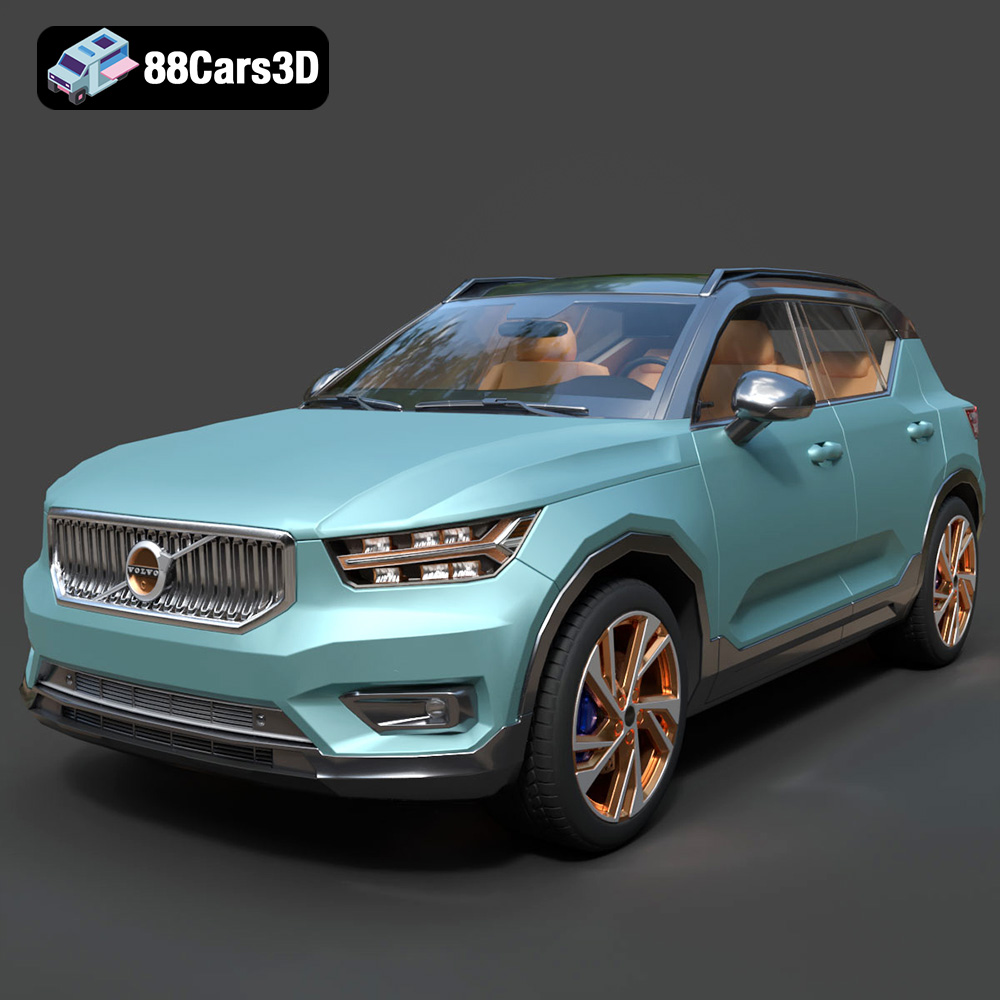
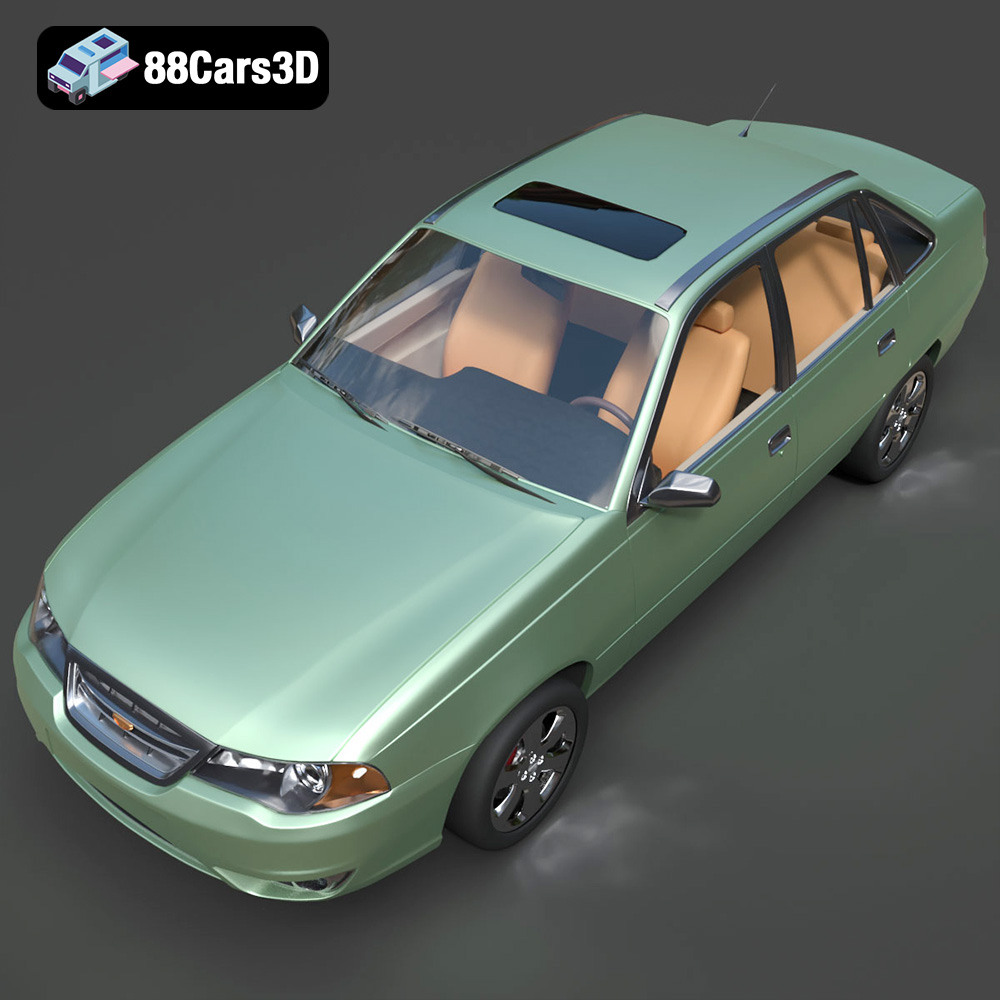
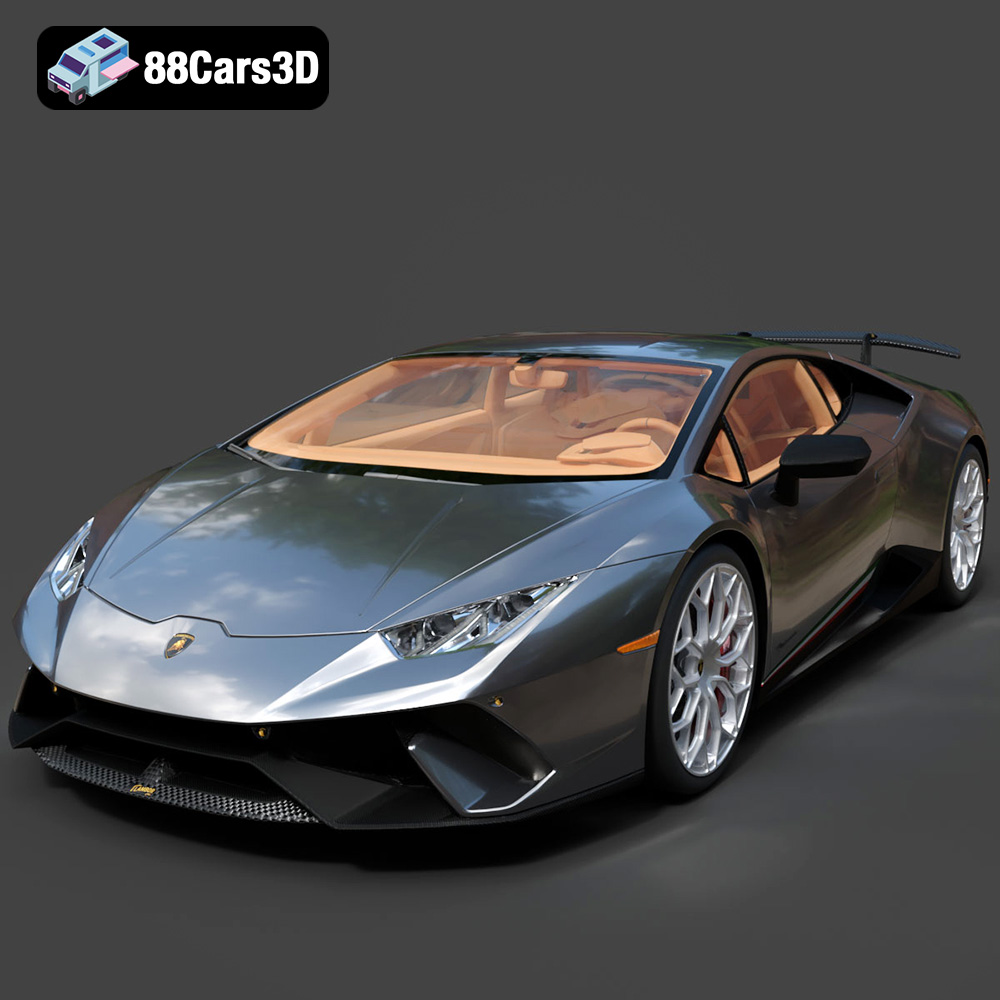
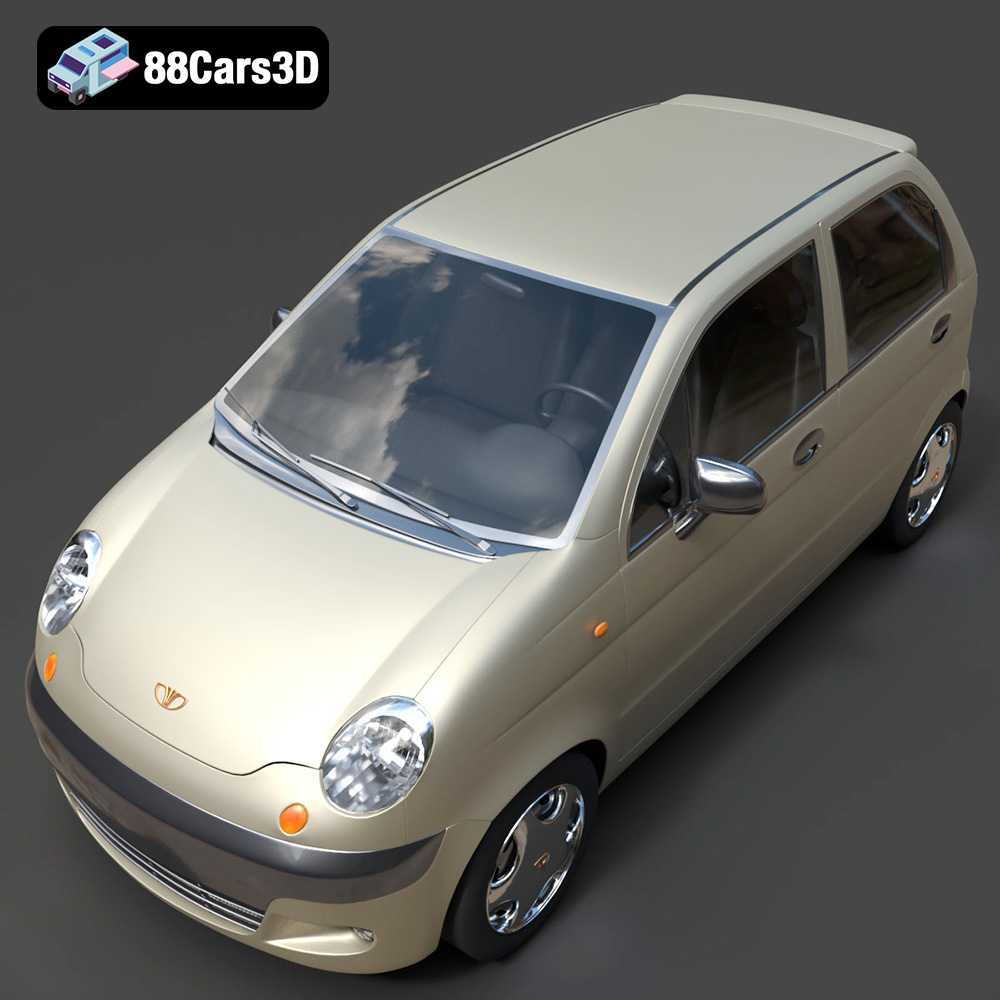
Get 50% OFF All Premium 3D & STL Models!

In the rapidly evolving digital landscape, the demand for exceptionally realistic and technically sound 3D car models has never been higher. From breathtaking cinematic visualizations to immersive open-world games and cutting-edge AR/VR experiences, high-fidelity automotive assets are the cornerstone of compelling digital content. Crafting these intricate models requires a deep understanding of design, engineering, and the specific technical demands of various digital pipelines. This comprehensive guide delves into the world of 3D car models, exploring their applications, the technical intricacies involved, and how they empower creators across industries.
Whether you’re an automotive designer bringing concepts to life, a game developer pushing visual boundaries, or an architect integrating vehicles into sprawling visualizations, the quality of your 3D car models directly impacts the final output. The digital automotive realm is a testament to precision and artistry, where every curve, reflection, and texture contributes to an illusion of reality. Companies like 88cars3d.com stand at the forefront, providing artists and developers with the essential building blocks for their most ambitious projects – meticulously crafted 3D car models ready for immediate integration and customization.
The journey of a vehicle from a sketch to a drivable car is complex, and 3D modeling has revolutionized every stage of this process. What once relied heavily on physical prototypes and painstaking manual labor is now augmented, and often led, by digital twins and virtual simulations. This shift has not only accelerated development cycles but also opened new avenues for creative expression and market engagement.
Automotive designers use 3D car models to iterate on designs at a speed impossible with physical materials. From initial concept sketches, designers move swiftly to 3D sculpts, allowing for rapid exploration of form, aerodynamics, and interior ergonomics. These digital models serve as the blueprint for engineering, marketing, and even early manufacturing processes. They provide a common visual language that unifies teams across different disciplines, ensuring that everyone is working from a consistent, high-fidelity representation of the product.
For marketing and sales, photorealistic renders generated from these 3D car models are often indistinguishable from actual photography, offering unparalleled flexibility. Brands can showcase countless configurations, colors, and environments without ever needing to build a physical prototype, saving significant resources and time. This capability extends to interactive configurators and virtual showrooms, allowing potential customers to explore vehicles in a personalized, immersive manner long before they reach a dealership.
The pursuit of photorealism and immersive experiences drives the demand for increasingly detailed and accurate 3D car models. In film and animation, models need to hold up under extreme close-ups, demanding intricate surface detail, accurate material properties, and robust animation rigs. For architectural visualization, vehicles add life and context to static environments, requiring models that seamlessly blend with rendered scenes without drawing undue attention to themselves as digital constructs.
Game development, while often requiring optimized assets, still pushes for visual fidelity that rivals offline rendering. Modern game engines leverage advanced rendering techniques like real-time ray tracing, making high-quality mesh topology, detailed UV maps, and physically based rendering (PBR) textures absolutely essential. The expectation from consumers for stunning visuals means that game artists must start with the best possible assets, which is where specialized marketplaces like 88cars3d.com become invaluable resources.
Navigating the diverse world of 3D applications and pipelines requires a solid understanding of file formats. Each format has its strengths, weaknesses, and intended use cases, making the choice of format crucial for project efficiency and compatibility. Selecting the right format ensures that your 3D car models seamlessly integrate into your workflow, preserving data integrity and optimizing performance.
The .blend format is the native file type for Blender, a powerful open-source 3D creation suite. A .blend file is more than just a model; it’s a complete scene package. It can contain meshes, materials, textures, lighting setups, cameras, animations, rigging, simulations, scripts, and even user interface layouts. This makes it incredibly convenient for Blender users, as it allows for the entire project to be self-contained. For those who primarily work within Blender, a .blend file offers full editability and access to all modifiers, node setups, and animation curves. When procuring 3D car models in .blend format, users can expect to have maximum flexibility for customization and integration into their Blender-centric projects.
The .fbx (Filmbox) format, developed by Autodesk, is one of the most widely adopted interchange formats in the 3D industry. It supports a vast array of data types, including geometry (meshes), materials, textures, animations, skinning, camera data, and lighting. Its robust support for animation and rigging makes it ideal for game development (Unreal Engine, Unity), film VFX, and any pipeline where animated 3D car models are required. While .fbx can sometimes present compatibility challenges between different software versions, it remains the go-to choice for complex asset transfers due to its comprehensive data encapsulation.
The .obj (Wavefront OBJ) format is a more universal and simpler format, widely supported across virtually all 3D software. It primarily stores geometry (vertices, faces, normals, UV coordinates) and can reference external material files (.mtl) for basic material properties and texture paths. While .obj does not support animation, rigging, or complex material node setups, its widespread compatibility makes it excellent for static 3D car models where mesh data is the priority. It’s often used for archival purposes or when a clean mesh needs to be transferred between disparate programs without the baggage of advanced features.
The .glb (GL Transmission Format Binary) is an increasingly popular format, especially optimized for AR, VR, and browser-based 3D applications. It’s a binary version of glTF, which means all data—geometry, materials, textures, animations—is packed into a single, self-contained file. This makes .glb files incredibly efficient for web delivery, offering fast loading times and ease of integration into web viewers and immersive experiences. For displaying 3D car models interactively on a website or in a mobile AR app, .glb is often the superior choice due to its optimization and compact nature.
The .unreal file is not a standalone 3D model format in the traditional sense, but rather a package or asset file within the Unreal Engine ecosystem. When a 3D car model is imported into Unreal Engine (often via .fbx), it is converted into Unreal’s proprietary asset format and stored within the engine’s content browser. This “engine-ready asset” encapsulates all the necessary data for real-time rendering, including optimized meshes, PBR materials, collision data, LODs (Levels of Detail), and potentially blueprint logic. Receiving an asset in a pre-packaged .unreal format means it’s already integrated and optimized for the engine, saving significant import and setup time for Unreal Engine developers.
The .stl (Stereolithography) format is the industry standard for 3D printing. It represents the surface geometry of a 3D object using a collection of interconnected triangles, without any color, texture, or material information. For designers looking to physically produce a 3D car model, .stl is the most common format to send to a 3D printer. While simple, its ubiquity in additive manufacturing makes it indispensable for rapid prototyping and creating physical representations of digital designs.
The .ply (Polygon File Format, or Stanford Triangle Format) is designed to store polygonal meshes, often generated from 3D scanning or precise CAD operations. It can store a wider range of properties than .obj or .stl, including color, transparency, texture coordinates, normals, and even confidence values for each vertex or face. This makes it a “precision mesh format” often used in scientific visualization, reverse engineering, and applications requiring highly accurate geometric data for analysis or direct conversion to CAD models.
The .max format is the native project file for Autodesk 3ds Max, a leading software for 3D modeling, animation, and rendering, particularly strong in architectural visualization, product design, and cinematic pre-visualization. Similar to .blend, a .max file contains the entire scene data, including all objects, materials (V-Ray, Corona, Arnold setups), lighting, cameras, animation timelines, and scene settings. For professionals working within the 3ds Max ecosystem, a .max file provides the most complete and editable version of a 3D car model, allowing full control over every aspect of the asset for high-end rendering and animation tasks.
Achieving photorealistic automotive renders is an art form that blends technical proficiency with an keen eye for aesthetics. It’s about more than just a good model; it’s about crafting an environment where the 3D car model truly shines. The process involves meticulous setup of lighting, materials, and camera, followed by strategic post-processing.
The environment plays a crucial role in grounding your 3D car model in reality. High Dynamic Range Images (HDRIs) are often the starting point, providing both realistic lighting and reflections from a real-world environment. Coupled with physical light sources (e.g., area lights, spot lights) to simulate studio setups or specific sun angles, HDRIs create a believable foundation. Software like 3ds Max with V-Ray or Corona Renderer, or Blender with Cycles, offer sophisticated lighting tools that allow artists to mimic everything from harsh midday sun to soft, diffused studio lighting. Understanding how light interacts with the car’s surfaces—highlighting contours and revealing reflections—is paramount. Think about the mood you want to convey; a dark, moody shot under city lights or a crisp, bright scene in a sun-drenched landscape.
Perhaps the most critical element in automotive rendering is the material setup. Car paint, in particular, is complex, featuring multiple layers: a base coat, metallic flakes (if applicable), a clear coat, and sometimes a protective film. Physically Based Rendering (PBR) workflows are essential here, utilizing maps for albedo, roughness, metallic, normal, and clear coat properties. Achieving the subtle imperfections – orange peel effect, microscopic scratches, or dust – adds a layer of realism. Chrome, glass, rubber, and leather also require precise PBR material definitions. For instance, glass needs accurate refractive indices and dispersion, while rubber requires specific roughness and normal map detail to convey its texture. High-quality 3D car models from sources like 88cars3d.com often come with expertly set up materials, saving considerable time and effort.
Once the raw render is complete, post-processing in tools like Adobe Photoshop or Affinity Photo is vital. This stage involves color grading, adjusting contrast, adding subtle bloom or glare effects, and perhaps a touch of chromatic aberration to mimic real-world camera lenses. Vignetting can draw attention to the car, while lens flares can add drama. Even minor tweaks to sharpness, noise reduction, and environmental integration (compositing background plates or adding atmospheric effects) can elevate a good render to an exceptional one. The goal is to make the digital render indistinguishable from a photograph, ensuring all elements harmonize seamlessly.
Game development presents a unique set of challenges for 3D car models, where visual fidelity must be balanced with real-time performance. Unlike offline rendering, game assets must be optimized to run smoothly on diverse hardware while maintaining graphical integrity.
Performance in game engines like Unreal Engine and Unity hinges on efficient asset management. The primary optimization strategy involves controlling polycount. While cinematic models can run into millions of polygons, game-ready 3D car models need to be significantly lower, typically ranging from 50,000 to 200,000 polygons for hero vehicles, with even lower counts for background cars. This is achieved through careful retopology, baking high-poly detail onto low-poly meshes using normal maps, and stripping unnecessary geometry. Instancing identical components (like wheels or brake calipers) also reduces draw calls, improving rendering efficiency. Another critical aspect is efficient texture packing, combining multiple grayscale maps into a single texture’s RGB channels to minimize memory usage.
To further enhance performance without sacrificing visual quality at close range, game artists implement Levels of Detail (LODs). This involves creating multiple versions of the same 3D car model, each with progressively lower polycounts. As the car moves further from the camera, the engine automatically switches to a lower LOD, reducing the computational load. For accurate physics and player interaction, dedicated collision models (often simplified versions of the render mesh) are essential. These invisible meshes dictate how the car interacts with the environment and other objects.
Proper UV mapping is non-negotiable for game assets. Clean, non-overlapping UVs are required for texture application, lightmaps, and ambient occlusion. Often, a second UV channel is dedicated to lightmapping, ensuring shadows are accurately baked onto the model. Efficient UV packing maximizes texture resolution, crucial for detail while minimizing texture memory.
Both Unreal Engine and Unity offer robust pipelines for importing and managing 3D car models. Typically, models are exported from 3D software (like 3ds Max or Blender) as .fbx files, which retain geometry, UVs, and sometimes basic material assignments and animations. In Unreal Engine, artists import the .fbx, create PBR materials using the node-based material editor, set up physics assets, and configure LODs within the Static Mesh Editor. Blueprints can then be used to add interactivity, driving mechanics, and other game logic. Unity follows a similar pattern, utilizing its own material system and scripting environment (C#) for gameplay implementation. High-quality 3D car models from 88cars3d.com often come pre-optimized or with clear guidelines for integration into these engines, streamlining the development process for game studios.
The utility of high-quality 3D car models extends far beyond traditional rendering and game development, permeating emerging technologies and specialized visualization fields.
Augmented Reality (AR) and Virtual Reality (VR) are transforming how consumers interact with automotive brands. Imagine stepping into a virtual showroom and customizing a car in real-time, walking around it, and even “sitting” inside, all before it’s physically built. Or, using AR on a smartphone to project a full-scale 3D car model onto your driveway. These applications demand highly optimized 3D car models, often leveraging formats like .glb for web and mobile AR, or proprietary engine formats for dedicated VR experiences. The focus is on lightweight assets that retain visual fidelity, ensuring smooth performance and a truly immersive experience without lag or visual glitches. This allows for unparalleled product exploration and engagement.
While digital models are crucial for visualization, physical prototypes remain important in the design and engineering phases. 3D printing, powered by formats like .stl and .ply, enables rapid iteration of physical models directly from digital designs. Designers can quickly print scaled-down versions of car components or even entire car bodies to evaluate ergonomics, aesthetics, and fitment. This accelerates the design cycle, reduces the cost of traditional prototyping, and allows for tactile review of digital concepts. From concept validation to manufacturing jigs and fixtures, 3D printing provides a tangible link between the digital 3D car model and the physical world.
In architectural visualization (arch-viz), 3D car models are essential for adding scale, context, and a sense of realism to renders of buildings and urban landscapes. A well-placed vehicle can convey the intended use of a space, its scale, and even the time of day or social status. Similarly, in product visualization, cars often serve as aspirational backdrop elements or as complementary products, enhancing the overall scene. The key here is seamless integration; the car models must have appropriate levels of detail and material fidelity to match the quality of the architectural elements, enhancing the narrative without becoming a distraction. They serve as silent storytellers, grounding the primary subject within a believable, dynamic environment.
With a plethora of options available, selecting the ideal 3D car model requires careful consideration of several technical aspects. The “best” model isn’t always the highest polygon count, but rather the one most suited to your specific pipeline and purpose.
The polygon count of a 3D car model directly impacts rendering performance and fidelity. For high-end cinematic renders or architectural visualizations, a very high polycount (hundreds of thousands to millions) allows for incredible detail and smooth curves without needing excessive normal maps. However, for game development or AR/VR, a much lower polycount is essential for real-time performance. When choosing a model, look at its wireframe. Good mesh topology means clean, all-quad geometry, evenly distributed polygons, and efficient edge loops that follow the car’s natural contours. This makes the model easier to edit, unwrap, and deform if animation or rigging is required. Avoid models with excessive triangles, N-gons (polygons with more than four sides), or stretched geometry unless specifically intended for a highly optimized, static background asset.
Flawless UV mapping is critical for applying textures without distortion. Check if the model has clean, non-overlapping UVs across all its components. Well-organized UV islands prevent texture stretching and make texturing a much smoother process. The quality of included textures is equally important. Look for high-resolution PBR texture sets (Albedo/Base Color, Roughness, Metallic, Normal, AO) that are clean, detailed, and tileable where appropriate. The resolution of textures (e.g., 2K, 4K, 8K) should match the model’s intended use and the required level of detail. Low-resolution textures on a high-poly model will undermine its visual quality, while overly high-resolution textures on a low-poly model are wasteful. Sources like 88cars3d.com provide detailed specifications on their 3D car models, including texture resolutions and UV layouts, helping you make informed decisions.
For projects requiring movement, such as car commercials, game cinematics, or interactive configurators, a pre-rigged and potentially animated 3D car model can be a massive time-saver. A well-designed rig for a car typically includes controls for steering, wheel rotation, suspension compression, and possibly even door/hood opening mechanisms. If the model comes with pre-baked animations (e.g., wheel spin, simple drive cycles), ensure these are compatible with your target software or engine. While adding custom animation is always an option, starting with a functional rig or a basic animation provides a significant head start, allowing artists to focus on creative direction rather than technical setup.
The world of 3D car models is a testament to the blend of technical skill and artistic vision. From pushing the boundaries of photorealistic rendering to driving immersive experiences in games and AR/VR, these meticulously crafted digital assets are indispensable across numerous industries. Understanding the intricacies of file formats, mastering rendering techniques, optimizing for real-time environments, and making informed choices about model specifications are all crucial steps in leveraging the full potential of 3D automotive design.
As technology continues to advance, the demand for high-quality, versatile 3D car models will only grow. For professionals seeking excellence and efficiency in their projects, a reliable source of premium assets is paramount. By providing a diverse range of meticulously prepared 3D car models suitable for various applications, 88cars3d.com empowers creators to realize their visions with unparalleled quality and ease. Invest in quality 3D car models, and drive your projects into a new era of visual brilliance.

Price: $129.99

Price: $99.99

Price: $89.99