In the exhilarating world of game development and real-time visualization, stunning visuals are paramount, and nothing captures attention quite like a meticulously crafted automotive model. From the sleek curves of a supercar to the rugged lines of an off-road beast, high-fidelity car models bring virtual worlds to life. However, achieving this level of visual fidelity while maintaining optimal performance in game engines is a complex balancing act. This is where texture baking emerges as an indispensable technique, serving as the bridge between breathtakingly detailed high-polygon models and the lean, efficient assets required for real-time environments.
This comprehensive guide will immerse you in the art and science of texture baking for game-ready car models. We’ll delve into why baking is critical, explore the various map types essential for PBR workflows, walk through step-by-step processes in industry-standard software like Blender and Substance Painter, and provide crucial insights into optimization and troubleshooting. Whether you’re a seasoned 3D artist, a game developer, or an automotive designer looking to optimize your visualization assets, understanding texture baking is key to unlocking the full potential of your 3D car models. Get ready to transform your detailed creations into high-performance, visually striking game assets.
The Fundamental Importance of Texture Baking for Game Assets
Imagine a 3D car model boasting millions of polygons, each sculpted to perfection, capturing every rivet, every panel gap, every intricate detail of the real-world vehicle. While such a model is ideal for offline rendering and high-end cinematic visuals, it’s a performance nightmare for real-time applications like video games or interactive AR/VR experiences. Game engines have strict polygon budgets and rely heavily on optimized assets to maintain high frame rates and a smooth user experience. This is precisely the dilemma that texture baking resolves, making it a cornerstone technique in modern game asset pipelines.
Bridging the Gap: High-Poly Detail to Low-Poly Performance
The core philosophy behind texture baking is straightforward yet revolutionary: transfer the intricate visual details from a computationally expensive high-polygon mesh onto a lightweight, optimized low-polygon mesh. Instead of rendering millions of polygons for every minute detail, the game engine renders the low-polygon model, and the illusion of detail is created by special textures. This process drastically reduces the polygon count, often by an order of magnitude or more (e.g., from 5 million polygons to 80,000 triangles for a hero car asset), leading to significant performance gains without a noticeable drop in visual quality. It’s about ‘faking’ detail efficiently, allowing artists to create stunning visuals that run smoothly on a wide range of hardware. This technique is crucial not only for cars but for virtually every complex asset in a game, from characters to environments, ensuring that the game world remains both beautiful and interactive.
Essential Map Types Generated Through Baking
Texture baking generates a suite of specialized image maps, each serving a distinct purpose in recreating the high-poly detail on the low-poly surface. Understanding these maps is crucial for effective baking and PBR material creation:
- Normal Maps: Perhaps the most critical baked texture, normal maps simulate surface detail like scratches, bolts, or subtle panel lines without adding actual geometry. They store information about the direction of surface normals, instructing the game engine how light should reflect off the surface, creating the illusion of depth and intricate geometry. A correctly baked normal map can make a flat surface appear highly detailed.
- Ambient Occlusion (AO) Maps: These maps capture the soft, diffuse shadows caused by objects blocking ambient light. They add crucial depth and realism by darkening creases, corners, and areas where geometry is close together, making objects feel more grounded in their environment. AO maps don’t affect direct light but enhance the perceived interaction with ambient light.
- Curvature Maps: Also known as Cavity maps or Edge maps, curvature maps highlight the concave (cavities) and convex (edges) areas of a mesh. These are incredibly useful for generating procedural wear and tear, dirt accumulation, or edge highlights in materials, allowing for highly realistic and dynamic texturing effects.
- ID/Color Maps: These maps assign distinct colors to different material zones or parts of the model (e.g., car body, tires, windows, interior). They act as masks, simplifying the texturing process by allowing artists to quickly select and apply materials or effects to specific areas of the model in texturing software.
- Position Maps: These maps store the world-space coordinates (X, Y, Z) of each pixel, often encoded in RGB channels. They can be invaluable for advanced shader effects, such as procedural gradients, world-aligned textures, or specific localized effects that depend on an object’s position in space.
- Thickness Maps: Also known as Subsurface Scattering maps, these indicate how thick an object is at different points. They are particularly useful for translucent materials like car headlights, glass, or even fabrics, helping to simulate how light scatters through an object.
Preparing Your Car Models for Optimal Baking
The success of your texture bake hinges significantly on the quality and preparation of both your high-polygon source model and your low-polygon target mesh. Neglecting these foundational steps can lead to frustrating artifacts, distorted details, and ultimately, a compromised final asset. A methodical approach to preparation ensures a smooth baking process and superior results.
High-Poly Model Requirements: Detail and Cleanliness
The high-polygon model is the ‘source of truth’ for all the detail you intend to bake down. Therefore, its quality is paramount. It should be meticulously detailed, free from any major mesh errors such as inverted normals, duplicate faces, or non-manifold geometry. Common high-poly models for complex assets like cars can range anywhere from 2 to 10 million polygons, sometimes even higher for extremely intricate components. Key considerations for the high-poly include:
- Sharp Edges and Creases: Ensure that all hard edges, panel gaps, and intricate details like grilles, vents, and badges are sharply defined. The baking process relies on these details to project accurate normal map information. Proper support loops or crease sets on subdivision surfaces are vital here.
- Clean Geometry: Avoid overlapping faces or self-intersections, as these can confuse the raycasting process during baking, leading to dark spots or jagged artifacts. While some very minor intersections can be tolerated, significant ones must be resolved.
- Separate Components: For highly detailed car models, it’s often beneficial to have components like wheels, calipers, and small interior parts as separate meshes in the high-poly model. This allows for more control during the baking process and can prevent ray intersection issues.
- Naming Conventions: Adopt consistent naming conventions for your high-poly meshes, especially if you intend to bake by mesh name (e.g.,
car_body_high, wheel_front_high). This will streamline the process in texturing software like Substance Painter.
When sourcing high-quality, pre-detailed models, platforms like 88cars3d.com offer an excellent starting point, providing models that often serve as robust high-poly bases for game asset creation, requiring minimal cleanup before optimization and baking.
Low-Poly Mesh Creation: Topology and UV Unwrapping
The low-polygon mesh, sometimes referred to as the ‘game mesh’ or ‘target mesh,’ is where all the baked information will reside. Its construction is equally critical, focusing on efficiency and proper UV layout.
- Optimized Topology: The low-poly mesh should have clean, efficient topology with an optimal polygon count. For a hero car model in a modern game, polygon counts typically range from 50,000 to 150,000 triangles, depending on the required level of detail and target platform. Prioritize quads where possible for clean deformation, but be prepared for triangles in areas where topology is dense or for export to game engines which triangulate meshes anyway. Edge flow should facilitate animation (e.g., wheel rotation, door opening) and maintain a pleasing silhouette.
- UV Unwrapping: This is arguably the most critical step for the low-poly mesh. UVs are 2D coordinates that tell the texture where to sit on the 3D model. For baking, UVs must be:
- Non-Overlapping: Absolutely essential for baking. Overlapping UV islands will result in baked details appearing on multiple parts of the model, creating unwanted artifacts.
- Efficient Use of Space: Maximize the use of the 0-1 UV space. Minimize empty areas to ensure the highest possible texel density for your chosen texture resolution.
- Consistent Texel Density: Ensure that all significant parts of the model have a similar texel density. This means that a texture pixel covers roughly the same real-world surface area across the entire model. Inconsistent texel density leads to some areas looking blurry and others overly sharp.
- Hard vs. Soft Edges: Identify hard edges (where the normal should ‘break’ for a sharp corner) and ensure they correspond to UV seams. Soft edges, conversely, should not have UV seams to allow for smooth normal map blending. This is crucial for preventing normal map “seams” on your model.
- Padding: Add adequate padding (or ‘bleed’) around UV islands to prevent texture bleeding artifacts at the edges of the model, especially when using MIP maps in game engines. A standard padding of 8-16 pixels is often recommended.
Step-By-Step Baking Workflows in Popular 3D Software
Once your high and low-poly models are meticulously prepared, it’s time to move into the baking phase using specialized 3D software. The general principle remains consistent across applications, but the specific tools and settings vary. We’ll explore workflows in two prominent tools: Blender and Substance Painter.
Blender’s Baking Powerhouse
Blender, a powerful open-source 3D suite, offers robust baking capabilities through its Cycles render engine. This allows artists to bake a wide array of texture maps directly within the application. For the most up-to-date and in-depth understanding of Blender’s baking features, always consult the official Blender documentation. Specifically, the Cycles Render Engine section on Baking provides detailed explanations and examples: Blender 4.4 Cycles Bake Documentation.
Blender Baking Workflow:
- Prepare Your Scene: Ensure your high-poly and low-poly models are correctly aligned and in the same position. It’s often helpful to keep the high-poly model hidden but selectable.
- UV Unwrapping: Make sure your low-poly model has a clean, non-overlapping UV map. Create a new image texture in the UV Editor or Image Editor (e.g.,
bake_normal.png) to store the baked map.
- Set Up for Baking:
- Select your high-poly mesh first, then Shift-select your low-poly mesh last.
- Go to the Render Properties tab in the Properties Editor. Ensure your render engine is set to Cycles.
- Scroll down to the ‘Bake’ panel.
- Choose your desired Bake Type (e.g., ‘Normal’ for normal maps, ‘Ambient Occlusion’ for AO, ‘Diffuse’ with direct/indirect deselected for Color/ID maps).
- Crucially, enable ‘Selected to Active’. This tells Blender to bake details from the selected high-poly onto the active (last selected) low-poly mesh.
- Adjust ‘Extrusion’ and ‘Max Ray Distance’. Extrusion determines how far out from the low-poly surface rays are cast to ‘find’ the high-poly geometry. Max Ray Distance limits this distance. These values are critical for avoiding errors and capturing all details. Start with a small extrusion (e.g., 0.05-0.1m) and adjust as needed.
- Make sure your newly created image texture for baking is selected in the Node Editor for your low-poly material (even if not connected to anything). This tells Blender where to bake the information.
- Execute the Bake: Click the ‘Bake’ button. Monitor the progress in the status bar. If artifacts appear, adjust your ‘Extrusion’ and ‘Max Ray Distance’ or check for high-poly/low-poly alignment issues.
- Save Your Baked Map: After baking, immediately save the image from the UV Editor or Image Editor. Blender does not automatically save baked images.
Substance Painter: Industry Standard for Game Asset Texturing
Substance Painter by Adobe is renowned for its intuitive PBR texturing workflow and excellent integrated baking tools. It simplifies many aspects of baking, especially the cage generation, making it a favorite for game artists.
Substance Painter Baking Workflow:
- Import Meshes: Export your high-poly and low-poly models (usually as FBX or OBJ) from your 3D modeling software. In Substance Painter, start a new project, and import your low-poly mesh as the Mesh.
- Bake Mesh Maps:
- Go to ‘Texture Set Settings’ and click ‘Bake Mesh Maps’.
- Under ‘High Definition Meshes’, click the folder icon and import your high-poly mesh(es). Substance Painter can handle multiple high-poly meshes, automatically matching them to low-poly parts if named correctly (e.g.,
_high and _low suffixes).
- Output Size: Set your desired texture resolution (e.g., 2048×2048, 4096×4096).
- Common Maps: Ensure ‘Normal’, ‘World Space Normals’, ‘ID’, ‘Ambient Occlusion’, ‘Curvature’, ‘Position’, and ‘Thickness’ are selected under ‘Common Maps’.
- Anti-Aliasing: Set this to a higher value (e.g., 4×4 or 8×8) for smoother map edges and reduced jaggedness.
- Max Frontal/Rear Distance: These are equivalent to Blender’s ‘Extrusion’. They define how far the rays extend from the low-poly mesh to capture detail from the high-poly. Adjust these values carefully. Start with a general value (e.g., 0.01-0.03 for a car) and fine-tune if artifacts appear.
- Cage: Substance Painter can generate a cage automatically. You can also manually adjust the cage for specific parts if necessary in the 3D viewport.
- Execute Bake: Click ‘Bake selected textures’. Substance Painter will process each map.
- Review and Refine: After baking, inspect all maps carefully for artifacts. If issues arise, adjust settings (especially cage and distances), or separate and bake problematic parts individually.
Substance Painter’s ability to preview baked maps instantly and make adjustments makes it incredibly efficient for iterating on baking results.
Optimizing Baked Textures and Game Engine Integration
Once your textures are baked, the next crucial step is optimizing them for game engine performance and integrating them into your chosen engine (Unity or Unreal Engine). Proper optimization ensures your car models look fantastic without bogging down the game’s frame rate or consuming excessive memory.
Texel Density and Texture Resolution Management
Texel density refers to the number of texture pixels (texels) per unit of real-world surface area on your 3D model. Consistent texel density is paramount for visual uniformity: a tire shouldn’t look blurrier than a car door unless intentionally so. While hero assets like the main car body might warrant higher texel density, less visible or smaller components can have lower densities to save resources.
- Choosing Resolutions: Texture resolutions should always be powers of two (e.g., 512×512, 1024×1024, 2048×2048, 4096×4096). For a primary hero car in a modern game, 4K (4096×4096) for critical maps (Normal, Albedo) and 2K (2048×2048) for secondary maps or less prominent parts is common. Smaller details like brake calipers or interior components might use 1K or even 512 maps.
- Texture Packing: To reduce draw calls and memory footprint, it’s common practice to pack multiple grayscale texture maps (like Metallic, Roughness, and Ambient Occlusion) into the RGB channels of a single texture. For instance, you might pack Metallic into the Red channel, Roughness into the Green channel, and AO into the Blue channel of one texture, saving two texture samples per material. This technique, often called an MRAS map, is widely used in game development.
- MIP Maps: Ensure your engine generates MIP maps for your textures. MIP maps are pre-calculated, progressively smaller versions of a texture. When an object is far from the camera, the engine uses a smaller MIP map level, reducing aliasing and improving performance by sampling less detailed textures.
Integrating into Unity and Unreal Engine
The final destination for your game-ready car model and its baked textures is the game engine. Both Unity and Unreal Engine provide robust PBR rendering pipelines that efficiently handle baked maps.
Unity Integration:
- Import FBX: Drag your low-poly FBX model into your Unity project’s Assets folder. Configure import settings (e.g., scale, normals import) as needed.
- Import Textures: Drag all your baked texture maps (Normal, Albedo/Base Color, Metallic, Roughness, AO, etc.) into the Assets folder.
- Texture Settings:
- For Normal maps, set ‘Texture Type’ to ‘Normal Map’ and ensure ‘Create from Grayscale’ is unchecked.
- For Metallic, Roughness, and AO maps, set ‘Texture Type’ to ‘Default’ and ensure ‘sRGB (Color Texture)’ is unchecked, as these are linear data maps, not color.
- For Albedo/Base Color, ‘sRGB (Color Texture)’ should be checked.
- Adjust compression settings (e.g., BC7, DXT1, DXT5) to balance quality and file size.
- Material Setup:
- Create a new Material (e.g., ‘Car_Body_Mat’).
- Assign the material to your car model in the Inspector.
- Use the ‘Standard’ shader (or URP/HDRP equivalent).
- Drag and drop your Albedo, Normal, Metallic, and Ambient Occlusion maps into their respective slots. If using packed maps, connect the correct channels (e.g., R for Metallic, G for Roughness, B for AO).
Unreal Engine Integration:
- Import FBX: Drag your low-poly FBX into the Content Browser. Configure import options (e.g., ‘Combine Meshes’, ‘Normal Import Method’).
- Import Textures: Drag all your baked textures into the Content Browser.
- Texture Settings:
- For Normal maps, ensure ‘Compression Settings’ is set to ‘Normalmap (DXT5, BC5, etc.)’ and ‘sRGB’ is unchecked.
- For Albedo/Base Color, ‘Compression Settings’ should be ‘Default (DXT1/5, BC1/3)’ and ‘sRGB’ checked.
- For Metallic, Roughness, AO, and packed maps, ‘Compression Settings’ should be ‘Default’ or ‘VectorDisplacementmap’ for specific uses, and ‘sRGB’ unchecked.
- Material Setup:
- Create a new Material (e.g., ‘M_Car_Body’).
- Open the Material Editor and connect your texture samples to the corresponding input pins of the ‘Material Output’ node:
- Base Color: Connect Albedo texture.
- Normal: Connect Normal map.
- Metallic: Connect the Red channel of your packed MRAS map.
- Roughness: Connect the Green channel of your packed MRAS map.
- Ambient Occlusion: Connect the Blue channel of your packed MRAS map.
- Set ‘Blend Mode’ to ‘Opaque’ and ‘Shading Model’ to ‘Default Lit’.
Remember that LODs (Level of Detail) are another crucial optimization post-baking. Generate multiple versions of your low-poly mesh with decreasing polygon counts and assign them to your car model. The engine will automatically swap to a lower-detail mesh when the car is further from the camera, dramatically reducing render complexity without perceived quality loss. This is a manual or semi-automatic process performed after baking, extending the efficiency gains achieved by texture baking.
Advanced Baking Techniques and Troubleshooting
Even with meticulous preparation, texture baking can present challenges. Understanding common artifacts and advanced techniques to circumvent them is key to achieving pristine results, especially with complex automotive models.
Addressing Common Baking Artifacts
Baking isn’t always a one-shot process. Artists frequently encounter artifacts that require careful troubleshooting. Here are some of the most common issues and their solutions:
- Skewing/Warping: This occurs when the projection rays from the low-poly mesh cannot accurately hit the high-poly surface, causing baked details to appear stretched or misaligned.
- Causes: Insufficient extrusion/cage distance, complex geometry where the low-poly deviates too much from the high-poly, or incorrect high/low poly alignment.
- Solutions:
- Adjust Extrusion/Cage: Increase the extrusion distance (Blender) or Max Frontal/Rear Distance (Substance Painter) carefully. If using a custom cage, expand it.
- Split Meshes: For areas with extreme overhangs or very distinct parts (e.g., mirrors, spoilers), consider baking them separately. This prevents rays from one part of the low-poly from mistakenly hitting another part of the high-poly.
- Refine Low-Poly: Ensure your low-poly closely follows the general contours of the high-poly, particularly in areas with significant detail.
- Dark Spots/Shadows: Often appearing in crevices or tight spaces, these are typically caused by rays getting trapped or failing to hit any high-poly surface.
- Causes: Overlapping high-poly geometry, very small gaps in the high-poly, or too short extrusion/cage distance.
- Solutions:
- Increase Extrusion: Sometimes a slight increase helps rays ‘escape’ tight spots.
- Clean High-Poly: Address any self-intersecting or overly close geometry on the high-poly.
- Bake with Exploded Mesh: For complex, assembled objects (like a car chassis with many interconnected parts), it’s a common advanced technique to “explode” the high-poly mesh. This means moving individual components apart in a non-overlapping way for baking, then reassembling the low-poly mesh in the engine. This prevents rays from hitting adjacent parts unintentionally.
- Jagged Edges/Aliasing: Baked textures can sometimes show stair-stepping or pixelation, especially on diagonal lines.
- Causes: Low anti-aliasing settings during baking, insufficient texture resolution for the required detail.
- Solutions:
- Increase Anti-Aliasing: In Substance Painter, set Anti-Aliasing to 4×4 or 8×8. In Blender, render settings contribute to the overall quality, though dedicated anti-aliasing for baking is less direct and often handled by the output image resolution.
- Higher Resolution: If detail requires it, consider baking to a higher texture resolution.
- Seams on Normal Maps: Visible lines appearing where UV islands meet.
- Causes: Incorrect smoothing groups/hard edges on the low-poly, or lack of sufficient padding around UV islands.
- Solutions:
- Correct Smoothing Groups: Ensure hard edges on your low-poly correspond to UV seams. Where there should be a smooth transition, the edge should be soft, and there shouldn’t be a UV seam.
- Increase UV Padding: Add more pixels of padding around your UV islands to allow for proper bleeding and prevent artifacts at the edges.
Specific Challenges for Automotive Models
Automotive models present unique baking challenges due to their combination of large, smooth surfaces, intricate details, and often reflective materials.
- Panel Gaps and Sharp Creases: Accurately capturing the fine lines of panel gaps and the crispness of body lines is crucial for car realism. Ensure these details are present and sharp on the high-poly and that the low-poly topology and UVs support their projection without pinching or blurring.
- Glass and Translucent Parts: Car glass, headlights, and taillights require special attention. While the primary body often uses a single texture set, these elements might need separate baking or even different shader approaches. For transparent parts, ensure your low-poly has accurate geometry for light refraction and reflection, and bake maps that support specific PBR glass shaders (e.g., thickness maps).
- Small, Overlapping Details (e.g., emblems, grilles): Components like emblems or complex grilles can be problematic if their geometry is very close or intersecting.
- Bake Separately: Often, the best approach is to bake these elements individually. This gives you precise control over their cage and projection settings.
- Floating Geometry: Sometimes, very thin details are modeled as “floating geometry” (not attached to the main mesh) on the high-poly. Ensure the cage adequately covers these during baking.
- Interior Components: Car interiors can be as complex as exteriors, with many small, distinct parts. It’s common practice to break the interior down into multiple texture sets or even separate assets for optimal performance and easier texturing. Bake maps for dashboard elements, seats, steering wheel, etc., using specific resolutions based on their visibility.
Mastering these advanced techniques and being proficient in troubleshooting common baking errors will elevate the quality of your game-ready car models significantly, ensuring they look stunning and perform flawlessly in any real-time application.
Conclusion
Texture baking is not merely a technical step in the 3D pipeline; it’s an art form that transforms static, high-resolution models into dynamic, performance-friendly game assets. For the intricate and visually demanding world of automotive design and game development, mastering this technique is indispensable. We’ve journeyed through the critical importance of baking, explored the diverse array of essential texture maps, navigated step-by-step workflows in industry-standard software like Blender and Substance Painter, and delved into the nuances of optimization and troubleshooting common artifacts.
The journey from a multi-million polygon CAD model to a beautifully rendered, game-ready car asset with tens of thousands of triangles is a testament to the power of texture baking. It allows artists to maintain astonishing visual fidelity – capturing every subtle curve, every sharp edge, every intricate detail – while adhering to the stringent performance requirements of real-time engines. Remember the key takeaways: start with a clean, detailed high-poly model, craft an optimized low-poly mesh with precise UVs, understand the function of each baked map, and patiently troubleshoot any artifacts. Your proficiency in these areas will directly translate into higher quality, more immersive virtual experiences.
As you embark on your next automotive visualization or game development project, remember that the foundation of exceptional game-ready car models lies in the quality of your source assets and the precision of your baking process. Platforms like 88cars3d.com offer a wealth of high-quality 3D car models that provide an excellent starting point for optimization and baking, giving you a head start in creating stunning virtual vehicles. Practice these techniques, experiment with different settings, and you’ll soon be producing game-ready car models that captivate and perform at the highest level.
Featured 3D Car Models

Texture: Yes | Material: Yes | 3D Printable: Yes. Download the Italian Thoroughbreds Bundle featuring 5 iconic 3D models: Lamborghini Huracán Performante, Ferrari 458 Italia, Lamborghini Urus, Diablo SV, and Maserati GT. Optimized for 4K rendering and 3D printing (STL included). Save 50% with this ultimate Italian vehicle collection.
Price: $199.99
View Product

Download the Elite Future Mobility Bundle featuring 4 highly optimized 3D models: Tesla Model S, Avatr 11, Li L9, and Zoox Robotaxi. Perfect for ArchViz, Smart City renders, and game dev. Optimized for Unreal Engine and Blender. Includes .fbx, .obj, and .max formats.
Price: $99
View Product
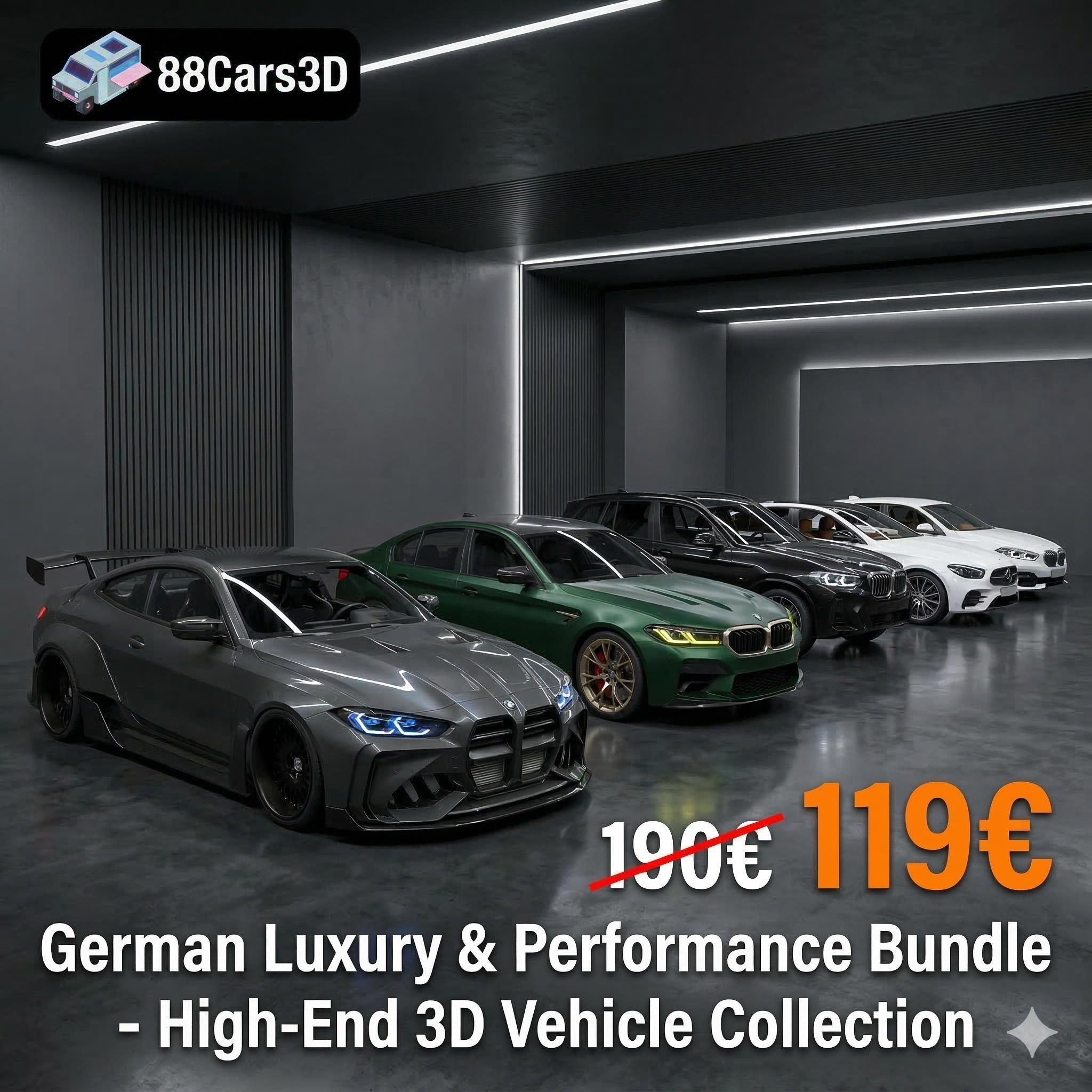
🚗 5 Iconic German Cars (BMW M4 G82, M5 CS, X3, 1 Series & Mercedes E-Class). ✅ Optimized for ArchViz: Ready for Corona & V-Ray. 💰 Save €71 with this limited-time collection! 🚀 Instant Download after purchase.
Price: $119
View Product
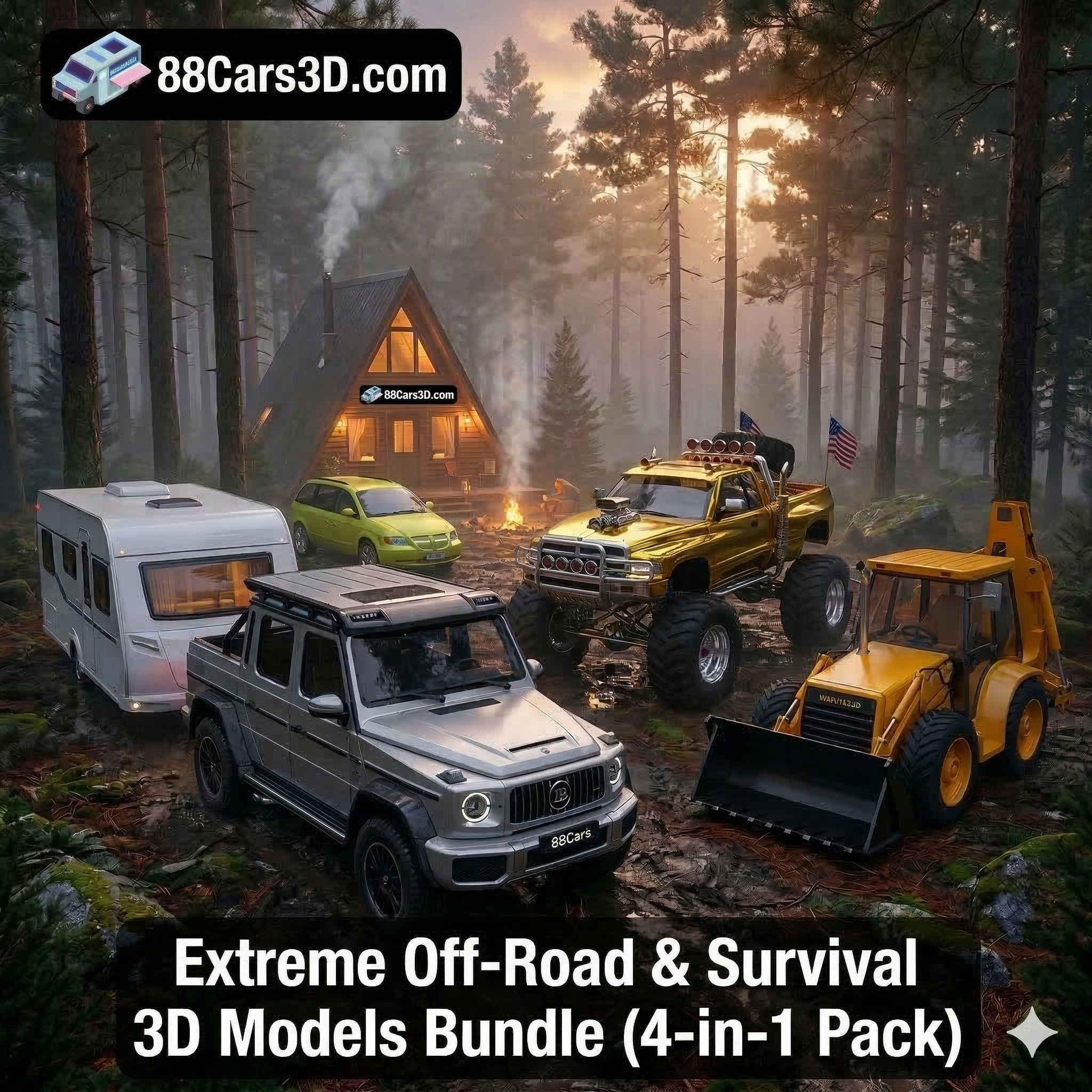
Download the Extreme Off-Road & Survival 3D Models Bundle! Includes the Brabus 800 Adventure, Dodge Ram Bigfoot, Spec Truck, and a Caravan. Save over €210 on this premium 4-in-1 off-grid vehicle pack for ArchViz and game development.
Price: $149.99
View Product
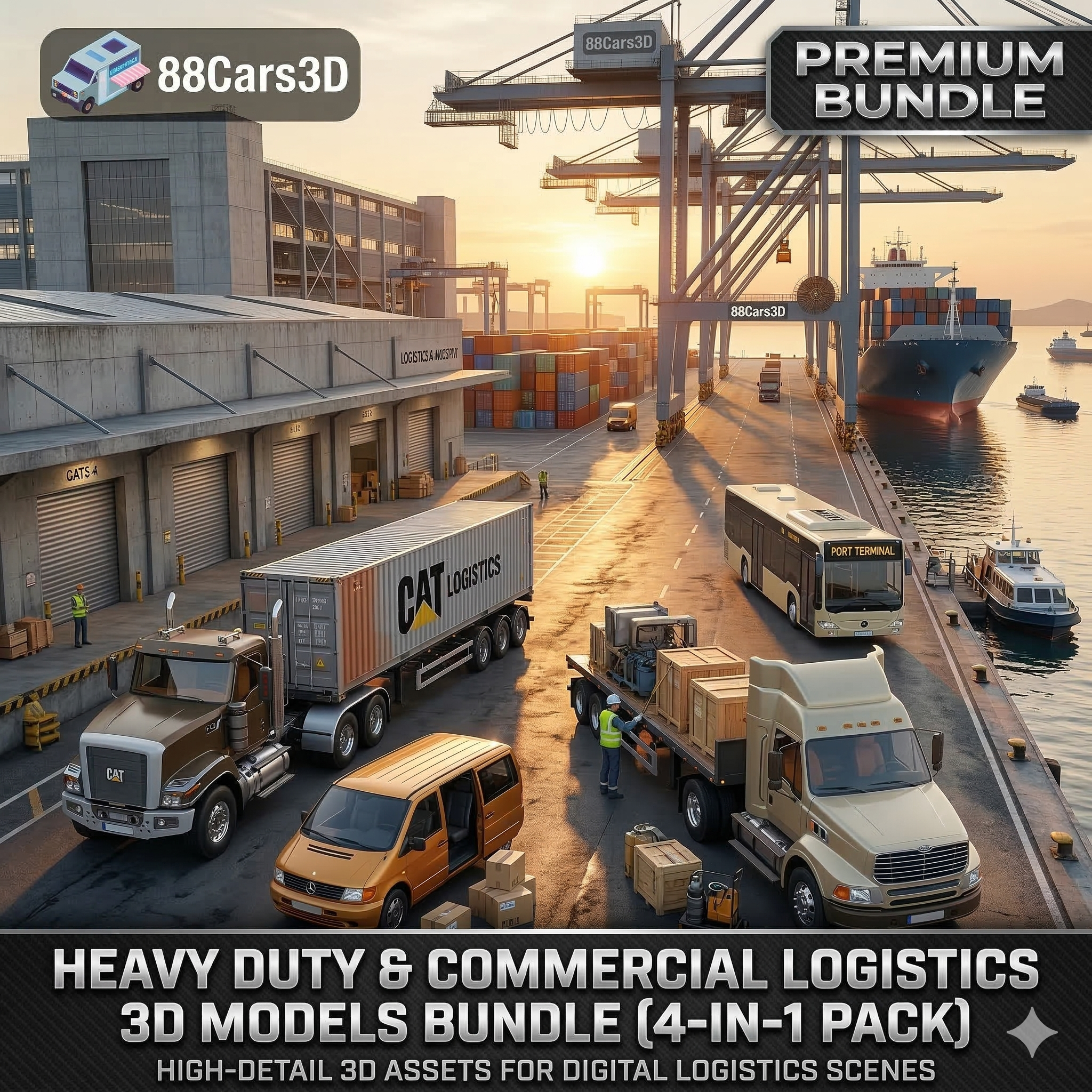
Download the Heavy Duty & Commercial Logistics 3D Models Bundle! Includes the Ford Sterling, Caterpillar CT680, Mercedes Citaro Bus, and Vito Van. Save over €130 on this massive, game-ready 4-in-1 industrial vehicle pack.
Price: $109.99
View Product

Download the Ultimate Custom Motorcycles 3D Models Bundle. Includes a Custom Chopper, Ducati 916 Café Fighter, Harley XR1200X, and BMW K100. Perfect premium props for luxury ArchViz garages. Save over €250 today!
Price: $159.99
View Product

Download the ultimate JDM Street Racing 3D Models Bundle! Includes the Nissan GT-R, Toyota Supra, Mazda RX-7, Lancer Evo IX, and Honda NSX. Save big on this highly optimized, game-ready 5-in-1 Japanese legend car pack.
Price: $129.99
View Product

Download the ultimate American Muscle & Cinematic Classics 3D Models Bundle! Includes the Dodge Charger ’68, Mustang Eleanor GT500, Camaro Z28 ’79, and a custom ’69 Mustang. Save over €240 on this game-ready, premium 4-in-1 pack.
Price: $149.99
View Product
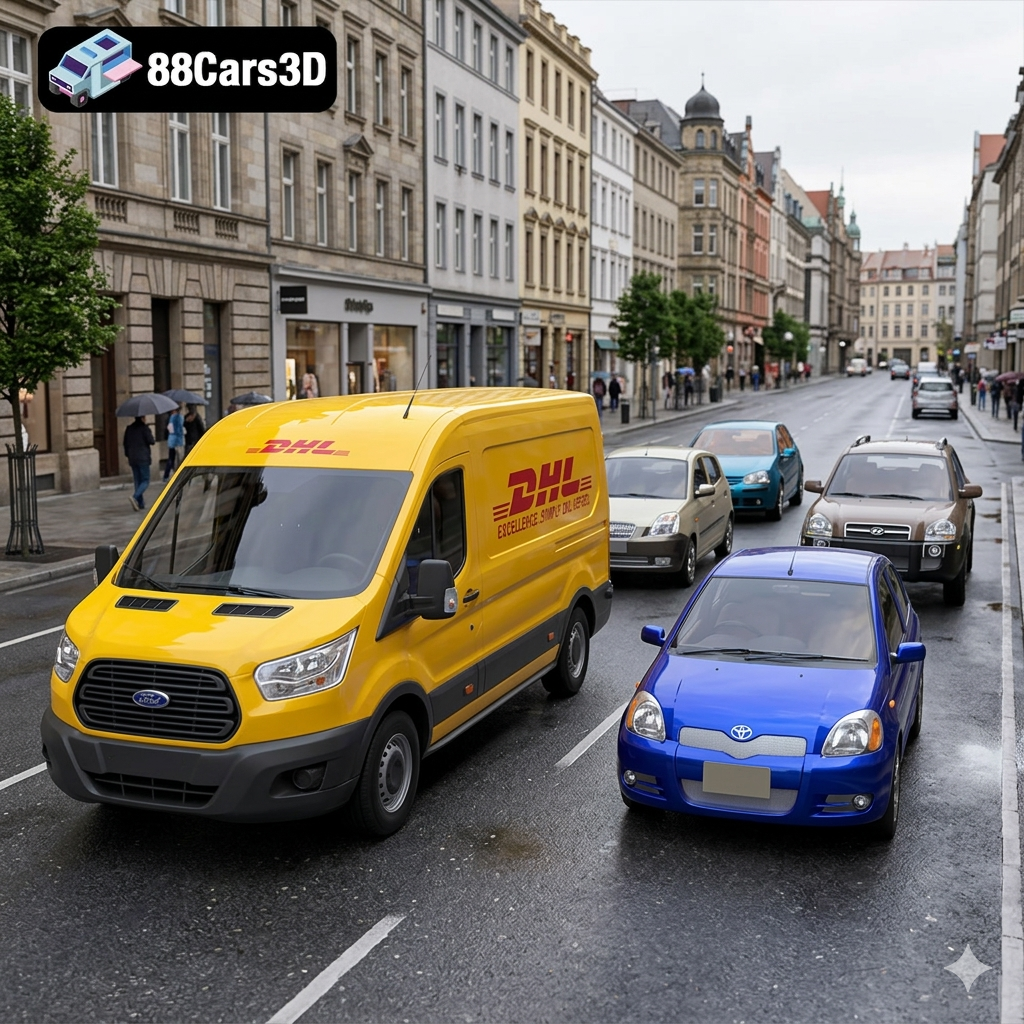
Download the Everyday City Traffic 3D Models Bundle. Includes the VW Golf, Kia Picanto, Hyundai Tucson, Toyota Yaris, and a DHL Ford Transit Van. Save big on this 5-in-1 pack, perfectly optimized for realistic ArchViz streets and game traffic.
Price: $99.99
View Product
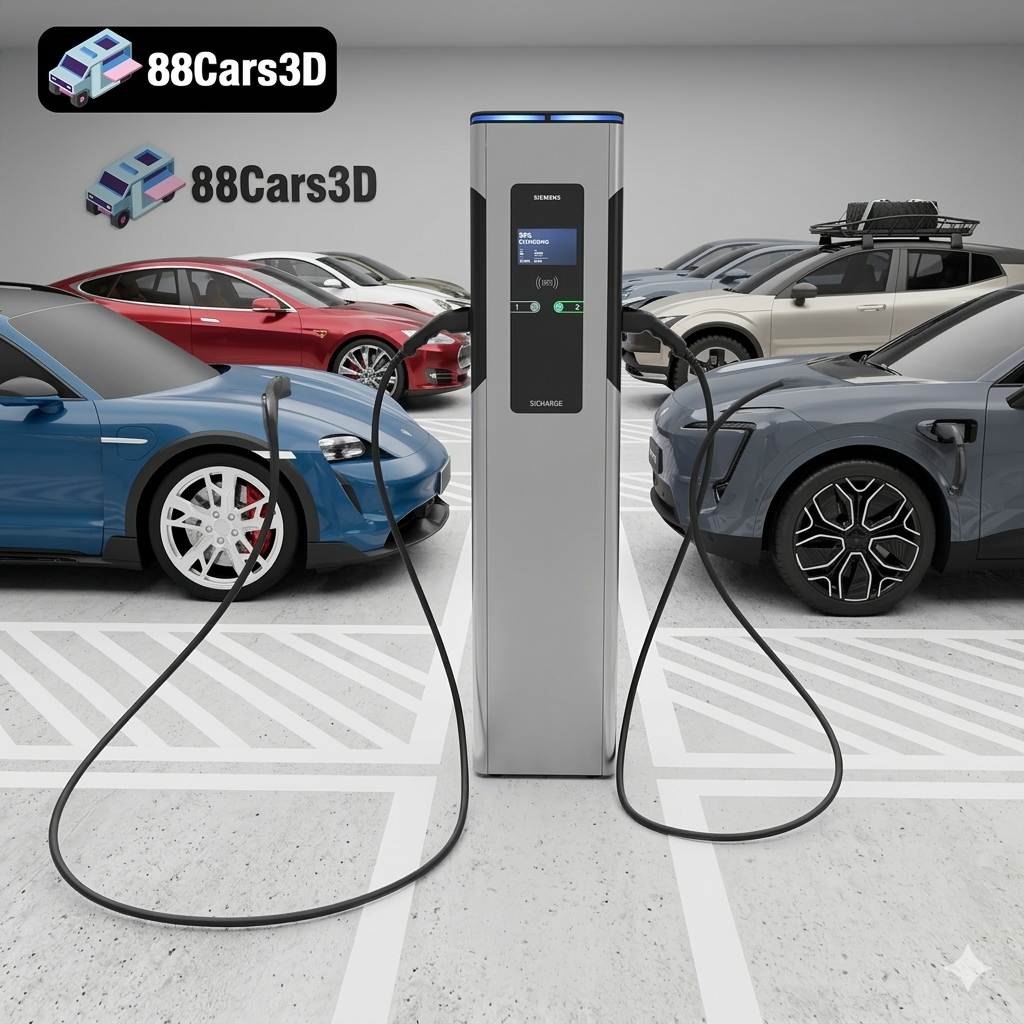
Download the Future of Mobility EV 3D Models Bundle. Includes the Volvo EX30, Tesla Model S, AVATR 11, Porsche Taycan, and a Siemens EV Charger. Save big on this highly optimized 5-in-1 pack for ArchViz and game development!
Price: $89.99
View Product


