Get 50% OFF All Premium 3D & STL Models!

Unreal Engine has revolutionized real-time rendering, offering unparalleled visual fidelity and interactive capabilities. At its core, powering much of this interactivity without requiring extensive coding knowledge, is Blueprint Visual Scripting. For 3D artists, designers, and visualization professionals who want to bring their automotive concepts to life in Unreal Engine but lack traditional programming experience, Blueprint is an indispensable tool. It empowers you to create complex interactions, dynamic environments, and engaging user experiences, transforming static 3D models into immersive, functional realities.
This comprehensive guide will demystify Blueprint Visual Scripting, specifically tailored for the needs of automotive visualization and interactive projects. We’ll explore how artists can leverage Blueprint to animate vehicles, build intricate configurators, integrate stunning visual effects, and optimize performance, all without writing a single line of C++ code. Whether you’re aiming to create a jaw-dropping car configurator, a cutting-edge virtual showroom, or compelling cinematic content, understanding Blueprint is your gateway to unlocking the full potential of your high-quality 3D car models within Unreal Engine.
Blueprint Visual Scripting is Unreal Engine’s powerful node-based interface that allows you to create game logic, control objects, and define interactions visually. Instead of typing lines of code, you connect nodes, each representing a specific action, event, or data point, to form logical sequences. This approach makes programming accessible to a broader audience, including 3D artists and designers who excel at visual problem-solving. For automotive projects, Blueprint provides the foundation for everything from a simple door opening animation to a full-fledged interactive vehicle configurator.
At its heart, Blueprint enables you to define the behavior of any Actor in your scene. An “Actor” in Unreal Engine is any object that can be placed in a level, such as a 3D car model, a light, a camera, or even an invisible trigger volume. By attaching a Blueprint script to an Actor, you dictate how it responds to user input, environmental changes, or other Actors. This paradigm empowers you to infuse your static 3D car models with dynamic life, making them responsive and engaging elements within your real-time visualizations.
Navigating the Blueprint Editor is crucial. It comprises several key panels: the Components panel lists all the visual and functional components attached to your Actor; the My Blueprint panel displays variables, functions, macros, and event graphs; and the central Event Graph is where you visually connect nodes to create your logic. Variables hold data (like a car’s color), events are triggers (like a mouse click), and functions are reusable blocks of logic. Understanding these fundamental building blocks is the first step towards mastering Blueprint.
For instance, to make a car’s headlights turn on, you would create an “Event” (e.g., a keyboard press) and connect it to a “Function” node that controls the visibility or intensity of a light component attached to your car model. The beauty lies in seeing the flow of logic directly, making it easier to debug and understand. More details on getting started with the Blueprint Editor can be found in the official Unreal Engine documentation, which offers extensive resources for beginners and advanced users alike.
Unreal Engine offers different types of Blueprints, each suited for specific tasks. Actor Blueprints are the most common, used to add functionality to objects in your scene (like your car model). Widget Blueprints (UMG) are essential for creating user interfaces, such as the buttons and sliders for an automotive configurator. Level Blueprints provide a way to script unique interactions within a specific level, often used for environmental events or unique cinematic sequences that are tied to that level alone. Finally, Data Blueprints (or Data Asset Blueprints) are excellent for organizing large amounts of data, like different car specifications, colors, and material presets, making your projects modular and scalable. Choosing the right Blueprint type for your task is a key aspect of efficient development.
Bringing your high-quality 3D car models into Unreal Engine is just the first step. The real magic happens when you infuse them with interactivity using Blueprint. Let’s walk through a fundamental example: changing a car’s paint color dynamically and making a car door open and close. This will introduce you to core Blueprint concepts that are essential for any automotive visualization project, especially when using assets optimized for Unreal Engine, such as those found on 88cars3d.com.
Before diving into Blueprint, ensure your 3D car model is properly imported with clean topology, correct UV mapping, and distinct material slots for different parts (e.g., body, wheels, interior). This modularity is crucial for Blueprint interactions. When sourcing automotive assets from marketplaces such as 88cars3d.com, these considerations are often pre-addressed, providing a solid foundation for your interactive experiences. Once your model is in the engine, right-click on it in the Content Browser and choose “Create Blueprint Class” to turn it into an Actor Blueprint.
To dynamically change a car’s color, you’ll work with Dynamic Material Instances (DMIs). A DMI allows you to modify material parameters (like color or roughness) at runtime without creating new static materials. Here’s a simplified workflow:
This fundamental setup forms the backbone of any car configurator, allowing users to personalize their vehicles in real-time. For a deeper dive into materials, Epic Games provides excellent learning resources on their developer portal.
Animating a car door to open and close is another excellent introductory Blueprint exercise, combining input events with Timeline nodes and Lerp (Linear Interpolate) functions:
This simple door animation demonstrates how Blueprint can drive complex motion over time, making your automotive scenes interactive and dynamic. You can extend this logic to control convertible tops, hood and trunk openings, or even deployable spoilers.
Beyond basic interactions, Blueprint truly shines in building sophisticated automotive visualization tools. Think about the power of a fully interactive car configurator, where users can swap out wheels, change interior trims, or even see physics-driven performance variations in real-time. This level of complexity requires a deeper understanding of Blueprint’s capabilities, integrating UI, data structures, and more intricate event handling.
When developing advanced configurators, organization becomes paramount. Leveraging the robust architecture of Unreal Engine, especially with high-quality, pre-optimized 3D car models from platforms like 88cars3d.com, significantly streamlines the process. These assets are often structured with named material slots and separate mesh components, perfectly set up for Blueprint-driven customization. This allows developers to focus on the interactive logic rather than spending time optimizing or re-structuring the base geometry.
A full-featured automotive configurator combines interactive UI elements with robust data management. UMG (Unreal Motion Graphics) is Unreal Engine’s UI system, allowing you to design user interfaces directly within the engine. You’ll create Widget Blueprints for buttons, sliders, dropdowns, and text displays. These UI elements then communicate with your car’s Actor Blueprint to trigger changes.
This structured approach ensures your configurator remains manageable even with dozens of customization options, providing a smooth and responsive user experience. It allows for dynamic loading of assets and parameters, making your automotive visualization incredibly flexible.
For more immersive experiences, you might want to showcase vehicle dynamics. Unreal Engine provides a robust physics system that can be integrated with Blueprint to control and visualize car behavior. While complex vehicle physics often utilize C++ for optimal performance, Blueprint can still drive higher-level interactions and parameters.
By blending UI-driven controls with physics and animations, Blueprint empowers you to create deeply interactive automotive experiences that go far beyond simple visual changes, allowing users to feel the presence and performance of the vehicle.
While Blueprint offers incredible accessibility, it’s a visual scripting language and, by nature, can be less performant than highly optimized C++ code. For real-time automotive visualization, especially in demanding scenarios like AR/VR, maintaining a high frame rate is crucial. Therefore, understanding and applying Blueprint optimization best practices is paramount to ensure your projects run smoothly without sacrificing visual quality.
The key to efficient Blueprint often lies in minimizing unnecessary operations and structuring your logic intelligently. Even when working with high-quality 3D car models that are already optimized for poly count and textures (as typically found on 88cars3d.com), inefficient Blueprint scripts can still lead to significant performance bottlenecks. The goal is to achieve complex interactions without overburdening the CPU, especially when dealing with many Actors or intricate logic graphs.
One of the most common performance pitfalls in Blueprint is over-reliance on the Event Tick. The Event Tick fires every single frame, making it suitable for actions that require continuous updates (like smooth camera movement). However, if you place logic that doesn’t need to run constantly on the Event Tick (e.g., checking if a car door is open, which only needs to happen when the door state changes), you’re wasting valuable CPU cycles.
Thoughtful use of events can dramatically reduce the processing overhead of your Blueprints, leading to smoother frame rates and a better user experience.
Well-structured Blueprints are not only easier to debug but also often more performant. Here are some key practices:
By adhering to these best practices, you can create robust and performant Blueprint scripts that bring your automotive visualizations to life without compromising real-time performance.
The foundation of any stunning automotive visualization in Unreal Engine is the 3D car model itself. High-quality assets, like those meticulously crafted and optimized for real-time rendering available on 88cars3d.com, are designed with clean topology, proper UV mapping, and distinct material assignments. Blueprint acts as the bridge, allowing you to dynamically interact with and manipulate these static assets, transforming them into interactive experiences.
Effective integration begins with how your 3D model is prepared and imported. A modular approach to modeling, where individual components like doors, wheels, and interior elements are separate meshes, simplifies Blueprint scripting significantly. This allows Blueprint to directly target and control specific parts of the car without affecting others, enabling granular control over animations, material changes, and component visibility.
Before importing your 3D car model into Unreal Engine, consider these preparation steps to ensure seamless Blueprint integration:
When you acquire assets from professional sources like 88cars3d.com, these models are often delivered with this level of preparation, making your Unreal Engine development much more efficient and reducing the setup time required before you can start scripting interactivity.
Once your car model is imported as a Skeletal Mesh or a collection of Static Meshes within an Actor Blueprint, you gain direct access to its components and materials:
By combining well-prepared 3D assets with thoughtful Blueprint scripting, you can unlock a new dimension of interactivity and visual fidelity for your automotive projects, delivering captivating real-time experiences.
Blueprint’s utility extends far beyond just interactive configurators. In the rapidly evolving fields of virtual production, AR (Augmented Reality), and VR (Virtual Reality), Blueprint serves as a critical tool for orchestrating complex scenes, managing user interactions, and optimizing content for diverse platforms. For automotive projects, this means creating immersive training simulations, interactive marketing experiences, or even driving cinematic sequences on LED volumes.
The flexibility of Blueprint allows artists and designers to quickly prototype and iterate on interactive elements, making it an invaluable asset in fast-paced production environments. Whether it’s controlling cameras, triggering particle effects, or integrating external data, Blueprint provides the visual scripting backbone for these advanced real-time applications, all while maintaining accessibility for non-programmers.
Virtual Production (VP), often utilizing large LED volumes, has transformed filmmaking and broadcast. Blueprint plays a pivotal role in these workflows, allowing technical artists to control various aspects of the virtual environment in real-time:
This dynamic control allows filmmakers and designers to make creative decisions on the fly, saving significant time and resources compared to traditional production methods.
AR and VR offer unique opportunities for automotive visualization, from virtual showrooms to interactive design reviews. Blueprint is essential for crafting these immersive experiences while addressing the unique performance and interaction challenges of AR/VR:
By leveraging Blueprint, even non-programmers can develop compelling and performant AR/VR automotive experiences, bridging the gap between cutting-edge technology and artistic vision.
Even with its visual nature, working with Blueprint in complex automotive projects can present its own set of challenges. From logic errors to performance bottlenecks, encountering issues is a natural part of the development process. The good news is that Unreal Engine provides robust debugging tools and established best practices to help you troubleshoot and maintain your Blueprint scripts efficiently. Understanding these challenges and how to overcome them is crucial for ensuring smooth project development, especially when dealing with intricate interactive systems like car configurators.
A structured approach to debugging and a proactive mindset towards maintaining clean Blueprint graphs will save you significant time and frustration. Remember that even the most optimized 3D car models from marketplaces like 88cars3d.com, while providing a solid asset foundation, still rely on well-written Blueprint logic to function correctly and interactively.
When your Blueprint isn’t behaving as expected, debugging is your best friend. Unreal Engine offers several powerful tools to help you identify and fix issues:
Mastering these debugging tools will significantly accelerate your ability to diagnose and resolve issues in your automotive Blueprint projects, ensuring your interactive features work flawlessly.
As your automotive projects grow in scope, Blueprints can quickly become large and difficult to navigate, leading to what’s often called “spaghetti Blueprint.” This refers to an unorganized graph with tangled wires and sprawling nodes, making it hard to understand, debug, or expand. Preventing this requires proactive organization and good practices:
By following these best practices, you can create clean, efficient, and easily maintainable Blueprints for even the most ambitious automotive visualization projects, ensuring long-term success and scalability.
Blueprint Visual Scripting stands as a monumental achievement in game development and real-time visualization, democratizing the power of Unreal Engine for artists, designers, and non-programmers. For anyone involved in automotive visualization, from creating interactive configurators to crafting immersive virtual production scenes or cutting-edge AR/VR experiences, Blueprint is an indispensable skill. It empowers you to infuse your high-quality 3D car models with dynamic life, allowing users to interact, customize, and explore vehicles in ways that static renders simply cannot achieve.
We’ve traversed the landscape of Blueprint, from understanding its core principles and setting up your first interactive automotive elements, to building advanced configurators and optimizing for peak performance. We’ve also highlighted its crucial role in emergent fields like virtual production and AR/VR, demonstrating its versatility and future-proofing your skills in a rapidly evolving industry. By adopting best practices for organization and leveraging Unreal Engine’s powerful debugging tools, you can overcome common challenges and develop robust, captivating real-time automotive projects.
The journey of mastering Blueprint is one of continuous learning and experimentation. Start with simple interactions, build upon your knowledge, and always strive for clean, efficient logic. As you delve deeper, remember that the quality of your foundational assets is paramount. High-fidelity, optimized 3D car models, such as those available on 88cars3d.com, provide the perfect canvas for your Blueprint creations, enabling you to focus on bringing your interactive visions to life without compromise. Embrace Blueprint, and unlock the full potential of your automotive projects within Unreal Engine.

Texture: Yes | Material: Yes | 3D Printable: Yes. Download the Italian Thoroughbreds Bundle featuring 5 iconic 3D models: Lamborghini Huracán Performante, Ferrari 458 Italia, Lamborghini Urus, Diablo SV, and Maserati GT. Optimized for 4K rendering and 3D printing (STL included). Save 50% with this ultimate Italian vehicle collection.
Price: $199.99

Download the Elite Future Mobility Bundle featuring 4 highly optimized 3D models: Tesla Model S, Avatr 11, Li L9, and Zoox Robotaxi. Perfect for ArchViz, Smart City renders, and game dev. Optimized for Unreal Engine and Blender. Includes .fbx, .obj, and .max formats.
Price: $99

🚗 5 Iconic German Cars (BMW M4 G82, M5 CS, X3, 1 Series & Mercedes E-Class). ✅ Optimized for ArchViz: Ready for Corona & V-Ray. 💰 Save €71 with this limited-time collection! 🚀 Instant Download after purchase.
Price: $119

Download the Extreme Off-Road & Survival 3D Models Bundle! Includes the Brabus 800 Adventure, Dodge Ram Bigfoot, Spec Truck, and a Caravan. Save over €210 on this premium 4-in-1 off-grid vehicle pack for ArchViz and game development.
Price: $149.99

Download the Heavy Duty & Commercial Logistics 3D Models Bundle! Includes the Ford Sterling, Caterpillar CT680, Mercedes Citaro Bus, and Vito Van. Save over €130 on this massive, game-ready 4-in-1 industrial vehicle pack.
Price: $109.99

Download the Ultimate Custom Motorcycles 3D Models Bundle. Includes a Custom Chopper, Ducati 916 Café Fighter, Harley XR1200X, and BMW K100. Perfect premium props for luxury ArchViz garages. Save over €250 today!
Price: $159.99

Download the ultimate JDM Street Racing 3D Models Bundle! Includes the Nissan GT-R, Toyota Supra, Mazda RX-7, Lancer Evo IX, and Honda NSX. Save big on this highly optimized, game-ready 5-in-1 Japanese legend car pack.
Price: $129.99

Download the ultimate American Muscle & Cinematic Classics 3D Models Bundle! Includes the Dodge Charger ’68, Mustang Eleanor GT500, Camaro Z28 ’79, and a custom ’69 Mustang. Save over €240 on this game-ready, premium 4-in-1 pack.
Price: $149.99

Download the Everyday City Traffic 3D Models Bundle. Includes the VW Golf, Kia Picanto, Hyundai Tucson, Toyota Yaris, and a DHL Ford Transit Van. Save big on this 5-in-1 pack, perfectly optimized for realistic ArchViz streets and game traffic.
Price: $99.99
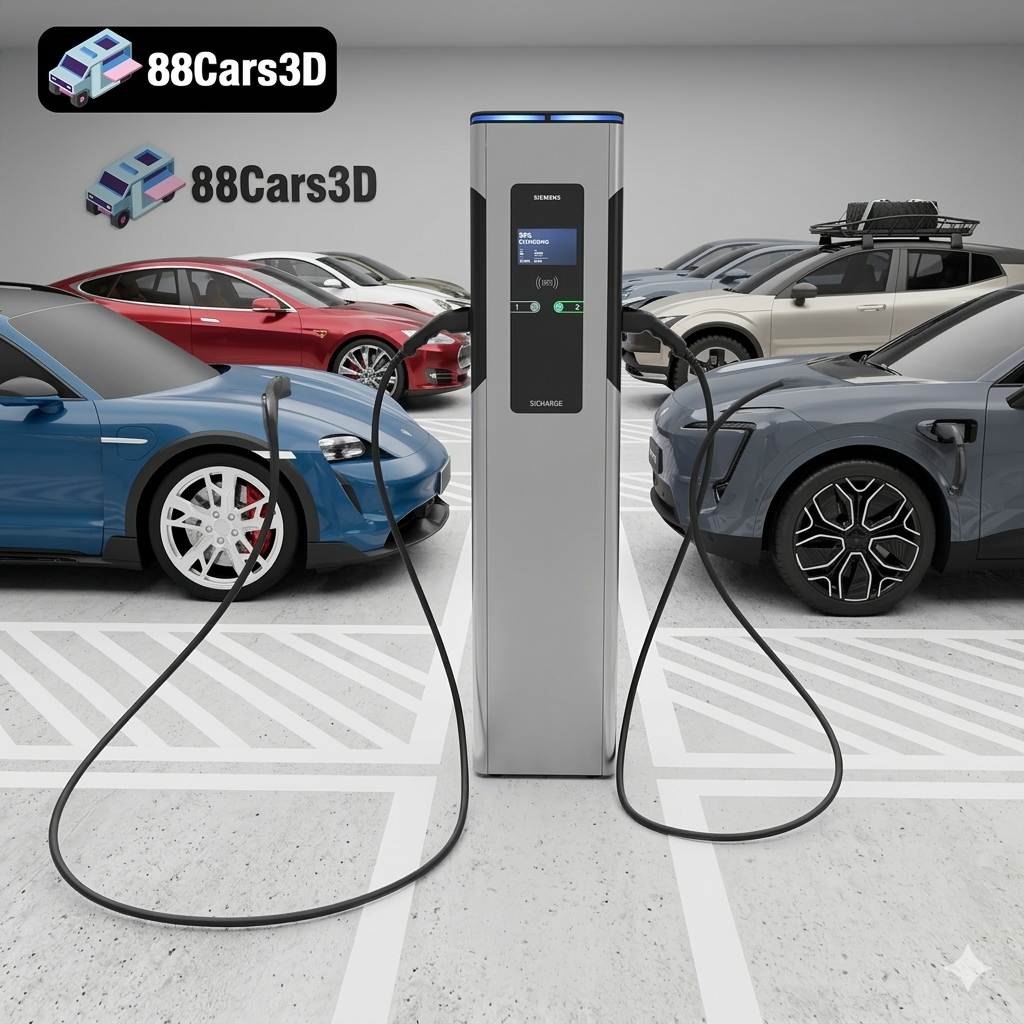
Download the Future of Mobility EV 3D Models Bundle. Includes the Volvo EX30, Tesla Model S, AVATR 11, Porsche Taycan, and a Siemens EV Charger. Save big on this highly optimized 5-in-1 pack for ArchViz and game development!
Price: $89.99

