Get 50% OFF All Premium 3D & STL Models!

In the vast landscape of automotive history, some vehicles transcend their original purpose, evolving into cultural touchstones. The first-generation Jeep Grand Cherokee, affectionately known by its internal code “ZJ,” is undoubtedly one such icon. Introduced in the 1990s, it masterfully blended rugged off-road prowess with an unprecedented level of comfort and refinement for its era, setting a new benchmark for SUVs. Today, this classic vehicle continues to captivate enthusiasts, designers, and digital artists alike, finding a new life in the intricate world of 3D modeling.
For professionals engaged in automotive rendering, game development, simulation, or even creating tangible collector’s items through 3D printing, having access to a meticulously crafted digital replica of such a significant vehicle is invaluable. The Jeep Grand Cherokee Laredo (ZJ) 3D Model from 88cars3d.com is a testament to this demand, offering a highly detailed and technically robust asset that captures the essence of this pioneering SUV. Whether you’re aiming to recreate authentic 90s street scenes, develop immersive off-road game environments, or produce stunning visualizations, a quality 3D model like this serves as the foundational cornerstone of your creative endeavors.
Navigating the world of 3D modeling involves a crucial understanding of various file formats, each serving specific purposes and workflows. When acquiring a sophisticated 3D car model like the Jeep Grand Cherokee Laredo (ZJ) from 88cars3d.com, knowing which format to use ensures seamless integration into your project, whether it’s for high-fidelity rendering, real-time game engines, or physical production via 3D printing. Here’s a detailed look at the formats included with the ZJ Grand Cherokee model and their ideal applications:
The .blend file is Blender’s native format, providing a complete scene package. This includes the mesh, materials, textures, lighting, camera setups, and often even animation data. For users working within the Blender ecosystem, this is the most flexible and editable format. It allows full control over every aspect of the model, from adjusting topology and UV maps to fine-tuning shader networks using Blender’s powerful Cycles or Eevee renderers. If you plan extensive modifications, custom animations, or simply want to leverage Blender’s comprehensive toolset, the .blend file is your go-to.
Widely considered the industry-standard exchange format, .fbx (Filmbox) excels in transferring 3D data between different software applications and game engines. It supports geometry, materials, textures, bones, animations, and more. For developers using Unreal Engine or Unity, .fbx is often the preferred choice due to its robust support for importing complex animated characters and models. It’s an ideal format when moving the Jeep Grand Cherokee Laredo (ZJ) from a modeling application into a real-time environment, ensuring that the hierarchy, pivots, and basic material assignments are largely preserved.
The .obj (Wavefront Object) format is a universal standard for exporting and importing 3D geometry. While it doesn’t typically store advanced scene data like animations or complex material nodes, it’s exceptionally reliable for mesh data and UV coordinates. Almost every 3D software can import and export .obj files, making it excellent for cross-software compatibility. If your workflow involves multiple applications for different stages – say, modeling in one, texturing in another, and rendering in a third – .obj provides a clean, dependable way to transfer the core mesh data of your ZJ Grand Cherokee.
Based on the GL Transmission Format (glTF), .glb is a single-file version optimized for efficient loading in AR/VR applications and web-based 3D viewers. It bundles geometry, materials, and textures into one compact package, making it perfect for interactive experiences where performance and rapid loading are critical. For showcasing the classic Jeep Grand Cherokee in augmented reality apps, virtual showrooms, or directly on a webpage, .glb offers the best balance of visual quality and optimization.
When the digital world transitions to the physical, the .stl (Stereolithography) format takes center stage. It represents a 3D model as a collection of triangulated surfaces, defining only the surface geometry of an object without color, texture, or other CAD attributes. This makes it the de facto standard for 3D printing. The ZJ Grand Cherokee model, provided as .stl, is ready to be sliced and printed, allowing enthusiasts to bring a tangible scale model of this iconic SUV to life.
The .ply (Polygon File Format or Stanford Triangle Format) is often used for storing 3D data from 3D scanners, CAD applications, and for scientific analysis. It can store a variety of properties including color, transparency, surface normals, and texture coordinates. While less common for general-purpose rendering than .fbx or .obj, it’s a valuable format for precision-focused applications or when integrating the ZJ model into engineering or CAD workflows.
The .unreal file (or an Unreal-ready asset package) signifies a model specifically prepared for direct import and optimal performance within Unreal Engine. This often implies proper scaling, collision meshes, LODs (Levels of Detail), and a basic material setup already configured to Unreal’s physically based rendering (PBR) system. For game developers and real-time visualization artists, this format significantly streamlines the pipeline, reducing setup time and ensuring the Jeep Grand Cherokee Laredo (ZJ) functions flawlessly in your interactive experiences.
Finally, the .max file is the native format for Autodesk 3ds Max, a powerful 3D modeling, animation, and rendering software widely used in architectural visualization, game development, and film. Like .blend, it contains the entire scene data, offering complete editability for users of 3ds Max. This format is ideal for those who prefer to work within 3ds Max for complex animation, advanced rendering setups (using renderers like V-Ray or Corona), or custom modifications to the ZJ Grand Cherokee model.
Understanding these formats empowers you to make informed decisions and optimize your workflow, ensuring that the versatile Jeep Grand Cherokee Laredo (ZJ) 3D Model seamlessly integrates into any creative pipeline.
The essence of a truly valuable 3D model lies in its meticulous attention to detail and technical precision. The Jeep Grand Cherokee Laredo (ZJ) 3D Model exemplifies this, offering a comprehensive digital recreation that respects the original vehicle’s design and engineering. From its iconic silhouette to its period-correct interior, every element has been carefully considered to provide an authentic and versatile asset for professionals.
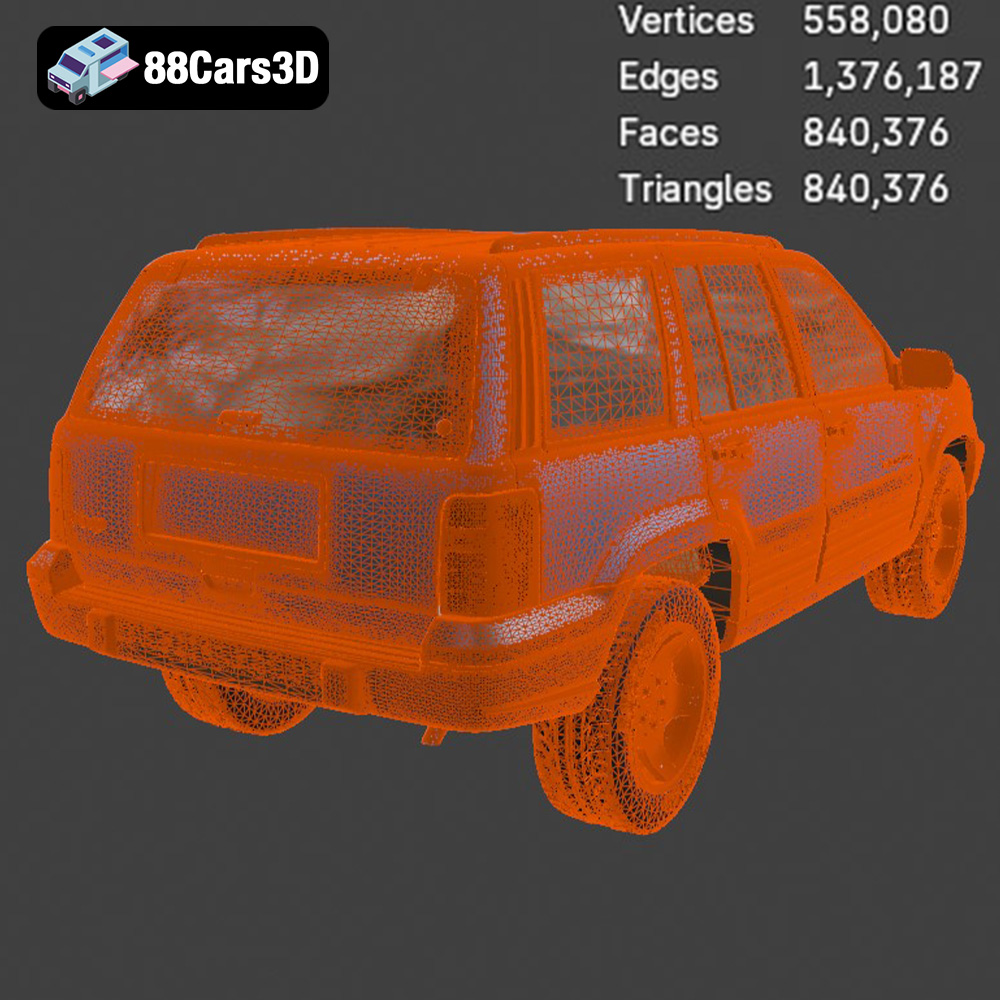
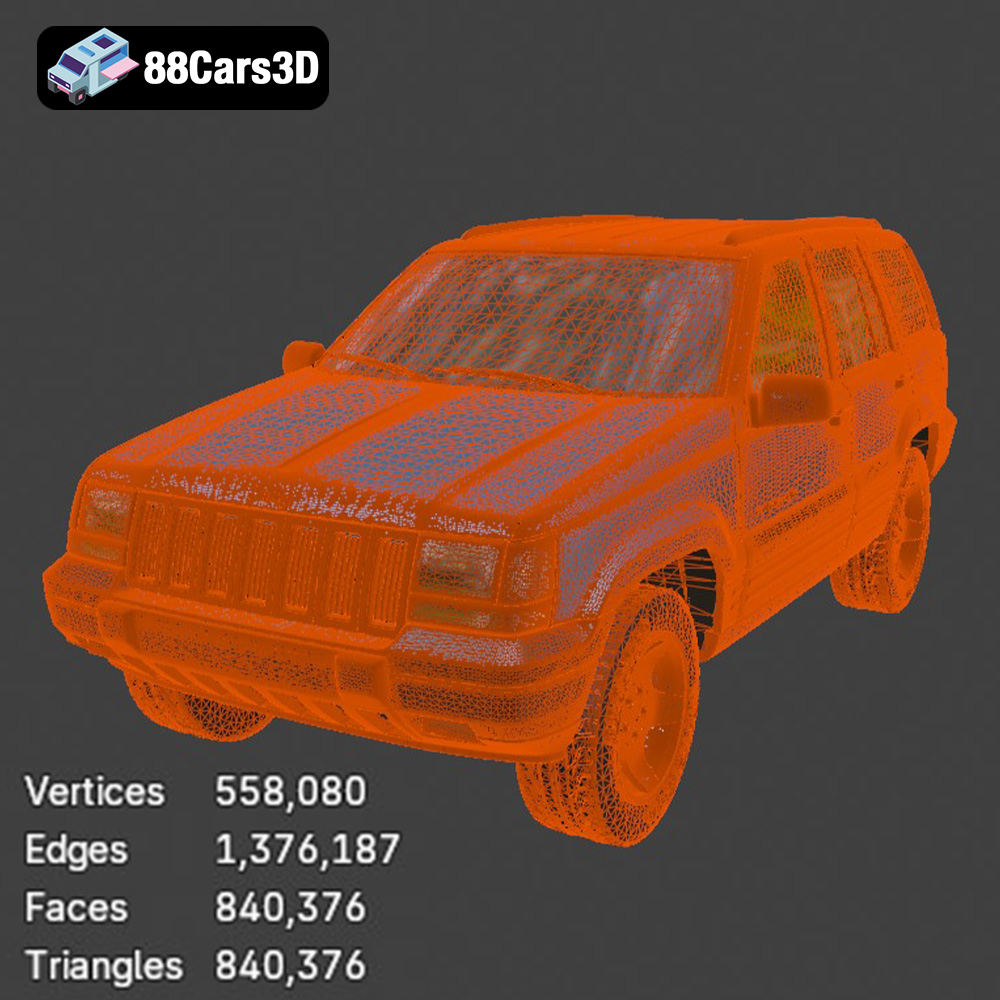
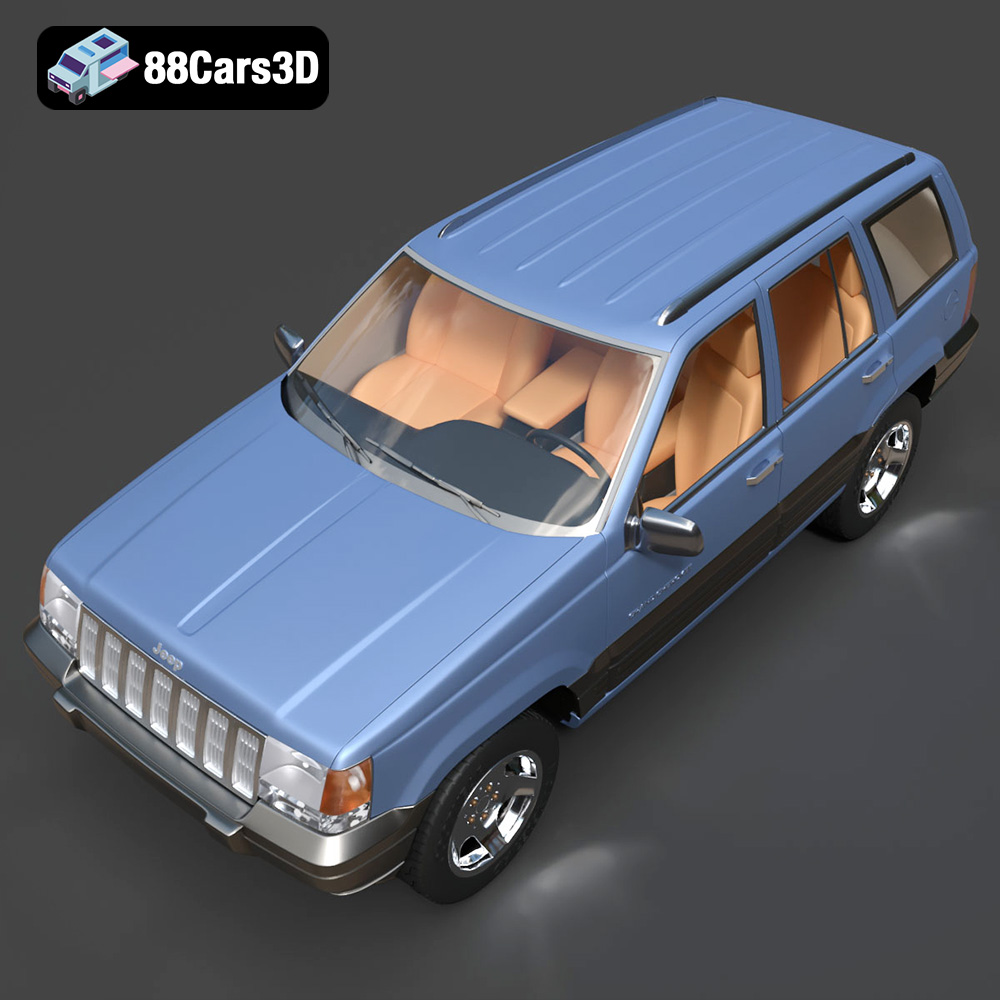
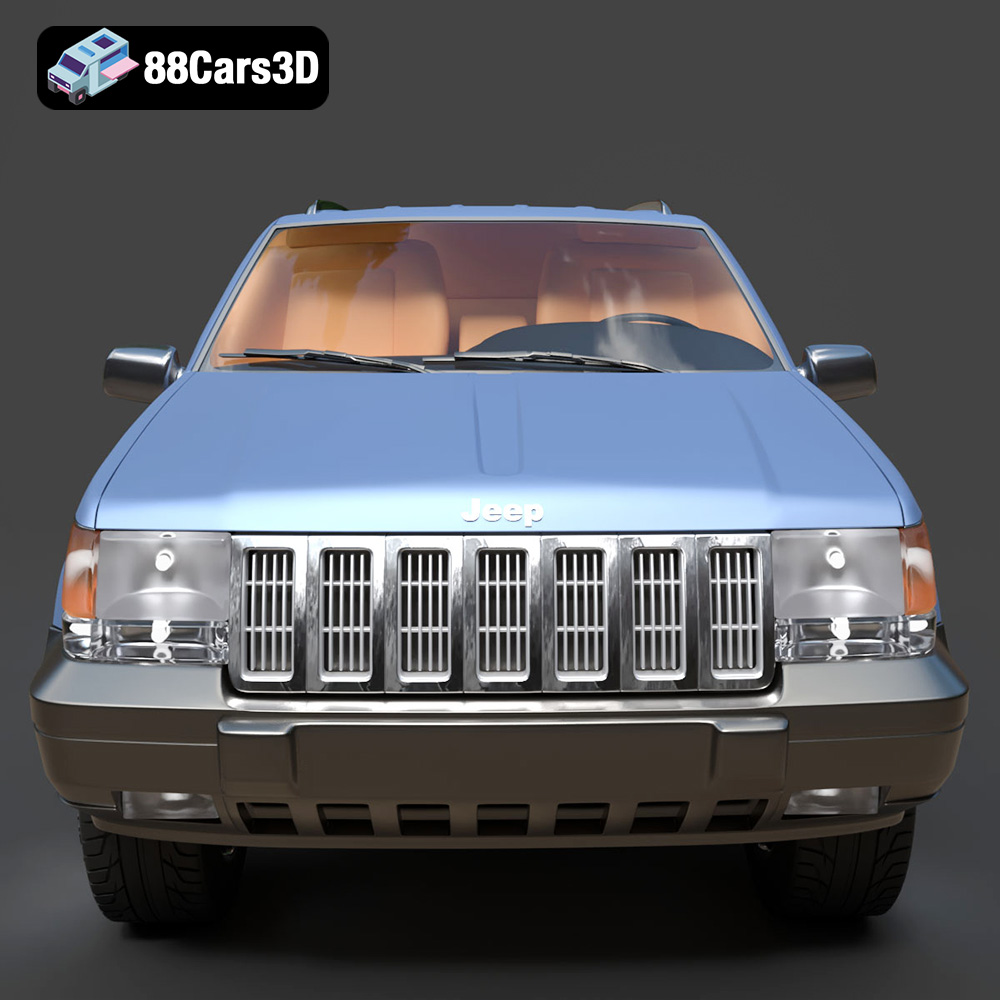
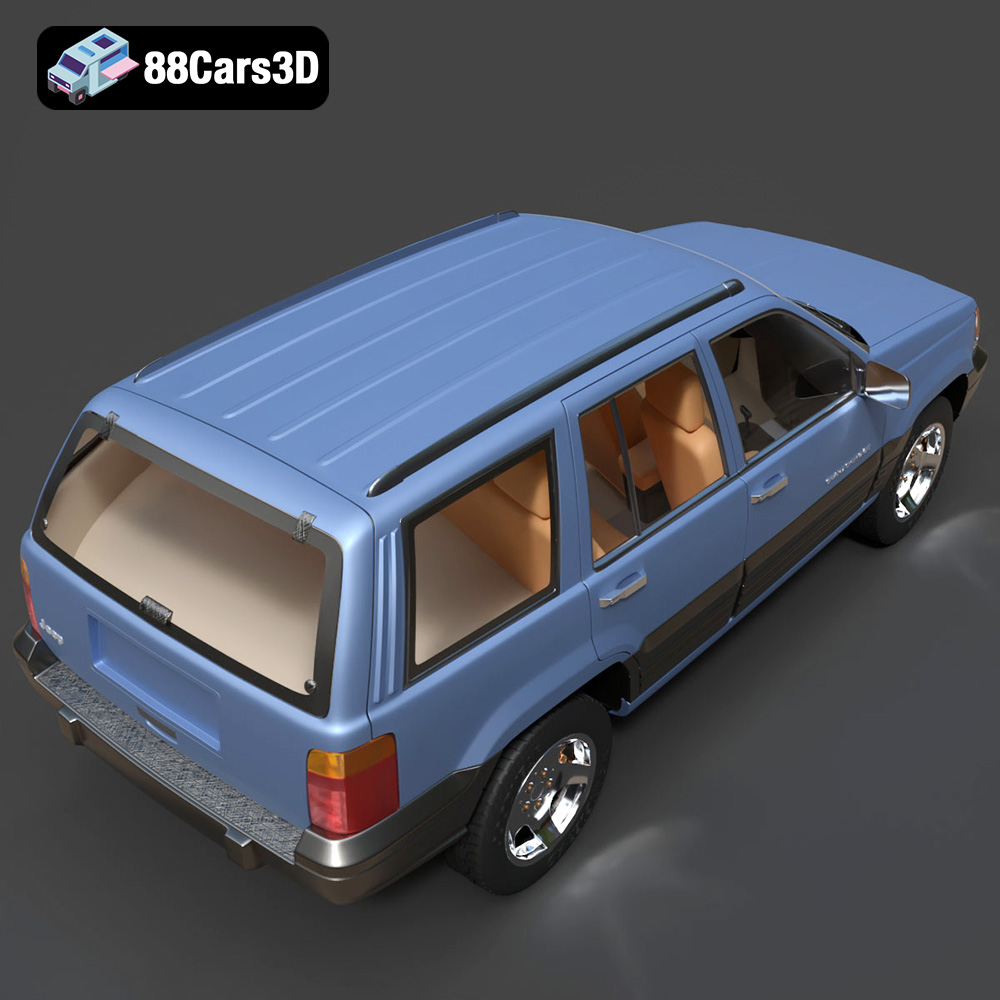
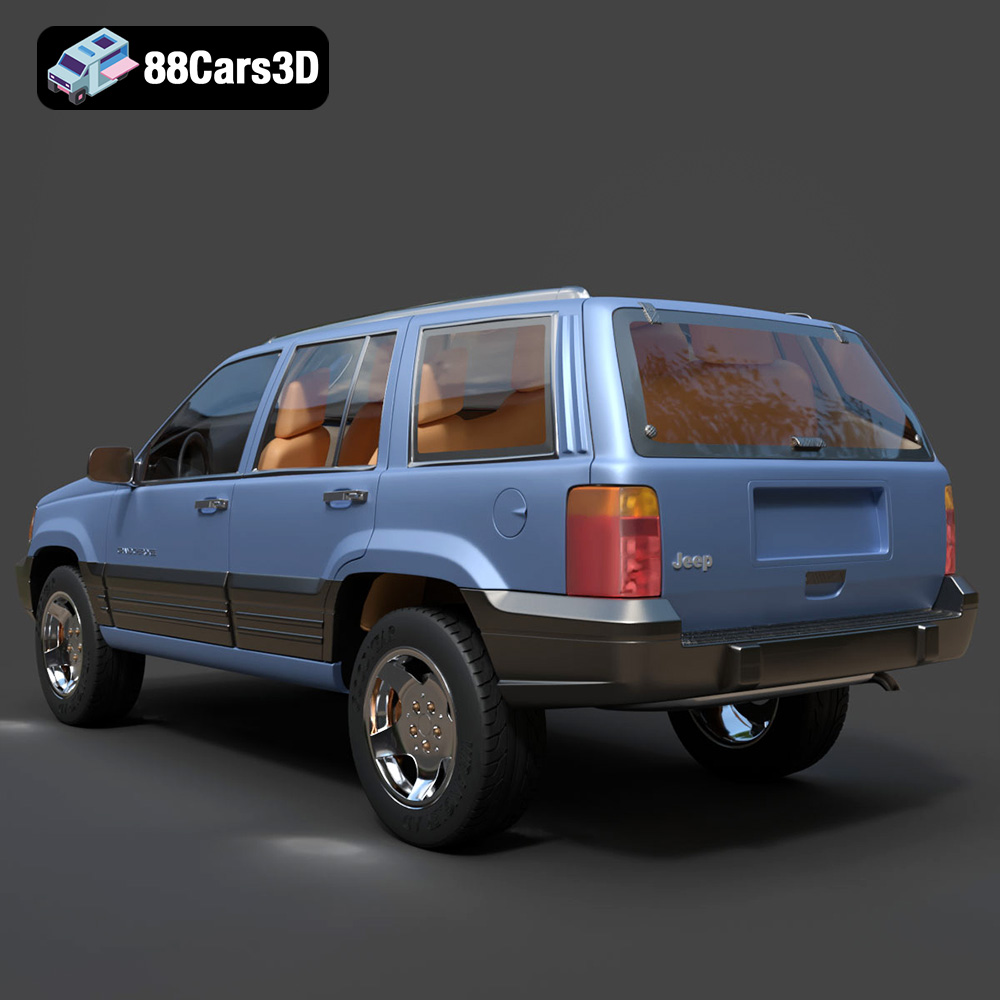
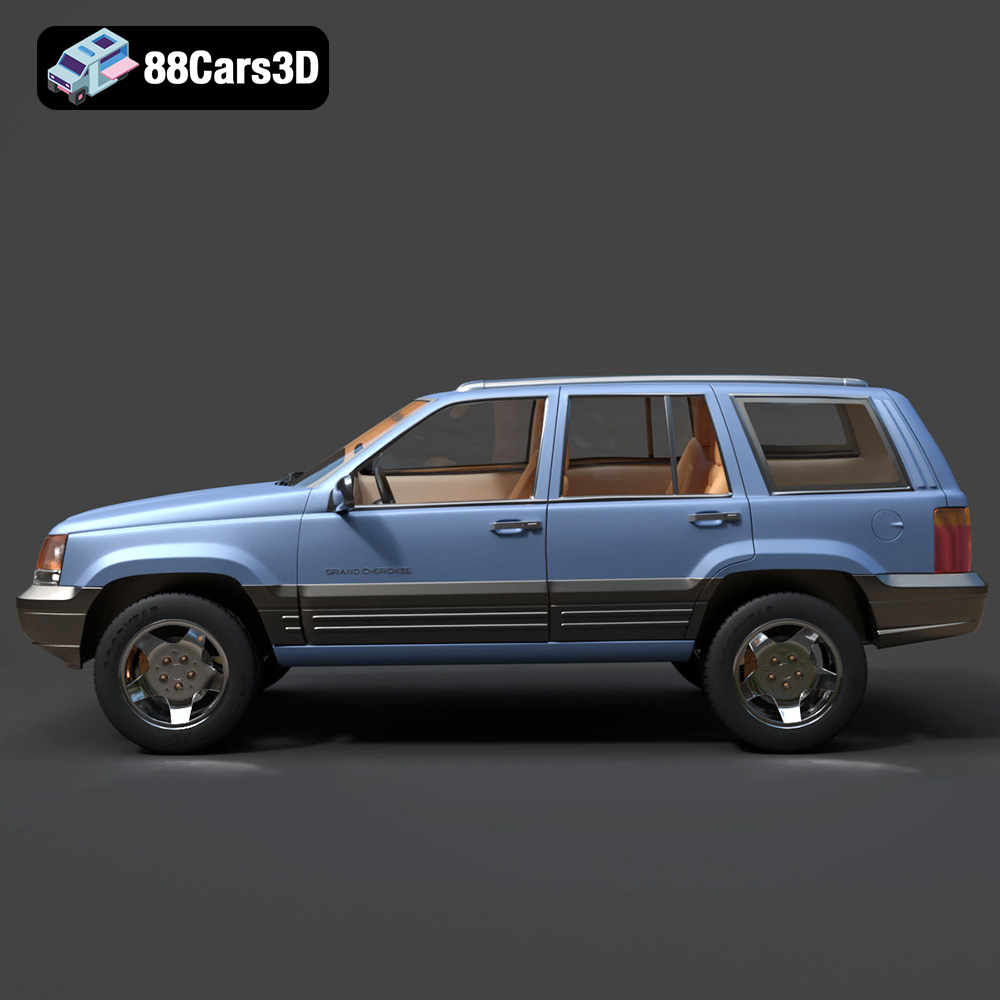
The exterior of the ZJ Grand Cherokee is its most recognizable feature, a harmonious blend of rugged utility and emerging sophistication. This 3D model accurately recreates the vehicle’s unique proportions, capturing the boxy-yet-refined body styling that defined the 1990s SUV aesthetic. Critical elements like the signature seven-slot grille, rectangular headlamps, and wide stance are all precisely modeled, giving the asset an undeniable authenticity. Furthermore, subtle but important details such as the taillights, bumpers, side moldings, and roof rails are present, contributing to a complete and convincing representation. The model even includes period-correct wheels and off-road tires, along with carefully considered brake components and underbody details, ensuring realism even in close-up renders. Transparent materials are correctly applied for windows and lighting elements, allowing for realistic reflections and interior visibility. For animation purposes, key components like doors, the hood, tailgate, and wheels are separated and appropriately pivoted, ready for dynamic scene creation.
Beyond the impressive exterior, the Jeep Grand Cherokee Laredo (ZJ) 3D Model provides a fully modeled 1990s-style interior. This isn’t just a basic shell; it includes the dashboard, steering wheel, seats, and center console, all designed to reflect the era’s automotive design language. Details such as the analog instrument cluster, radio system, air vents, and control panels are represented, adding to the immersive quality. The interior mesh is optimized, striking a balance between polygon density for detailed rendering and efficiency for real-time applications like game engines. This thoughtful approach ensures that whether the ZJ is viewed in a high-fidelity cinematic sequence or driven within an interactive simulation, its interior remains visually compelling and performant.
The value of a 3D model in professional pipelines extends beyond visual fidelity to its underlying technical structure. The ZJ Grand Cherokee model boasts a clean and structured mesh, which is crucial for smooth shading, easy customization, and predictable deformation if animated. Its adherence to real-world scale based on authentic ZJ generation dimensions guarantees accurate integration into any scene or environment. Moreover, the proper hierarchy and pivot setup for elements like wheel rotation, steering, and door animation significantly accelerate workflow for animators and riggers. The balanced polygon density ensures that the model is optimized for both high-quality rendering and efficient performance in real-time applications, making it a versatile asset for diverse projects.
A high-quality 3D car model like the Jeep Grand Cherokee Laredo (ZJ) from 88cars3d.com is a powerful asset across multiple professional domains. Its versatility allows it to seamlessly integrate into various pipelines, from cinematic rendering to interactive game development and immersive AR/VR experiences.
For artists focused on automotive rendering, the ZJ Grand Cherokee offers a fantastic subject for classic SUV showcases and nostalgic automotive scenes. Imagine a hyper-realistic render of the ZJ traversing a dusty desert trail at sunset, or parked under the neon glow of a 90s city street. Using industry-standard renderers like V-Ray, Corona, or Blender’s Cycles, artists can leverage the model’s clean topology and accurate proportions to achieve stunning visual fidelity. The separated components (doors, hood, wheels) allow for dynamic studio renders, perhaps showcasing the engine bay or an open door inviting the viewer inside. By experimenting with material shaders, lighting environments – from harsh direct sunlight to moody, overcast skies – and post-production techniques, the ZJ model can be transformed into compelling visual stories for advertising, digital art, or portfolio pieces.
In the realm of game development, the ZJ Grand Cherokee 3D Model serves as an excellent game asset for open-world driving games, retro simulations, and off-road gameplay environments. With its balanced polygon density and optimized interior mesh, it performs efficiently in real-time engines like Unreal Engine and Unity. Game designers can integrate the model, apply physics simulations for realistic driving dynamics, and populate their virtual worlds with an authentic piece of automotive history. Its proper hierarchy and pivot setup are invaluable for rigging, allowing for quick implementation of wheel rotation, steering, and door animations, crucial for player interaction or AI-controlled vehicles. Whether it’s a player vehicle in a vintage racing game or an environmental prop in a post-apocalyptic setting, the ZJ model adds character and realism to any digital landscape.
The burgeoning fields of Augmented Reality (AR) and Virtual Reality (VR) also benefit immensely from high-fidelity 3D car models. The ZJ Grand Cherokee model, especially with its .glb and .unreal formats, is perfectly suited for interactive classic vehicle showrooms or historical automotive experiences. Users could virtually walk around the ZJ, inspect its interior, or even “drive” it in a simulated environment. For simulation and training, particularly in specialized vehicle handling or historical reenactments, this model provides a visually accurate representation for training modules focused on terrain driving simulations or understanding vehicle mechanics. The realism and technical cleanliness of the model enhance immersion, making AR/VR and simulation applications more engaging and effective.
The journey of a 3D model isn’t always confined to digital screens; it often culminates in tangible, physical objects through the magic of 3D printing. The Jeep Grand Cherokee Laredo (ZJ) 3D Model, with its readily convertible .stl format, presents a fantastic opportunity for enthusiasts and designers to create impressive physical scale models or collectibles of this iconic SUV.
3D printing allows for the creation of intricate miniatures that perfectly replicate the digital design. For the ZJ Grand Cherokee, this means producing highly detailed scale models that can be displayed, collected, or used for prototyping. The model’s clean mesh and accurate proportions are crucial for successful 3D printing, ensuring that the printed object precisely matches the digital blueprint. Whether you’re using FDM (Fused Deposition Modeling) for larger, more robust prints or SLA/DLP (Stereolithography/Digital Light Processing) for finer details and smoother surfaces, the .stl file acts as the universal interpreter for your printer.
To achieve the best possible physical reproduction of the ZJ Grand Cherokee, specific 3D print settings are recommended. For scale, the model is versatile, allowing for prints at 1:32, 1:24, 1:18, or even 1:12. The choice of scale will influence the level of detail captured and the overall print time. A suggested layer height of 0.12–0.20 mm balances print speed with surface quality, while a wall thickness of 2.0–3.5 mm ensures structural integrity, especially for larger scales. An infill percentage of 20–35% provides a good balance between material usage and model strength. Supports are typically required for complex overhangs such as side mirrors, bumper overhangs, and roof rails to prevent sagging during printing. A thoughtful print orientation, specifically printing the body upside-down, is recommended for achieving an optimal finish on critical surfaces like the roof and hood. Printing wheels separately allows for better detailing and easier painting, adding another layer of realism to the finished product. Finally, post-processing – including sanding, applying primer, a period-correct paint finish, and a clear coat – is highly recommended to achieve a professional, showroom-quality look for your miniature ZJ.
The true power of a meticulously crafted 3D model like the Jeep Grand Cherokee Laredo (ZJ) lies not just in its accurate representation, but in its inherent versatility and potential for customization. This asset empowers artists and designers to go beyond static renders, transforming the digital ZJ into a unique expression of their creative vision.
The provided 3D car model serves as an excellent foundation, but its clean structure and separated components invite a wealth of customization options. Imagine altering the paint colors to match specific Laredo trim variations from the 90s, or even experimenting with contemporary finishes. The model’s design facilitates modifications to wheel styles, allowing you to swap out the stock rims for aftermarket off-road alloys or classic steel wheels. Beyond aesthetics, you can add a range of functional or stylistic accessories, such as authentic roof racks loaded with camping gear, robust bull bars for an aggressive look, or intricate trail equipment for an overland expedition setup. For those recreating historical scenes, adding classic decals or period-specific branding can further enhance authenticity. This level of granular control ensures that the ZJ Grand Cherokee Laredo (ZJ) 3D Model can adapt to virtually any narrative or artistic direction.
The customization potential extends to the environments in which the ZJ Grand Cherokee is placed. The model’s versatility makes it suitable for a wide array of scenes, each requiring distinct lighting and contextual elements. Envision the ZJ navigating challenging forest trails, with dynamic shadows cast by dense foliage and dappled sunlight breaking through the canopy. Or perhaps it’s cruising through a bustling 90s urban scene, reflecting the vibrant city lights and architecture of the era. For promotional materials or a sophisticated portfolio showcase, a clean showroom lighting setup can highlight the model’s precise detailing and form. For filmmakers or cinematographers, configuring dramatic cinematic setups with specific camera angles and atmospheric effects can evoke powerful emotions and tell compelling stories. Whether the goal is realism, nostalgia, or futuristic reimagining, the Jeep Grand Cherokee Laredo (ZJ) 3D Model provides the perfect canvas for creative exploration in automotive rendering and visualization.
The Jeep Grand Cherokee Laredo (ZJ) stands as a monumental vehicle in automotive history, a symbol of a pivotal decade in SUV evolution. Its transition into a meticulously crafted 3D car model offers immense value to professionals across diverse creative fields. From its accurate exterior and detailed 90s-era interior to its technically robust mesh and extensive file format support, this asset is designed for seamless integration and maximum creative flexibility. Whether your project demands realistic automotive rendering, immersive game development, interactive AR/VR experiences, or tangible 3D Printing projects, the ZJ Grand Cherokee delivers on all fronts.
Its comprehensive technical advantages, combined with the detailed product description and versatile customization options, make it an indispensable tool for anyone seeking to bring this classic SUV to life in the digital realm and beyond. By choosing a high-quality asset like the Jeep Grand Cherokee Laredo (ZJ) 3D Model from 88cars3d.com, you’re not just acquiring a digital file; you’re investing in a foundation for creativity, authenticity, and technical excellence that will elevate your projects. This model truly is a bridge between automotive heritage and cutting-edge digital artistry.
The Jeep Grand Cherokee Laredo (ZJ) 3D Model is a detailed digital recreation of the first-generation Grand Cherokee, internally known as the ZJ platform. Produced during the 1990s, this model represents a milestone in SUV development, combining traditional off-road capability with modern comfort for its era. This 3D asset accurately captures the boxy-yet-refined body styling, signature seven-slot grille, rectangular headlamps, wide stance, and practical 5-door layout that defined the ZJ generation. Designed with clean topology and real-world proportions, it is ideal for rendering, animation, simulation, AR/VR, game development, and automotive visualization projects. Perfect for retro automotive scenes, off-road environments, 90s-themed city simulations, cinematic productions, and classic SUV showcases.
$39.99
.1990sSUV
.arvr
.blend
.car3dmodel
.classicsuv
.fbx
.gameasset
.glb
.grandcherokeelaredo
.jeep
.max
.obj
.offroadvehicle
.ply
.rendering
.retrocar
.simulation
.stl
.unreal
.vehicle3D
.zj