Get 50% OFF All Premium 3D & STL Models!

In the dynamic world of 3D design, the demand for exceptionally detailed and versatile assets is consistently growing. From automotive configurators and realistic game environments to captivating cinematic sequences and precise architectural visualizations, a high-quality 3D car model is often the cornerstone of a compelling project. The ability to seamlessly integrate a vehicle that truly reflects its real-world counterpart, both aesthetically and technically, can elevate a visualization from good to breathtaking. This pursuit of digital perfection is precisely where a model like the Jeep Commander 3D Model distinguishes itself, offering a robust foundation for a myriad of professional applications.
At 88cars3d.com, we understand the intricate needs of 3D artists, game developers, architects, and product designers. Our curated collection of 3D car models is designed to meet the highest standards of accuracy, detail, and technical versatility. The Jeep Commander, a vehicle known for its distinctive boxy styling, rugged 4×4 capability, and practical three-row seating, serves as an excellent example of the meticulous craftsmanship we apply to our assets. This model isn’t just a static representation; it’s a fully articulated digital asset ready to be deployed across a spectrum of creative endeavors, from urban environment renders to immersive AR/VR experiences and even precise 3D prints.
The true power of a comprehensive 3D model, such as the Jeep Commander, lies not only in its detailed geometry but also in its availability across multiple industry-standard file formats. Each format caters to specific software ecosystems, workflows, and end-use applications, ensuring maximum compatibility and efficiency for professionals. Understanding when and why to use each format is crucial for optimizing your project pipeline. The Jeep Commander 3D Model is provided in a remarkable array of formats, empowering artists and developers with unparalleled flexibility.
The .blend file is native to Blender, an incredibly powerful and increasingly popular open-source 3D creation suite. When you receive a .blend file for a 3D car model, you’re not just getting geometry; you’re getting a fully editable scene. This typically includes pre-configured materials using Blender’s Cycles or Eevee render engines, scene lighting setups, and an organized collection of objects with proper naming conventions. For the Jeep Commander, this means access to all the individual mesh components – doors, hood, tailgate, and wheels – ready for immediate manipulation, animation, or custom shader development directly within Blender. Artists can easily adjust paint colors, modify wheel designs, or add custom accessories, making it an ideal starting point for projects where Blender is the primary DCC (Digital Content Creation) tool.
The Filmbox (.fbx) format is an industry-standard proprietary file format developed by Autodesk for 3D content exchange. It’s renowned for its ability to store entire 3D scenes, including geometry, materials, textures, animations, and even skeletal rigs. Its robust nature makes it the go-to format for importing 3D car models into real-time game engines like Unreal Engine and Unity, as well as other DCC applications such as Maya, 3ds Max, and Cinema 4D. For game developers working with the Jeep Commander 3D Model, an .fbx file ensures that the model, its PBR materials, and any pre-rigged components (like individual doors or wheels for animation) are efficiently transferred, maintaining hierarchy and pivot points for seamless integration into a game environment.
The Wavefront OBJ (.obj) format is one of the oldest and most universally supported 3D file formats. It’s a simple, text-based format that primarily stores geometric data: vertices, normals, UV coordinates, and faces. While it can reference external material (.mtl) files, it doesn’t embed textures or advanced material properties directly. The .obj format is invaluable for cross-software compatibility, acting as a reliable interchange format between virtually any 3D application. If you need to bring the Jeep Commander into an obscure rendering engine or a niche CAD program, .obj is often the most dependable choice, providing a clean mesh that can then be textured and shaded in the target software.
GLB (.glb) is the binary version of glTF (GL Transmission Format), an open-standard format specifically designed for the efficient transmission and loading of 3D scenes and models in web and real-time applications. It encapsulates textures, materials, and animations directly within a single file, making it highly optimized for augmented reality (AR), virtual reality (VR), and browser-based 3D viewers. The Jeep Commander 3D Model in .glb format is perfect for virtual showrooms, interactive product configurators on websites, or immersive vehicle demos that need to run smoothly on mobile devices or in web browsers without extensive loading times.
The Stereolithography (.stl) format is the standard file type for 3D printing. It describes only the surface geometry of a 3D object using a collection of interconnected triangles, without any color, texture, or material information. While less sophisticated for rendering, its simplicity is precisely what makes it ideal for additive manufacturing. The Jeep Commander’s .stl output allows enthusiasts and professionals to physically manifest the digital model, creating scale SUV miniatures or collector builds. Careful attention to manifold geometry and resolution is key for successful 3D prints, ensuring the digital model translates flawlessly to a physical object.
The Polygon File Format (.ply) is a flexible and self-describing format commonly used to store 3D data from 3D scanners, CAD systems, and other precision measurement devices. It can store various properties beyond geometry, such as color, transparency, normals, texture coordinates, and even reliability information for each vertex or face. While less common for general-purpose rendering than .fbx or .obj, .ply is excellent for scientific visualization, reverse engineering, or applications requiring precise geometric analysis of the Jeep Commander’s structure.
The .unreal format refers to assets specifically prepared and packaged for direct import and optimal performance within Unreal Engine. This often implies that the model has undergone specific optimization processes, such as proper scaling, UV mapping, material setup (using Unreal’s PBR workflow), and potentially even pre-built collision meshes or LOD (Level of Detail) variations. For immediate deployment in a game or simulation built with Unreal Engine, the .unreal asset of the Jeep Commander provides a plug-and-play experience, significantly reducing the setup time for developers.
The .max file is the native file format for Autodesk 3ds Max, a professional 3D computer graphics program for making 3D animations, models, games, and images. Like .blend for Blender, a .max file offers a fully editable scene, often including complex material setups (V-Ray, Corona, Arnold), lighting rigs, and hierarchical object structures. For those whose primary workflow revolves around 3ds Max, the .max version of the Jeep Commander 3D Model provides the highest level of control and fidelity, allowing for complex animation, advanced rendering techniques, and seamless integration into existing 3ds Max projects.
The availability of the Jeep Commander 3D Model in these diverse formats underscores its value as a truly universal asset. Whether you are a solo artist prototyping an idea in Blender, a game studio integrating vehicles into a vast open-world, an arch-viz specialist placing realistic cars in a scene, or a hobbyist bringing a digital design to life with a 3D printer, this model offers the right foundation in the right format.
Creating a high-quality 3D car model is far more than just replicating shapes. It involves a deep understanding of automotive design principles, meticulous attention to detail, and a mastery of 3D modeling techniques. The Jeep Commander 3D Model from 88cars3d.com exemplifies this dedication, featuring a clean mesh structure, accurate proportions, and an organized hierarchy crucial for professional workflows.
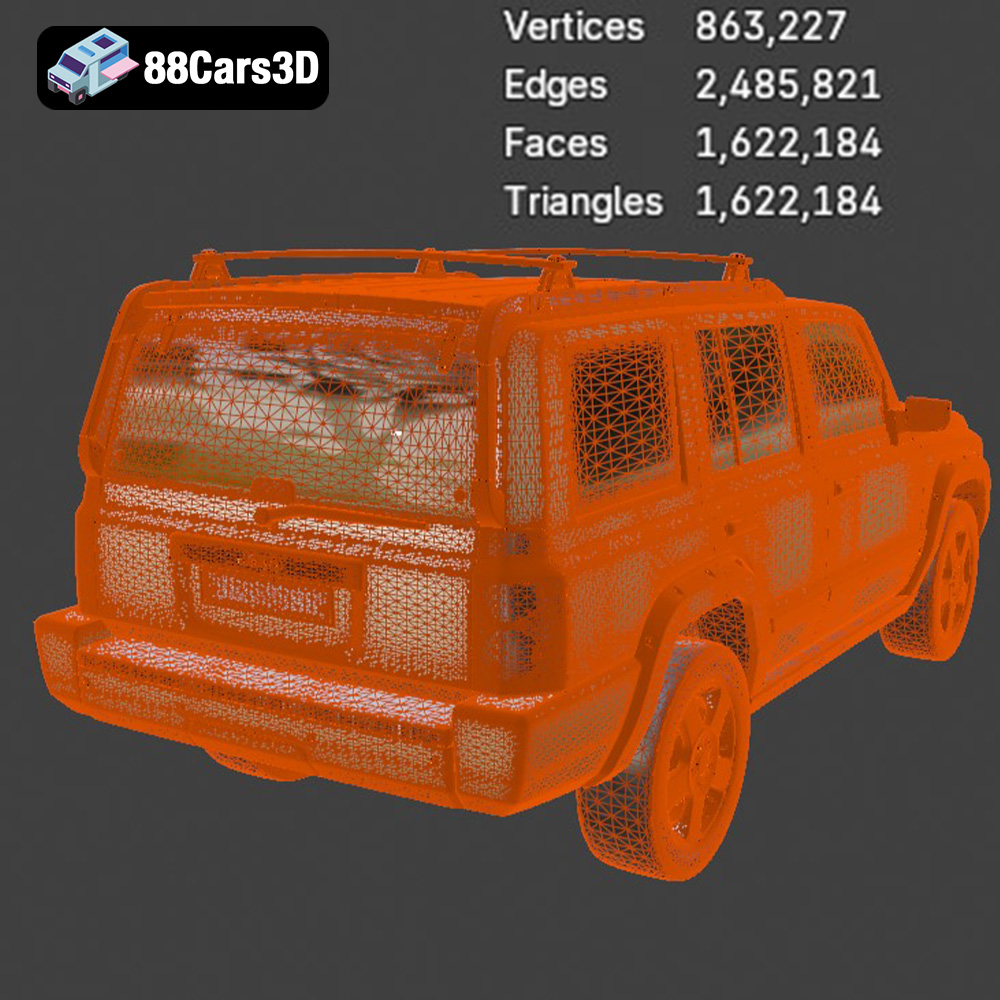
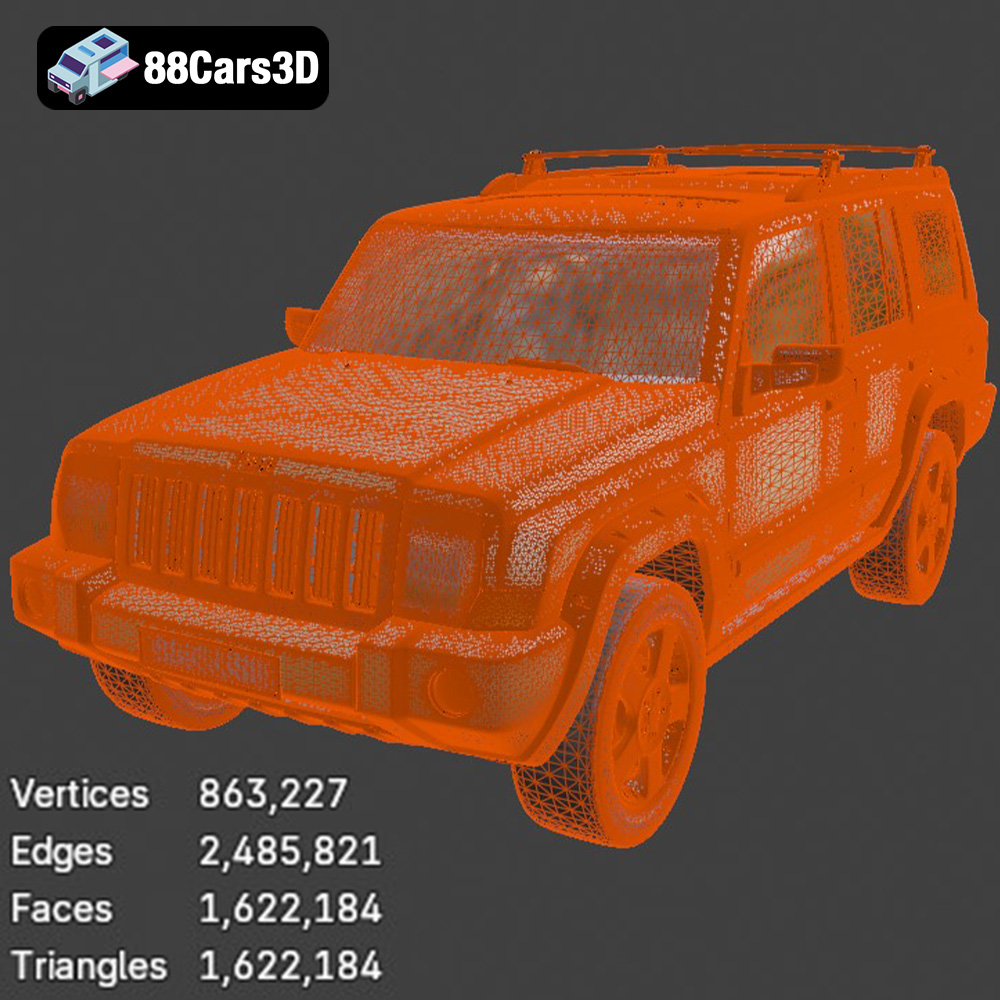
A “clean mesh structure with proper edge flow” is paramount in 3D modeling, especially for subdivision surfaces and animation. Good topology ensures that the model deforms predictably during animation, prevents shading artifacts, and allows for efficient UV unwrapping. For the Jeep Commander, this means smooth curves along its boxy body, distinct panel gaps, and crisp edges that hold up under close-up renders. Optimized polygon count, carefully balancing detail for high-quality rendering with efficiency for game engines, means that artists don’t have to compromise. The geometry is structured to support both realistic visuals and real-time performance, a testament to thoughtful design.
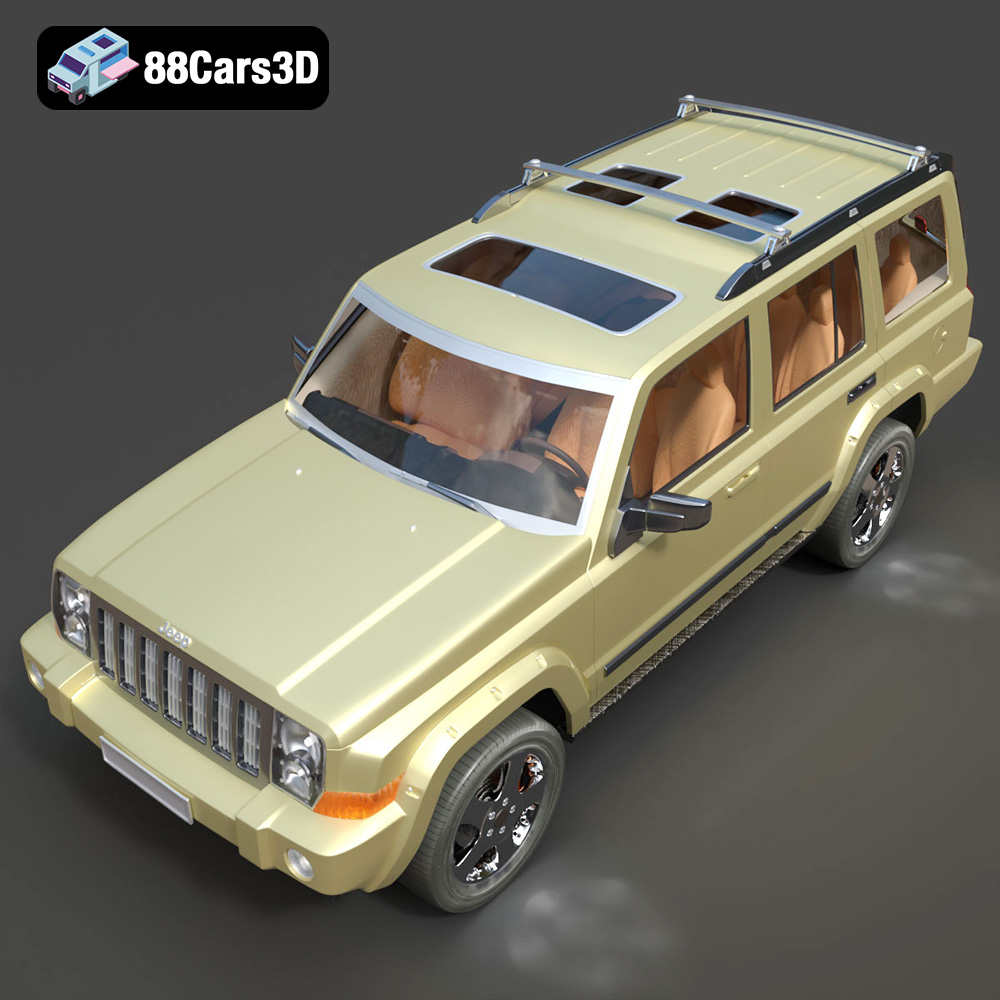
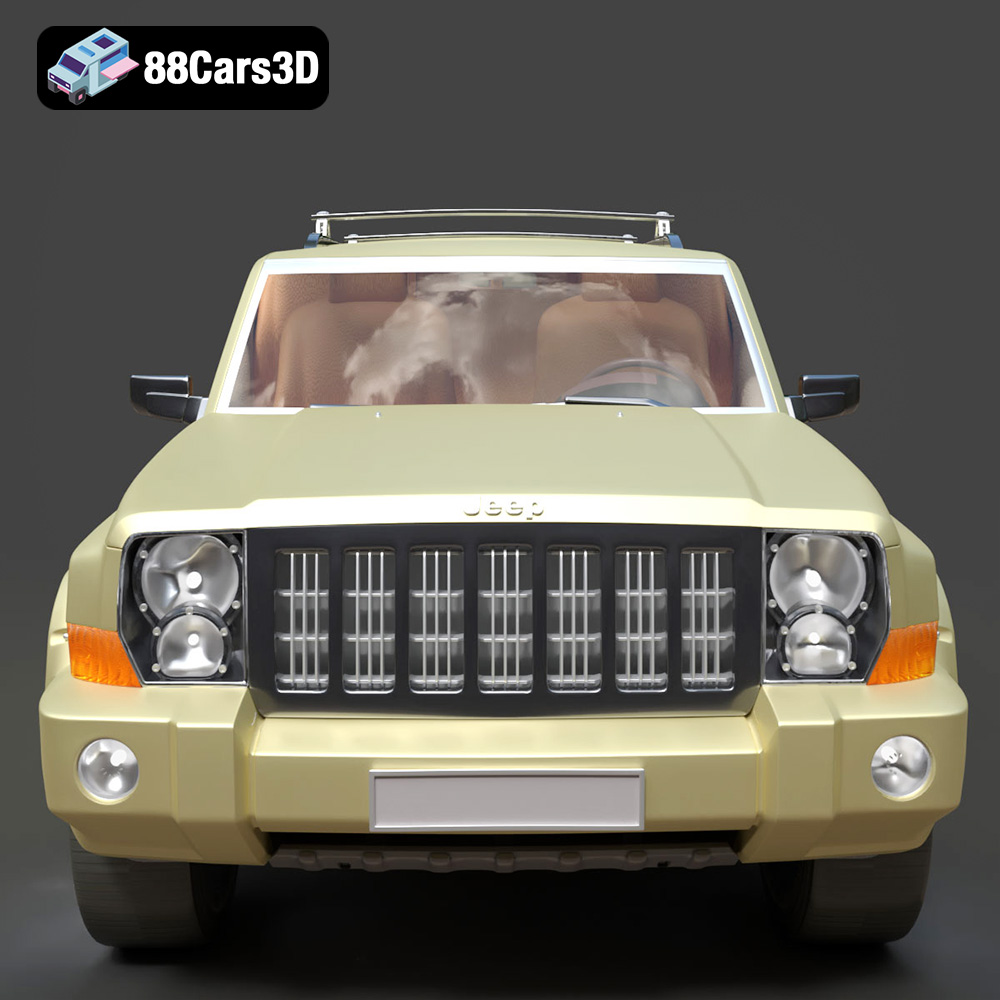
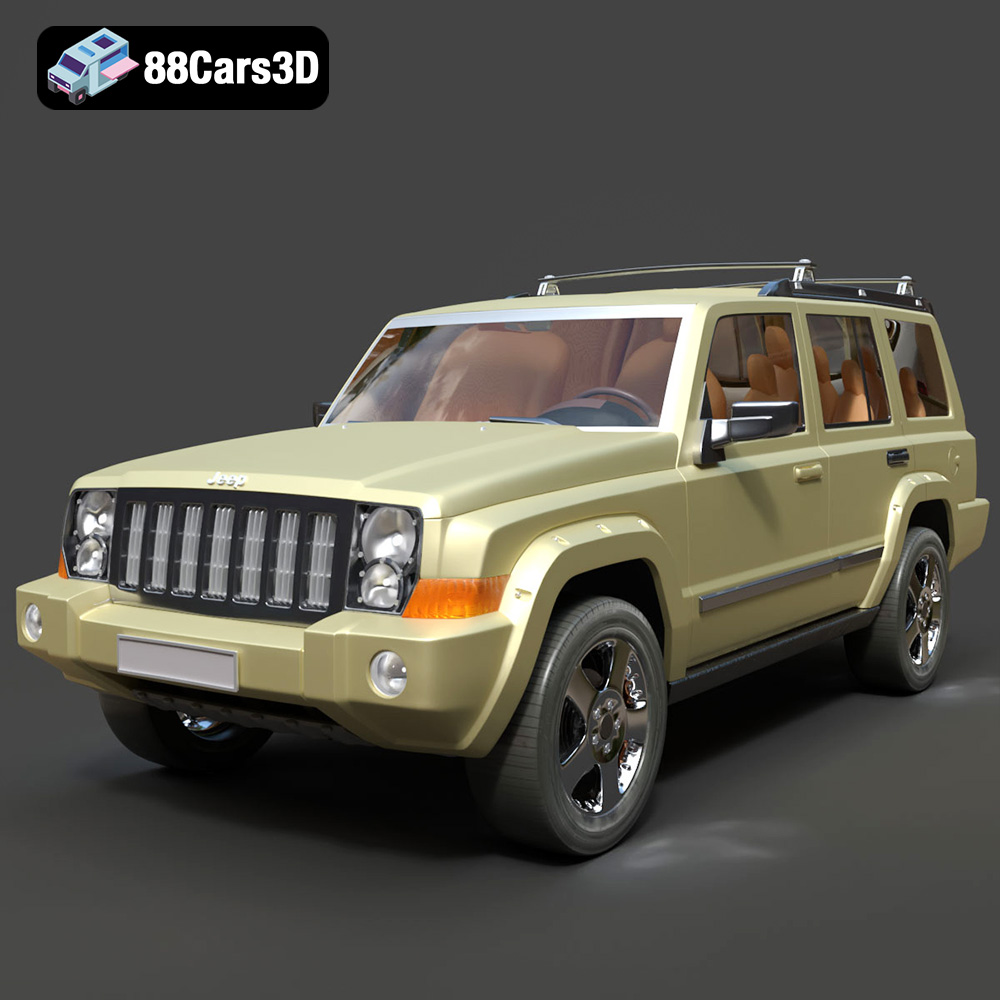
Accuracy in scale and proportions is non-negotiable for automotive visualization. A vehicle model that isn’t true-to-life in size will immediately feel out of place in any scene. The Jeep Commander 3D Model adheres to real-world scale accuracy, ensuring it integrates perfectly into architectural visualizations, driving simulations, or virtual environments without requiring tedious adjustments. This attention to scale extends to specific exterior features like the signature seven-slot grille, rectangular headlight styling, detailed front and rear bumpers, roof rails, side mirrors, and even the suspension clearance, all faithfully recreated to the Commander’s true dimensions.
Beyond geometry, the realism of a 3D car model hinges on its materials and textures. Modern rendering relies heavily on Physically Based Rendering (PBR) workflows, which simulate how light interacts with surfaces in the real world. While the prompt doesn’t explicitly detail PBR textures, the mention of “Texture: Yes” and “Material: Yes” in the meta description, combined with the professional formats, strongly implies PBR compatibility. For the Jeep Commander, this translates to realistic paint finishes, accurate tire rubber, chrome highlights, and glass transparency, all of which contribute to photorealistic outputs. The ability to easily change paint colors and modify wheel designs, as highlighted in the product’s customization options, leverages a well-setup PBR material system.
The versatility of a well-crafted 3D car model unlocks a vast array of professional applications. The Jeep Commander, with its robust design and comprehensive file formats, is an invaluable asset for various industries.
For automotive presentations, marketing visuals, and cinematic productions, photorealistic rendering is key. Using software like 3ds Max (with V-Ray or Corona Renderer) or Blender (with Cycles), artists can leverage the Jeep Commander 3D Model to create stunning images. Imagine the Commander parked majestically against a scenic backdrop, its detailed body proportions and signature grille catching the light just so. With an organized hierarchy for animation workflows, separate mesh components for doors, hood, tailgate, and wheels, artists can easily open doors for interior shots or animate the vehicle’s movement, adding dynamic realism to any scene.
The Jeep Commander’s structured model is perfect for animation. Its separate mesh components allow for realistic door openings, wheel rotations, and even suspension compression. This is critical for driving simulations, cutscenes in games, or even creating product showcases that highlight the vehicle’s features. When integrated into urban environments, off-road scenes, or overlanding visuals, the model’s precise detailing and real-world scale ensure it blends seamlessly, enhancing the overall believability of the animated sequence.
Architectural visualization often requires realistic context, and nothing grounds a scene like a meticulously placed vehicle. The Jeep Commander 3D Model is ideal for populating parking scenes, showcasing urban developments, or adding a touch of lifestyle to residential renders. For automotive showrooms, whether physical or virtual, having a highly accurate model allows for interactive displays and configurators, letting potential buyers explore the vehicle from every angle and customize its features in real-time.
Game development presents unique challenges for 3D assets, primarily balancing visual fidelity with real-time performance. The Jeep Commander 3D Model is specifically designed with these constraints in mind, making it an excellent candidate for interactive experiences.
The product description mentions an “optimized polygon count for both high-quality rendering and game engines” and “optimized geometry suitable for real-time engines.” This indicates that the model has been carefully crafted to minimize polygon count while retaining crucial details, potentially through the use of LODs (Levels of Detail). LODs are essential in games, swapping out high-resolution models for lower-resolution versions as the player moves further away, saving computational resources without a noticeable drop in quality. For a robust SUV like the Commander, this optimization ensures smooth frame rates in demanding open-world games or driving simulators.
With .fbx and .unreal file formats included, the Jeep Commander 3D Model is primed for immediate deployment into major game engines. Unreal Engine, for example, benefits from assets that come pre-packaged and optimized for its physically based lighting system. Developers can import the model, apply materials, and set up collision meshes rapidly, allowing for quick iteration and integration into a larger game world. The modeled dashboard, center console, three-row seating, and other interior features provide enough detail for first-person views or in-car camera angles, enhancing player immersion.
Augmented Reality (AR) and Virtual Reality (VR) applications demand highly optimized models to deliver a smooth and immersive experience. The .glb format, specifically designed for web and real-time viewing, is perfect for virtual showrooms or interactive configurators where the Jeep Commander can be explored in a fully immersive 3D space. Users can walk around the vehicle, open its doors, and even “sit inside” a virtual representation, making it an invaluable tool for marketing and sales in the digital age.
Automotive rendering is a specialized field that combines technical expertise with artistic vision. The quality of the source 3D car model directly impacts the final output. The Jeep Commander 3D Model provides an exceptional foundation for creating compelling visual narratives.
For automotive presentations, the Jeep Commander’s accurate body proportions and distinctive features allow artists to focus on creative lighting and composition. The separate mesh components – doors, hood, tailgate, and wheels – enable dynamic shots, such as a close-up of a turning wheel, or an interior view through an open door, showcasing the modeled dashboard and three-row seating. These details, often overlooked in lower-quality models, are what make the difference in a high-impact render.
The customization options listed for the Jeep Commander 3D Model are crucial for visualization. The ability to change paint colors (metallic silver, black, white, dark green, etc.), modify wheel designs, and add roof cargo boxes or off-road accessories allows artists to tailor the vehicle to specific client briefs or storytelling needs. Imagine a rugged dark green Commander with off-road accessories for an adventure-themed advertisement, or a sleek silver one for a more urban, family-focused campaign. These options ensure the model remains flexible for diverse narratives.
Successful automotive rendering heavily relies on realistic lighting. The Jeep Commander 3D Model is designed to react accurately to various lighting setups, whether it’s a studio environment, a bright sunny day, or a dramatic night scene. Its clean topology ensures correct reflections and refractions, especially on the vehicle’s paint and glass, which are critical elements for photographic realism. Artists can experiment with HDRIs (High Dynamic Range Images) and physical lights to achieve the desired mood and impact.
One of the most exciting applications of high-quality 3D car models is the ability to transform them into physical objects through 3D printing. The Jeep Commander 3D Model is explicitly offered as a 3D printable STL, catering to a growing community of enthusiasts and professionals who wish to create tangible replicas.
While the .stl format is designed for 3D printing, preparing a model correctly involves more than just exporting the file. The Jeep Commander’s description includes detailed 3D print settings, which are invaluable. Recommended scales (1:32, 1:24, 1:18, 1:12) suggest the model has been designed with different print resolutions in mind. For intricate details, especially at smaller scales, resin printing (SLA/DLP) is often recommended over FDM (Fused Deposition Modeling) due to its superior precision. The “clean mesh structure with proper edge flow” translates to a manifold (watertight) geometry, essential for successful slicing and printing.
The specified layer height (0.12–0.20 mm), wall thickness (2–3 mm), and infill (15–30%) are critical parameters that influence print quality, strength, and material consumption. A thicker wall and higher infill result in a sturdier model, while a finer layer height yields smoother surfaces. The guidance on supports (required for mirrors, roof rails, and underbody details) and print orientation (body printed upside-down for smoother roof finish, wheels separately) are professional tips that significantly enhance the success rate and final quality of the physical model. These considerations highlight the forethought put into ensuring the Jeep Commander 3D Model is truly “FDM Ready” and “Resin Print” compatible.
The journey from a raw 3D print to a collector-grade miniature involves meticulous post-processing. The product description advises sanding, priming, automotive-style paint, and an optional clear coat. These steps are vital for achieving a factory-fresh look that mirrors the digital model’s fidelity. For model enthusiasts, this means having a blueprint to create stunning, personalized Jeep Commander miniatures, allowing for custom colors and finishes beyond what the digital model initially provides. This ability to physically manifest a 3D car model adds another dimension to its utility, blurring the lines between digital and tangible artistry.
The world of 3D modeling thrives on detail, versatility, and technical excellence. A high-quality 3D car model is not just an asset; it’s a gateway to limitless creative possibilities across industries. The Jeep Commander 3D Model exemplifies this principle, offering a meticulously crafted digital recreation of a beloved SUV, complete with accurate proportions, optimized geometry, and a wealth of customization potential.
Whether you are an automotive renderer striving for photorealism, a game developer building an immersive world, an architect grounding your visualizations with realistic vehicles, or a hobbyist bringing digital designs to life through 3D printing, this model provides the necessary foundation. Its availability in a comprehensive range of file formats—from .blend and .max for comprehensive editing, to .fbx and .unreal for real-time applications, .glb for web and AR/VR, and .stl for physical fabrication—ensures it fits seamlessly into any professional workflow.
Investing in premium 3D car models like the Jeep Commander from 88cars3d.com empowers creators to focus on their artistic vision, confident in the technical integrity and flexibility of their digital assets. Explore the possibilities and elevate your next project with an asset designed for distinction.
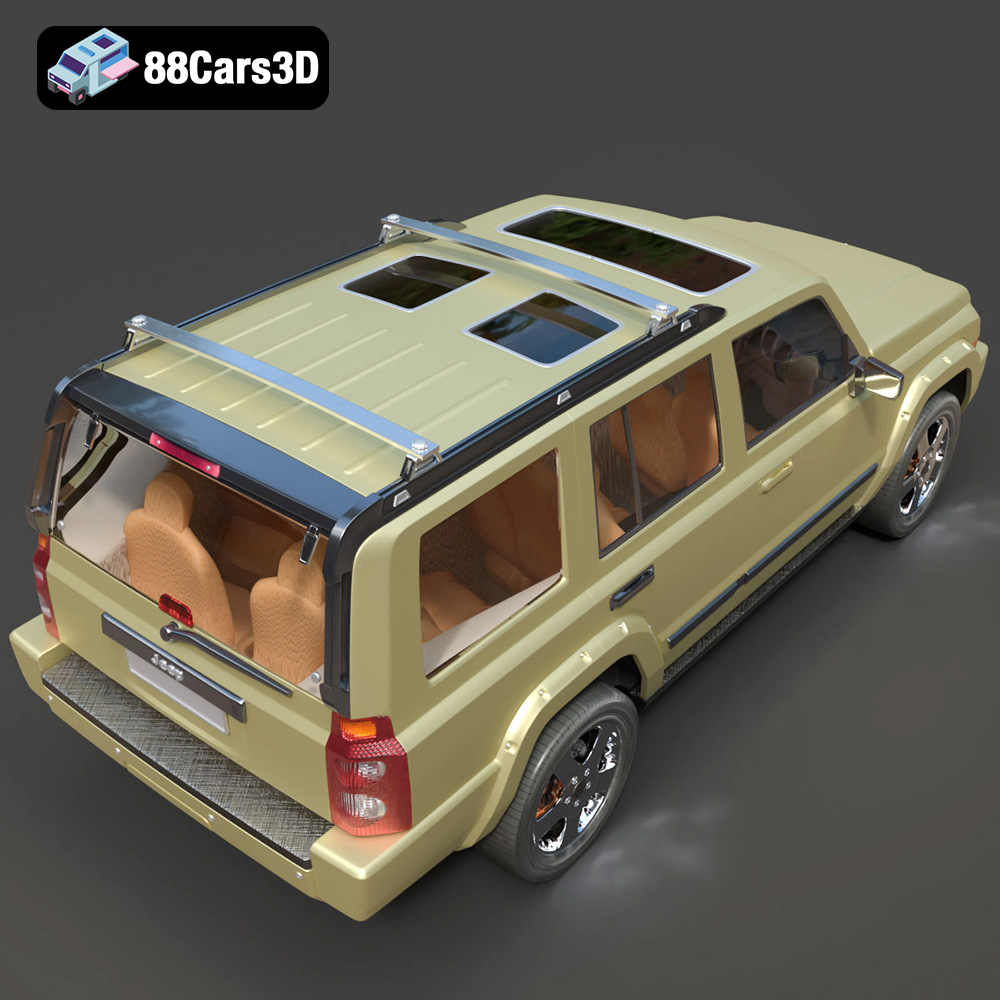
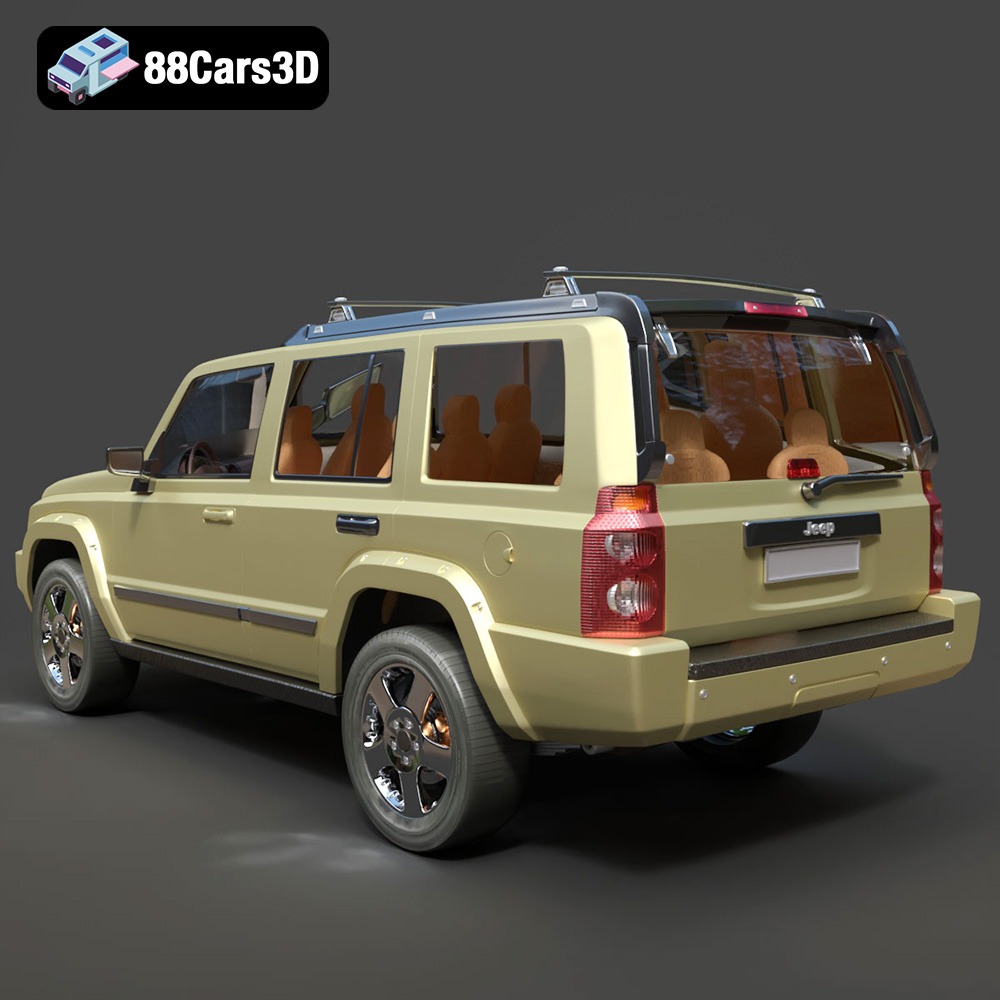
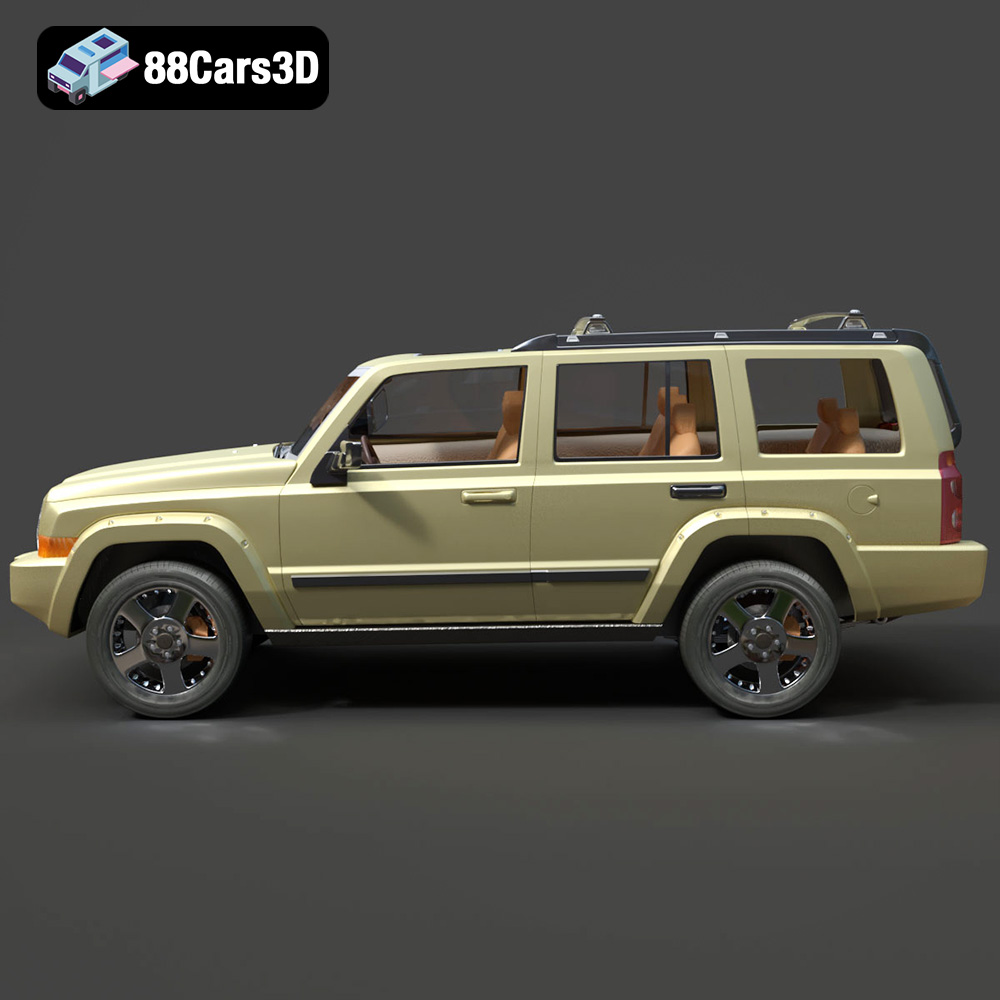
The Jeep Commander 3D Model is a precise digital recreation of the full-size SUV produced by Jeep. Known for its boxy styling, three-row seating configuration, and rugged 4×4 capability, the Commander blends classic Jeep DNA with family-oriented practicality. This 3D model captures the Commander’s distinctive squared body design, seven-slot grille, roof rails, elevated stance, and strong off-road character. Designed with clean topology and accurate proportions, it is ideal for rendering, animation, simulation, AR/VR applications, and game development.
$39.99
.4x4vehicle
.arvr
.blend
.car3dmodel
.commander
.familySUV
.fbx
.gameasset
.glb
.jeep
.max
.obj
.ply
.rendering
.simulation
.stl
.suv3dmodel
.unreal
.vehicleasset